
AnNajah National University Faculty of Engineering AutoTracking Solar



- Slides: 26
An-Najah National University Faculty of Engineering Auto-Tracking Solar Radiation System Prepared by : Mohammed Attayyeb Abbas Atabeh Hamza Zayed Aseel Salem Supervisor: Dr. Bashir Nouri
Content: - Introduction. - Overview and description. - Solar energy and the scenario in Palestine. - Literature Review. - Electrical Design. - Model Fabrication and Design. - Results and Dissection. - Conclusion.
Introduction • Overview and description. • The choice reasons. • The high demand the suffering energy sector. • The aim of the project. • keeping the solar photovoltaic panel perpendicular to the sun.
• Solar power in Palestine. • Solar radiation in Palestine. • The annual incident solar irradiance is about 2000 k. Wh per m². • Technologies of solar energy. • Domestic solar water heaters. • Solar drying. • Solar desalination and cooling. • Photovoltaic.
Literature Review. • Solar panels. • Design of solar tracking system. • Passive vs. Active trackers. • The passive tracking system depend on the center of mass. • The active tracking systems can be grouped into classes by the number and orientation of the tracker’s axes.
• Continuous vs. step-wise realignment. • Drive types. • Electric, hydraulic and passive drivers. • Control strategy. • Forward, feedback and hybrid strategy.
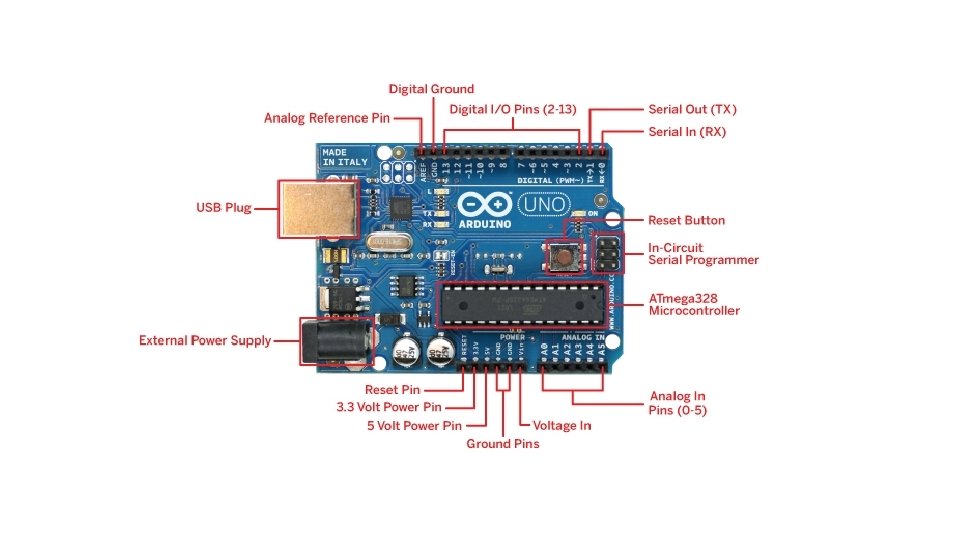
Electrical Design • Arduino microcontroller. • Arduino Uno. • Digital input/output pins. • Analog inputs. • Easy programing.
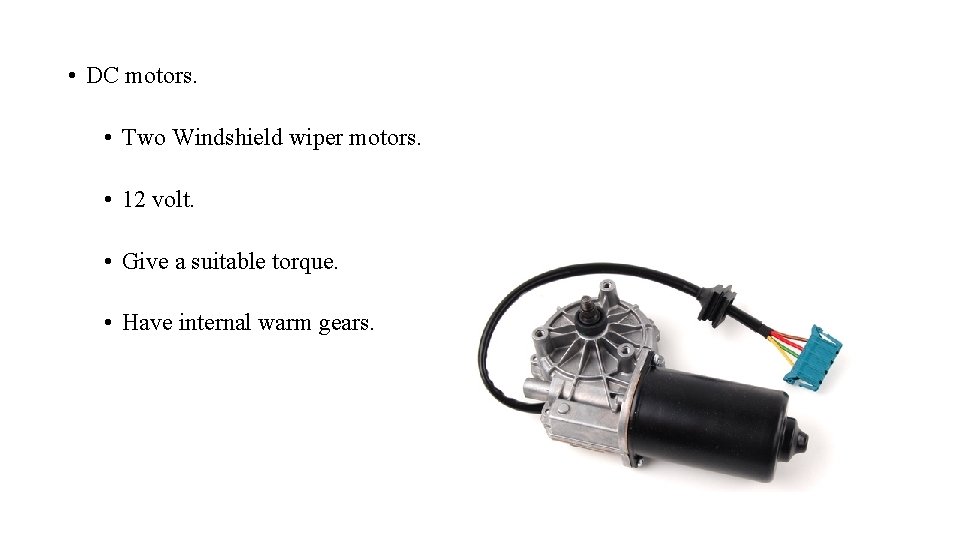
• DC motors. • Two Windshield wiper motors. • 12 volt. • Give a suitable torque. • Have internal warm gears.
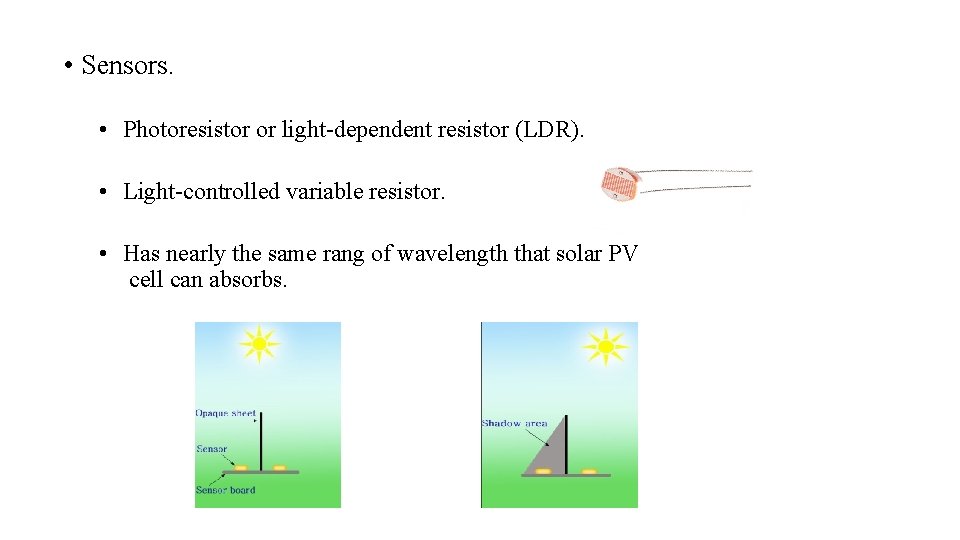
• Sensors. • Photoresistor or light-dependent resistor (LDR). • Light-controlled variable resistor. • Has nearly the same rang of wavelength that solar PV cell can absorbs.
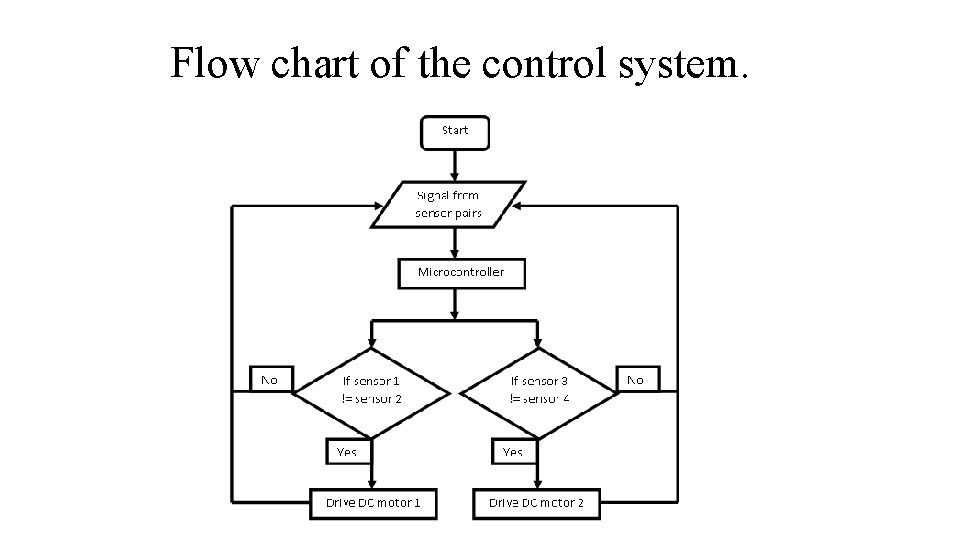
Flow chart of the control system.
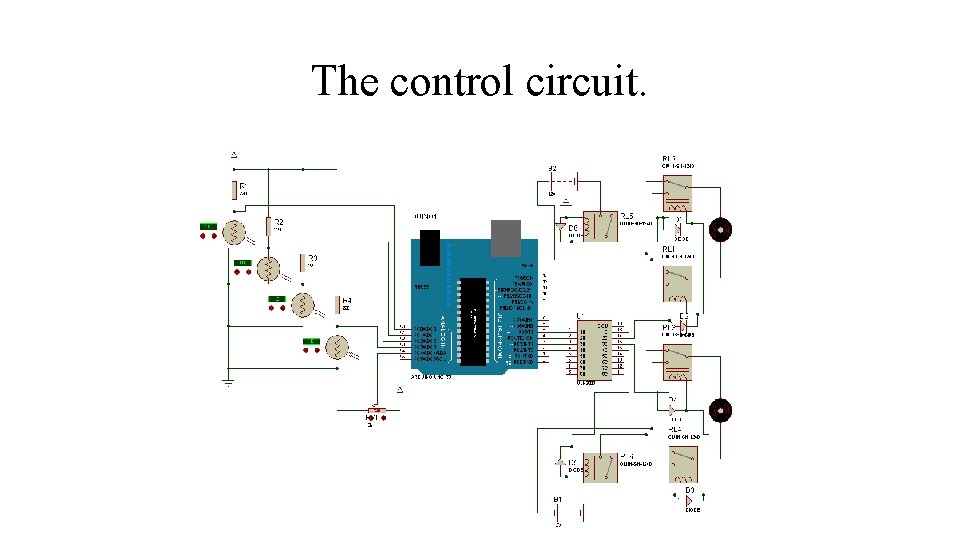
The control circuit.
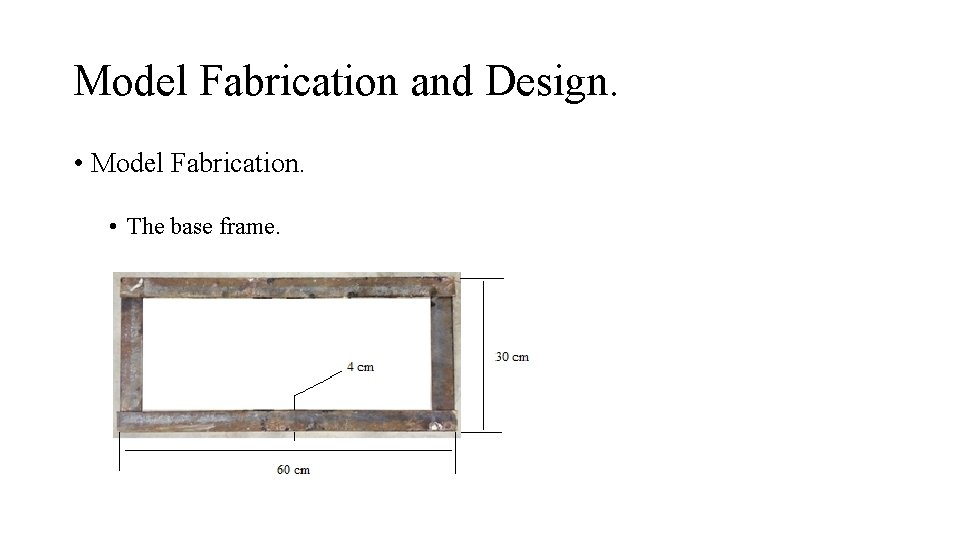
Model Fabrication and Design. • Model Fabrication. • The base frame.
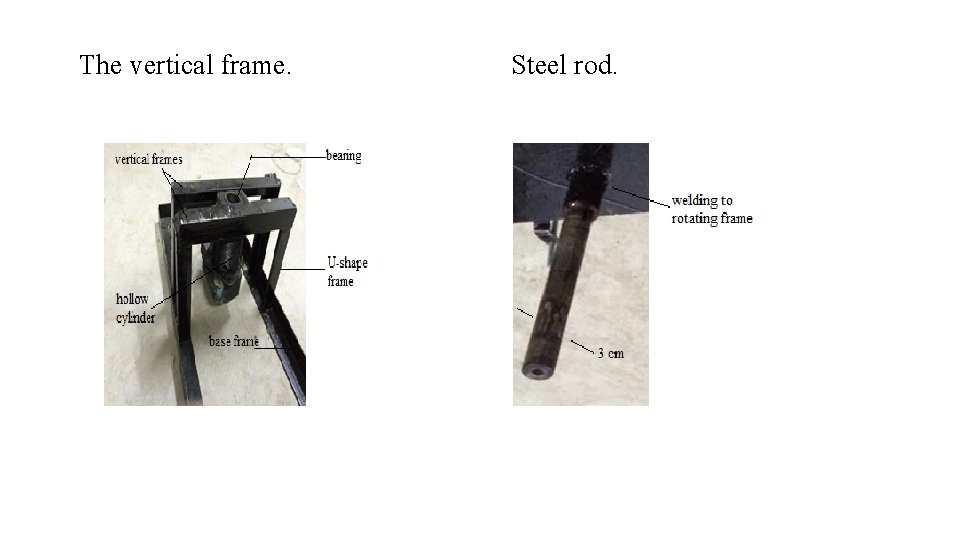
The vertical frame. Steel rod.
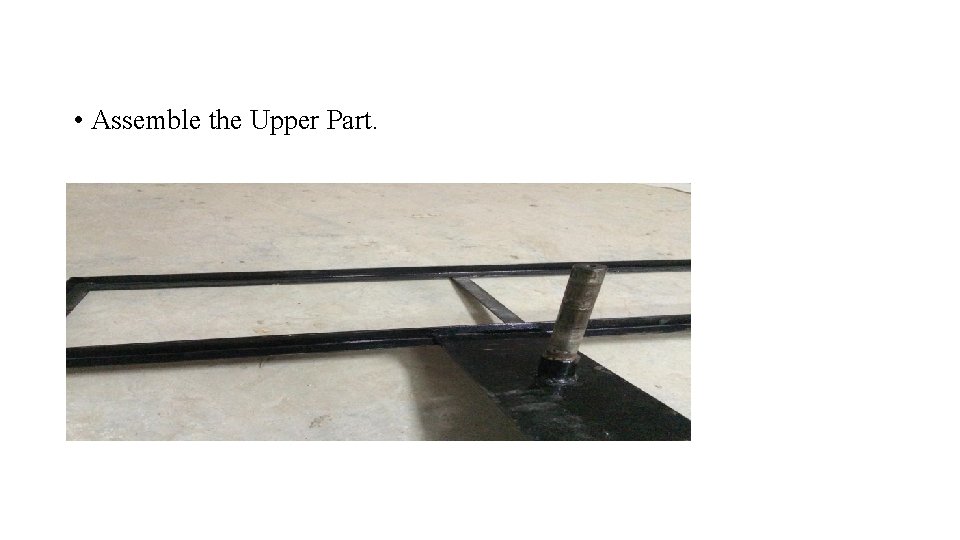
• Assemble the Upper Part.
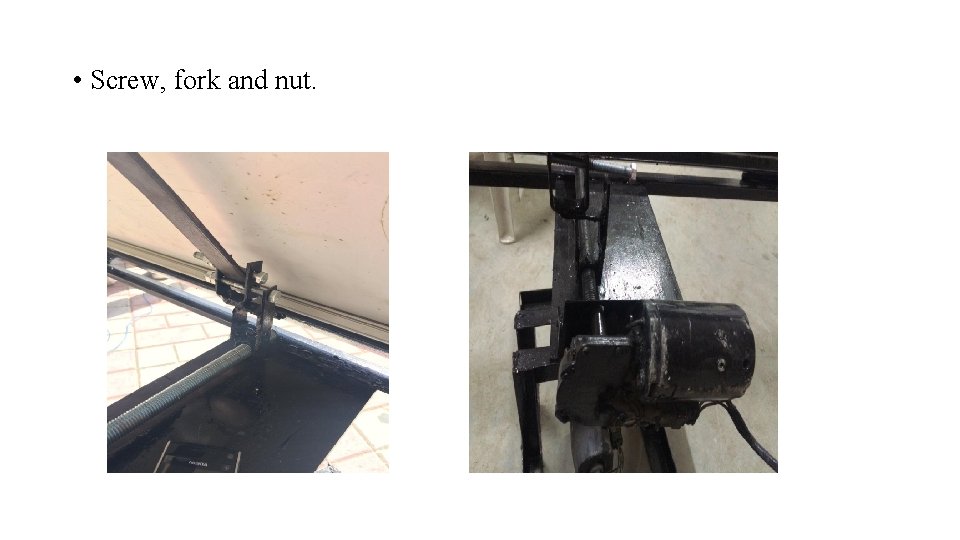
• Screw, fork and nut.
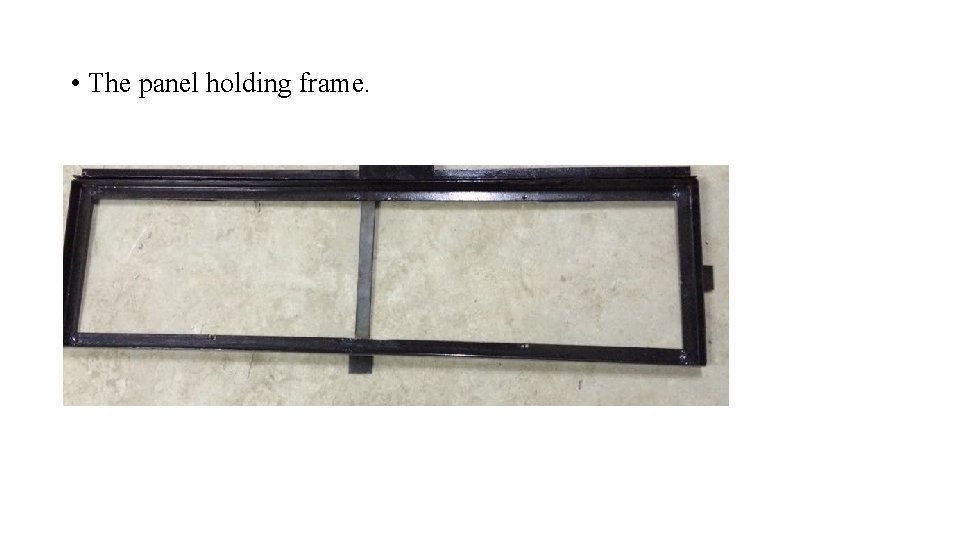
• The panel holding frame.
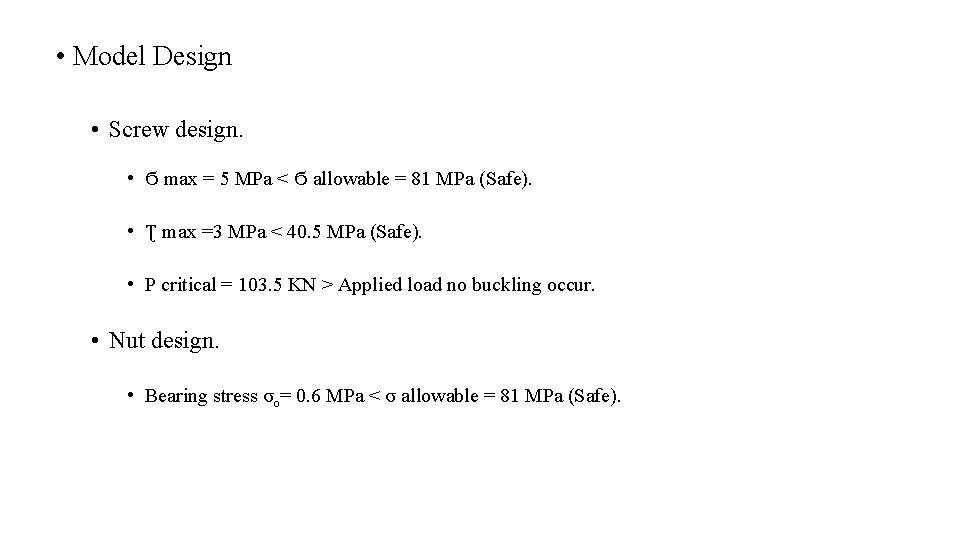
• Model Design • Screw design. • Ϭ max = 5 MPa < Ϭ allowable = 81 MPa (Safe). • Ʈ max =3 MPa < 40. 5 MPa (Safe). • P critical = 103. 5 KN > Applied load no buckling occur. • Nut design. • Bearing stress σo= 0. 6 MPa < σ allowable = 81 MPa (Safe).
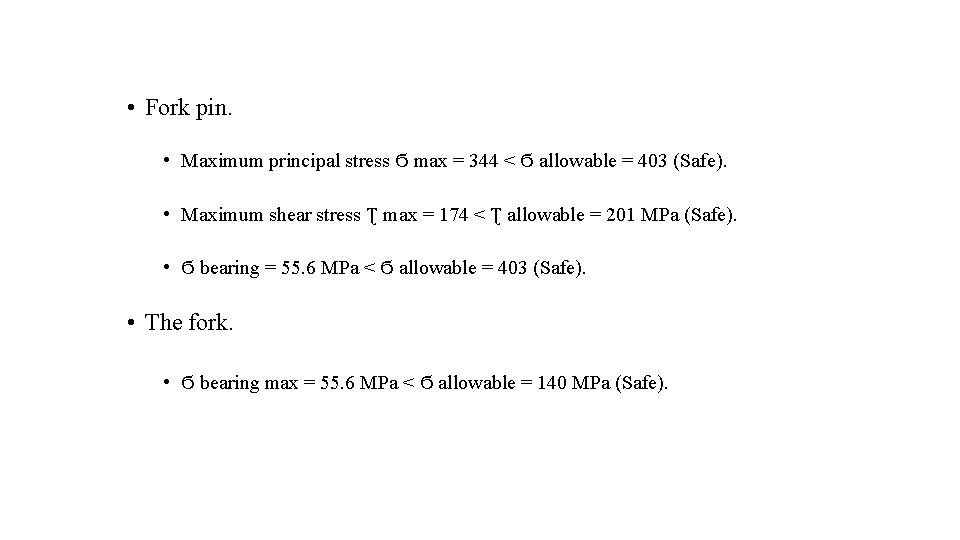
• Fork pin. • Maximum principal stress Ϭ max = 344 < Ϭ allowable = 403 (Safe). • Maximum shear stress Ʈ max = 174 < Ʈ allowable = 201 MPa (Safe). • Ϭ bearing = 55. 6 MPa < Ϭ allowable = 403 (Safe). • The fork. • Ϭ bearing max = 55. 6 MPa < Ϭ allowable = 140 MPa (Safe).
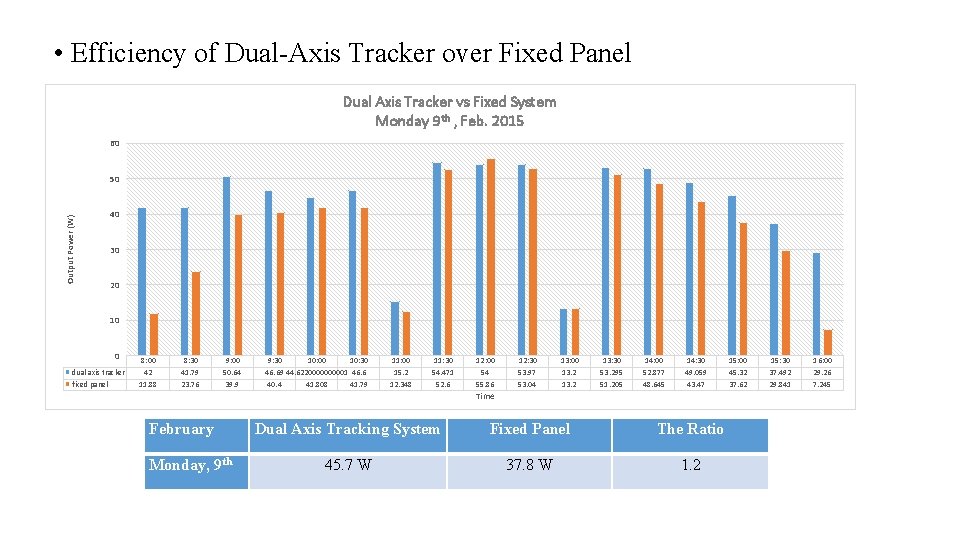
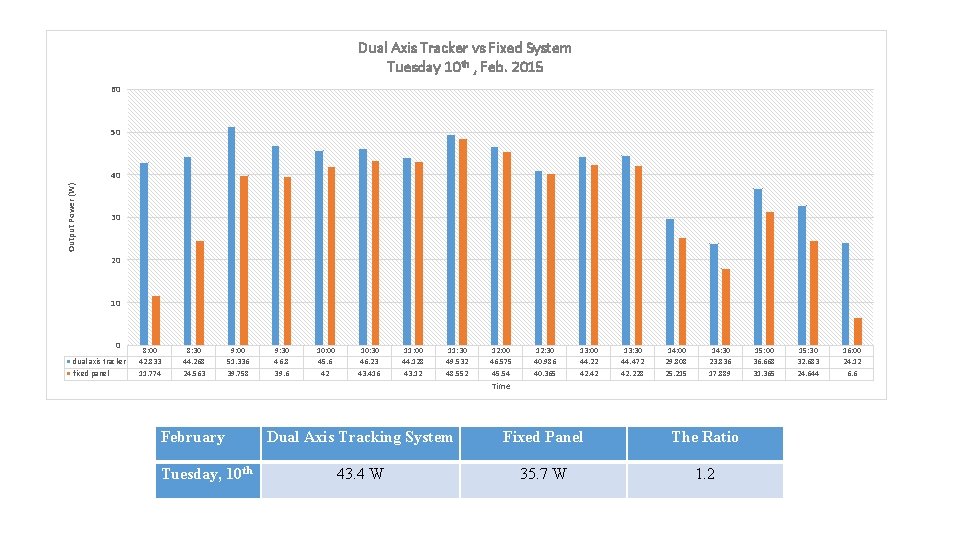
Results and Dissection. • The average readings of the power output for the dual-axis tracker and fixed panel was taken for two days which are the 9 th and the 10 th of February 2015 from morning 8: 00 am to evening 4: 00 pm for every half hour. • The fixed panel face was directed to the south with inclination angle equal of 32º.
• Efficiency of Dual-Axis Tracker over Fixed Panel Dual Axis Tracker vs Fixed System Monday 9 th , Feb. 2015 60 Output Power (W) 50 40 30 20 10 0 dual axis tracker fixed panel 8: 00 42 11. 88 8: 30 41. 79 23. 76 9: 00 50. 64 39. 9 9: 30 10: 00 10: 30 46. 69 44. 622000001 46. 6 40. 4 41. 808 41. 79 11: 00 15. 2 12. 348 11: 30 54. 471 52. 6 12: 00 54 55. 86 12: 30 53. 97 53. 04 13: 00 13. 2 13: 30 53. 295 51. 205 14: 00 52. 877 48. 645 14: 30 49. 059 43. 47 Time February Monday, 9 th Dual Axis Tracking System Fixed Panel The Ratio 45. 7 W 37. 8 W 1. 2 15: 00 45. 32 37. 62 15: 30 37. 492 29. 841 16: 00 29. 26 7. 245
Dual Axis Tracker vs Fixed System Tuesday 10 th , Feb. 2015 60 50 Output Power (W) 40 30 20 10 0 dual axis tracker fixed panel 8: 00 42. 833 11. 774 8: 30 44. 268 24. 563 9: 00 51. 336 39. 758 9: 30 46. 8 39. 6 10: 00 45. 6 42 10: 30 46. 23 43. 416 11: 00 44. 128 43. 12 11: 30 49. 532 48. 552 12: 00 46. 575 45. 54 12: 30 40. 986 40. 365 13: 00 44. 22 42. 42 13: 30 44. 472 42. 228 14: 00 29. 808 25. 215 14: 30 23. 836 17. 889 Time February Tuesday, 10 th Dual Axis Tracking System Fixed Panel The Ratio 43. 4 W 35. 7 W 1. 2 15: 00 36. 668 31. 365 15: 30 32. 683 24. 644 16: 00 24. 12 6. 6
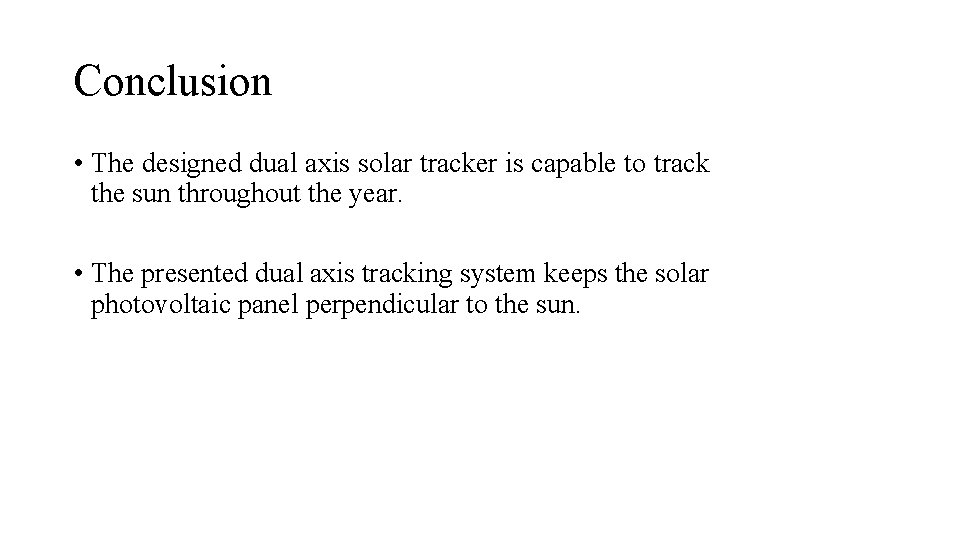
Conclusion • The designed dual axis solar tracker is capable to track the sun throughout the year. • The presented dual axis tracking system keeps the solar photovoltaic panel perpendicular to the sun.
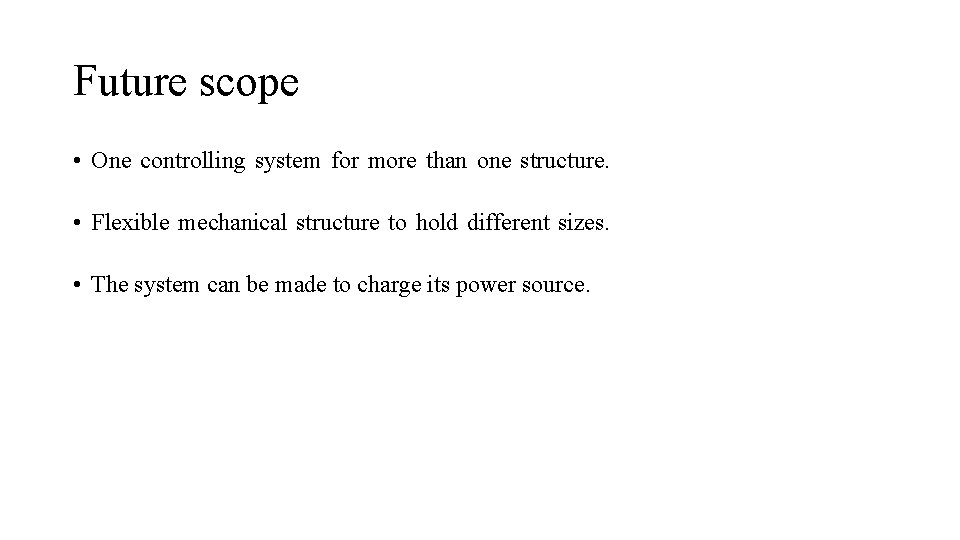
Future scope • One controlling system for more than one structure. • Flexible mechanical structure to hold different sizes. • The system can be made to charge its power source.
Thank You