
Ankle and Foot Orthopaedic Tests Orthopedics and Neurology

- Slides: 51
Ankle and Foot Orthopaedic Tests Orthopedics and Neurology DX 612 James J. Lehman, DC, MBA, DABCO University of Bridgeport College of Chiropractic
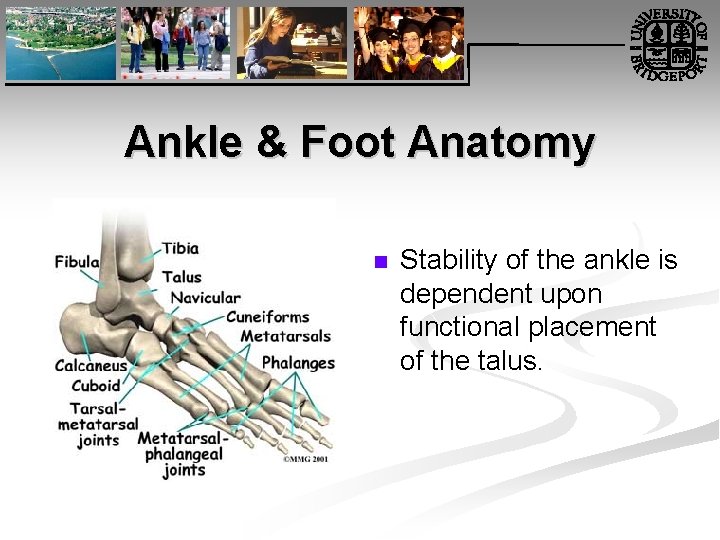
Ankle & Foot Anatomy n Stability of the ankle is dependent upon functional placement of the talus.
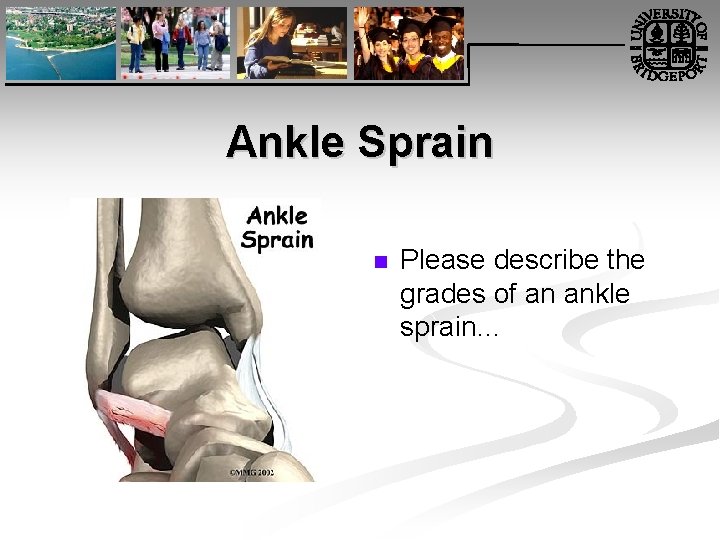
Ankle Sprain n Please describe the grades of an ankle sprain…
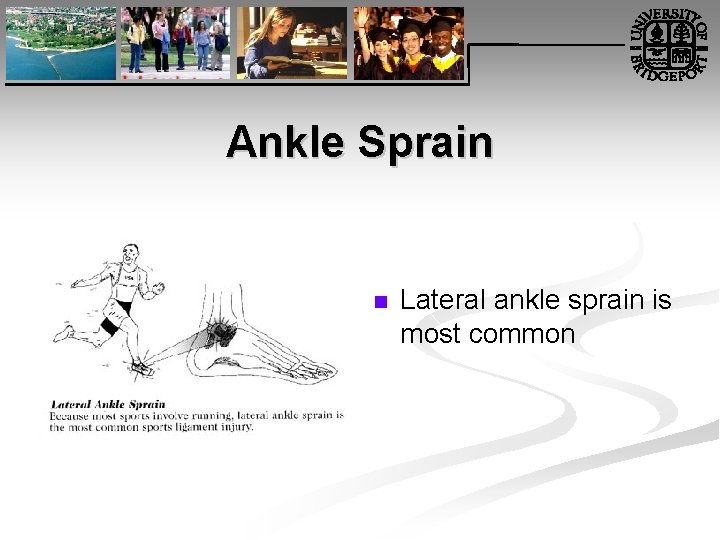
Ankle Sprain n Lateral ankle sprain is most common
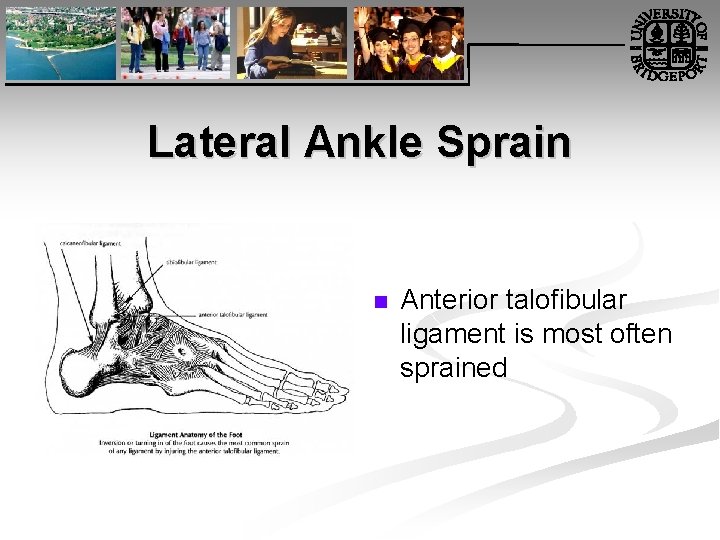
Lateral Ankle Sprain n Anterior talofibular ligament is most often sprained
Drawer’s Foot Sign n Anterior drawer will be positive with gapping secondary to trauma
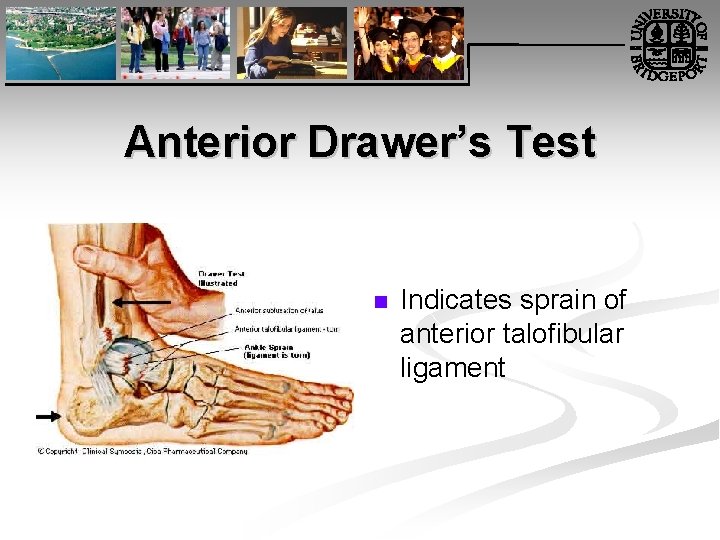
Anterior Drawer’s Test n Indicates sprain of anterior talofibular ligament
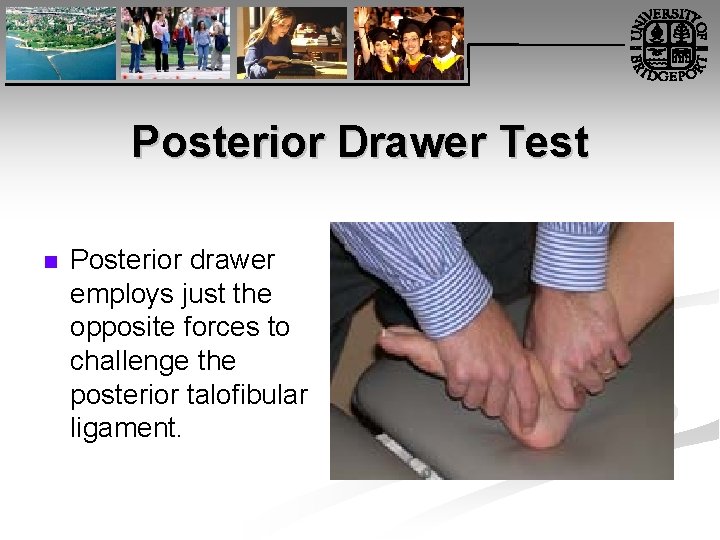
Posterior Drawer Test n Posterior drawer employs just the opposite forces to challenge the posterior talofibular ligament.
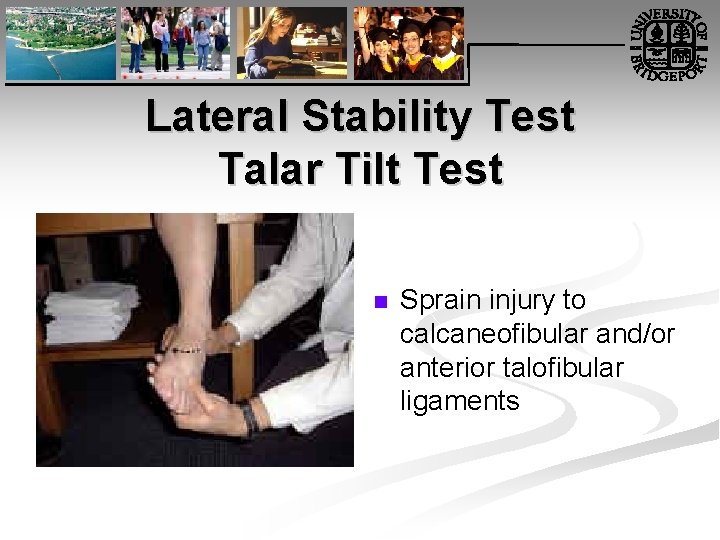
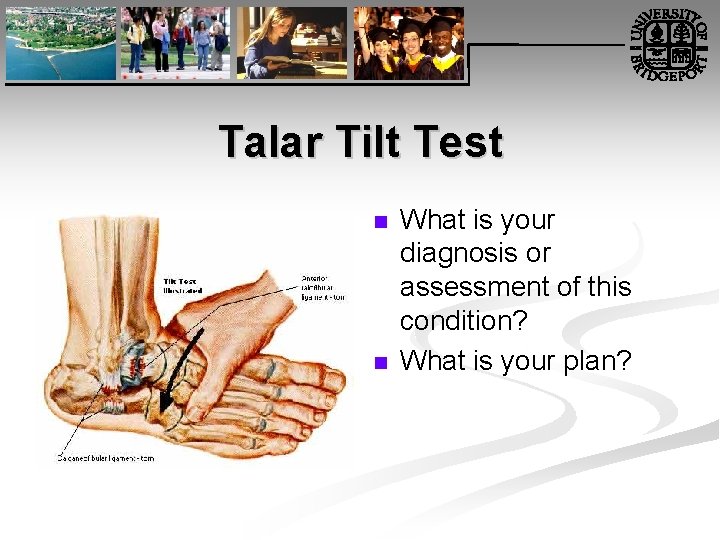
Lateral Stability Test Talar Tilt Test n Sprain injury to calcaneofibular and/or anterior talofibular ligaments
Talar Tilt Test n n What is your diagnosis or assessment of this condition? What is your plan?
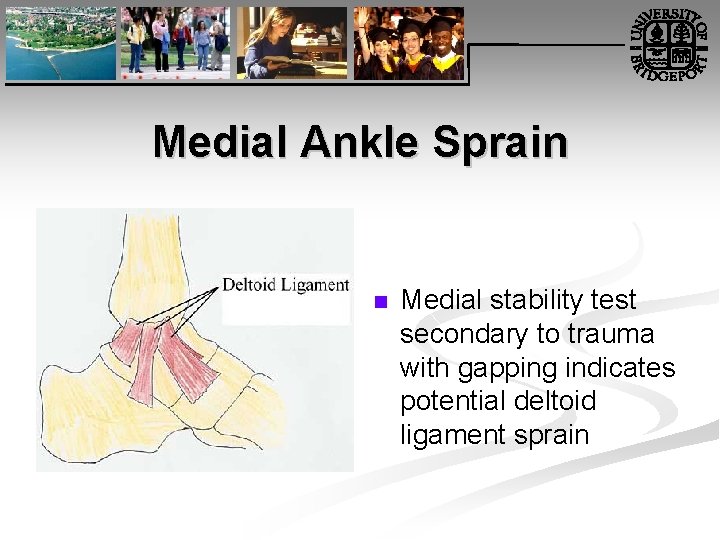
Medial Ankle Sprain n Medial stability test secondary to trauma with gapping indicates potential deltoid ligament sprain
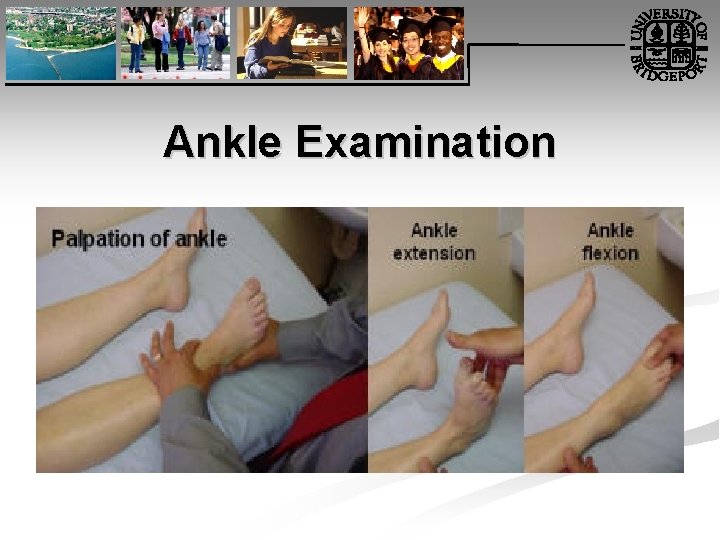
Ankle Examination
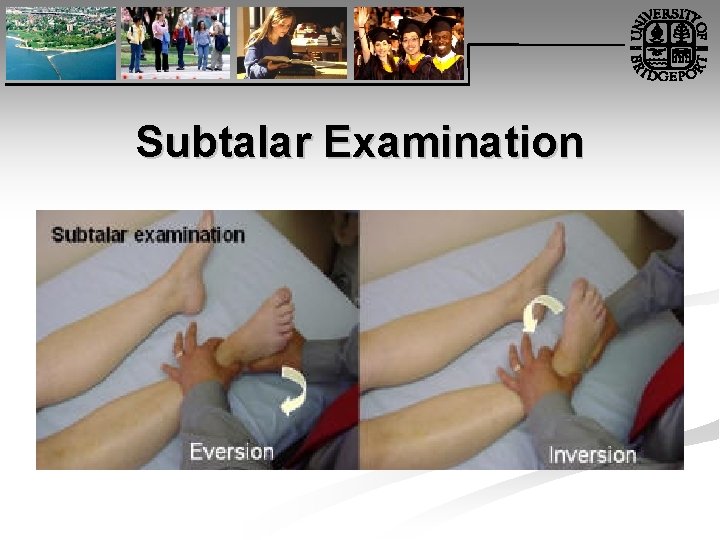
Subtalar Examination
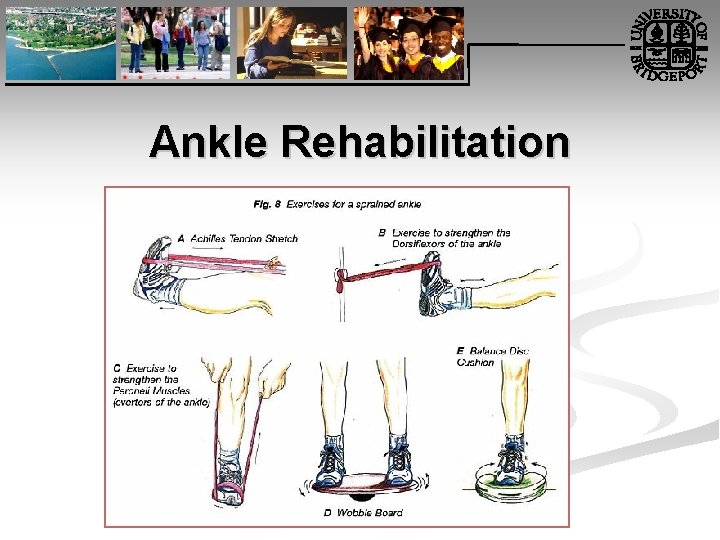
Ankle Rehabilitation
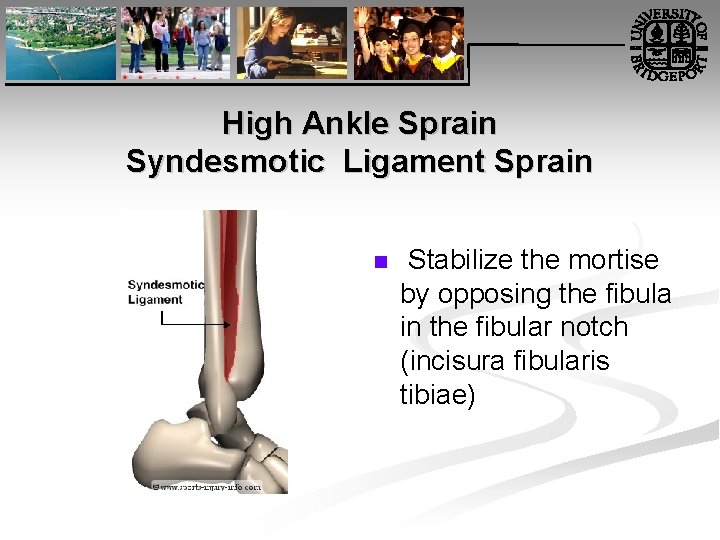
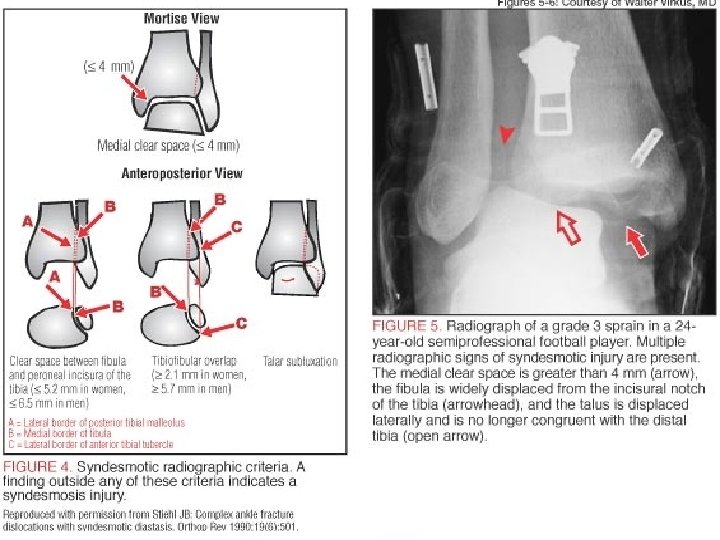
High Ankle Sprain Syndesmotic Ligament Sprain n Stabilize the mortise by opposing the fibula in the fibular notch (incisura fibularis tibiae)
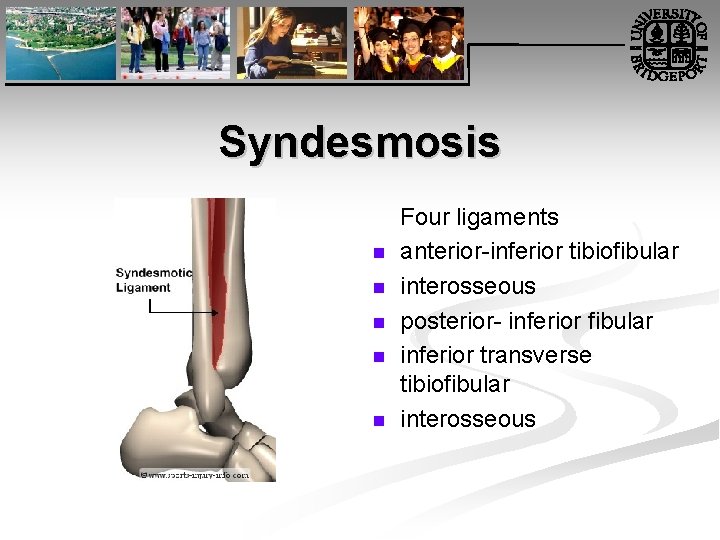
Syndesmosis n n n Four ligaments anterior-inferior tibiofibular interosseous posterior- inferior fibular inferior transverse tibiofibular interosseous
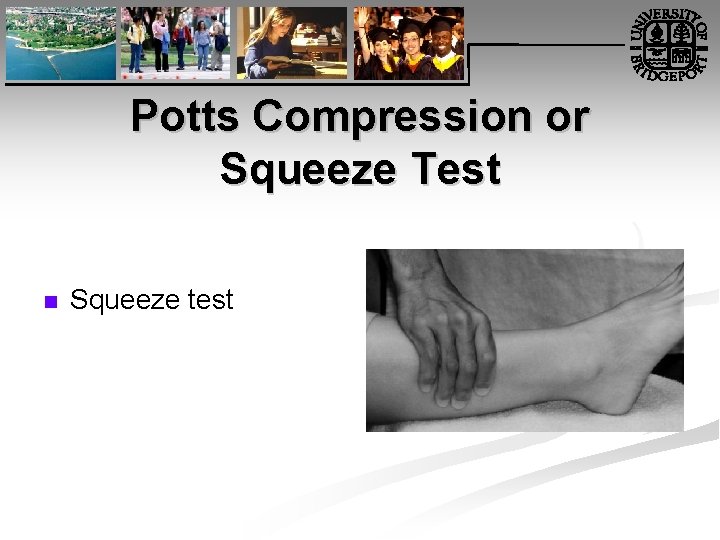
Potts Compression or Squeeze Test n Squeeze test
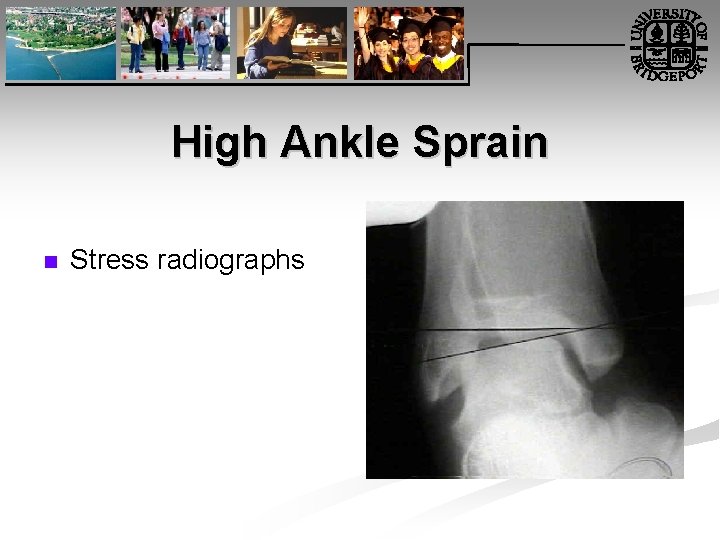
High Ankle Sprain n Stress radiographs
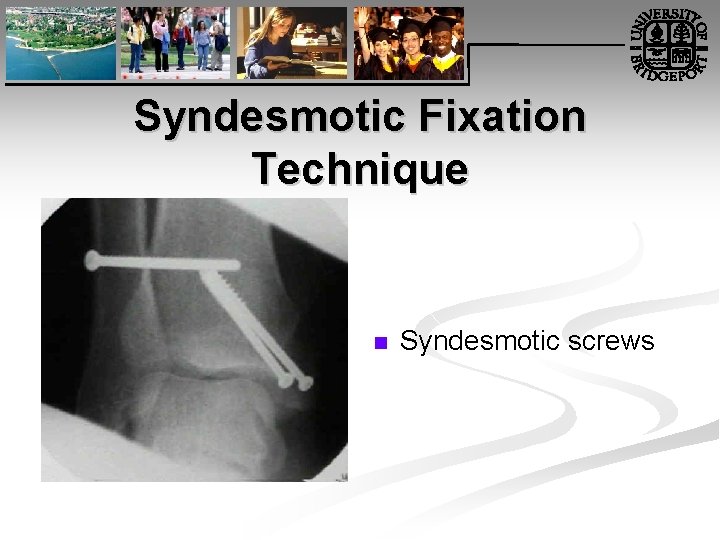
Syndesmotic Fixation Technique n Syndesmotic screws
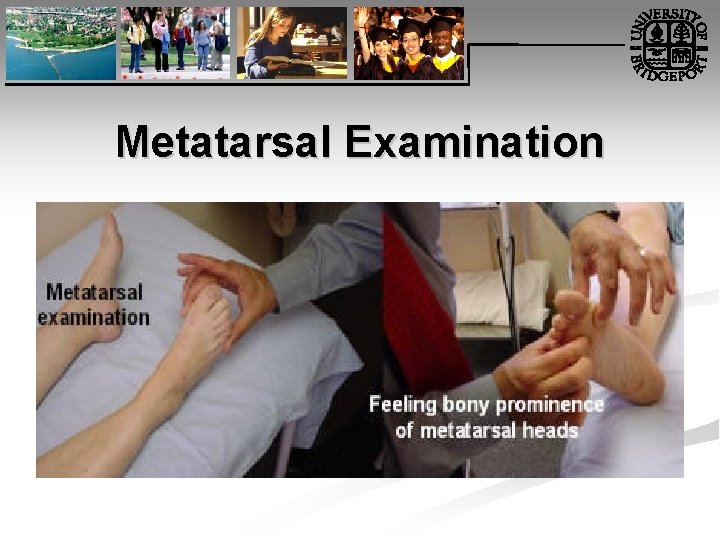
Metatarsal Examination
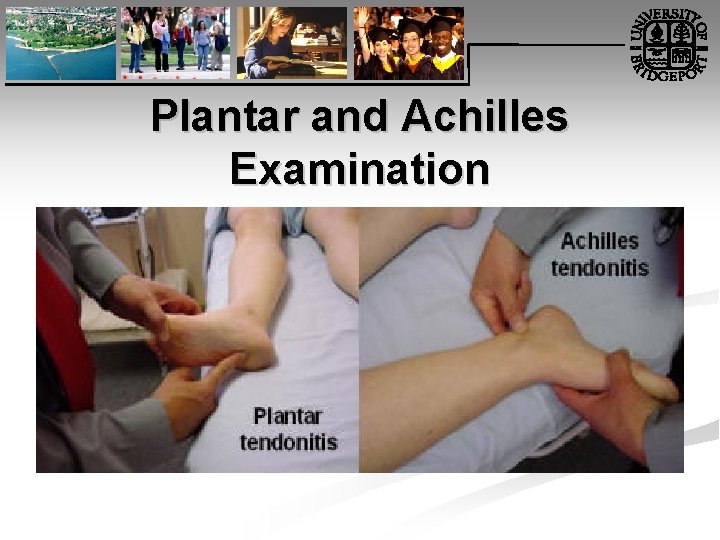
Plantar and Achilles Examination
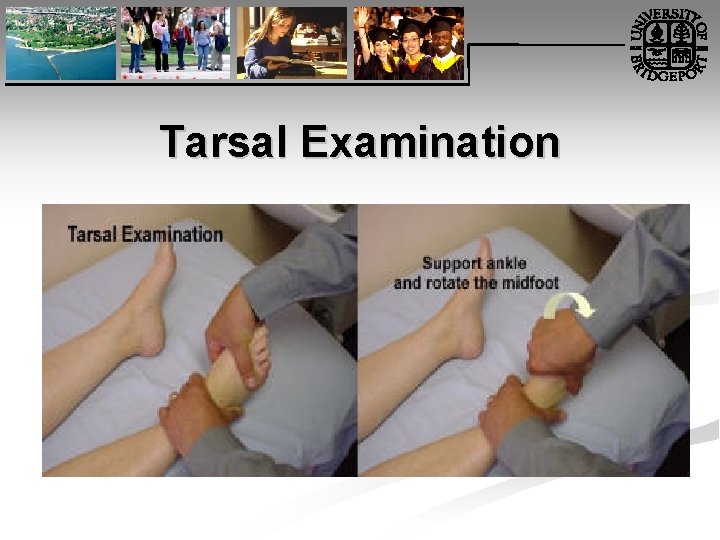
Tarsal Examination
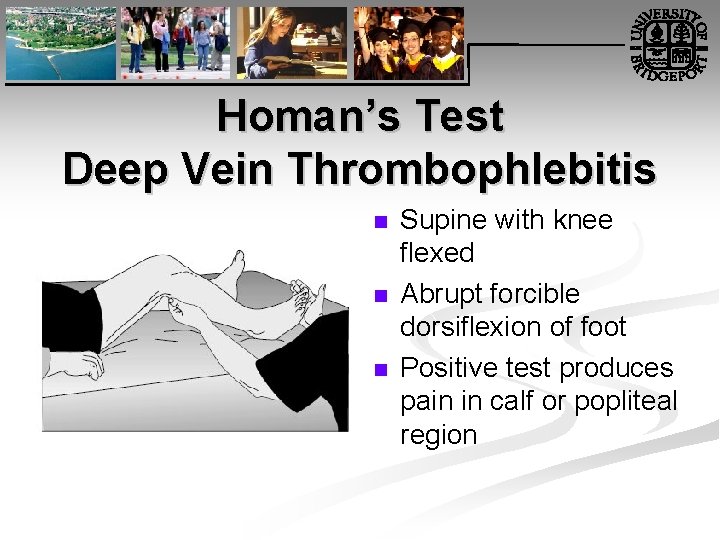
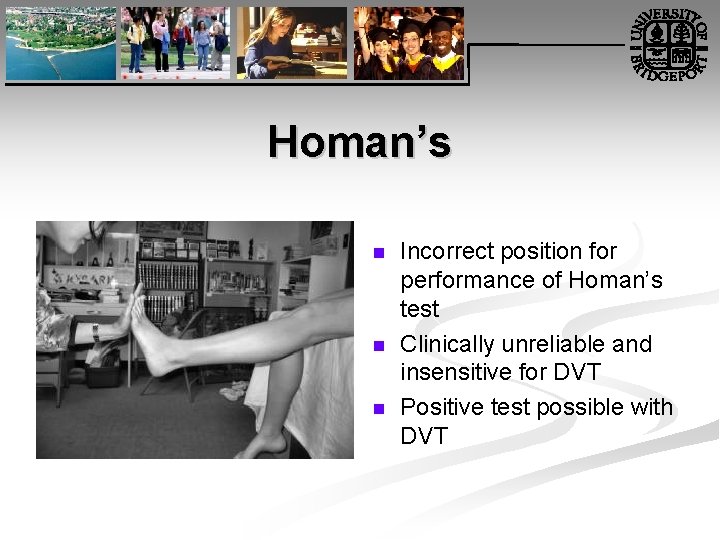
Homan’s Test Deep Vein Thrombophlebitis n n n Supine with knee flexed Abrupt forcible dorsiflexion of foot Positive test produces pain in calf or popliteal region
Homan’s n n n Incorrect position for performance of Homan’s test Clinically unreliable and insensitive for DVT Positive test possible with DVT
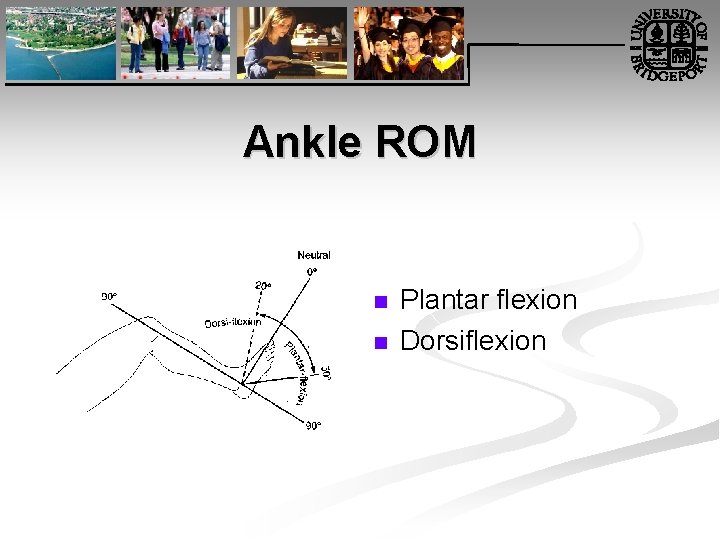
Ankle ROM n n Plantar flexion Dorsiflexion
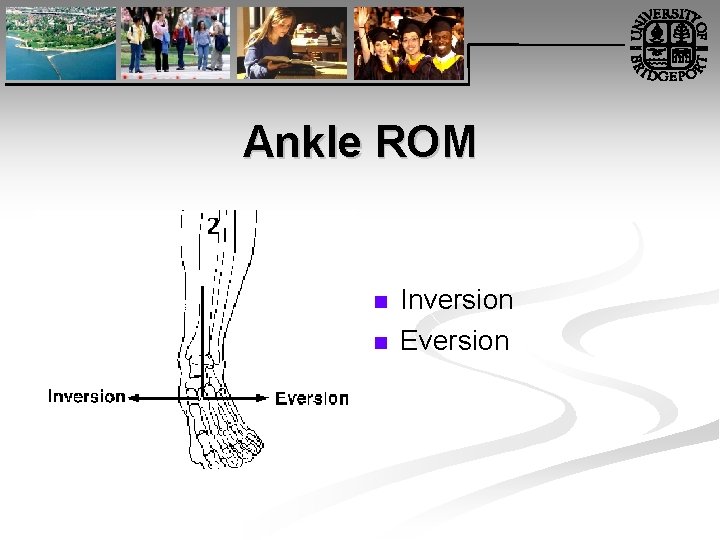
Ankle ROM n n Inversion Eversion
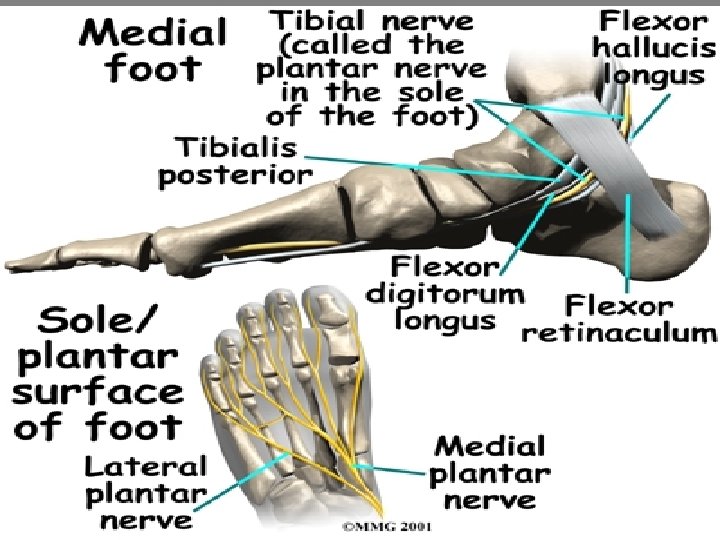
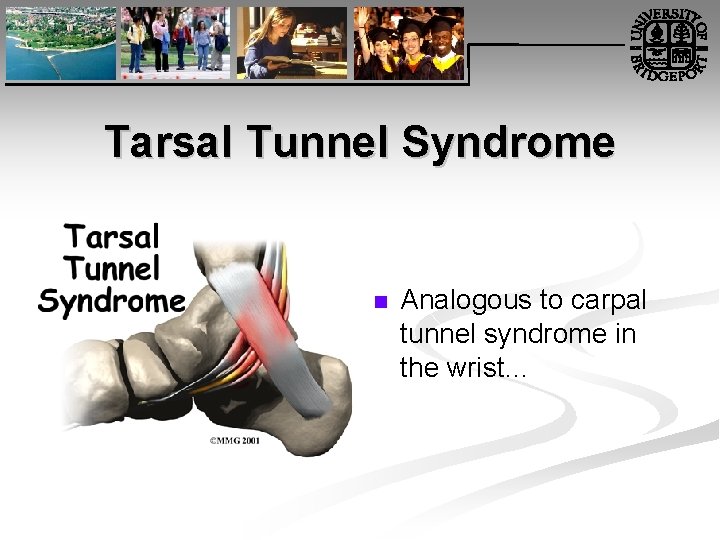
Tarsal Tunnel Syndrome n Analogous to carpal tunnel syndrome in the wrist…
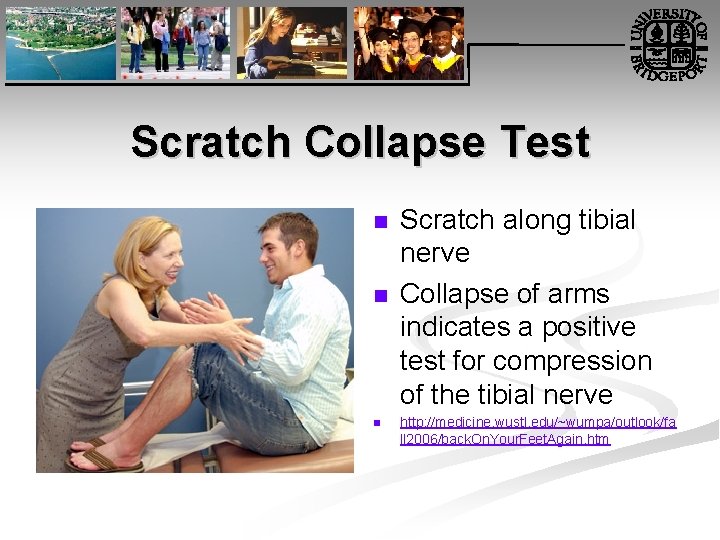
Scratch Collapse Test n n n Scratch along tibial nerve Collapse of arms indicates a positive test for compression of the tibial nerve http: //medicine. wustl. edu/~wumpa/outlook/fa ll 2006/back. On. Your. Feet. Again. htm
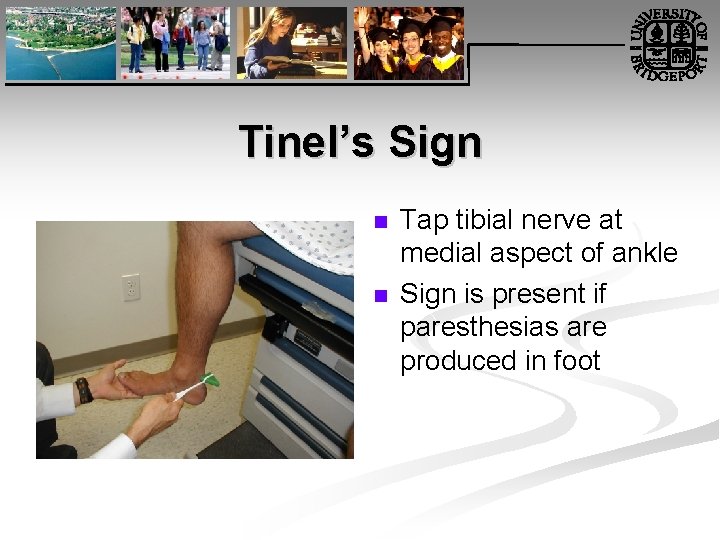
Tinel’s Sign n n Tap tibial nerve at medial aspect of ankle Sign is present if paresthesias are produced in foot
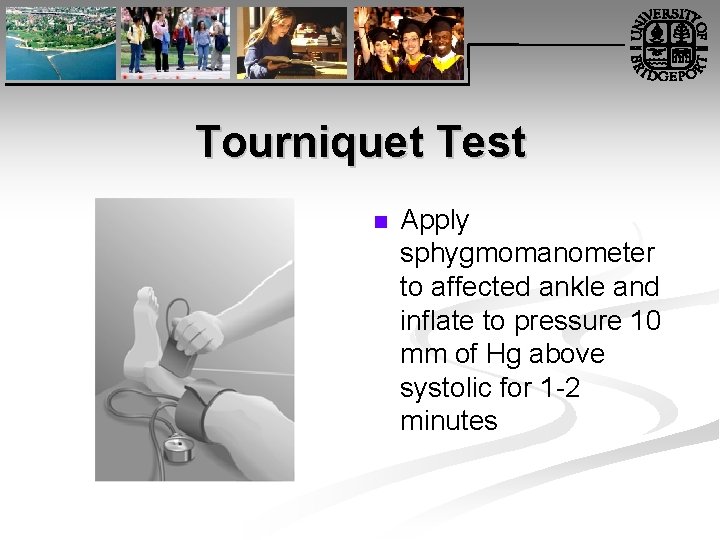
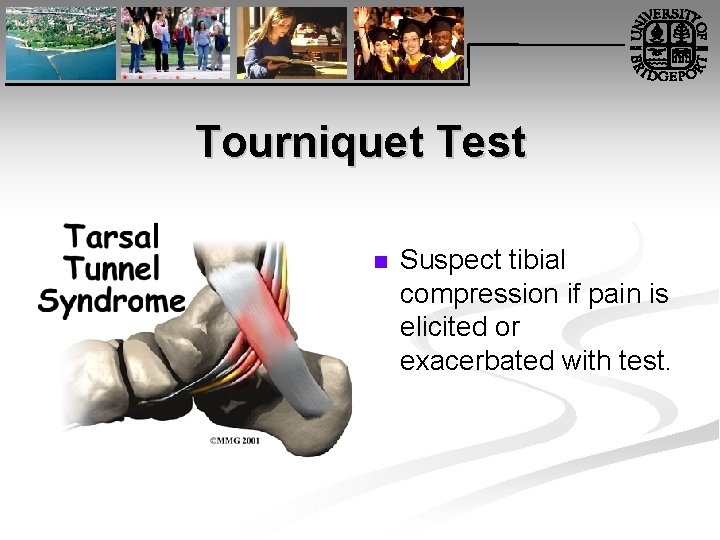
Tourniquet Test n Apply sphygmomanometer to affected ankle and inflate to pressure 10 mm of Hg above systolic for 1 -2 minutes
Tourniquet Test n Suspect tibial compression if pain is elicited or exacerbated with test.
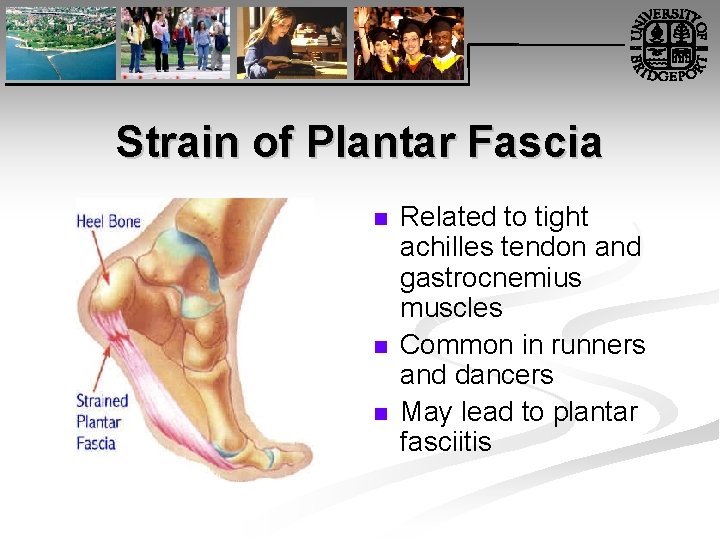
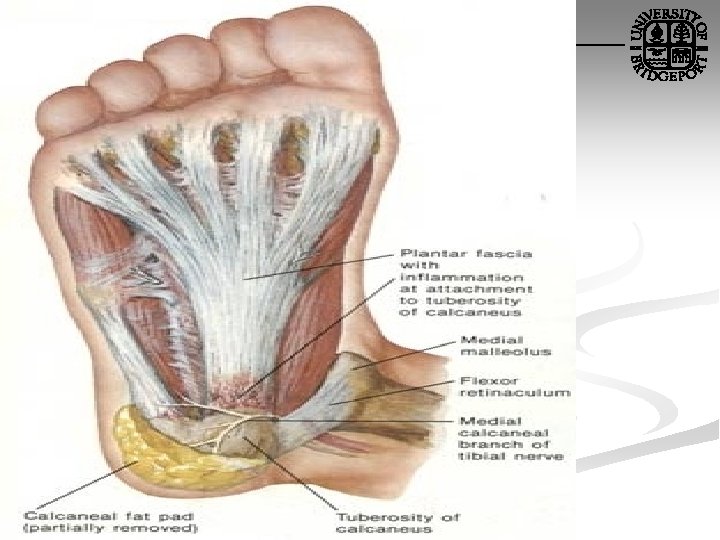
Strain of Plantar Fascia n n n Related to tight achilles tendon and gastrocnemius muscles Common in runners and dancers May lead to plantar fasciitis
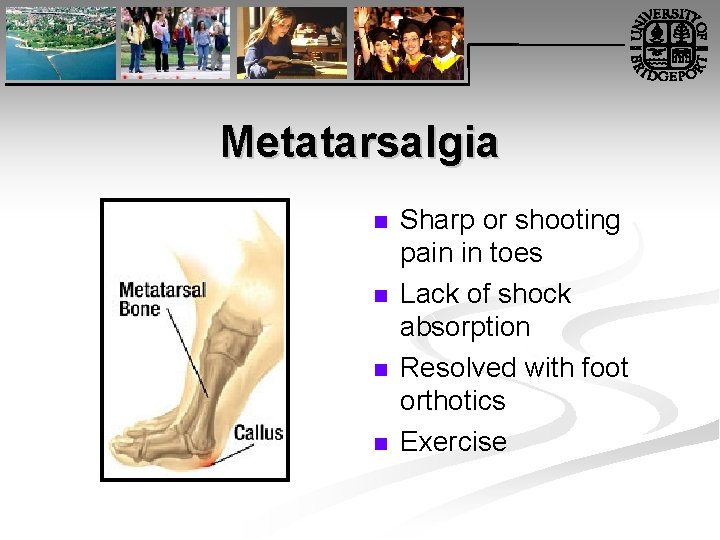
Metatarsalgia n n Sharp or shooting pain in toes Lack of shock absorption Resolved with foot orthotics Exercise
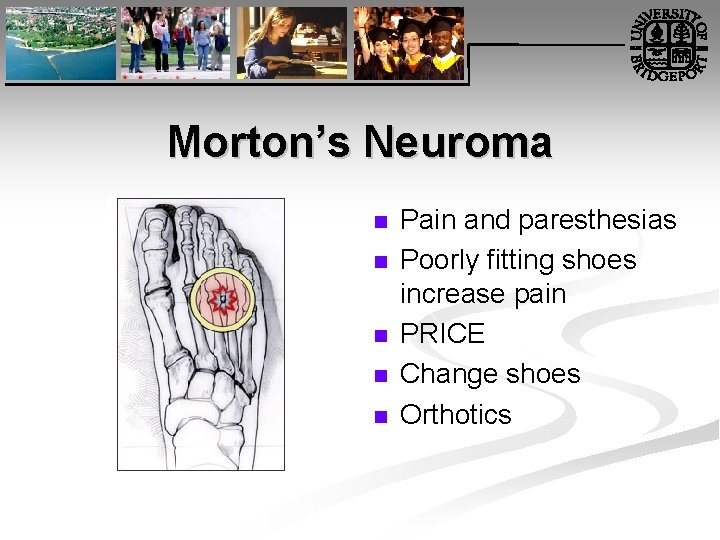
Morton’s Neuroma n n n Pain and paresthesias Poorly fitting shoes increase pain PRICE Change shoes Orthotics
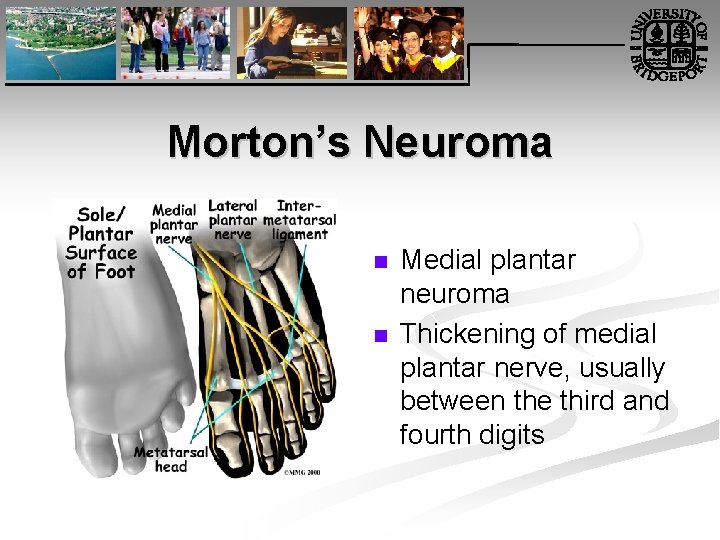
Morton’s Neuroma n n Medial plantar neuroma Thickening of medial plantar nerve, usually between the third and fourth digits
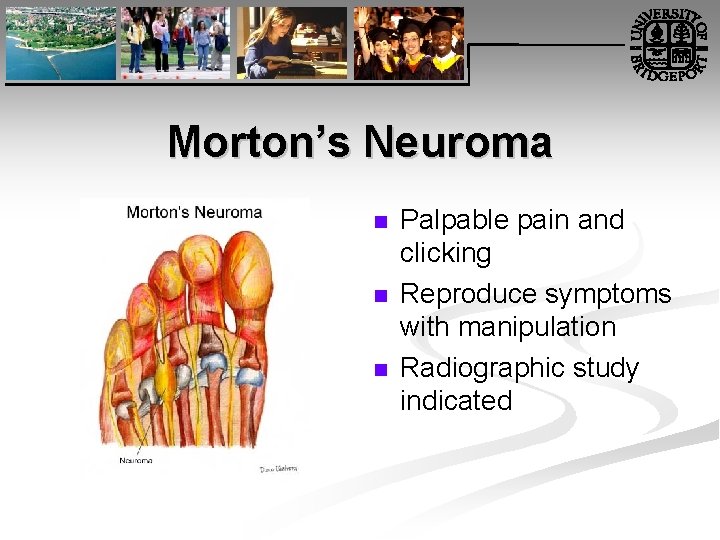
Morton’s Neuroma n n n Palpable pain and clicking Reproduce symptoms with manipulation Radiographic study indicated
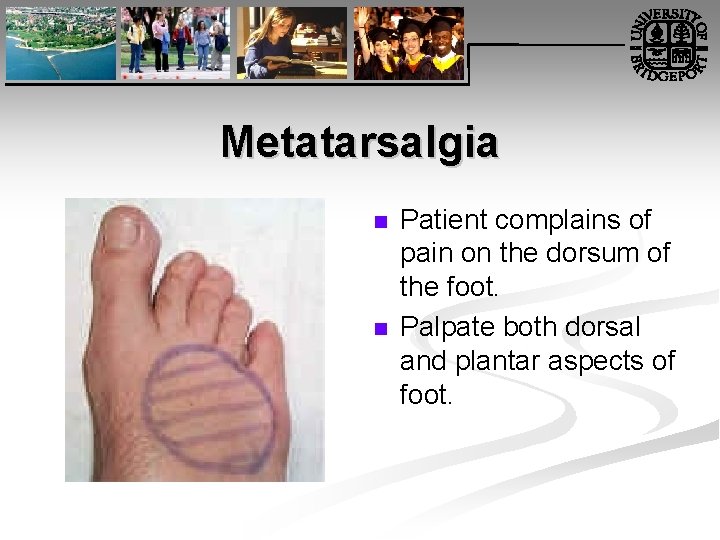
Metatarsalgia n n Patient complains of pain on the dorsum of the foot. Palpate both dorsal and plantar aspects of foot.
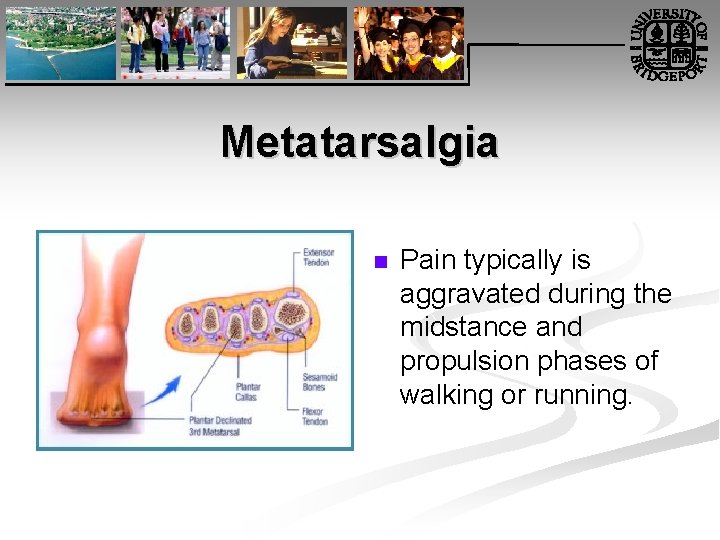
Metatarsalgia n Pain typically is aggravated during the midstance and propulsion phases of walking or running.
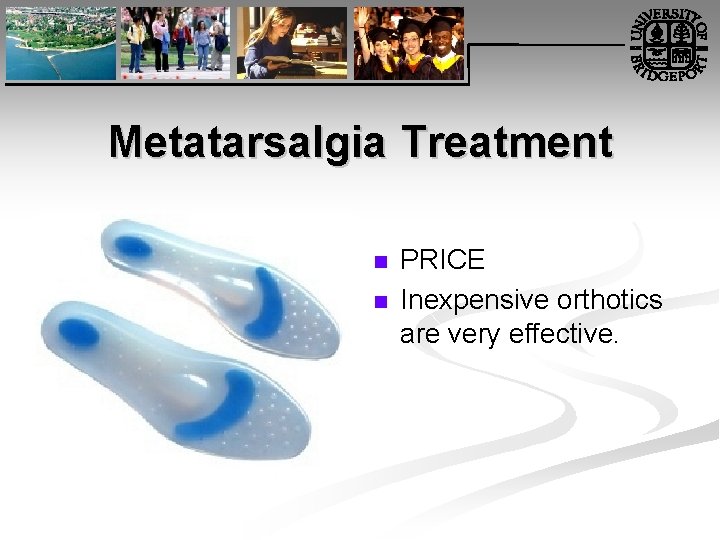
Metatarsalgia Treatment n n PRICE Inexpensive orthotics are very effective.
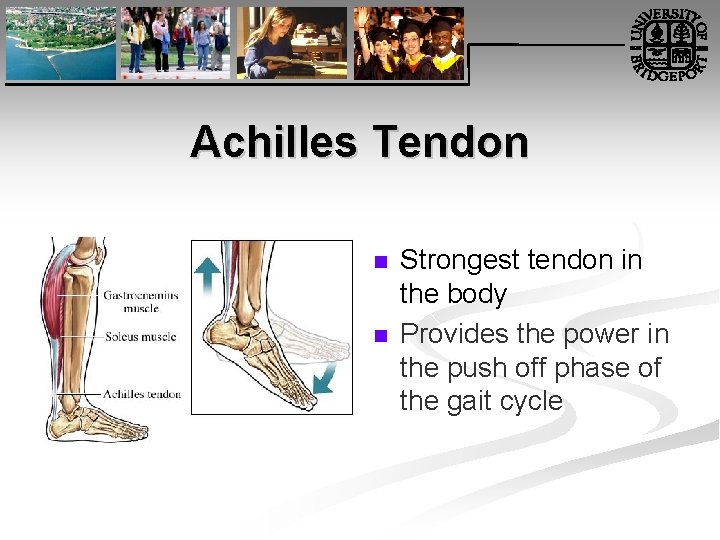
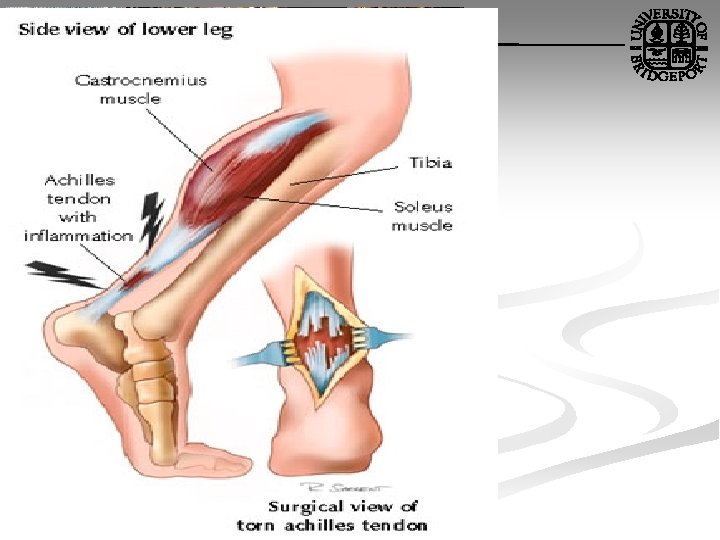
Achilles Tendon n n Strongest tendon in the body Provides the power in the push off phase of the gait cycle
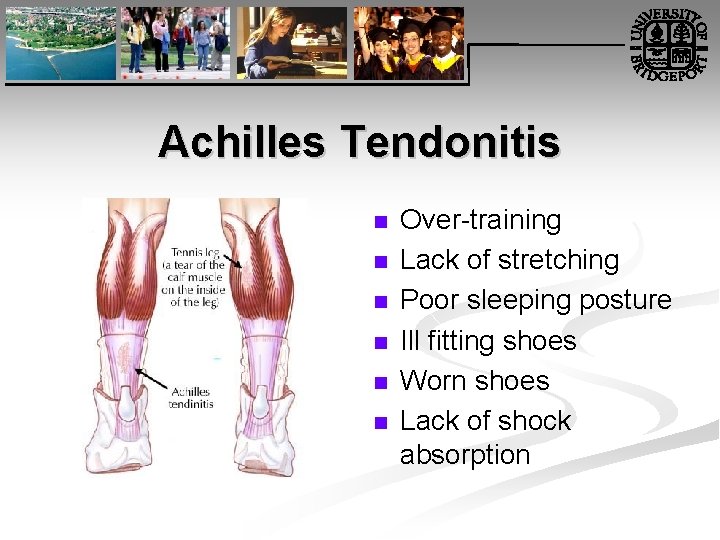
Achilles Tendonitis n n n Over-training Lack of stretching Poor sleeping posture Ill fitting shoes Worn shoes Lack of shock absorption
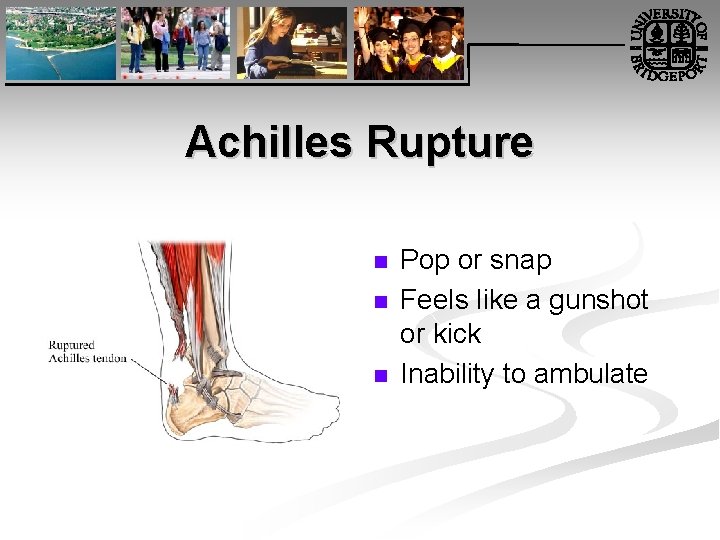
Achilles Rupture n n n Pop or snap Feels like a gunshot or kick Inability to ambulate
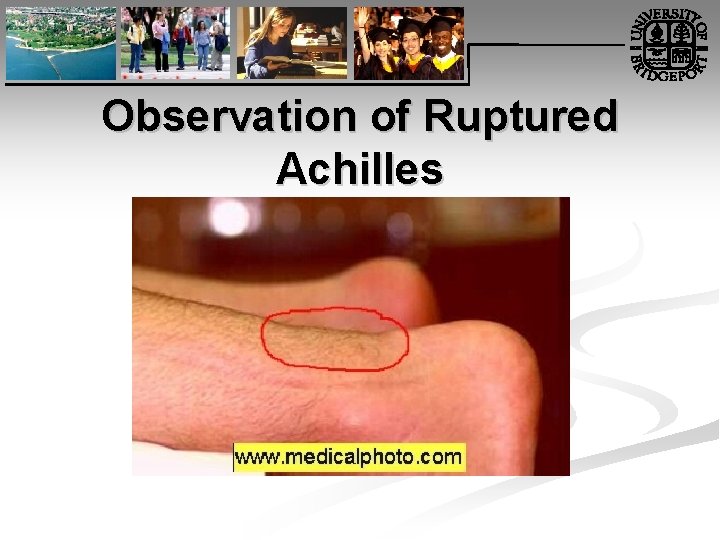
Observation of Ruptured Achilles
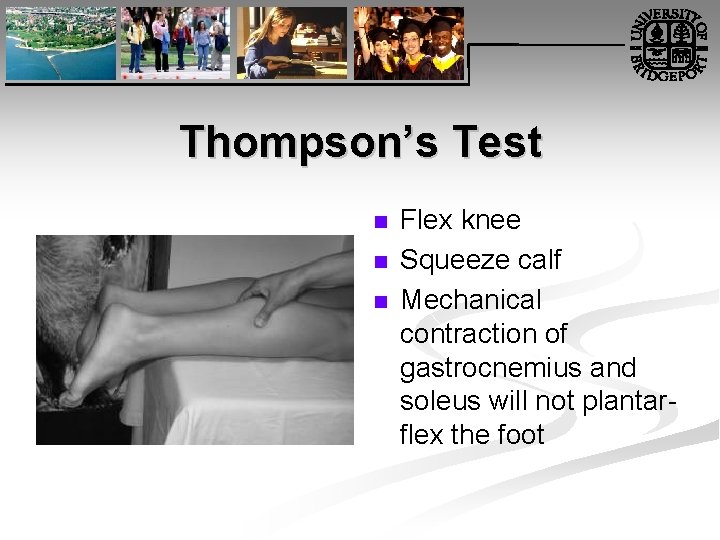
Thompson’s Test n n n Flex knee Squeeze calf Mechanical contraction of gastrocnemius and soleus will not plantarflex the foot
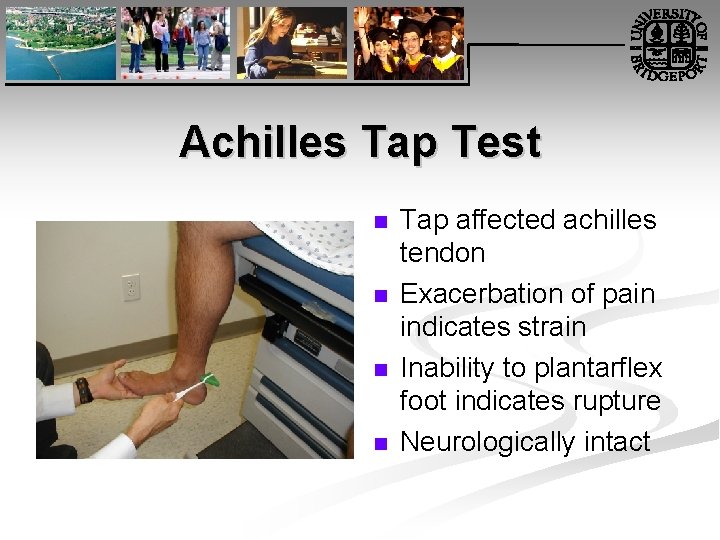
Achilles Tap Test n n Tap affected achilles tendon Exacerbation of pain indicates strain Inability to plantarflex foot indicates rupture Neurologically intact
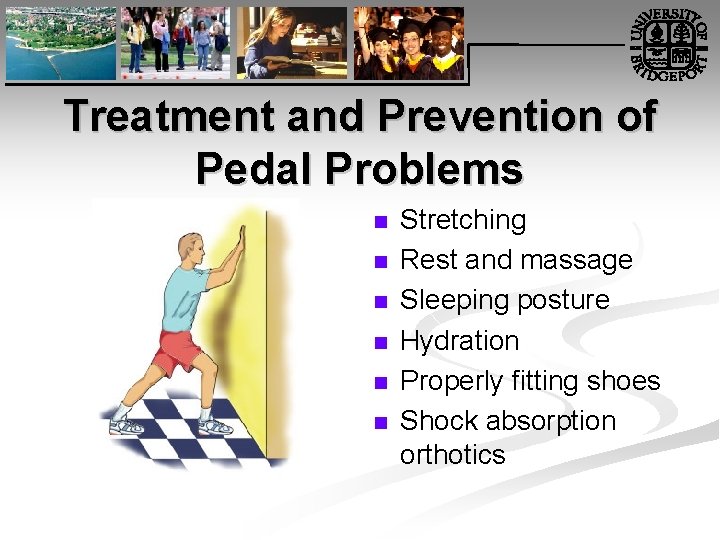
Treatment and Prevention of Pedal Problems n n n Stretching Rest and massage Sleeping posture Hydration Properly fitting shoes Shock absorption orthotics