
Anionic Polymerization Polar monomers Possible Termination Reactions Attack
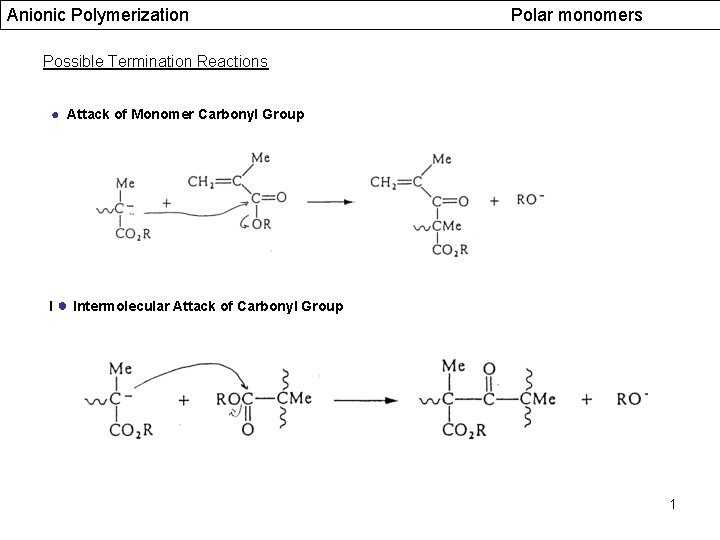
Anionic Polymerization Polar monomers Possible Termination Reactions ● Attack of Monomer Carbonyl Group I ● Intermolecular Attack of Carbonyl Group 1
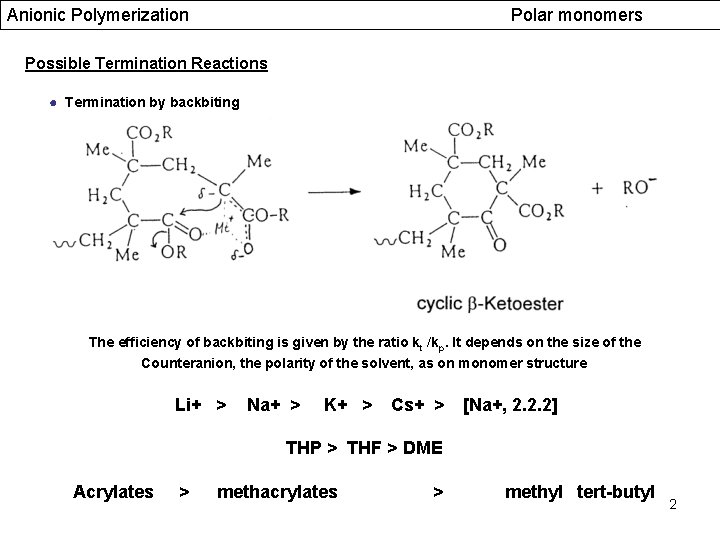
Anionic Polymerization Polar monomers Possible Termination Reactions ● Termination by backbiting The efficiency of backbiting is given by the ratio kt /kp. It depends on the size of the Counteranion, the polarity of the solvent, as on monomer structure Li+ > Na+ > K+ > Cs+ > [Na+, 2. 2. 2] THP > THF > DME Acrylates > methacrylates > methyl tert-butyl 2
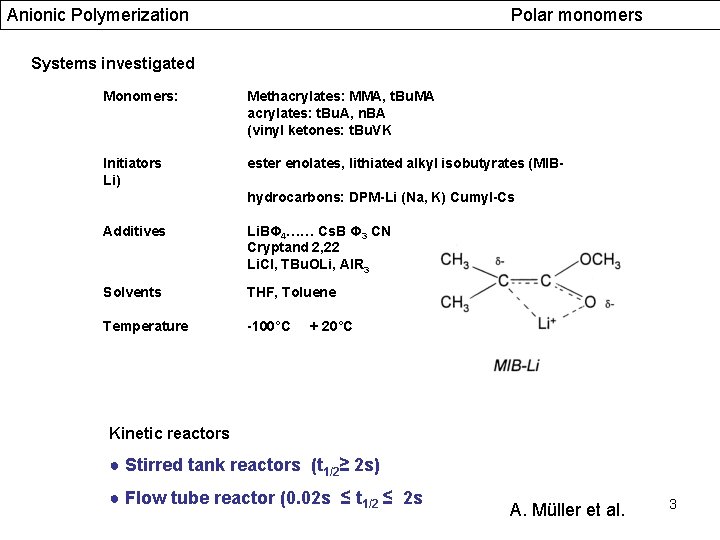
Anionic Polymerization Polar monomers Systems investigated Monomers: Methacrylates: MMA, t. Bu. MA acrylates: t. Bu. A, n. BA (vinyl ketones: t. Bu. VK Initiators Li) ester enolates, lithiated alkyl isobutyrates (MIBhydrocarbons: DPM-Li (Na, K) Cumyl-Cs Additives Li. BΦ 4…… Cs. B Φ 3 CN Cryptand 2, 22 Li. Cl, TBu. OLi, Al. R 3 Solvents THF, Toluene Temperature -100°C + 20°C Kinetic reactors ● Stirred tank reactors (t 1/2≥ 2 s) ● Flow tube reactor (0. 02 s ≤ t 1/2 ≤ 2 s A. Müller et al. 3
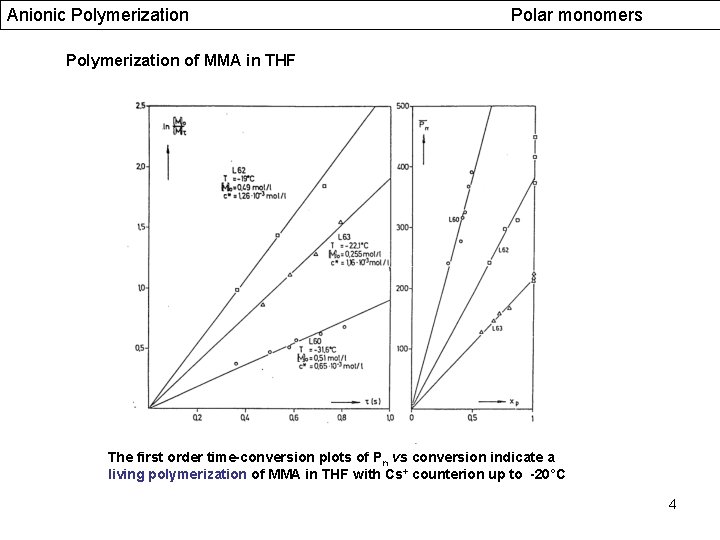
Anionic Polymerization Polar monomers Polymerization of MMA in THF The first order time-conversion plots of Pn vs conversion indicate a living polymerization of MMA in THF with Cs+ counterion up to -20°C 4
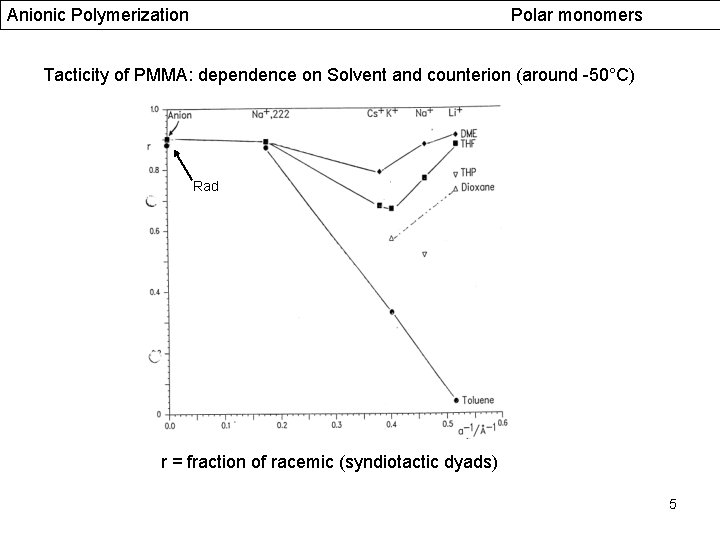
Anionic Polymerization Polar monomers Tacticity of PMMA: dependence on Solvent and counterion (around -50°C) Rad r = fraction of racemic (syndiotactic dyads) 5
Anionic Polymerization Polar monomers 6
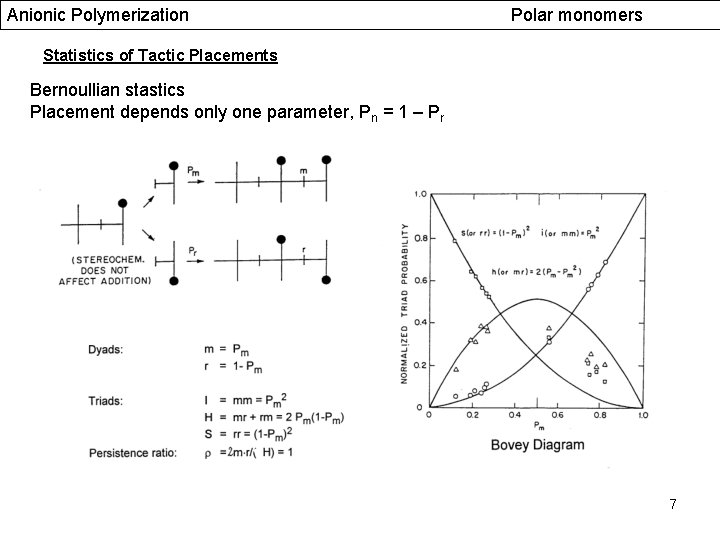
Anionic Polymerization Polar monomers Statistics of Tactic Placements Bernoullian stastics Placement depends only one parameter, Pn = 1 – Pr 7
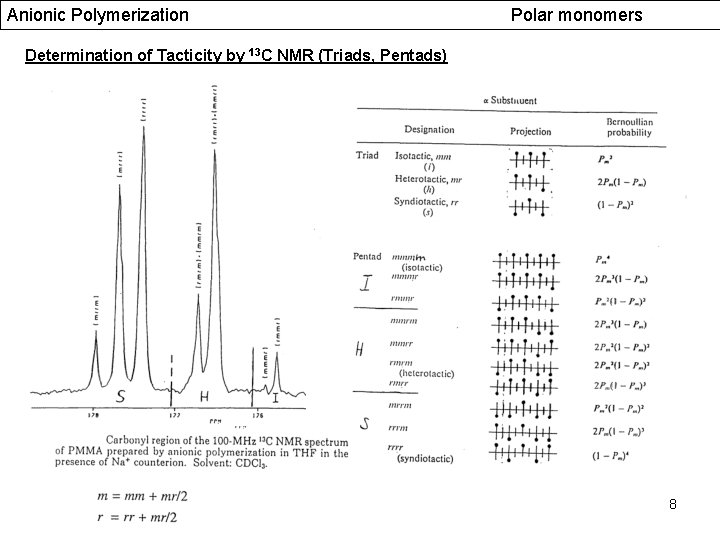
Anionic Polymerization Polar monomers Determination of Tacticity by 13 C NMR (Triads, Pentads) 8
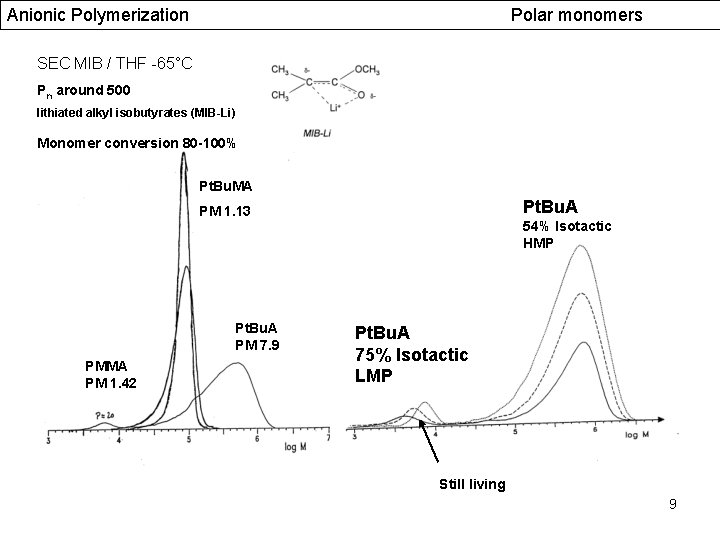
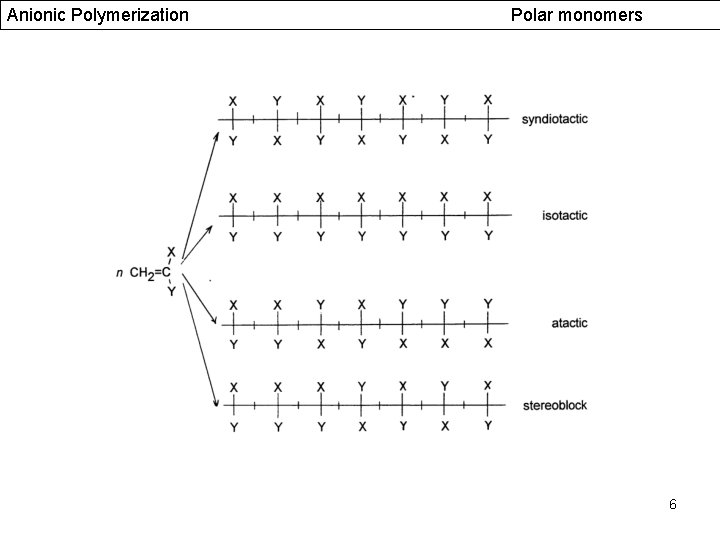
Anionic Polymerization Polar monomers SEC MIB / THF -65°C Pn around 500 lithiated alkyl isobutyrates (MIB-Li) Monomer conversion 80 -100% Pt. Bu. MA Pt. Bu. A PM 1. 13 Pt. Bu. A PM 7. 9 PMMA PM 1. 42 54% Isotactic HMP Pt. Bu. A 75% Isotactic LMP Still living 9
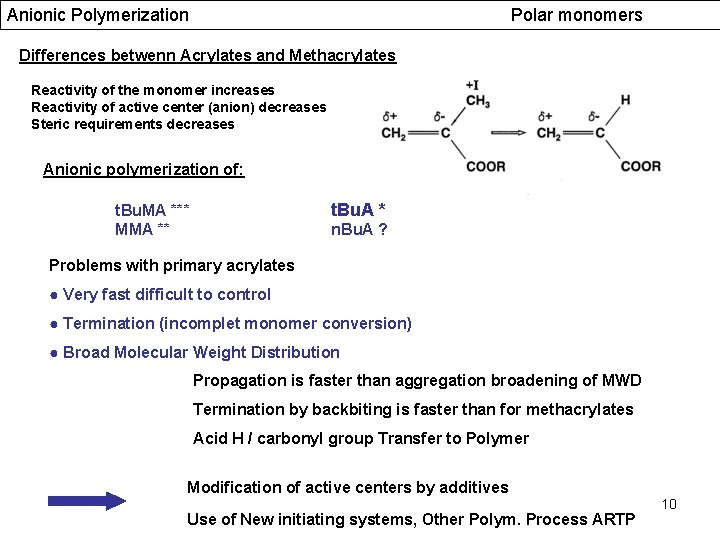
Anionic Polymerization Polar monomers Differences betwenn Acrylates and Methacrylates Reactivity of the monomer increases Reactivity of active center (anion) decreases Steric requirements decreases Anionic polymerization of: t. Bu. A * t. Bu. MA *** MMA ** n. Bu. A ? Problems with primary acrylates ● Very fast difficult to control ● Termination (incomplet monomer conversion) ● Broad Molecular Weight Distribution Propagation is faster than aggregation broadening of MWD Termination by backbiting is faster than for methacrylates Acid H / carbonyl group Transfer to Polymer Modification of active centers by additives Use of New initiating systems, Other Polym. Process ARTP 10
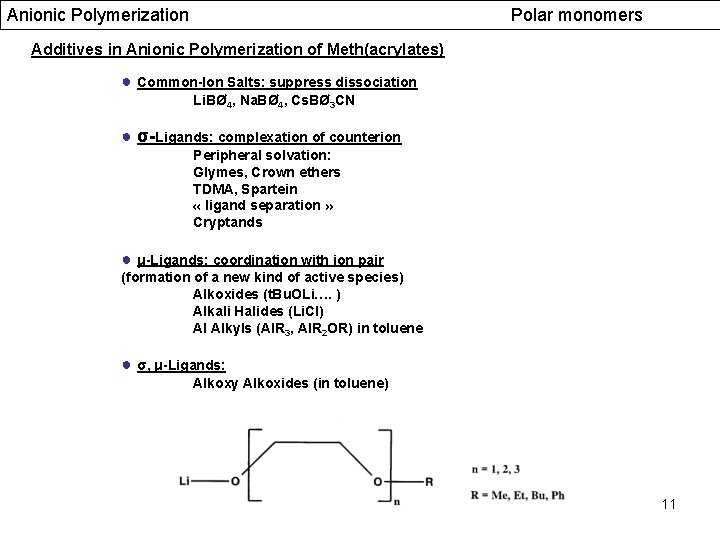
Anionic Polymerization Polar monomers Additives in Anionic Polymerization of Meth(acrylates) ● Common-Ion Salts: suppress dissociation Li. BØ 4, Na. BØ 4, Cs. BØ 3 CN ● σ-Ligands: complexation of counterion Peripheral solvation: Glymes, Crown ethers TDMA, Spartein « ligand separation » Cryptands ● μ-Ligands: coordination with ion pair (formation of a new kind of active species) Alkoxides (t. Bu. OLi…. ) Alkali Halides (Li. Cl) Al Alkyls (Al. R 3, Al. R 2 OR) in toluene ● σ, μ-Ligands: Alkoxy Alkoxides (in toluene) 11
- Slides: 11