
Anionic Polymerization Polar monomers Additives in Anionic Polymerization
- Slides: 11
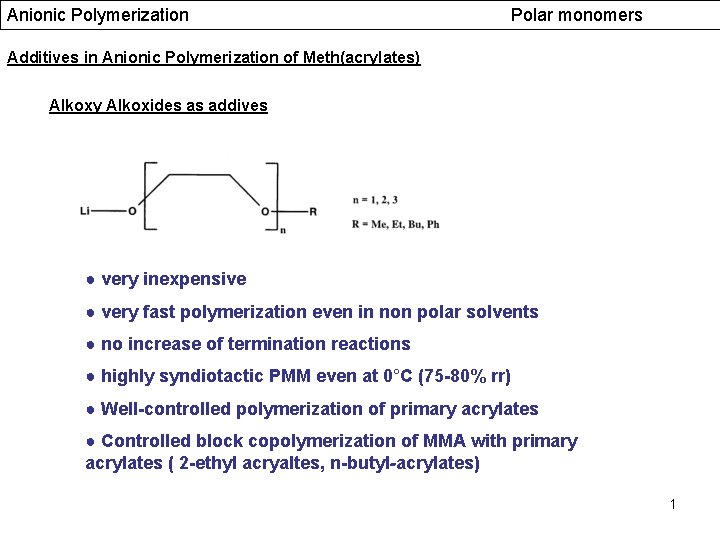
Anionic Polymerization Polar monomers Additives in Anionic Polymerization of Meth(acrylates) Alkoxy Alkoxides as addives ● very inexpensive ● very fast polymerization even in non polar solvents ● no increase of termination reactions ● highly syndiotactic PMM even at 0°C (75 -80% rr) ● Well-controlled polymerization of primary acrylates ● Controlled block copolymerization of MMA with primary acrylates ( 2 -ethyl acryaltes, n-butyl-acrylates) 1
Anionic Polymerization Polar monomers Additives in Anionic Polymerization of Meth(acrylates) Effect of Additives: case of Li. Cl (Teyssie) ● Drastic decrease of polymolecularity, especially in the case of tert-butyl acrylate ● Rate constants of propagation decrease to 10 -50% Li. Cl breaks the aggregates by forming the 1: 1 and 2: 1 adducts with ion pair ● The rate constant of propagation of the 1: 1 adducts is comparable to that of the ion pair, the rate constant of the 2: 1 adduct is low ● The rate of termination is not significantly influenced by Li. Cl ● The rate of the complexation equilibrium with Li. Cl is higher than that of the association. This accounts for the narrower MWD ● There is no significant effect of Li. Cl on the tacticity of the polymers formed 2
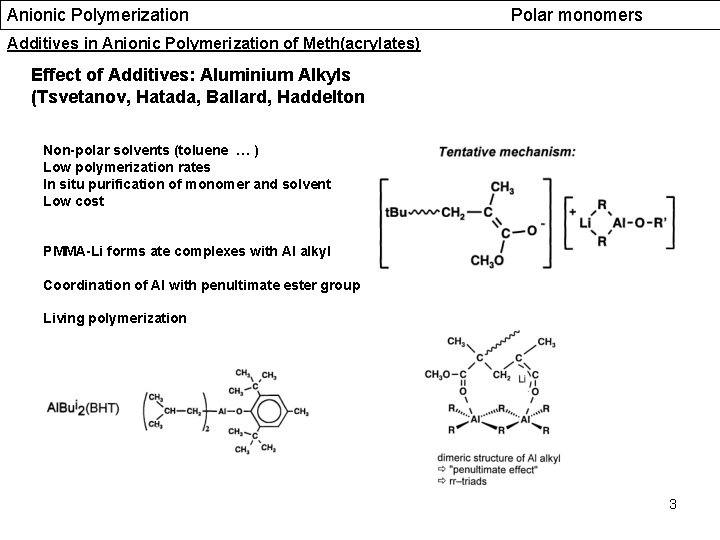
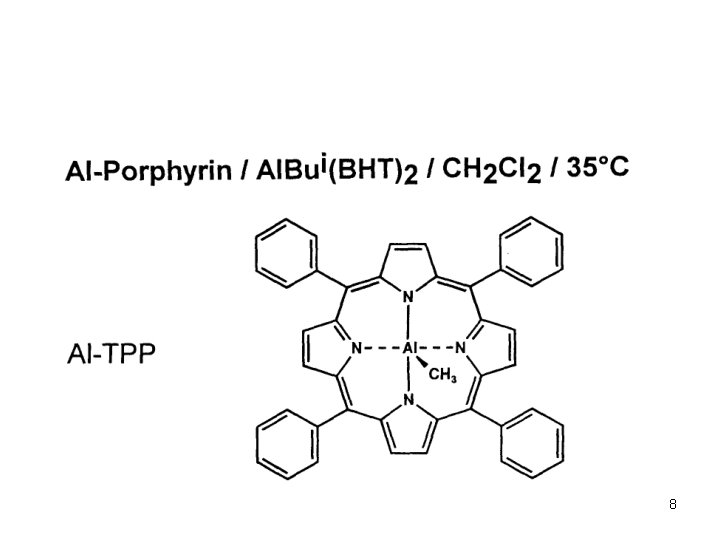
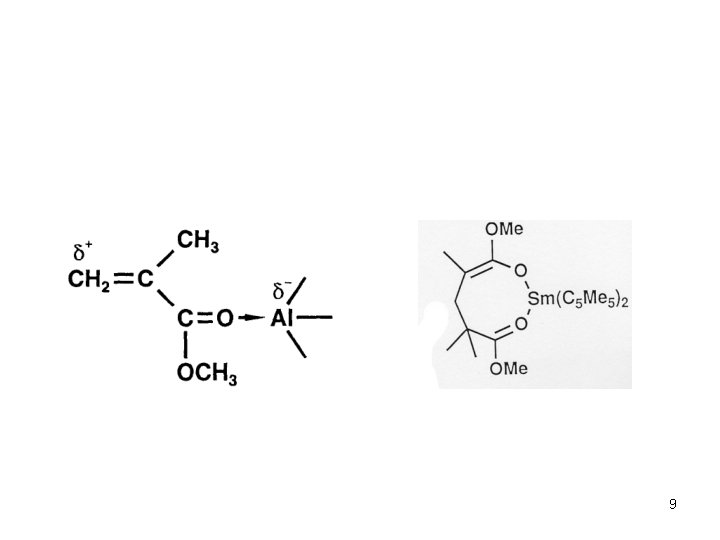
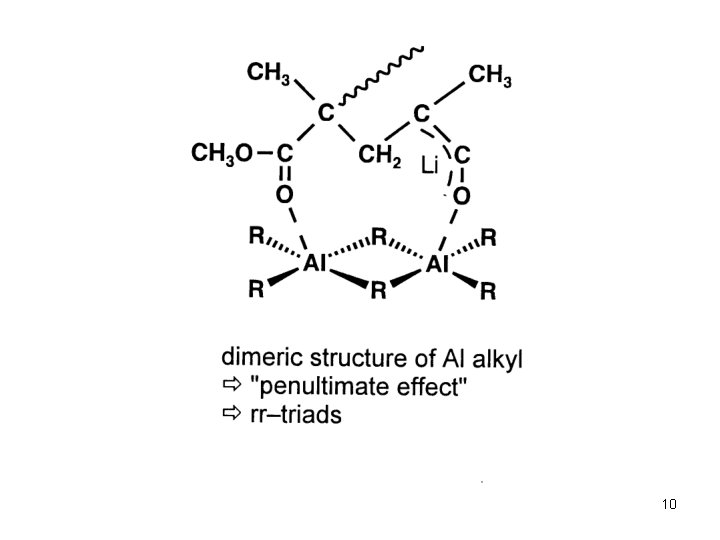
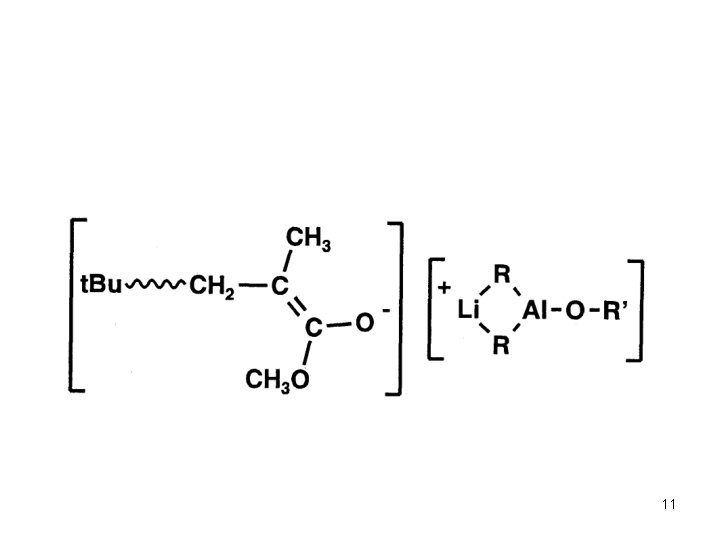
Anionic Polymerization Polar monomers Additives in Anionic Polymerization of Meth(acrylates) Effect of Additives: Aluminium Alkyls (Tsvetanov, Hatada, Ballard, Haddelton Non-polar solvents (toluene … ) Low polymerization rates In situ purification of monomer and solvent Low cost PMMA-Li forms ate complexes with Al alkyl Coordination of Al with penultimate ester group Living polymerization 3
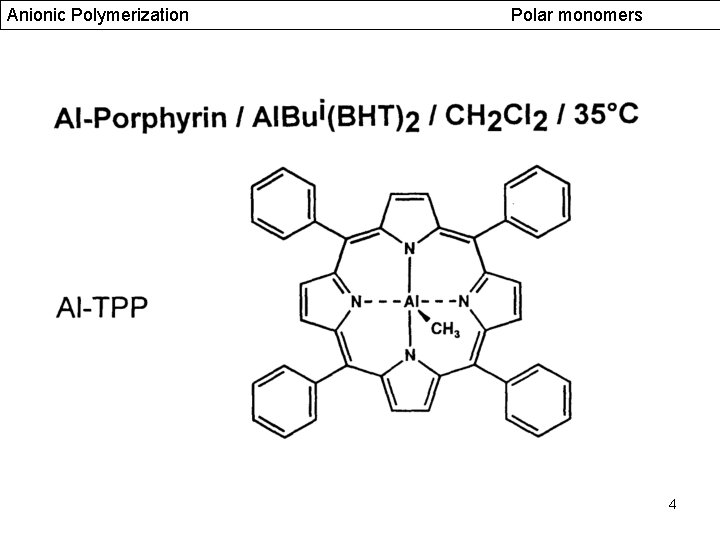
Anionic Polymerization Polar monomers 4
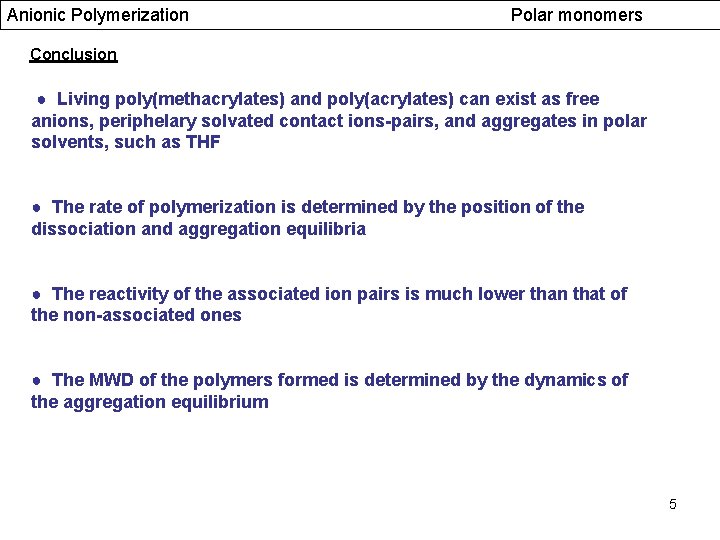
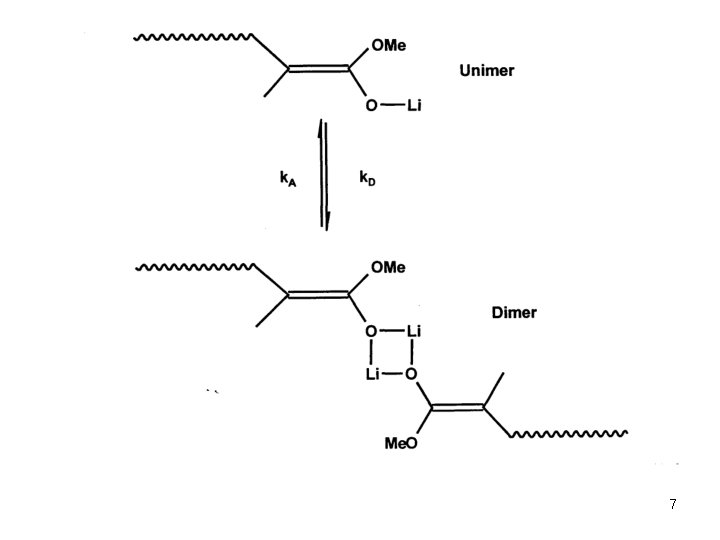
Anionic Polymerization Polar monomers Conclusion ● Living poly(methacrylates) and poly(acrylates) can exist as free anions, periphelary solvated contact ions-pairs, and aggregates in polar solvents, such as THF ● The rate of polymerization is determined by the position of the dissociation and aggregation equilibria ● The reactivity of the associated ion pairs is much lower than that of the non-associated ones ● The MWD of the polymers formed is determined by the dynamics of the aggregation equilibrium 5
6
7
8
9
10
11