
Animals the most complex of all organisms multicellular


- Slides: 10
Animals the most complex of all organisms multicellular eukaryotes most are motile (they can move around) have amazing sensory ability capable of very complex behaviours
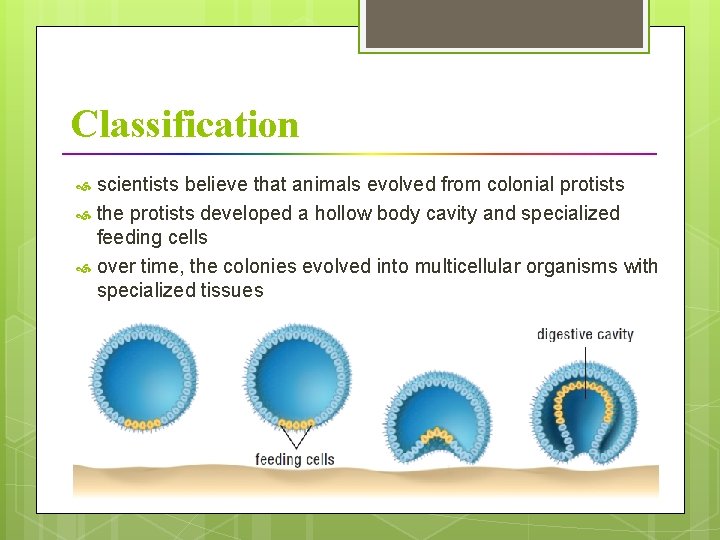
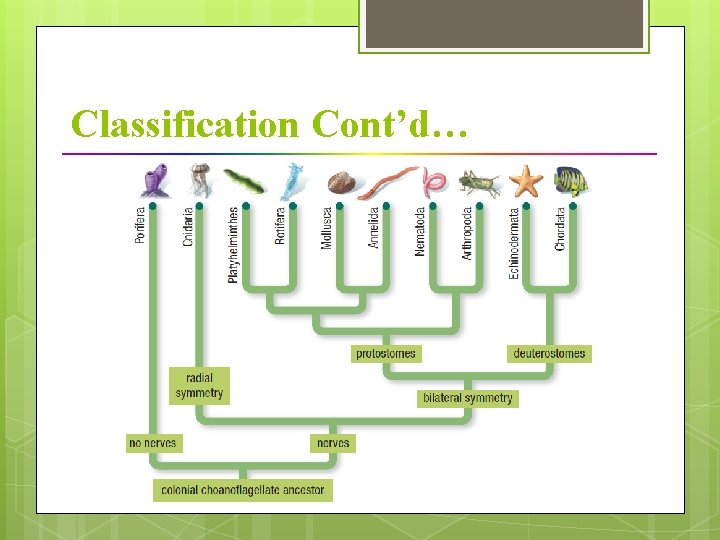
Classification scientists believe that animals evolved from colonial protists the protists developed a hollow body cavity and specialized feeding cells over time, the colonies evolved into multicellular organisms with specialized tissues
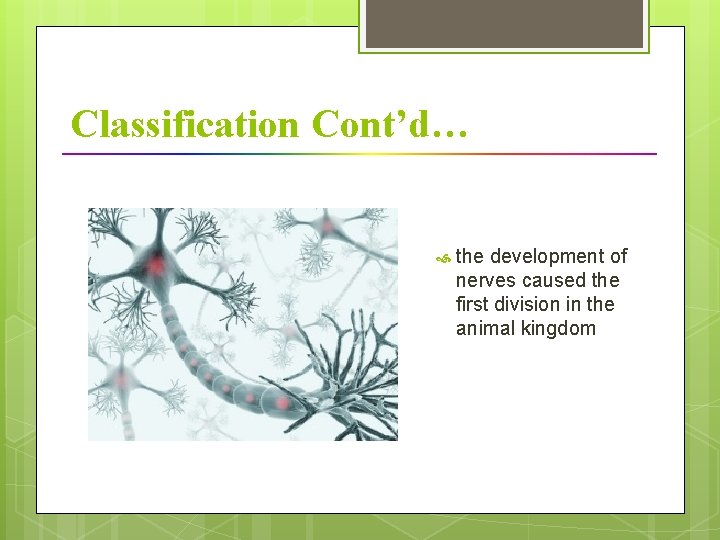
Classification Cont’d… the development of nerves caused the first division in the animal kingdom
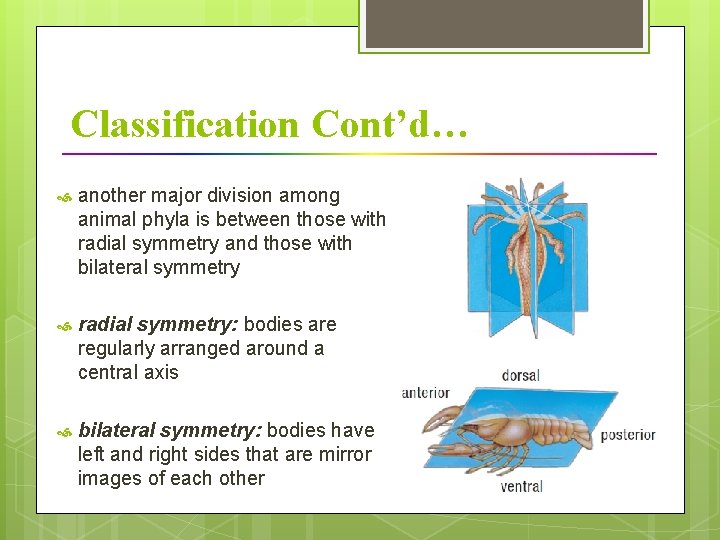
Classification Cont’d… another major division among animal phyla is between those with radial symmetry and those with bilateral symmetry radial symmetry: bodies are regularly arranged around a central axis bilateral symmetry: bodies have left and right sides that are mirror images of each other
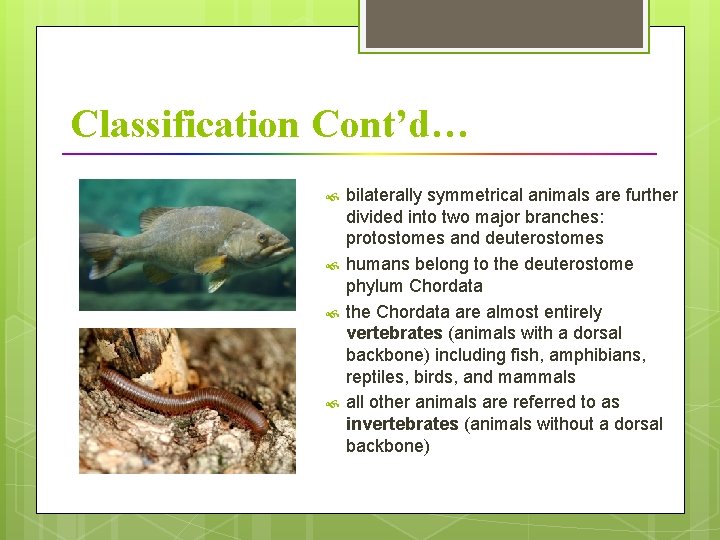
Classification Cont’d… bilaterally symmetrical animals are further divided into two major branches: protostomes and deuterostomes humans belong to the deuterostome phylum Chordata the Chordata are almost entirely vertebrates (animals with a dorsal backbone) including fish, amphibians, reptiles, birds, and mammals all other animals are referred to as invertebrates (animals without a dorsal backbone)
Classification Cont’d…
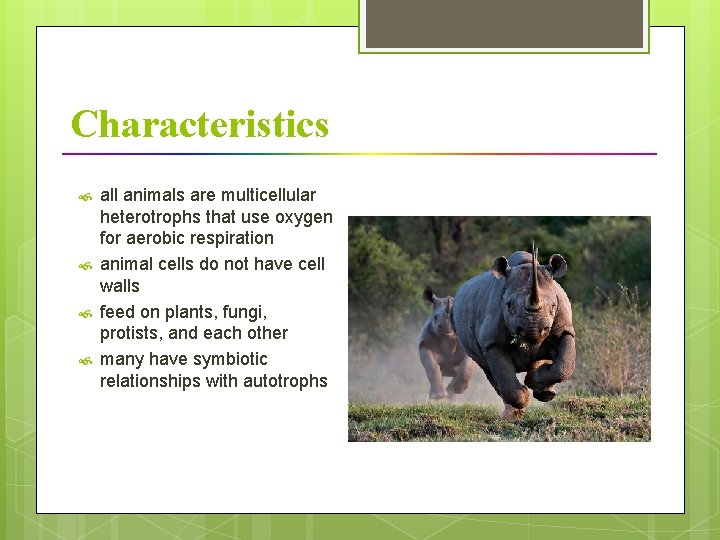
Characteristics all animals are multicellular heterotrophs that use oxygen for aerobic respiration animal cells do not have cell walls feed on plants, fungi, protists, and each other many have symbiotic relationships with autotrophs
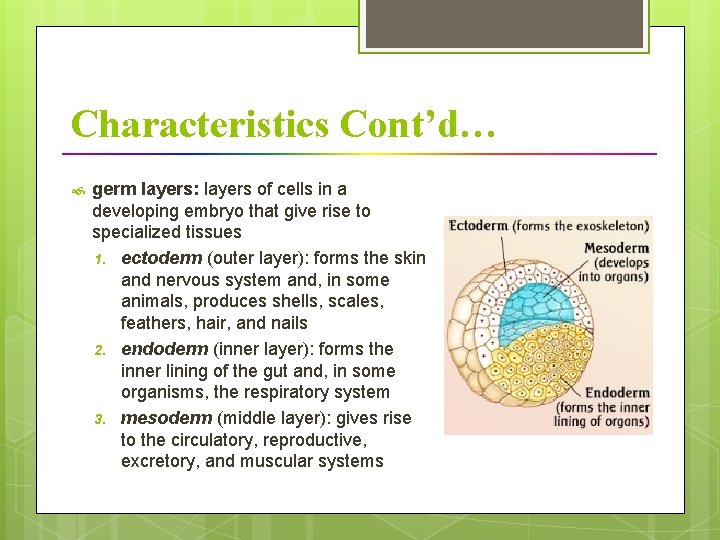
Characteristics Cont’d… germ layers: layers of cells in a developing embryo that give rise to specialized tissues 1. ectoderm (outer layer): forms the skin and nervous system and, in some animals, produces shells, scales, feathers, hair, and nails 2. endoderm (inner layer): forms the inner lining of the gut and, in some organisms, the respiratory system 3. mesoderm (middle layer): gives rise to the circulatory, reproductive, excretory, and muscular systems
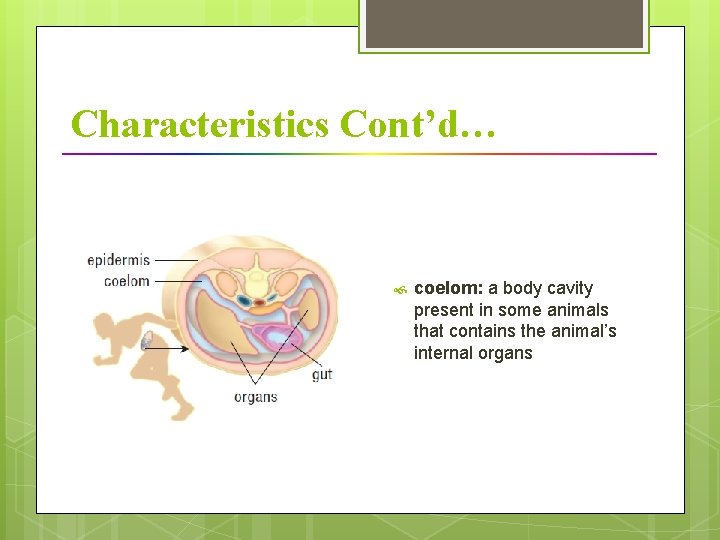
Characteristics Cont’d… coelom: a body cavity present in some animals that contains the animal’s internal organs
Homework read pages 96 -107 in the text answer 3. 3 questions # 1 -5, 7, 11, & 12 on page 107