
Animals Mollusks Annelids Echinoderms Arthropods The Mollusks 23



- Slides: 18
Animals: Mollusks, Annelids, Echinoderms & Arthropods
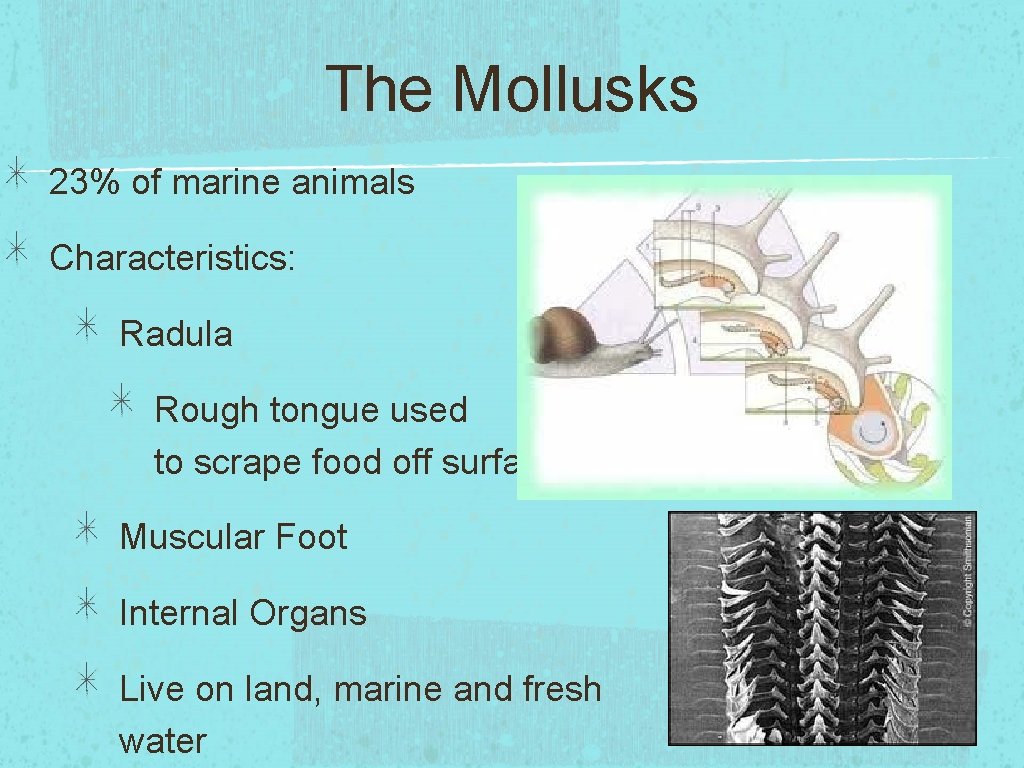
The Mollusks 23% of marine animals Characteristics: Radula Rough tongue used to scrape food off surfaces Muscular Foot Internal Organs Live on land, marine and fresh water
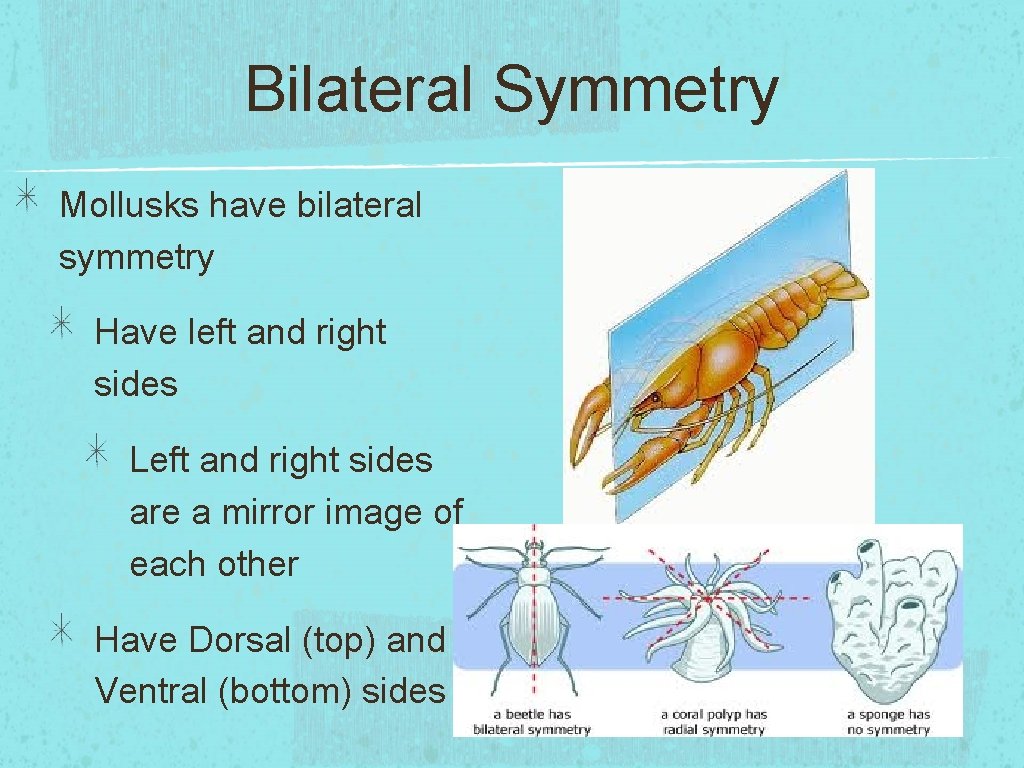
Bilateral Symmetry Mollusks have bilateral symmetry Have left and right sides Left and right sides are a mirror image of each other Have Dorsal (top) and Ventral (bottom) sides
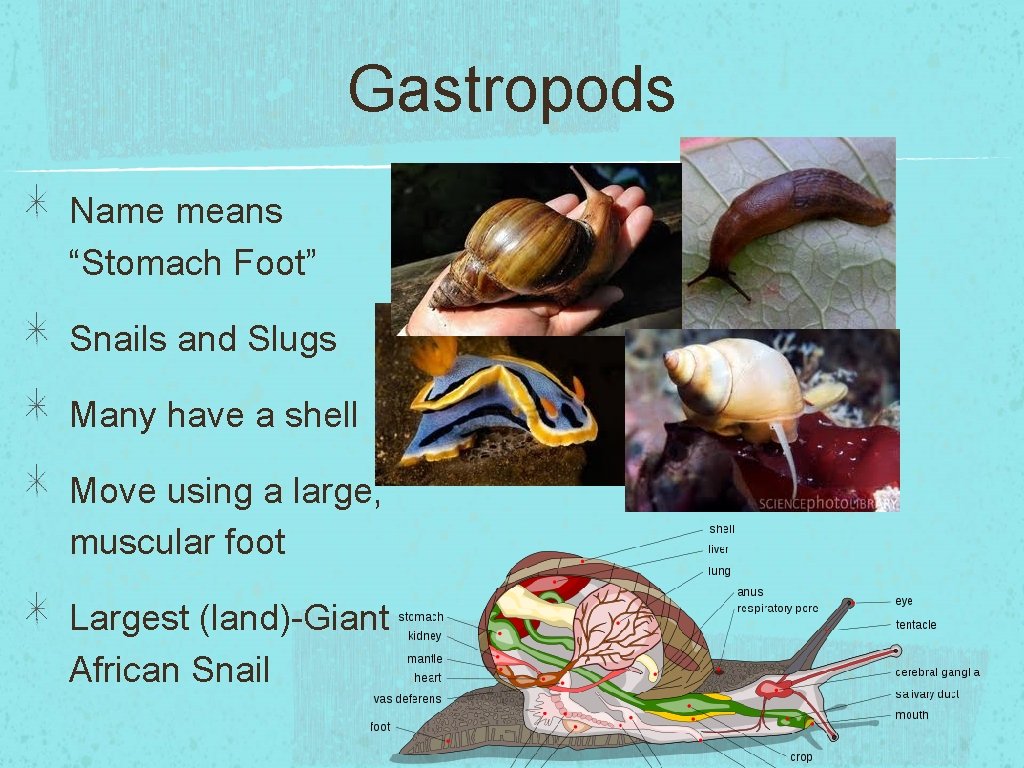
Gastropods Name means “Stomach Foot” Snails and Slugs Many have a shell Move using a large, muscular foot Largest (land)-Giant African Snail
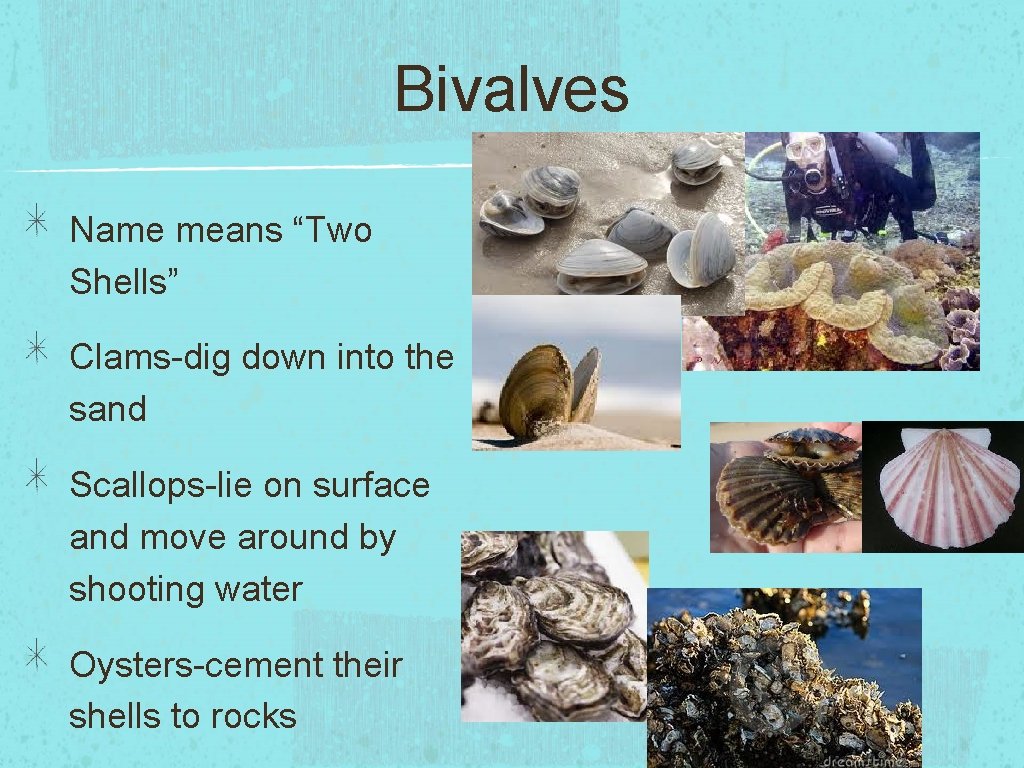
Bivalves Name means “Two Shells” Clams-dig down into the sand Scallops-lie on surface and move around by shooting water Oysters-cement their shells to rocks
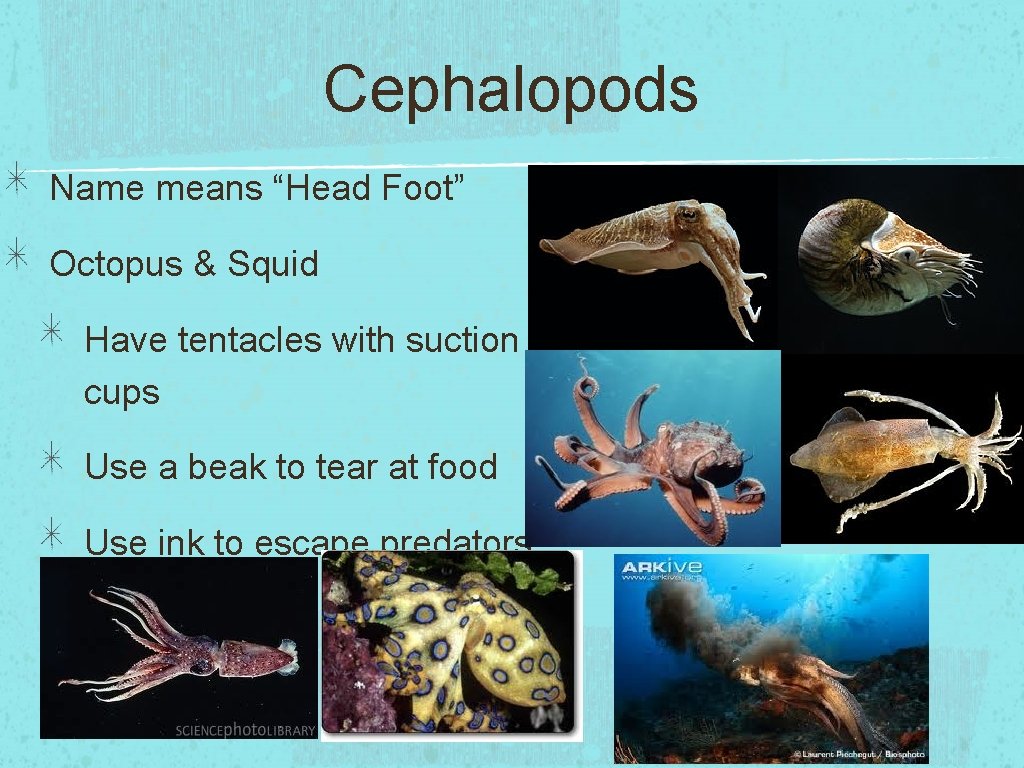
Cephalopods Name means “Head Foot” Octopus & Squid Have tentacles with suction cups Use a beak to tear at food Use ink to escape predators
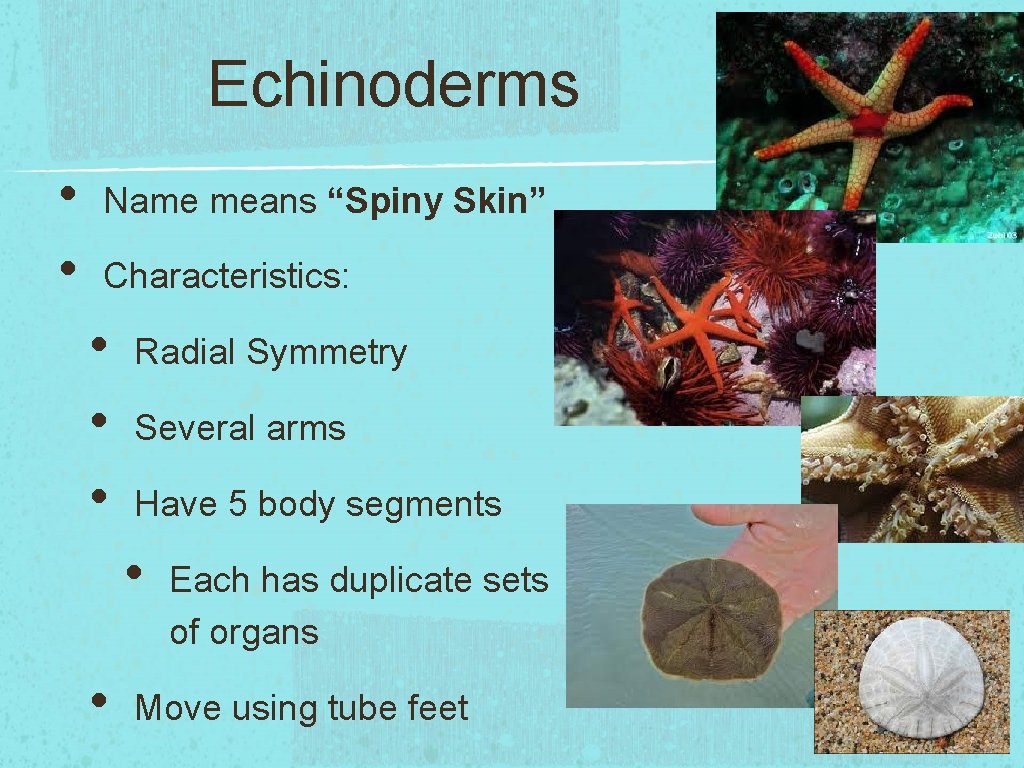
Echinoderms • • Name means “Spiny Skin” Characteristics: • • • Radial Symmetry Several arms Have 5 body segments • • Each has duplicate sets of organs Move using tube feet
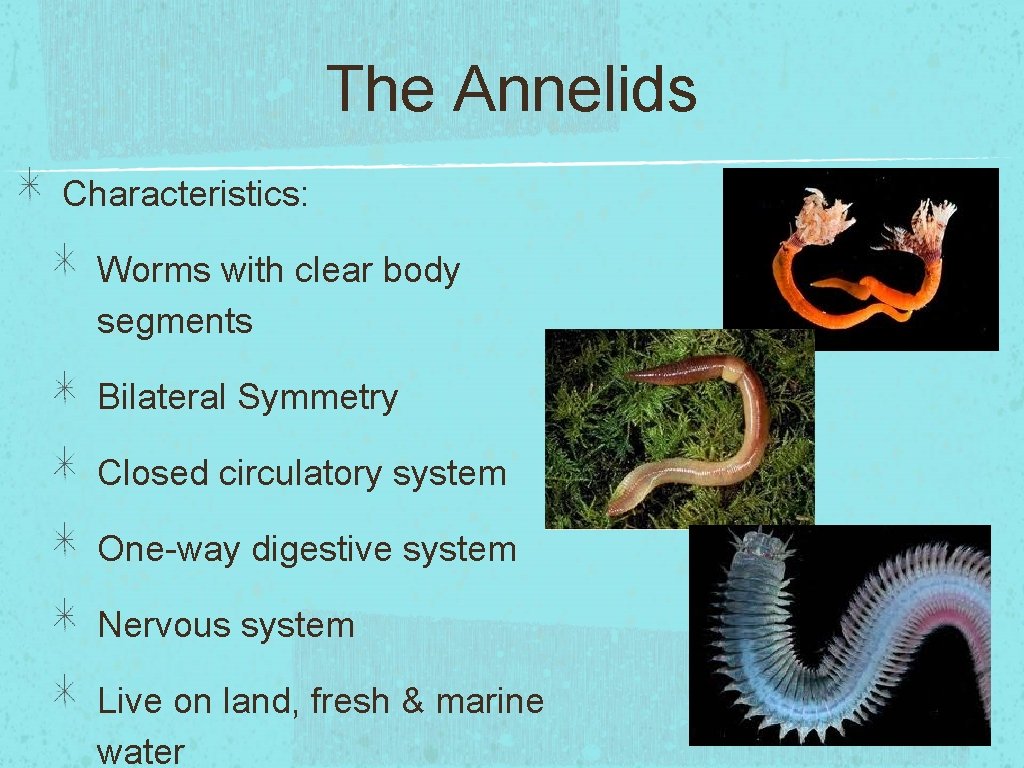
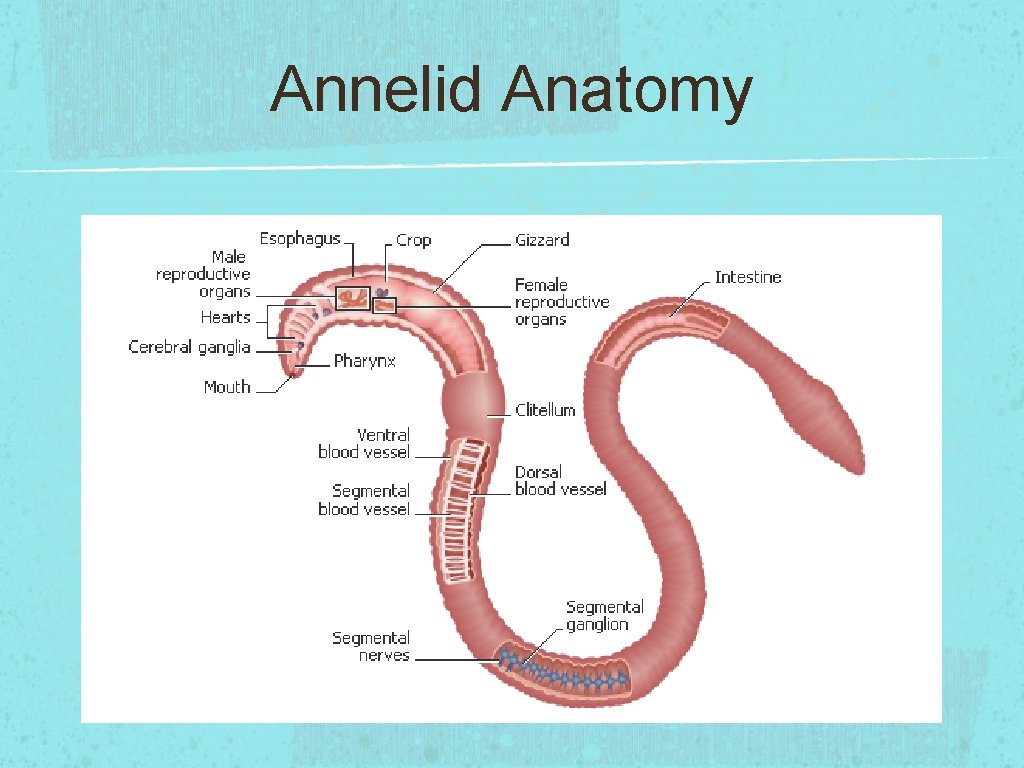
The Annelids Characteristics: Worms with clear body segments Bilateral Symmetry Closed circulatory system One-way digestive system Nervous system Live on land, fresh & marine water
Annelid Anatomy
Arthropods Make up 90% of the Animal Kingdom Characteristics: Exoskeleton Body divided into sections Jointed legs Bilateral Symmetry
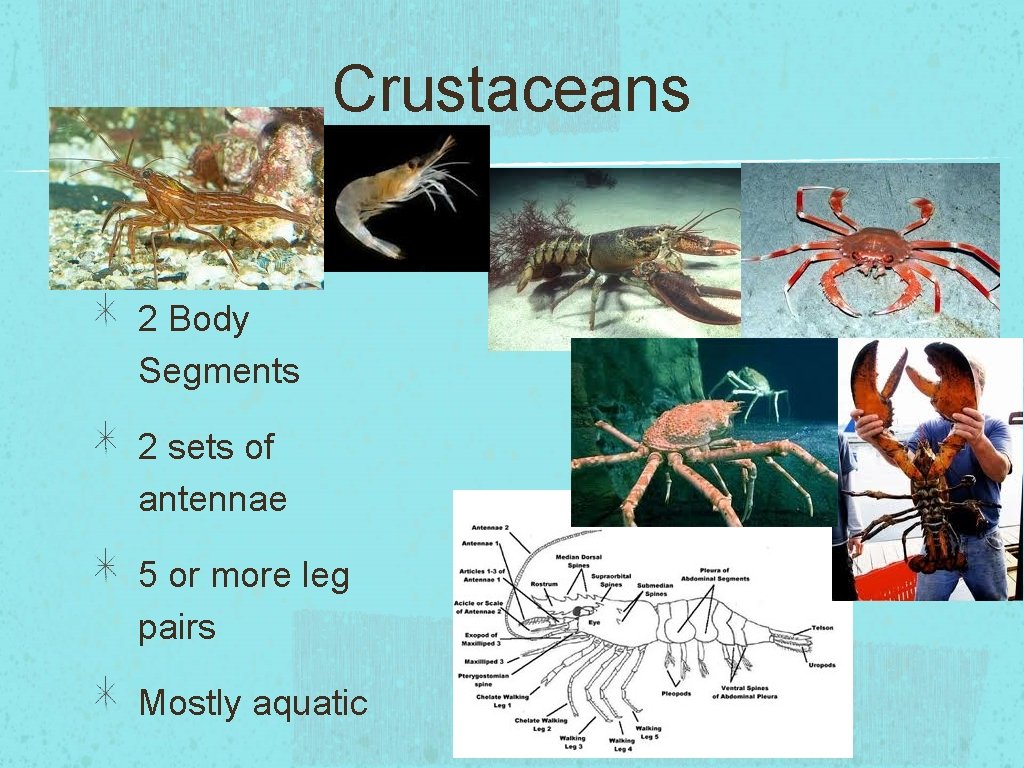
Crustaceans Characteristics: 2 Body Segments 2 sets of antennae 5 or more leg pairs Mostly aquatic
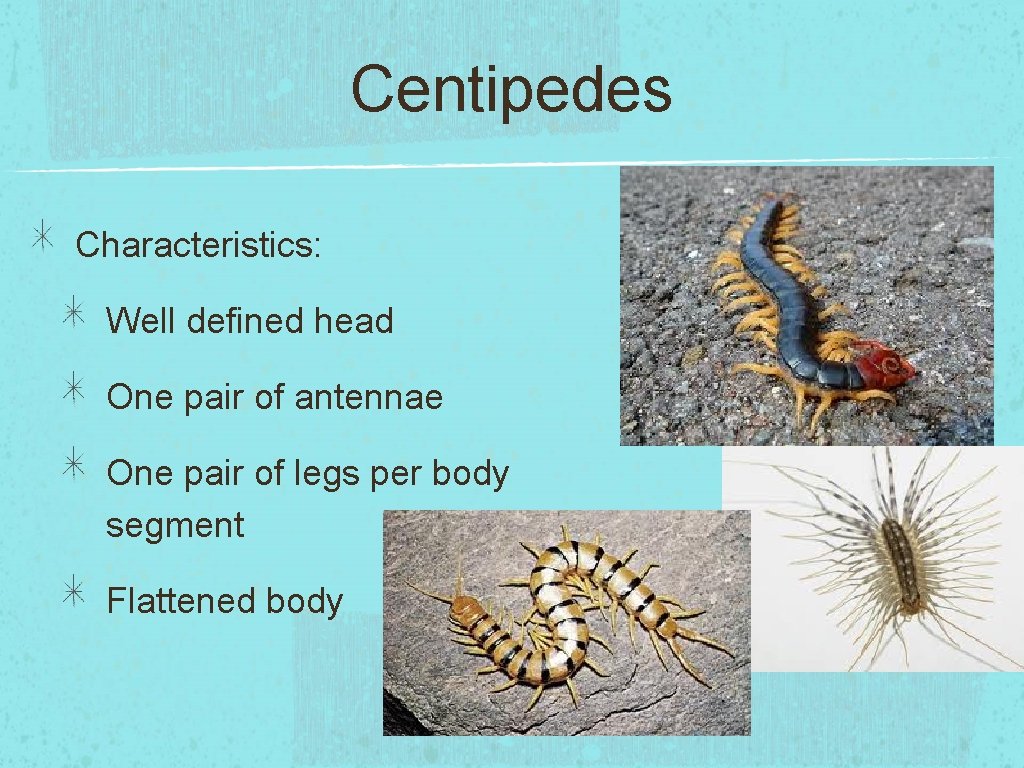
Centipedes Characteristics: Well defined head One pair of antennae One pair of legs per body segment Flattened body
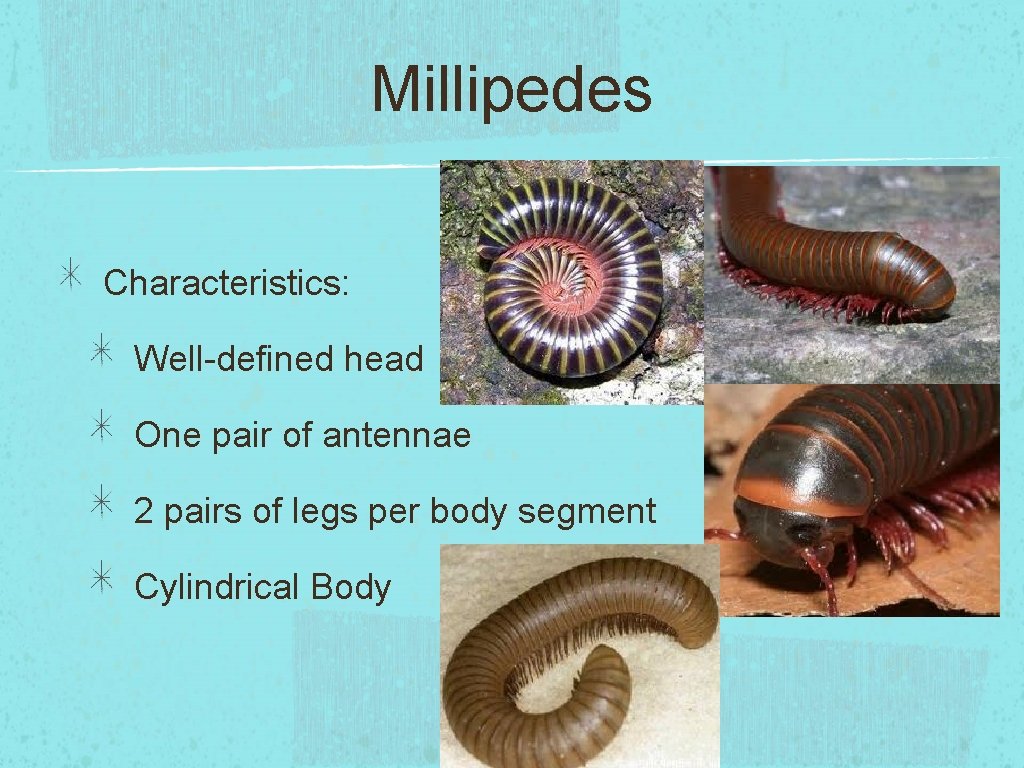
Millipedes Characteristics: Well-defined head One pair of antennae 2 pairs of legs per body segment Cylindrical Body
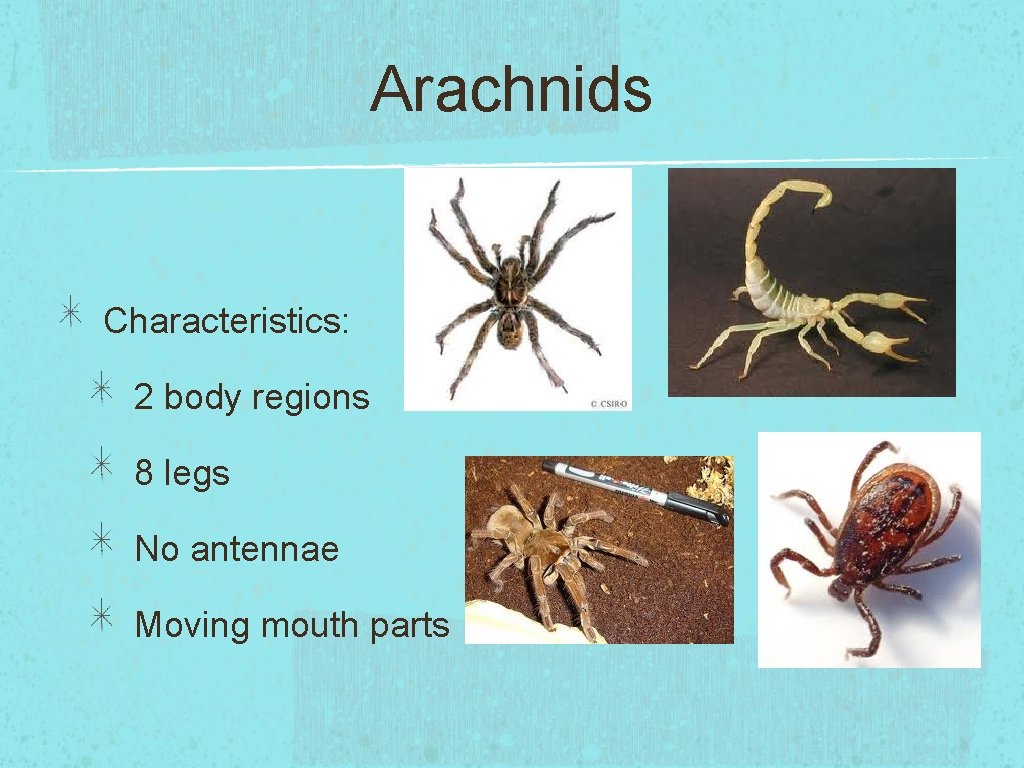
Arachnids Characteristics: 2 body regions 8 legs No antennae Moving mouth parts
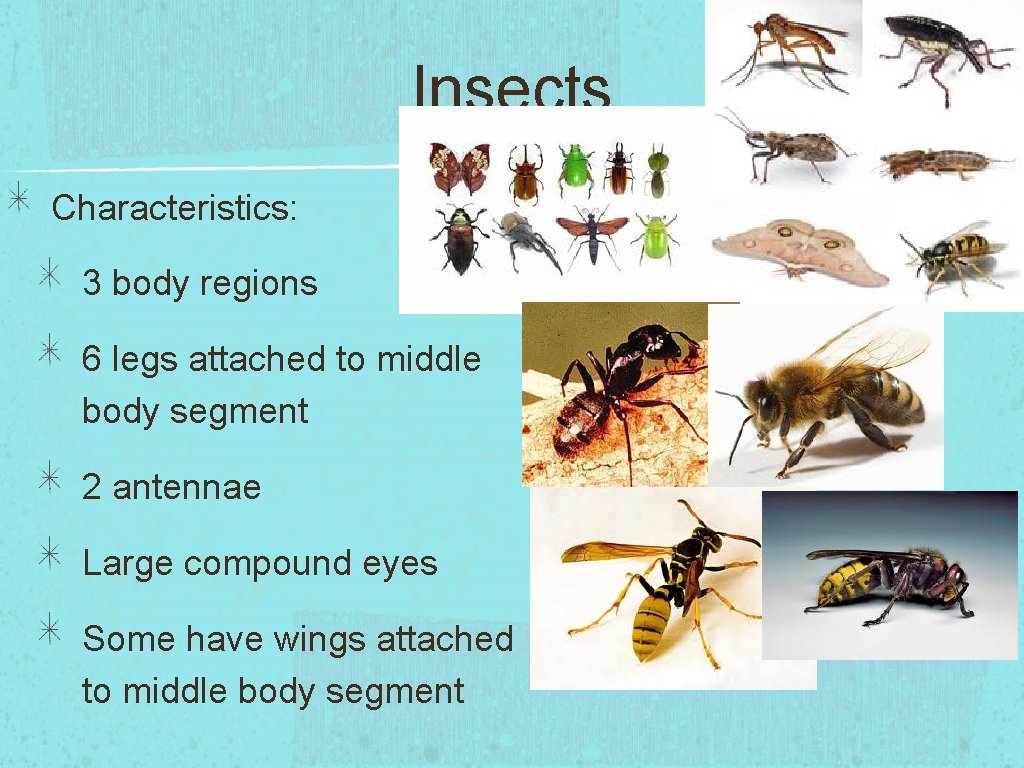
Insects Characteristics: 3 body regions 6 legs attached to middle body segment 2 antennae Large compound eyes Some have wings attached to middle body segment