
Animals Learning Objectives General Describe several characteristics common
Animals
Learning Objectives • General: • Describe several characteristics common to most animals • Describe how biologists use morphology (body symmetry, tissue layers, body cavity) and patterns of early development to infer relationships • Describe the characteristics and distinguish among the poriferans, cnidarians, ctenophores, platyhelminths, and nematodes. • Poriferans: • Identify significant characteristics of poriferans • Jellies: • Identify distinguishing characteristics of cnidarians, describe four groups, and give examples of animals that belong to each group • Identify characteristics of ctenophore • Flatworms: • Describe the adaptive advantages of having a coelom and cephalization • Identify distinguishing characteristics of flatworms. • Describe the main groups of flatworms giving examples that belong to each class. • Roundworms: • Describe key characteristics of nematodes • Identify four parasitic nematodes
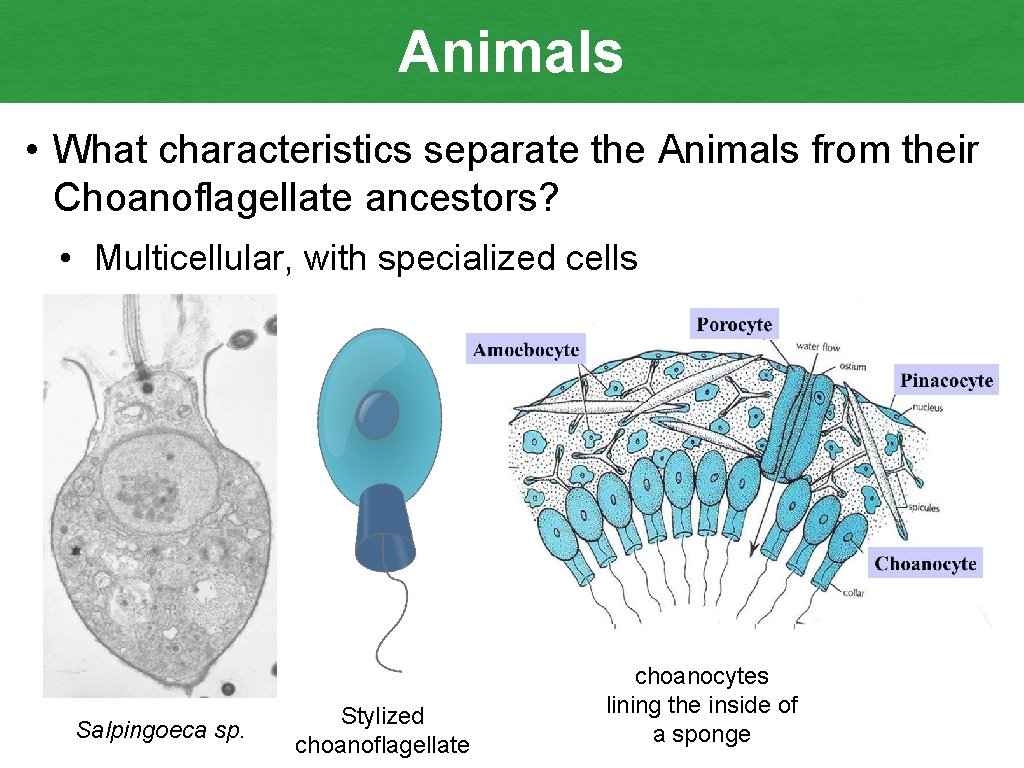
Animals • What characteristics separate the Animals from their Choanoflagellate ancestors? • Multicellular, with specialized cells Salpingoeca sp. Stylized choanoflagellate choanocytes lining the inside of a sponge
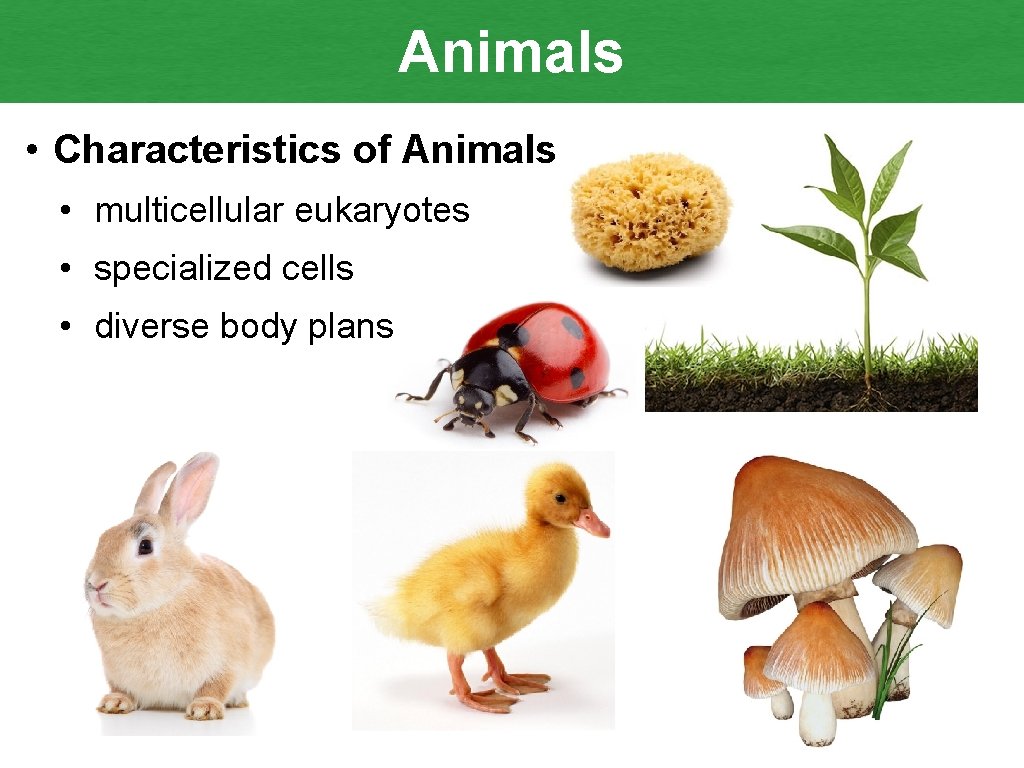
Animals • Characteristics of Animals • multicellular eukaryotes • specialized cells • diverse body plans
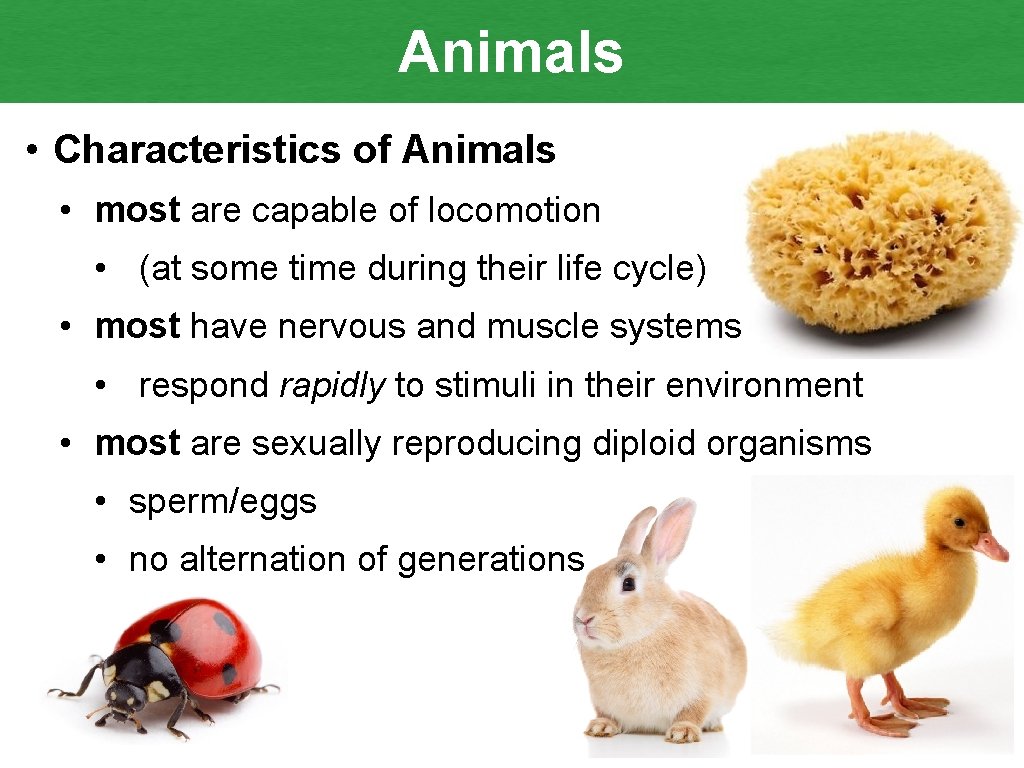
Animals • Characteristics of Animals • most are capable of locomotion • (at some time during their life cycle) • most have nervous and muscle systems • respond rapidly to stimuli in their environment • most are sexually reproducing diploid organisms • sperm/eggs • no alternation of generations

Animals • Characteristics of Animals • Growth is determinate • plants/fungi are indeterminate • Go through a period of embryonic development • body plan is set/fixed early in development
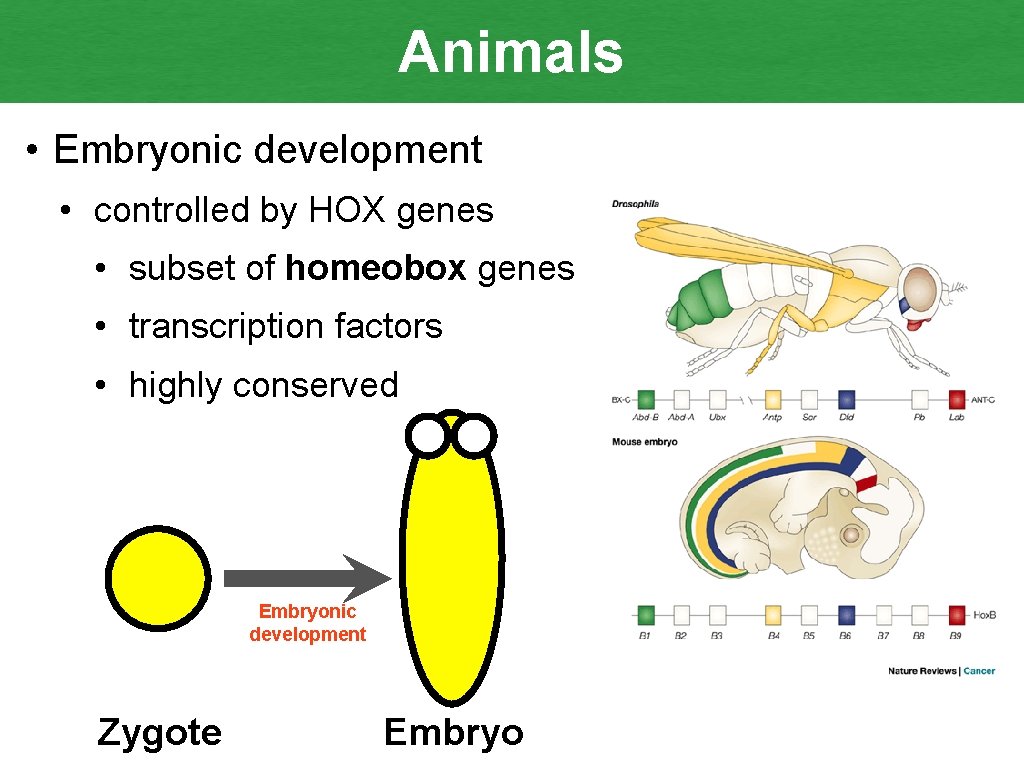
Animals • Embryonic development • controlled by HOX genes • subset of homeobox genes • transcription factors • highly conserved Embryonic development Zygote Embryo
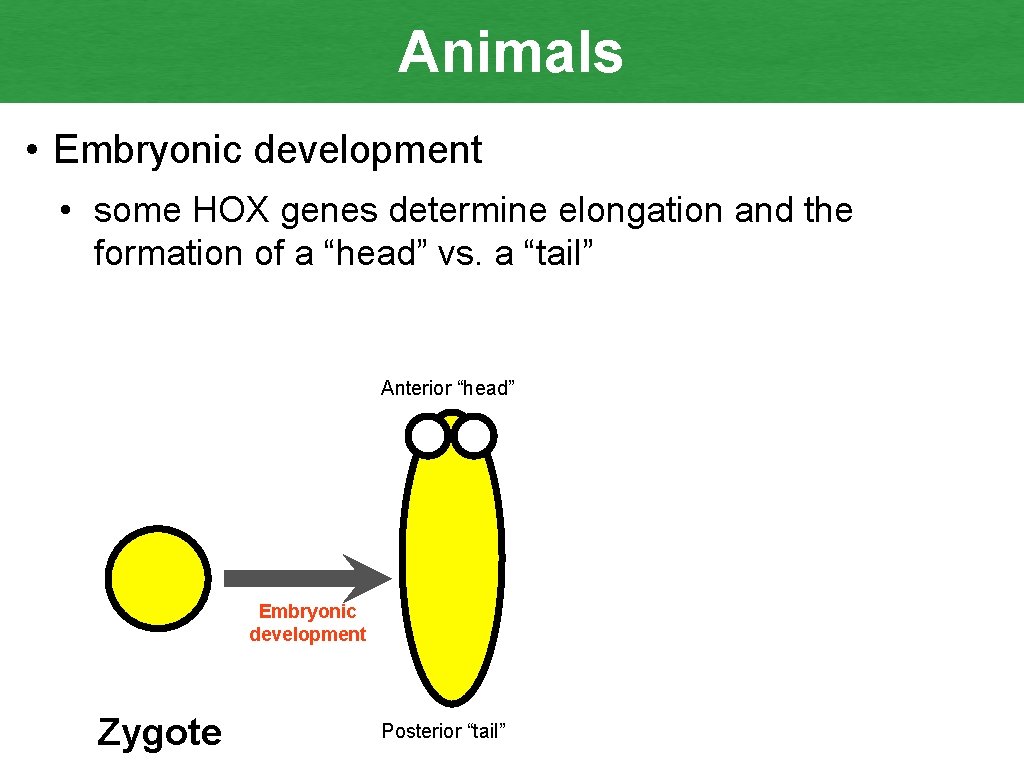
Animals • Embryonic development • some HOX genes determine elongation and the formation of a “head” vs. a “tail” Anterior “head” Embryonic development Zygote Posterior “tail”
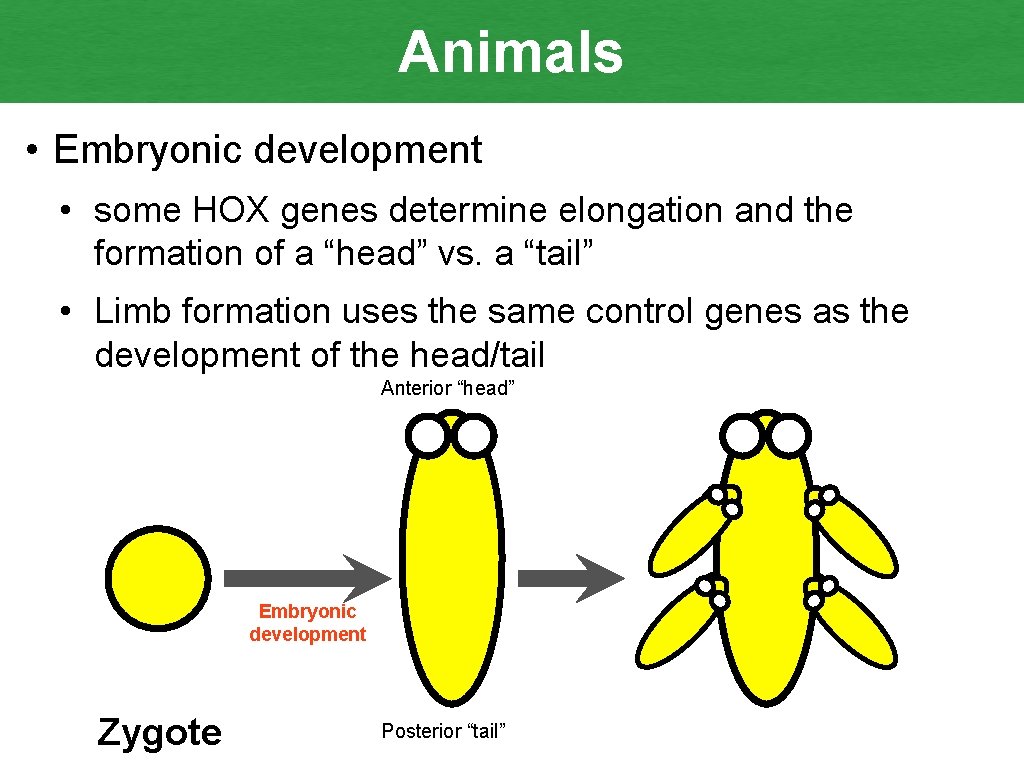
Animals • Embryonic development • some HOX genes determine elongation and the formation of a “head” vs. a “tail” • Limb formation uses the same control genes as the development of the head/tail Anterior “head” Embryonic development Zygote Posterior “tail”
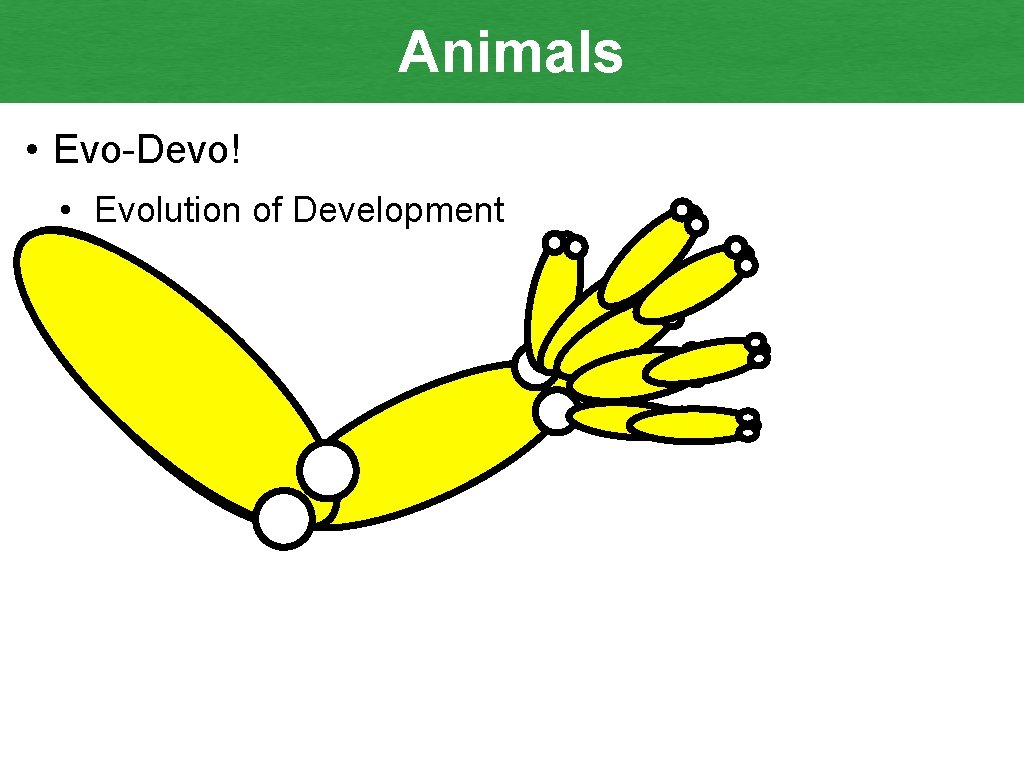
Animals • Evo-Devo! • Evolution of Development

Animals • Cambrian Radiation (Explosion) 542 -488 MYA • new body plans rapidly evolved among clades • mutations in HOX genes could have resulted in rapid Orthozanclus changes in animal body plans Anomalocaris Hallucigenia
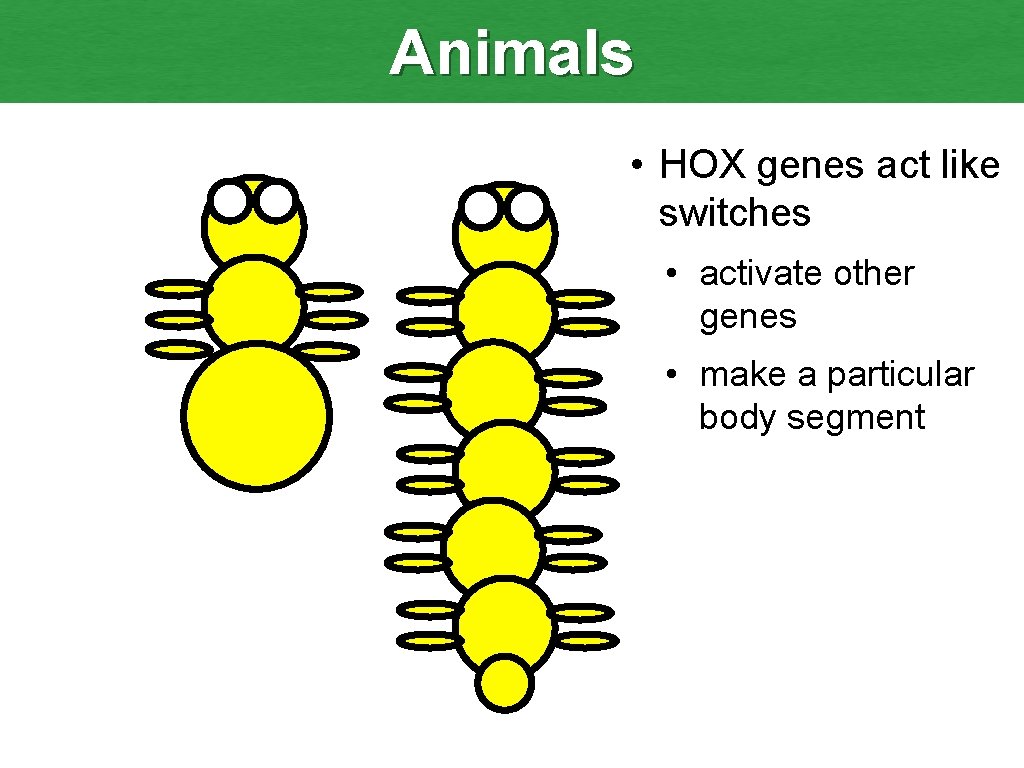
Animals • HOX genes act like switches • activate other genes • make a particular body segment
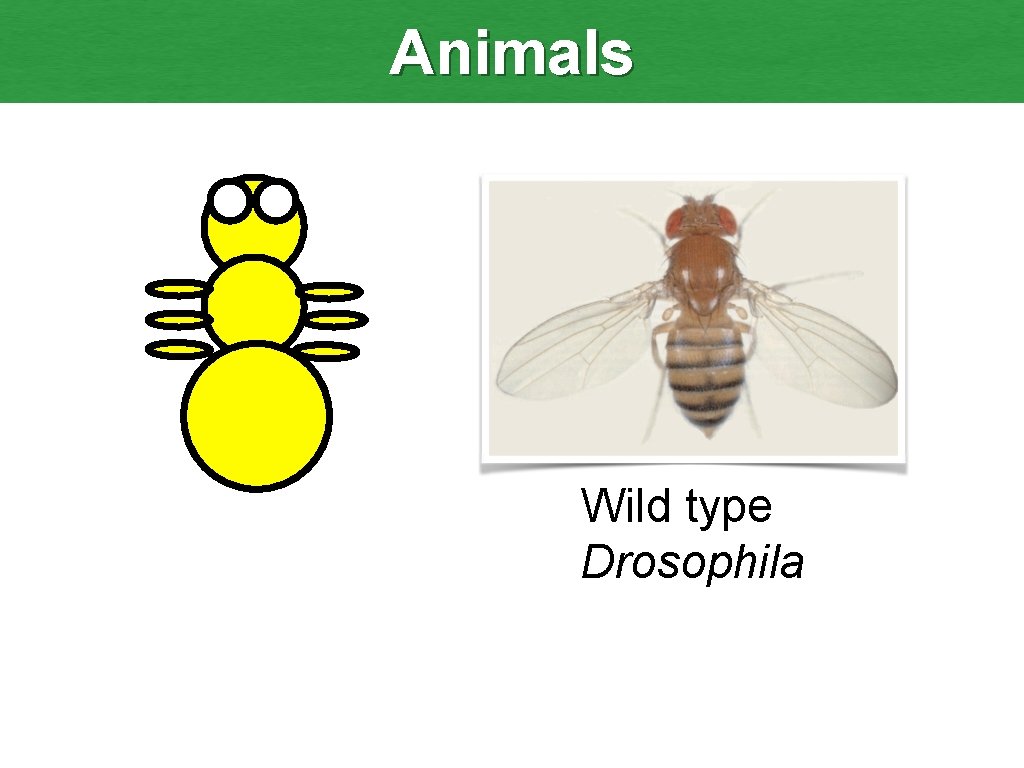
Animals Wild type Drosophila
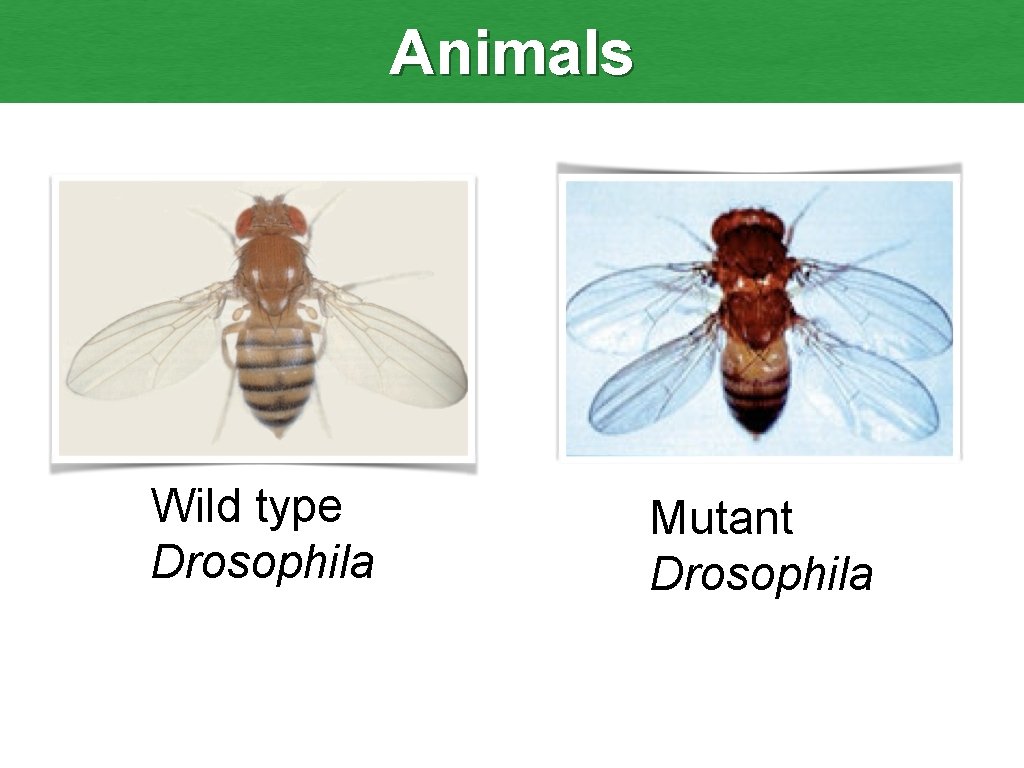
Animals Wild type Drosophila Mutant Drosophila
Animals • Other significant embryonic or developmental characteristics in animals - Body Plans • Symmetry • asymmetry -> radial symmetry -> bilateral symmetry • cephalization (head formation) • Cell division (cleavage) • Germ layers (embryonic tissue layers) • Coelom development (body cavity) • Fate of the blastopore (first “opening” in embryo)
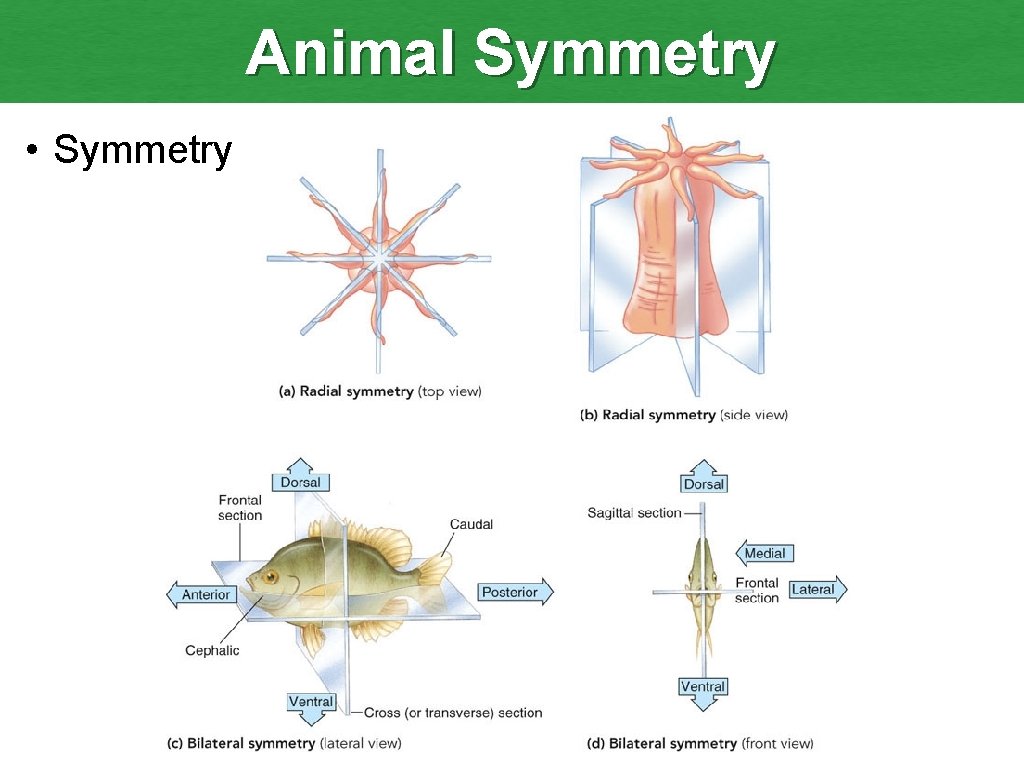
Animal Symmetry • Symmetry

Spiral Cleavage

Radial Cleavage
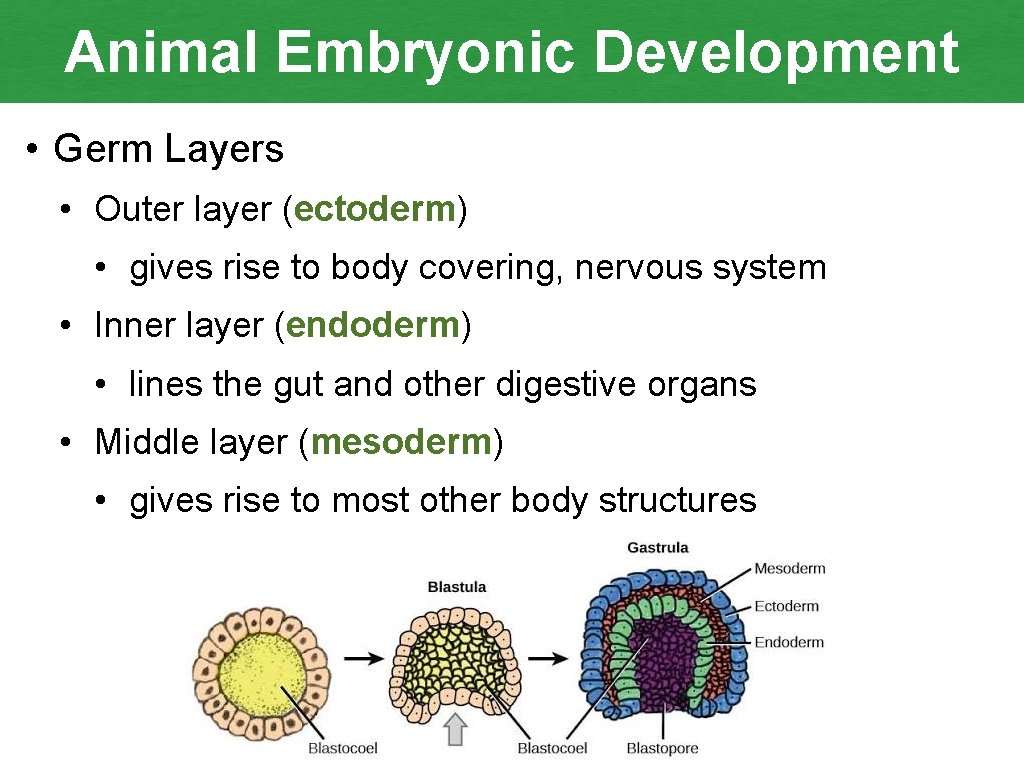
Animal Embryonic Development • Germ Layers • Outer layer (ectoderm) • gives rise to body covering, nervous system • Inner layer (endoderm) • lines the gut and other digestive organs • Middle layer (mesoderm) • gives rise to most other body structures
Development • Some animals, most notably sponges, lack these tissue layers. • Cnidarians (coral and jellyfish) have only two of these layers. • Flatworms all have three tissue layers. • Humans are triploblastic.
Development • Animals classified on the basis of tissue development as they develop embryologically. – Diploblastic • Ectoderm • Endoderm – Triploblastic • Ectoderm • Endoderm • Mesoderm
Development • Triploblasts classified according to type of coelom – Acoelomates • No coelom – Pseudocoelomates • Body cavity not completely surrounded by mesoderm – Coelomates • True coelom – Protostomia – Deuterostomia
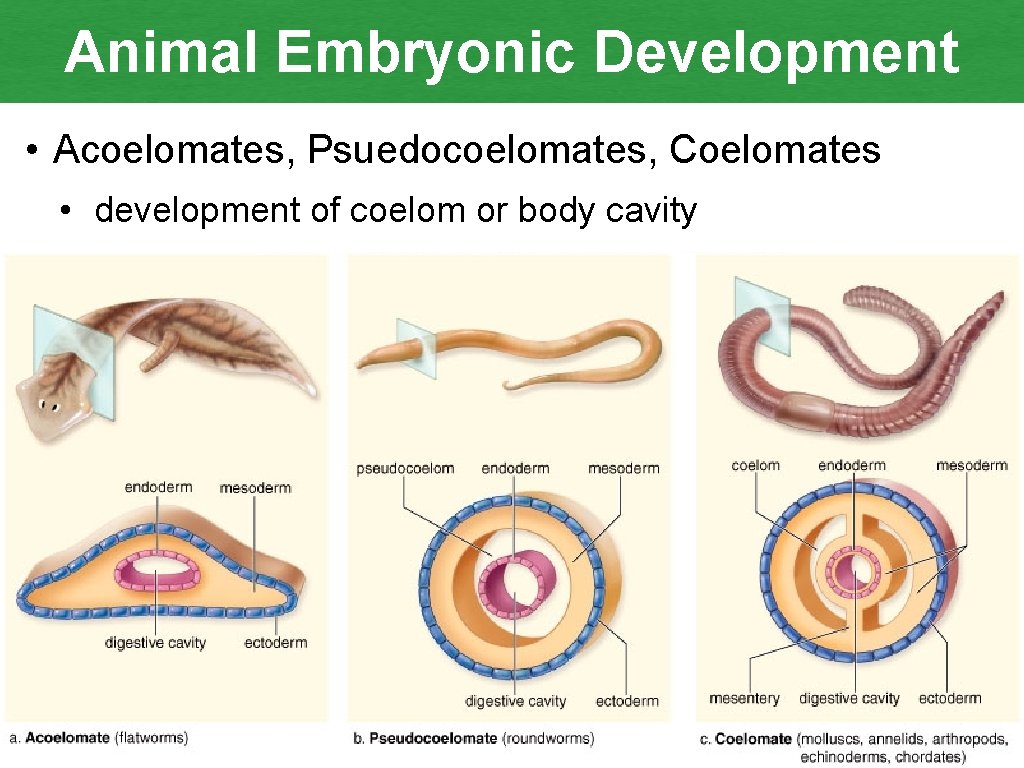
Animal Embryonic Development • Acoelomates, Psuedocoelomates, Coelomates • development of coelom or body cavity
Pseudocoelomates • Pseudocoelomates were formerly classified as a separate phylum • Probably not a monophyletic group – Nematodes – Rotifers – Nemerteans • Probably evolved through simplification from multiple groups of coelomates
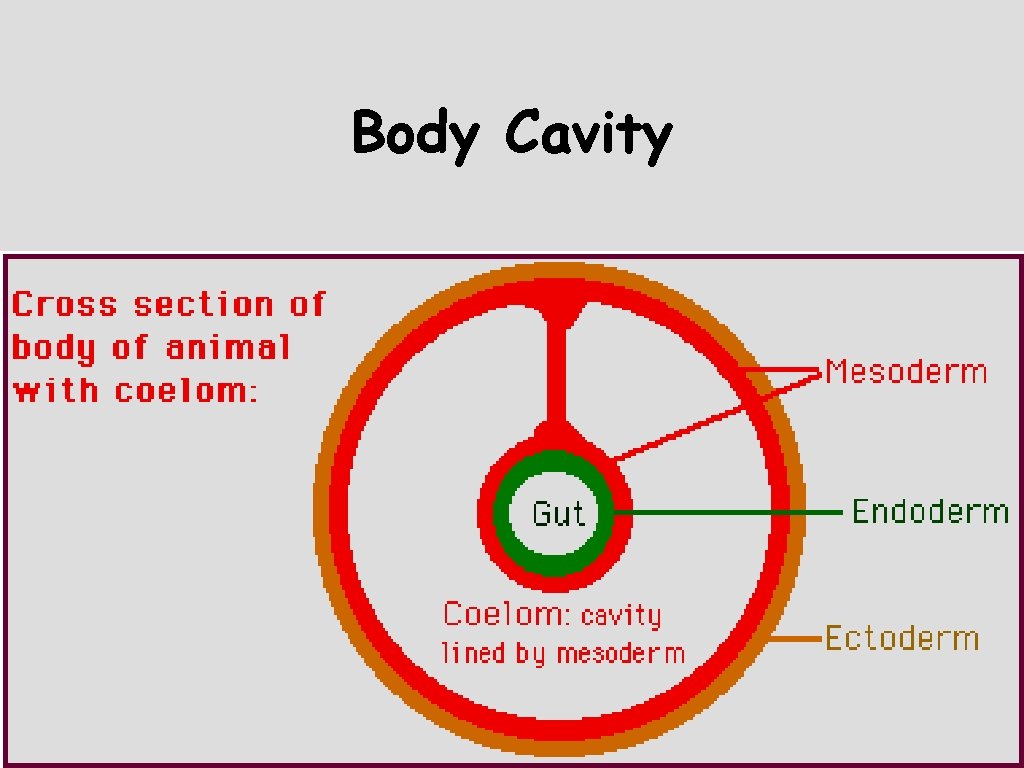
Body Cavity
Coelom 2 • An enclosed compartment (or series of compartments) of fluid under pressure • Serve as hydrostatic skeleton – contracting muscles push against tube of fluid – This type of skeleton is first seen in cnidarians
Coelom 3 • A space in which internal organs develop – including gonads • Helps transport materials • Protects internal organs
Coelomates • Two evolutionary lineages based on embryonic development – Protostomia • Spiral cleavage – Cell divisions diagonal to polar axis, therefore spiral arrangement of cells • Cleavage is determinate – Each cell is destined for a specific fate – No stem cells • In protostomes, blastopore develops into the mouth • Coelom formed by schizocoely
Coelomates • Two evolutionary lineages based on embryonic development – Deuterostomia • Radial cleavage – Cell divisions parallel or at 90°, therefore cells directly above or below each other • Cleavage is indeterminate – Cells are pleuripotent – “stem cells” • In deuterostomes, the blastopore usually becomes the anus • Coelom formed by enterocoely
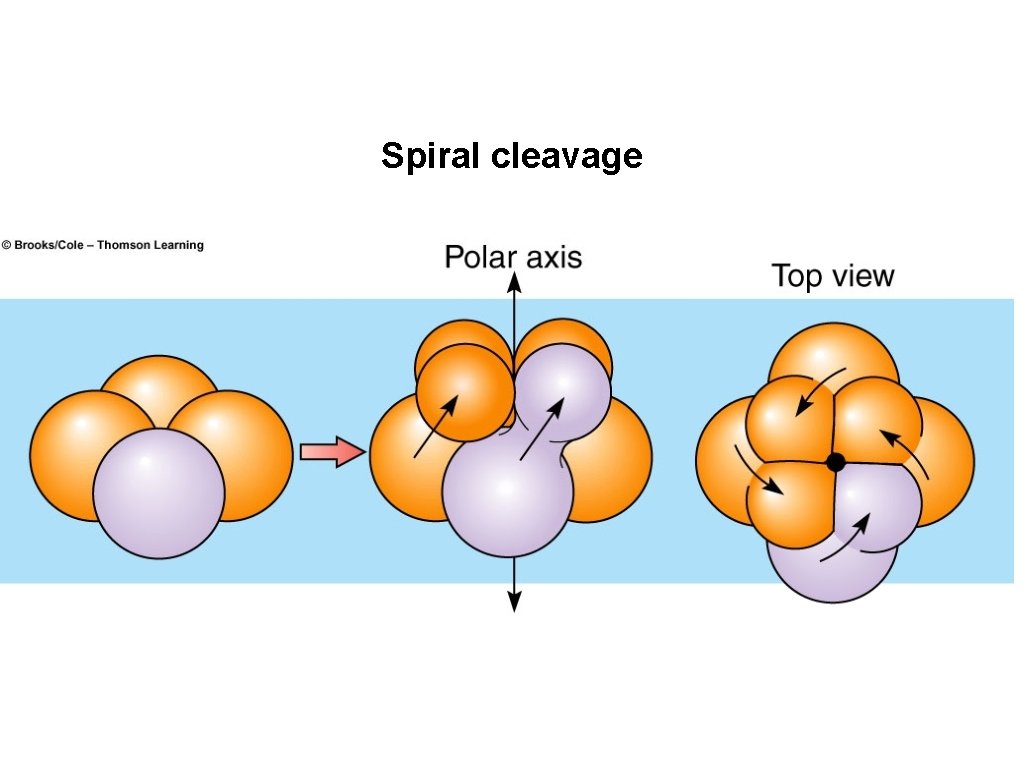
Spiral cleavage
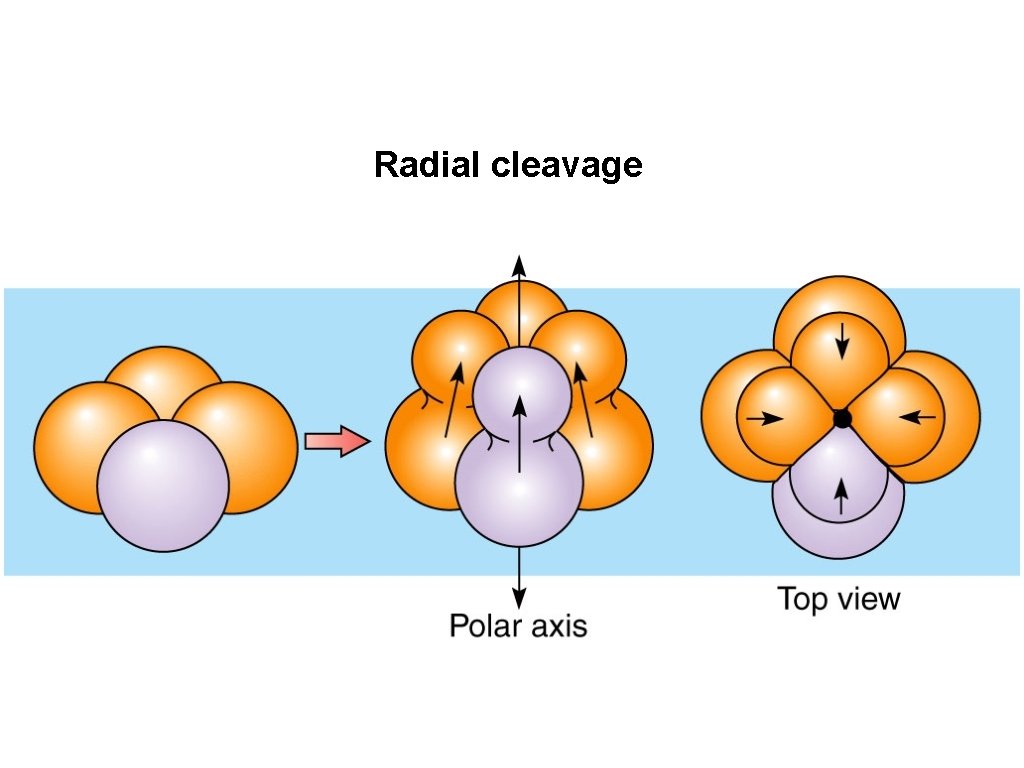
Radial cleavage
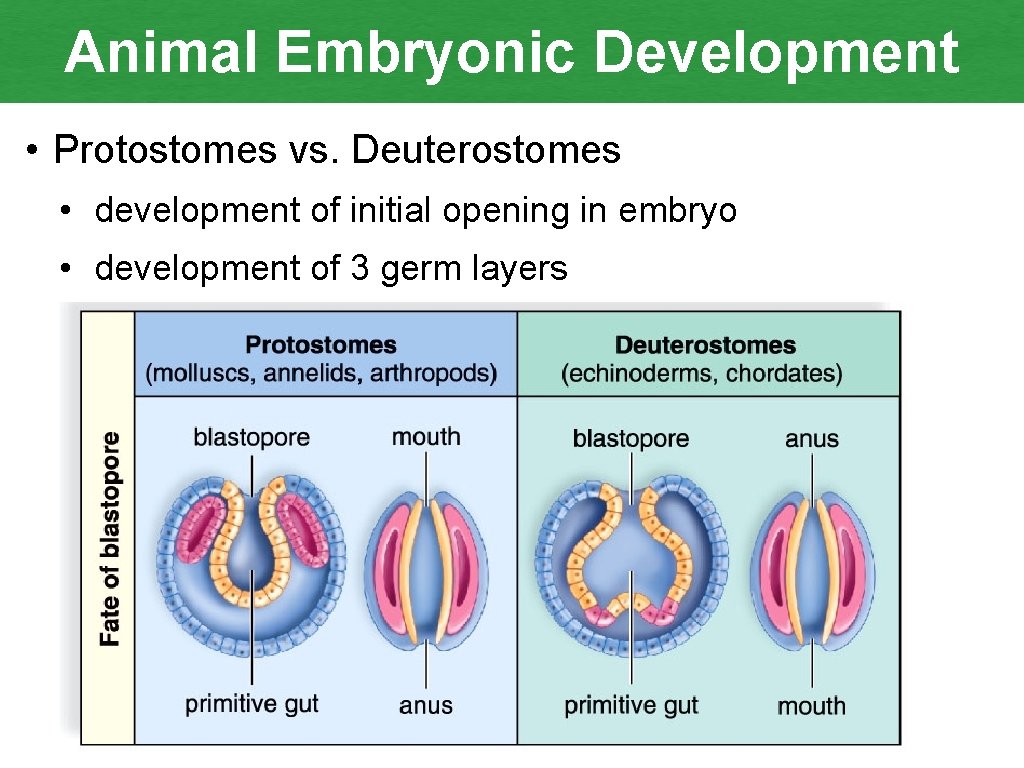
Animal Embryonic Development • Protostomes vs. Deuterostomes • development of initial opening in embryo • development of 3 germ layers
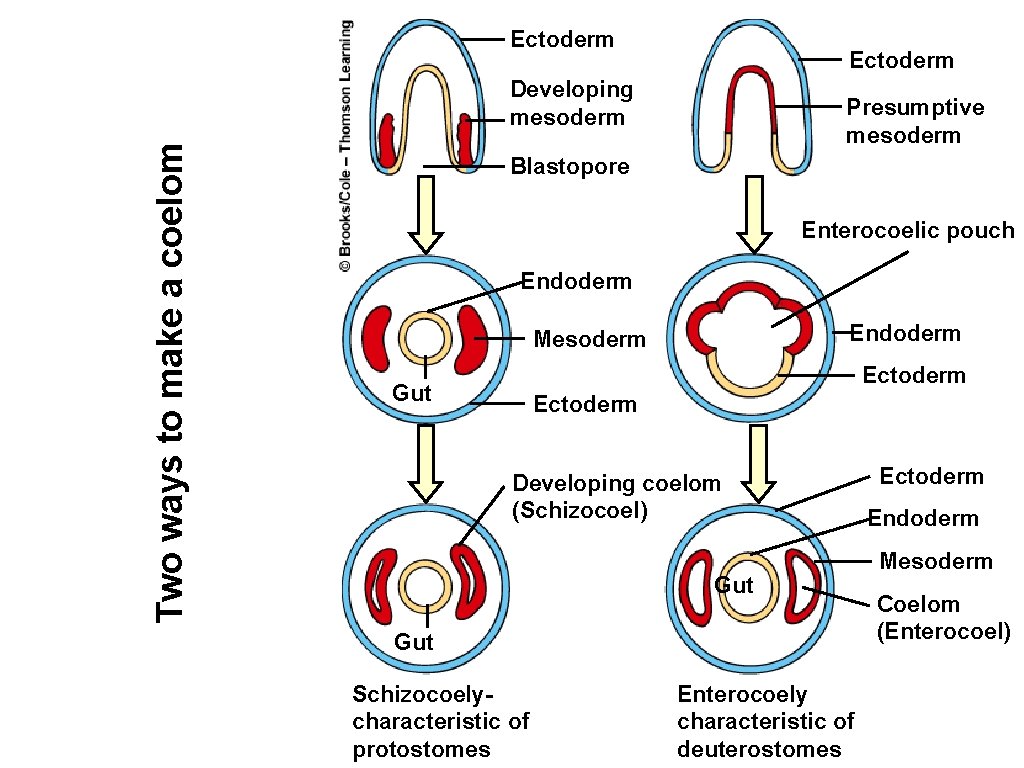
Ectoderm Two ways to make a coelom Developing mesoderm Presumptive mesoderm Blastopore Enterocoelic pouch Endoderm Mesoderm Ectoderm Gut Ectoderm Developing coelom (Schizocoel) Gut Schizocoelycharacteristic of protostomes Enterocoely characteristic of deuterostomes Ectoderm Endoderm Mesoderm Coelom (Enterocoel)
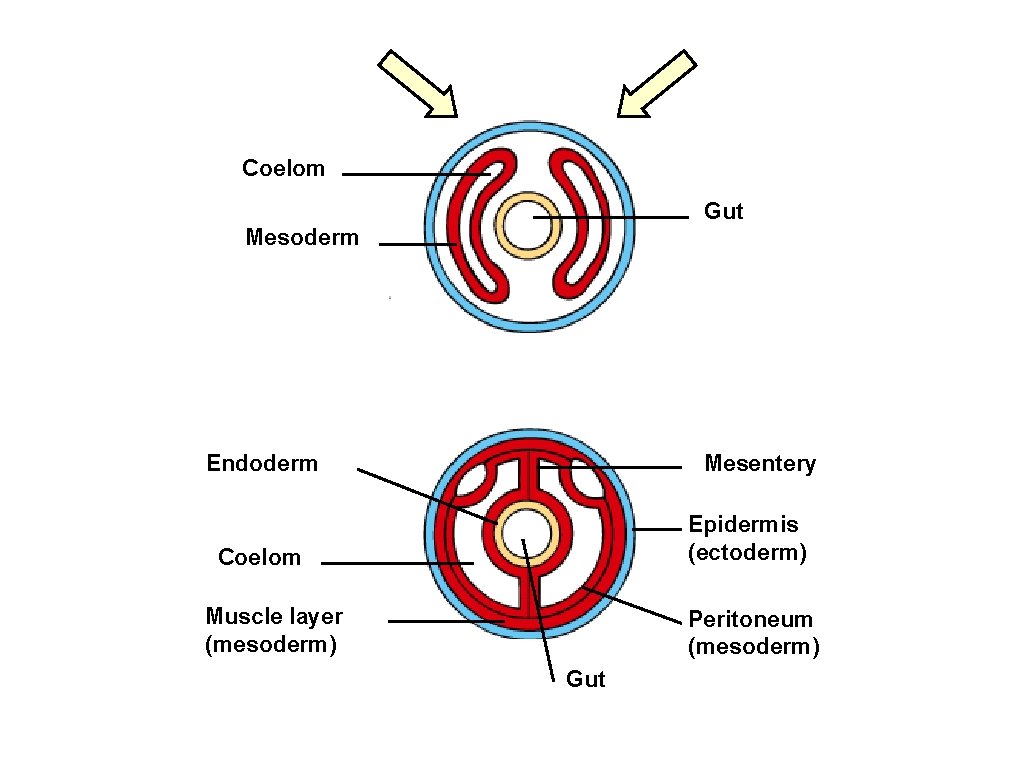
Coelom Gut Mesoderm Endoderm Mesentery Epidermis (ectoderm) Coelom Muscle layer (mesoderm) Peritoneum (mesoderm) Gut
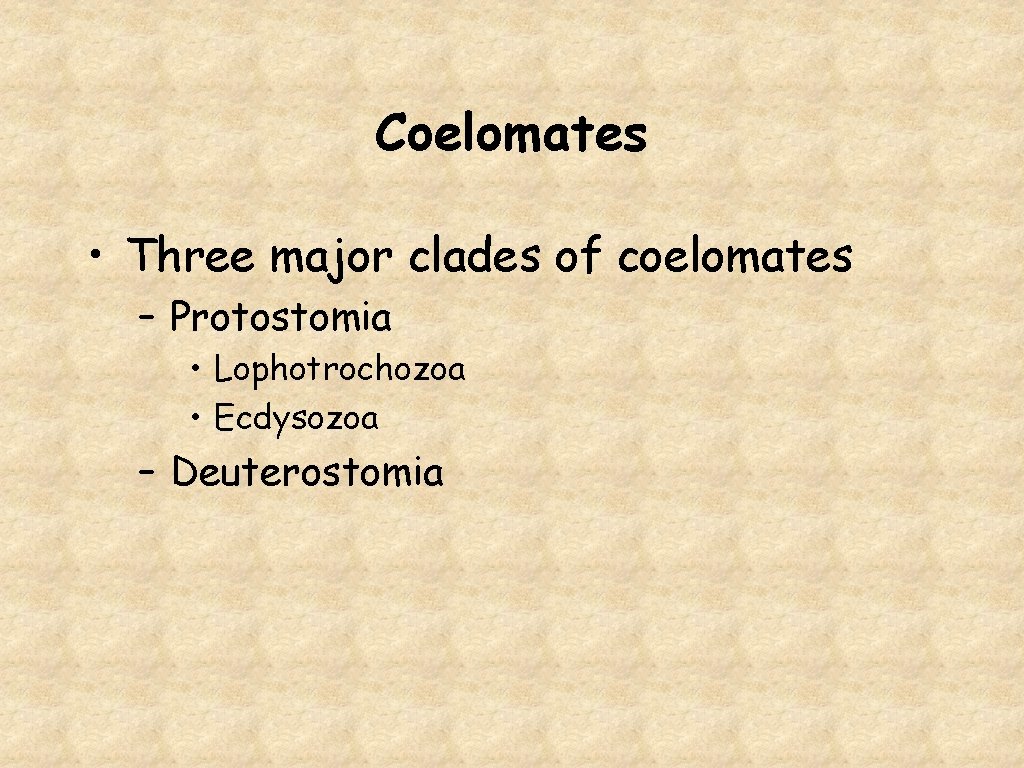
Coelomates • Three major clades of coelomates – Protostomia • Lophotrochozoa • Ecdysozoa – Deuterostomia
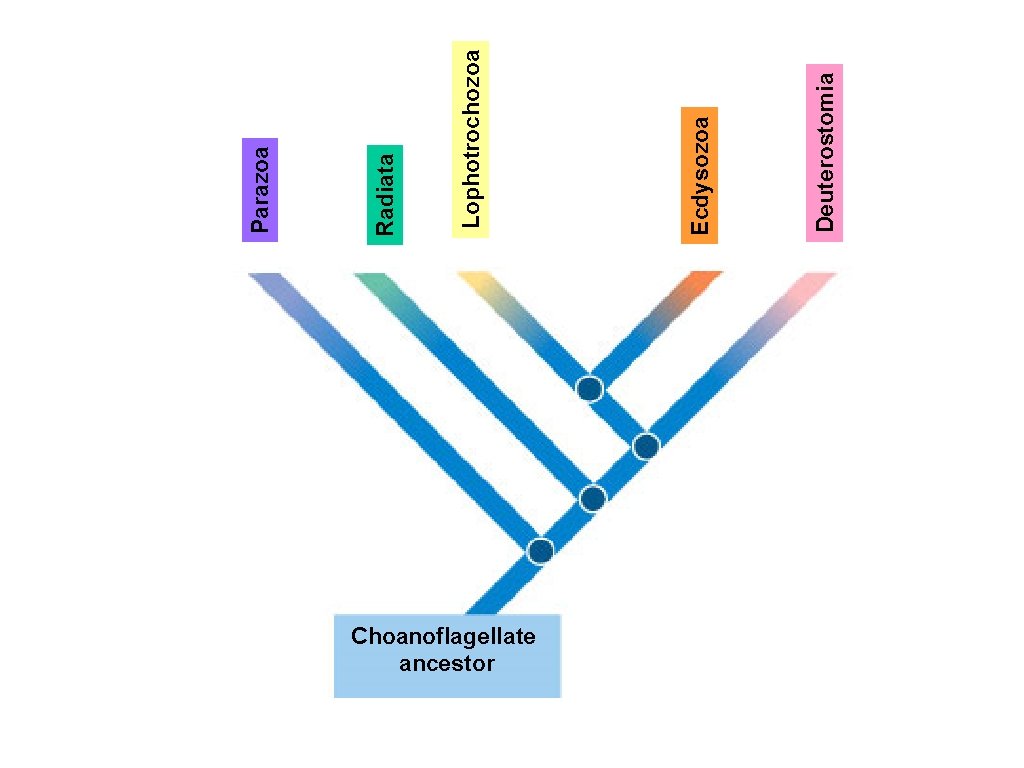
Choanoflagellate ancestor Deuterostomia Ecdysozoa Lophotrochozoa Radiata Parazoa
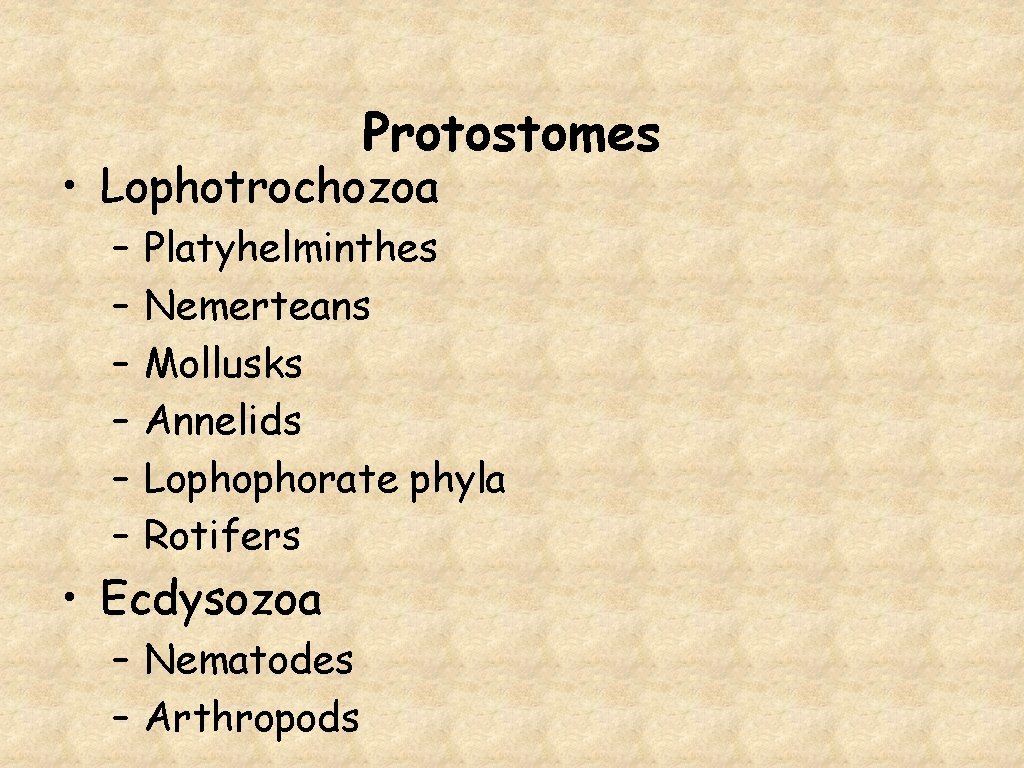
Protostomes • Lophotrochozoa – – – Platyhelminthes Nemerteans Mollusks Annelids Lophophorate phyla Rotifers • Ecdysozoa – Nematodes – Arthropods
Deuterostomes – Echinoderms – Hemichordates – Chordates
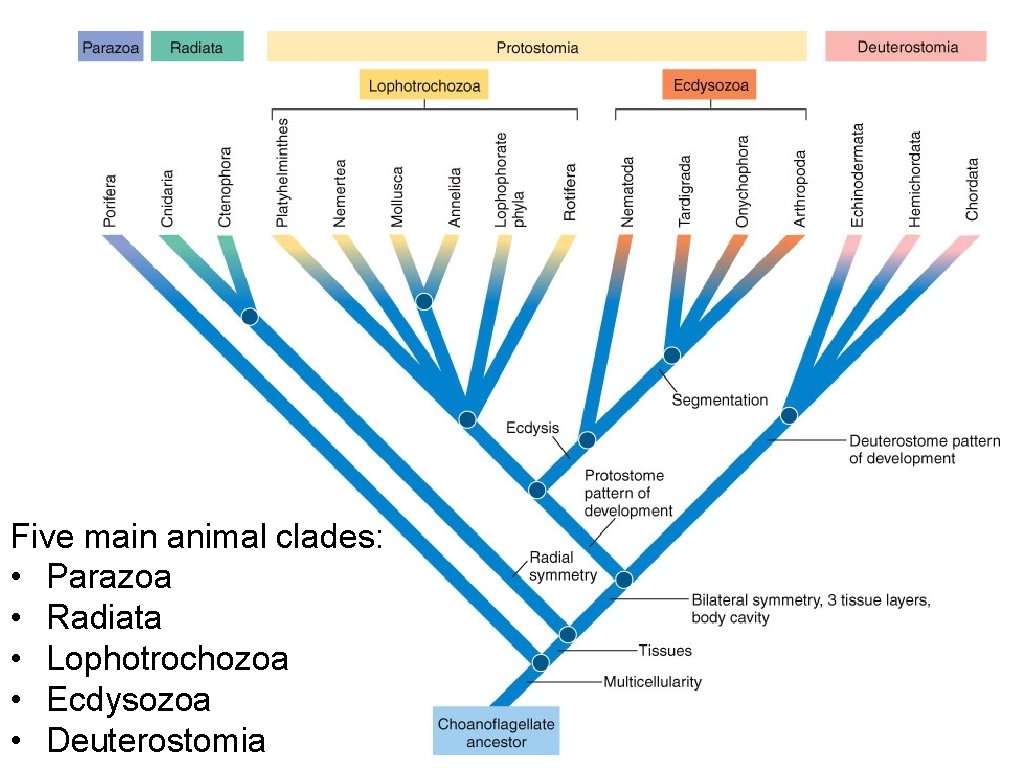
Five main animal clades: • Parazoa • Radiata • Lophotrochozoa • Ecdysozoa • Deuterostomia
- Slides: 39