
Animals During Disasters What do you do with










- Slides: 39
Animals During Disasters What do you do with Fido and Fluffy?
The Basics • Pets are an important part of many families • In a disaster, what is best for you, is usually best for your pet • Make a pet emergency kit • Have a plan, including a POA for your pet
The Numbers • It is estimated that there are over 80 million pet dogs and 96 million pet cats in the US. • 77 million households have at least one dog • 86 million households have at least one cat • 63% of people consider their pet(s) to be family members
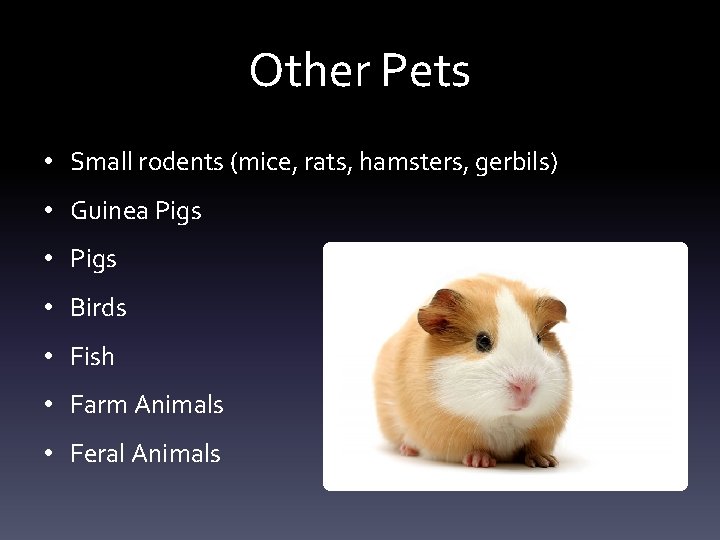
Other Pets • Small rodents (mice, rats, hamsters, gerbils) • Guinea Pigs • Birds • Fish • Farm Animals • Feral Animals
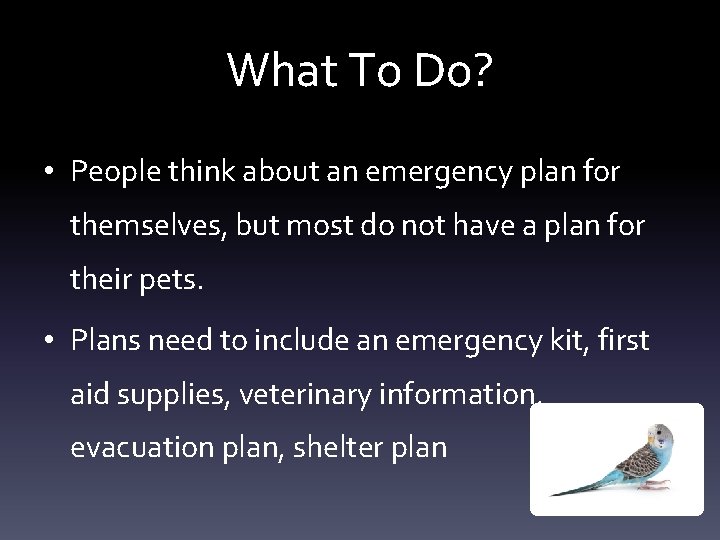
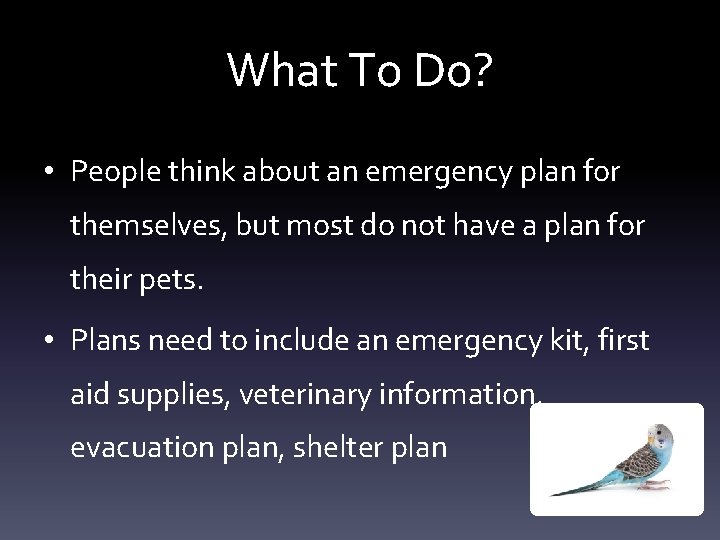
What To Do? • People think about an emergency plan for themselves, but most do not have a plan for their pets. • Plans need to include an emergency kit, first aid supplies, veterinary information, evacuation plan, shelter plan
What To Do? • People think about an emergency plan for themselves, but most do not have a plan for their pets. • Plans need to include an emergency kit, first aid supplies, veterinary information, evacuation plan, shelter plan
Pack a Pet Grab and Go Bag
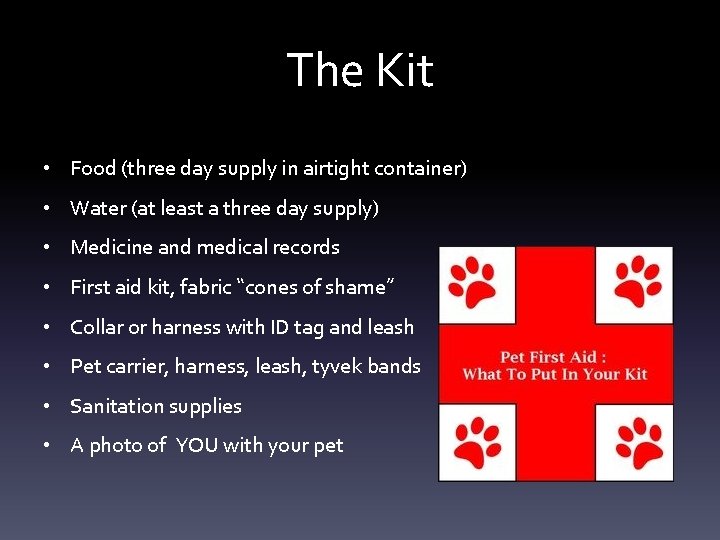
The Kit • Food (three day supply in airtight container) • Water (at least a three day supply) • Medicine and medical records • First aid kit, fabric “cones of shame” • Collar or harness with ID tag and leash • Pet carrier, harness, leash, tyvek bands • Sanitation supplies • A photo of YOU with your pet
For Cats
Evacuation • Be ready to leave with your pet(s) • Do not leave your pet behind • Use carriers, if possible, rather than leashes • Have a shelter plan – not all shelters taking humans will accept pets • Develop a buddy plan
• One of your best resources, for planning, is your own veterinarian • Speak with your veterinarian about supplies needed and permanent ID such as a microchip
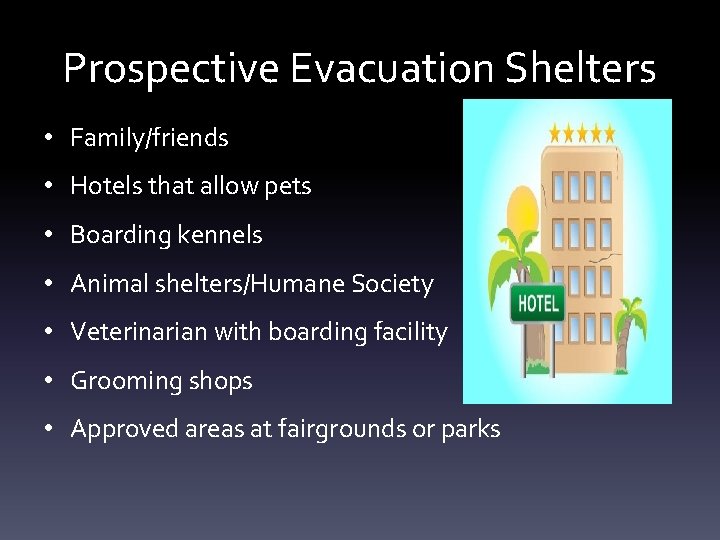
Prospective Evacuation Shelters • Family/friends • Hotels that allow pets • Boarding kennels • Animal shelters/Humane Society • Veterinarian with boarding facility • Grooming shops • Approved areas at fairgrounds or parks
Local Shelters • During Hurricane Katrina, it is estimated at 44% of pet owners refused to leave their homes without their pets. • Multnomah County warming and cooling shelters allow guests to bring their pets with them.
If You Must Leave Without Your Pet(s) • Leave their familiar food and treats to avoid intestinal issues • Provide water in a heavy bowl that cannot tip • Keep exotic animals in a separate room • Paste labels in obvious places to tell rescuers about the pet(s) they will find in your home • Leave information on how to contact you
Notations • When you evacuate your home, with your pet(s), make note of this so rescuers are aware • If you must leave your pet(s) make note of that as well. Do NOT tie your pet up, nor turn them loose to fend for themselves, if you must leave them.
What do we as NETs do? • Once we deploy, we may find ourselves faced with either residents with pets, or pets that have gotten lose and seek us out as humans.
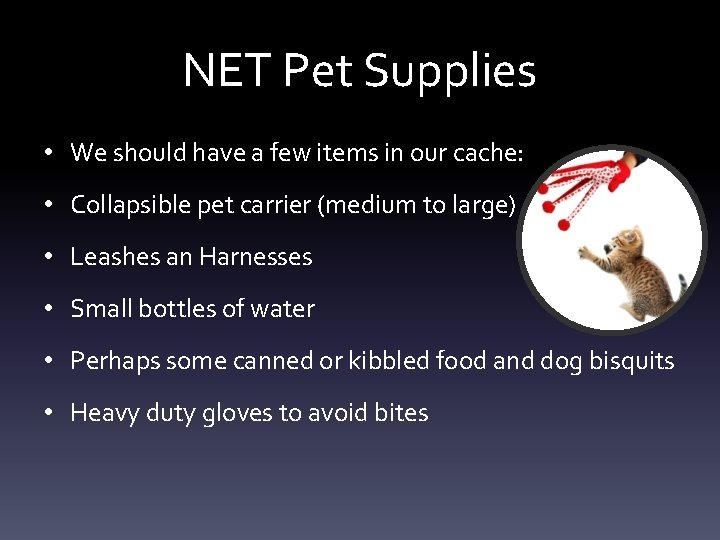
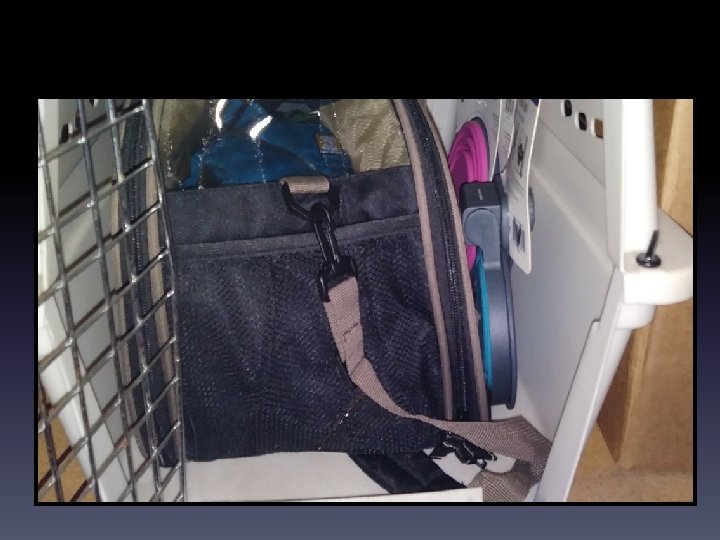
NET Pet Supplies • We should have a few items in our cache: • Collapsible pet carrier (medium to large) • Leashes an Harnesses • Small bottles of water • Perhaps some canned or kibbled food and dog bisquits • Heavy duty gloves to avoid bites
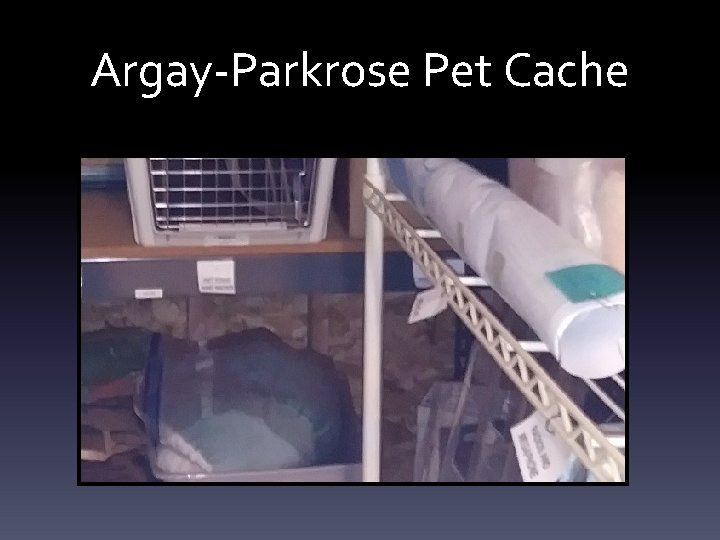
Argay-Parkrose Pet Cache
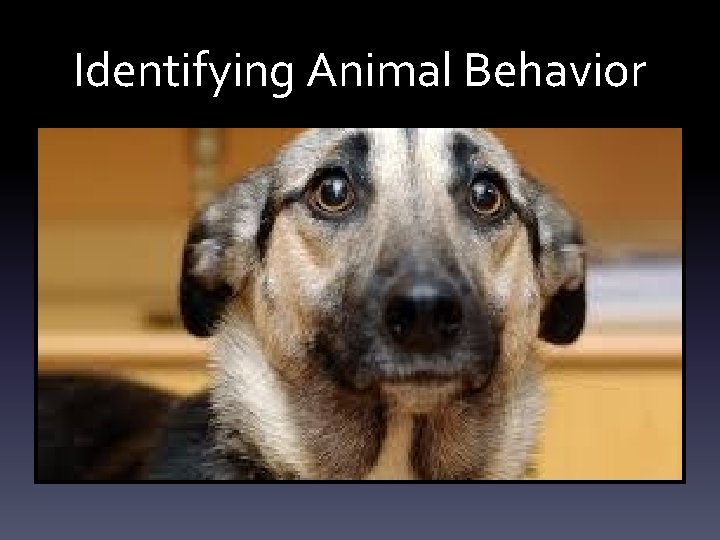
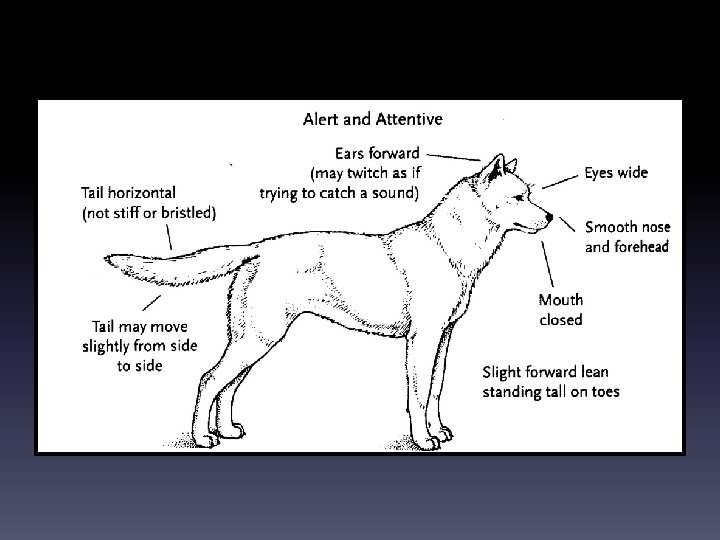
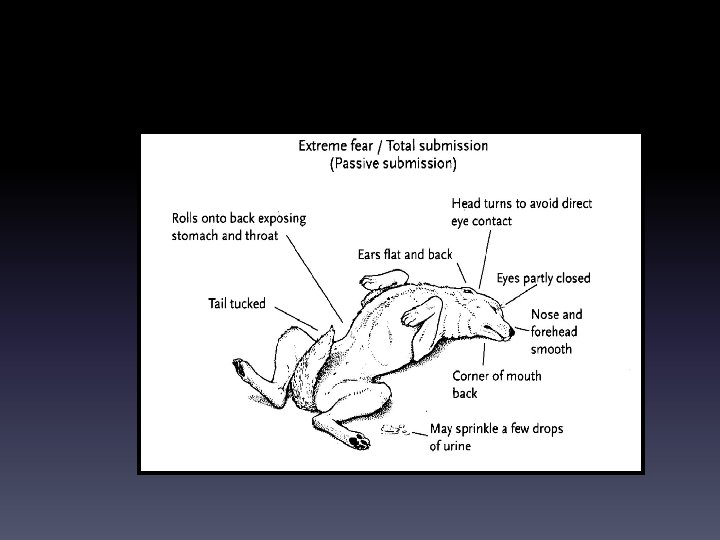
Identifying Animal Behavior
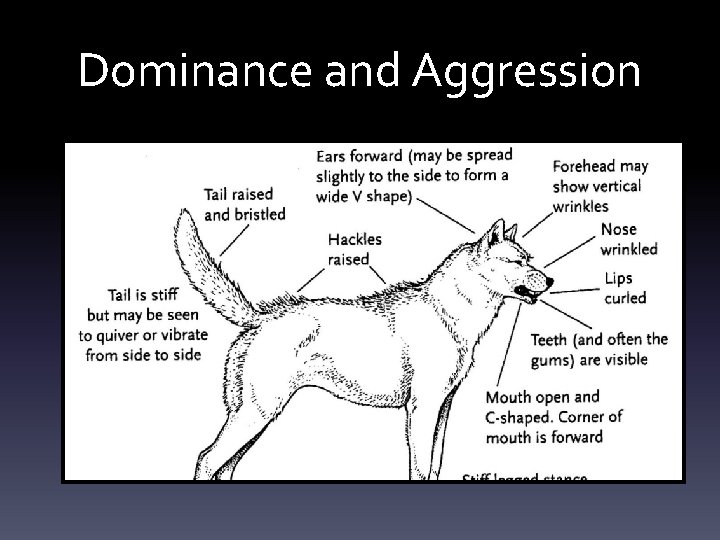
Dominance and Aggression
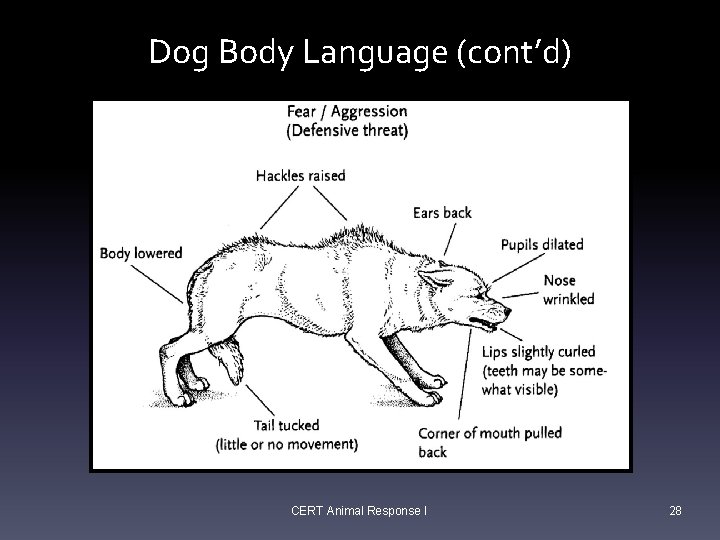
Dog Body Language (cont’d) CERT Animal Response I 28
Dog Body Language (cont’d) CERT Animal Response I 29
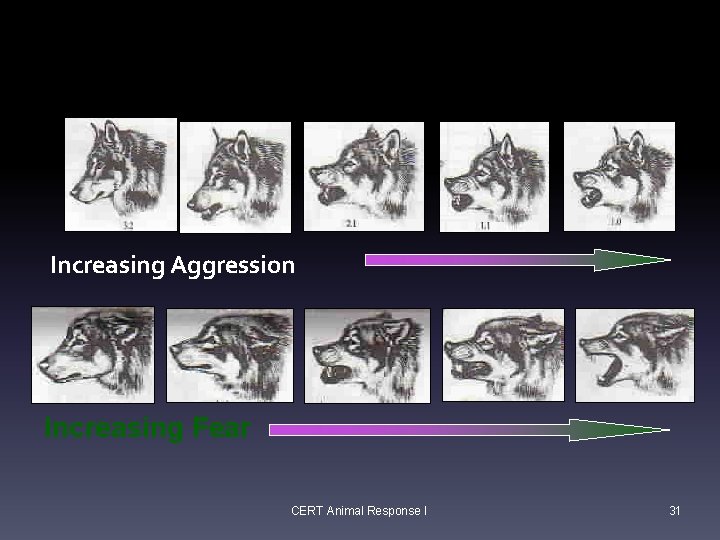
Dog Facial Expressions Increasing Aggression Increasing Fear CERT Animal Response I 31
t a d e r P o r P r ? y e
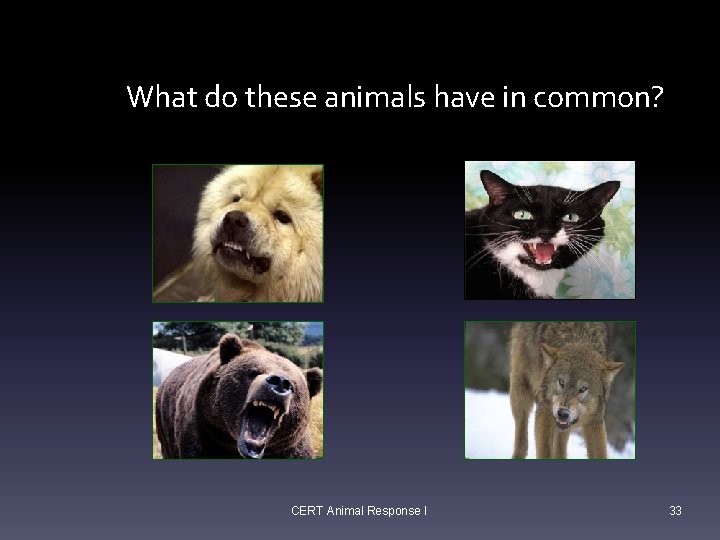
Grouping Animals What do these animals have in common? CERT Animal Response I 33
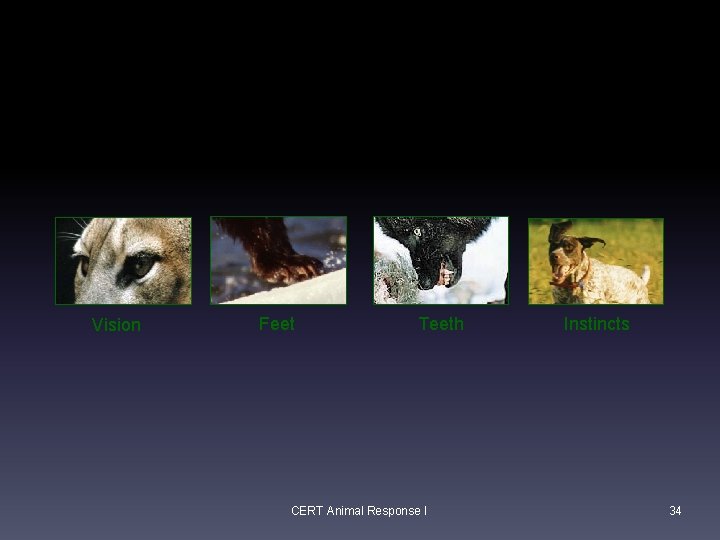
Characteristics of Predator Animals Vision Feet Teeth CERT Animal Response I Instincts 34
Approaching a Predator • Approach from an angle • Do not make direct eye contact • Use a calm voice • Move slowly • Do not run from the animal
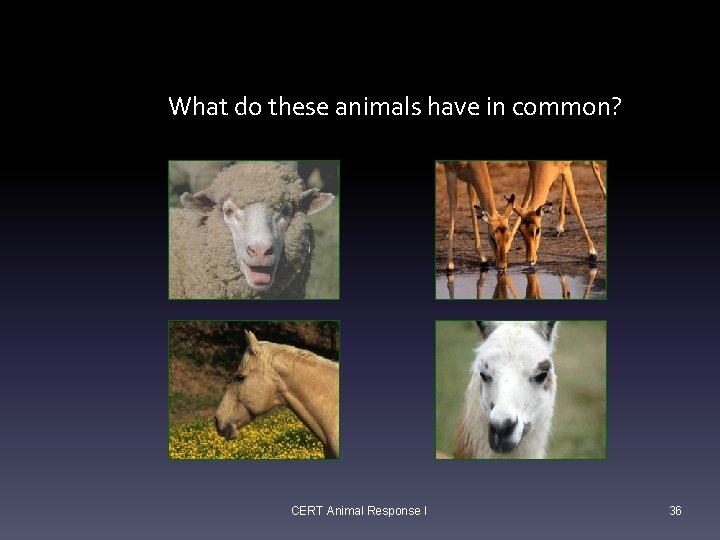
Grouping Animals What do these animals have in common? CERT Animal Response I 36
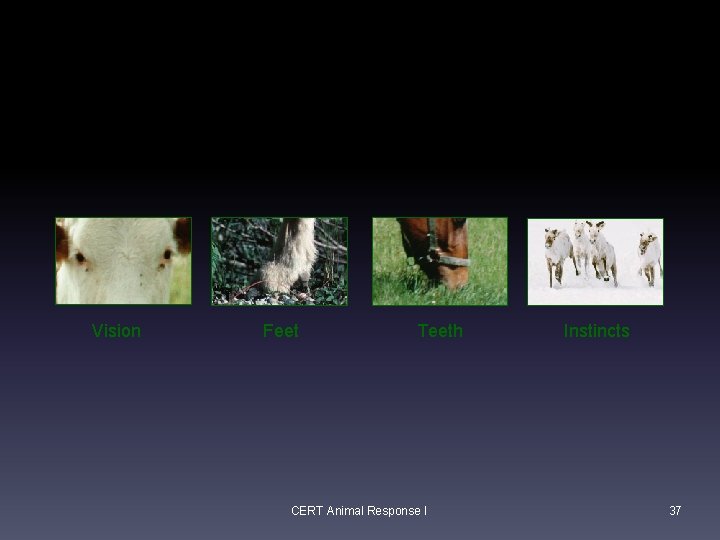
Characteristics of Prey Animals Vision Feet Teeth CERT Animal Response I Instincts 37
Approaching Prey Animals • Approach from the side • Try to approach from the front side • Avoid rear legs • Use a calm tone
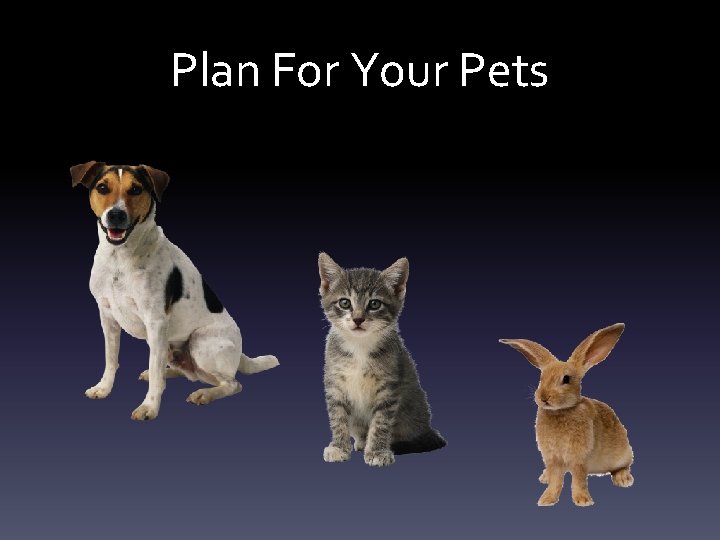
Plan For Your Pets