
Animals and Their Adaptations By Camryn Audet Llama
Animals and Their Adaptations By: Camryn Audet

Llama � They live at high altitudes where less oxygen is available. Their blood is unique, different than any other mammal. They have more red blood cells per unit. Their hemoglobin (type of red blood cell that moves oxygen) allows them to move oxygen quickly and in sufficient quantities around their body to ensure optimal body function. � Physiological Adaptation

Tiger � The tiger's striped coat helps them blend in well with the sunlight filtering through the treetops to the jungle floor. The tiger's seamless camouflage to their surroundings is enhanced because the striping also helps break up their body shape, making them difficult to detect for unsuspecting prey. � Physiological Adaptation
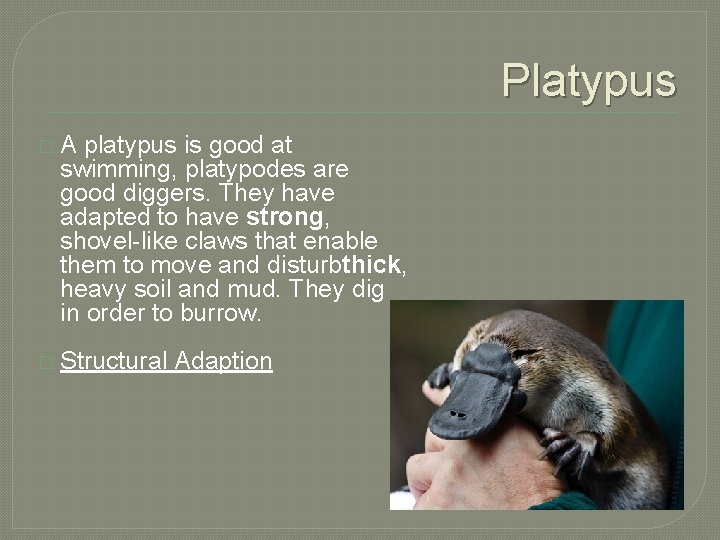
Platypus � A platypus is good at swimming, platypodes are good diggers. They have adapted to have strong, shovel-like claws that enable them to move and disturbthick, heavy soil and mud. They dig in order to burrow. � Structural Adaption
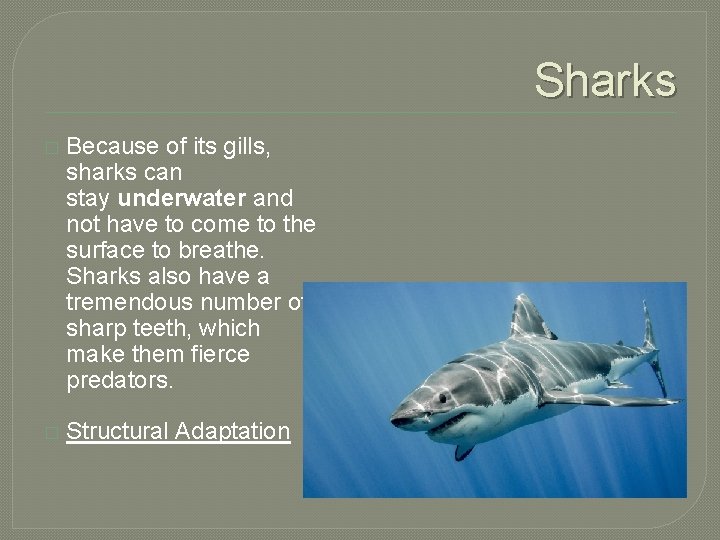
Sharks � Because of its gills, sharks can stay underwater and not have to come to the surface to breathe. Sharks also have a tremendous number of sharp teeth, which make them fierce predators. � Structural Adaptation

Camel � Deserts are hot and dry. Winds blow sand all around, so a camel haslong eyelashes. It has nostrils that can open and close. � Behavioural Adaptation

Penguins � A thick fat layer under their skin provides insulation while their dark colored overlapping feathers absorb heat from the sun, providing water proof feathers and warmth. In addition, penguins huddle together to keep warm. � Behavioural Adaptation
- Slides: 7