
Animals A group to group system to system
- Slides: 57
Animals A group to group, system to system comparison.
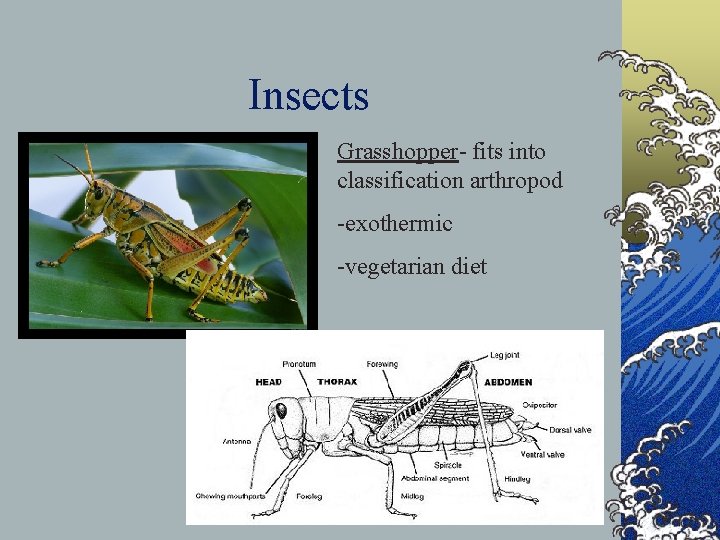
Insects Grasshopper- fits into classification arthropod -exothermic -vegetarian diet
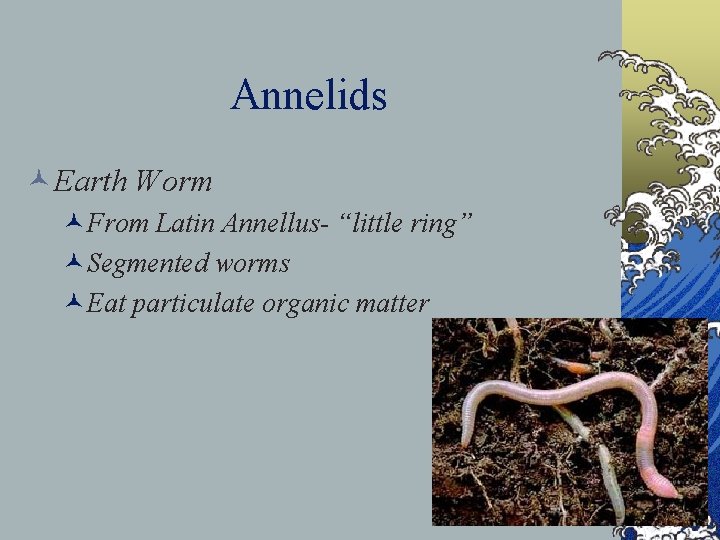
Annelids ©Earth Worm ©From Latin Annellus- “little ring” ©Segmented worms ©Eat particulate organic matter
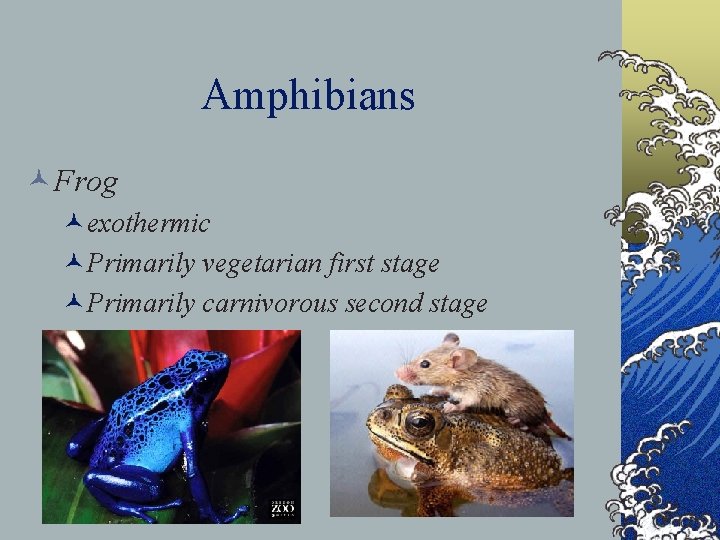
Amphibians ©Frog ©exothermic ©Primarily vegetarian first stage ©Primarily carnivorous second stage
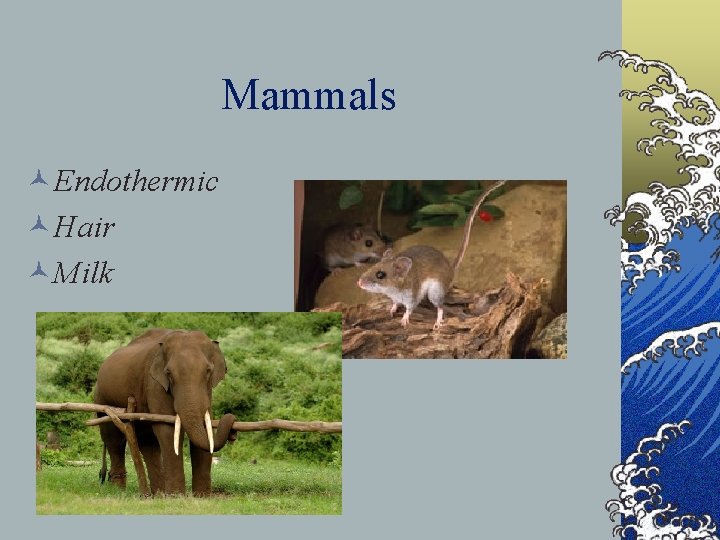
Mammals ©Endothermic ©Hair ©Milk
Transport ©How does this group of organisms approach circulation? ©Open circulatory systems- vessels dump into open cavity and pressure pushes random liquid back to the heart ©Closed circulatory systems- vessels carry medium throughout the body and back to heart
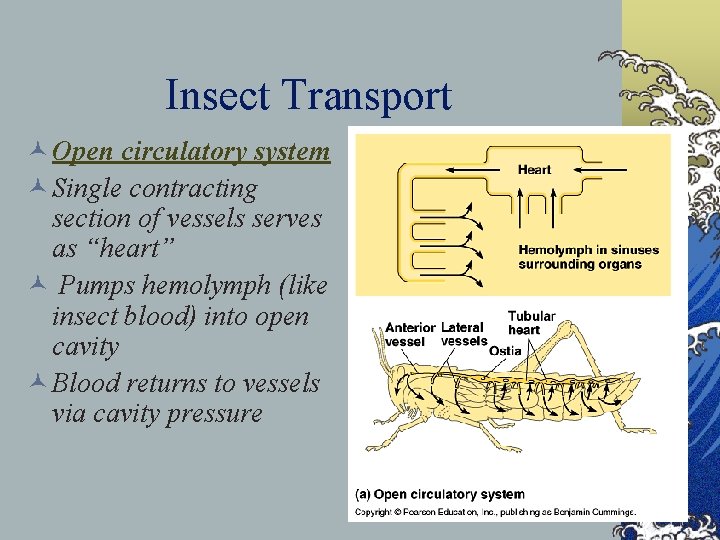
Insect Transport © Open circulatory system © Single contracting section of vessels serves as “heart” © Pumps hemolymph (like insect blood) into open cavity © Blood returns to vessels via cavity pressure
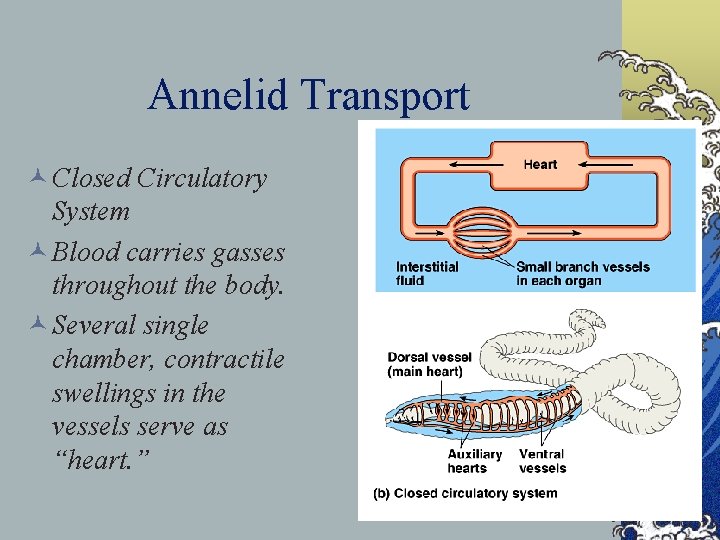
Annelid Transport © Closed Circulatory System © Blood carries gasses throughout the body. © Several single chamber, contractile swellings in the vessels serve as “heart. ”
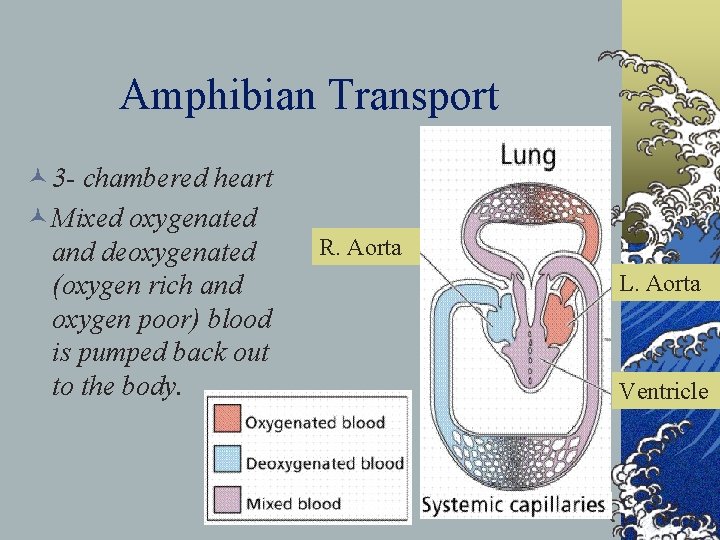
Amphibian Transport © 3 - chambered heart © Mixed oxygenated and deoxygenated (oxygen rich and oxygen poor) blood is pumped back out to the body. R. Aorta L. Aorta Ventricle
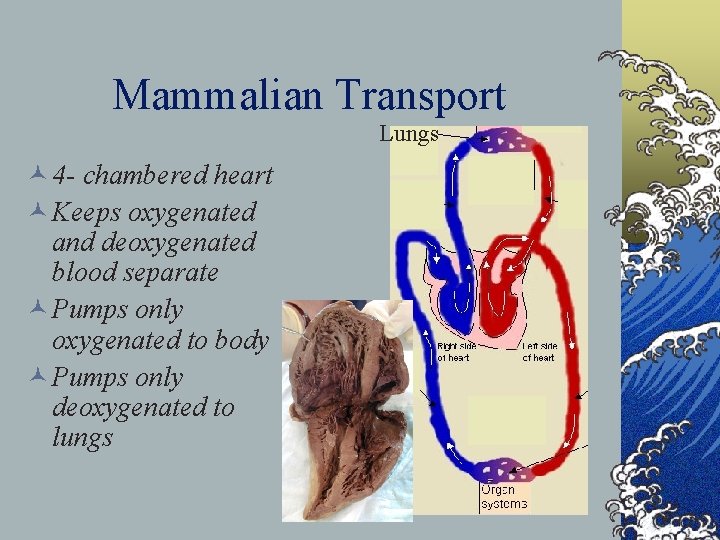
Mammalian Transport Lungs © 4 - chambered heart © Keeps oxygenated and deoxygenated blood separate © Pumps only oxygenated to body © Pumps only deoxygenated to lungs
Excretion ©Digestion of proteins (amino acids, NH 2) yields excess Nitrogen. ©All organisms must find a way to get rid of excess Nitrogen. ©Nitrogen is excreted as urea, uric acid, and/ or urine by different organisms all trying to get rid of nitrogen and conserve water.
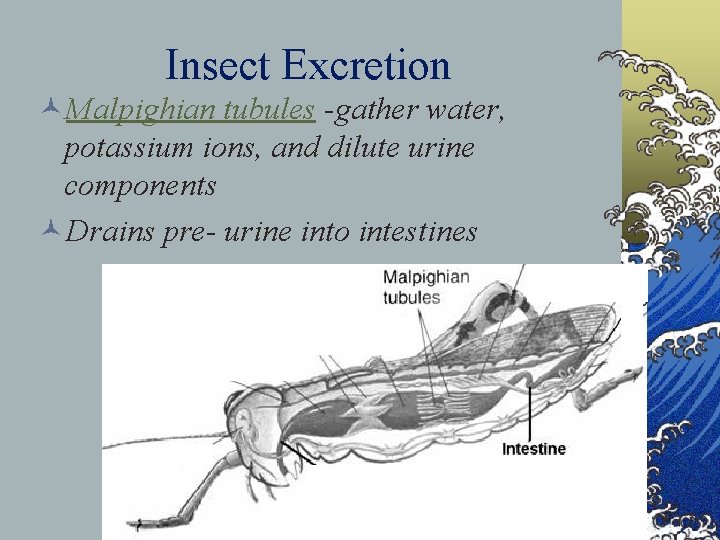
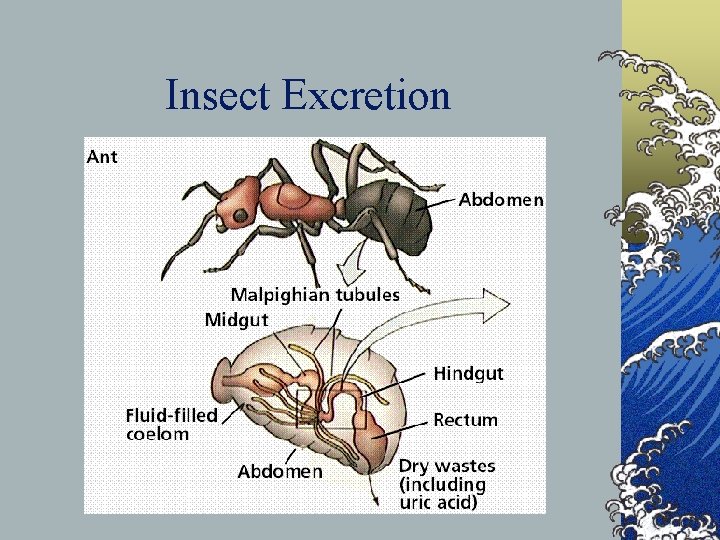
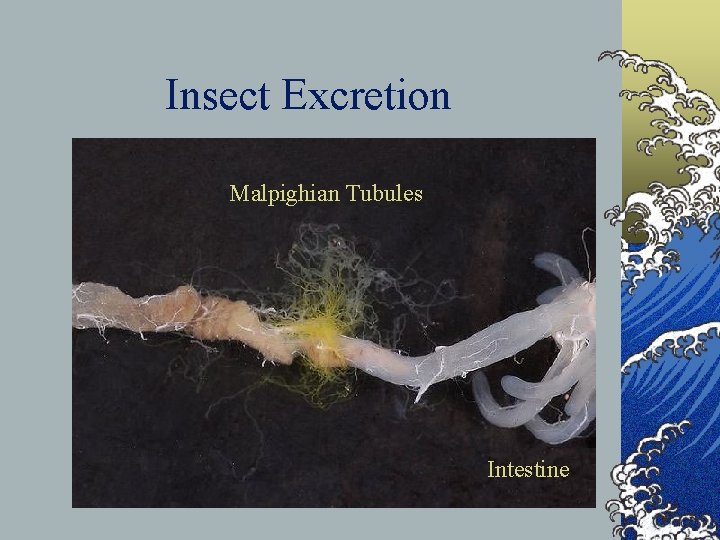
Insect Excretion ©Malpighian tubules -gather water, potassium ions, and dilute urine components ©Drains pre- urine into intestines
Insect Excretion
Insect Excretion Malpighian Tubules Intestine
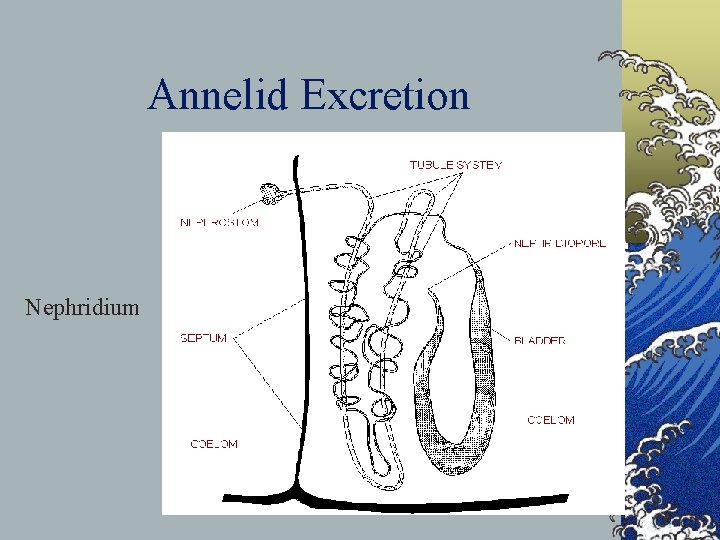
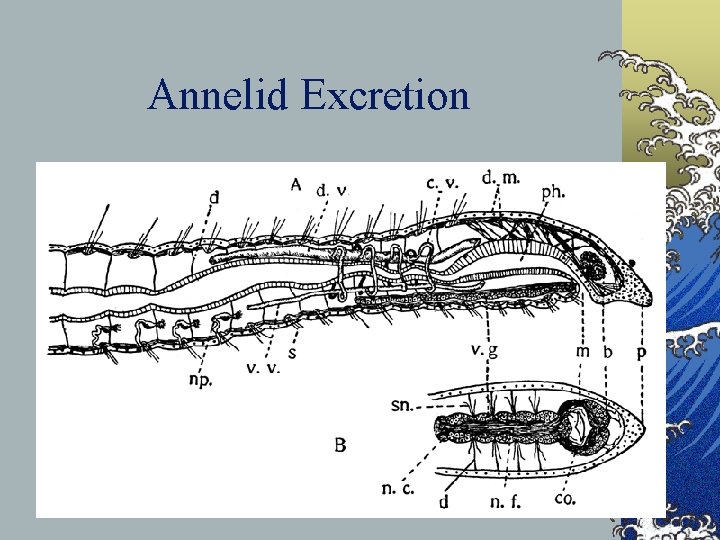
Annelid Excretion ©Use nephridia to concentrate urine and conserve water © 2 nephridia on nearly every body segment ©A nephridium (singular) has its own bladder and exits directly through the skin.
Annelid Excretion Nephridium
Annelid Excretion
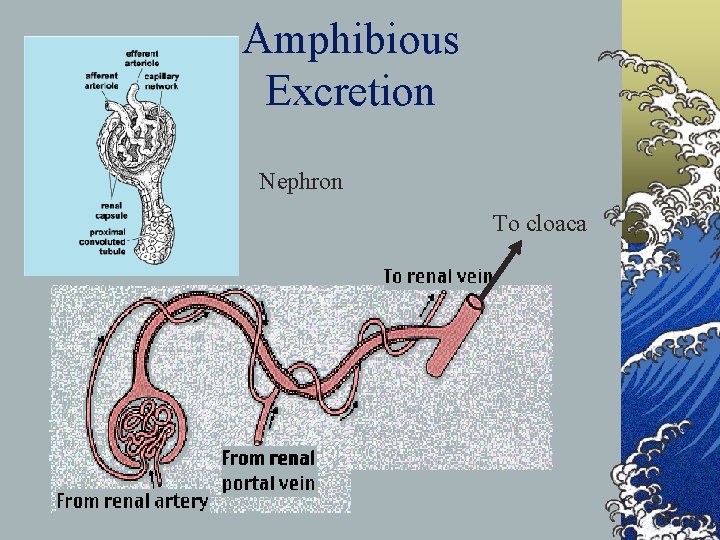
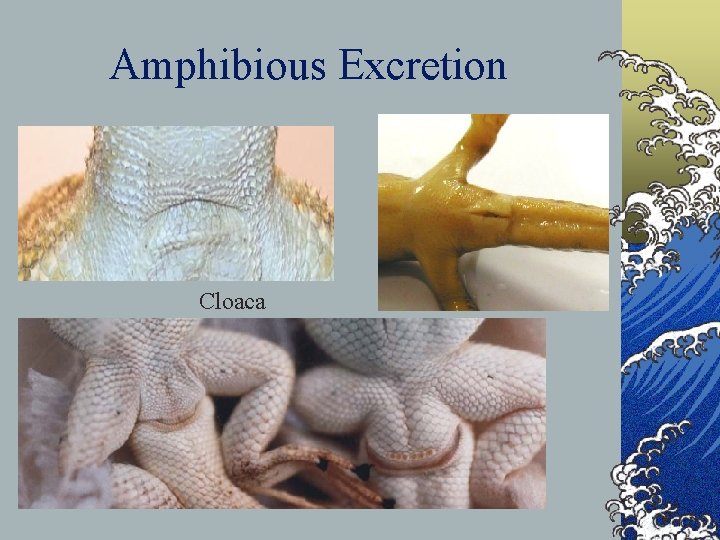
Amphibious Excretion © Primitive kidney functions in excreting excess water taken in through the skin and excess N © Cloaca- single posterior opening that serves as the only opening for intestinal and urinary tracts © Kidney adjusts urine concentration depending on amount of internal water. © Nephrons in kidney filter water and waste from blood © Urine passes from kidney to bladder to cloaca
Amphibious Excretion Nephron To cloaca
Amphibious Excretion Cloaca
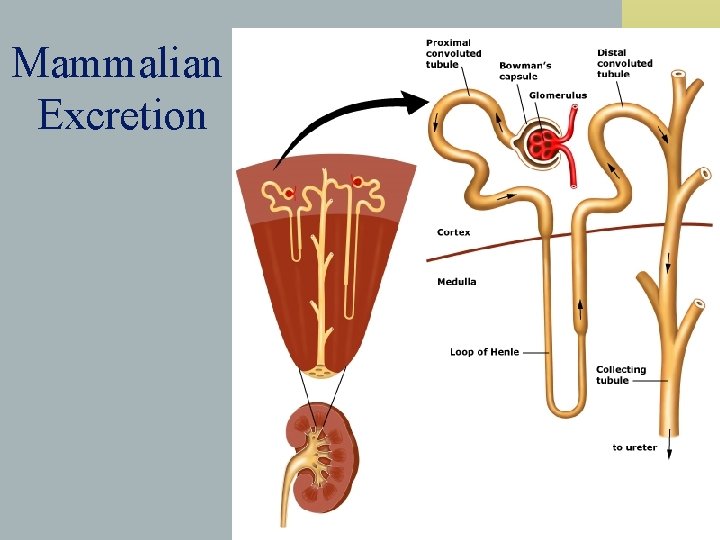
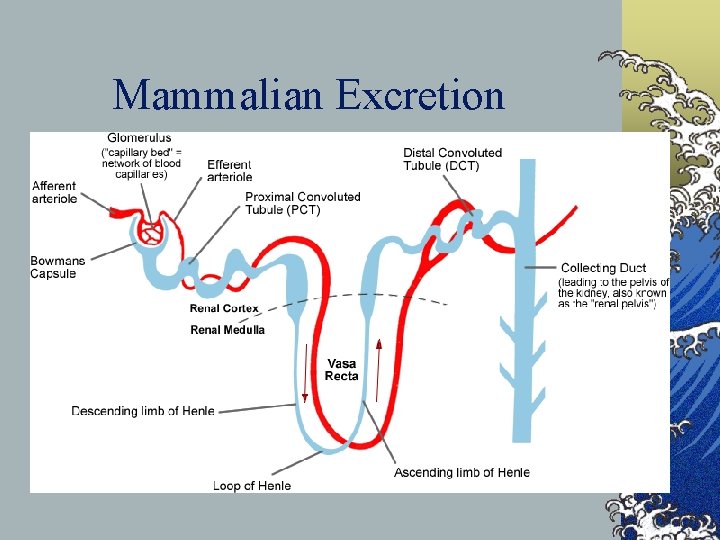
Mammalian Excretion ©Modern kidney can conserve water or excrete excess ©Excretes salts, ions, and nitrogen ©Urine can be extra concentrated by additional loops in the nephrons ©Loop of Henle allows for extra water conservation ©Urine stored in bladder until exit via urethra
Mammalian Excretion
Mammalian Excretion
Respiration ©How does O 2 get in and CO 2 get out? ©On what part of the body does gas exchange take place? ©What organs does each group use?
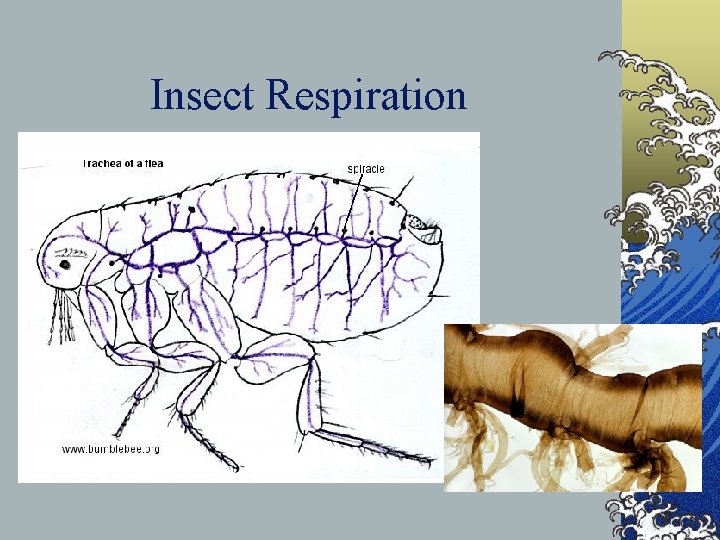
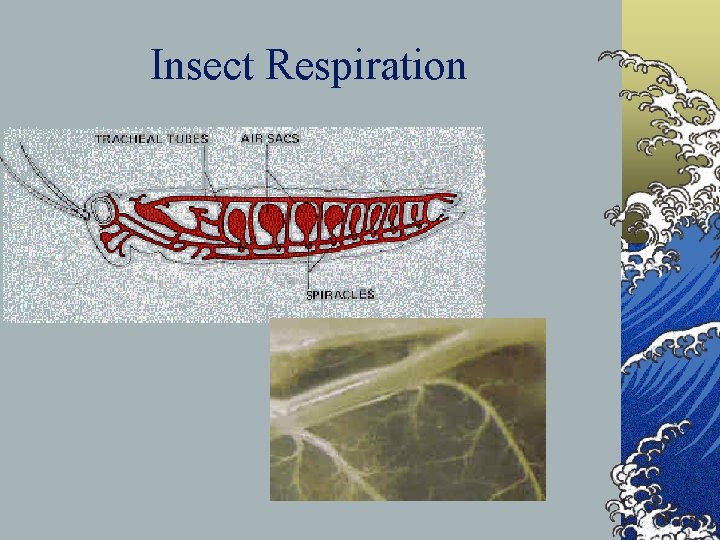
Insect Respiration © Tracheal tubes pass through the exoskeleton and carry oxygen throughout the body. © Spiracles are the holes through which gasses move. © Generally a passive process of air movement. ©In larger insects, (grasshopper) muscle activity helps pumping and creates air movement.
Insect Respiration
Insect Respiration
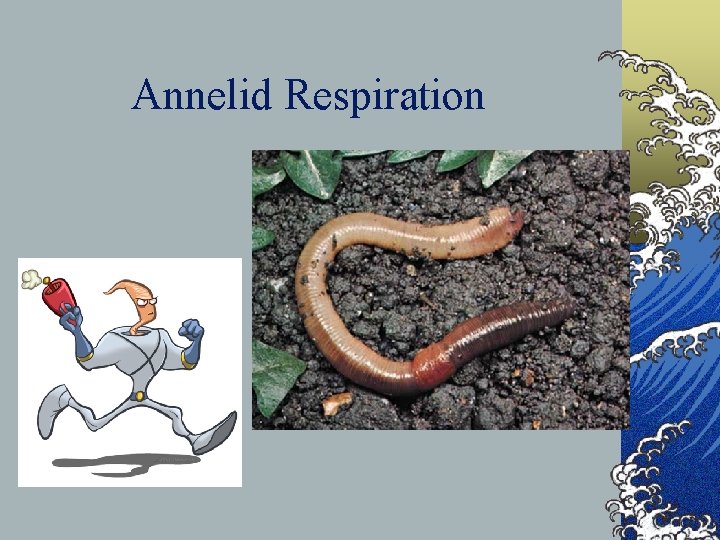
Annelid Respiration ©Annelids do respiration across the moist membranes of their skin. ©Their respiration method is called diffusion. ©Handy, but it has drawbacks ©Too wet- they drown ©Too dry- they suffocate
Annelid Respiration
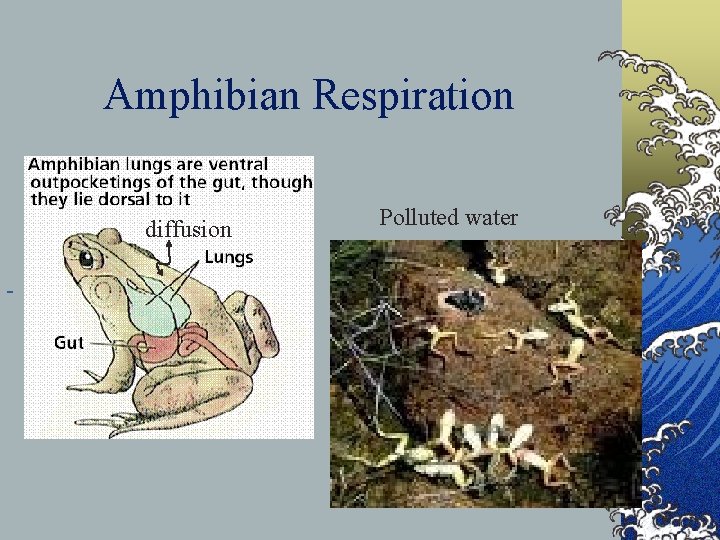
Amphibian Respiration ©Poor blood/gas transport makes skin gas exchange important. ©Moist skin exchanges gases all over the body and diffuses into vessels ©Again, handy, but problematic ©Amphibians are highly susceptible to water pollution because of their skin diffusion
Amphibian Respiration diffusion Polluted water
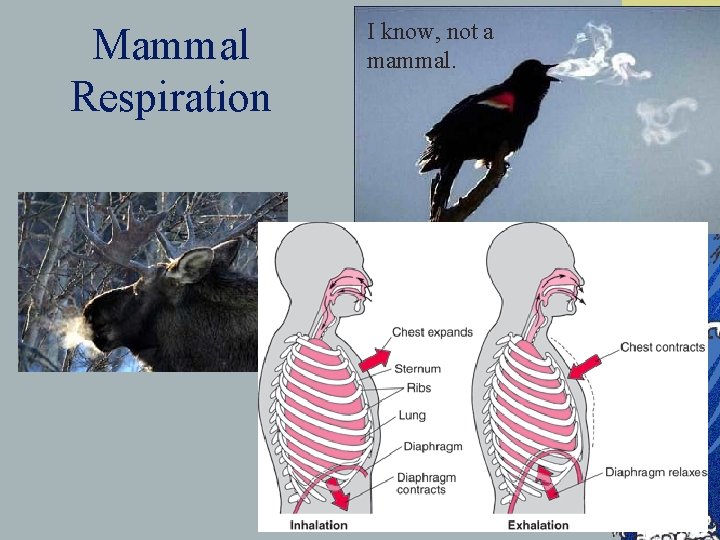
Mammal Respiration ©Diaphragm assists lungs ©Accessory muscles assist lungs ©No gas exchange takes place through skin
Mammal Respiration I know, not a mammal.
Digestion ©Putting food into the body ©Passing indigestible parts of foods from the body ©Getting nutrients and water from the food, and keeping them in the body when the indigestibles leave
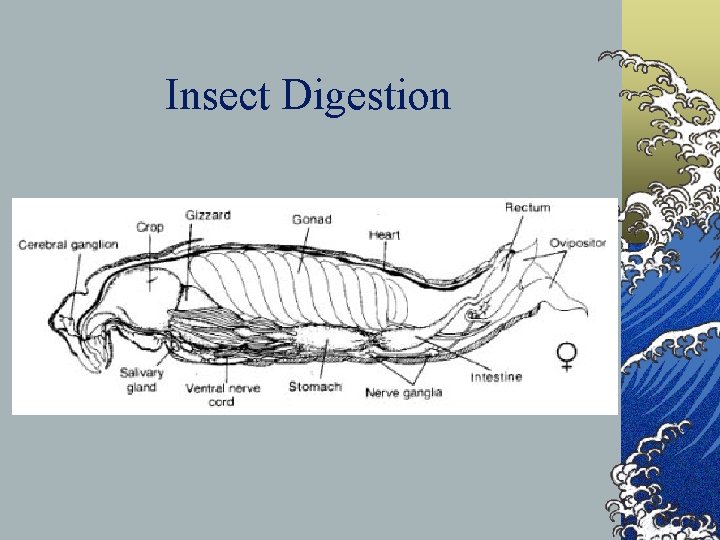
Insect Digestion ©Complete system with digestive enzymes ©Pharynx sucks and swallows ©Crop holds it for later digestion ©Gizzard grinds or sort of “chews” food ©Intestines absorb and pass remaining indigestible parts
Insect Digestion
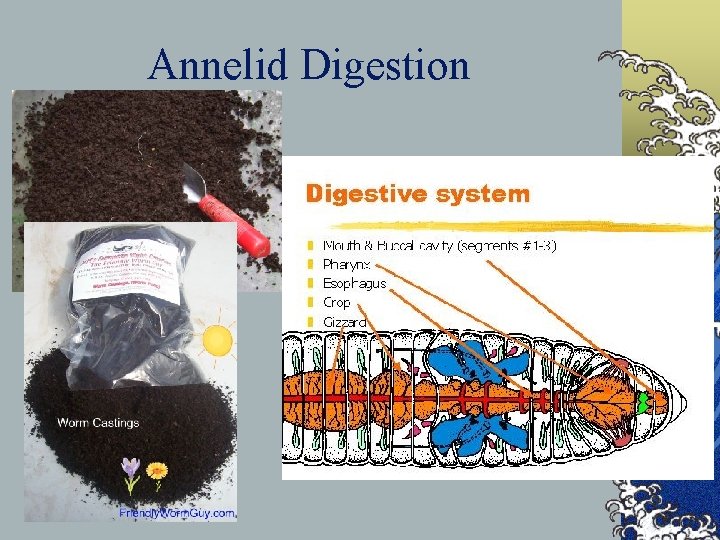
Annelid Digestion ©Crop holds for later ©Gizzard grinds food with hard little indigestible particles to make it smaller ©They eat soil and digest the organic particles found in it
Annelid Digestion
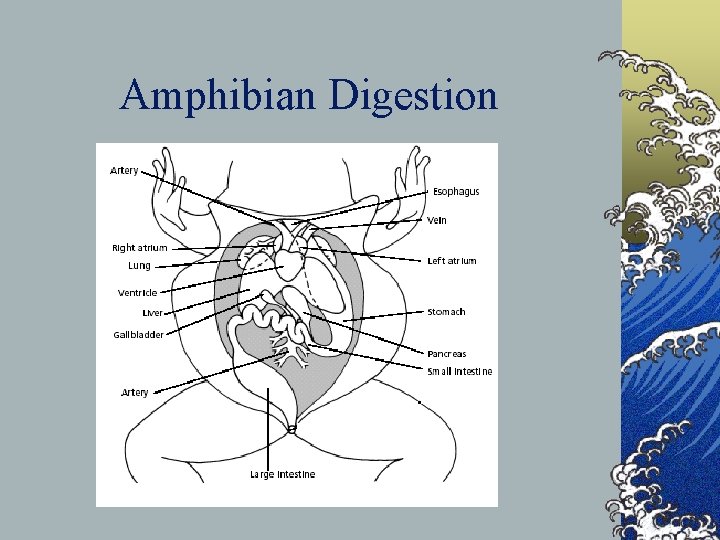
Amphibian Digestion © Digestive tract with gall bladder and liver enzymes © Digest much like mammals © Exits via the cloaca © Cloaca- single posterior opening that serves as the only opening for intestinal and urinary tracts
Amphibian Digestion
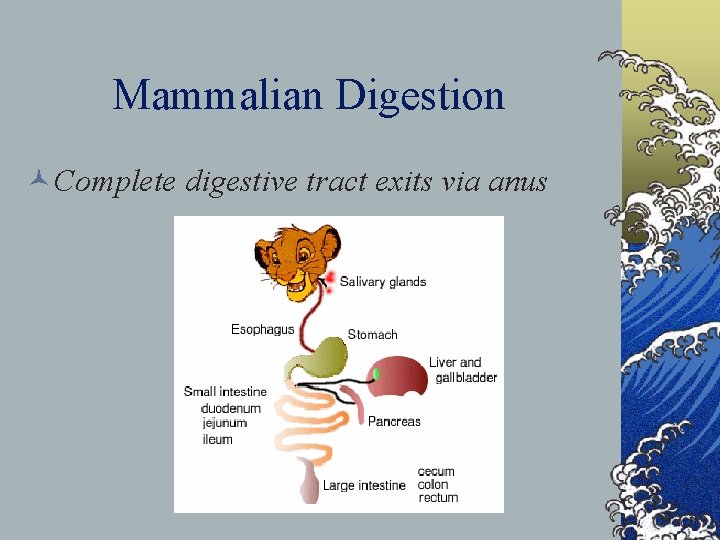
Mammalian Digestion ©Complete digestive tract exits via anus
Reproduction ©Strategies for making babies… ©Internal fertilization- egg is inside the body and sperm enters to join ©External fertilization- egg is released from the body to meet sperm in outside world ©Parthenogenesis- ability to asexually produce offspring from unfertilized egg
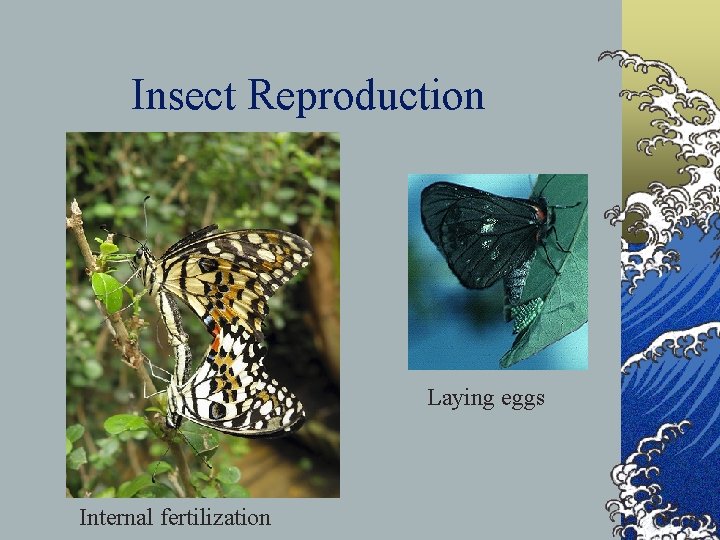
Insect Reproduction ©VERY DIVERSE! ©Usually sexual with internal fertilization ©Eggs are laid once fertilized ©May undergo parthenogenesis if no mate is available to fertilize the egg
Insect Reproduction Laying eggs Internal fertilization
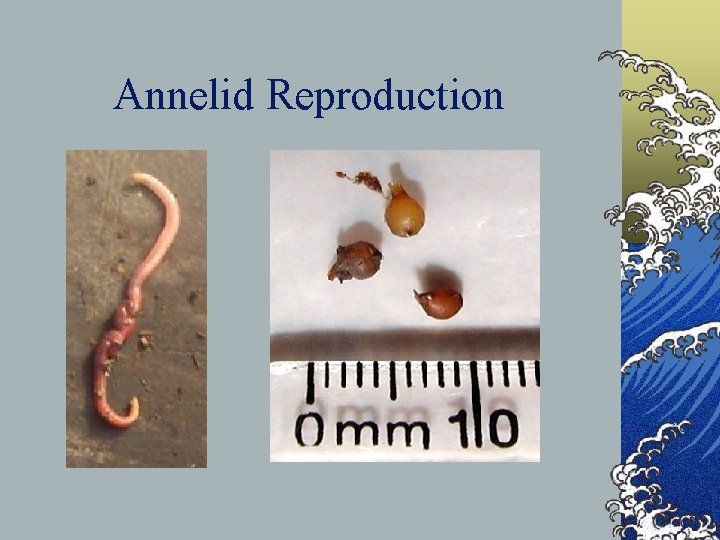
Annelid Reproduction ©Hermaphrodites- each one produces both eggs and sperm, but does not self-fertilize ©In mating, each worm donates sperm to the other ©Both worms can then become pregnant ©Once fertilized, they lay eggs
Annelid Reproduction
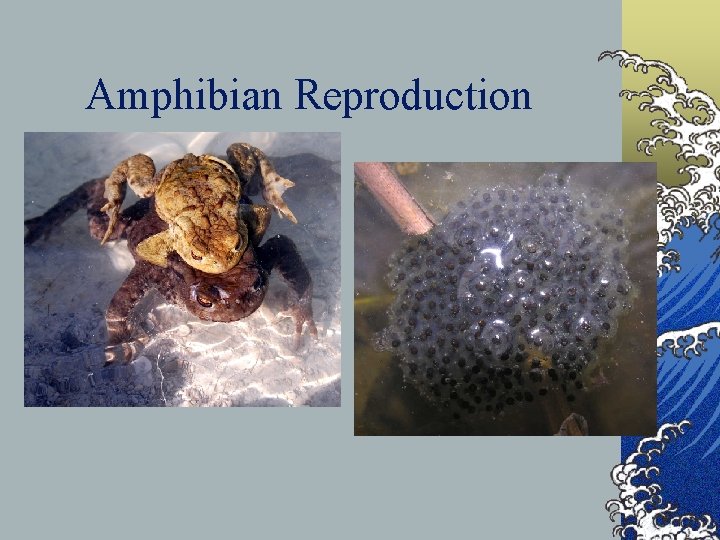
Amphibian Reproduction ©External Fertilization in water as a transport medium for sperm ©Animals mount, and both release into the water ©Eggs lack protective coats ©Some parthenogenesis can take place when mates are scarce.
Amphibian Reproduction
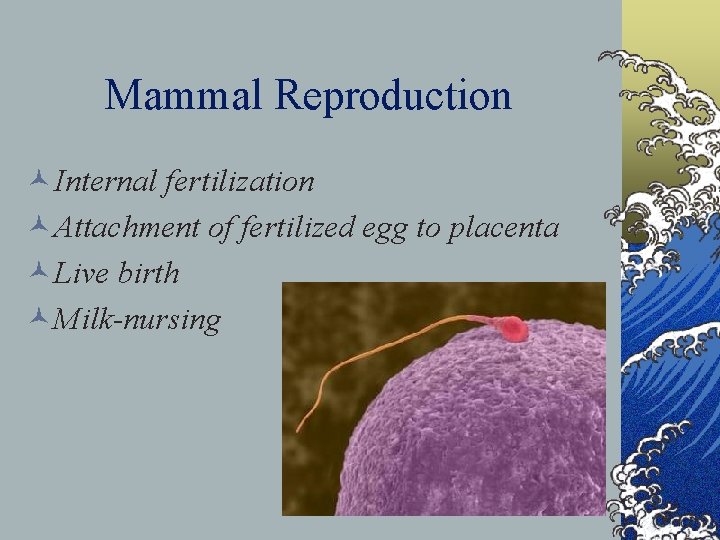
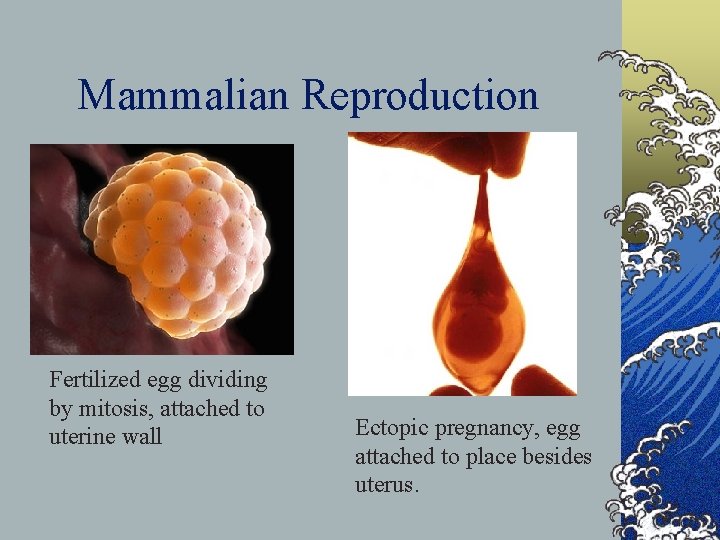
Mammal Reproduction ©Internal fertilization ©Attachment of fertilized egg to placenta ©Live birth ©Milk-nursing
Mammalian Reproduction Fertilized egg dividing by mitosis, attached to uterine wall Ectopic pregnancy, egg attached to place besides uterus.
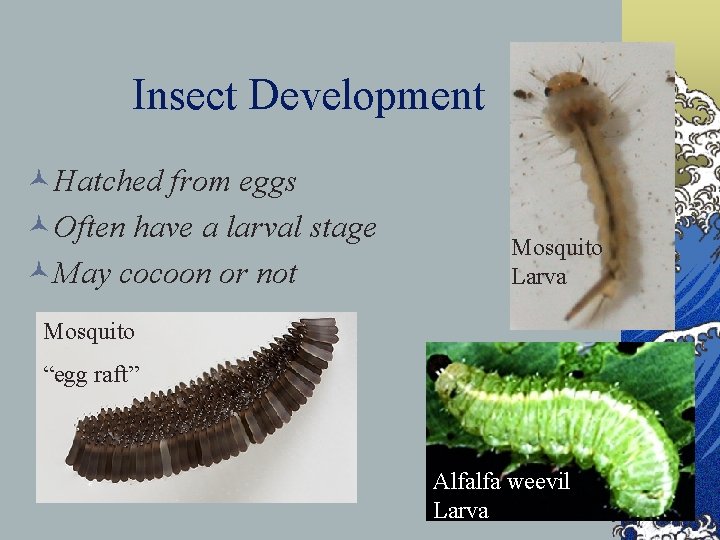
Insect Development ©Hatched from eggs ©Often have a larval stage ©May cocoon or not Mosquito Larva Mosquito “egg raft” Alfalfa weevil Larva
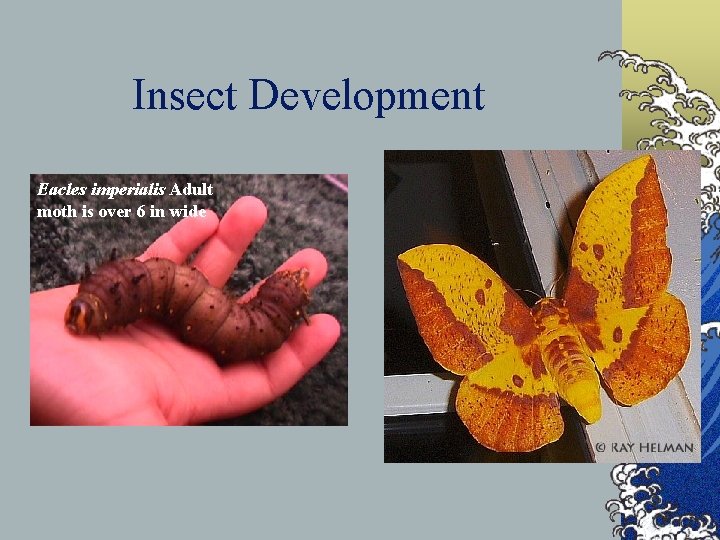
Insect Development Eacles imperialis Adult moth is over 6 in wide
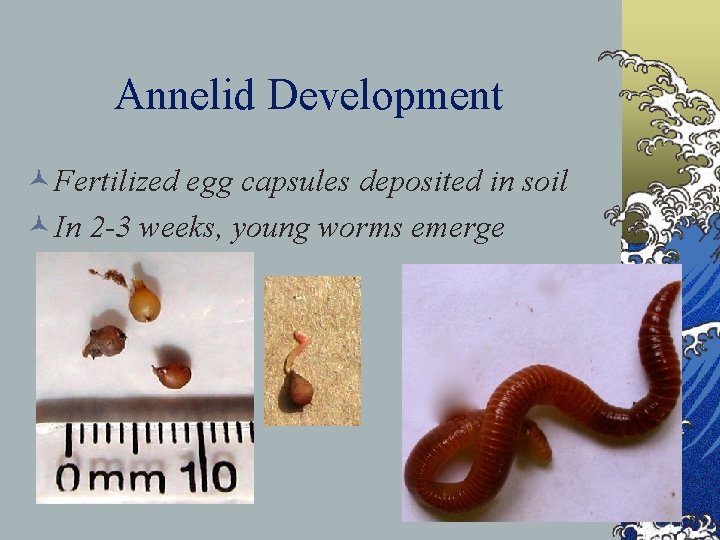
Annelid Development ©Fertilized egg capsules deposited in soil ©In 2 -3 weeks, young worms emerge
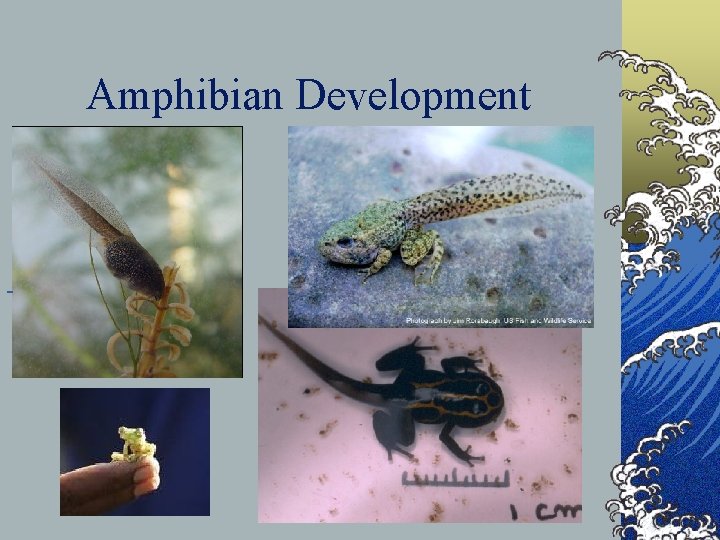
Amphibian Development ©Metamorphosis- life has two completely different stages ©Young are herbivorous and aquatic ©Adults are carnivorous and can migrate onto land
Amphibian Development
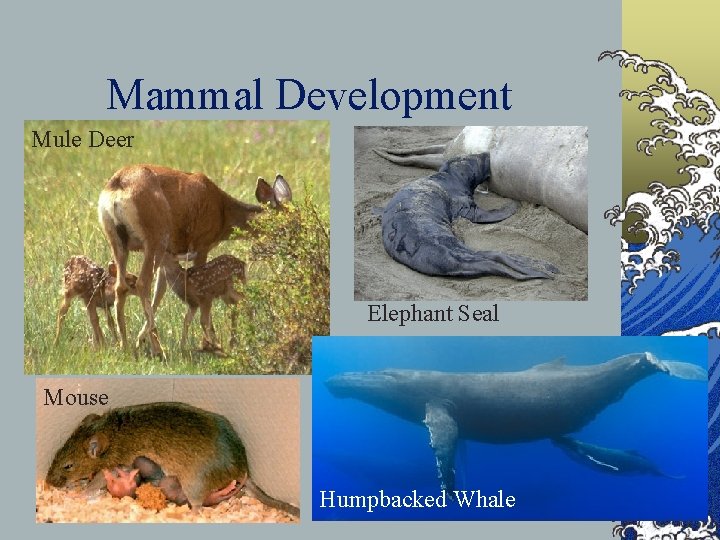
Mammal Development ©Young born live and nursing for nutrition ©Spend at least some time with parents learning behaviors and receiving nutrition and protection from mothers
Mammal Development Mule Deer Elephant Seal Mouse Humpbacked Whale