
Animalism We Are Animals Every human person is
- Slides: 35
Animalism
We Are Animals Every human person is identical to an animal
What Animalism says What Animalism is and what it is not
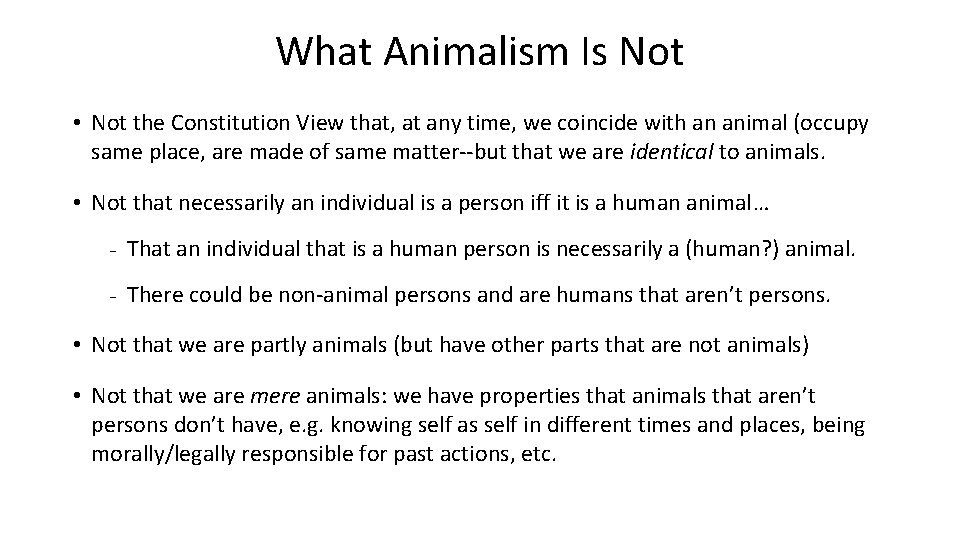
What Animalism Is Not • Not the Constitution View that, at any time, we coincide with an animal (occupy same place, are made of same matter--but that we are identical to animals. • Not that necessarily an individual is a person iff it is a human animal… - That an individual that is a human person is necessarily a (human? ) animal. - There could be non-animal persons and are humans that aren’t persons. • Not that we are partly animals (but have other parts that are not animals) • Not that we are mere animals: we have properties that animals that aren’t persons don’t have, e. g. knowing self as self in different times and places, being morally/legally responsible for past actions, etc.
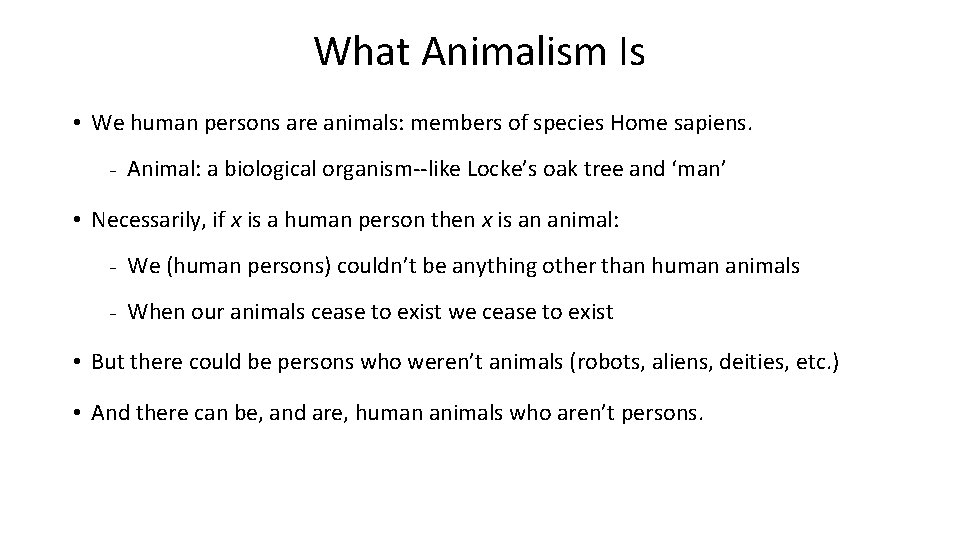
What Animalism Is • We human persons are animals: members of species Home sapiens. - Animal: a biological organism--like Locke’s oak tree and ‘man’ • Necessarily, if x is a human person then x is an animal: - We (human persons) couldn’t be anything other than human animals - When our animals cease to exist we cease to exist • But there could be persons who weren’t animals (robots, aliens, deities, etc. ) • And there can be, and are, human animals who aren’t persons.
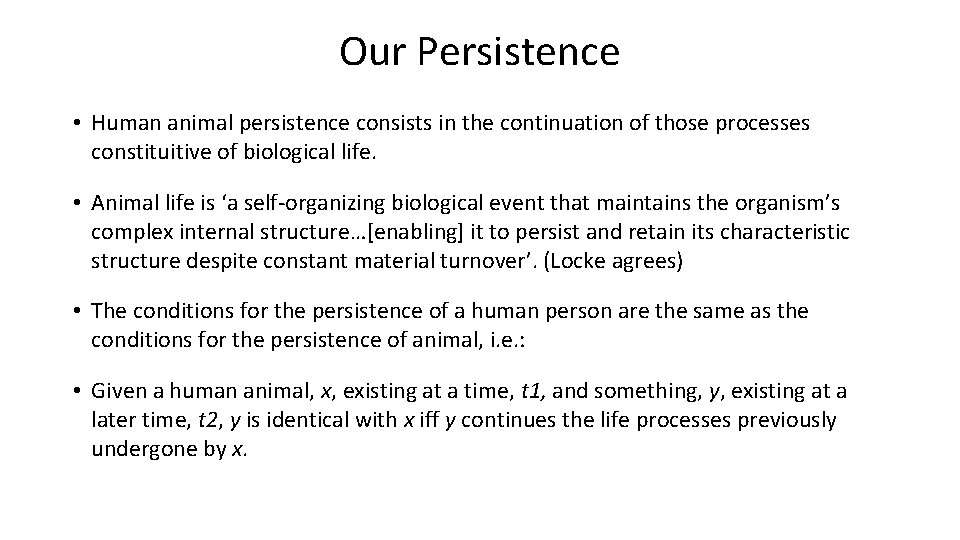
Our Persistence • Human animal persistence consists in the continuation of those processes constituitive of biological life. • Animal life is ‘a self-organizing biological event that maintains the organism’s complex internal structure…[enabling] it to persist and retain its characteristic structure despite constant material turnover’. (Locke agrees) • The conditions for the persistence of a human person are the same as the conditions for the persistence of animal, i. e. : • Given a human animal, x, existing at a time, t 1, and something, y, existing at a later time, t 2, y is identical with x iff y continues the life processes previously undergone by x.
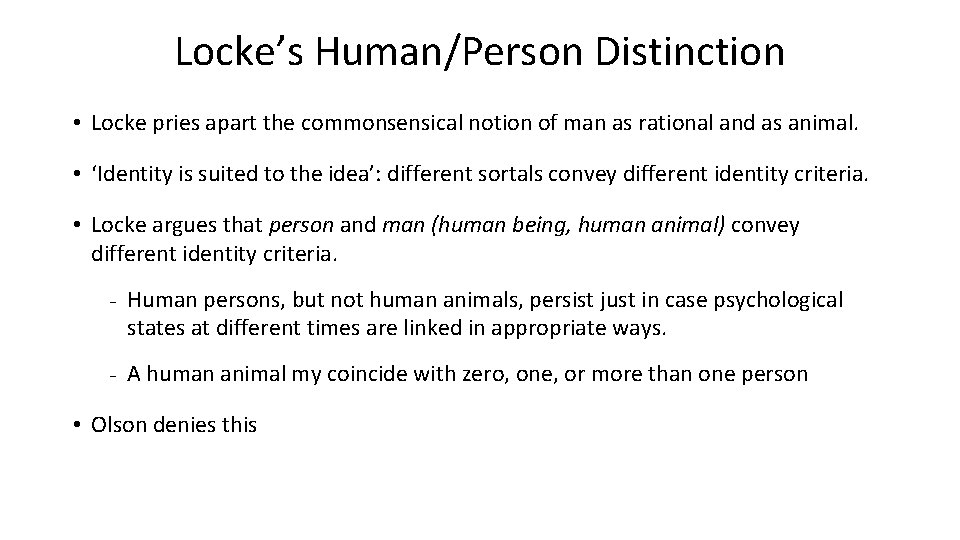
Locke’s Human/Person Distinction • Locke pries apart the commonsensical notion of man as rational and as animal. • ‘Identity is suited to the idea’: different sortals convey different identity criteria. • Locke argues that person and man (human being, human animal) convey different identity criteria. - Human persons, but not human animals, persist just in case psychological states at different times are linked in appropriate ways. - A human animal my coincide with zero, one, or more than one person • Olson denies this
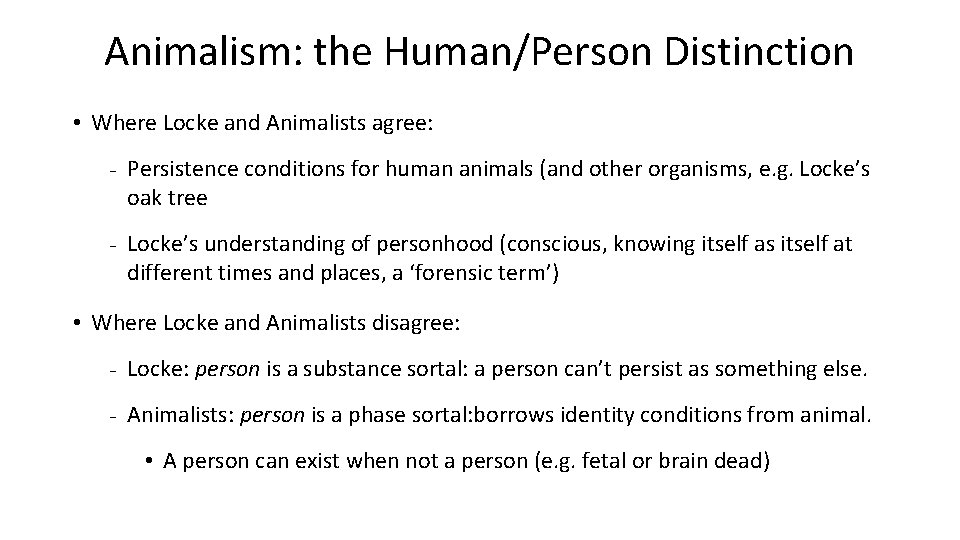
Animalism: the Human/Person Distinction • Where Locke and Animalists agree: - Persistence conditions for human animals (and other organisms, e. g. Locke’s oak tree - Locke’s understanding of personhood (conscious, knowing itself as itself at different times and places, a ‘forensic term’) • Where Locke and Animalists disagree: - Locke: person is a substance sortal: a person can’t persist as something else. - Animalists: person is a phase sortal: borrows identity conditions from animal. • A person can exist when not a person (e. g. fetal or brain dead)
Alternatives Animalism and other accounts of personal persistence
Animalism vs. Neo-Lockeanism(s) • Neo-Lockeanism: psychological criterion for personal persistence. - In-house disagreement about how to formulate, e. g. problems with ‘the memory criterion, ’ negotiating continuity and connectedness, etc. • Neo-Lockean Alternatives to Animalism - Constitution View - The Temporal Parts View - Unorthodox alternatives: Humean ‘bundle theory’, persons as programs, there re no persons
Why Animalism is Unpopular Problem with ’puzzle cases’: we begin by asking how we persist--not what we are
The Problem with the ‘Puzzle Cases’ • The traditional problem of personal identity is not what we are, but what it takes for us to persist • Claims about what it takes for us to persist do not by themselves tell us what other fundamental properties we have: whether we are material or immaterial, simple or composite, abstract or concrete, and so on. • Puzzle cases of personal persistence pump the Neo-Lockean psychological continuity intuition… • Which is incompatible with animalism: The persistence of a human animal…does not consist in mental continuity. - You were once an embryo and may end up as an unthinking human vegetable
Brain Transplant Puzzle Case • Puzzle cases: caveat emptor! - Compare Locke’s Day-Man/Night-Man case - Brain transplant pumps the intuition that we go with our brains--be careful! • Olson’s diagnosis of the brain transplant intuition - We begin by considering the personal persistence question - Ignoring the more fundamental question of what persons are, viz. animals - And then conclude that persons aren’t animals. • Neo-Lockean response: which organism should we care about? What matters?
The Thinking Animal Argument Olson’s too many thinkers argument for Animalism and objections
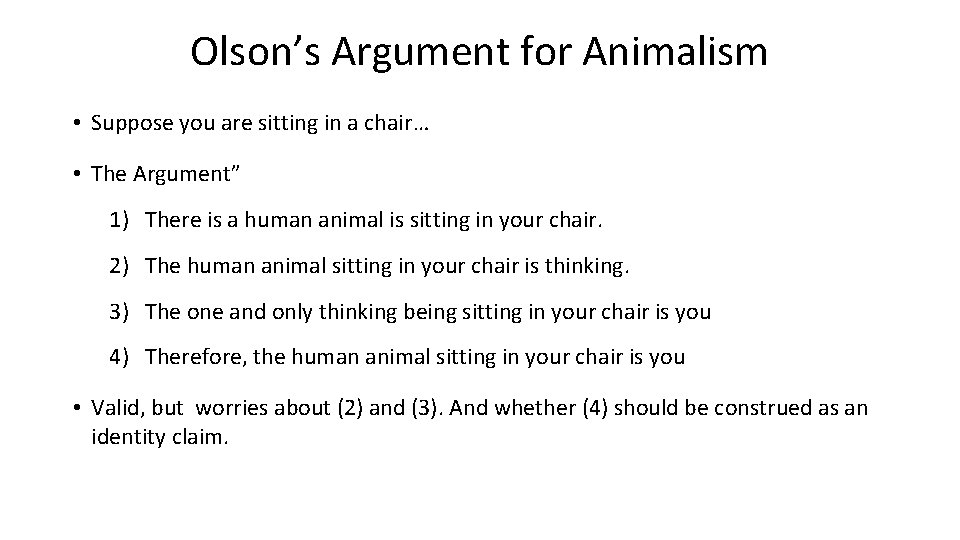
Olson’s Argument for Animalism • Suppose you are sitting in a chair… • The Argument” 1) There is a human animal is sitting in your chair. 2) The human animal sitting in your chair is thinking. 3) The one and only thinking being sitting in your chair is you 4) Therefore, the human animal sitting in your chair is you • Valid, but worries about (2) and (3). And whether (4) should be construed as an identity claim.
Alternative One: No Human Animals • Premise 1: There is a human animal is sitting in your chair. • Objection: There are no human animals or other organisms - e. g. Chisholm on ens successiva: what we think of as an organism isreally only a succession of different ‘masses of matter, each succeeded by a numerically different mass of matter when any part is replaced. • Olson’s response: ‘Few opponents of animalism deny the existence of animals’ - Would rule out the existence of anything else that we could be - Neither animals, nor people, not other ordinary objects are substances in the strict sense (but comparable to, e. g. fountains): is objectionable?
Alternative Two: Human Animals Can’t Think • Premise 2: The human animal sitting in your chair is thinking. • Objection: There is an animal sitting in your chair, but it isn’t thinking • Olson’s response: This is rather hard to believe. Anyone who denies that animals can think…needs to explain why they can’t. What stops a typical human animal from using its brain to think? Isn’t that what that organ is for? • Non-human animals (pace Descartes!) can think: why not human animals? • Shoemaker argues animals can’t think because they have wrong identity conditions--but see response to Brain Transplant case: this is beginning with intuitions about persistence conditions.
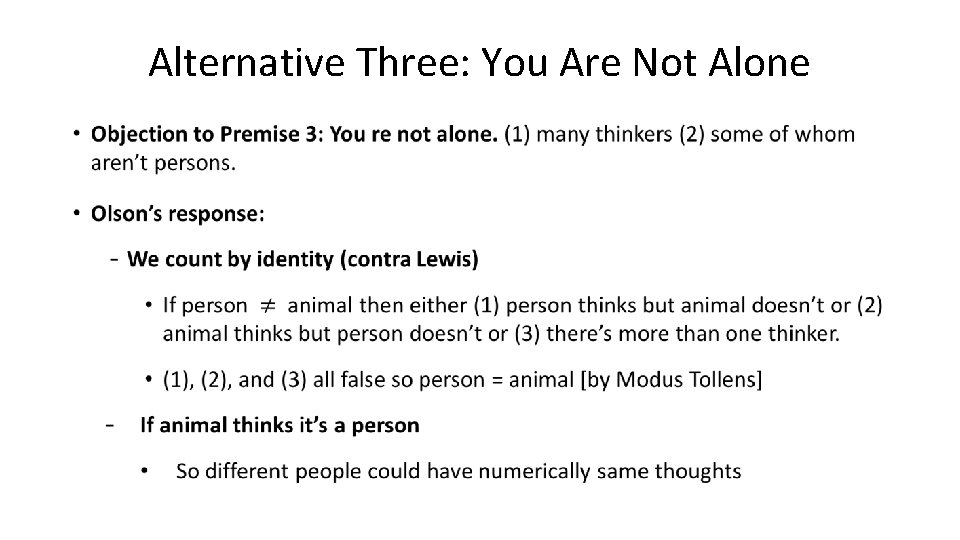
Alternative Three: You Are Not Alone •
Hard Choices And what it would mean if we were animals
Summary: Trade-Offs • Olson reflects on puzzle cases • Philosophers ‘haven’t asked the right questions. They have thought about what it takes for us to persist through time, but not about what we are’. - Is this fair to Locke? • The brain transplant argument - intuitions skewed by privileging the persistence question. • Animalist intuitions: we were once fetuses, we may persist in vegetative states, and ‘don’t we have a strong conviction that we are animals?
What would it mean if we were animals? • Person is a phase sortal: humans exist before becoming persons and may exist after ceasing to be persons. • Substance sortals, e. g. bicycle, planet, animal - Convey identity conditions for objects of the kind the designate - Designate objects throughout the time they exist • Phase sortals , e. g. baby and (according to Olson) person - designate objects during phases of their existence - Borrow identity criteria from substance sortals (e. g. person from animal)
Neo-Lockean Responses Baker’s Constitution View and Lewis’s Countrpart View
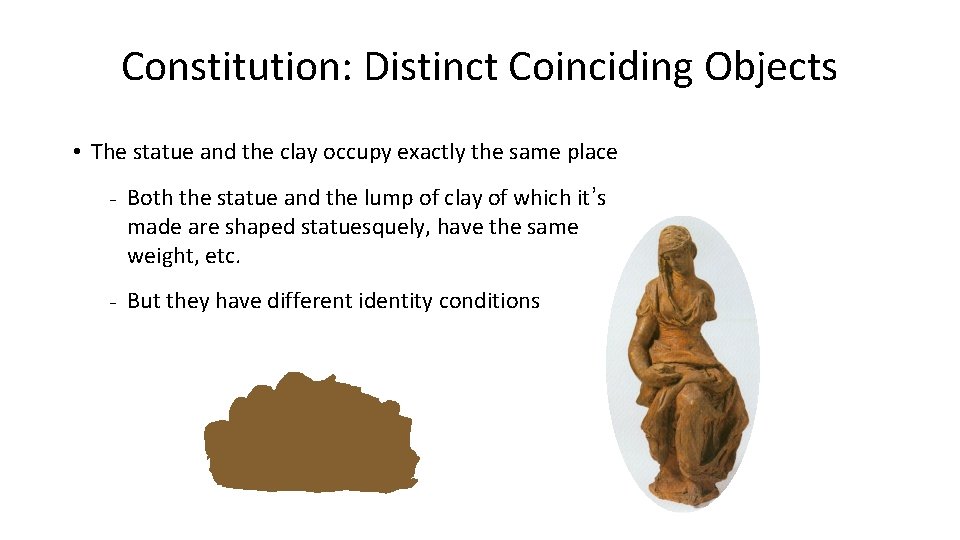
Constitution: Distinct Coinciding Objects • The statue and the clay occupy exactly the same place - Both the statue and the lump of clay of which it’s made are shaped statuesquely, have the same weight, etc. - But they have different identity conditions
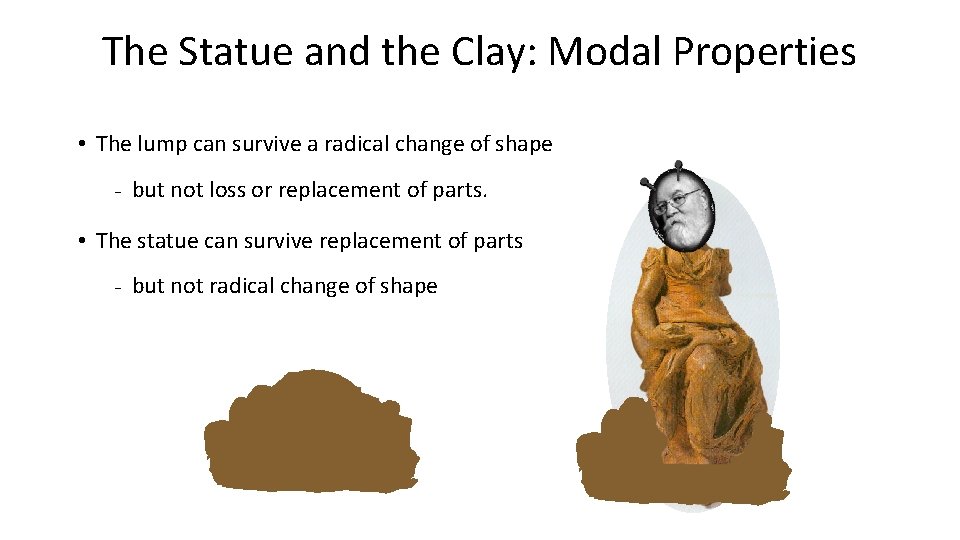
The Statue and the Clay: Modal Properties • The lump can survive a radical change of shape - but not loss or replacement of parts. • The statue can survive replacement of parts - but not radical change of shape
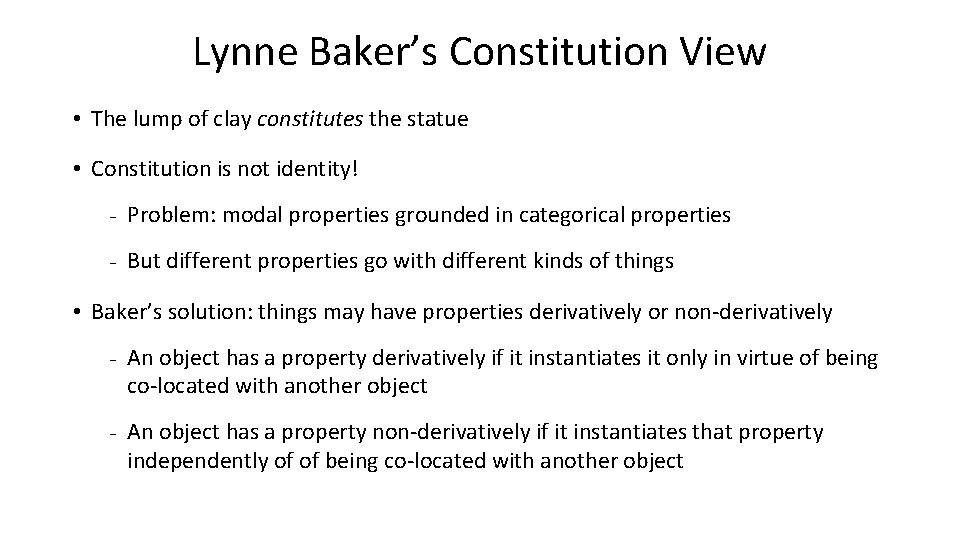
Lynne Baker’s Constitution View • The lump of clay constitutes the statue • Constitution is not identity! - Problem: modal properties grounded in categorical properties - But different properties go with different kinds of things • Baker’s solution: things may have properties derivatively or non-derivatively - An object has a property derivatively if it instantiates it only in virtue of being co-located with another object - An object has a property non-derivatively if it instantiates that property independently of of being co-located with another object
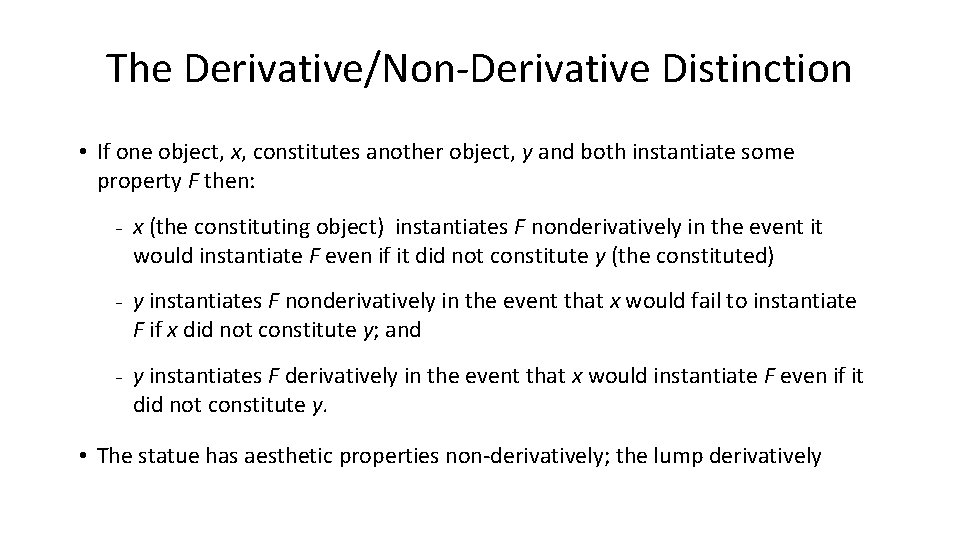
The Derivative/Non-Derivative Distinction • If one object, x, constitutes another object, y and both instantiate some property F then: - x (the constituting object) instantiates F nonderivatively in the event it would instantiate F even if it did not constitute y (the constituted) - y instantiates F nonderivatively in the event that x would fail to instantiate F if x did not constitute y; and - y instantiates F derivatively in the event that x would instantiate F even if it did not constitute y. • The statue has aesthetic properties non-derivatively; the lump derivatively
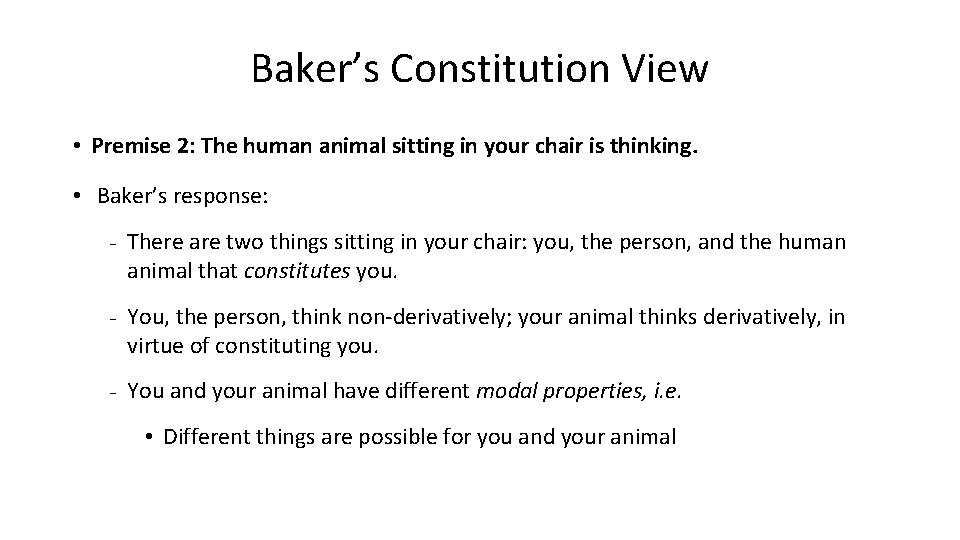
Baker’s Constitution View • Premise 2: The human animal sitting in your chair is thinking. • Baker’s response: - There are two things sitting in your chair: you, the person, and the human animal that constitutes you. - You, the person, think non-derivatively; your animal thinks derivatively, in virtue of constituting you. - You and your animal have different modal properties, i. e. • Different things are possible for you and your animal
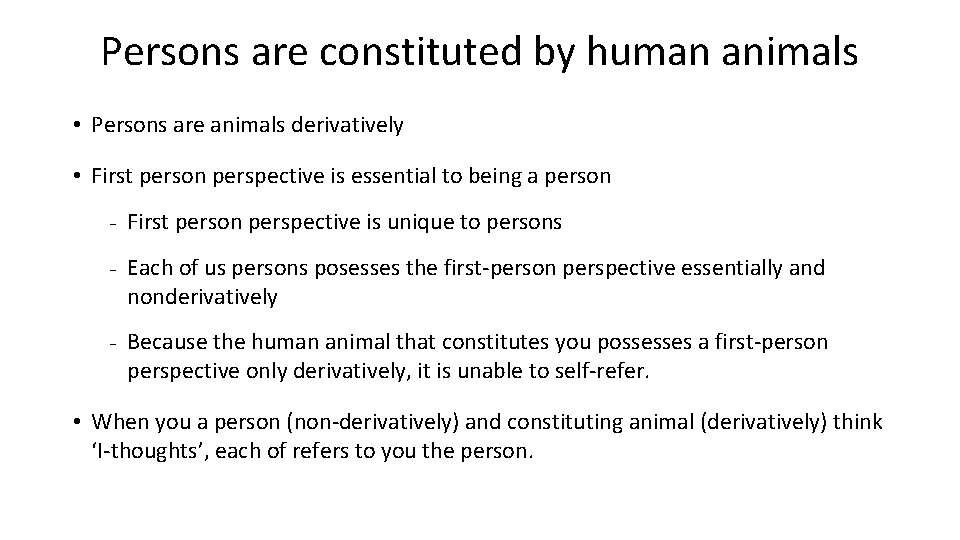
Persons are constituted by human animals • Persons are animals derivatively • First person perspective is essential to being a person - First person perspective is unique to persons - Each of us persons posesses the first-person perspective essentially and nonderivatively - Because the human animal that constitutes you possesses a first-person perspective only derivatively, it is unable to self-refer. • When you a person (non-derivatively) and constituting animal (derivatively) think ‘I-thoughts’, each of refers to you the person.
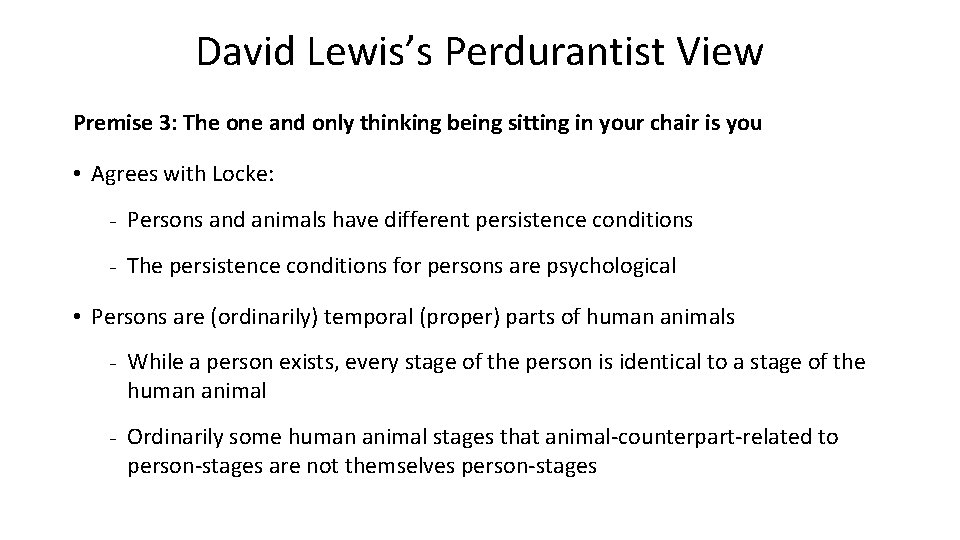
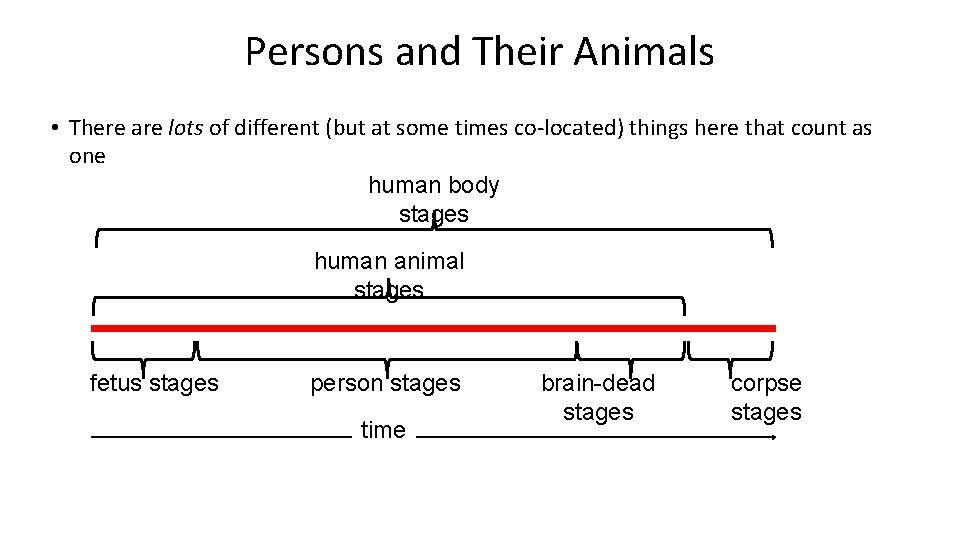
David Lewis’s Perdurantist View Premise 3: The one and only thinking being sitting in your chair is you • Agrees with Locke: - Persons and animals have different persistence conditions - The persistence conditions for persons are psychological • Persons are (ordinarily) temporal (proper) parts of human animals - While a person exists, every stage of the person is identical to a stage of the human animal - Ordinarily some human animal stages that animal-counterpart-related to person-stages are not themselves person-stages
Persons and Their Animals • There are lots of different (but at some times co-located) things here that count as one human body stages human animal stages fetus stages person stages time brain-dead stages corpse stages
You are not alone • Olson: Too many thinkers - Overcrowding: there are two thinkers - Which one is you? “I” refers to the thinker so when the animal thinks an “I”thought he thinks about the animal. Lewis’s Response: When two beings are as intimately related as you and your animal are…we ‘count them as one’…Ordinary people have no opinion about how many numerically different thinking beings there are…What matters in real life is not how many thinkers there are strictly speaking, but how many non-overlapping thinkers.
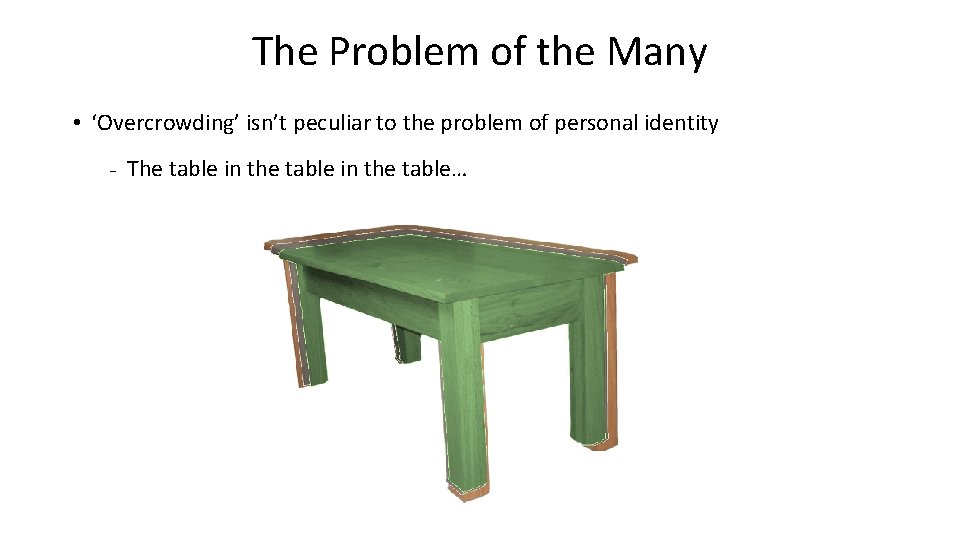
The Problem of the Many • ‘Overcrowding’ isn’t peculiar to the problem of personal identity - The table in the table…
Zimmerman’s Thinking Parts Premise 1: There is a human animal is sitting in your chair. • There are many things overlapping the human animal in your chair, e. g. - A hunk of matter that wholly overlaps you - Your brain, head, upper body + head, everything but your left foot, etc. • Each of these things thinks but none is identical with the human animal (as the animalist admits. • So the animalist has no reason to hold that you are identical with the human animal because it thinks.
Are we animals? • On the orthodox (neo-Lockean) account, yes and no • At any given time I, the person, occupy the same region as an animal: to that extent I am an animal, i. e. the animal and I count as one …Whatever else we are • But as a person I have different persistence conditions than my animal so - My animal may predate and postdate me, the person - And conceivably I may survive my animal, e. g. in a resurrection world • A physicalist account of what persons are at any time doesn’t preclude a mentalistic account of personal identity through time
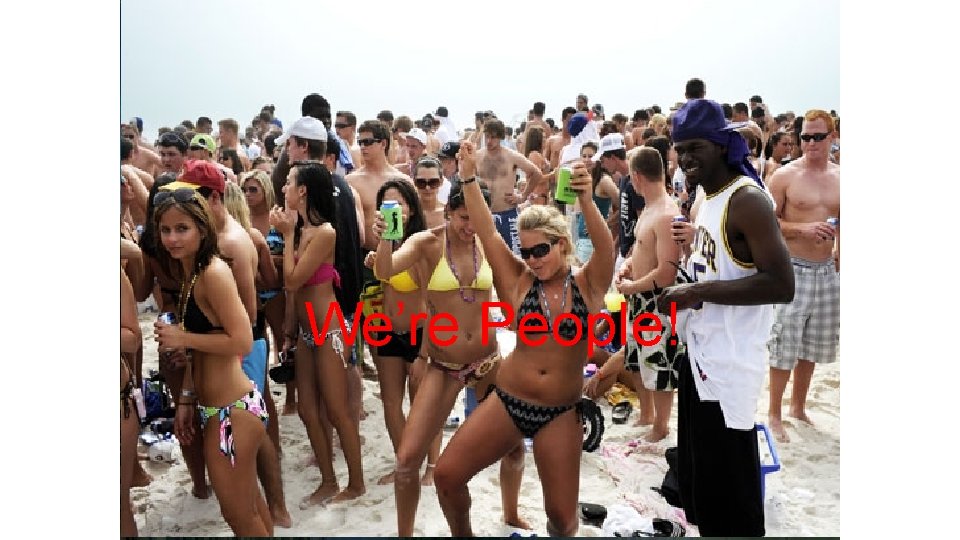
We’re People!