
AnimalDairy Science 434 Lec 2 Female comparative anatomy






- Slides: 25
Animal/Dairy Science 434 Lec 2: Female comparative anatomy; History of Reproductive Physiology Kangaroo Rat Human
Ovarian Differences Mare Cow Sow
Cow Cow, Sow, Ewe, Human • Cortex on outside • Ovulation can occur on any point of the ovary Mare • Inversion of the cortex and medulla. • Ovulation occurs at the Ovulation Fossa Preovulatory Tertiary Follicle Internal CL Mare Sow Blood vessels and connective tissue in medulla
Uterine and Cervical Differences Sow Cow Mare
Advanced Duplex (Opossum) Duplex (Rabbit, Mouse) Two Uterine Horns Two Cervices Bicornuate (Pig) Two Uterine Horns Two Cervices One Vagina Two Vaginas One Vagina Smaller Uterine Horns Bicornuate (Cow, Ewe, Doe) Two Uterine Horns (long) Common Uterine Body One Cervix No Larger Uterine Body with Smaller Horn, All Uterine Horns Uterine Body Simplex Bicornuate (Human) (Mare)
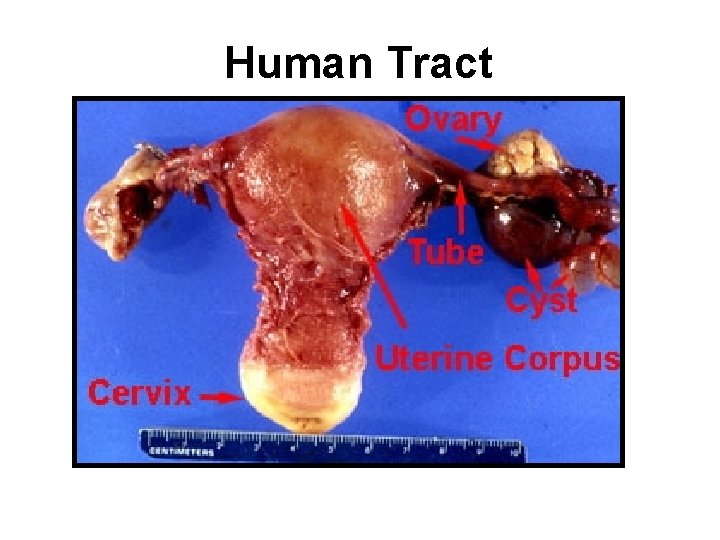
Human Tract
Human Tract
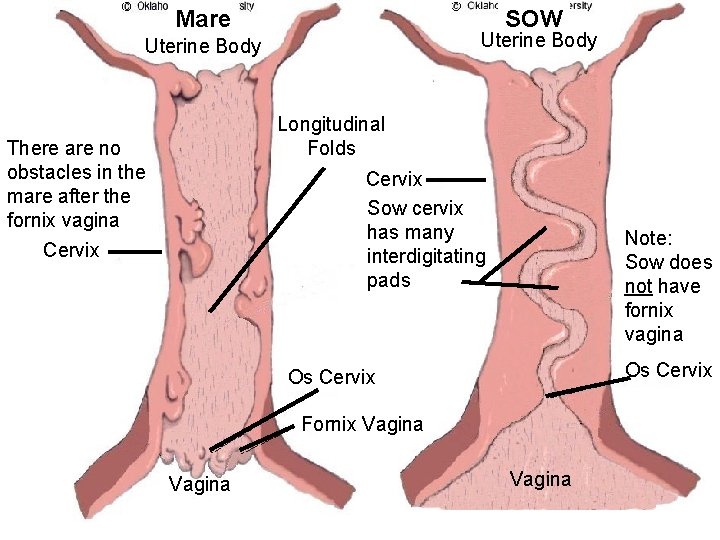
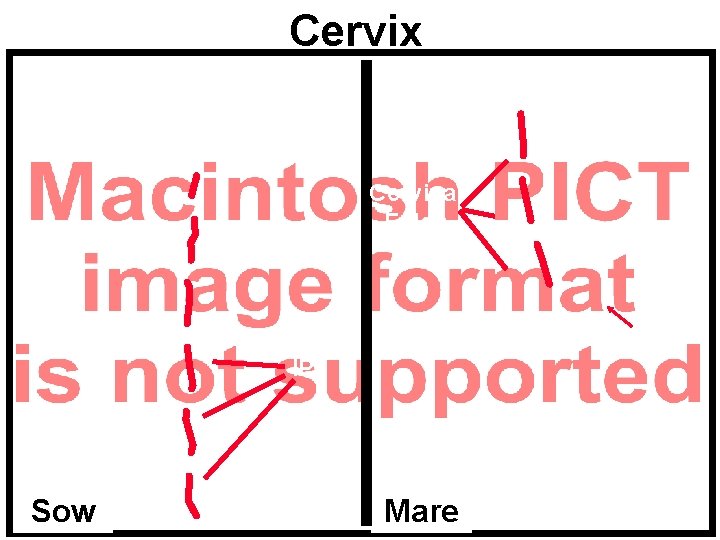
Mare SOW Uterine Body Longitudinal Folds There are no obstacles in the mare after the fornix vagina Cervix Sow cervix has many interdigitating pads Note: Sow does not have fornix vagina Os Cervix Fornix Vagina
Cervix COW Internal Os Cervical Ring Fornix External Os Anterior Vagina EWE Fornix Anterior Vagina
Cervix Cervical Folds FV IP Sow Mare
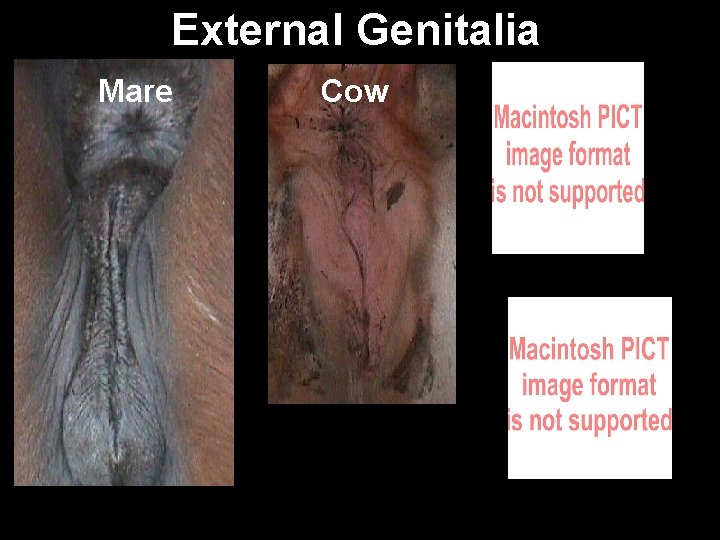
External Genitalia Mare Cow Sow Ewe
Human Tract
External Genitalia
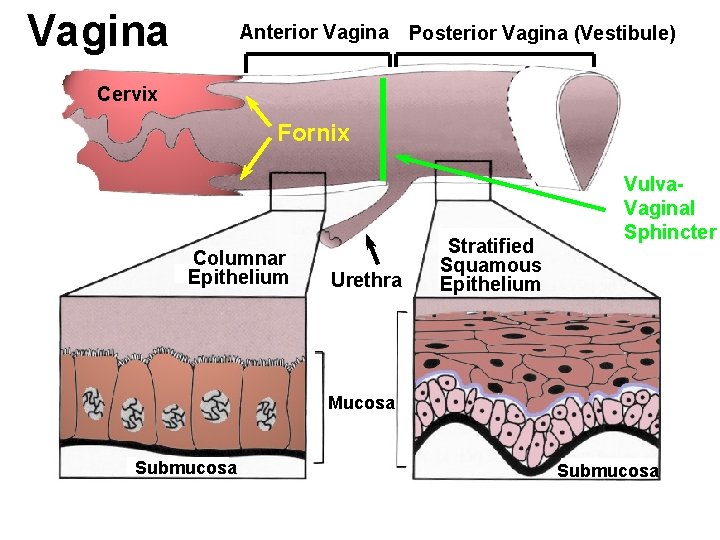
Vagina Anterior Vagina Posterior Vagina (Vestibule) Cervix Fornix Columnar Epithelium Urethra Stratified Squamous Epithelium Vulva. Vaginal Sphincter Mucosa Submucosa
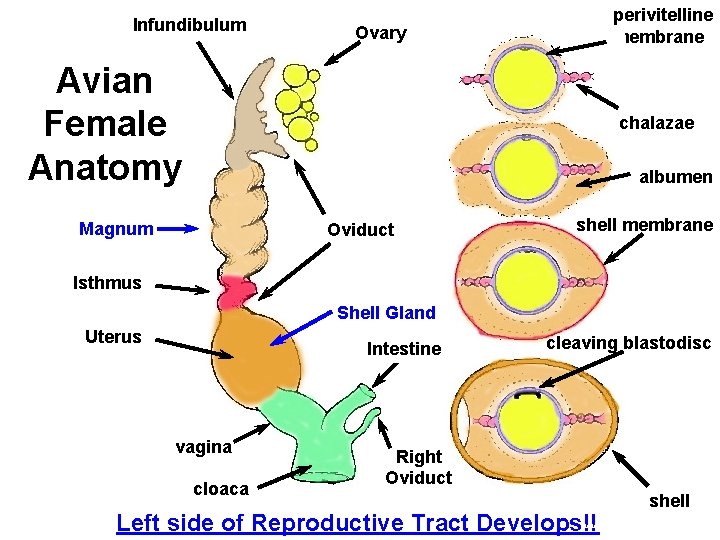
Infundibulum perivitelline membrane Ovary Avian Female Anatomy chalazae albumen Magnum Oviduct shell membrane Isthmus Shell Gland Uterus Intestine vagina cloaca cleaving blastodisc Right Oviduct Left side of Reproductive Tract Develops!! shell
Chicken Ovary Hierarchical Follicular Status
Chicken Tract Shell Gland Oviduct Ovary
Historical Development of Reproductive Physiology Aristotle 384 -322 BC • Fetus arises from Generation of Animals menstrual blood • Seminal plasma initiates the conversion of menstrual blood • Semen from all parts of body
Historical Development of Reproductive Physiology • Fallopius (1562) – Describes the oviduct • Coiter (1573) – Describes the corpus luteum • Regnier de Graff (1672) – Describes the antral follicle (Graafian Follicle) • van Leewenhoek (1677) – Develops the microscope – Describes spermatozoa in semen
Historical Development of Reproductive Physiology • Spallanzani (1780) – Sperm were the fertilizing agent in semen – Successful artificial insemination of a dog • Dumas (1825) – Proves sperm the fertilizing agent
Modern Reprod. Physiology • • • Gonads produce steroid hormones Cyclicity in females Radioimmunoassay (RIA) Artificial Insemination Semen Cryopreservation Prostaglandin used to control estrous cycles • Biotechnology
Approach to Applications • Develop basic knowledge of how system works • Investigate methods that can perturb the system • Manipulate the system to improve reproduction
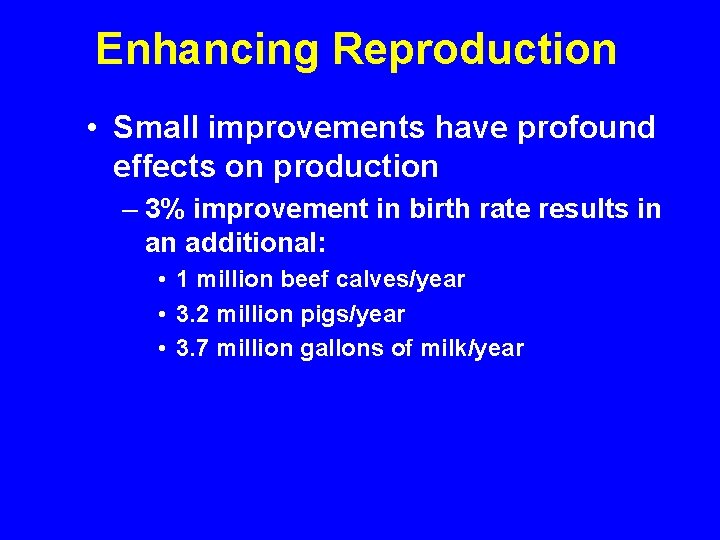
Enhancing Reproduction • Small improvements have profound effects on production – 3% improvement in birth rate results in an additional: • 1 million beef calves/year • 3. 2 million pigs/year • 3. 7 million gallons of milk/year
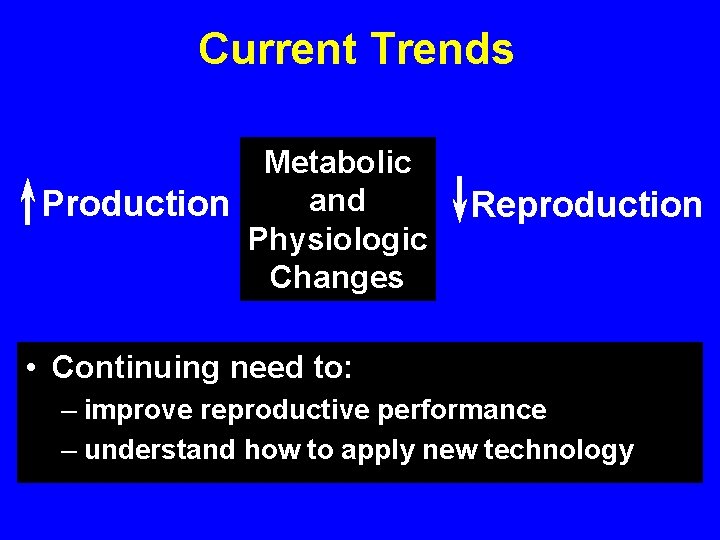
Current Trends Metabolic and Production Physiologic Changes Reproduction • Continuing need to: – improve reproductive performance – understand how to apply new technology
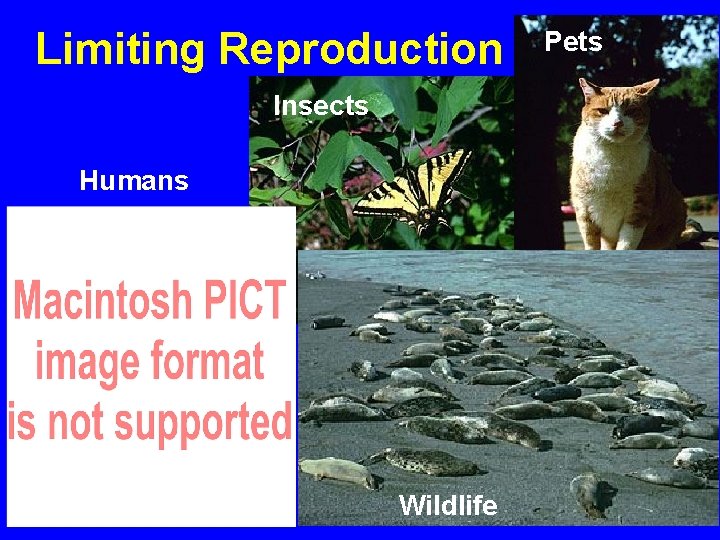
Limiting Reproduction Insects Humans Wildlife Pets