
AnimalDairy Science 434 Female comparative anatomy History of
- Slides: 42
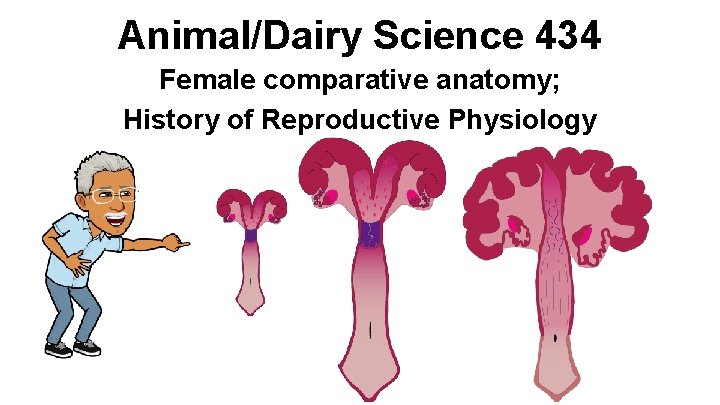
Animal/Dairy Science 434 Female comparative anatomy; History of Reproductive Physiology
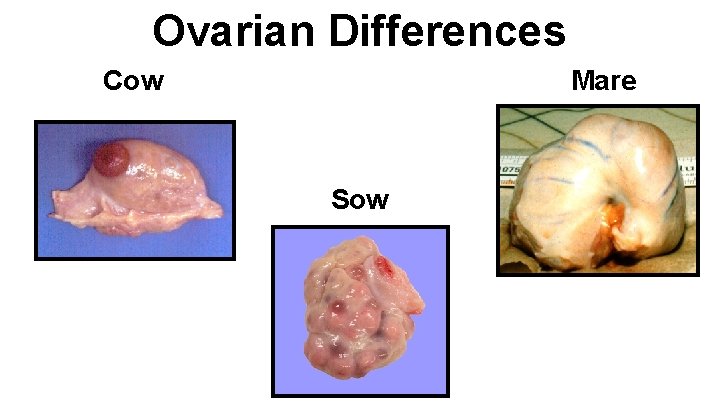
Ovarian Differences Cow Mare Sow
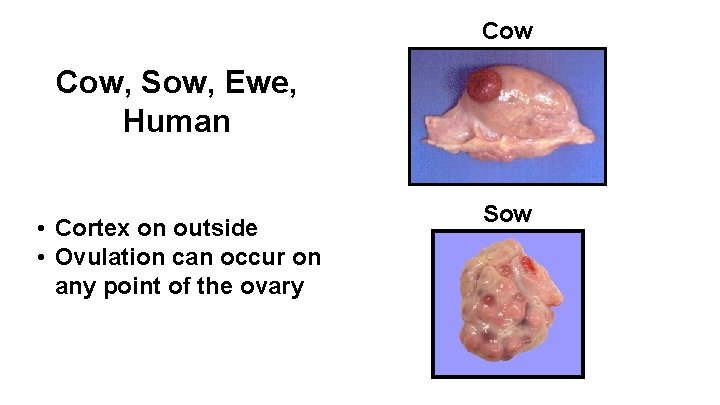
Cow Cow, Sow, Ewe, Human • Cortex on outside • Ovulation can occur on any point of the ovary Sow
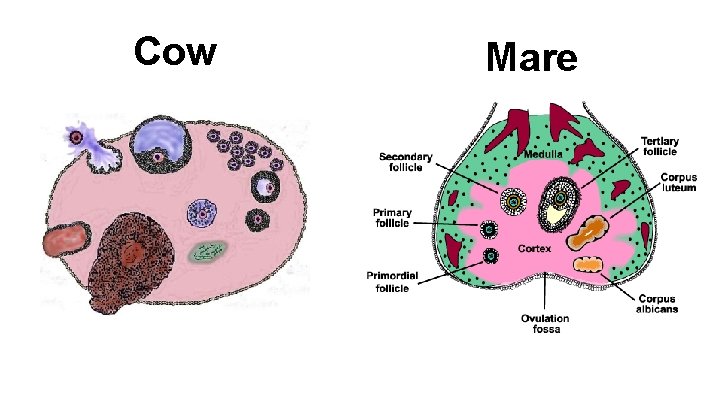
Cow Mare
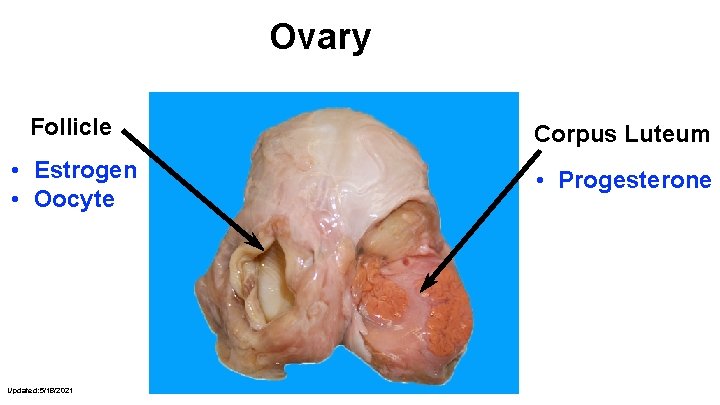
Ovary Follicle Corpus Luteum • Estrogen • Oocyte • Progesterone Updated: 5/18/2021
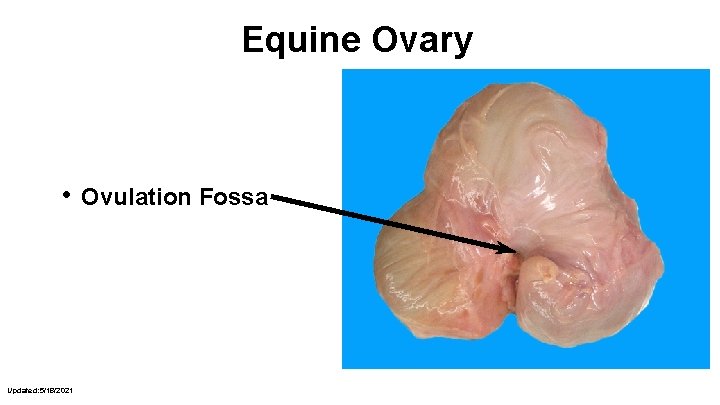
Equine Ovary • Updated: 5/18/2021 Ovulation Fossa
Quiz 2 a Remember to pause while you consider the answer to this question. Why does a mare have only 1 baby and a pig has many?
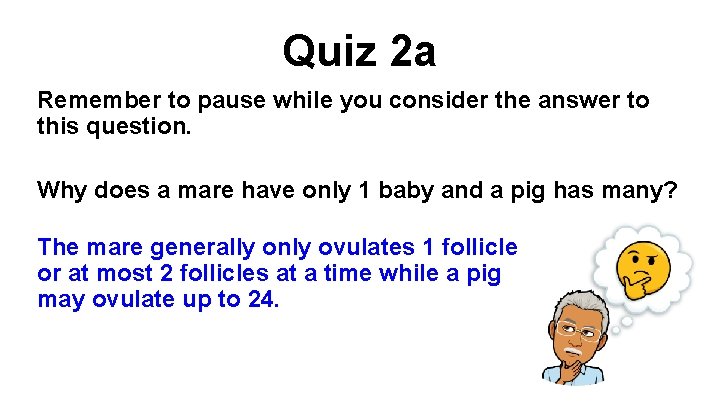
Quiz 2 a Remember to pause while you consider the answer to this question. Why does a mare have only 1 baby and a pig has many? The mare generally only ovulates 1 follicle or at most 2 follicles at a time while a pig may ovulate up to 24.
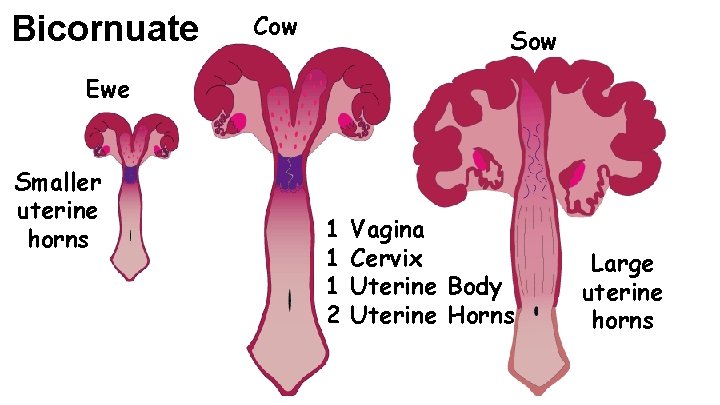
Bicornuate Cow Sow Ewe Smaller uterine horns 1 1 1 2 Vagina Cervix Uterine Body Uterine Horns Large uterine horns
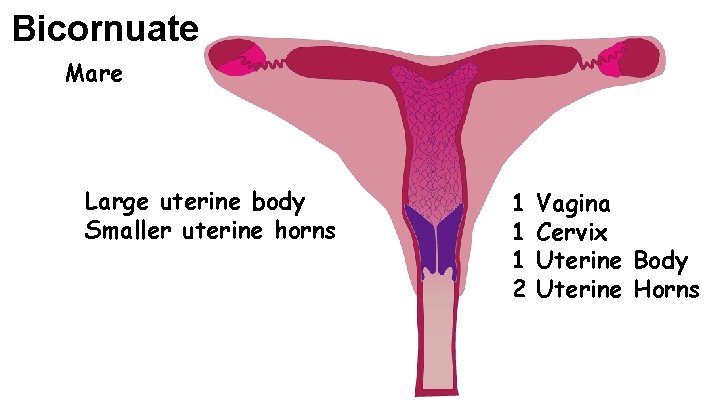
Bicornuate Mare Large uterine body Smaller uterine horns 1 1 1 2 Vagina Cervix Uterine Body Uterine Horns
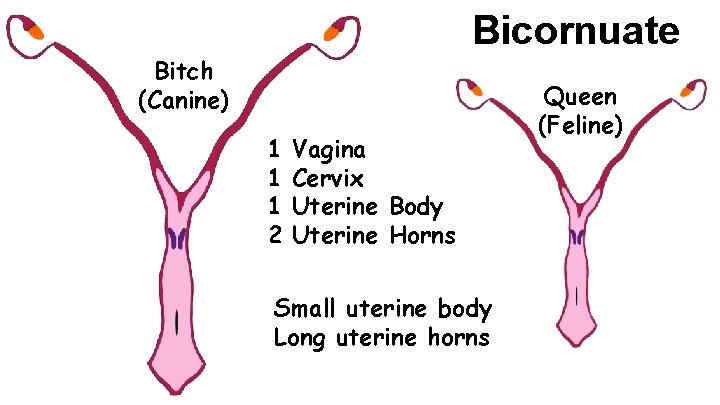
Bicornuate Bitch (Canine) 1 1 1 2 Vagina Cervix Uterine Body Uterine Horns Small uterine body Long uterine horns Queen (Feline)
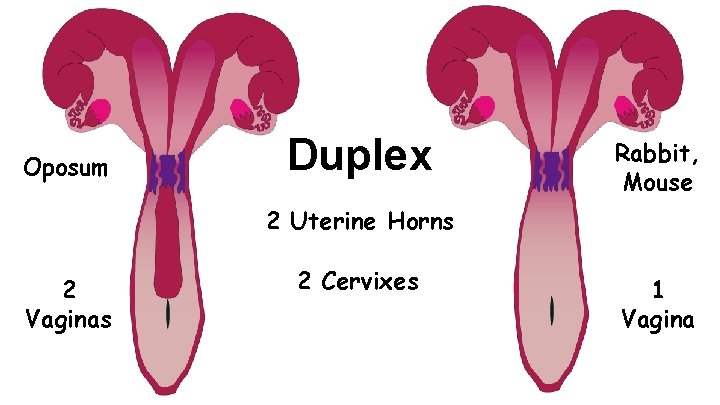
Oposum Duplex Rabbit, Mouse 2 Uterine Horns 2 Vaginas 2 Cervixes 1 Vagina
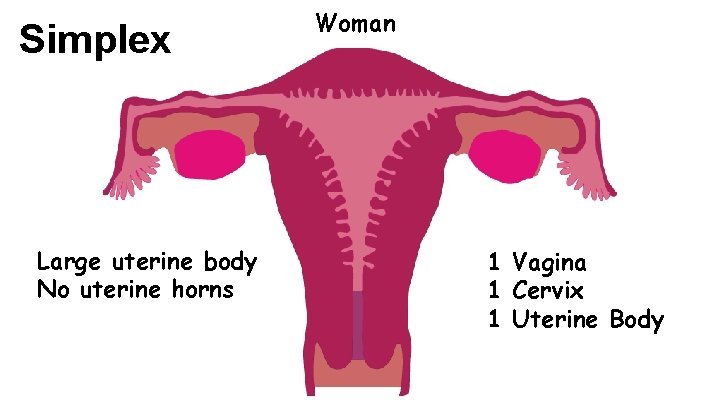
Simplex Large uterine body No uterine horns Woman 1 Vagina 1 Cervix 1 Uterine Body
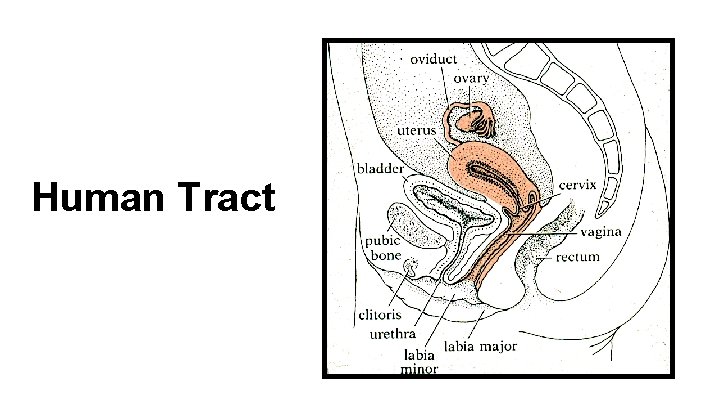
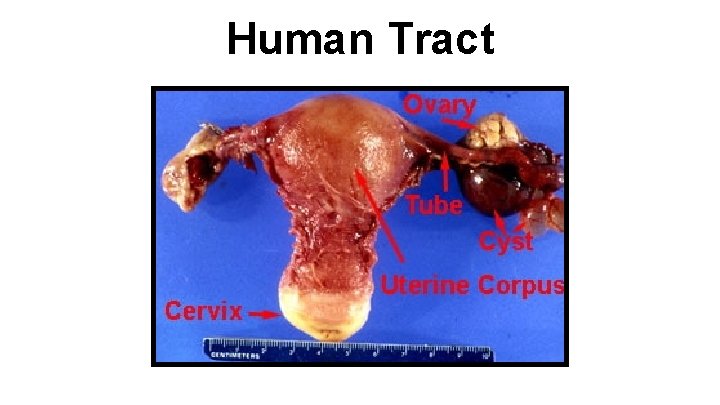
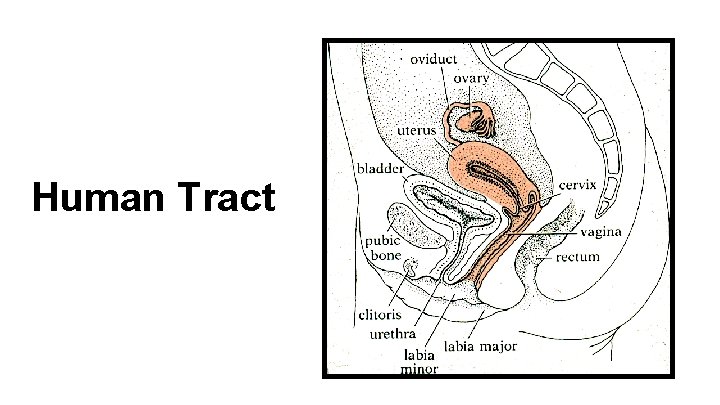
Human Tract
Human Tract
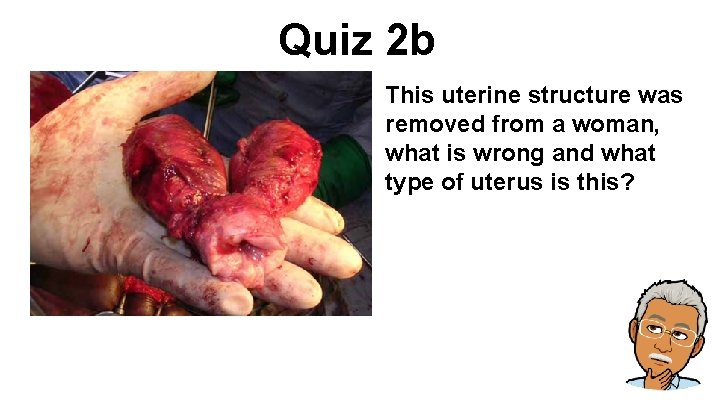
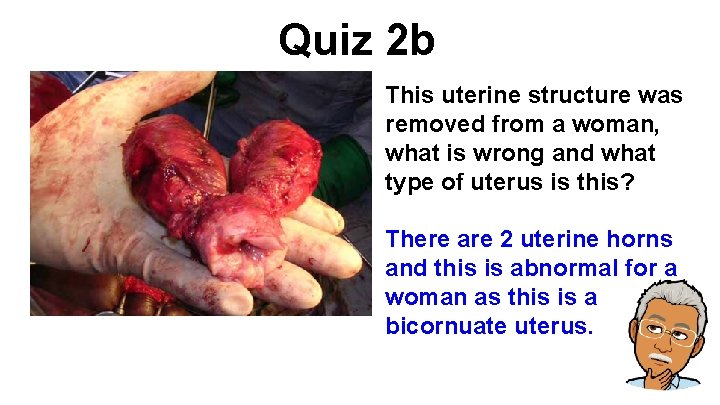
Quiz 2 b This uterine structure was removed from a woman, what is wrong and what type of uterus is this?
Quiz 2 b This uterine structure was removed from a woman, what is wrong and what type of uterus is this? There are 2 uterine horns and this is abnormal for a woman as this is a bicornuate uterus.
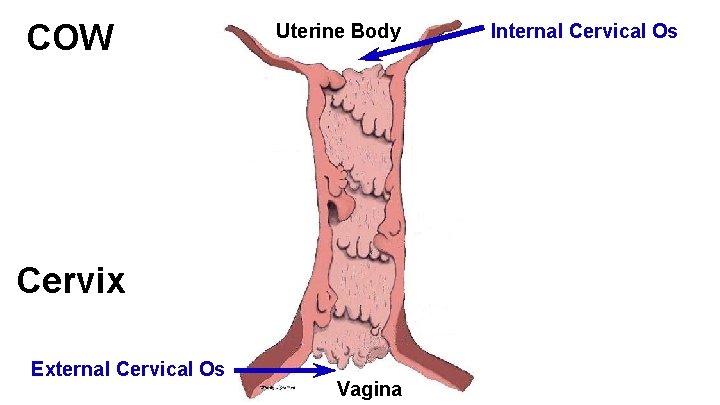
COW Uterine Body Cervix External Cervical Os Vagina Internal Cervical Os
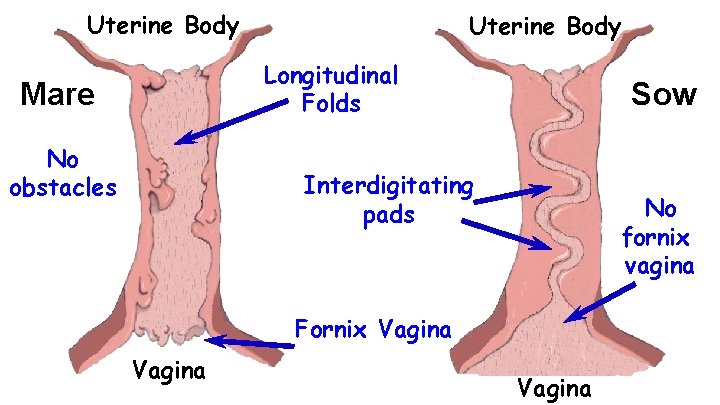
Uterine Body Longitudinal Folds Mare No obstacles Sow Interdigitating pads No fornix vagina Fornix Vagina
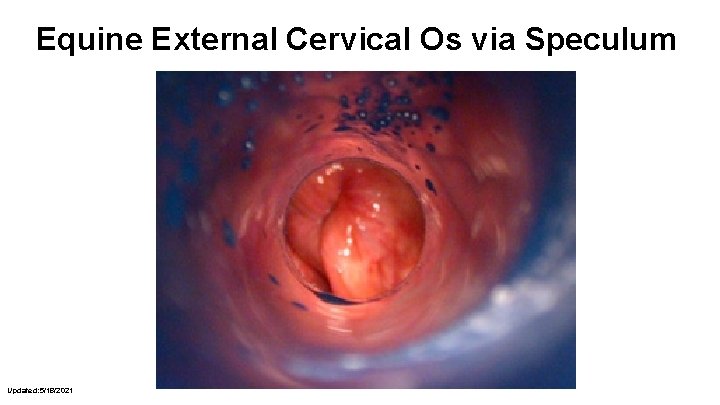
Equine External Cervical Os via Speculum Updated: 5/18/2021
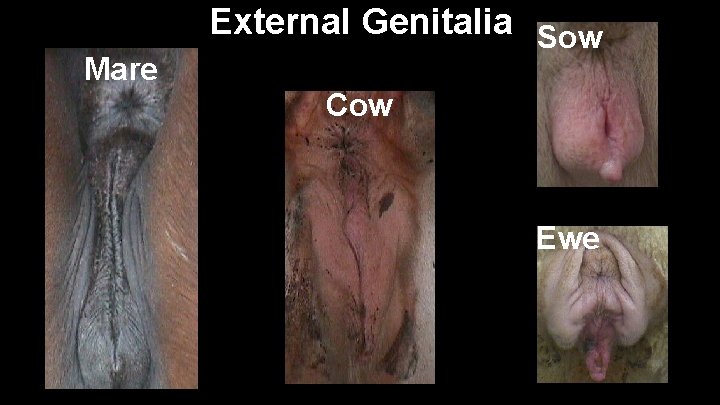
Mare External Genitalia Sow Cow Ewe
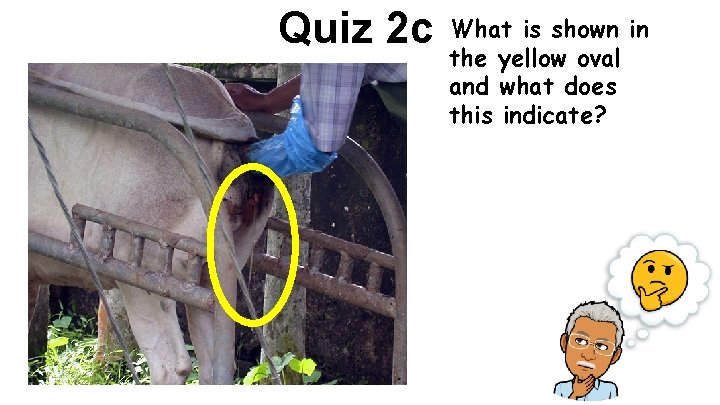
Quiz 2 c What is shown in the yellow oval and what does this indicate?
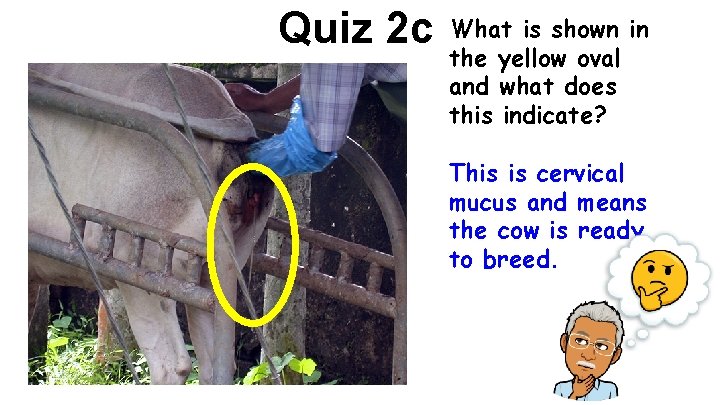
Quiz 2 c What is shown in the yellow oval and what does this indicate? This is cervical mucus and means the cow is ready to breed.
Human Tract
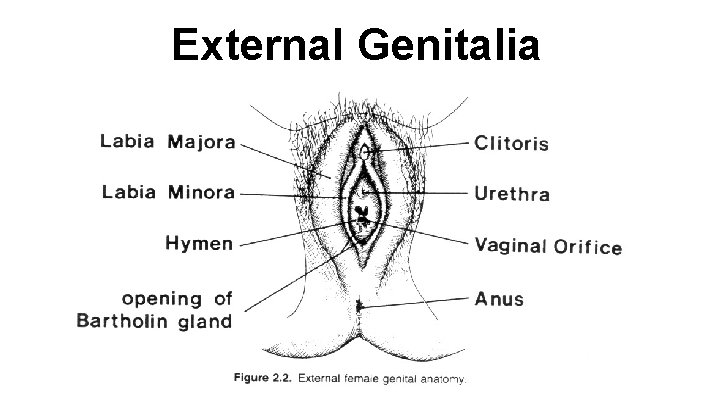
External Genitalia
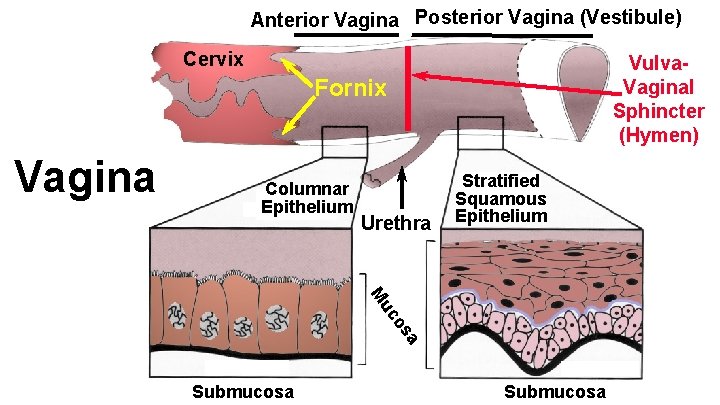
Anterior Vagina Posterior Vagina (Vestibule) Cervix Vulva. Vaginal Sphincter (Hymen) Fornix Vagina Columnar Epithelium Urethra Stratified Squamous Epithelium a os uc M Submucosa
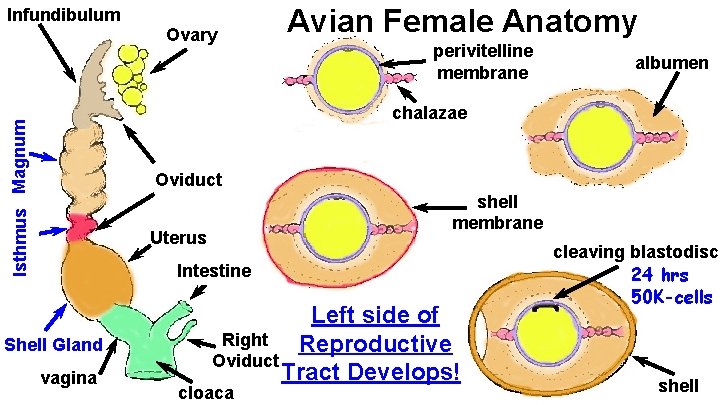
Infundibulum Ovary Avian Female Anatomy perivitelline membrane albumen Isthmus Magnum chalazae Oviduct shell membrane Uterus Intestine Shell Gland vagina Left side of Right Reproductive Oviduct Tract Develops!! cloaca cleaving blastodisc 24 hrs 50 K-cells shell
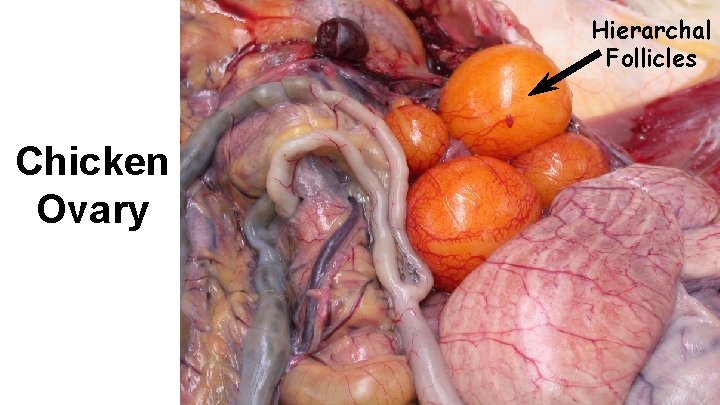
Hierarchal Follicles Chicken Ovary
Quiz 2 d Why do you get a double yolk egg?
Quiz 2 d Why do you get a double yolk egg? There is initially a double ovulation. The yolks are picked up by the single reproductive tract and then both yolks are surrounded by a shell membrane and then a shell.
Quiz 2 e What type of reproductive tract and pattern of reproduction did Dinosaurs have?
Quiz 2 e What type of reproductive tract and pattern of reproduction did Dinosaurs have? Dinosaurs were precursors to birds, had an avian type reproductive tract, laid hard shelled eggs in clutches and likely had only the left side of the reproductive tract develop.
Historical Development of Reproductive Physiology • Covered in Book, Chapter 1 • Material will be covered in Lecture exam I
Historical Development of Reprod. Physiol. Aristotle 384 -322 BC • Fetus arises from menstrual blood Generation of Animals • Seminal plasma initiates the conversion of menstrual blood • Semen from all parts of body
The Age of Gross Anatomy • Fallopius (1562) – Describes the oviduct • Coiter (1573) – Describes the CL • Regnier de Graff (1672) – Describes the Graafian Follicle
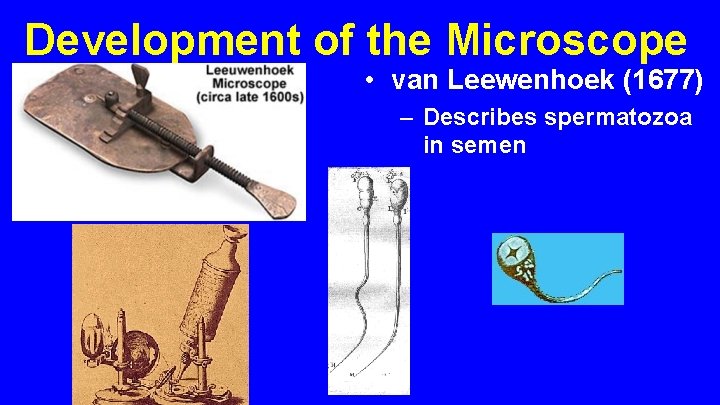
Development of the Microscope • van Leewenhoek (1677) – Describes spermatozoa in semen
What is the role of spermatozoa? • Spallanzani (1780) – Sperm were the fertilizing agent in semen – Successful artificial insemination of a dog • Dumas (1825) – Proves sperm the fertilizing agent
Modern Reprod. Physiology • • Gonads produce steroid hormones Regulation of estrous cycles in females Radioimmunoassay (RIA) Artificial Insemination Cryopreservation Prostaglandin used to control estrous cycles Biotechnology
Approach to Applications • Develop basic knowledge of how system works • Investigate methods that can perturb the system • Manipulate the system to improve reproduction – Estrus Synchronization
Enhancing Reproduction • Small improvements have profound effects on production – 3% improvement in birth rate results in an additional: • 1 million beef calves/year • 3. 2 million pigs/year • 3. 7 million gallons of milk/year
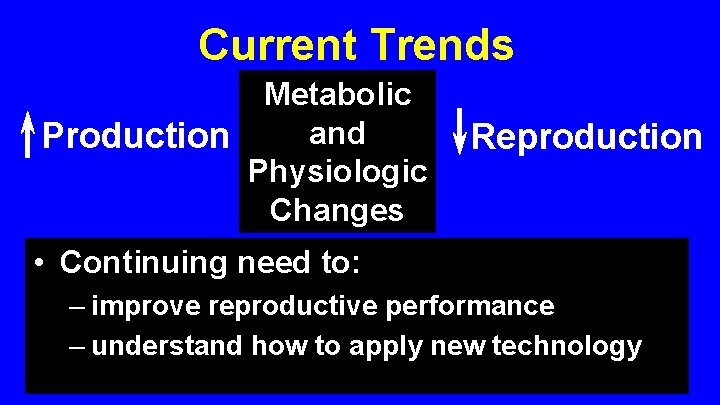
Current Trends Metabolic and Production Physiologic Changes Reproduction • Continuing need to: – improve reproductive performance – understand how to apply new technology
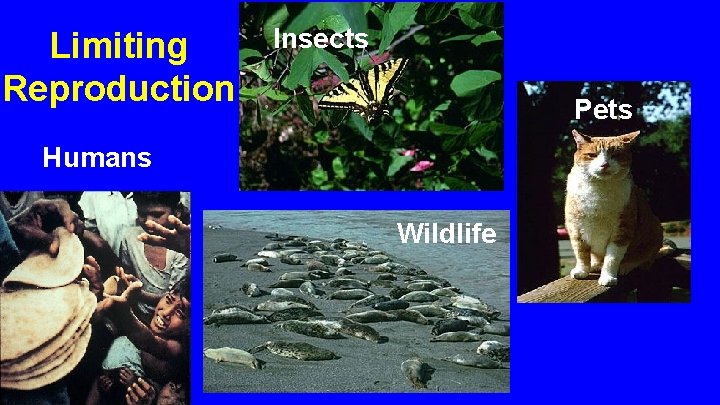
Limiting Reproduction Insects Pets Humans Wildlife