
Animal Telemetry a Key Part of Ocean Observing

Animal Telemetry a Key Part of Ocean Observing Systems Name: Zdenka Willis Institution: US IOOS® Contact info. Zdenka. S. Willis@noaa. gov
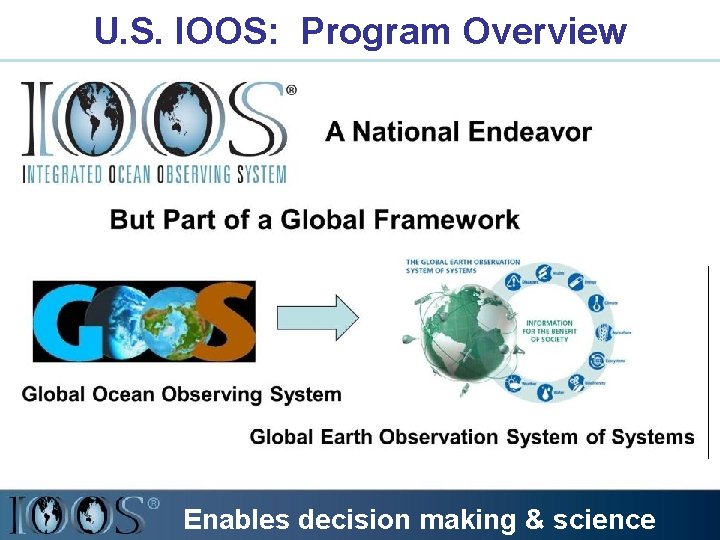
U. S. IOOS: Program Overview WHO: WHAT: – Observation – Data Management – Modeling & Analysis – Research & Development – Education – Management & Governance WHERE: Global Coastal (EEZ to head of tide) WHY: 7 Societal Goals, 1 System Predictions of climate change and weather Safety and efficiency of maritime operations Forecasts of natural hazards Improve homeland security Minimize public health risks Protect and restore healthy coastal ecosystems Sustain living marine resources Enables decision making & science

Eyes on the Oceans, Coasts and Great Lakes Observing Systems U. S. Integrated Ocean Observing System (IOOS)
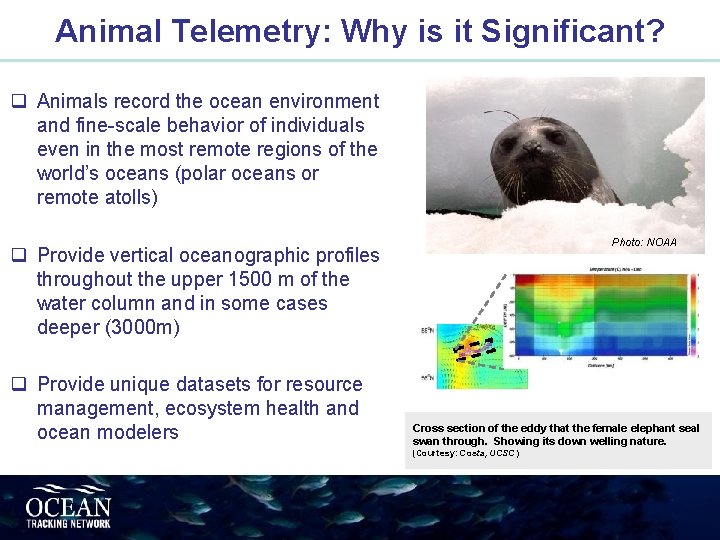
Animal Telemetry: Why is it Significant? q Animals record the ocean environment and fine-scale behavior of individuals even in the most remote regions of the world’s oceans (polar oceans or remote atolls) Photo: NOAA q Provide vertical oceanographic profiles throughout the upper 1500 m of the water column and in some cases deeper (3000 m) q Provide unique datasets for resource management, ecosystem health and ocean modelers Cross section of the eddy that the female elephant seal swan through. Showing its down welling nature. (Courtesy: Costa, UCSC)

Exposing Data

BENEFITS OF AN US ANIMAL TELEMETRY NETWORK (ATN) THROUGH US IOOS

Building a New Generation of Animal Telemetry Data Portals : Ingest the Diverse Animal Tag Platforms NDBC Archival tags Trackin g data Satellite tags ATN DAC RDBMS Operationa l Forecastin g Systems Research Modeling Systems e. g. , EBM, MPA etc. ATN data & Product s Research education& training Other Users Acoustic Receivers Data OTN, GOOS Courtesy of Barbara Block, Stanford Univ.

From Animals to GTS to Ocean Modelers Real-time data flow user In 2012 IOOS PO/ONR co-sponsored a collaboration with the Stanford Univ. , NAVOCEANO and NOAA GTS NCEP to improve data interoperability tools and assimilation of ocean observations from tagged animals into NAVO’s global (HYCOM) and region (NCOM) models. Courtesy: Dan Costa UCSC.

To Advance the Protection and Recovery of Great Lakes Fishes • Network of more than 400 Acoustic Receivers • More than 2300 fish have been tagged – Green Bay Lake Sturgeon, Walleye, Lake Trout, River Sea Lamprey) http: //data. glos. us/glatos/explore

Animal Telemetry Supports Adaptive Management of Salmon and Steelhead Photo: NOAA Source: Vemco, inc Salmon tagged with Acoustic tags Underwater Acoustic receivers
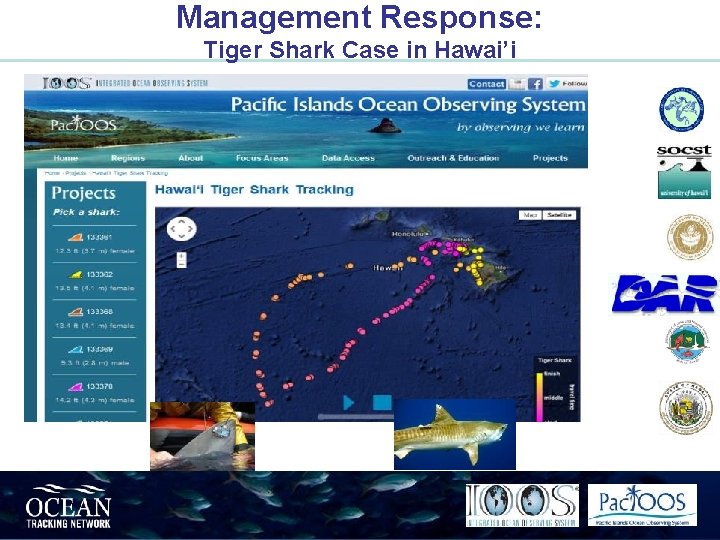
Management Response: Tiger Shark Case in Hawai’i

Southern Ocean: Using all sources Animal Tagging Traditional Sources

Animal Telemetry for Assessing Ecosystem Health Figure from Guinet et al. 2013)

Reduce Bycatch of Loggerhead Turtles in Hawaii in Longline Fishery http: //sos. noaa. gov/Datasets/dataset. php? id=181#
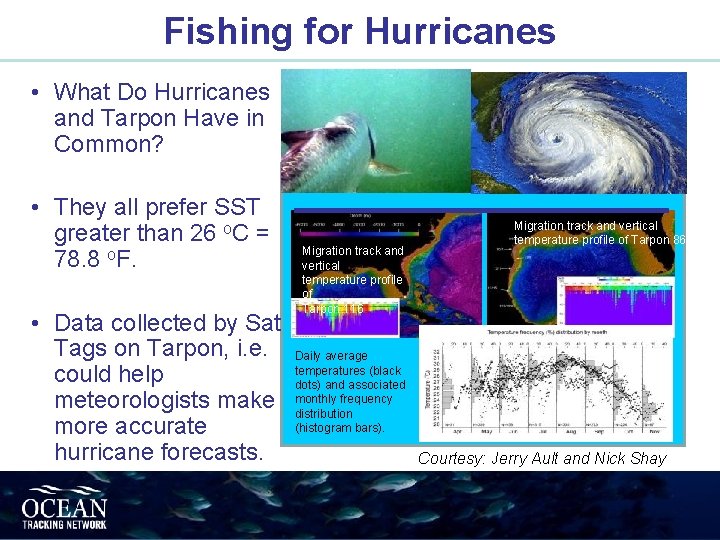
Fishing for Hurricanes • What Do Hurricanes and Tarpon Have in Common? • They all prefer SST greater than 26 o. C = 78. 8 o. F. • Data collected by Sat Tags on Tarpon, i. e. could help meteorologists make more accurate hurricane forecasts. Migration track and vertical temperature profile of Tarpon 116 Migration track and vertical temperature profile of Tarpon 86 Daily average temperatures (black dots) and associated monthly frequency distribution (histogram bars). Courtesy: Jerry Ault and Nick Shay
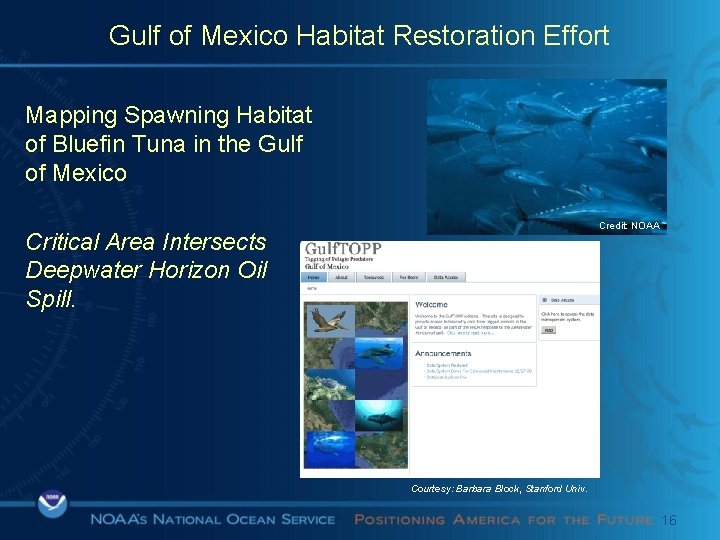
Gulf of Mexico Habitat Restoration Effort Mapping Spawning Habitat of Bluefin Tuna in the Gulf of Mexico Credit: NOAA Critical Area Intersects Deepwater Horizon Oil Spill. Courtesy: Barbara Block, Stanford Univ. 16
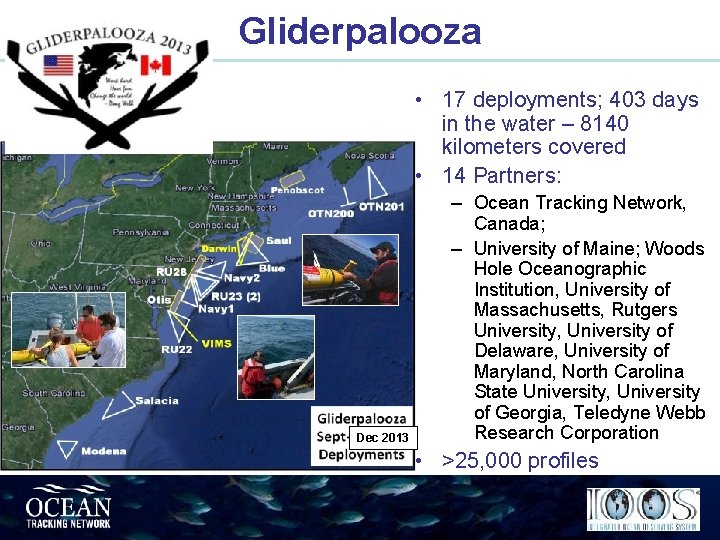
Gliderpalooza • 17 deployments; 403 days in the water – 8140 kilometers covered • 14 Partners: Dec 2013 – Ocean Tracking Network, Canada; – University of Maine; Woods Hole Oceanographic Institution, University of Massachusetts, Rutgers University, University of Delaware, University of Maryland, North Carolina State University, University of Georgia, Teledyne Webb Research Corporation • >25, 000 profiles
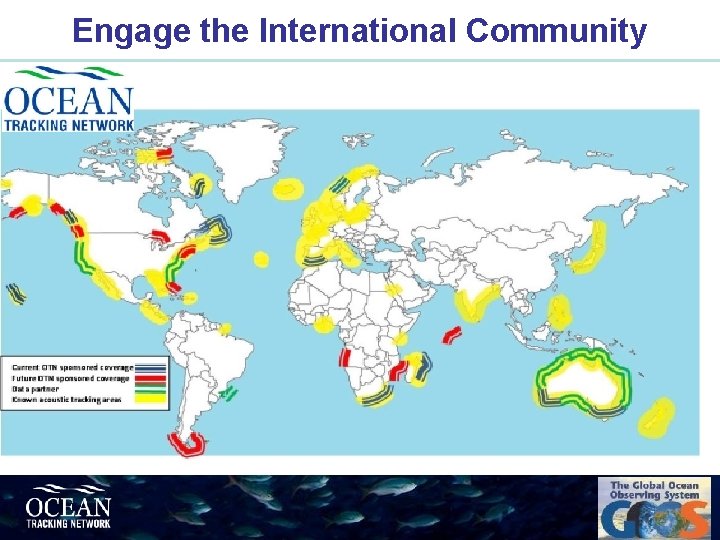
Engage the International Community
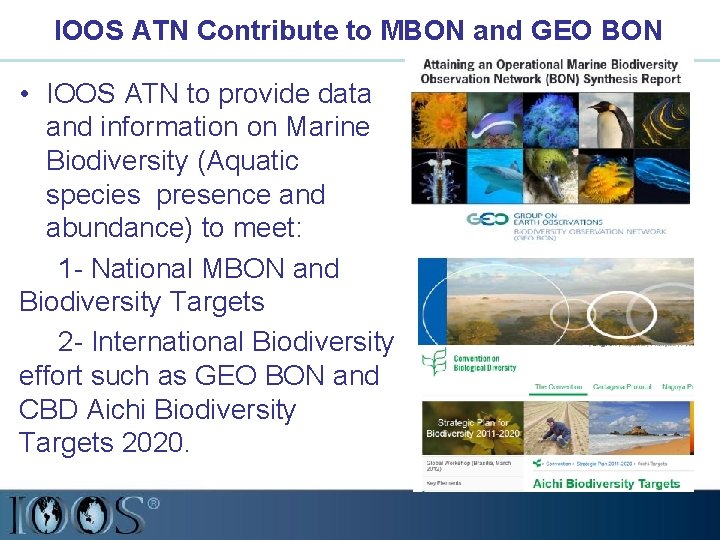
IOOS ATN Contribute to MBON and GEO BON • IOOS ATN to provide data and information on Marine Biodiversity (Aquatic species presence and abundance) to meet: 1 - National MBON and Biodiversity Targets 2 - International Biodiversity effort such as GEO BON and CBD Aichi Biodiversity Targets 2020.
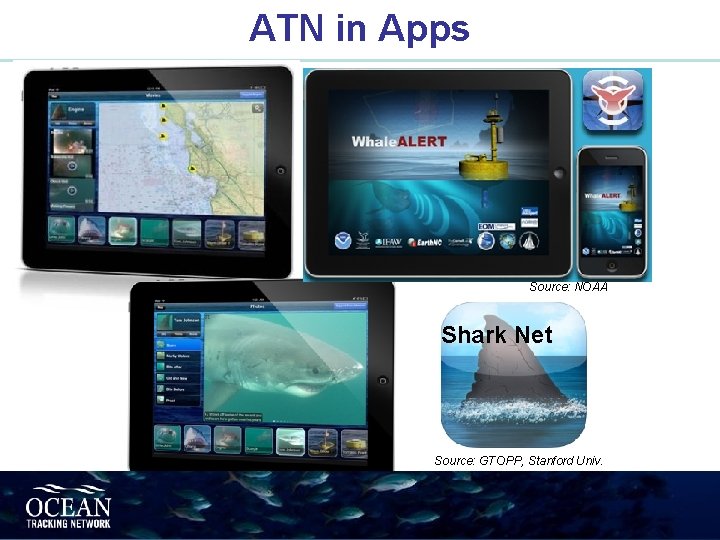
ATN in Apps Source: NOAA Shark Net Source: GTOPP, Stanford Univ.

Questions
NAME: Zdenka Willis INSTITUTION: U. S. IOOS CONTACT: Zdenka. S. Willis @noaa. gov Ocean Tracking Network Dalhousie University Halifax, Nova Scotia Canada otn@dal. ca +1 902. 494. 2357 oceantrackingnetwork. org @Ocean. Tracking Please Visit the U. S. IOOS Website ioos. noaa. gov
- Slides: 23