
Animal Systems II Structure and Function Response Most
- Slides: 18
Animal Systems II Structure and Function
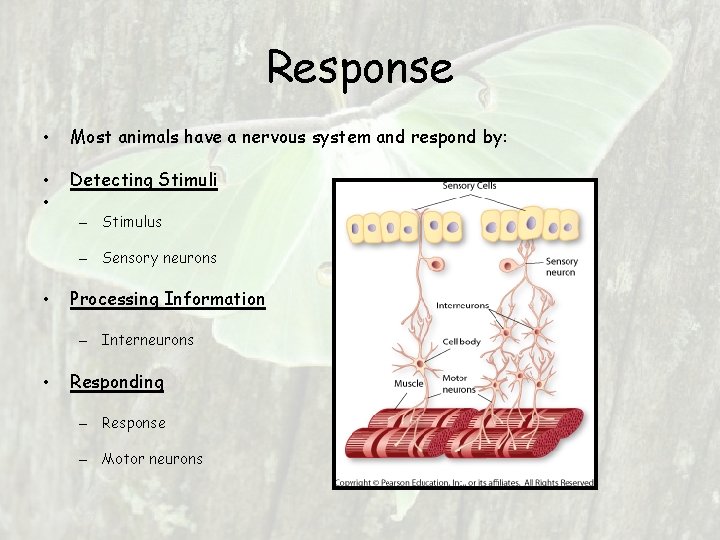
Response • Most animals have a nervous system and respond by: • • Detecting Stimuli – Stimulus – Sensory neurons • Processing Information – Interneurons • Responding – Response – Motor neurons
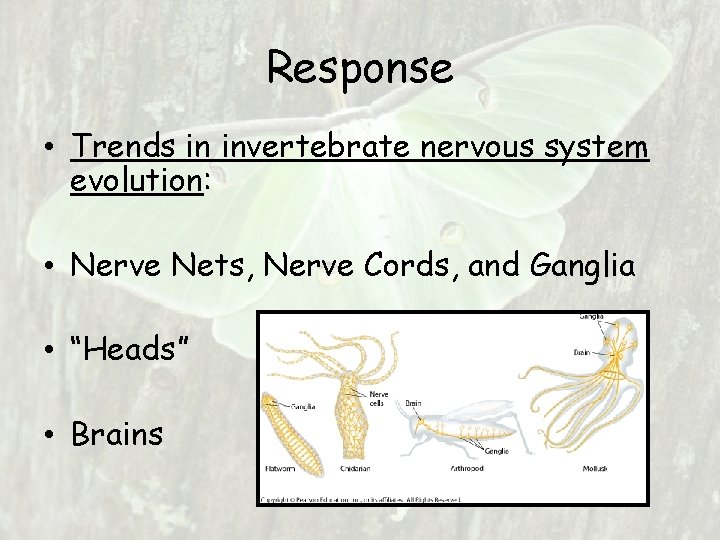
Response • Trends in invertebrate nervous system evolution: • Nerve Nets, Nerve Cords, and Ganglia • “Heads” • Brains
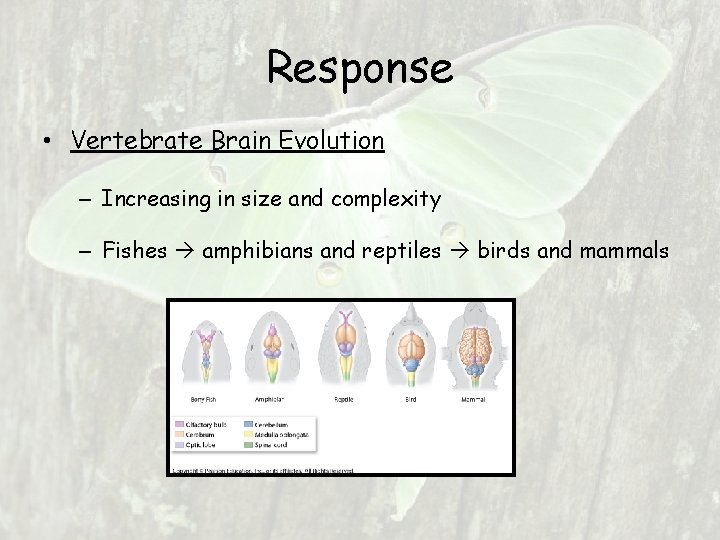
Response • Trends in chordate nervous system evolution: • Parts of the Vertebrate Brain – Cerebrum: learning, memory, conscious thought – Cerebellum: coordinates movement, controls balance – Medulla oblongata: controls functioning of many internal organs
Response • Vertebrate Brain Evolution – Increasing in size and complexity – Fishes amphibians and reptiles birds and mammals
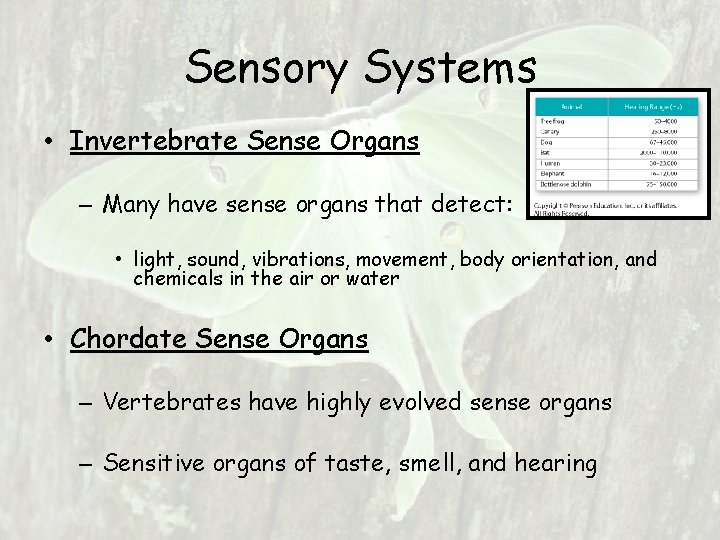
Sensory Systems • Invertebrate Sense Organs – Many have sense organs that detect: • light, sound, vibrations, movement, body orientation, and chemicals in the air or water • Chordate Sense Organs – Vertebrates have highly evolved sense organs – Sensitive organs of taste, smell, and hearing
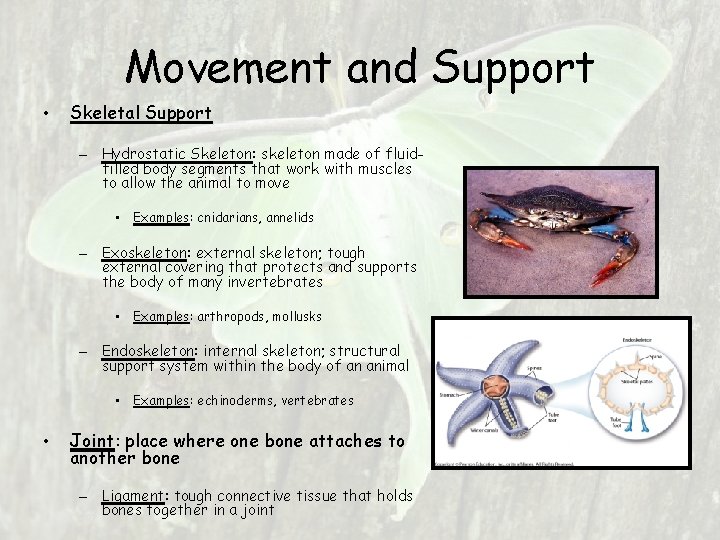
Movement and Support • Skeletal Support – Hydrostatic Skeleton: skeleton made of fluidfilled body segments that work with muscles to allow the animal to move • Examples: cnidarians, annelids – Exoskeleton: external skeleton; tough external covering that protects and supports the body of many invertebrates • Examples: arthropods, mollusks – Endoskeleton: internal skeleton; structural support system within the body of an animal • Examples: echinoderms, vertebrates • Joint: place where one bone attaches to another bone – Ligament: tough connective tissue that holds bones together in a joint
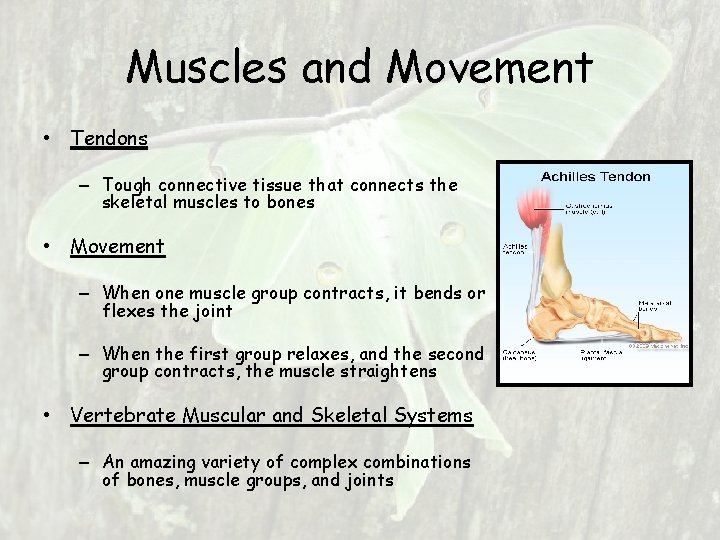
Muscles and Movement • Tendons – Tough connective tissue that connects the skeletal muscles to bones • Movement – When one muscle group contracts, it bends or flexes the joint – When the first group relaxes, and the second group contracts, the muscle straightens • Vertebrate Muscular and Skeletal Systems – An amazing variety of complex combinations of bones, muscle groups, and joints
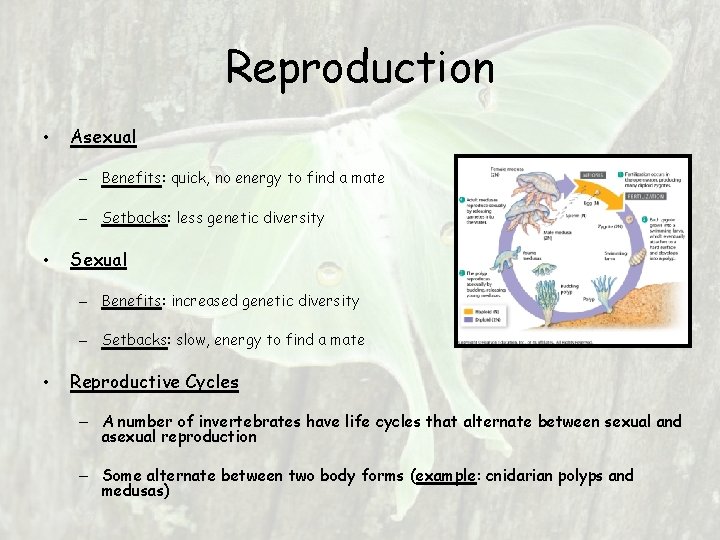
Reproduction • Asexual – Benefits: quick, no energy to find a mate – Setbacks: less genetic diversity • Sexual – Benefits: increased genetic diversity – Setbacks: slow, energy to find a mate • Reproductive Cycles – A number of invertebrates have life cycles that alternate between sexual and asexual reproduction – Some alternate between two body forms (example: cnidarian polyps and medusas)
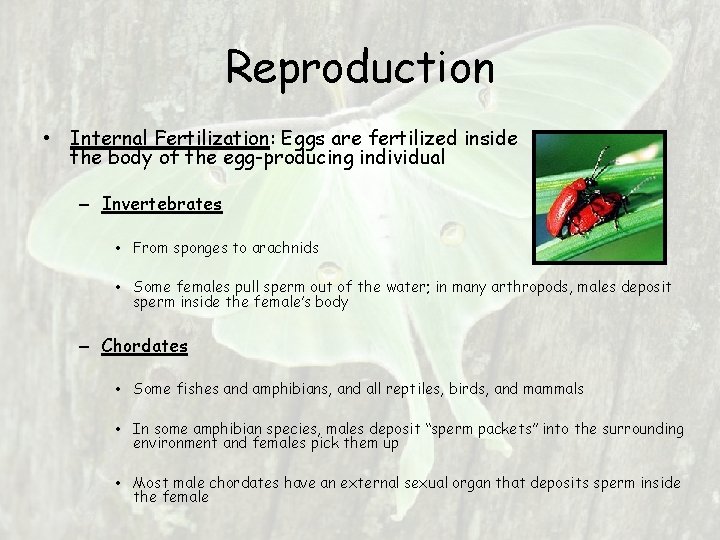
Reproduction • Internal Fertilization: Eggs are fertilized inside the body of the egg-producing individual – Invertebrates • From sponges to arachnids • Some females pull sperm out of the water; in many arthropods, males deposit sperm inside the female’s body – Chordates • Some fishes and amphibians, and all reptiles, birds, and mammals • In some amphibian species, males deposit “sperm packets” into the surrounding environment and females pick them up • Most male chordates have an external sexual organ that deposits sperm inside the female
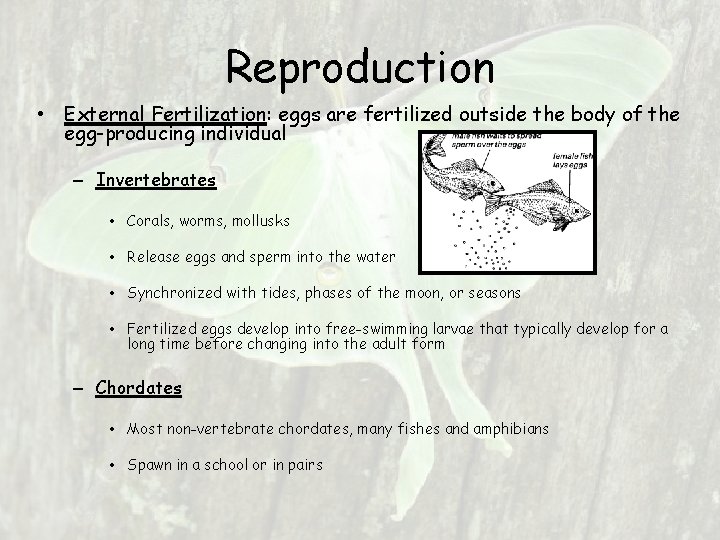
Reproduction • External Fertilization: eggs are fertilized outside the body of the egg-producing individual – Invertebrates • Corals, worms, mollusks • Release eggs and sperm into the water • Synchronized with tides, phases of the moon, or seasons • Fertilized eggs develop into free-swimming larvae that typically develop for a long time before changing into the adult form – Chordates • Most non-vertebrate chordates, many fishes and amphibians • Spawn in a school or in pairs
Development and Growth • Where Embryos Develop – Oviparous: species in which embryos develop in eggs outside a parent’s body • Most invertebrates, many fishes and amphibians, most reptiles, all birds, and a few odd mammals – Ovoviviparous: species in which the embryos develop within the mother’s body but depend entirely on the yolk sac of their eggs • Guppies and other fishes in their family, some shark species – Viviparous: animals that bear live young that are nourished directly by the mother’s body as they develop • Most mammals, some insects, sharks, bony fishes, amphibians, and reptiles
Development and Growth • How Young Develop – Young look like miniature adults – Metamorphosis: process of changes in shape and form of a larva into an adult; often controlled by hormones • Aquatic Invertebrates: many have a larval stage, which looks nothing like an adult • Terrestrial Invertebrates: insects may undergo one of two types of metamorphosis • Amphibians: undergo metamorphosis from aquatic young to terrestrial adults
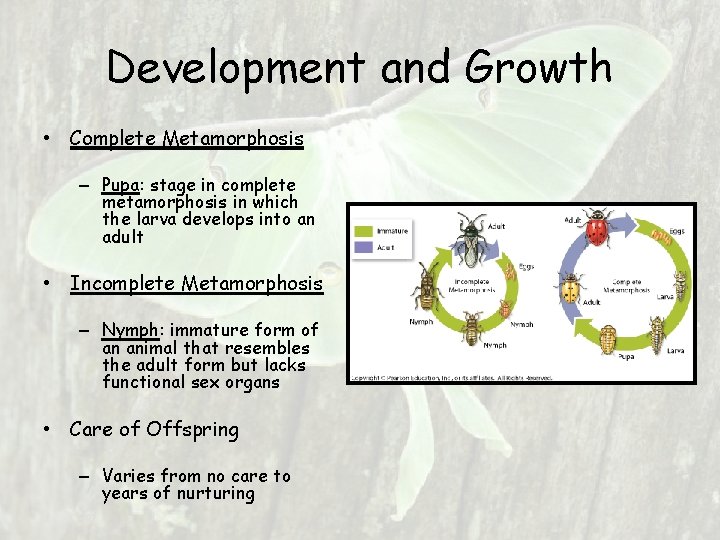
Development and Growth • Complete Metamorphosis – Pupa: stage in complete metamorphosis in which the larva develops into an adult • Incomplete Metamorphosis – Nymph: immature form of an animal that resembles the adult form but lacks functional sex organs • Care of Offspring – Varies from no care to years of nurturing
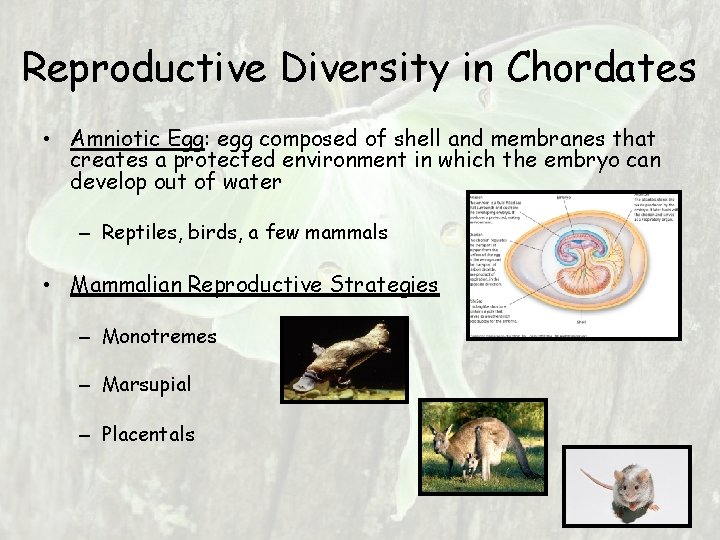
Reproductive Diversity in Chordates • Amniotic Egg: egg composed of shell and membranes that creates a protected environment in which the embryo can develop out of water – Reptiles, birds, a few mammals • Mammalian Reproductive Strategies – Monotremes – Marsupial – Placentals
Homeostasis • Interrelationship of Body Systems – Fighting Disease – Chemical Controls
Homeostasis • Body Temperature Control – Ectotherm: animal whose body temperature is determined by the temperature of the environment (old term: “cold blooded”) • Most reptiles, invertebrates, fishes, and amphibians – Endotherm: animal whose body temperature is regulated, at least in part, using heat generated within its body (old term: “warm blooded”) • Birds and mammals
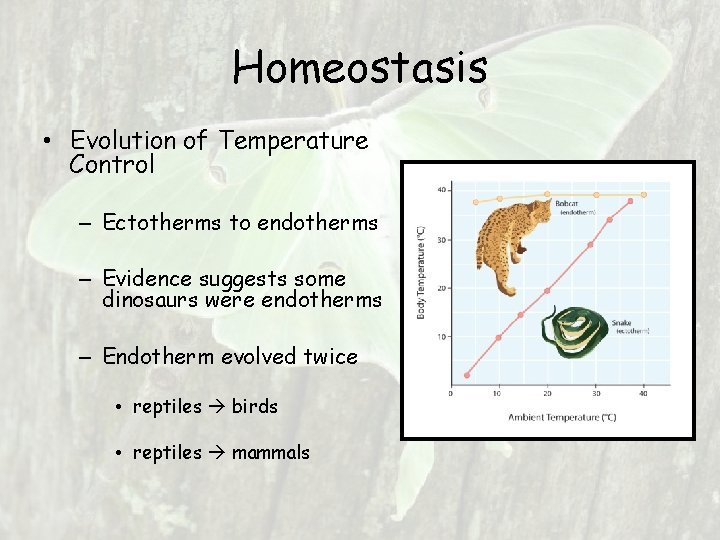
Homeostasis • Evolution of Temperature Control – Ectotherms to endotherms – Evidence suggests some dinosaurs were endotherms – Endotherm evolved twice • reptiles birds • reptiles mammals