
Animal Systems I Structure and Function Feeding and
- Slides: 19
Animal Systems I Structure and Function
Feeding and Digestion • Filter Feeders – Strain their food from water • Detritivores – Feed on detritus, often obtaining extra nutrients from bacteria, algae and other microorganism nearby • Carnivores – Eat other animals • Herbivores – Eat plants or parts of plants in terrestrial and aquatic habitats • Nutritional Symbionts – Dependent on another species • Parasitic Symbionts – Live within or on a host where they feed on tissue, blood, or other body fluids • Mutualistic Symbionts – Both participants benefit
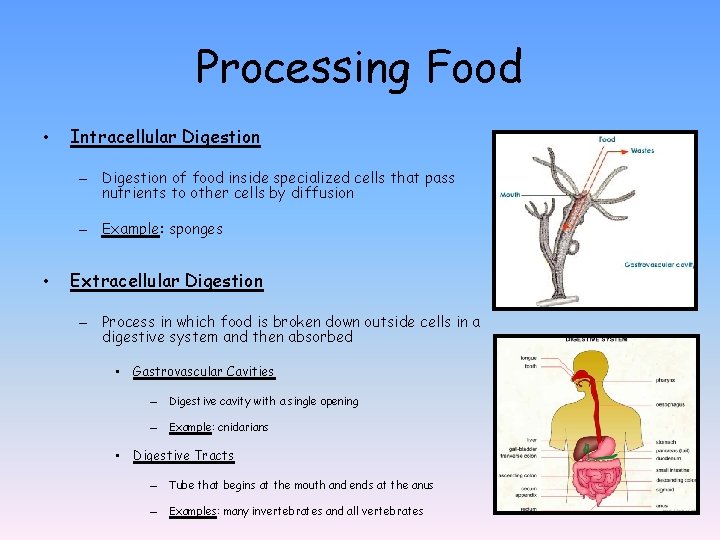
Processing Food • Intracellular Digestion – Digestion of food inside specialized cells that pass nutrients to other cells by diffusion – Example: sponges • Extracellular Digestion – Process in which food is broken down outside cells in a digestive system and then absorbed • Gastrovascular Cavities – Digestive cavity with a single opening – Example: cnidarians • Digestive Tracts – Tube that begins at the mouth and ends at the anus – Examples: many invertebrates and all vertebrates
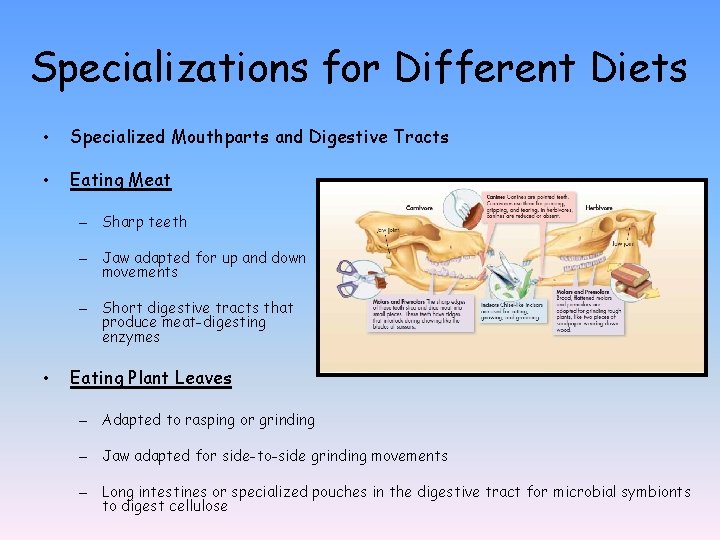
Specializations for Different Diets • Specialized Mouthparts and Digestive Tracts • Eating Meat – Sharp teeth – Jaw adapted for up and down movements – Short digestive tracts that produce meat-digesting enzymes • Eating Plant Leaves – Adapted to rasping or grinding – Jaw adapted for side-to-side grinding movements – Long intestines or specialized pouches in the digestive tract for microbial symbionts to digest cellulose
Respiration • Gas Exchange – All animals must exchange O 2 and CO 2 with their surroundings • Gas Diffusion and Membranes • Requirements for Respiration – Large surface area with a moist, selectively permeable membrane – Structures maintain a difference in the concentration of O 2 and CO 2 on either side of the membrane, promoting diffusion
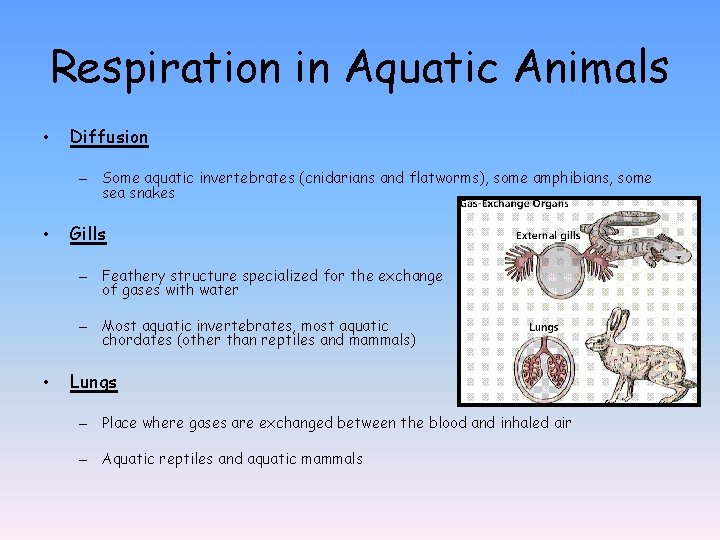
Respiration in Aquatic Animals • Diffusion – Some aquatic invertebrates (cnidarians and flatworms), some amphibians, some sea snakes • Gills – Feathery structure specialized for the exchange of gases with water – Most aquatic invertebrates, most aquatic chordates (other than reptiles and mammals) • Lungs – Place where gases are exchanged between the blood and inhaled air – Aquatic reptiles and aquatic mammals
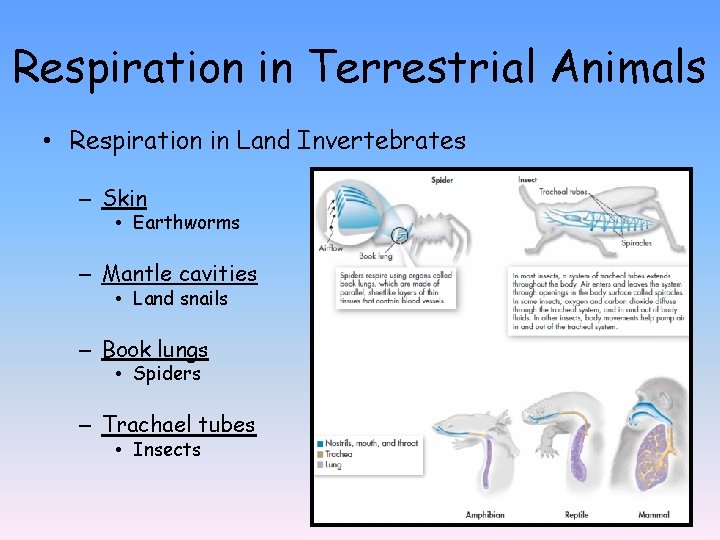
Respiration in Terrestrial Animals • Respiration in Land Invertebrates – Skin • Earthworms – Mantle cavities • Land snails – Book lungs • Spiders – Trachael tubes • Insects
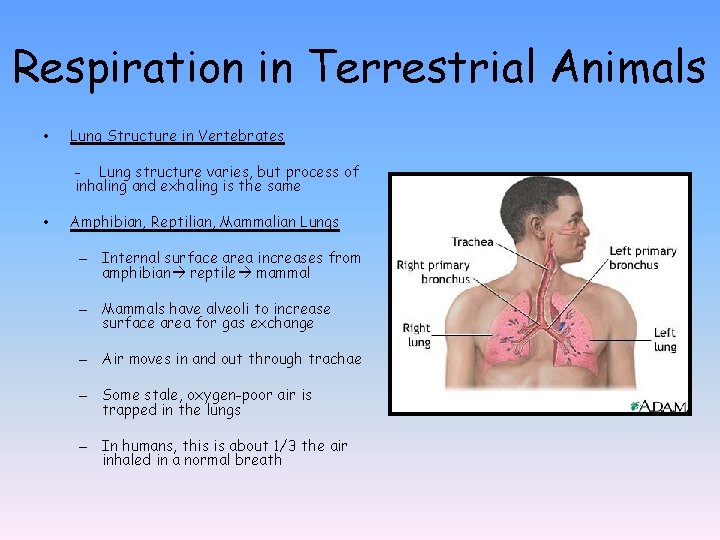
Respiration in Terrestrial Animals • Lung Structure in Vertebrates - Lung structure varies, but process of inhaling and exhaling is the same • Amphibian, Reptilian, Mammalian Lungs – Internal surface area increases from amphibian reptile mammal – Mammals have alveoli to increase surface area for gas exchange – Air moves in and out through trachae – Some stale, oxygen-poor air is trapped in the lungs – In humans, this is about 1/3 the air inhaled in a normal breath
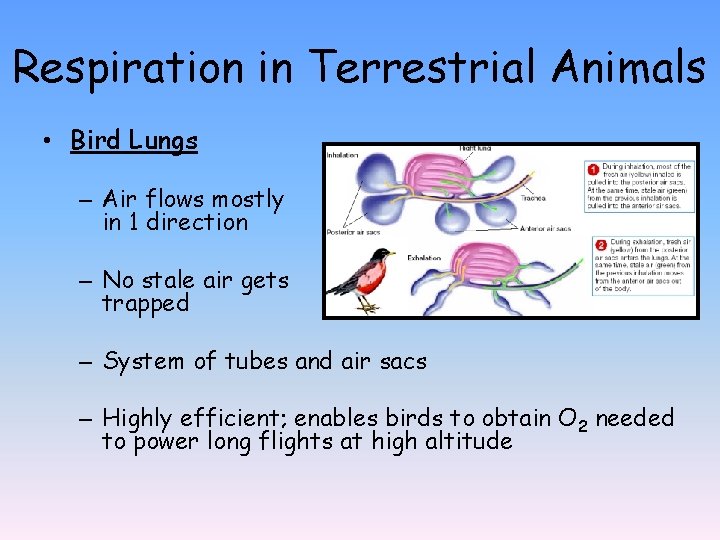
Respiration in Terrestrial Animals • Bird Lungs – Air flows mostly in 1 direction – No stale air gets trapped – System of tubes and air sacs – Highly efficient; enables birds to obtain O 2 needed to power long flights at high altitude
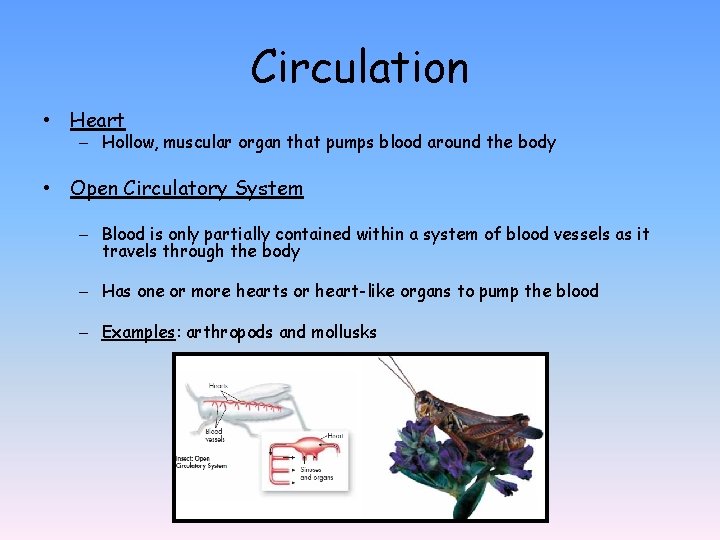
Circulation • Heart – Hollow, muscular organ that pumps blood around the body • Open Circulatory System – Blood is only partially contained within a system of blood vessels as it travels through the body – Has one or more hearts or heart-like organs to pump the blood – Examples: arthropods and mollusks
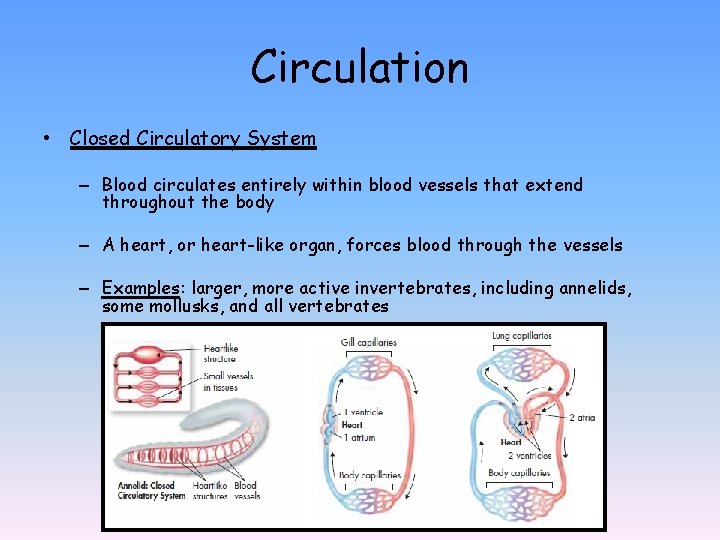
Circulation • Closed Circulatory System – Blood circulates entirely within blood vessels that extend throughout the body – A heart, or heart-like organ, forces blood through the vessels – Examples: larger, more active invertebrates, including annelids, some mollusks, and all vertebrates
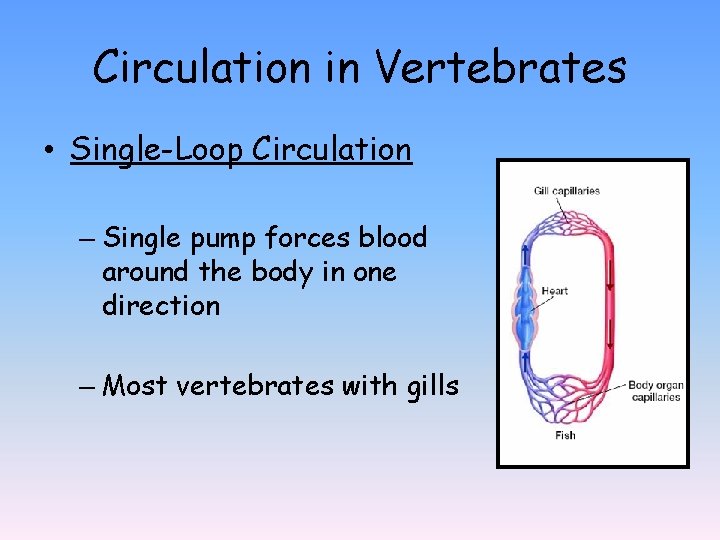
Circulation in Vertebrates • Single-Loop Circulation – Single pump forces blood around the body in one direction – Most vertebrates with gills
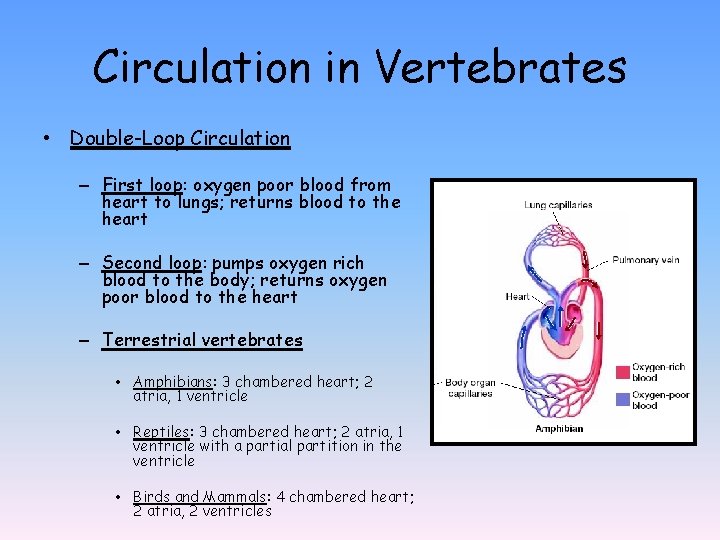
Circulation in Vertebrates • Double-Loop Circulation – First loop: oxygen poor blood from heart to lungs; returns blood to the heart – Second loop: pumps oxygen rich blood to the body; returns oxygen poor blood to the heart – Terrestrial vertebrates • Amphibians: 3 chambered heart; 2 atria, 1 ventricle • Reptiles: 3 chambered heart; 2 atria, 1 ventricle with a partial partition in the ventricle • Birds and Mammals: 4 chambered heart; 2 atria, 2 ventricles
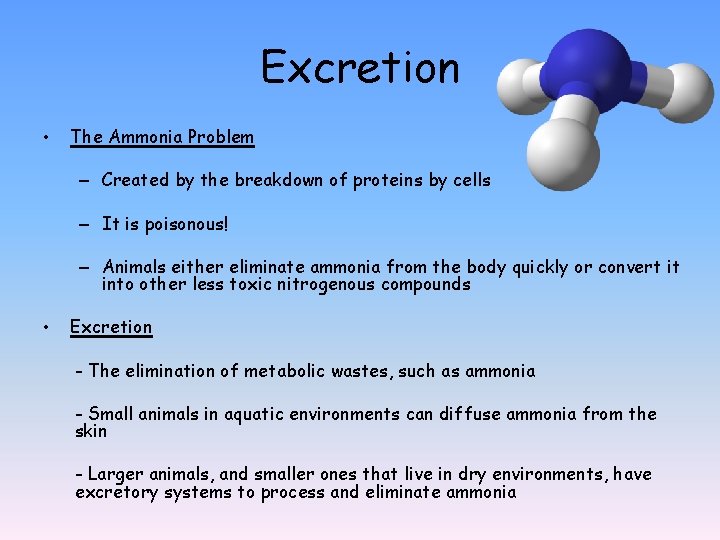
Excretion • The Ammonia Problem – Created by the breakdown of proteins by cells – It is poisonous! – Animals either eliminate ammonia from the body quickly or convert it into other less toxic nitrogenous compounds • Excretion - The elimination of metabolic wastes, such as ammonia - Small animals in aquatic environments can diffuse ammonia from the skin - Larger animals, and smaller ones that live in dry environments, have excretory systems to process and eliminate ammonia
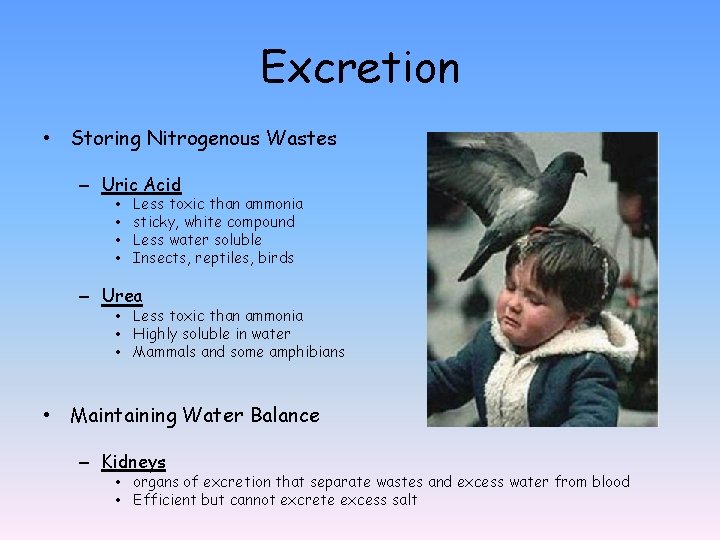
Excretion • Storing Nitrogenous Wastes – Uric Acid • • Less toxic than ammonia sticky, white compound Less water soluble Insects, reptiles, birds – Urea • Less toxic than ammonia • Highly soluble in water • Mammals and some amphibians • Maintaining Water Balance – Kidneys • organs of excretion that separate wastes and excess water from blood • Efficient but cannot excrete excess salt
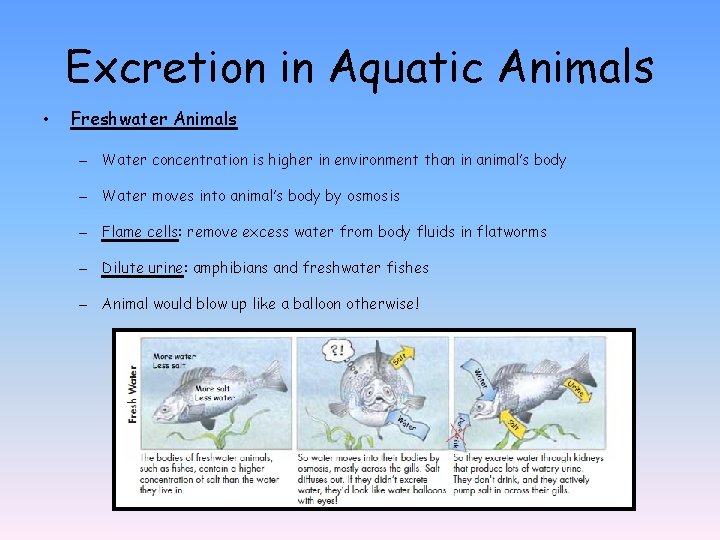
Excretion in Aquatic Animals • Freshwater Animals – Water concentration is higher in environment than in animal’s body – Water moves into animal’s body by osmosis – Flame cells: remove excess water from body fluids in flatworms – Dilute urine: amphibians and freshwater fishes – Animal would blow up like a balloon otherwise!
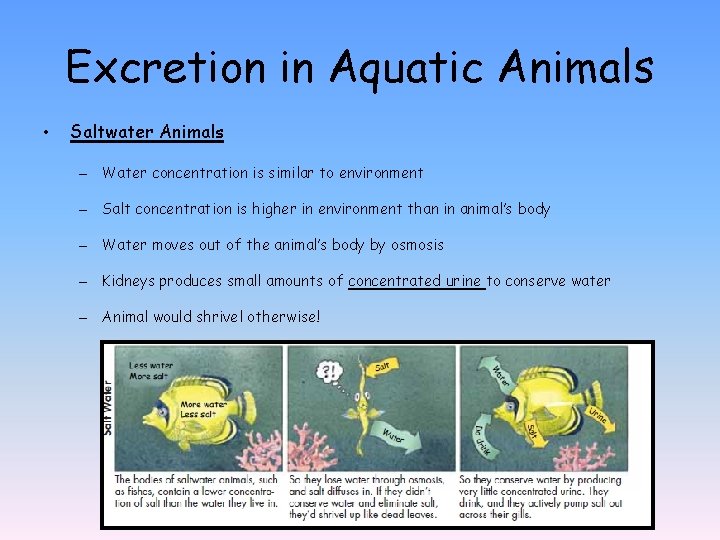
Excretion in Aquatic Animals • Saltwater Animals – Water concentration is similar to environment – Salt concentration is higher in environment than in animal’s body – Water moves out of the animal’s body by osmosis – Kidneys produces small amounts of concentrated urine to conserve water – Animal would shrivel otherwise!
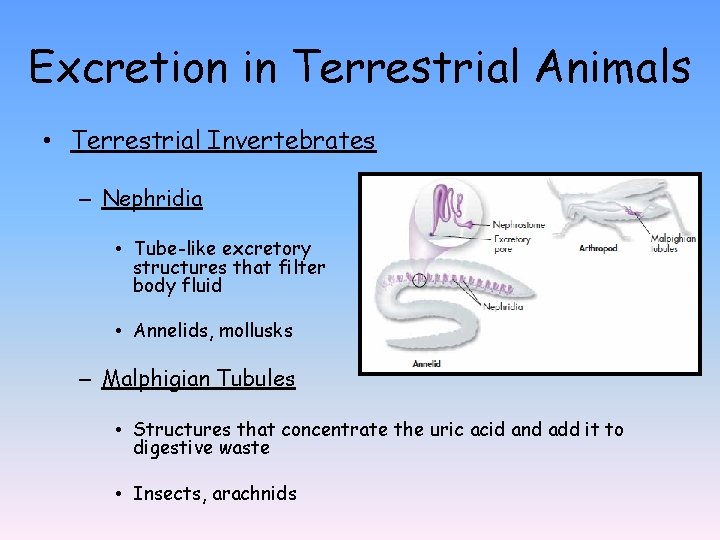
Excretion in Terrestrial Animals • Terrestrial Invertebrates – Nephridia • Tube-like excretory structures that filter body fluid • Annelids, mollusks – Malphigian Tubules • Structures that concentrate the uric acid and add it to digestive waste • Insects, arachnids
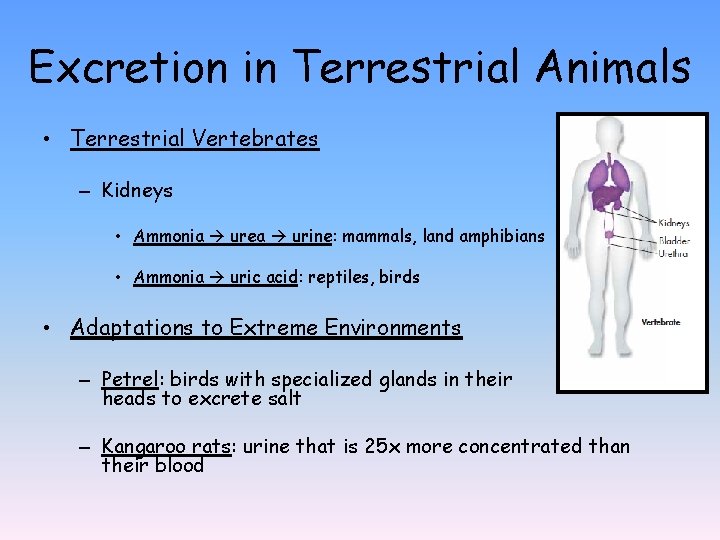
Excretion in Terrestrial Animals • Terrestrial Vertebrates – Kidneys • Ammonia urea urine: mammals, land amphibians • Ammonia uric acid: reptiles, birds • Adaptations to Extreme Environments – Petrel: birds with specialized glands in their heads to excrete salt – Kangaroo rats: urine that is 25 x more concentrated than their blood