
Animal Signals and Communication Signal a behavior that
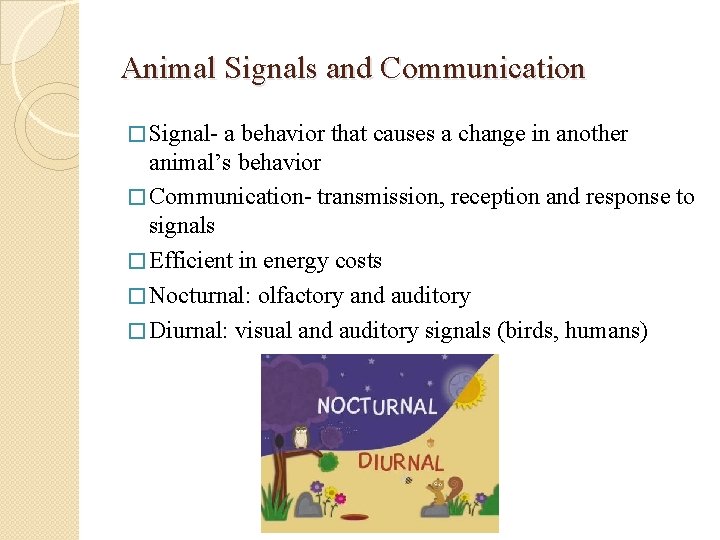
Animal Signals and Communication � Signal- a behavior that causes a change in another animal’s behavior � Communication- transmission, reception and response to signals � Efficient in energy costs � Nocturnal: olfactory and auditory � Diurnal: visual and auditory signals (birds, humans)
Chemical Communication � Pheromones: chemical substances that animals use to communicate � Often relate to reproductive behavior � Important in context � Also, used in non-reproductive behavior � Acts as an alarm substance � Effective at low concentrations
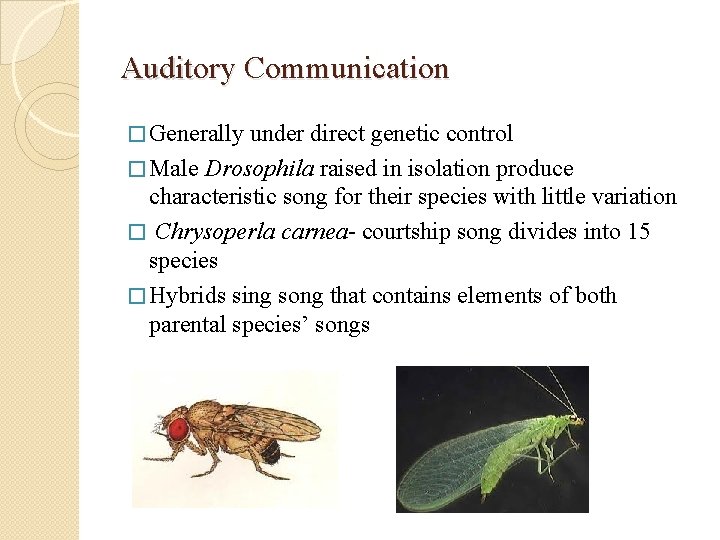
Auditory Communication � Generally under direct genetic control � Male Drosophila raised in isolation produce characteristic song for their species with little variation � Chrysoperla carnea- courtship song divides into 15 species � Hybrids sing song that contains elements of both parental species’ songs
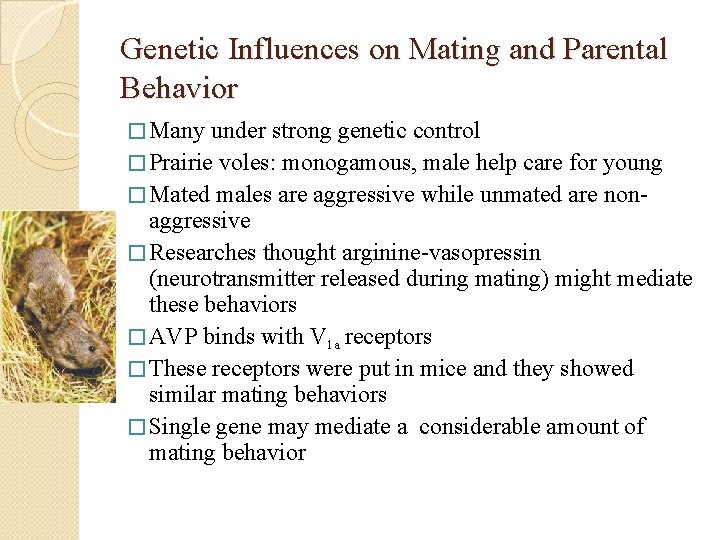
Genetic Influences on Mating and Parental Behavior � Many under strong genetic control � Prairie voles: monogamous, male help care for young � Mated males are aggressive while unmated are nonaggressive � Researches thought arginine-vasopressin (neurotransmitter released during mating) might mediate these behaviors � AVP binds with V 1 a receptors � These receptors were put in mice and they showed similar mating behaviors � Single gene may mediate a considerable amount of mating behavior
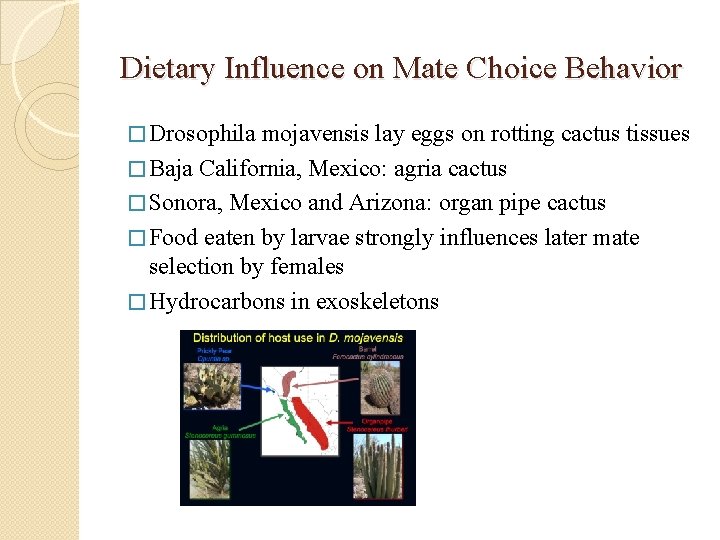
Dietary Influence on Mate Choice Behavior � Drosophila mojavensis lay eggs on rotting cactus tissues � Baja California, Mexico: agria cactus � Sonora, Mexico and Arizona: organ pipe cactus � Food eaten by larvae strongly influences later mate selection by females � Hydrocarbons in exoskeletons
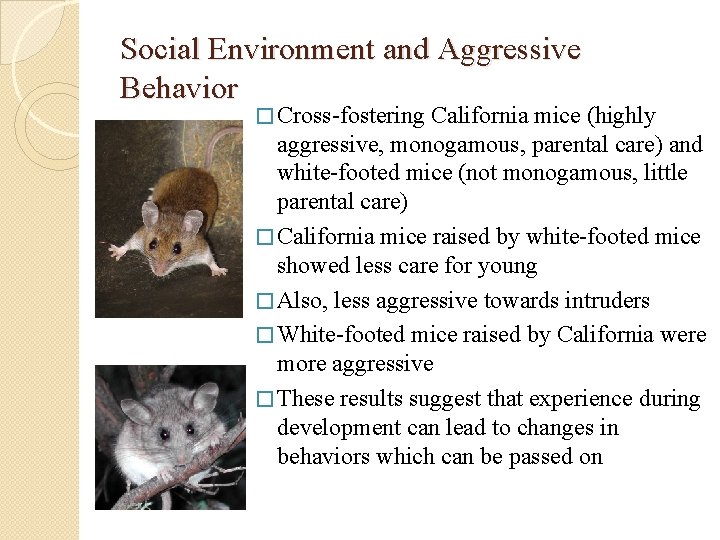
Social Environment and Aggressive Behavior � Cross-fostering California mice (highly aggressive, monogamous, parental care) and white-footed mice (not monogamous, little parental care) � California mice raised by white-footed mice showed less care for young � Also, less aggressive towards intruders � White-footed mice raised by California were more aggressive � These results suggest that experience during development can lead to changes in behaviors which can be passed on
Learning � Learning- the modification of behavior based on specific experiences � Habituation- a loss of responsiveness to stimuli that convey little or no information � Allows for nervous system to focus on helpful stimuli � Spatial learning- the modification of behavior based on experience with the spatial structure of the environment � Wasp pinecone experiment
- Slides: 7