
Animal Senses How do animals detect environmental stimuli

- Slides: 50
Animal Senses How do animals detect environmental stimuli?
Remember! • Sensory stimulation is the starting point of behaviour. • Animal’s senses are not necessarily the same as ours.
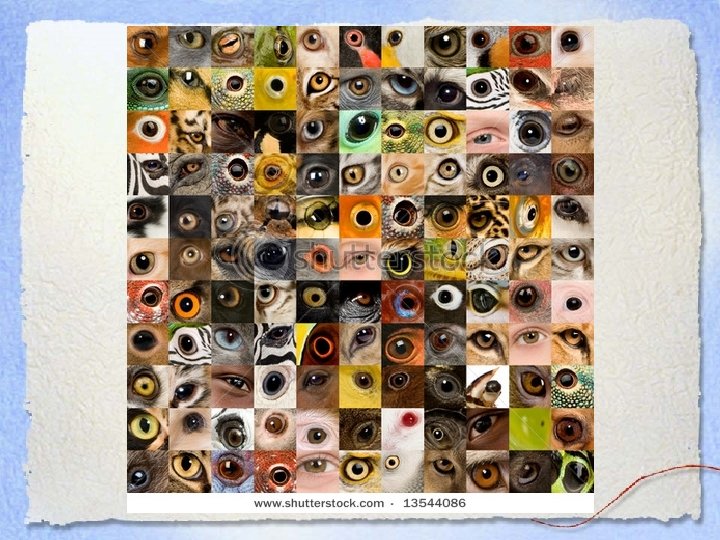
Photoreceptors • In animals light is detected by? – The eyes • The structure of the eye varies for different organisms.
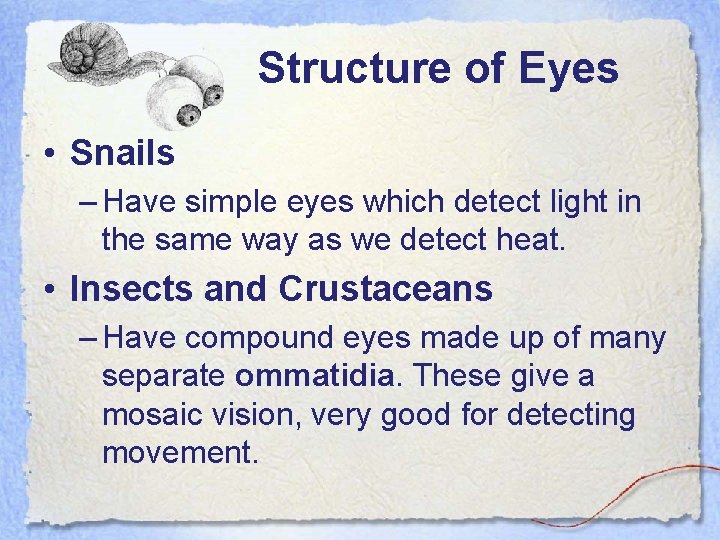
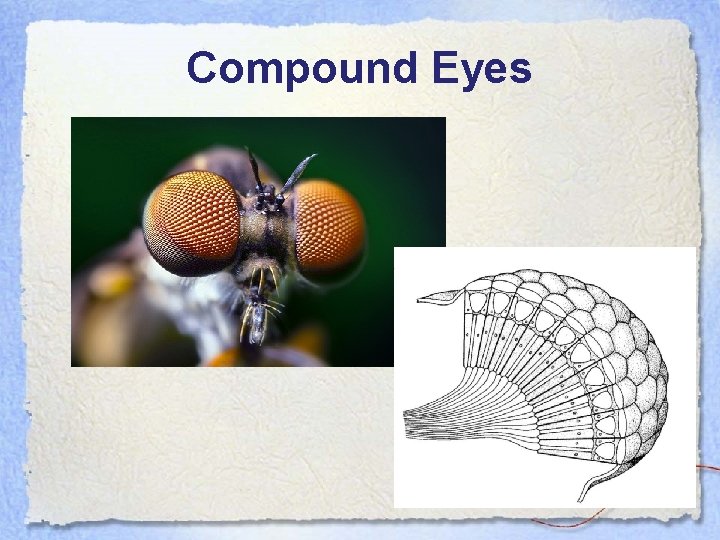
Structure of Eyes • Snails – Have simple eyes which detect light in the same way as we detect heat. • Insects and Crustaceans – Have compound eyes made up of many separate ommatidia. These give a mosaic vision, very good for detecting movement.
Compound Eyes
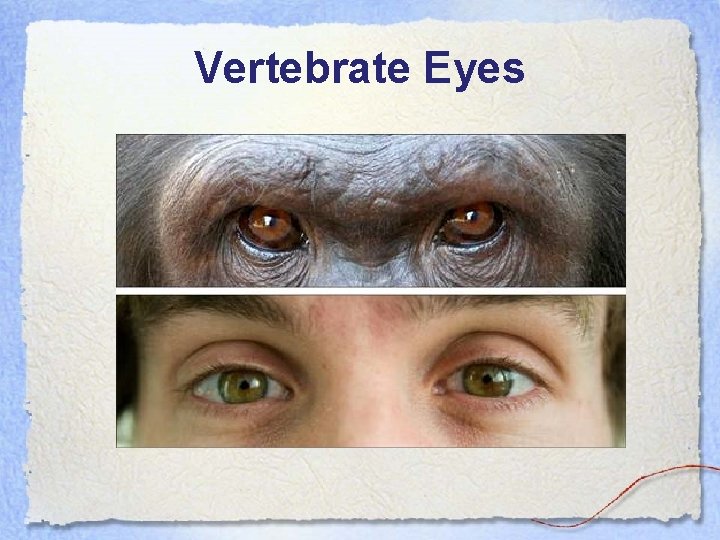
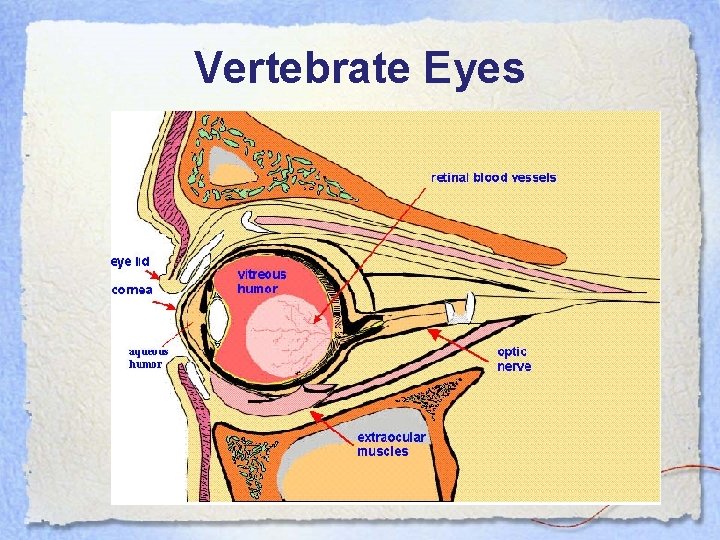
Structure of Eyes • Vertebrates – Have lenses that help to form clear images. – If two eyes face forwards they have overlapping fields (Binocular vision) enabling good judgement of distance
Vertebrate Eyes
Vertebrate Eyes
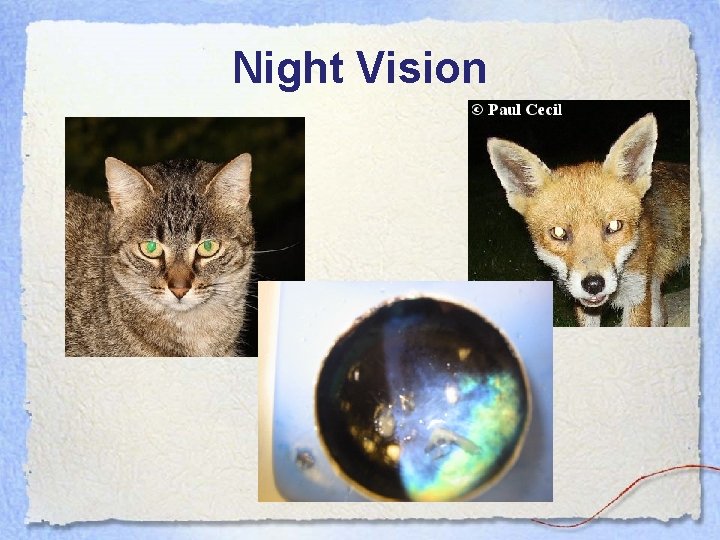
Structure of Eyes • Night Vision – This involves a structure called the tapetum, this is a layer of silvery crystals that acts as a reflector allowing animals like cats to pick up 50% more light at night than human’s can detect. – This is why cat’s eyes glow in the dark.
Night Vision
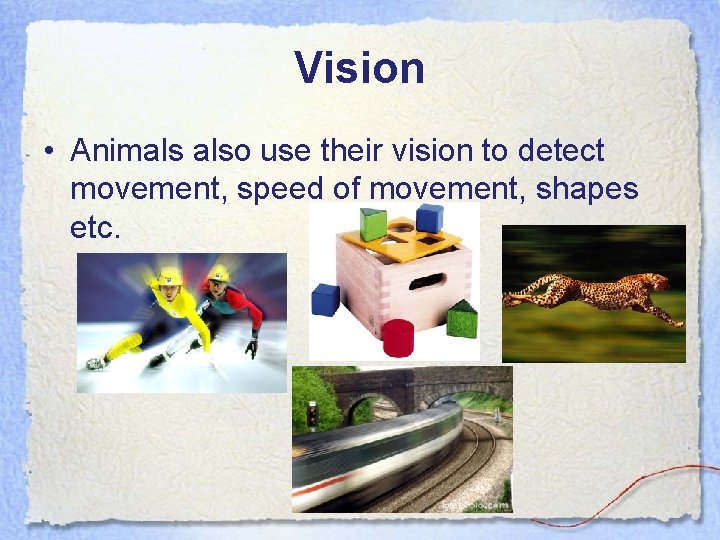
Vision • Animals also use their vision to detect movement, speed of movement, shapes etc.
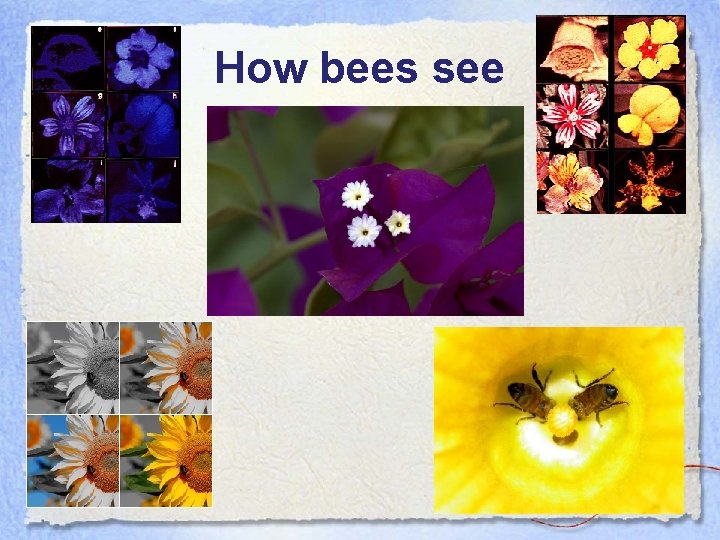
Colour Vision • We, as humans see violet, indigo, blue, green, yellow, orange and red parts of the light spectrum. • Bees see ultraviolet light but are less sensitive to red. This is why most red flowers have some blue or a strong scent.
How bees see
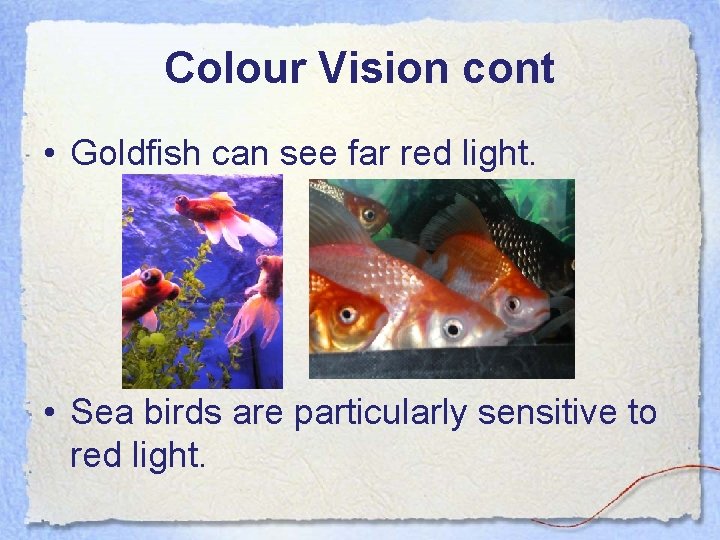
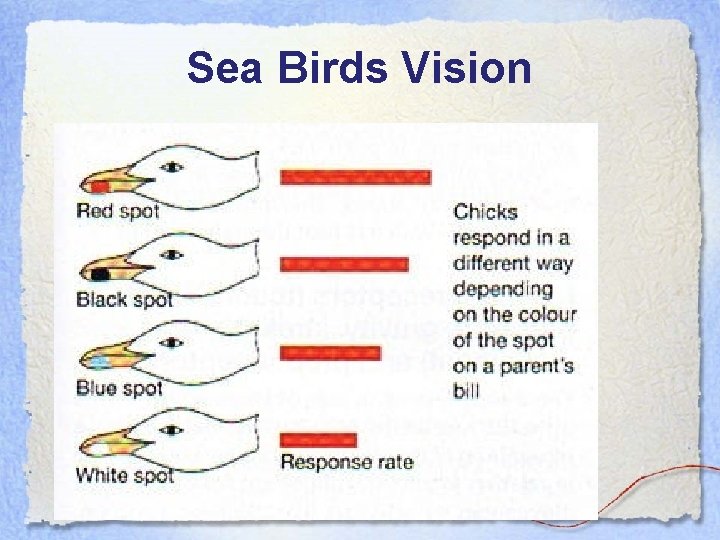
Colour Vision cont • Goldfish can see far red light. • Sea birds are particularly sensitive to red light.
Sea Birds Vision
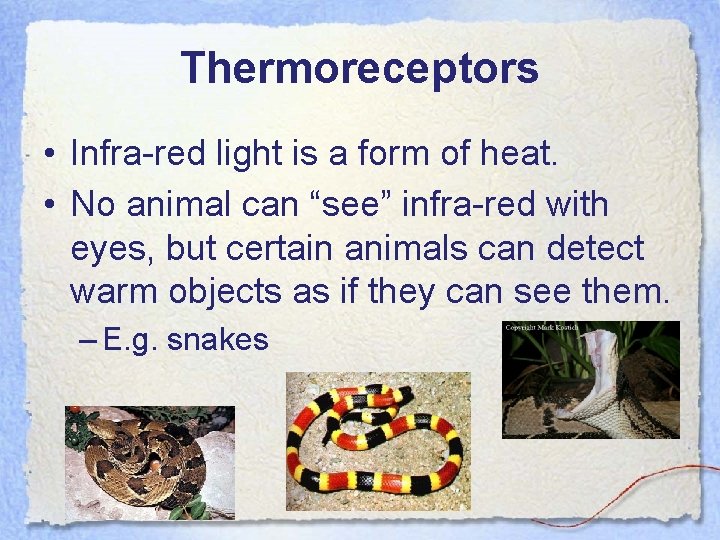
Thermoreceptors • Infra-red light is a form of heat. • No animal can “see” infra-red with eyes, but certain animals can detect warm objects as if they can see them. – E. g. snakes
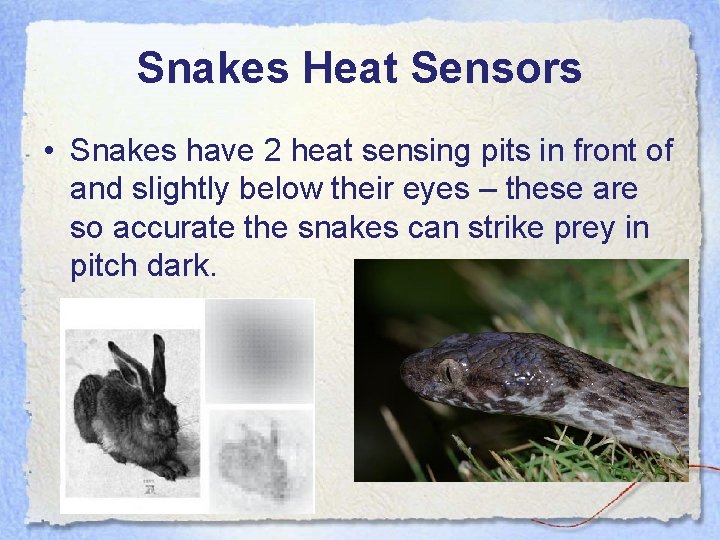
Snakes Heat Sensors • Snakes have 2 heat sensing pits in front of and slightly below their eyes – these are so accurate the snakes can strike prey in pitch dark.
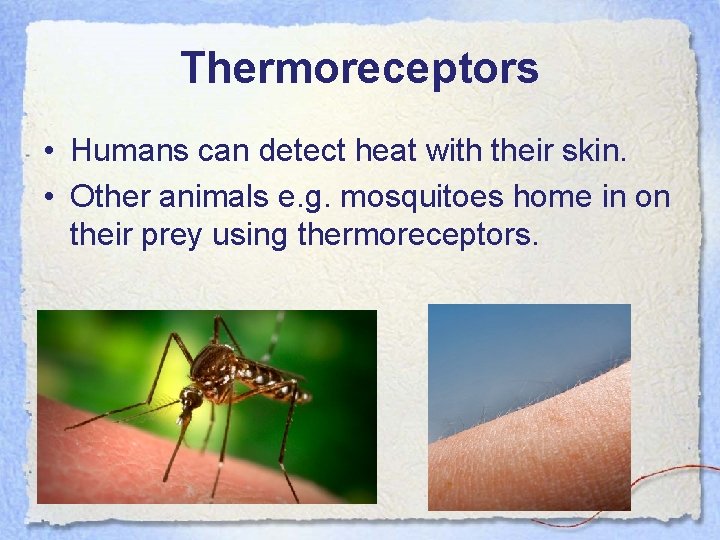
Thermoreceptors • Humans can detect heat with their skin. • Other animals e. g. mosquitoes home in on their prey using thermoreceptors.
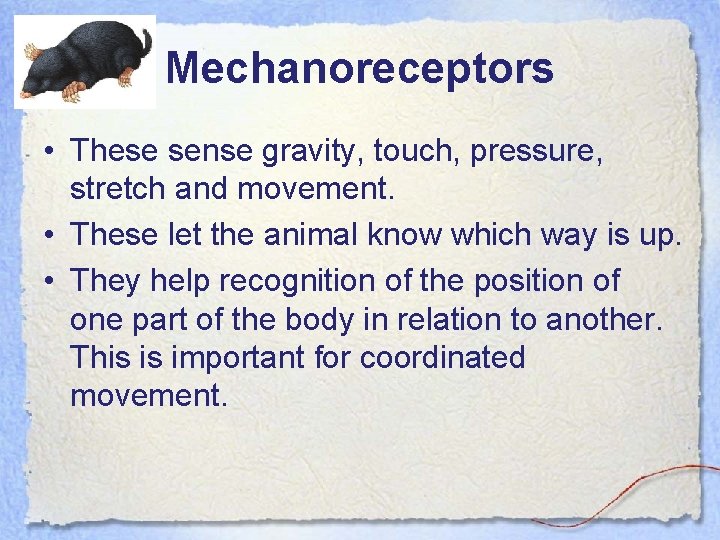
Mechanoreceptors • These sense gravity, touch, pressure, stretch and movement. • These let the animal know which way is up. • They help recognition of the position of one part of the body in relation to another. This is important for coordinated movement.
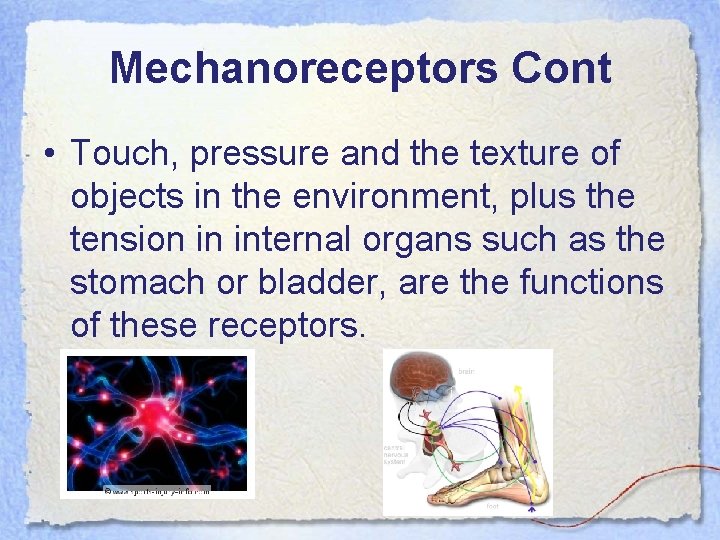
Mechanoreceptors Cont • Touch, pressure and the texture of objects in the environment, plus the tension in internal organs such as the stomach or bladder, are the functions of these receptors.
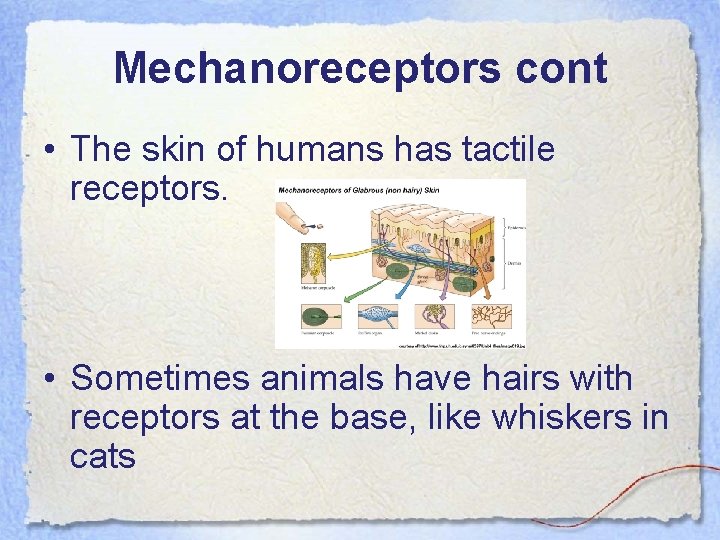
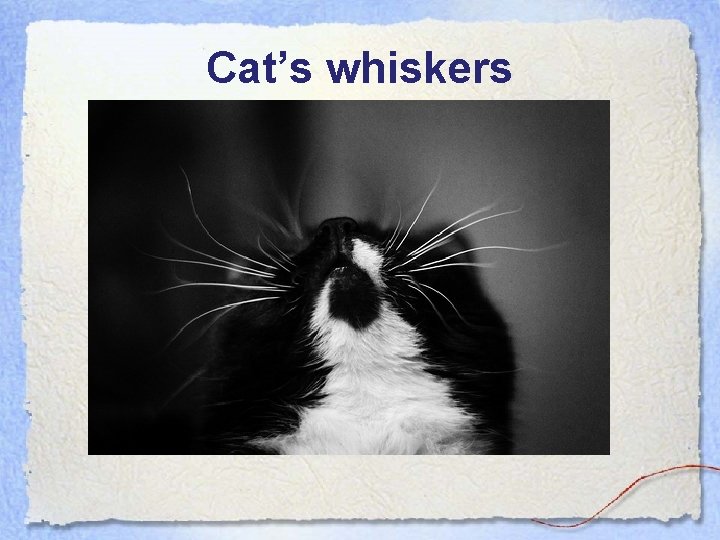
Mechanoreceptors cont • The skin of humans has tactile receptors. • Sometimes animals have hairs with receptors at the base, like whiskers in cats
Cat’s whiskers
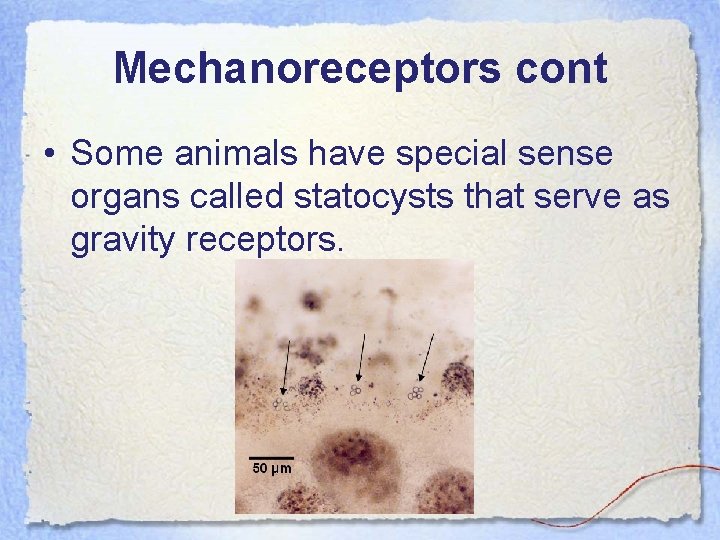
Mechanoreceptors cont • Some animals have special sense organs called statocysts that serve as gravity receptors.
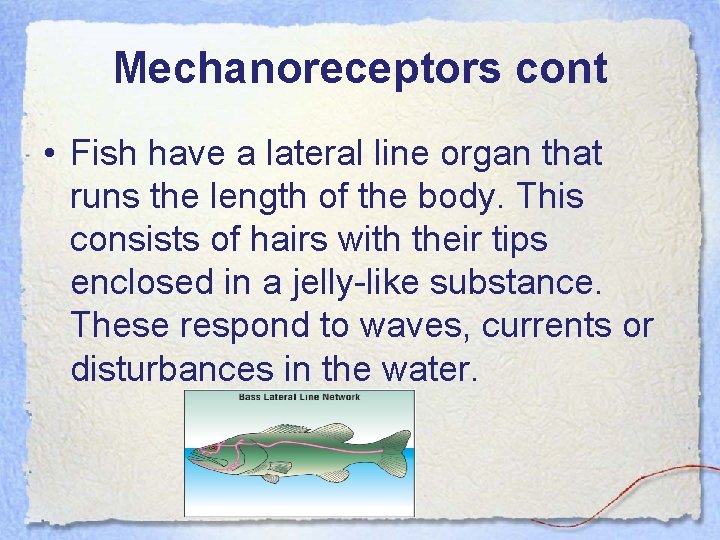
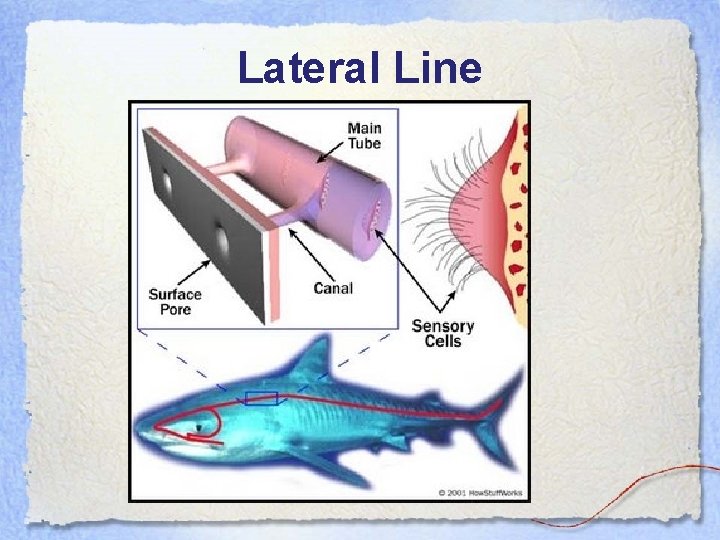
Mechanoreceptors cont • Fish have a lateral line organ that runs the length of the body. This consists of hairs with their tips enclosed in a jelly-like substance. These respond to waves, currents or disturbances in the water.
Lateral Line
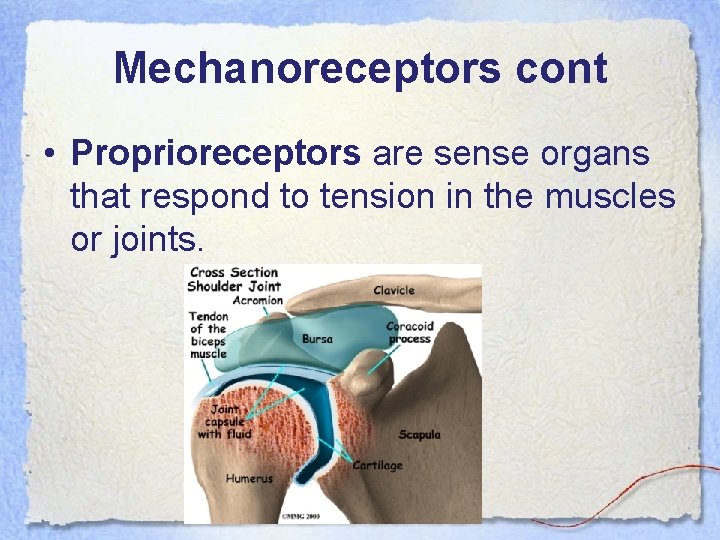
Mechanoreceptors cont • Proprioreceptors are sense organs that respond to tension in the muscles or joints.
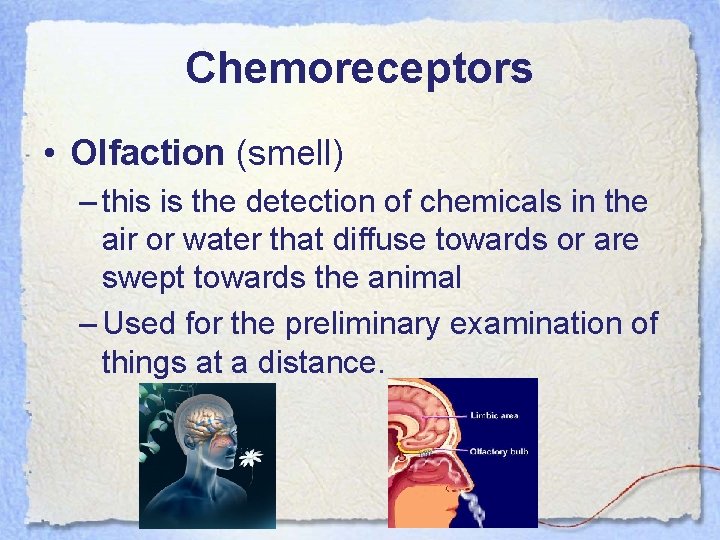
Chemoreceptors • Olfaction (smell) – this is the detection of chemicals in the air or water that diffuse towards or are swept towards the animal – Used for the preliminary examination of things at a distance.
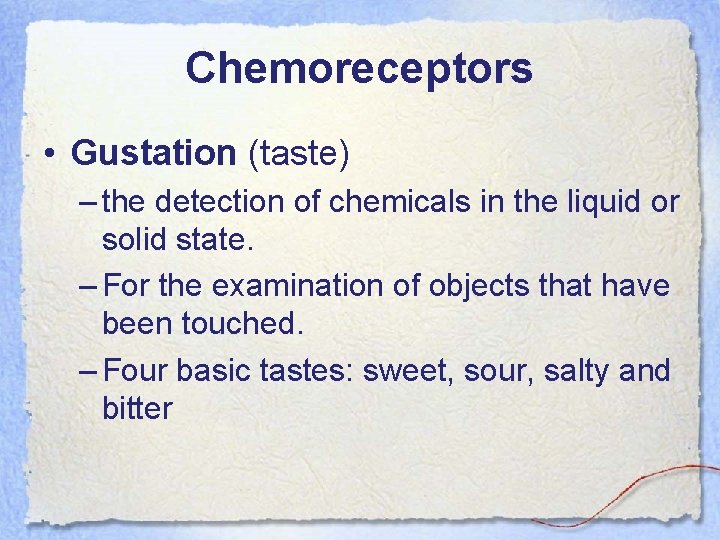
Chemoreceptors • Gustation (taste) – the detection of chemicals in the liquid or solid state. – For the examination of objects that have been touched. – Four basic tastes: sweet, sour, salty and bitter
Human Tongue
Gustation Cont – These are located in different areas of the tongue.
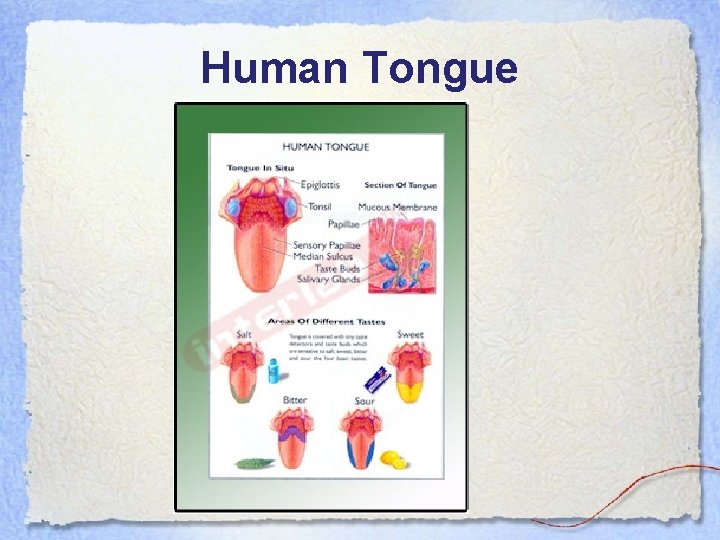
Chemoreceptors • The distinction between smell and taste becomes blurred in simpler animals. • Humans use their noses and tongues.
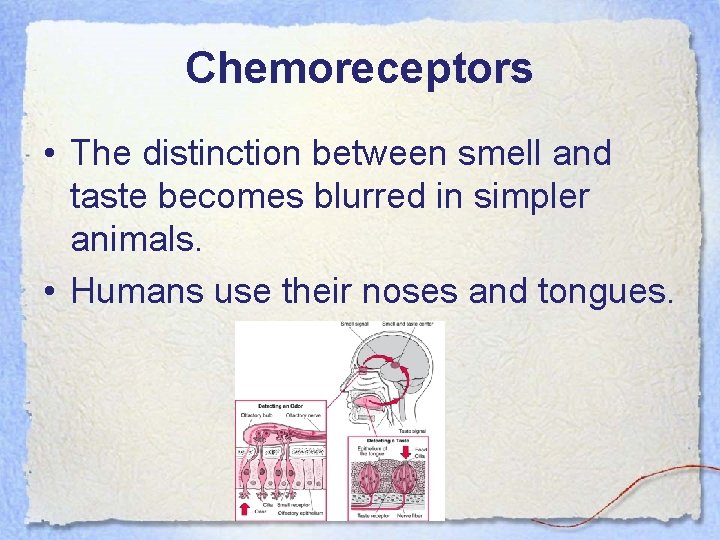
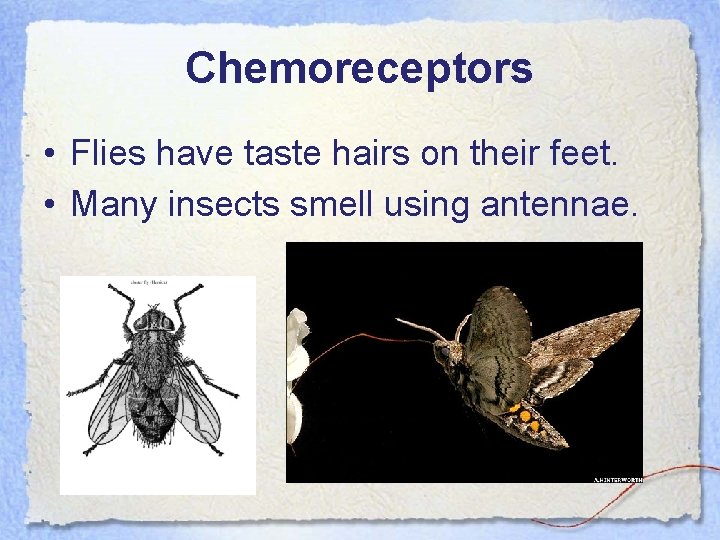
Chemoreceptors • Flies have taste hairs on their feet. • Many insects smell using antennae.
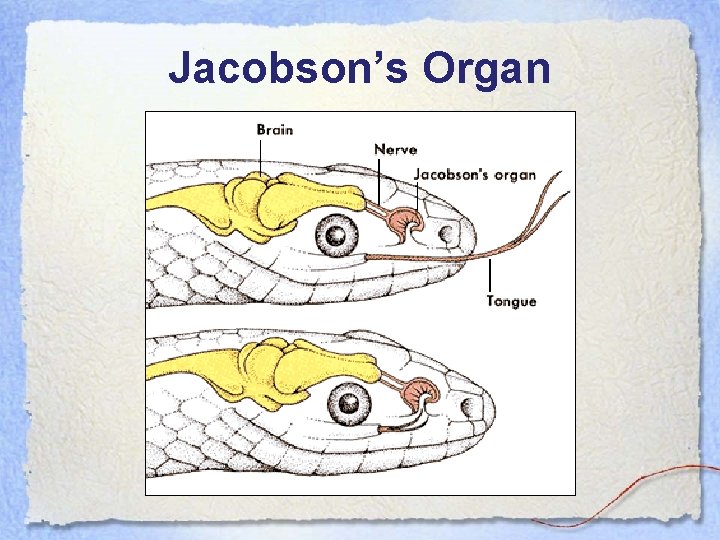
Chemoreceptors • Reptiles have a small opening in the head, this opens into the roof of the mouth. • This is called the Jacobson’s organ.
Jacobson’s Organ
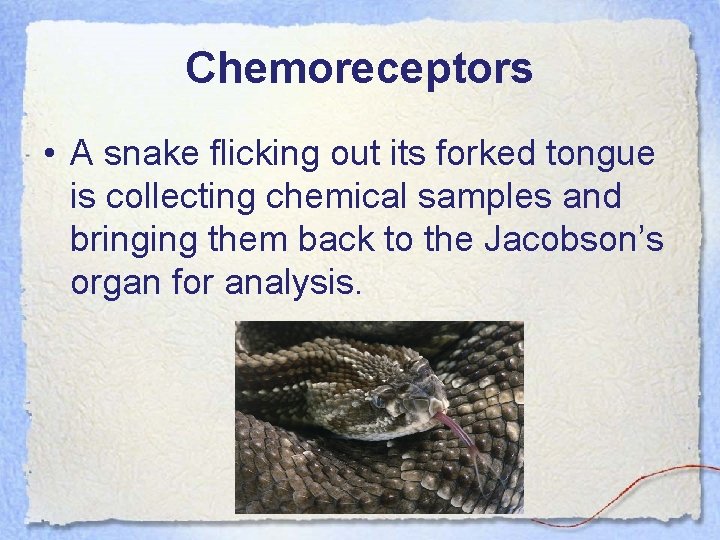
Chemoreceptors • A snake flicking out its forked tongue is collecting chemical samples and bringing them back to the Jacobson’s organ for analysis.
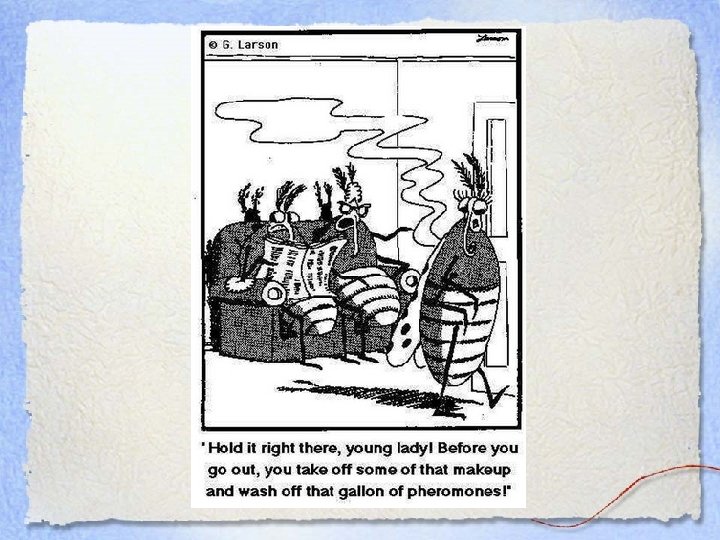
Pheromones • These are chemicals used to communicate between members of the same species. • Members of the same species have receptors to pick up these pheromones, other species ignore them.
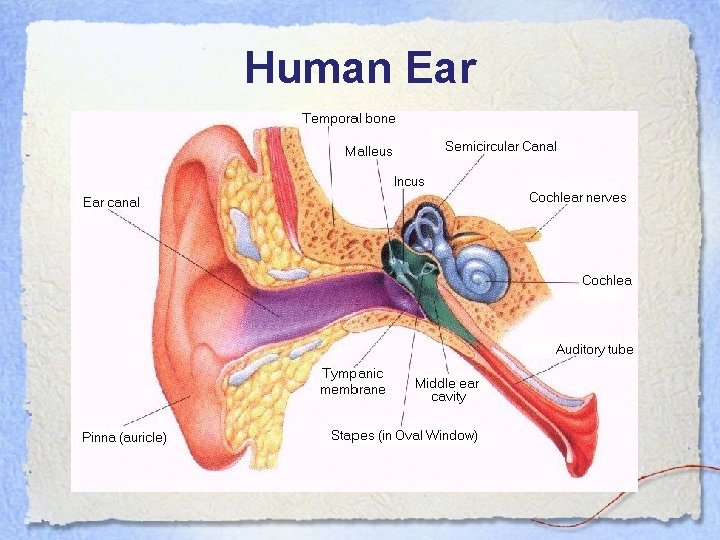
Auditory Receptors • In humans sound waves cause the eardrum to vibrate, these vibrations are transmitted across the middle ear by 3 small bones • This sets up vibrations in the fluid-filled cochlea. • This initiates impulses in the auditory nerve and we finally hear with our brain.
Human Ear
Auditory Receptors • Humans can hear from 20 Hz to 20 000 Hz. Sound above that is ultrasonic. • Bats use ultrasonic bleeps as a form of sonar. • Dogs and many insects hear in the ultrasonic range.
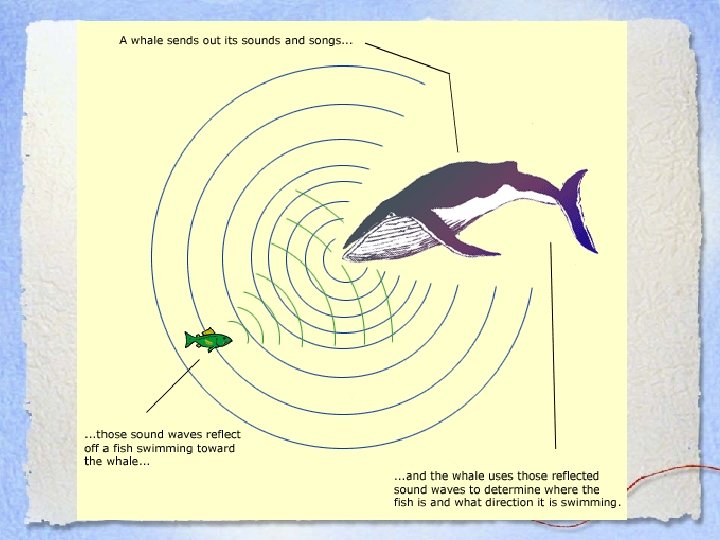
Auditory Receptors • Whales use a complicated communication system involving ultrasonic sounds, echo-location and very low sounds called infrasounds (travel for long distances)
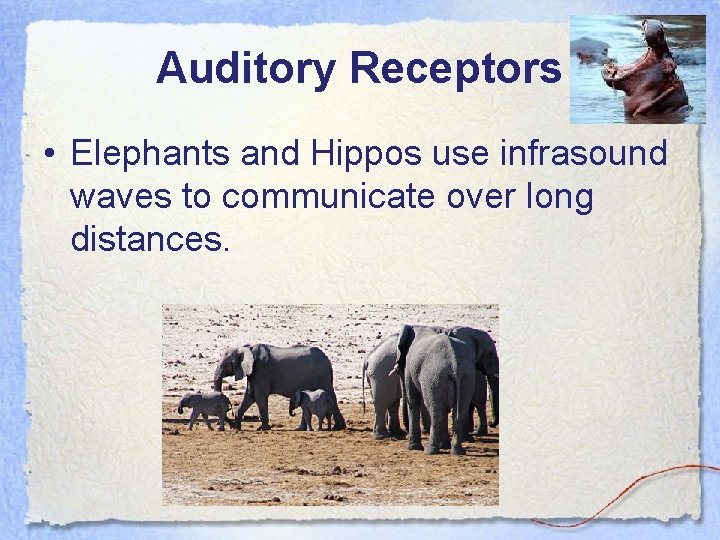
Auditory Receptors • Elephants and Hippos use infrasound waves to communicate over long distances.
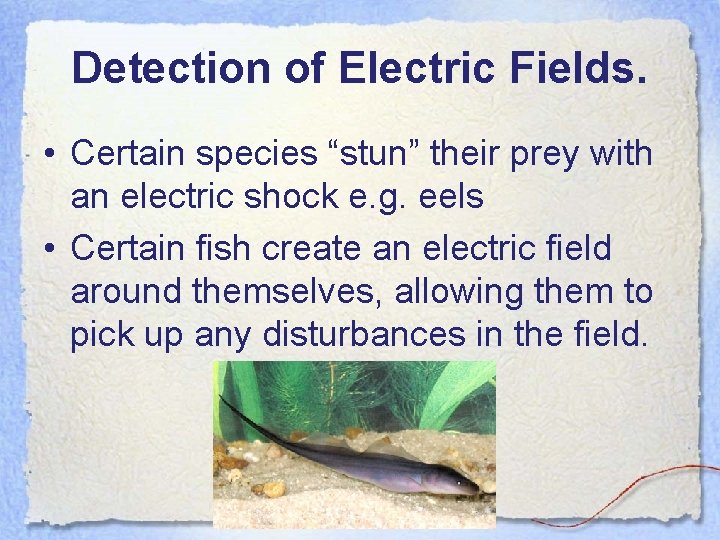
Detection of Electric Fields. • Certain species “stun” their prey with an electric shock e. g. eels • Certain fish create an electric field around themselves, allowing them to pick up any disturbances in the field.
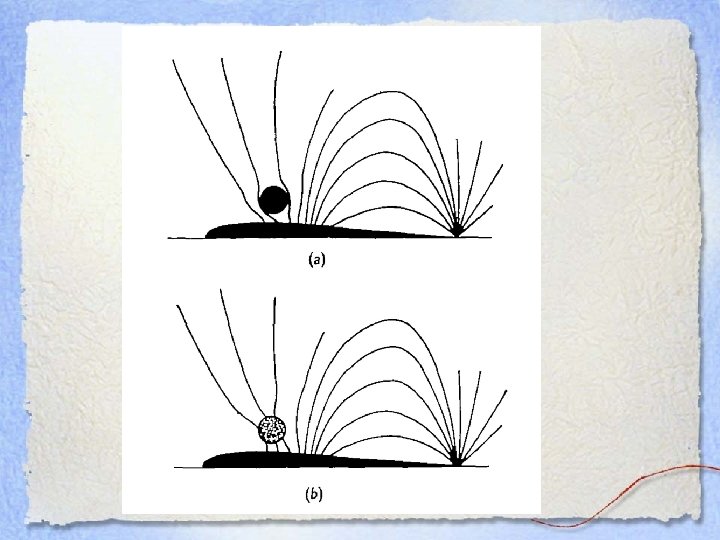
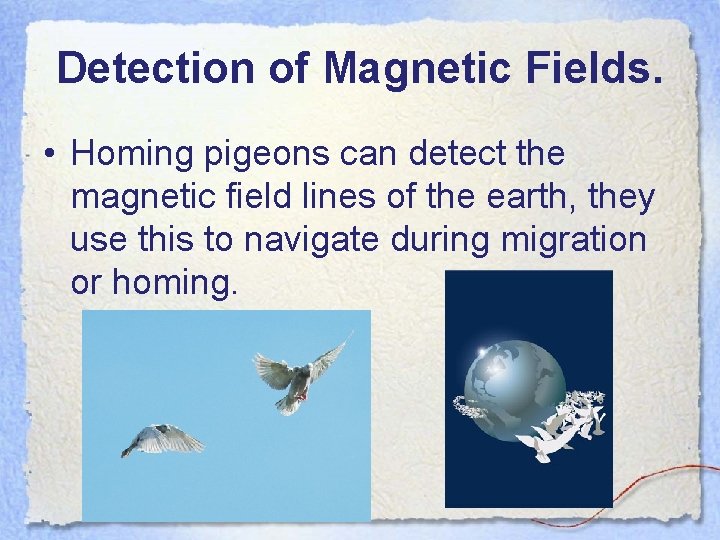
Detection of Magnetic Fields. • Homing pigeons can detect the magnetic field lines of the earth, they use this to navigate during migration or homing.
Questions • Name the colours of light we can see. • Which cells see colour and which see black and white? • Two eyes facing forward ………. Vision which is good for judging ………… • Insects have ……. . Eyes made up of many ………. Which give …… vision. • Snakes can “see” ……… ……. . With small pits set under their ……. .
Questions Cont • A gravity-detecting organ in invertebrates is called a ………… It consists of a round cavity with small ……. . , and placed on these is a small, hard, pebble-like object called a ……. . • In fish the ……. . Organ detects disturbances in the water. • Name 5 ways that animals use chemicals.
Questions Cont • Sounds above those that humans can hear are called ……. . , and those below are called………. • Some fish living in muddy conditions use ………. to test the world around them.