
Animal Reproduction Development AP Biology 2007 2008 Oogenesis
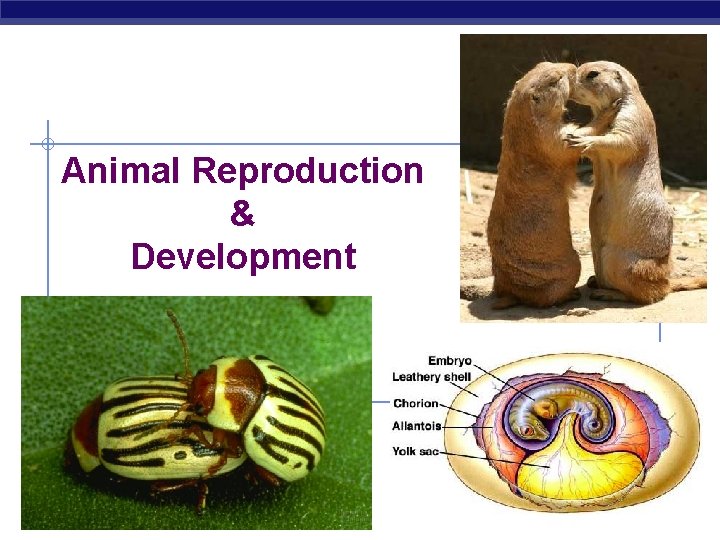
Animal Reproduction & Development AP Biology 2007 -2008
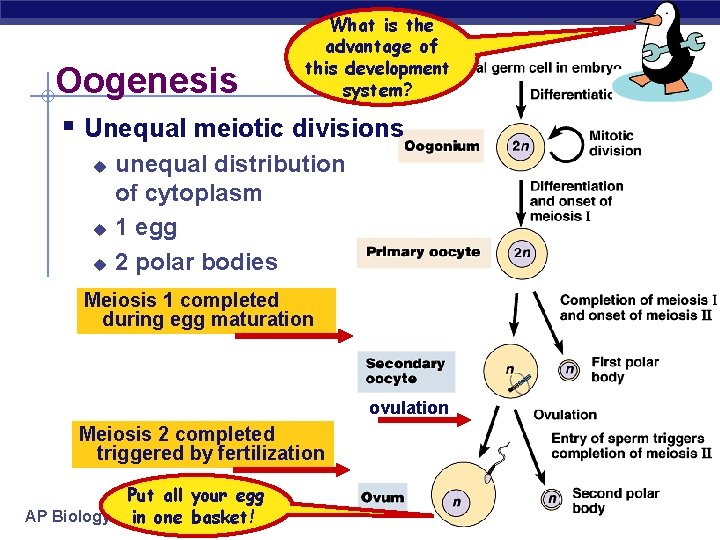
Oogenesis What is the advantage of this development system? § Unequal meiotic divisions u unequal distribution of cytoplasm 1 egg 2 polar bodies Meiosis 1 completed during egg maturation ovulation Meiosis 2 completed triggered by fertilization Put all your egg AP Biology in one basket!
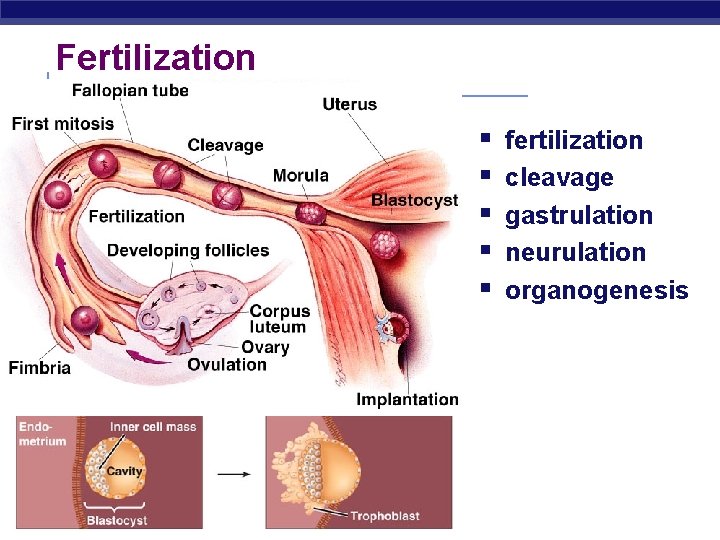
Fertilization § § § AP Biology fertilization cleavage gastrulation neurulation organogenesis
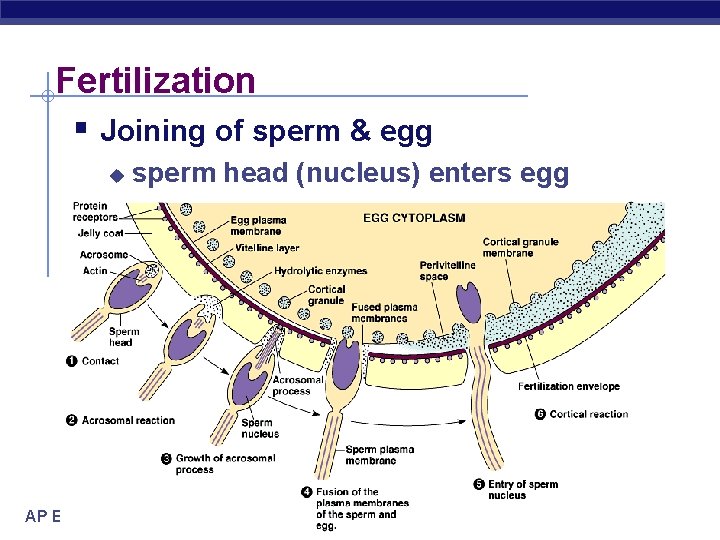
Fertilization § Joining of sperm & egg u AP Biology sperm head (nucleus) enters egg
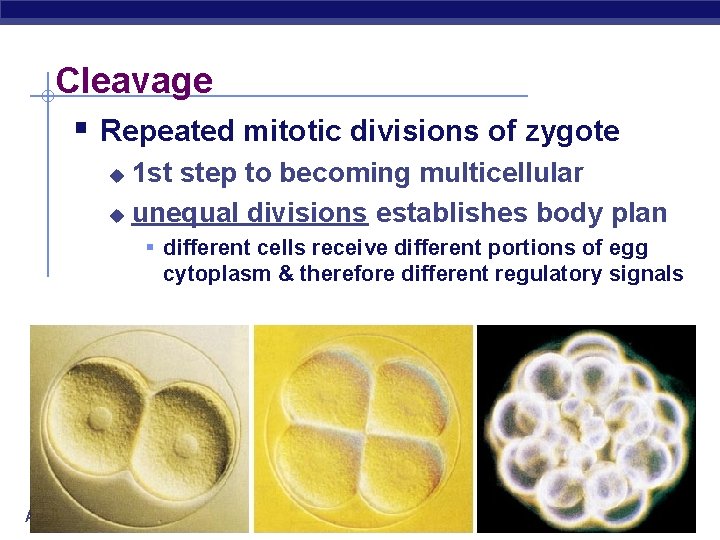
Cleavage § Repeated mitotic divisions of zygote 1 st step to becoming multicellular u unequal divisions establishes body plan u § different cells receive different portions of egg cytoplasm & therefore different regulatory signals AP Biology
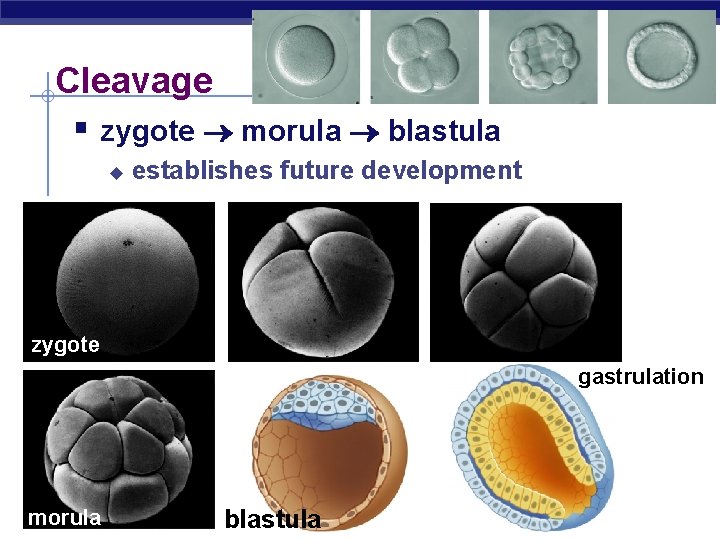
Cleavage § zygote morula blastula u establishes future development zygote gastrulation AP Biology morula blastula
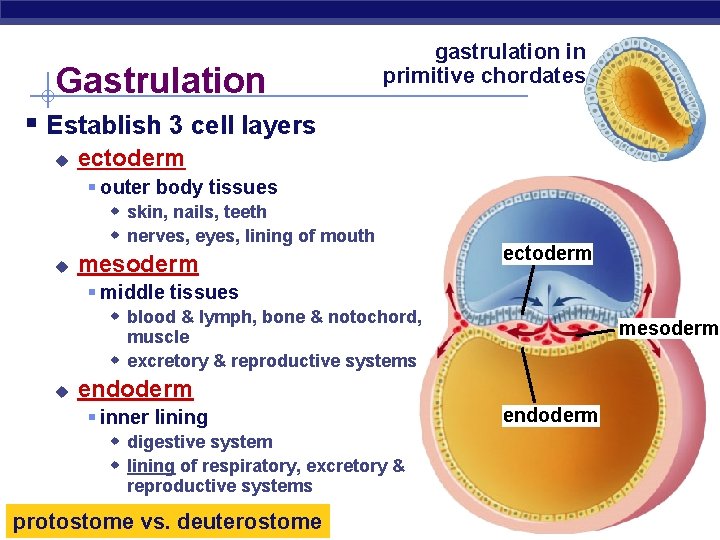
Gastrulation gastrulation in primitive chordates § Establish 3 cell layers u ectoderm § outer body tissues w skin, nails, teeth w nerves, eyes, lining of mouth u mesoderm ectoderm § middle tissues w blood & lymph, bone & notochord, mesoderm muscle w excretory & reproductive systems u endoderm § inner lining w digestive system w lining of respiratory, excretory & reproductive systems AP Biology protostome vs. deuterostome endoderm
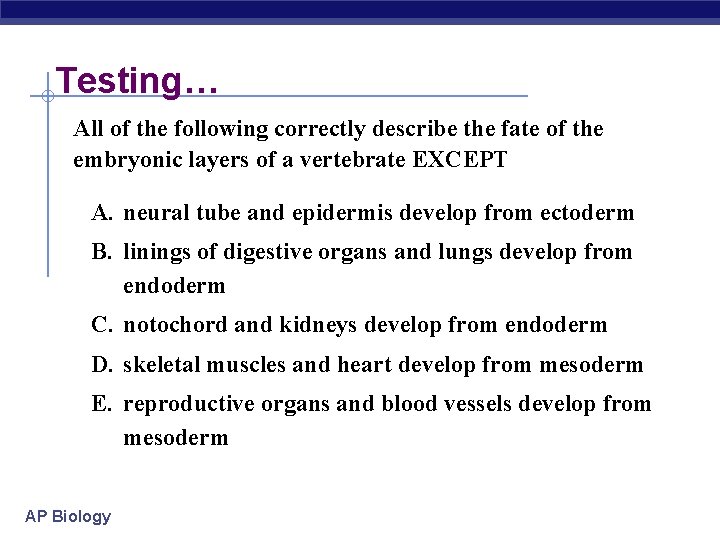
Testing… All of the following correctly describe the fate of the embryonic layers of a vertebrate EXCEPT A. neural tube and epidermis develop from ectoderm B. linings of digestive organs and lungs develop from endoderm C. notochord and kidneys develop from endoderm D. skeletal muscles and heart develop from mesoderm E. reproductive organs and blood vessels develop from mesoderm AP Biology
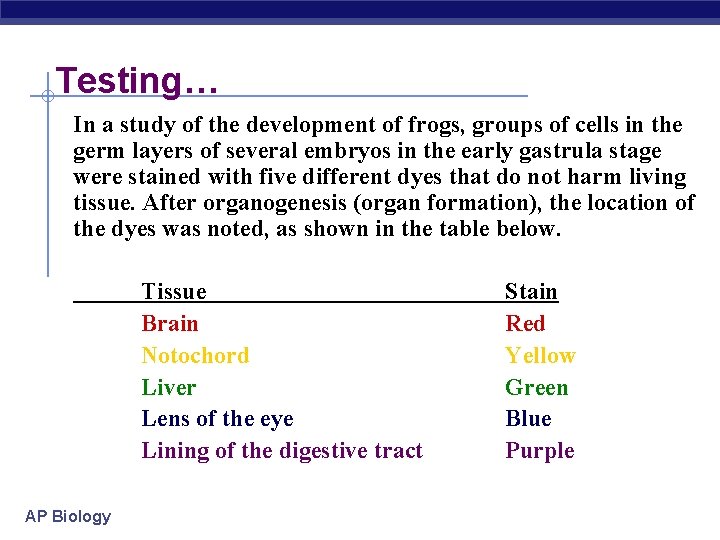
Testing… In a study of the development of frogs, groups of cells in the germ layers of several embryos in the early gastrula stage were stained with five different dyes that do not harm living tissue. After organogenesis (organ formation), the location of the dyes was noted, as shown in the table below. Tissue Brain Notochord Liver Lens of the eye Lining of the digestive tract AP Biology Stain Red Yellow Green Blue Purple
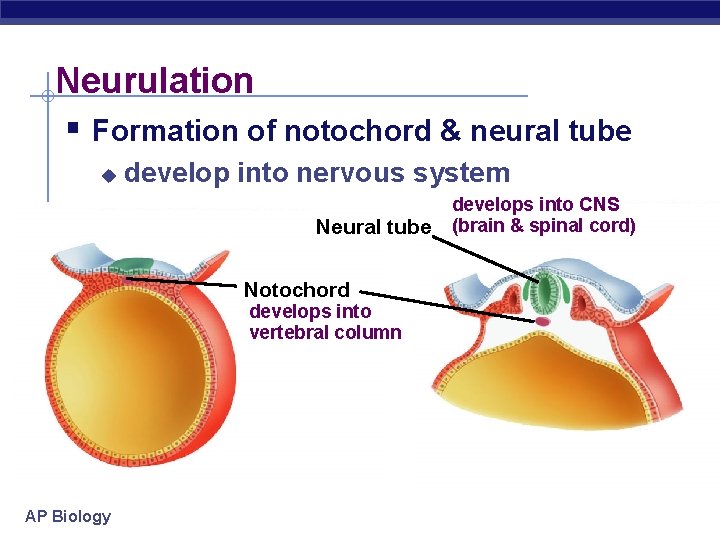
Neurulation § Formation of notochord & neural tube u develop into nervous system Neural tube Notochord develops into vertebral column AP Biology develops into CNS (brain & spinal cord)
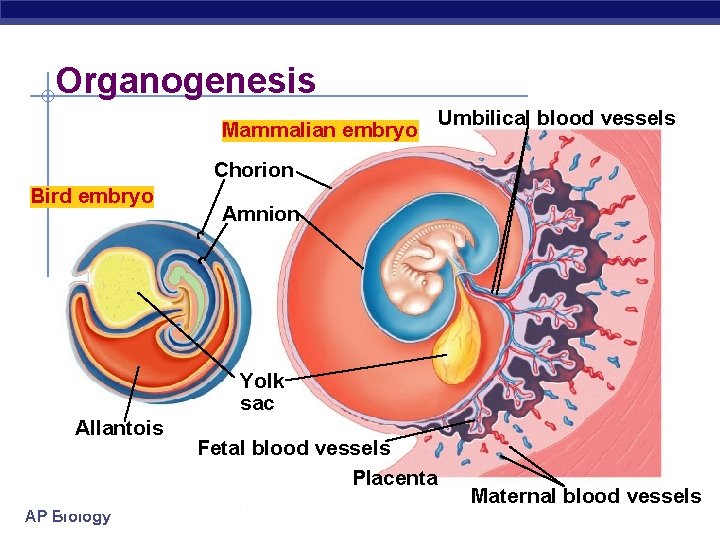
Organogenesis Mammalian embryo Umbilical blood vessels Chorion Bird embryo Amnion Yolk sac Allantois AP Biology Fetal blood vessels Placenta Maternal blood vessels
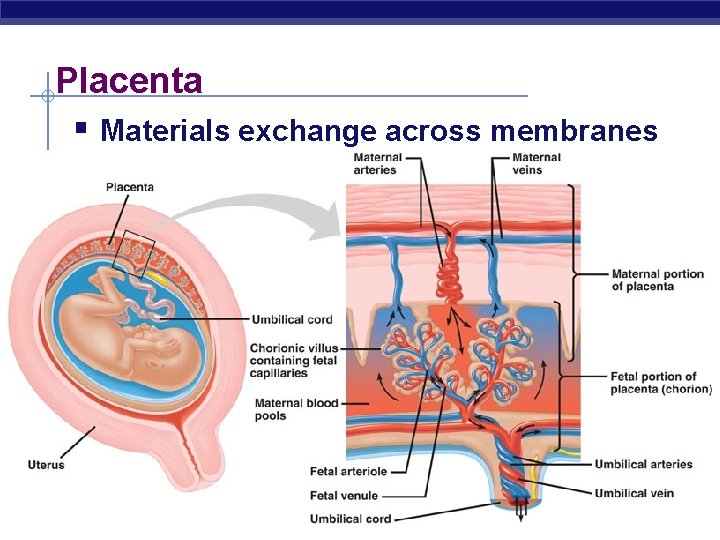
Placenta § Materials exchange across membranes AP Biology
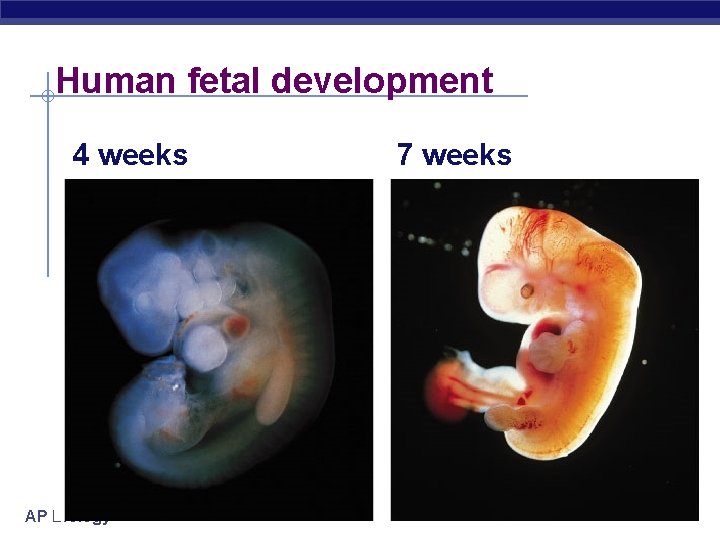
Human fetal development 4 weeks AP Biology 7 weeks
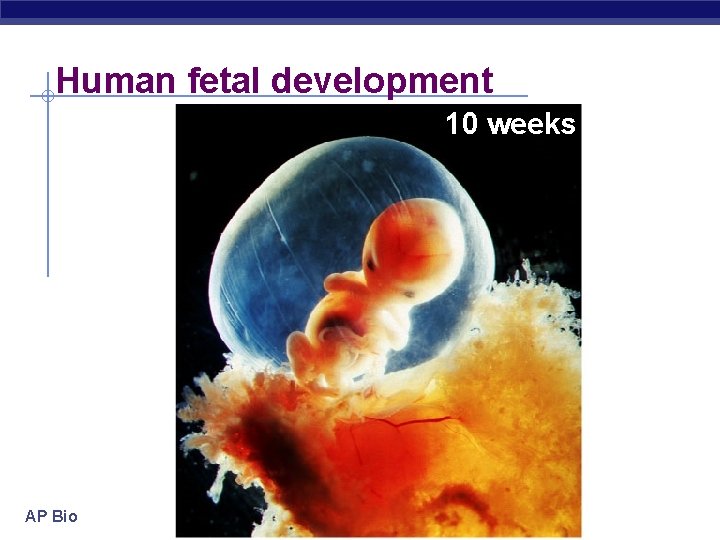
Human fetal development 10 weeks AP Biology
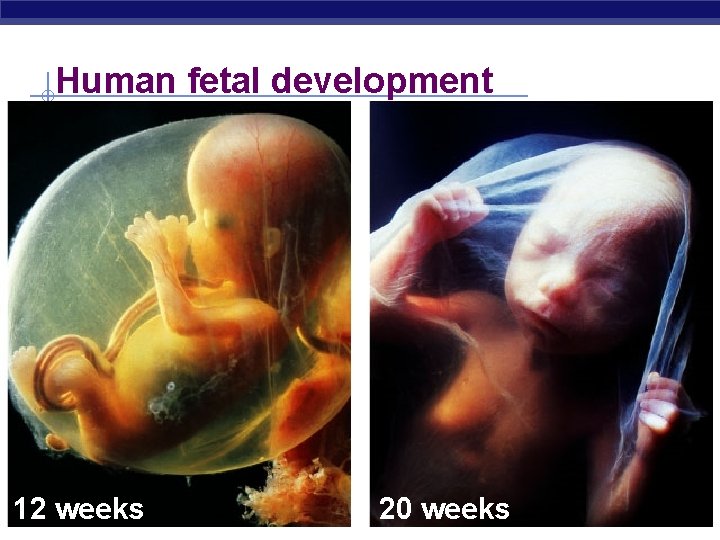
Human fetal development 12 weeks AP Biology 20 weeks
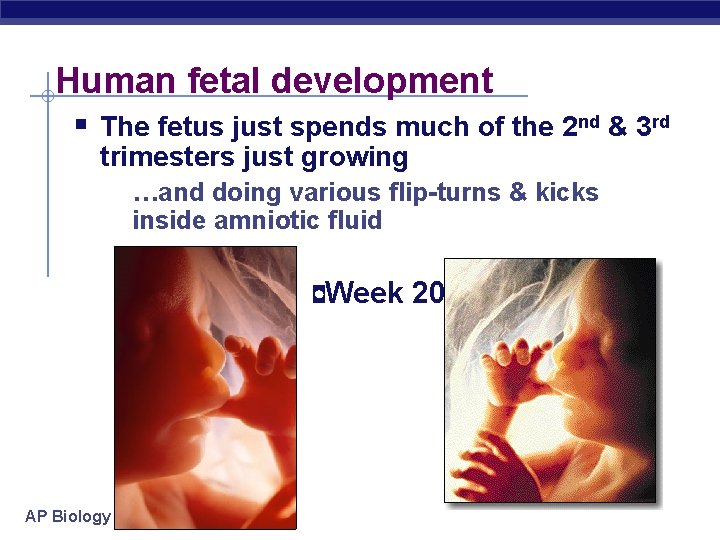
Human fetal development § The fetus just spends much of the 2 nd & 3 rd trimesters just growing …and doing various flip-turns & kicks inside amniotic fluid Week AP Biology 20
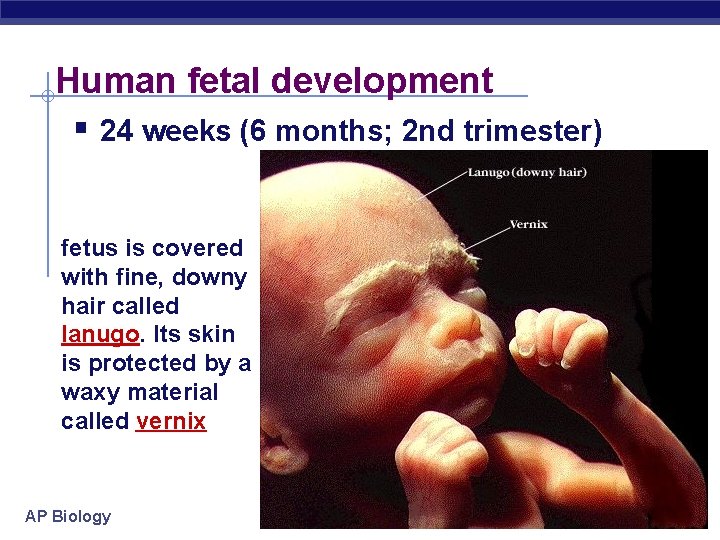
Human fetal development § 24 weeks (6 months; 2 nd trimester) fetus is covered with fine, downy hair called lanugo. Its skin is protected by a waxy material called vernix AP Biology
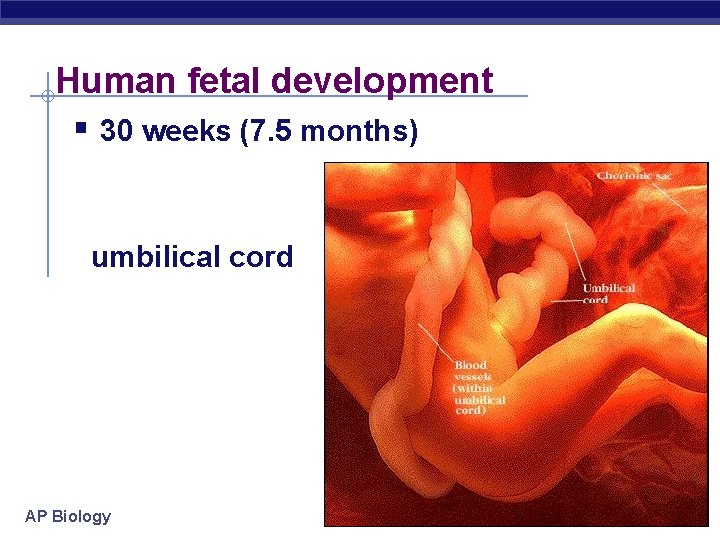
Human fetal development § 30 weeks (7. 5 months) umbilical cord AP Biology
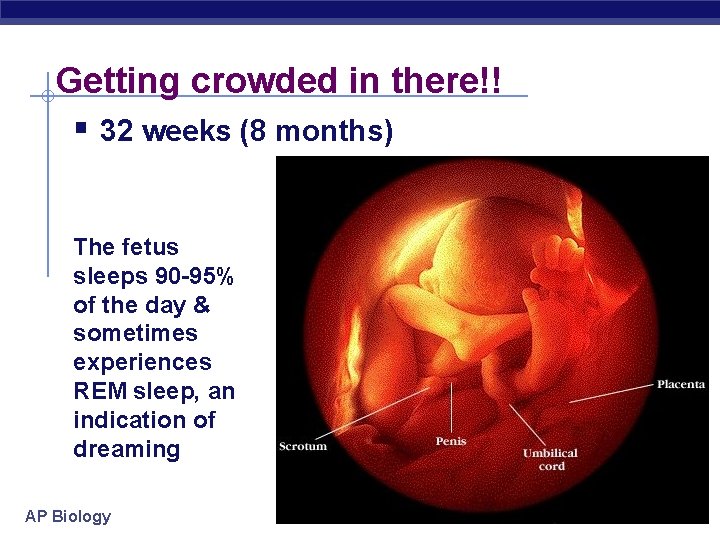
Getting crowded in there!! § 32 weeks (8 months) The fetus sleeps 90 -95% of the day & sometimes experiences REM sleep, an indication of dreaming AP Biology
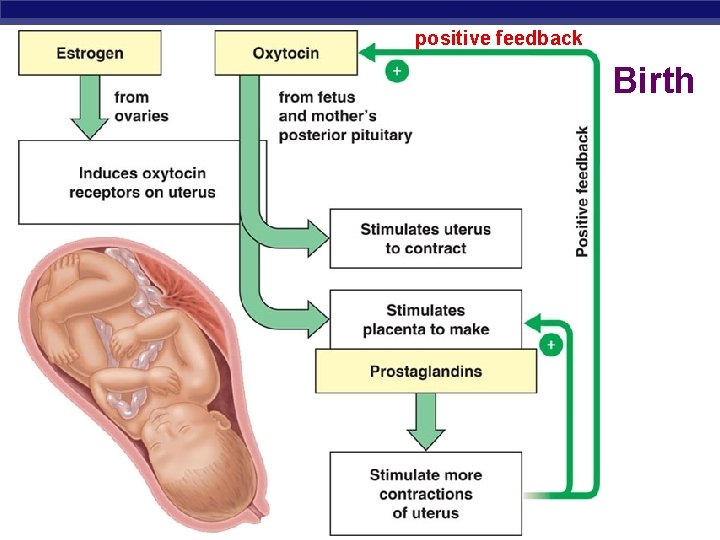
positive feedback Birth AP Biology
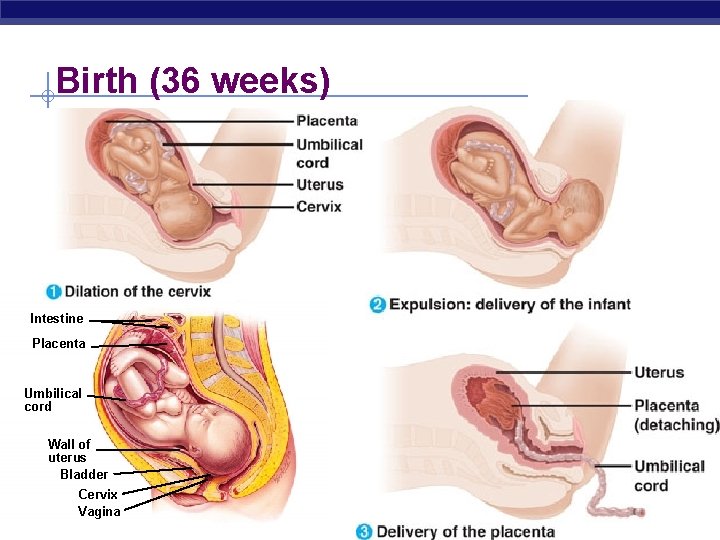
Birth (36 weeks) Intestine Placenta Umbilical cord Wall of uterus Bladder AP Cervix Vagina Biology
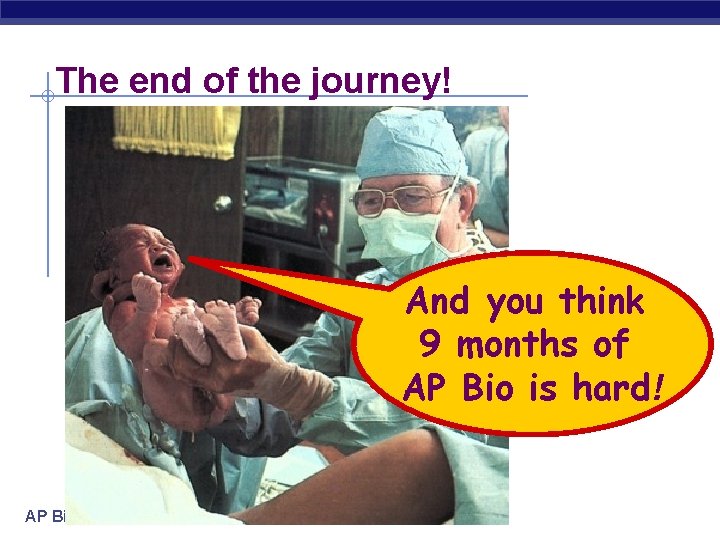
The end of the journey! And you think 9 months of AP Bio is hard! AP Biology
- Slides: 22