
Animal Reproduction AP Biology 2005 2006 Sexual asexual
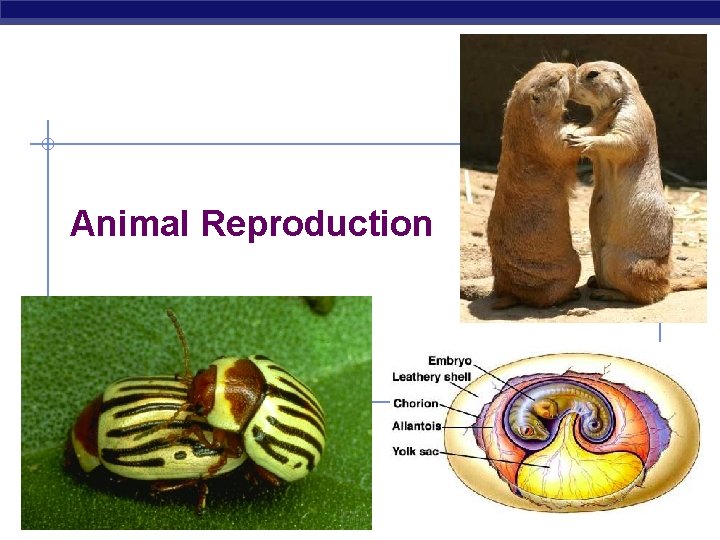
Animal Reproduction AP Biology 2005 -2006
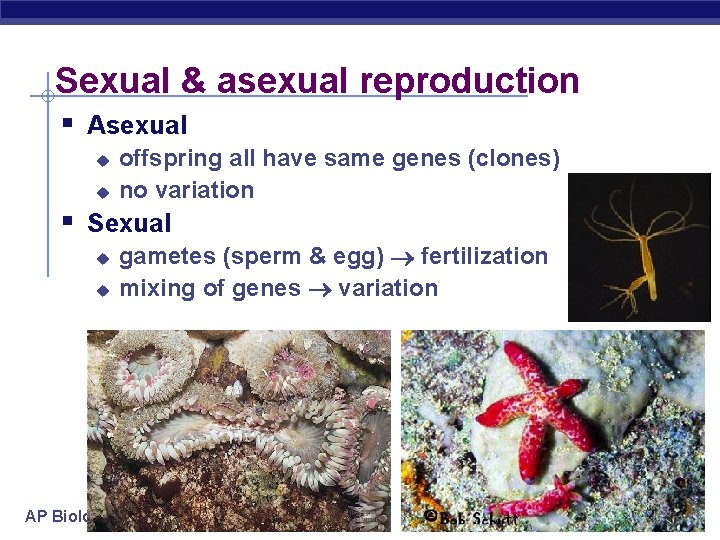
Sexual & asexual reproduction § Asexual u u offspring all have same genes (clones) no variation § Sexual u u AP Biology gametes (sperm & egg) fertilization mixing of genes variation 2005 -2006

Parthenogenesis § Development of an unfertilized egg u honey bees § drones = males produced through parthenogenesis haploid § workers & queens = females produced from fertilized eggs diploid AP Biology queen worker drone 2005 -2006
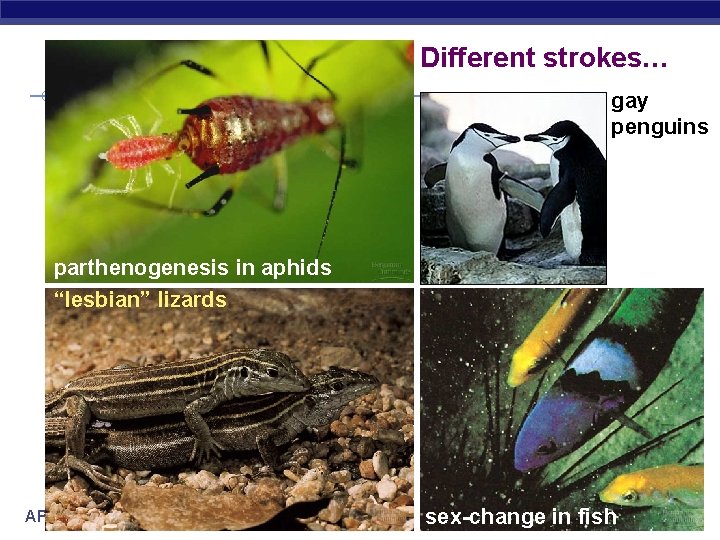
Different strokes… gay penguins parthenogenesis in aphids “lesbian” lizards AP Biology 2005 -2006 sex-change in fish
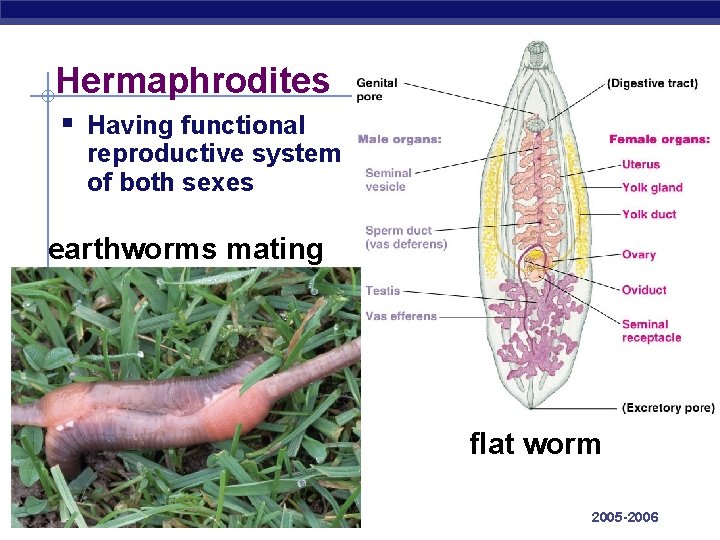
Hermaphrodites § Having functional reproductive system of both sexes earthworms mating flat worm AP Biology 2005 -2006

Fertilization § Joining of egg & sperm u external § usually aquatic animals u internal § usually land animals AP Biology 2005 -2006
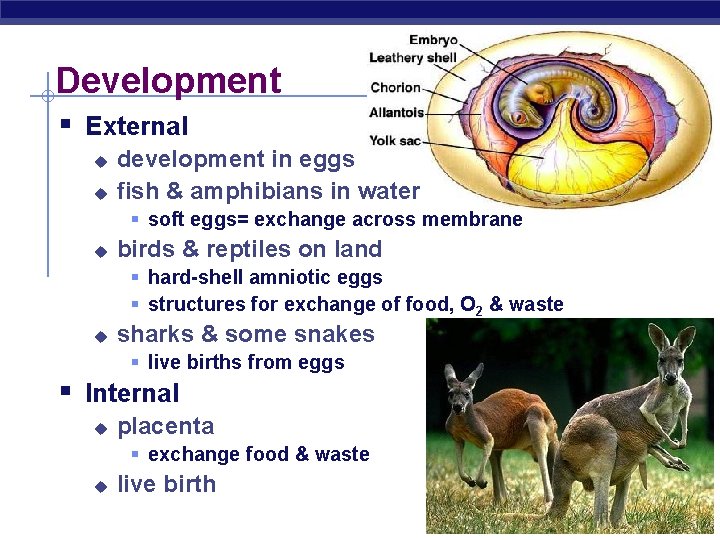
Development § External u u development in eggs fish & amphibians in water § soft eggs= exchange across membrane u birds & reptiles on land § hard-shell amniotic eggs § structures for exchange of food, O 2 & waste u sharks & some snakes § live births from eggs § Internal u placenta § exchange food & waste u AP Biology live birth 2005 -2006
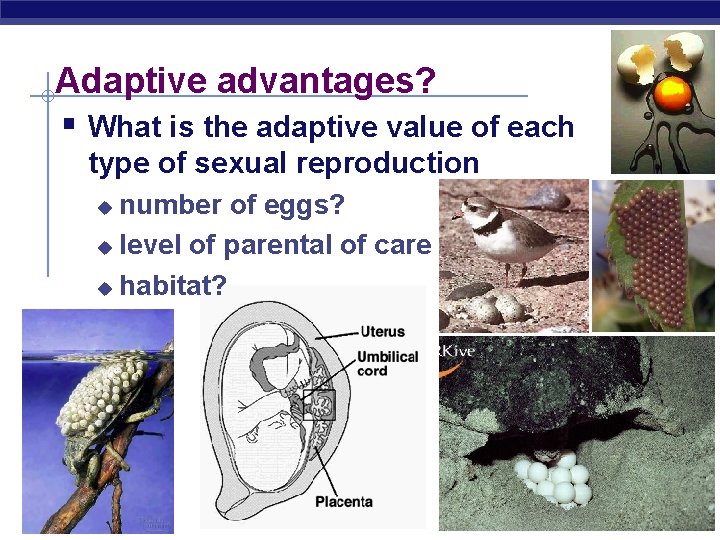
Adaptive advantages? § What is the adaptive value of each type of sexual reproduction number of eggs? u level of parental of care u habitat? u AP Biology 2005 -2006
Human Reproduction AP Biology 2005 -2006
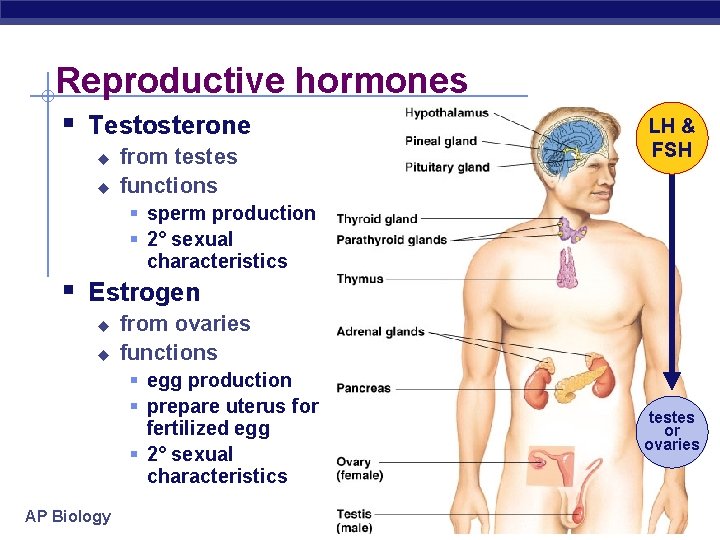
Reproductive hormones § Testosterone u u from testes functions LH & FSH § sperm production § 2° sexual characteristics § Estrogen u u from ovaries functions § egg production § prepare uterus for fertilized egg § 2° sexual characteristics AP Biology testes or ovaries 2005 -2006
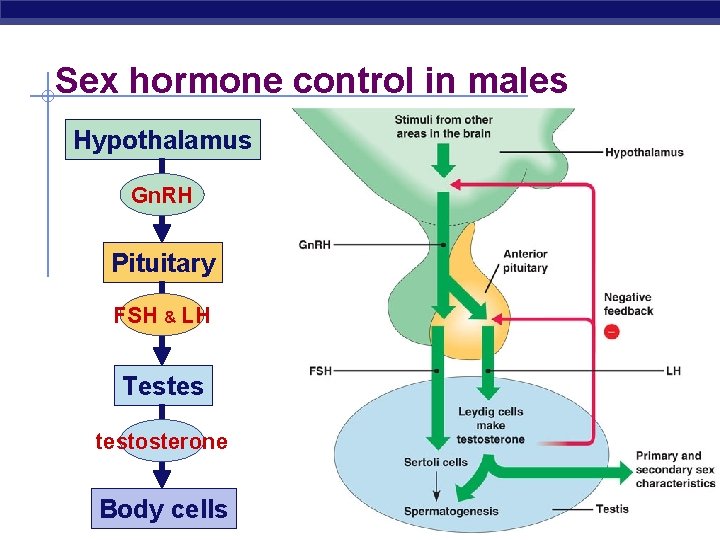
Sex hormone control in males Hypothalamus Gn. RH Pituitary FSH & LH Testes testosterone Body cells AP Biology 2005 -2006
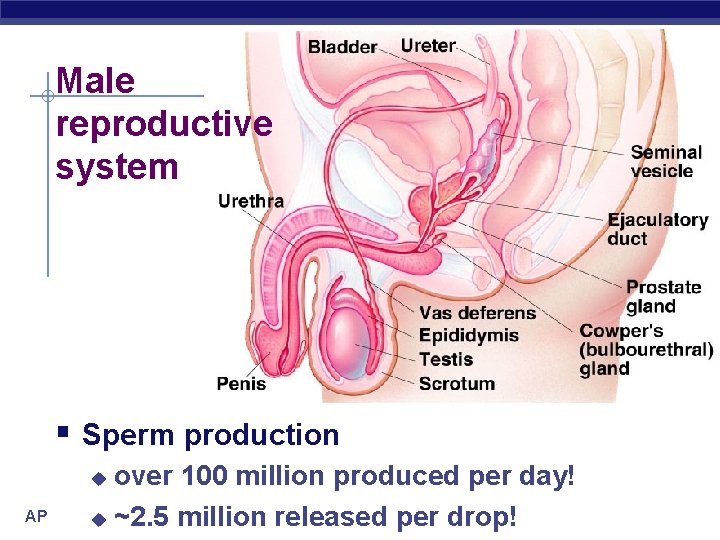
Male reproductive system § Sperm production over 100 million produced per day! AP Biology u ~2. 5 million released per drop! u 2005 -2006
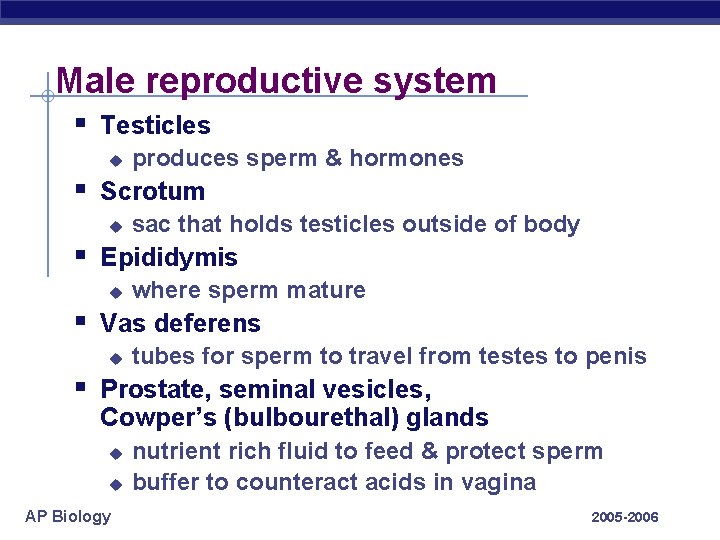
Male reproductive system § Testicles u produces sperm & hormones § Scrotum u sac that holds testicles outside of body § Epididymis u where sperm mature § Vas deferens u tubes for sperm to travel from testes to penis § Prostate, seminal vesicles, Cowper’s (bulbourethal) glands u u AP Biology nutrient rich fluid to feed & protect sperm buffer to counteract acids in vagina 2005 -2006
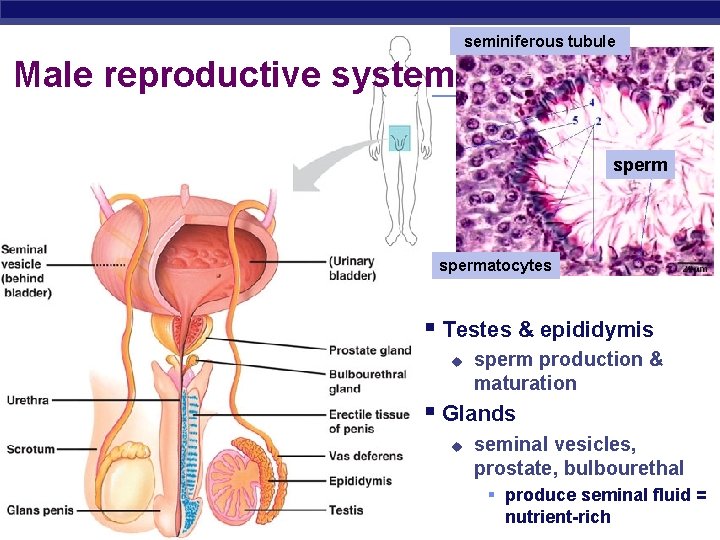
seminiferous tubule Male reproductive system spermatocytes § Testes & epididymis u sperm production & maturation § Glands u AP Biology seminal vesicles, prostate, bulbourethal § produce seminal fluid = 2005 -2006 nutrient-rich
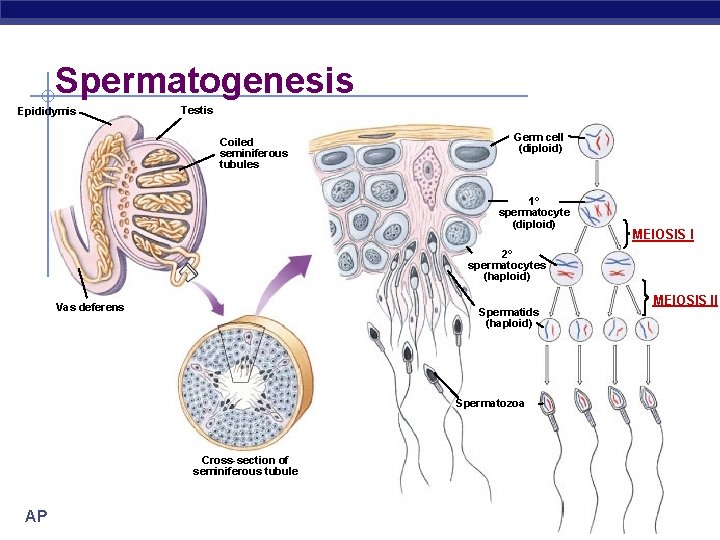
Spermatogenesis Epididymis Testis Coiled seminiferous tubules Germ cell (diploid) 1° spermatocyte (diploid) MEIOSIS I 2° spermatocytes (haploid) Vas deferens Spermatids (haploid) MEIOSIS II Spermatozoa Cross-section of seminiferous tubule AP Biology 2005 -2006
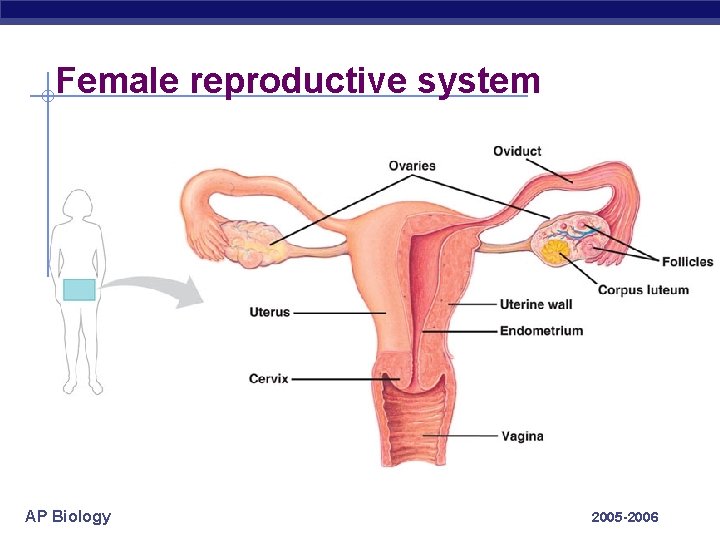
Female reproductive system AP Biology 2005 -2006
Female reproductive system § Ovaries u produces eggs & hormones § Uterus u nurtures fetus; lining builds up each month § Fallopian tubes u tubes for eggs to travel from ovaries to uterus § Cervix u opening to uterus, dilates 10 cm (4 inches) for birthing baby § Vagina u AP Biology birth canal for birthing baby 2005 -2006
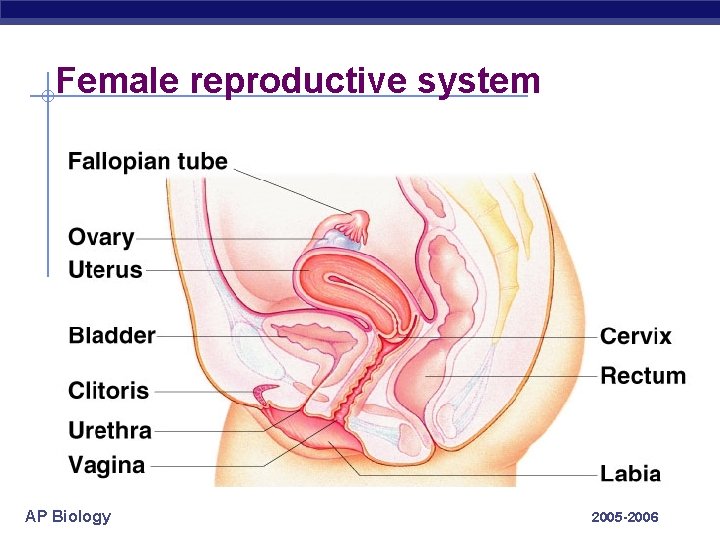
Female reproductive system AP Biology 2005 -2006
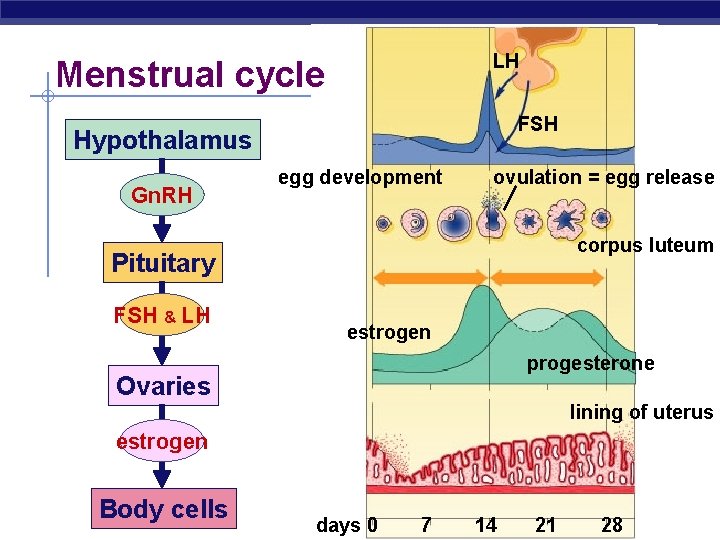
LH Menstrual cycle FSH Hypothalamus Gn. RH egg development ovulation = egg release corpus luteum Pituitary FSH & LH estrogen progesterone Ovaries lining of uterus estrogen Body cells AP Biology days 0 7 14 21 2005 -2006 28
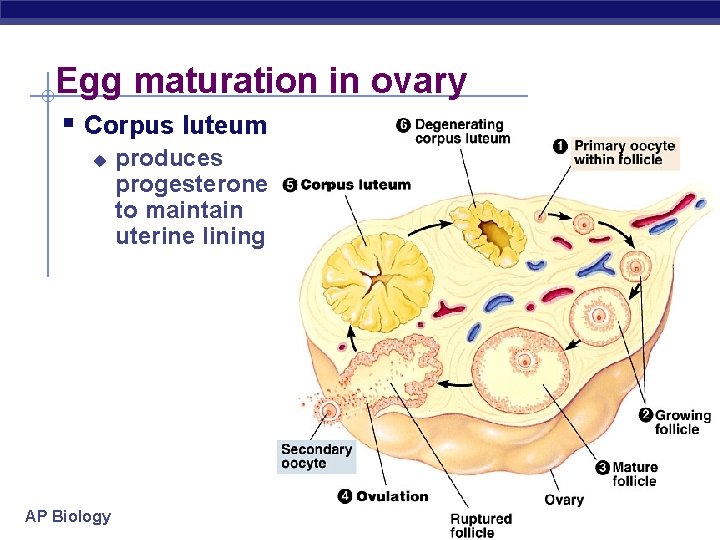
Egg maturation in ovary § Corpus luteum u AP Biology produces progesterone to maintain uterine lining 2005 -2006
Female hormones § FSH & LH u u u release from pituitary stimulates egg development & hormone release peak release = release of egg (ovulation) § Estrogen u u u released from ovary cells around developing egg stimulates growth of lining of uterus lowered levels = menstruation § Progesterone u u u AP Biology released from “corpus luteum” in ovaries § cells that used to take care of developing egg stimulates blood supply to lining of uterus lowered levels = menstruation 2005 -2006
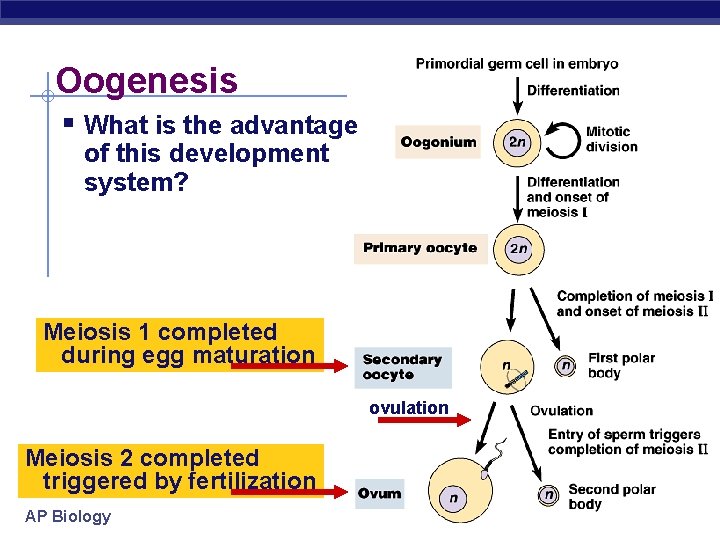
Oogenesis § What is the advantage of this development system? Meiosis 1 completed during egg maturation ovulation Meiosis 2 completed triggered by fertilization AP Biology 2005 -2006
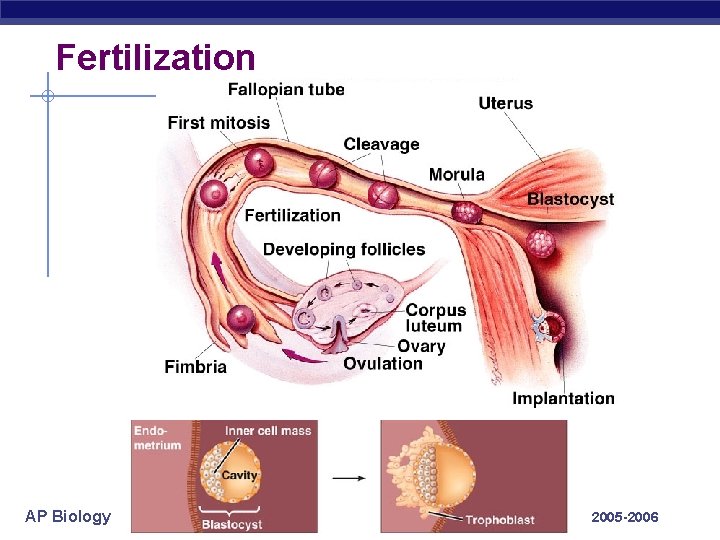
Fertilization AP Biology 2005 -2006
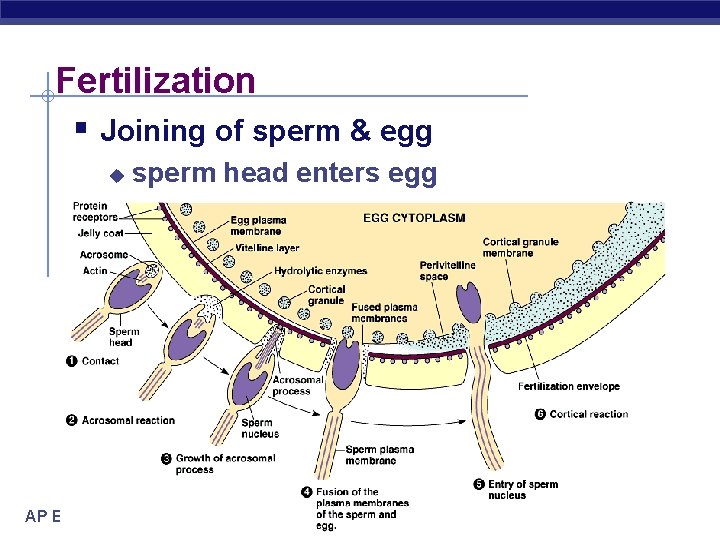
Fertilization § Joining of sperm & egg u AP Biology sperm head enters egg 2005 -2006
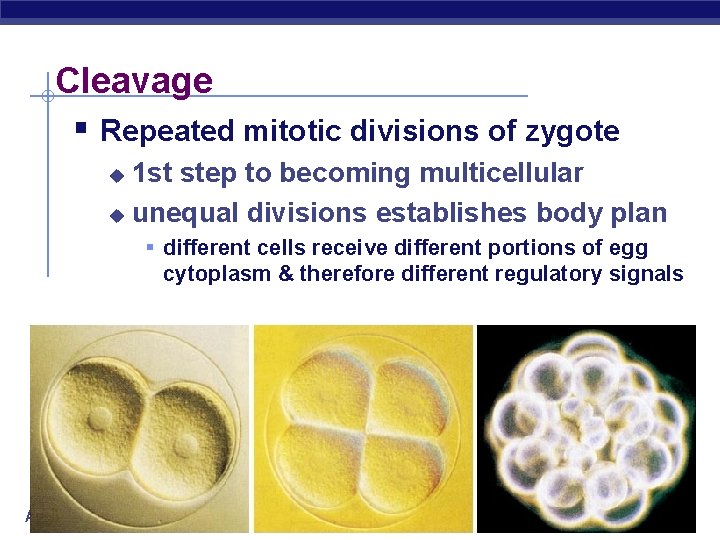
Cleavage § Repeated mitotic divisions of zygote 1 st step to becoming multicellular u unequal divisions establishes body plan u § different cells receive different portions of egg cytoplasm & therefore different regulatory signals AP Biology 2005 -2006
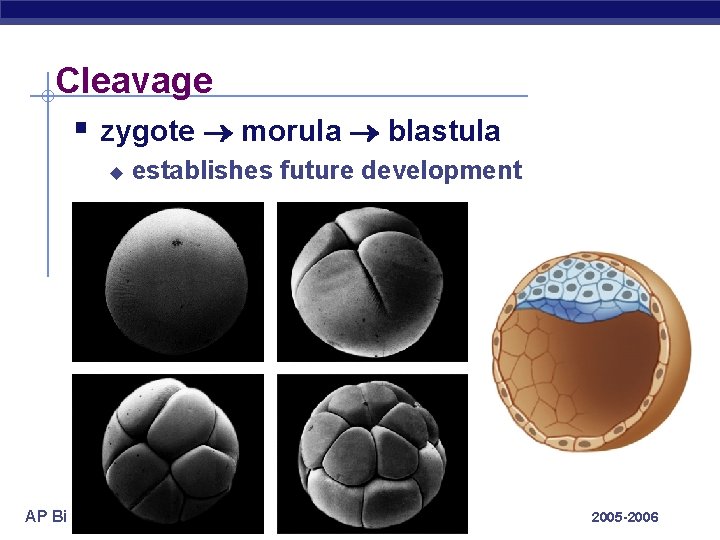
Cleavage § zygote morula blastula u AP Biology establishes future development 2005 -2006
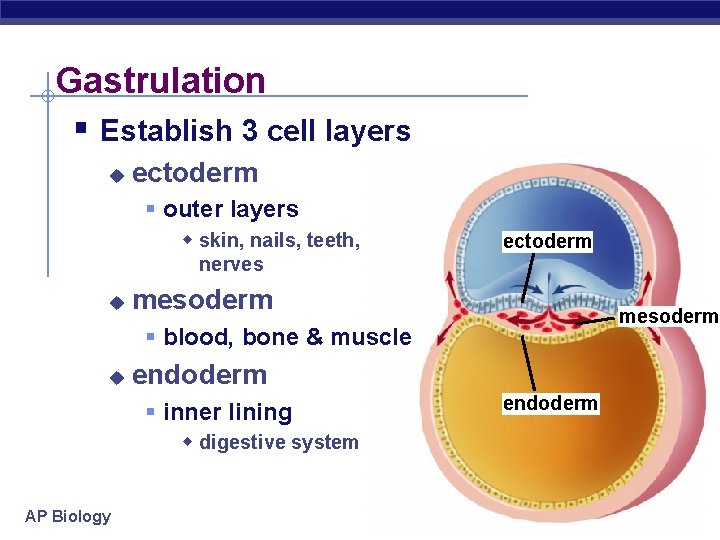
Gastrulation § Establish 3 cell layers u ectoderm § outer layers w skin, nails, teeth, ectoderm nerves u mesoderm § blood, bone & muscle u endoderm § inner lining w digestive system AP Biology endoderm 2005 -2006
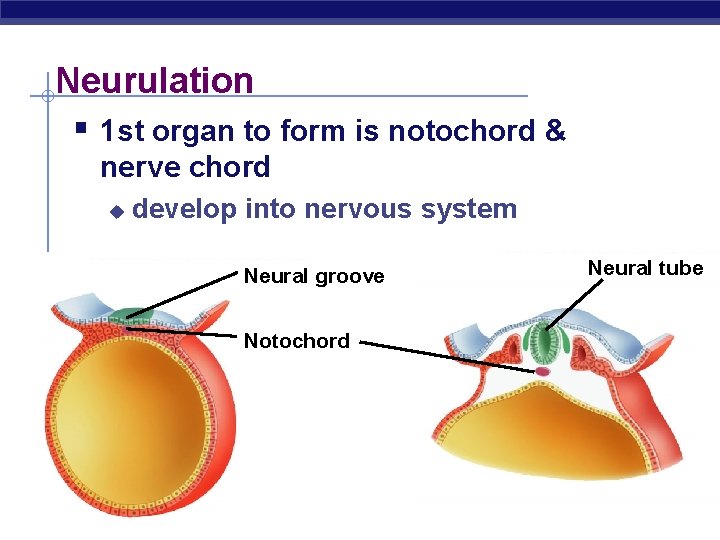
Neurulation § 1 st organ to form is notochord & nerve chord u develop into nervous system Neural groove Neural tube Notochord AP Biology 2005 -2006
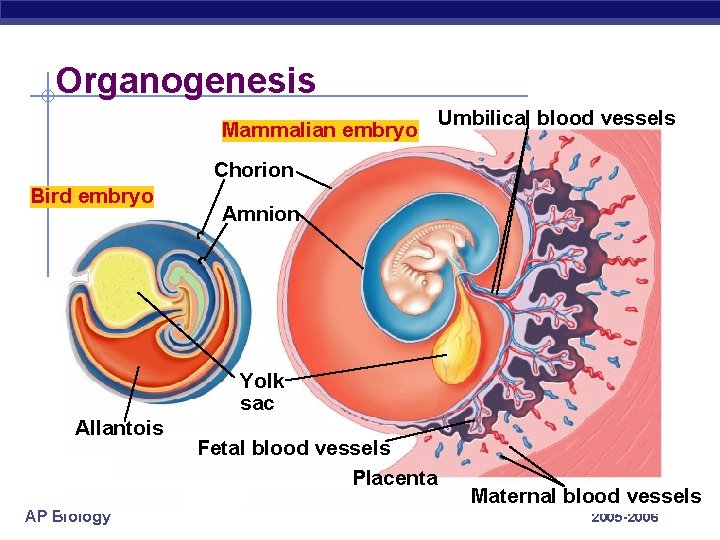
Organogenesis Mammalian embryo Umbilical blood vessels Chorion Bird embryo Amnion Yolk sac Allantois AP Biology Fetal blood vessels Placenta Maternal blood vessels 2005 -2006
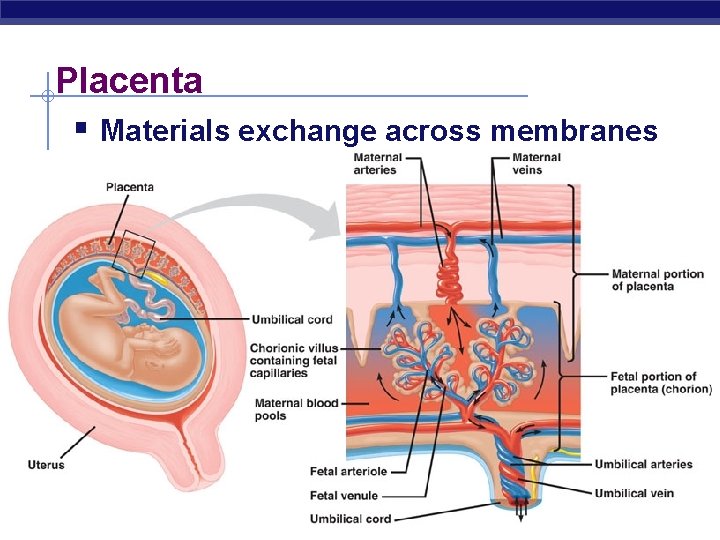
Placenta § Materials exchange across membranes AP Biology 2005 -2006
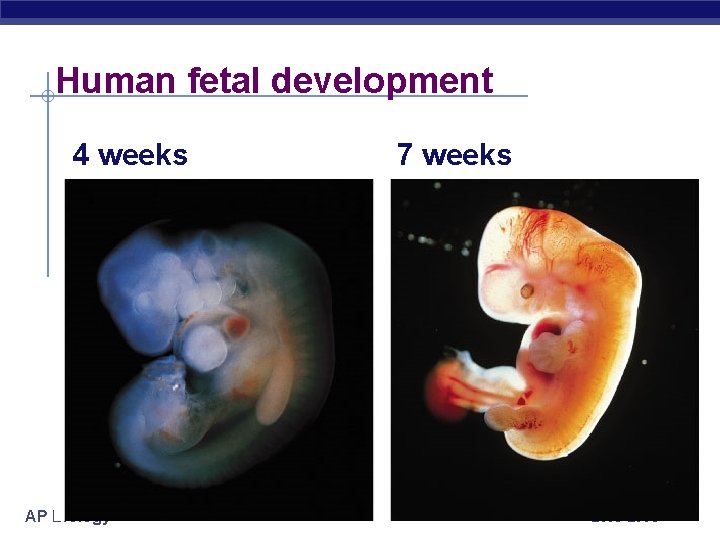
Human fetal development 4 weeks AP Biology 7 weeks 2005 -2006
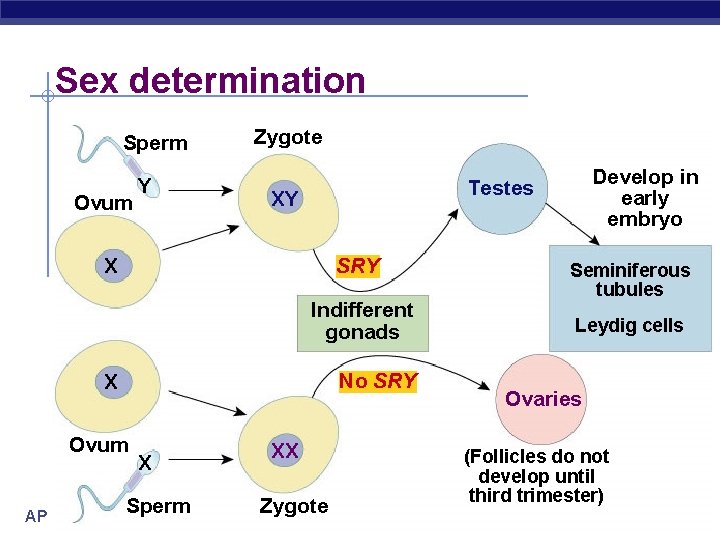
Sex determination Sperm Ovum Y Zygote XY X SRY Indifferent gonads No SRY X Ovum AP Biology X Sperm Develop in early embryo Testes XX Zygote Seminiferous tubules Leydig cells Ovaries (Follicles do not develop until third trimester) 2005 -2006
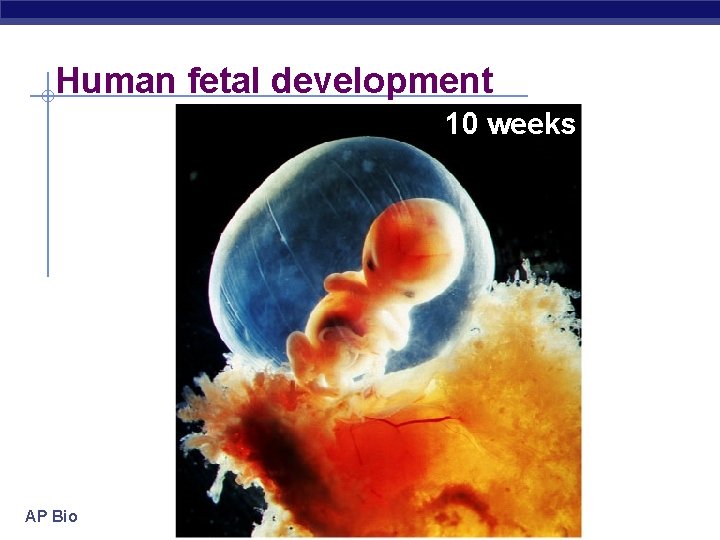
Human fetal development 10 weeks AP Biology 2005 -2006
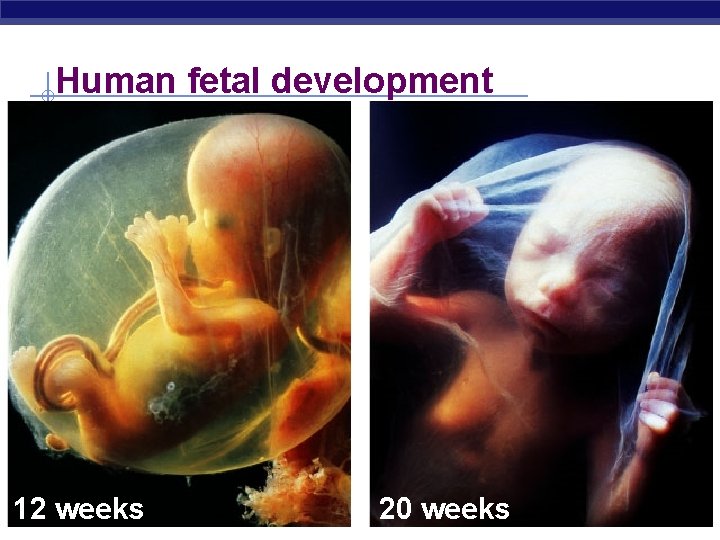
Human fetal development 12 weeks AP Biology 20 weeks 2005 -2006
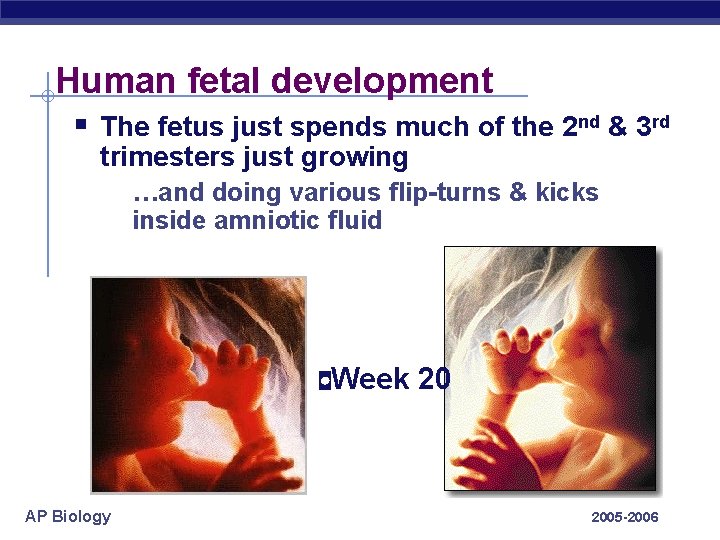
Human fetal development § The fetus just spends much of the 2 nd & 3 rd trimesters just growing …and doing various flip-turns & kicks inside amniotic fluid Week AP Biology 20 2005 -2006
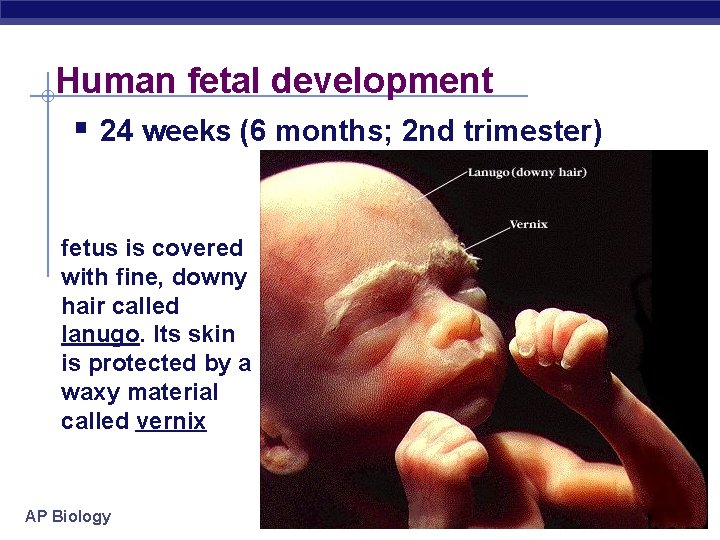
Human fetal development § 24 weeks (6 months; 2 nd trimester) fetus is covered with fine, downy hair called lanugo. Its skin is protected by a waxy material called vernix AP Biology 2005 -2006
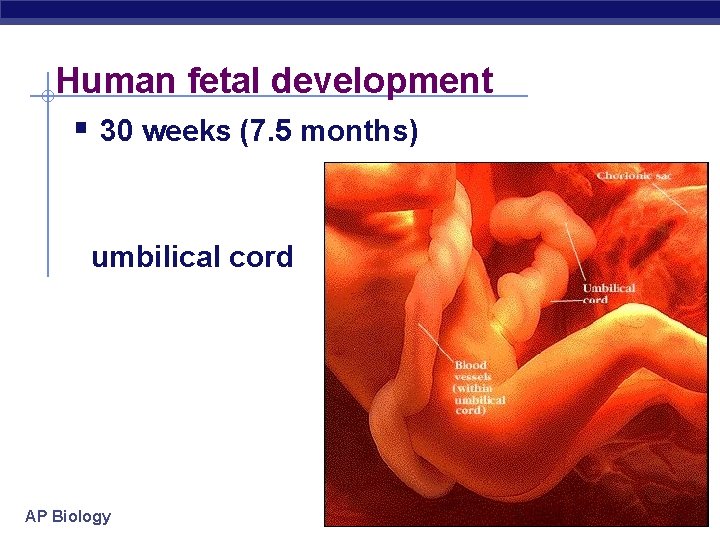
Human fetal development § 30 weeks (7. 5 months) umbilical cord AP Biology 2005 -2006
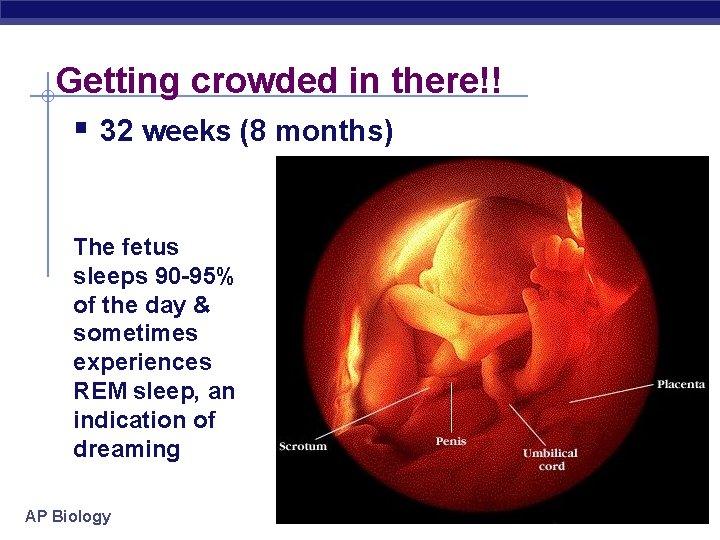
Getting crowded in there!! § 32 weeks (8 months) The fetus sleeps 90 -95% of the day & sometimes experiences REM sleep, an indication of dreaming AP Biology 2005 -2006
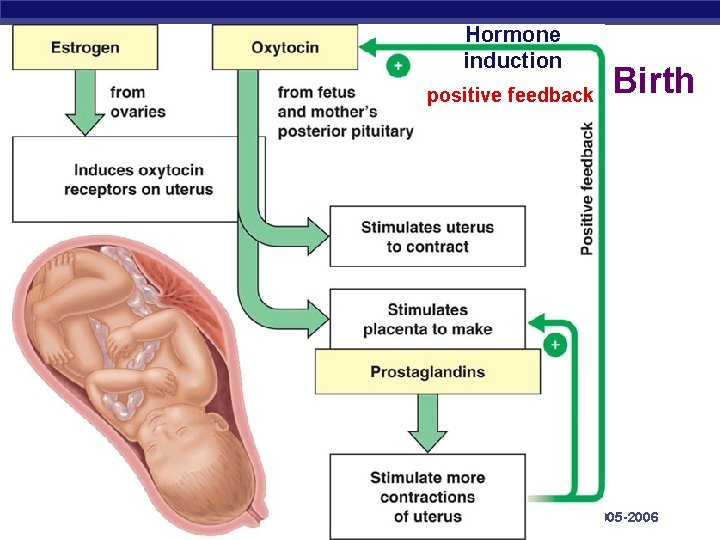
Hormone induction positive feedback AP Biology Birth 2005 -2006
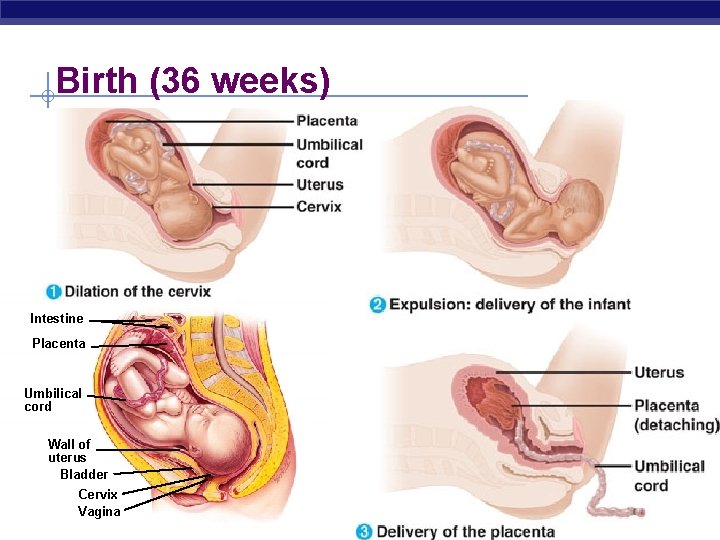
Birth (36 weeks) Intestine Placenta Umbilical cord Wall of uterus Bladder AP Cervix Vagina Biology 2005 -2006
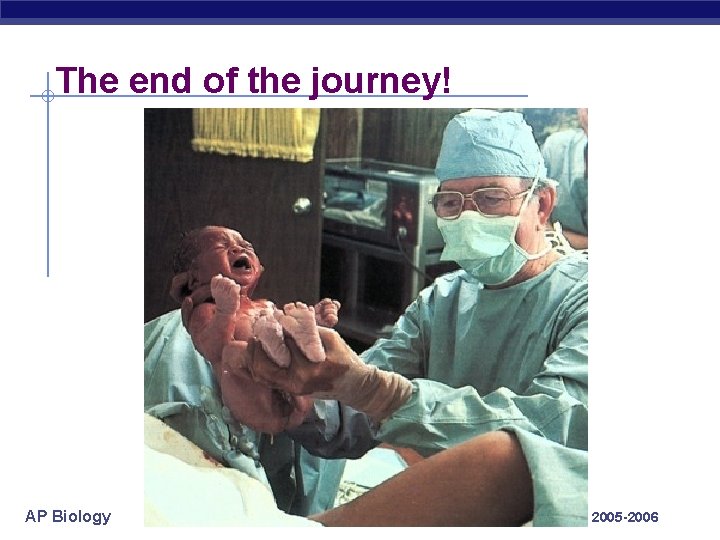
The end of the journey! AP Biology 2005 -2006
- Slides: 41