
Animal physiology What is Physiology What is animal
- Slides: 25
动物生理学 Animal physiology
What is Physiology? What is animal physiology? Why do I learn Physiology? How to learn animal physiology?
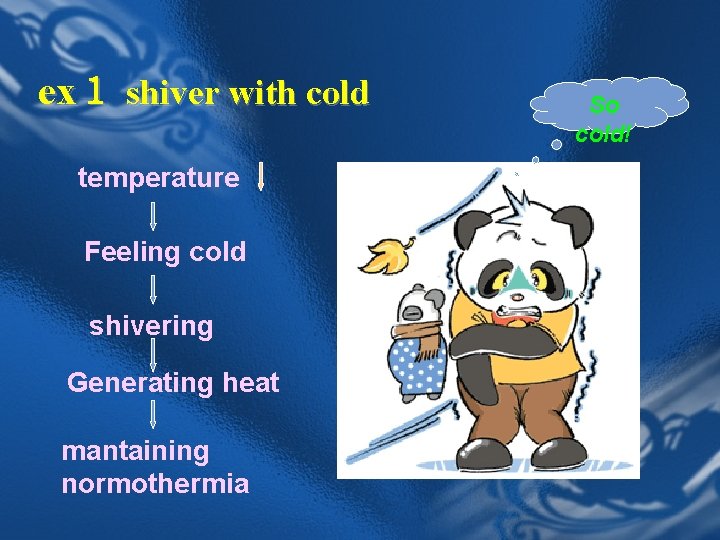
ex1 shiver with cold temperature Feeling cold shivering Generating heat mantaining normothermia So cold!
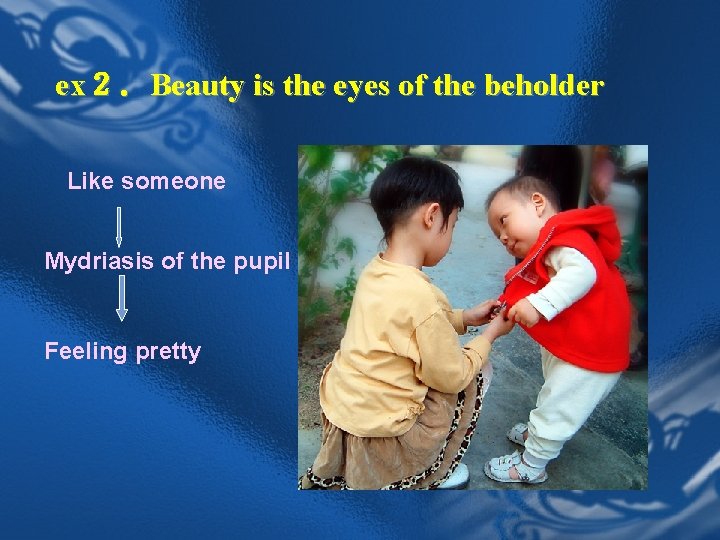
ex2.Beauty is the eyes of the beholder Like someone Mydriasis of the pupil Feeling pretty
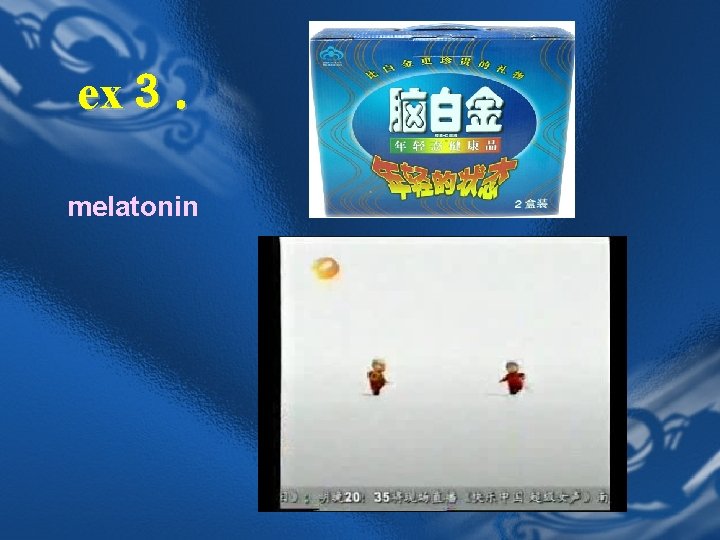
ex3. melatonin
live 生 理logical 学 study
Concept of Physiology is the science of studying the functional activities and its mechanisms in biological body. Animal Physiology To study the functional activities and its mechanisms in normal animals body.
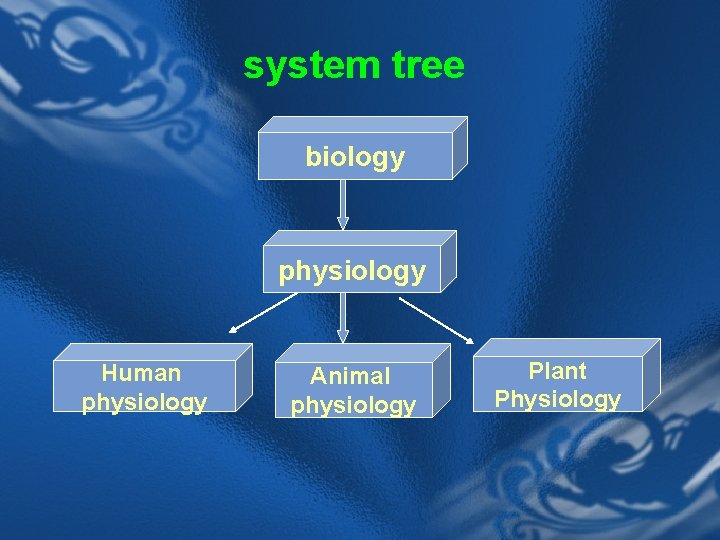
system tree biology physiology Human physiology Animal physiology Plant Physiology
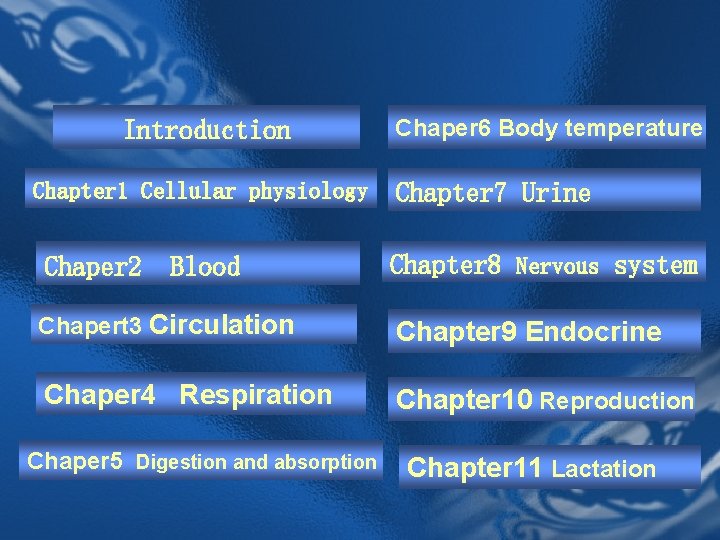
Introduction Chapter 1 Cellular physiology Chaper 2 Blood Chaper 6 Body temperature Chapter 7 Urine Chapter 8 Nervous system Chapert 3 Circulation Chapter 9 Endocrine Chaper 4 Respiration Chapter 10 Reproduction Chaper 5 Digestion and absorption Chapter 11 Lactation
Why do I learn Physiology? How to learn?
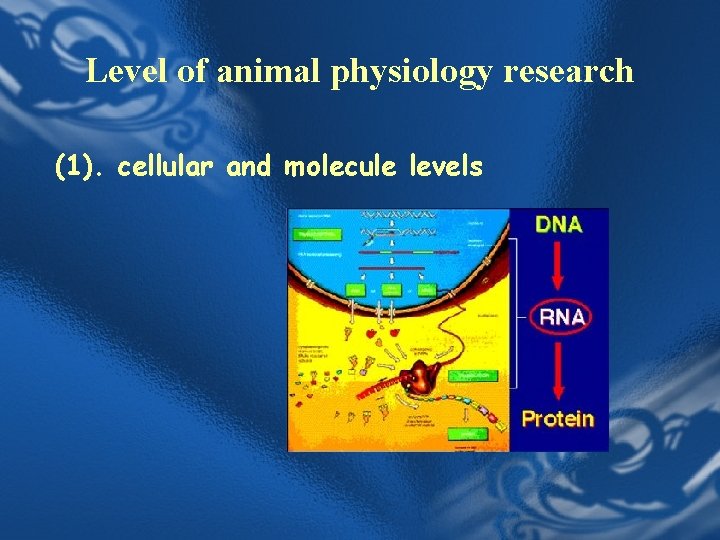
Level of animal physiology research (1). cellular and molecule levels
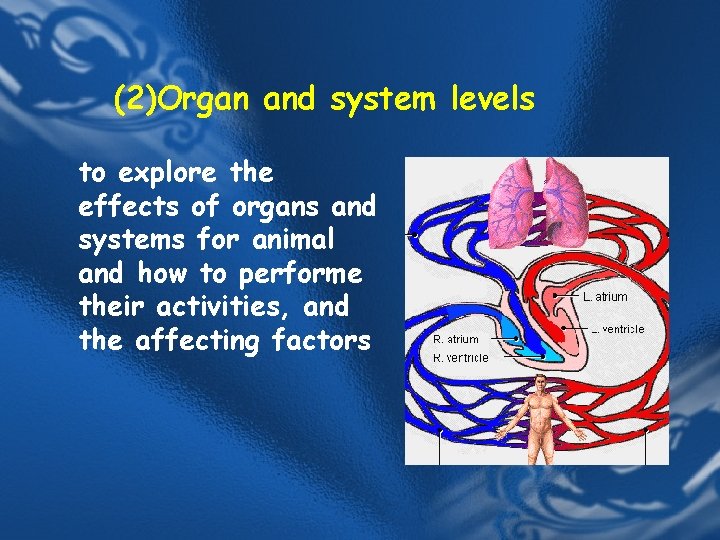
(2)Organ and system levels to explore the effects of organs and systems for animal and how to performe their activities, and the affecting factors
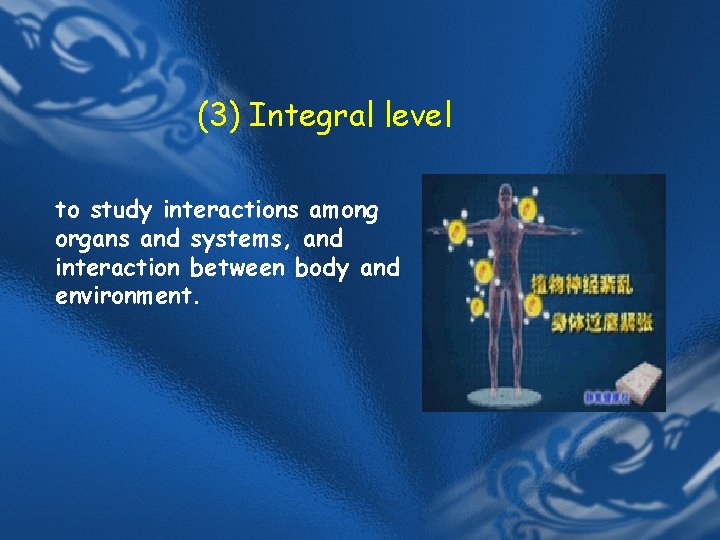
(3) Integral level to study interactions among organs and systems, and interaction between body and environment.
Purpose of Resreach • To garsp the rule of vital activities in animal body • to prevent and treat disease in livestock and poultry effectively, and promote the development of stockbreeding. 看我又肥又 壮
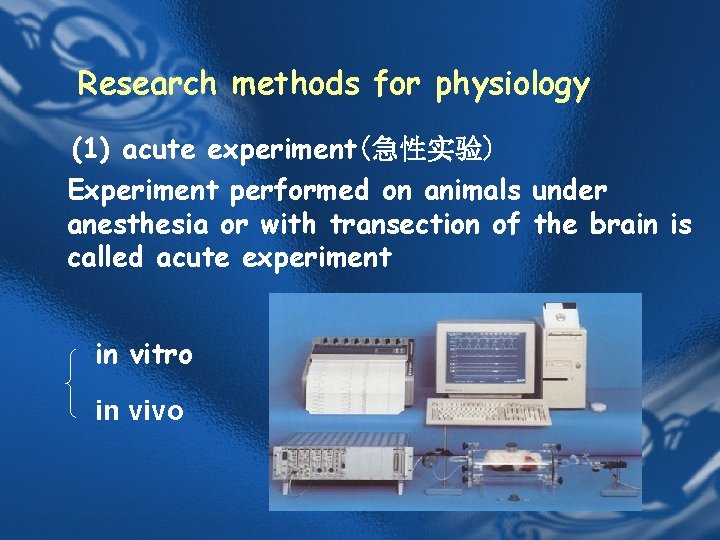
Research methods for physiology (1) acute experiment(急性实验) Experiment performed on animals under anesthesia or with transection of the brain is called acute experiment in vitro in vivo
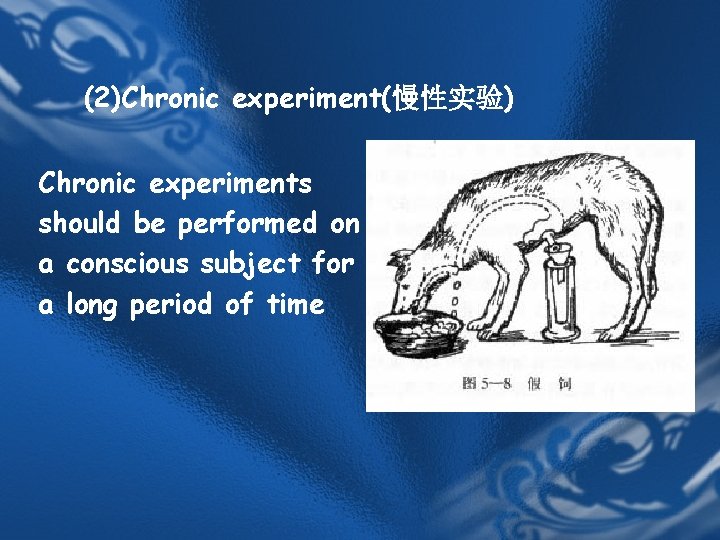
(2)Chronic experiment(慢性实验) Chronic experiments should be performed on a conscious subject for a long period of time
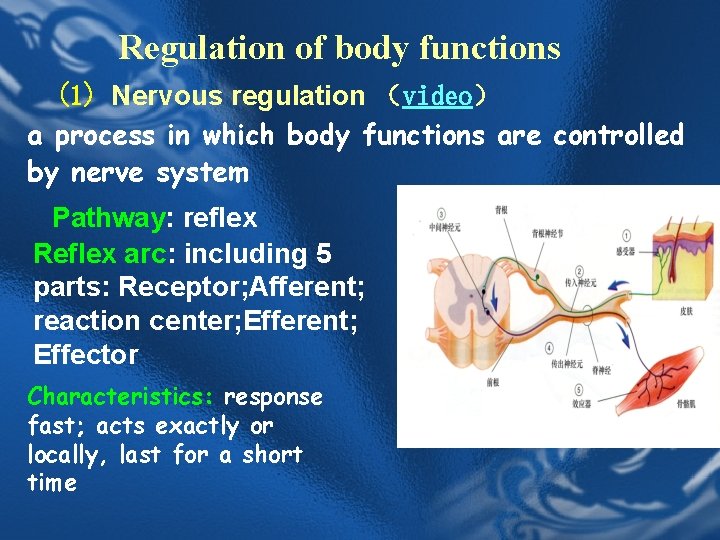
Regulation of body functions (1) Nervous regulation (video) a process in which body functions are controlled by nerve system Pathway: reflex Reflex arc: including 5 parts: Receptor; Afferent; reaction center; Efferent; Effector Characteristics: response fast; acts exactly or locally, last for a short time
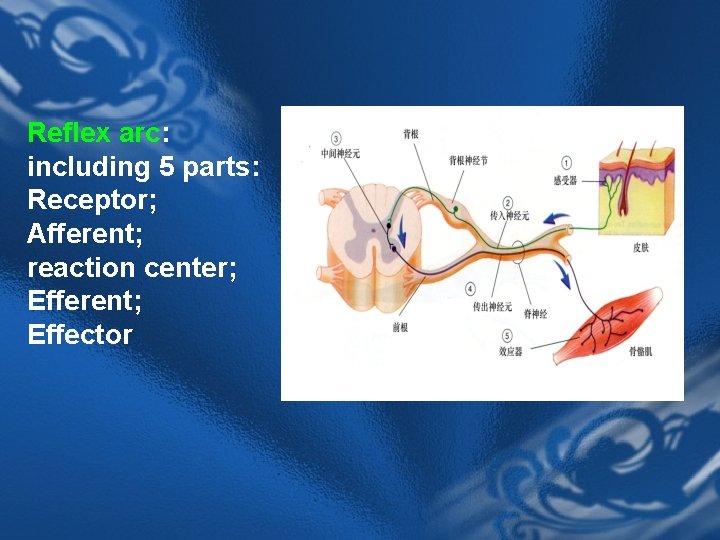
Reflex arc: including 5 parts: Receptor; Afferent; reaction center; Efferent; Effector
(2 ) Hormonal regulation(体液调节) a regulatory process performed by hormone or active chemical substance in blood or tissue It response slowly, acts extensively and lasts for a long time.
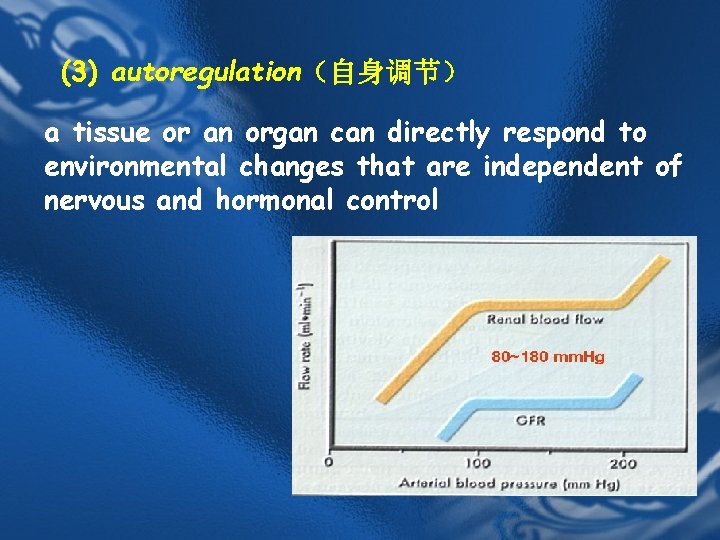
(3) autoregulation(自身调节) a tissue or an organ can directly respond to environmental changes that are independent of nervous and hormonal control
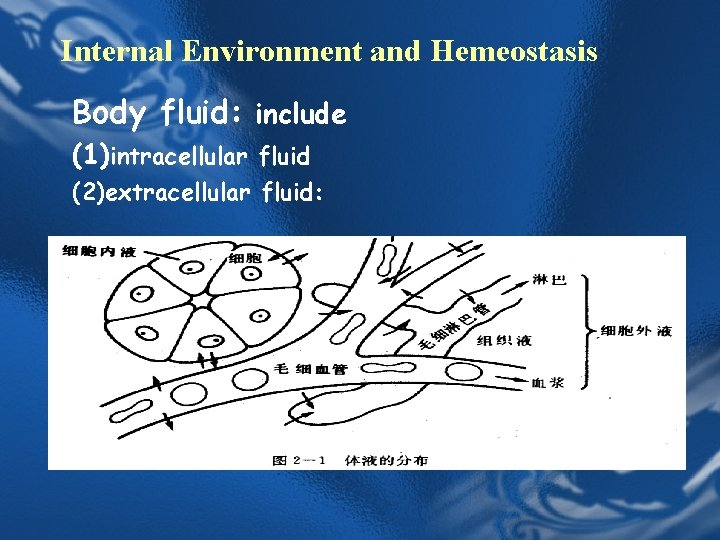
Internal Environment and Hemeostasis Body fluid: include (1)intracellular fluid (2)extracellular fluid:
Internal environment(内环境): All cells of the body live in the extracellular fluid; extracellular fluid is called the internal environment of the body. Homeostasis(稳态): Homeostasis is the maintenance of a constant state with special reference to the internal, the various physiological arrangements which serve to restore the normal state.
Including two meaning: (1) relatively stable (2) the control process maintaining the constant conditions of internal environments Function: All of the organs and tissues perform function to help maintain these constant conditions.