
Animal Nutrition Human Digestion Regents Biology 2006 2007
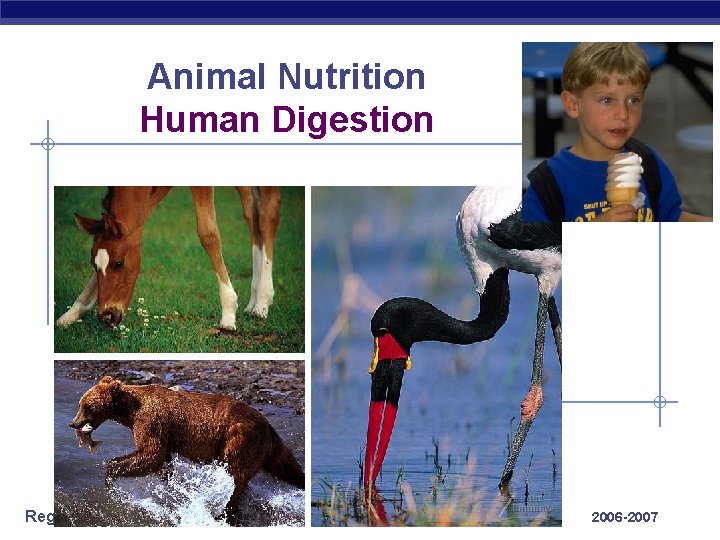
Animal Nutrition Human Digestion Regents Biology 2006 -2007
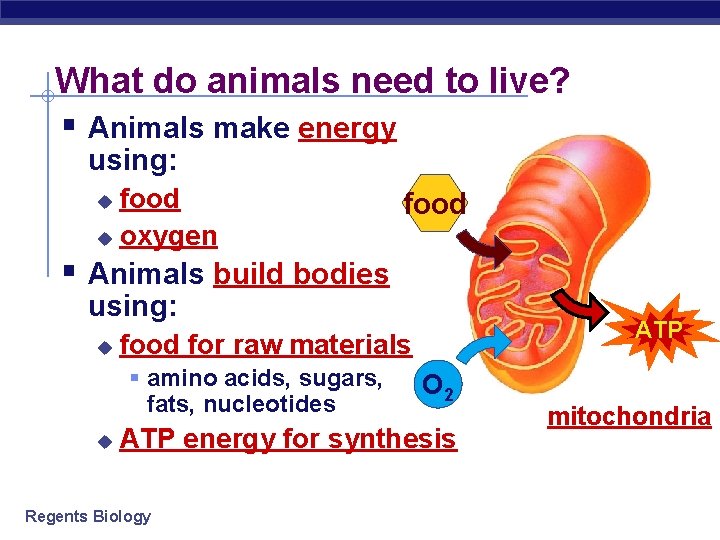
What do animals need to live? § Animals make energy using: food u oxygen u food § Animals build bodies using: u food for raw materials § amino acids, sugars, fats, nucleotides u ATP O 2 ATP energy for synthesis Regents Biology mitochondria
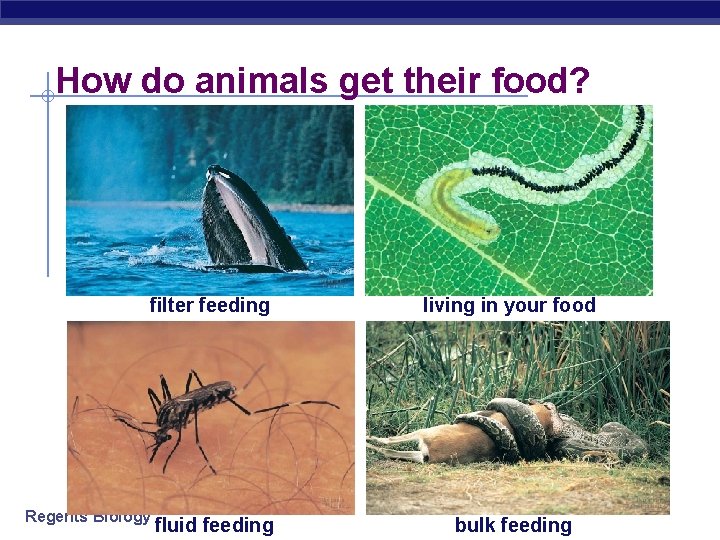
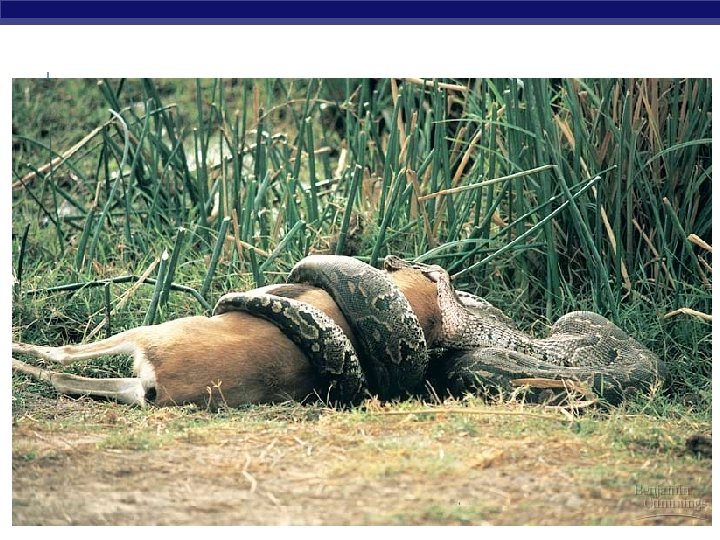
How do animals get their food? filter feeding Regents Biology fluid feeding living in your food bulk feeding
Regents Biology
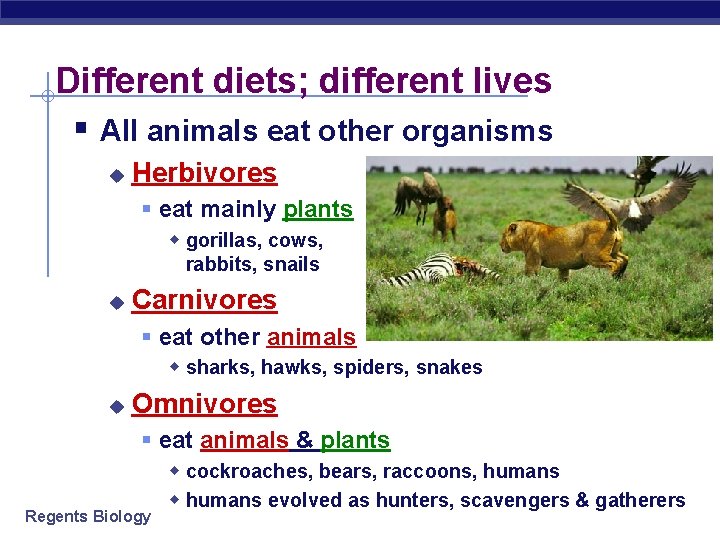
Different diets; different lives § All animals eat other organisms u Herbivores § eat mainly plants w gorillas, cows, rabbits, snails u Carnivores § eat other animals w sharks, hawks, spiders, snakes u Omnivores § eat animals & plants w cockroaches, bears, raccoons, humans w humans evolved as hunters, scavengers & gatherers Regents Biology
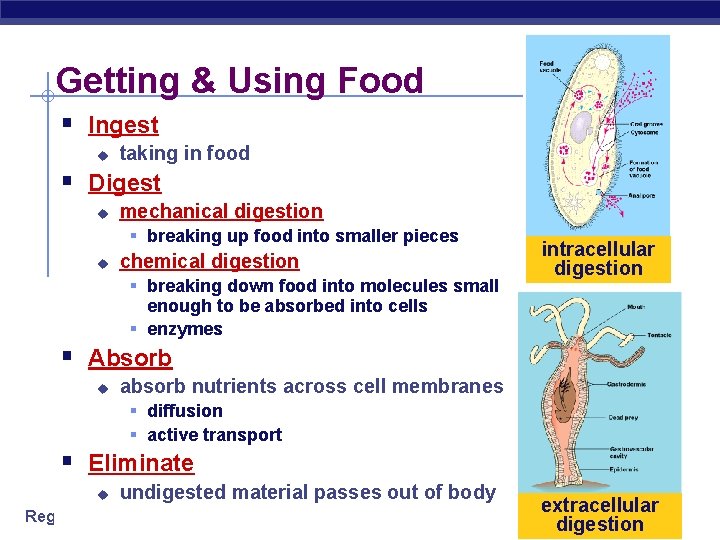
Getting & Using Food § Ingest u taking in food § Digest u mechanical digestion § breaking up food into smaller pieces u chemical digestion § breaking down food into molecules small enough to be absorbed into cells § enzymes intracellular digestion § Absorb u absorb nutrients across cell membranes § diffusion § active transport § Eliminate u undigested material passes out of body Regents Biology extracellular digestion
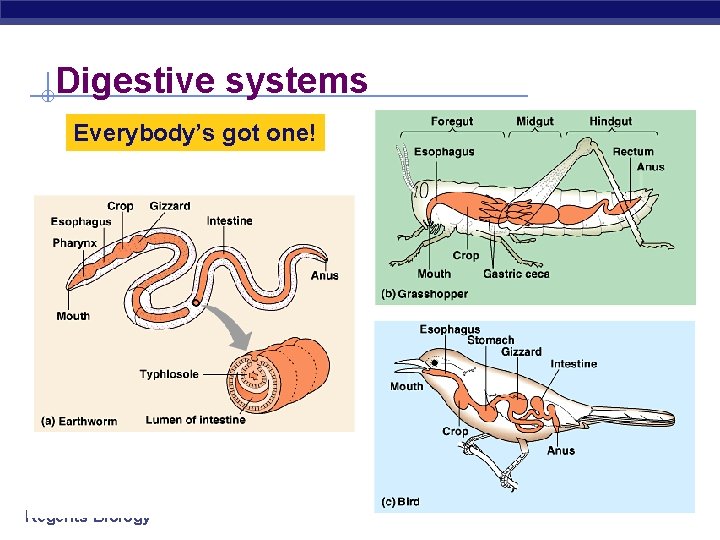
Digestive systems Everybody’s got one! Regents Biology
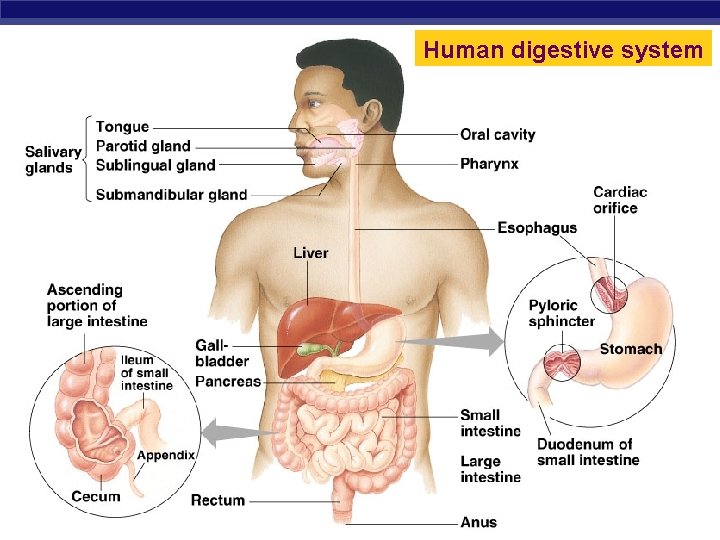
Human digestive system Regents Biology
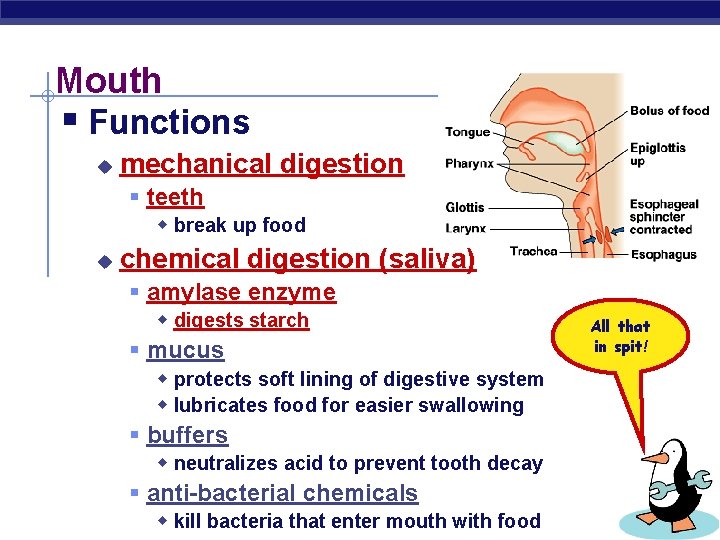
Mouth § Functions u mechanical digestion § teeth w break up food u chemical digestion (saliva) § amylase enzyme w digests starch § mucus w protects soft lining of digestive system w lubricates food for easier swallowing § buffers w neutralizes acid to prevent tooth decay § anti-bacterial chemicals Regents Biology w kill bacteria that enter mouth with food All that in spit!
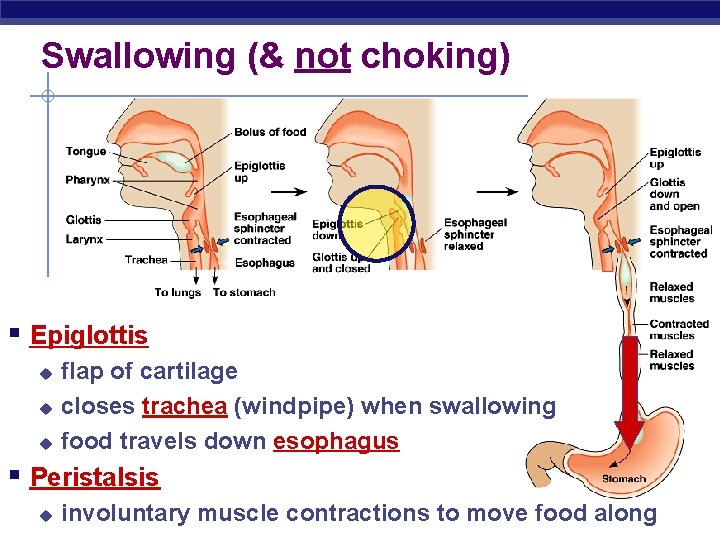
Swallowing (& not choking) § Epiglottis flap of cartilage u closes trachea (windpipe) when swallowing u food travels down esophagus u § Peristalsis u involuntary Regents Biology muscle contractions to move food along
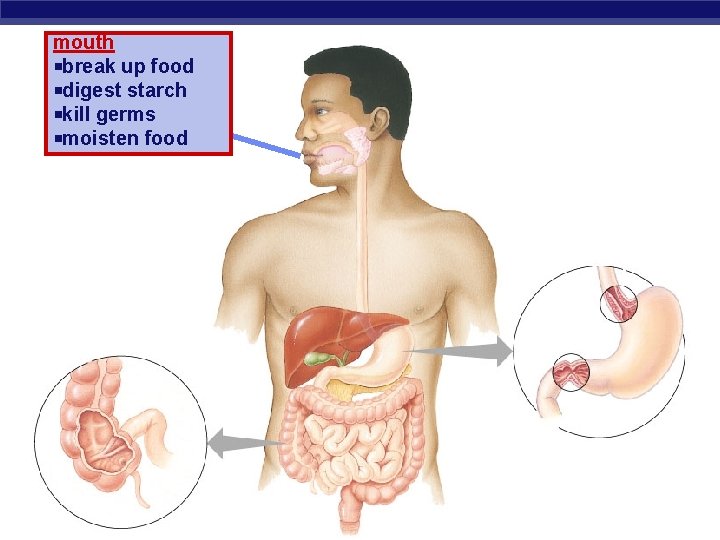
mouth break up food digest starch kill germs moisten food Regents Biology
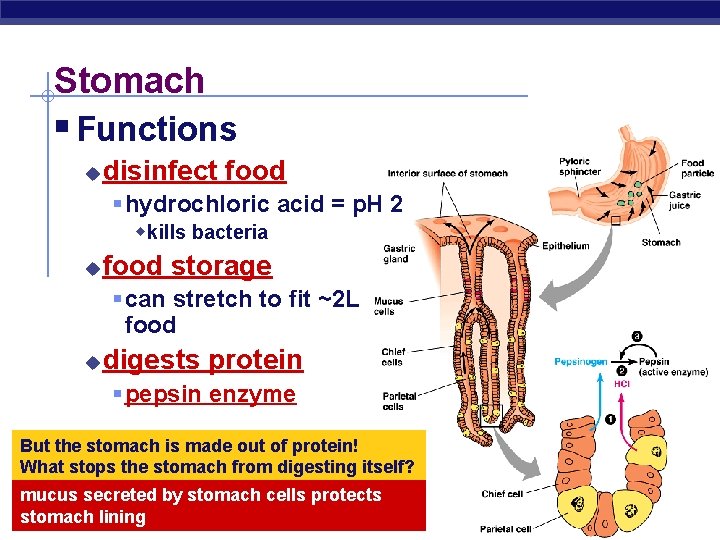
Stomach § Functions u disinfect food § hydrochloric acid = p. H 2 w kills bacteria u food storage § can stretch to fit ~2 L food u digests protein § pepsin enzyme But the stomach is made out of protein! What stops the stomach from digesting itself? mucus secreted by stomach cells protects Regents Biology stomach lining
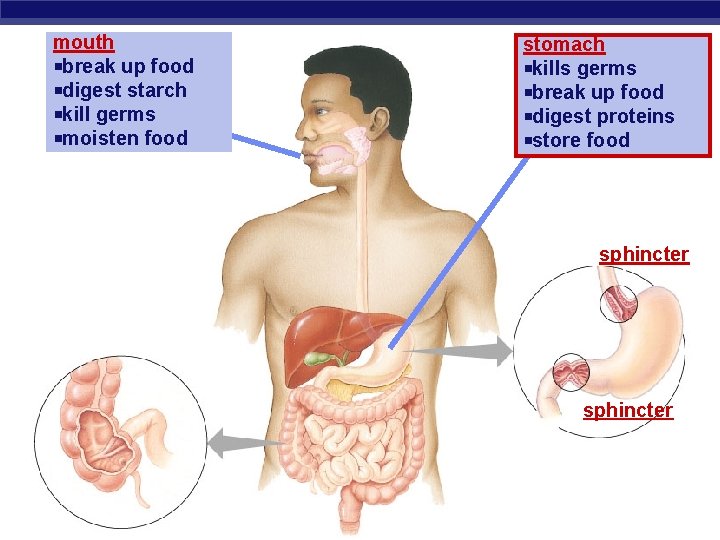
mouth break up food digest starch kill germs moisten food stomach kills germs break up food digest proteins store food sphincter Regents Biology
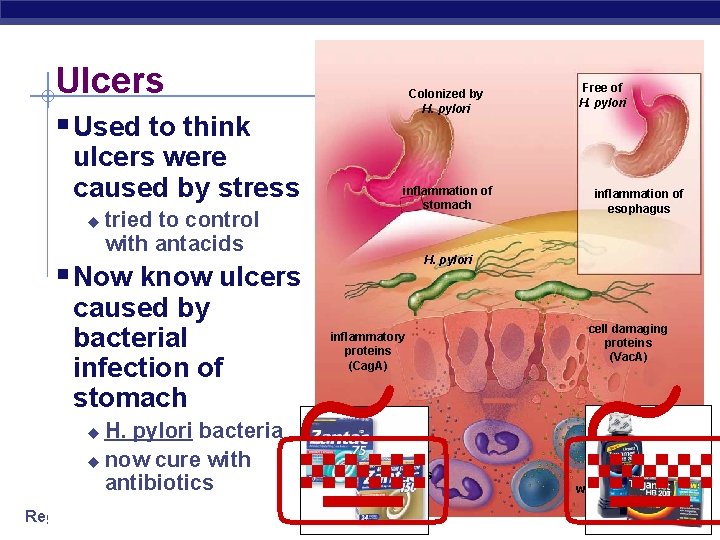
Ulcers Colonized by H. pylori § Used to think ulcers were caused by stress u tried to control with antacids inflammation of stomach Regents Biology inflammatory proteins (Cag. A) cell damaging proteins (Vac. A) H. pylori bacteria u now cure with antibiotics u inflammation of esophagus H. pylori § Now know ulcers caused by bacterial infection of stomach Free of H. pylori cytokines helper T cells neutrophil cells white blood cells
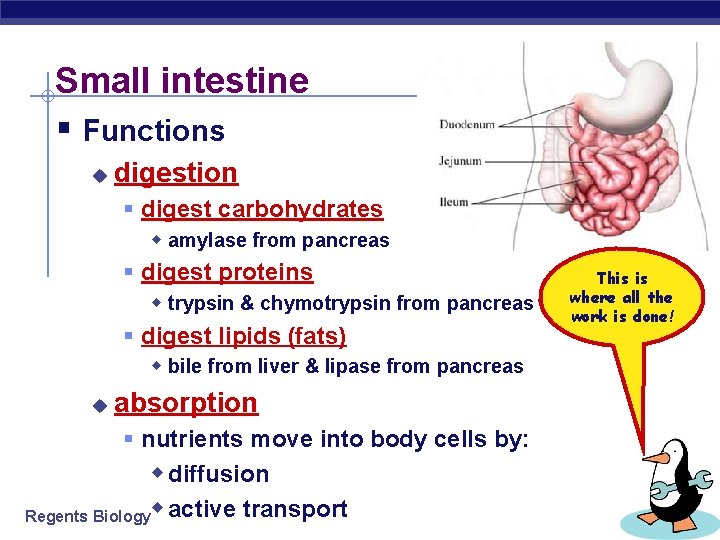
Small intestine § Functions u digestion § digest carbohydrates w amylase from pancreas § digest proteins w trypsin & chymotrypsin from pancreas § digest lipids (fats) w bile from liver & lipase from pancreas u absorption § nutrients move into body cells by: w diffusion Regents Biologyw active transport This is where all the work is done!
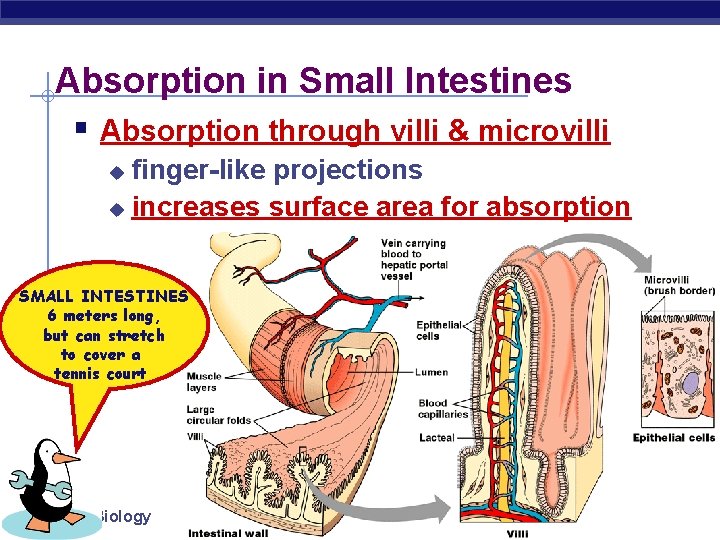
Absorption in Small Intestines § Absorption through villi & microvilli finger-like projections u increases surface area for absorption u SMALL INTESTINES 6 meters long, but can stretch to cover a tennis court Regents Biology
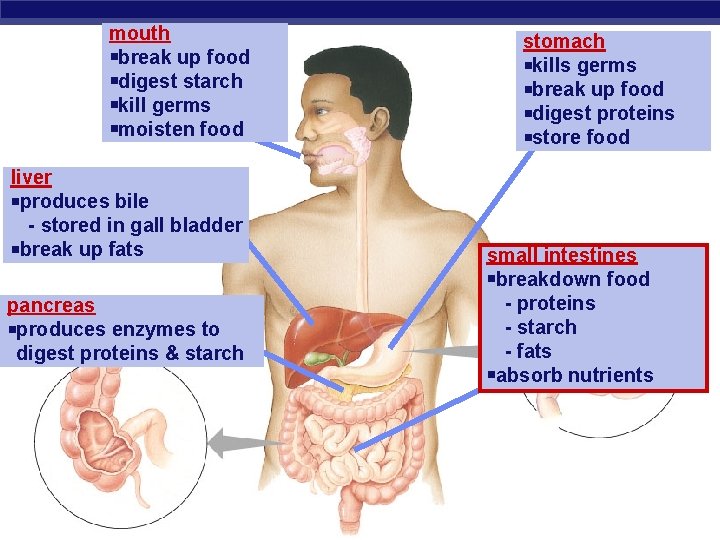
mouth break up food digest starch kill germs moisten food liver produces bile - stored in gall bladder break up fats pancreas produces enzymes to digest proteins & starch Regents Biology stomach kills germs break up food digest proteins store food small intestines breakdown food - proteins - starch - fats absorb nutrients
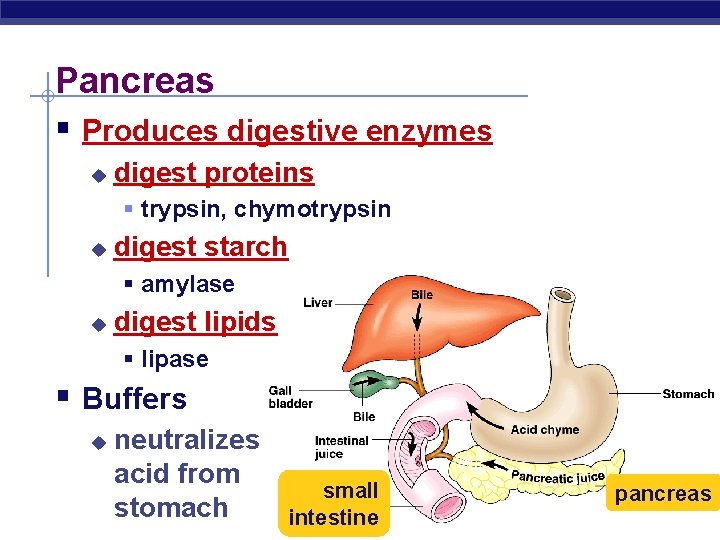
Pancreas § Produces digestive enzymes u digest proteins § trypsin, chymotrypsin u digest starch § amylase u digest lipids § lipase § Buffers neutralizes acid from stomach Regents Biology u small intestine pancreas
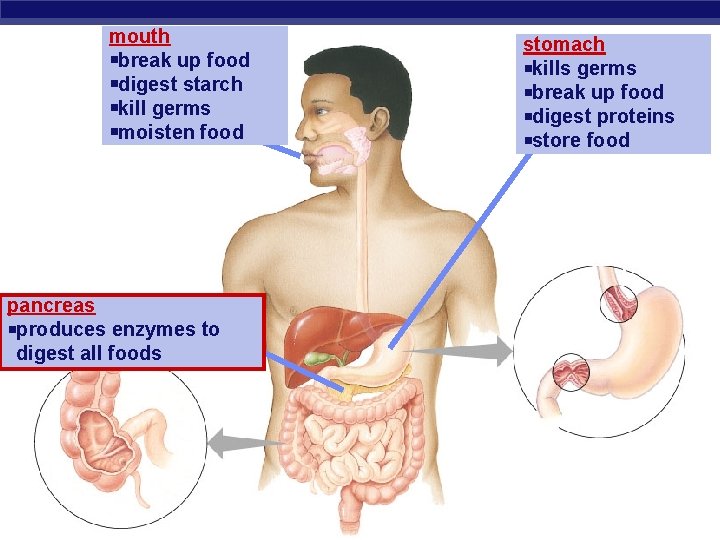
mouth break up food digest starch kill germs moisten food pancreas produces enzymes to digest all foods Regents Biology stomach kills germs break up food digest proteins store food

Liver & Gall Bladder § Produces bile breaks up fats u gallbladder only stores bile u § that’s why you can have your gall bladder removed bile contains colors from old red blood cells collected in liver = iron in RBC rusts & Regentsfeces Biology makes brown
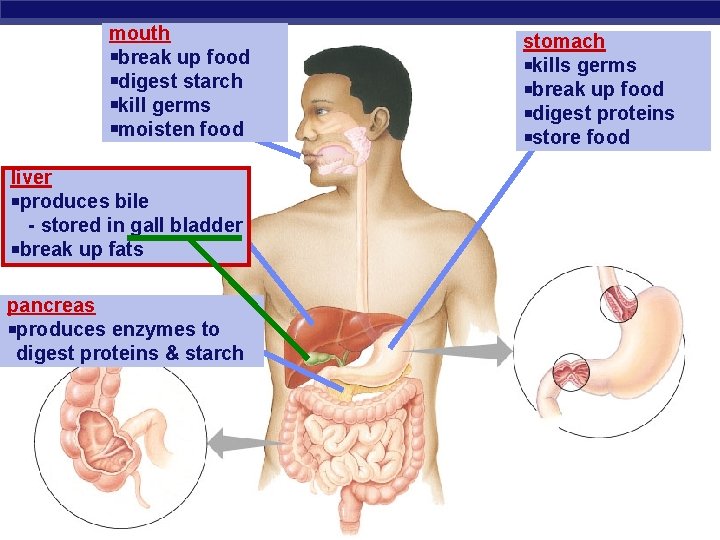
mouth break up food digest starch kill germs moisten food liver produces bile - stored in gall bladder break up fats pancreas produces enzymes to digest proteins & starch Regents Biology stomach kills germs break up food digest proteins store food
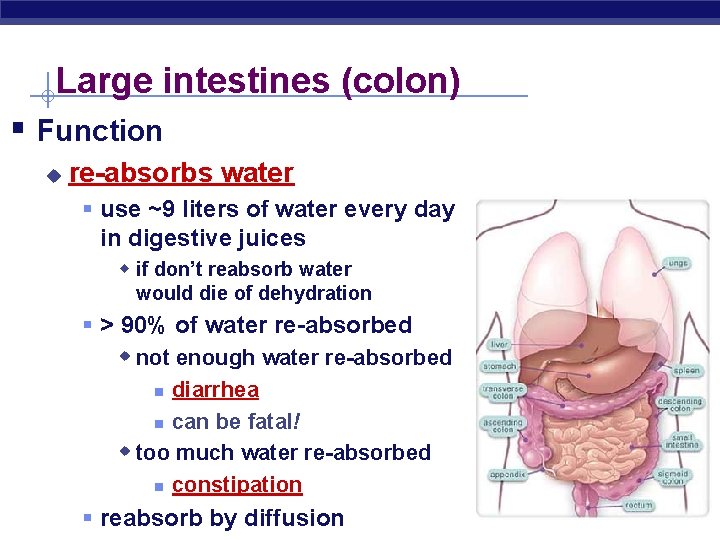
Large intestines (colon) § Function u re-absorbs water § use ~9 liters of water every day in digestive juices w if don’t reabsorb water would die of dehydration § > 90% of water re-absorbed w not enough water re-absorbed diarrhea n can be fatal! w too much water re-absorbed n constipation n Regents§Biology reabsorb by diffusion
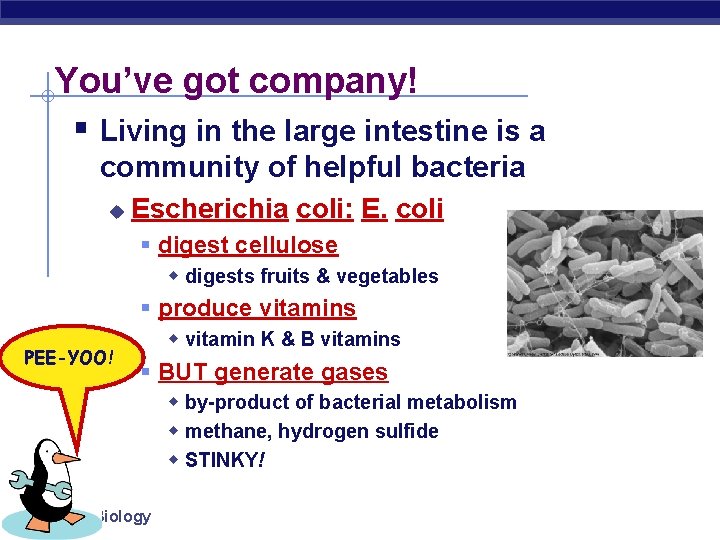
You’ve got company! § Living in the large intestine is a community of helpful bacteria u PEE-YOO! Escherichia coli: E. coli § digest cellulose w digests fruits & vegetables § produce vitamins w vitamin K & B vitamins § BUT generate gases w by-product of bacterial metabolism w methane, hydrogen sulfide w STINKY! Regents Biology
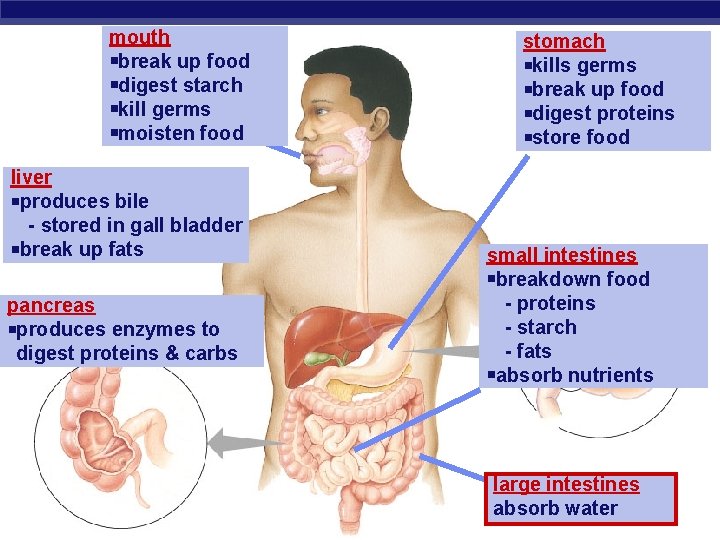
mouth break up food digest starch kill germs moisten food liver produces bile - stored in gall bladder break up fats pancreas produces enzymes to digest proteins & carbs Regents Biology stomach kills germs break up food digest proteins store food small intestines breakdown food - proteins - starch - fats absorb nutrients large intestines absorb water
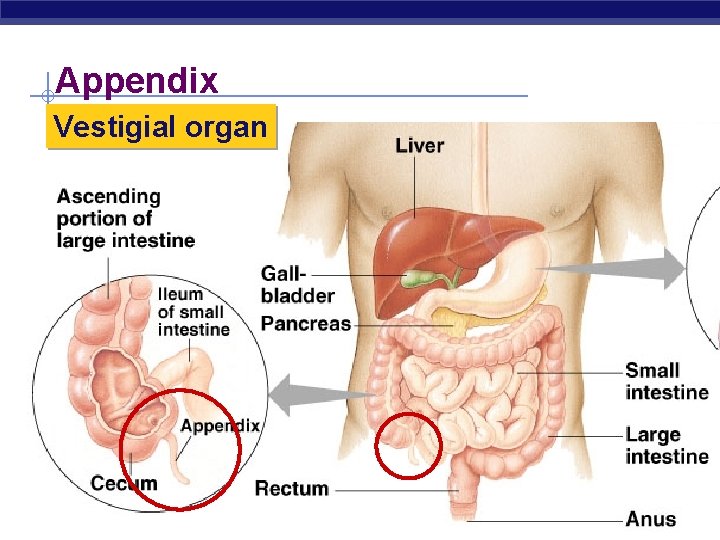
Appendix Vestigial organ Regents Biology
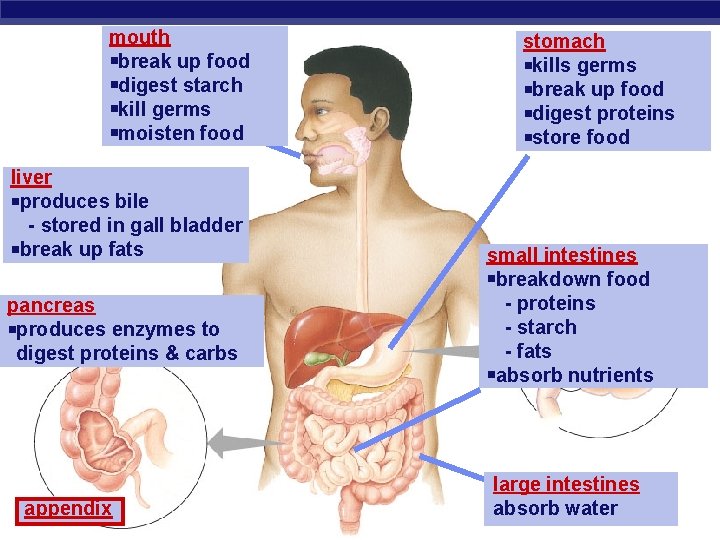
mouth break up food digest starch kill germs moisten food liver produces bile - stored in gall bladder break up fats pancreas produces enzymes to digest proteins & carbs appendix Regents Biology stomach kills germs break up food digest proteins store food small intestines breakdown food - proteins - starch - fats absorb nutrients large intestines absorb water
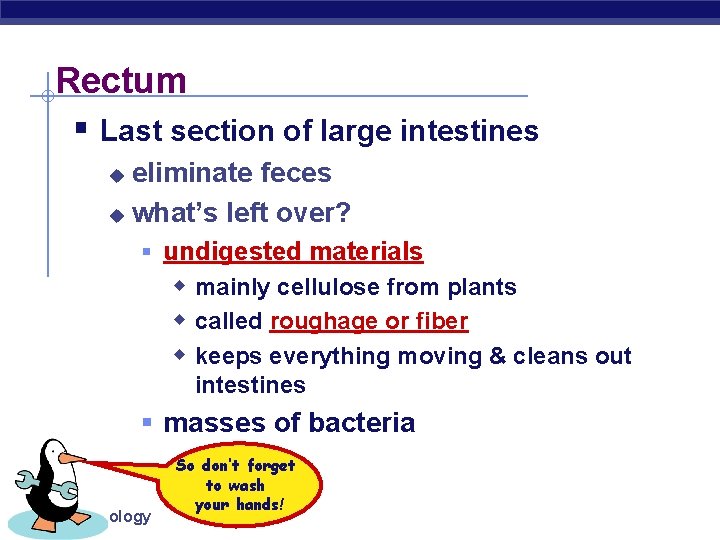
Rectum § Last section of large intestines eliminate feces u what’s left over? u § undigested materials w mainly cellulose from plants w called roughage or fiber w keeps everything moving & cleans out intestines § masses of bacteria Regents Biology So don’t forget to wash your hands!
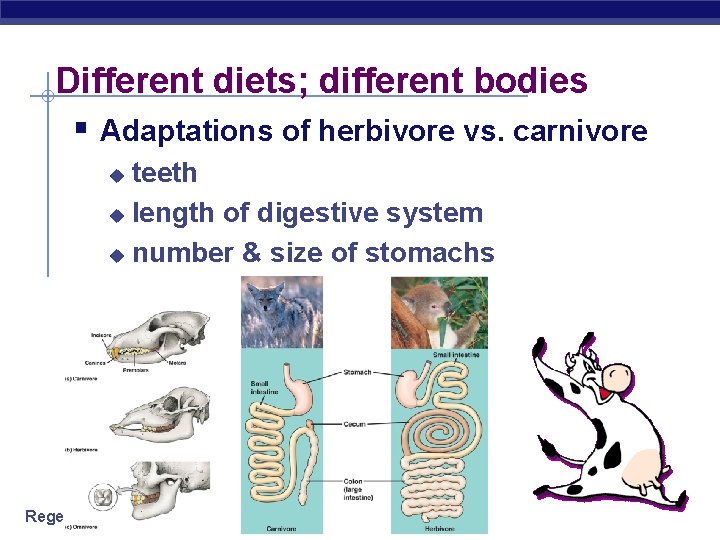
Different diets; different bodies § Adaptations of herbivore vs. carnivore teeth u length of digestive system u number & size of stomachs u Regents Biology
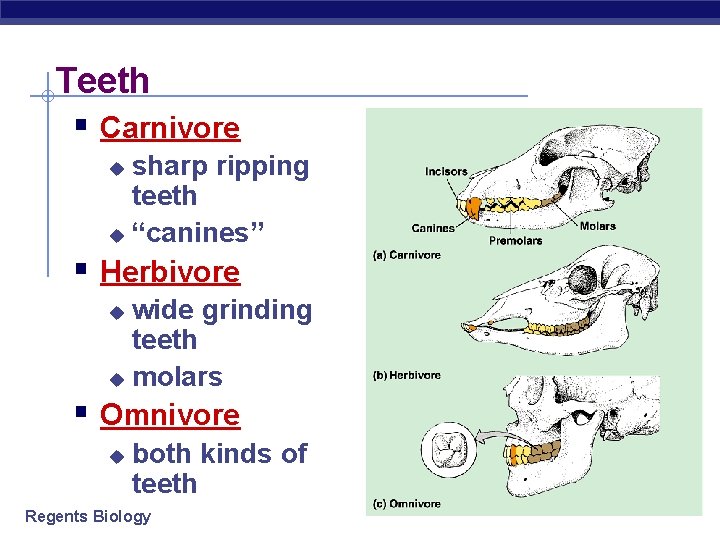
Teeth § Carnivore sharp ripping teeth u “canines” u § Herbivore wide grinding teeth u molars u § Omnivore u both kinds of teeth Regents Biology
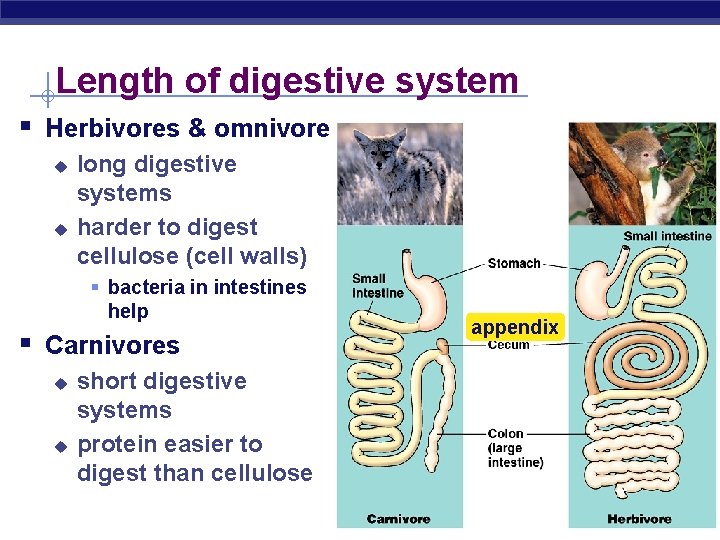
Length of digestive system § Herbivores & omnivores u u long digestive systems harder to digest cellulose (cell walls) § bacteria in intestines help § Carnivores u u short digestive systems protein easier to digest than cellulose Regents Biology appendix
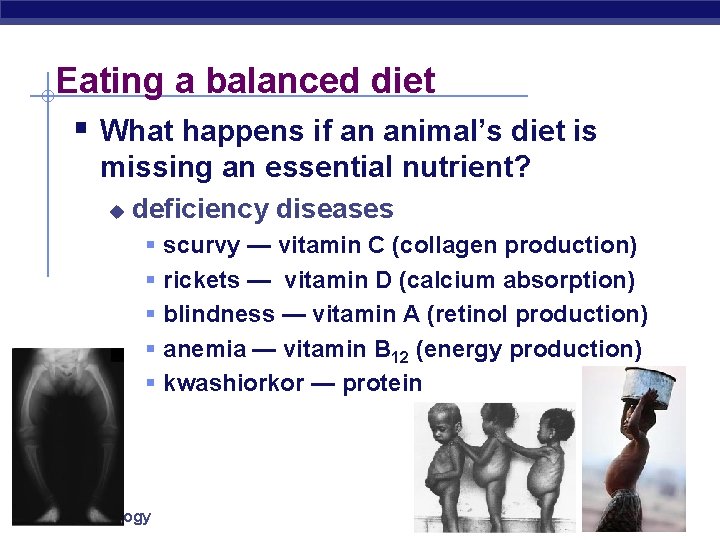
Eating a balanced diet § What happens if an animal’s diet is missing an essential nutrient? u deficiency diseases § § § Regents Biology scurvy — vitamin C (collagen production) rickets — vitamin D (calcium absorption) blindness — vitamin A (retinol production) anemia — vitamin B 12 (energy production) kwashiorkor — protein
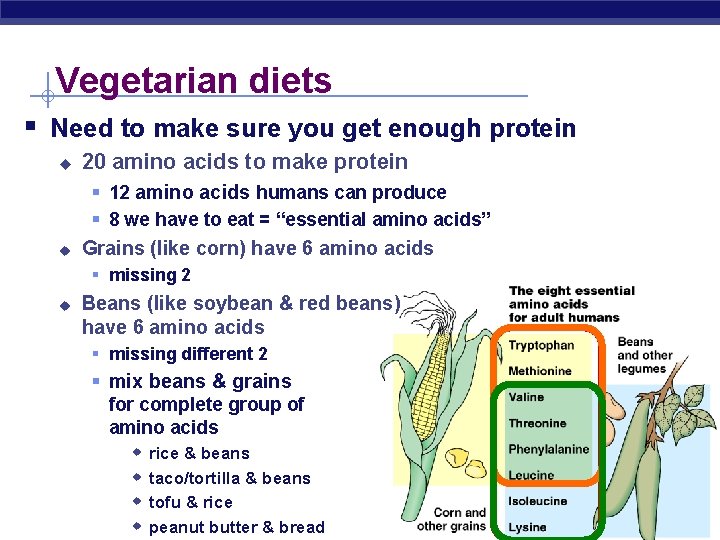
Vegetarian diets § Need to make sure you get enough protein u 20 amino acids to make protein § 12 amino acids humans can produce § 8 we have to eat = “essential amino acids” u Grains (like corn) have 6 amino acids § missing 2 u Beans (like soybean & red beans) have 6 amino acids § missing different 2 § mix beans & grains for complete group of amino acids w rice & beans w taco/tortilla & beans w tofu & rice Regents Biology w peanut butter & bread
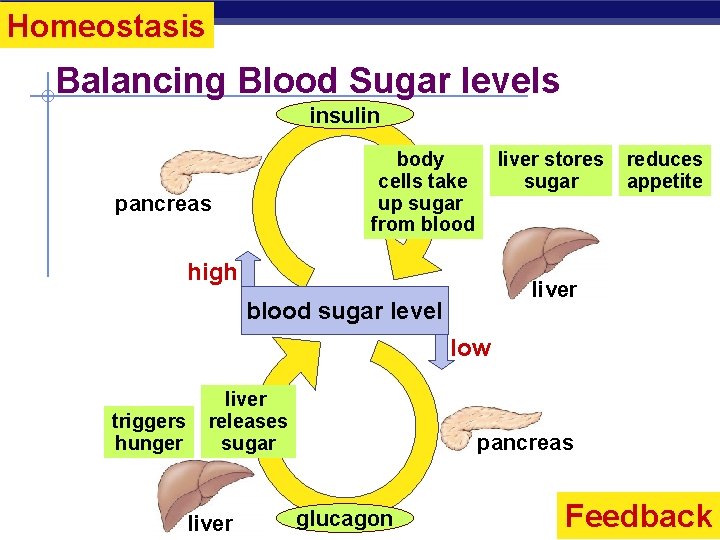
Homeostasis Balancing Blood Sugar levels insulin liver stores sugar body cells take up sugar from blood pancreas high reduces appetite liver blood sugar level low triggers hunger Regents Biology liver releases sugar liver pancreas glucagon Feedback
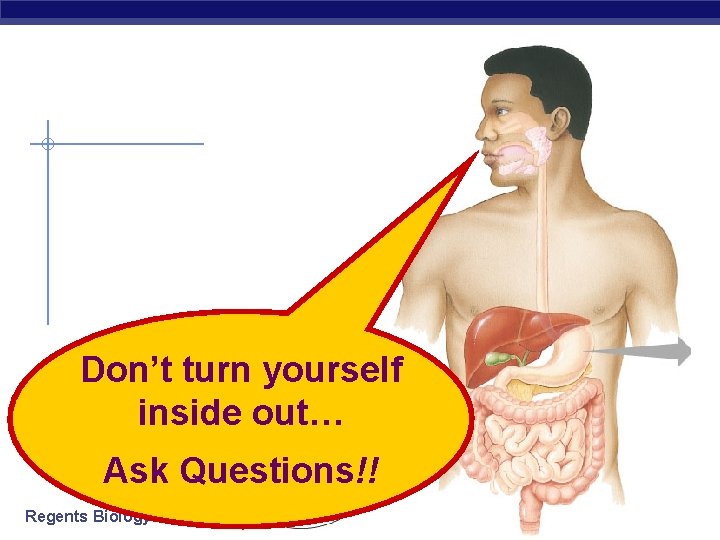
Don’t turn yourself inside out… Ask Questions!! Regents Biology 2006 -2007
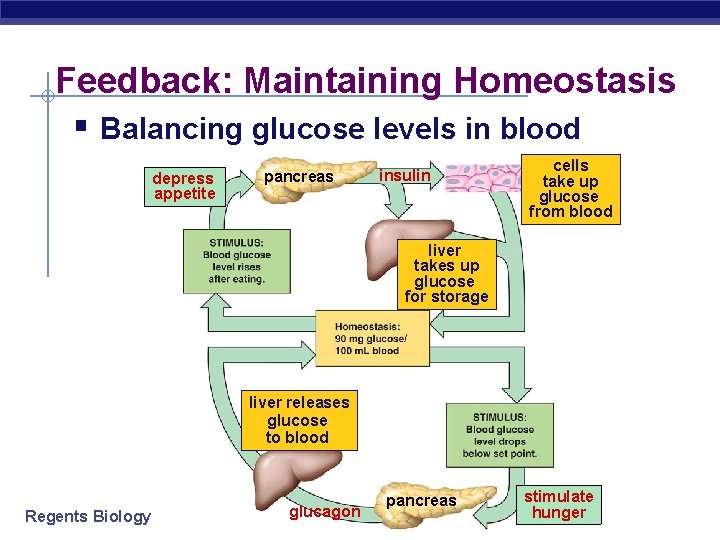
Feedback: Maintaining Homeostasis § Balancing glucose levels in blood depress appetite pancreas insulin cells take up glucose from blood liver takes up glucose for storage liver releases glucose to blood Regents Biology glucagon pancreas stimulate hunger
- Slides: 35