
Animal Identification Methods for Marking Livestock Georgia MSAGED



- Slides: 12
Animal Identification Methods for Marking Livestock Georgia MSAGED 6 -6: Demonstrate an understanding of the area of animal science. All In One Lessons from One Less Thing
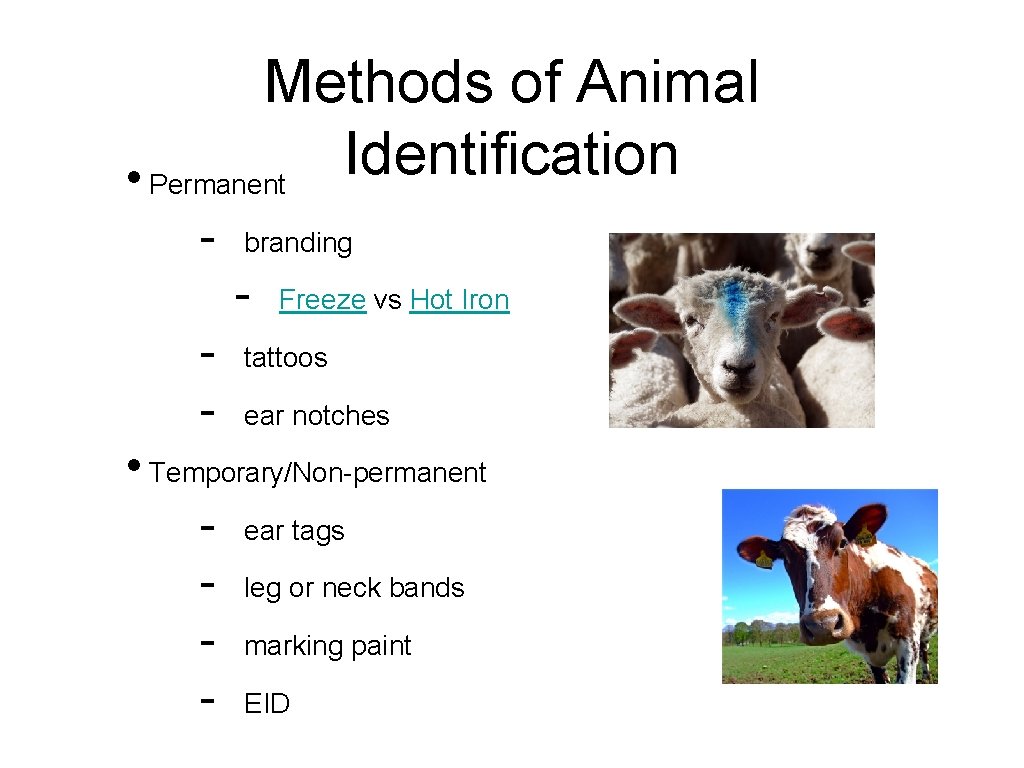
Methods of Animal Identification • Permanent - branding - Freeze vs Hot Iron tattoos ear notches • Temporary/Non-permanent - ear tags - leg or neck bands - marking paint - EID
Why Identify Individuals? • Record Keeping - vaccinations and medicines given - production and breeding records • Tracking Beyond the Farm - if the animal becomes sick after the sale or the carcass is contaminated, they can track it back to the source
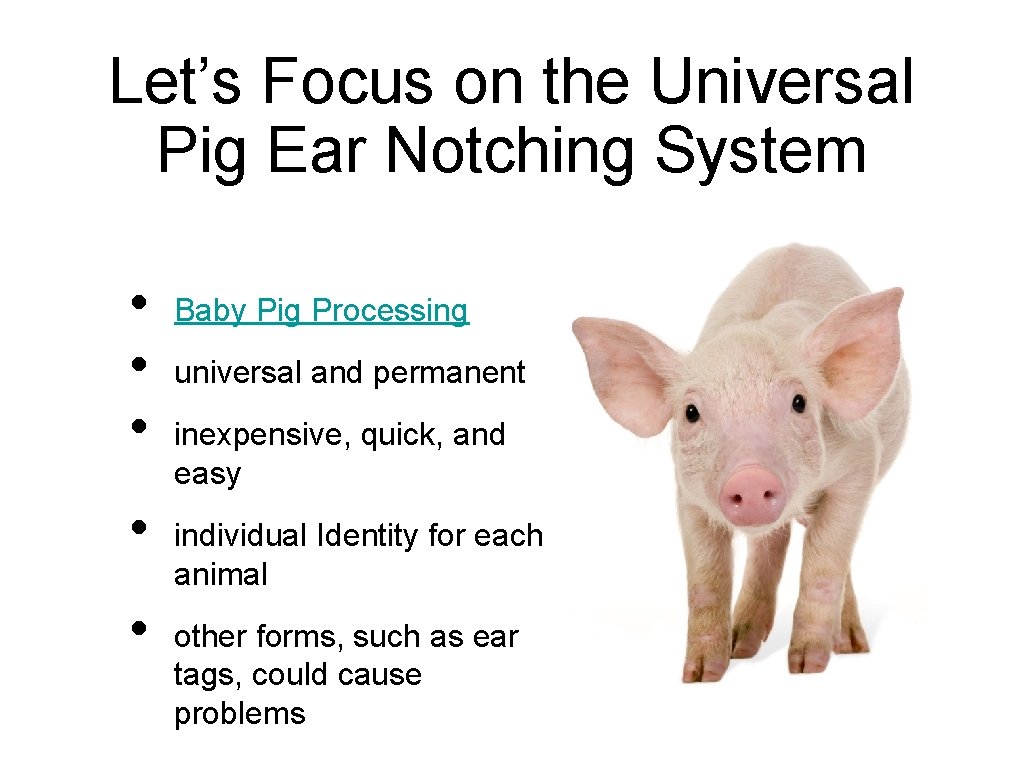
Let’s Focus on the Universal Pig Ear Notching System • • • Baby Pig Processing universal and permanent inexpensive, quick, and easy individual Identity for each animal other forms, such as ear tags, could cause problems
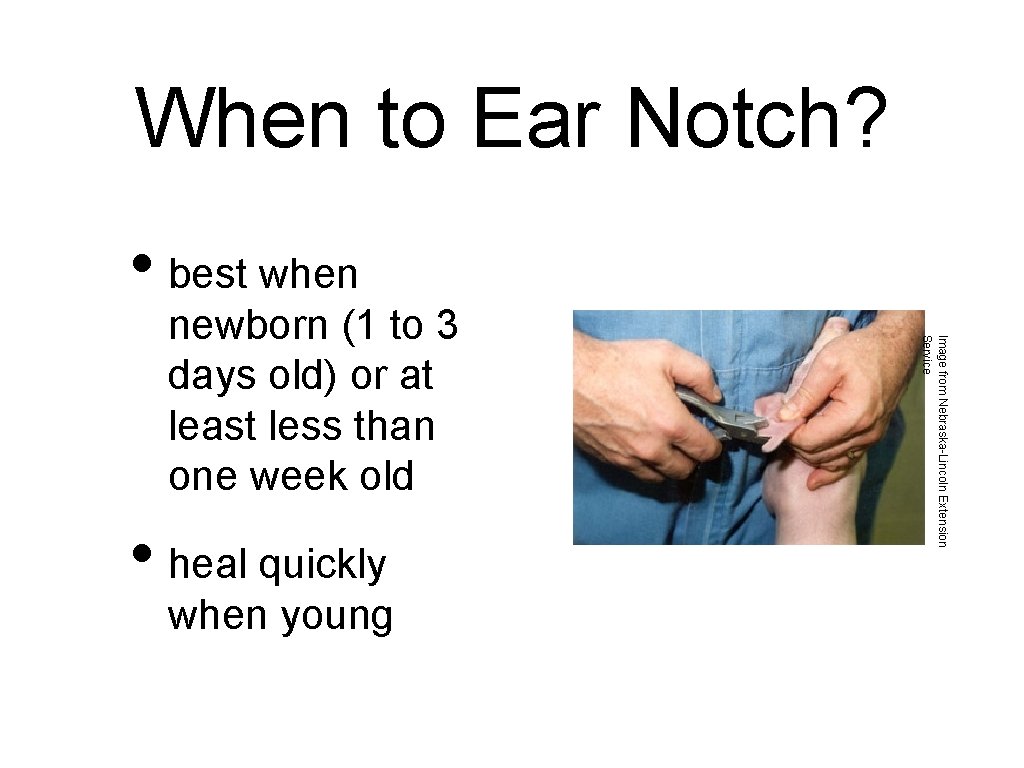
When to Ear Notch? • best when • heal quickly when young Image from Nebraska-Lincoln Extension Service newborn (1 to 3 days old) or at least less than one week old
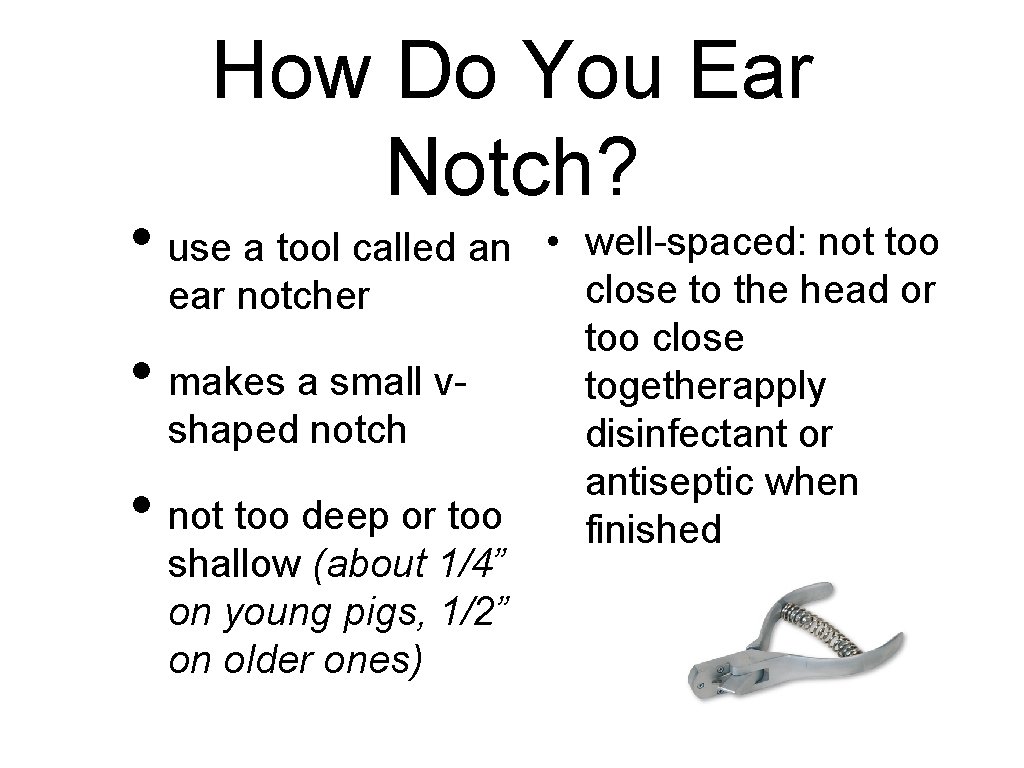
How Do You Ear Notch? • use a tool called an ear notcher • makes a small vshaped notch • not too deep or too shallow (about 1/4” on young pigs, 1/2” on older ones) • well-spaced: not too close to the head or too close togetherapply disinfectant or antiseptic when finished
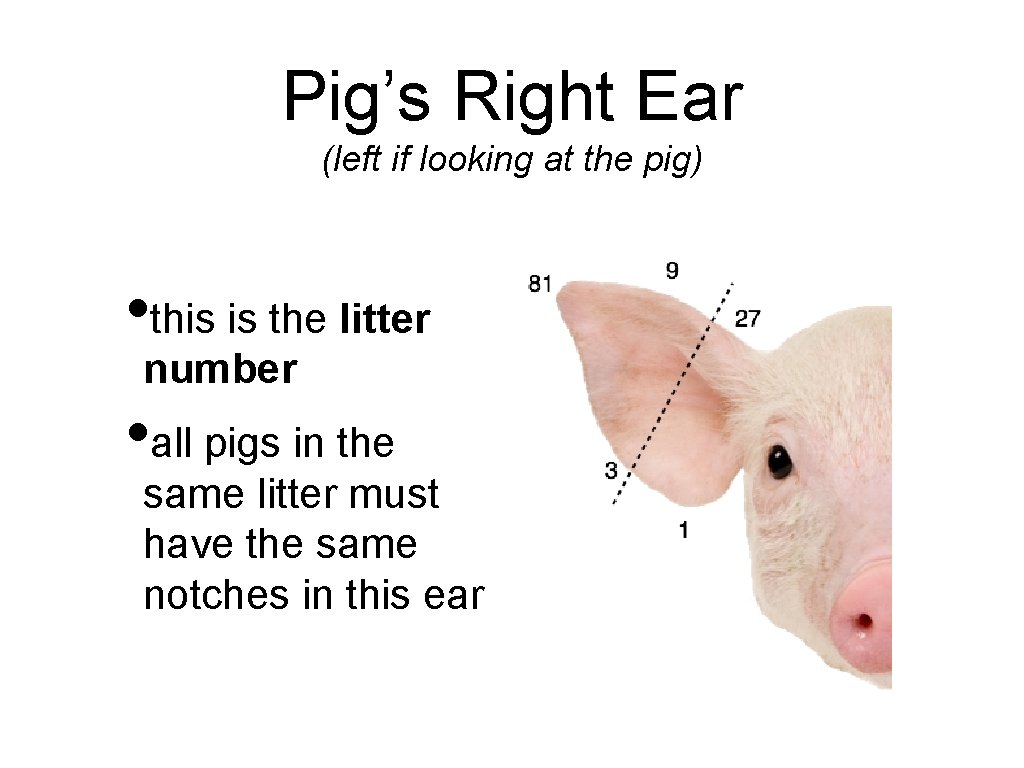
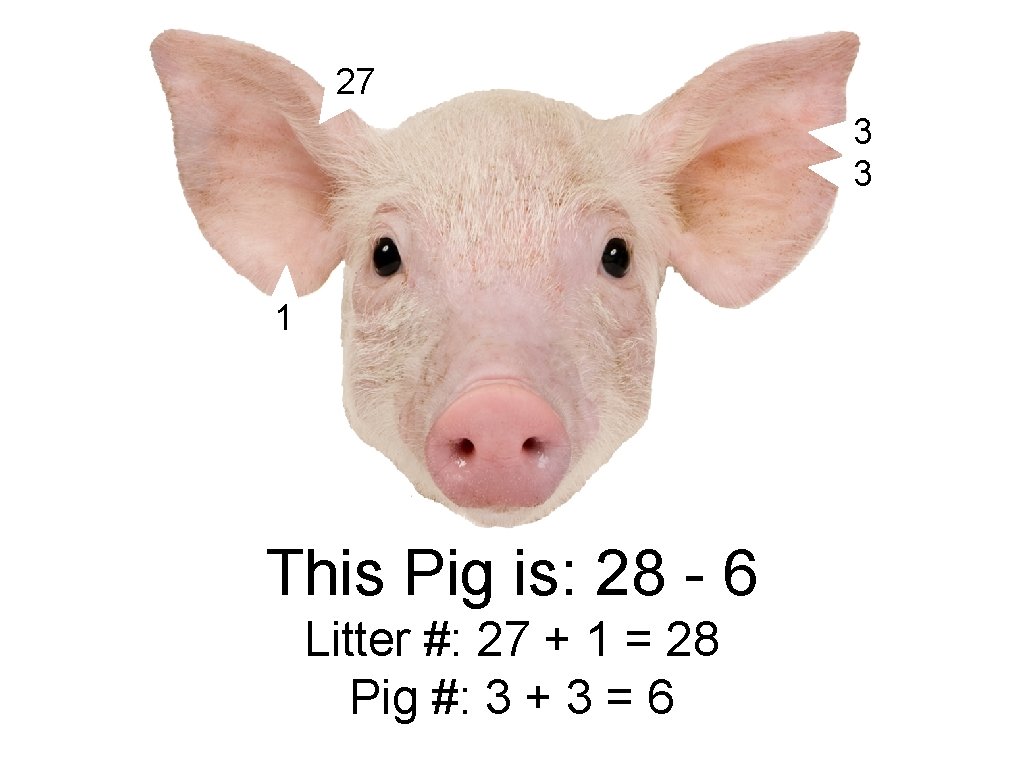
Pig’s Right Ear (left if looking at the pig) • this is the litter number • all pigs in the same litter must have the same notches in this ear
Pig’s Left Ear (right if looking at the pig) • this is the pig number • each pig in the same litter must have different notches in this ear
• Reading the Notches there may be only 1 or 2 notches per location (location 81 can only have one) add the notches together to determine the number (for example: 1 + 9 = 11)
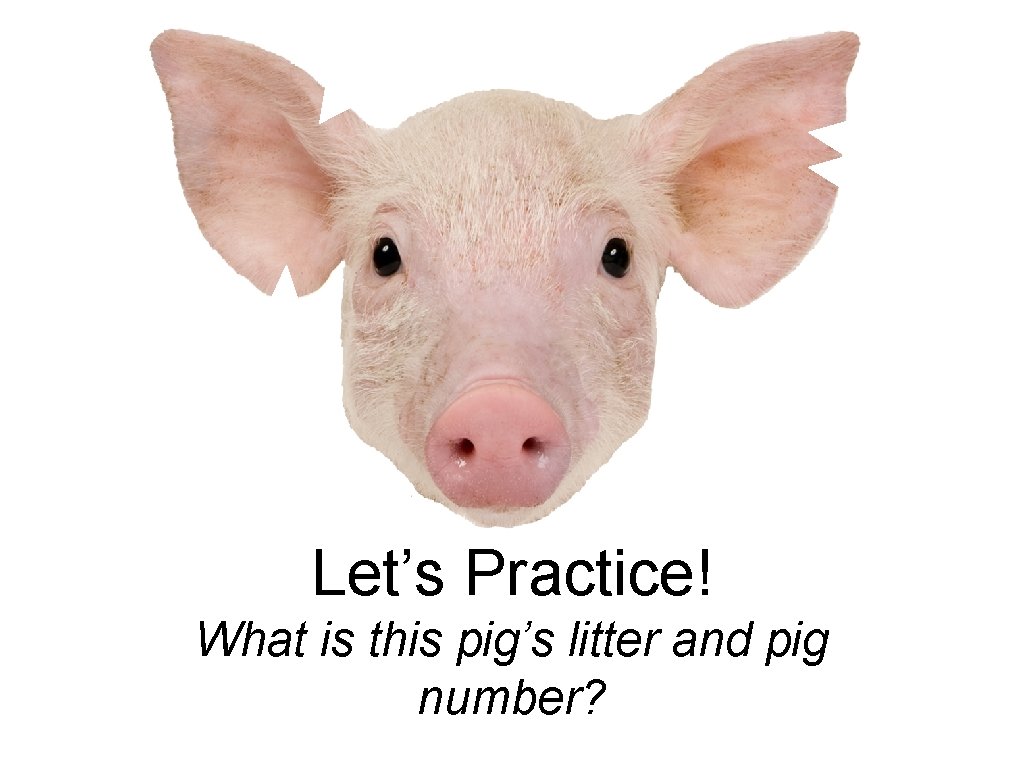
Let’s Practice! What is this pig’s litter and pig number?
27 3 3 1 This Pig is: 28 - 6 Litter #: 27 + 1 = 28 Pig #: 3 + 3 = 6
Thank You for Using All In One Lessons from One Less Thing www. onelessthing. net