
Animal hookworms Ancylostoma caninum braziliense Disease Cutaneous larva

Animal hookworms Ancylostoma caninum& braziliense
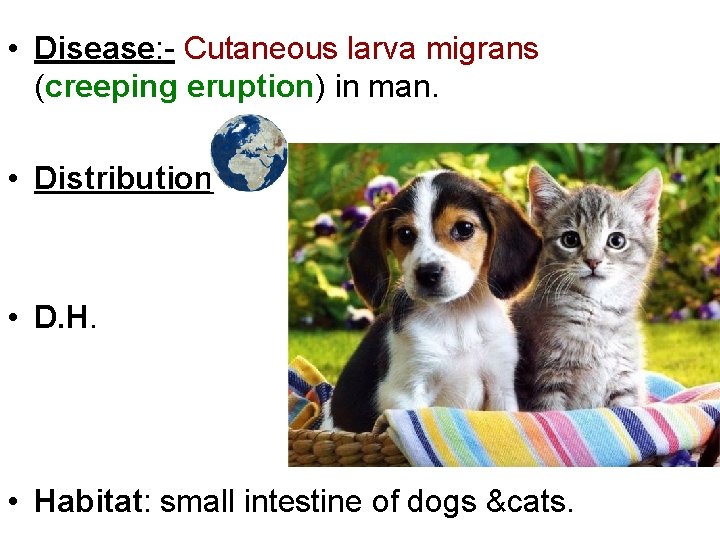
• Disease: - Cutaneous larva migrans (creeping eruption) in man. • Distribution • D. H. • Habitat: small intestine of dogs &cats.

Life cycle

Cutaneous larva migrans (creeping eruption) • Definition: • It is a cutanoues condition caused by larvae of A. caninum & A. braziliense that are not adapted to man.
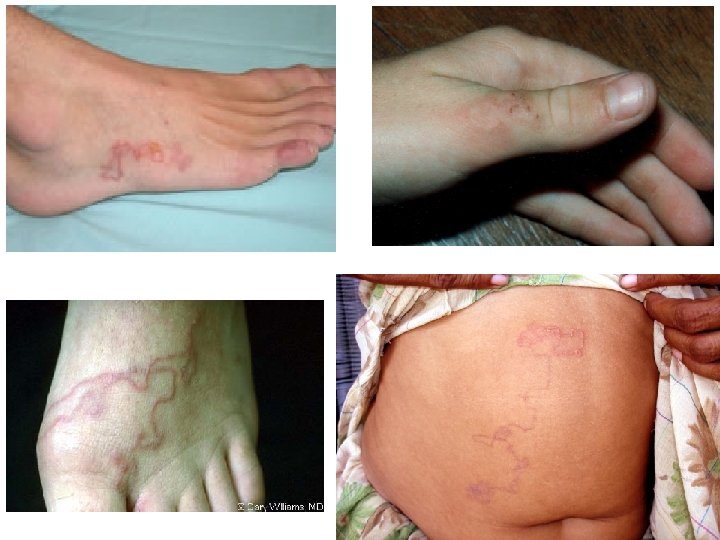
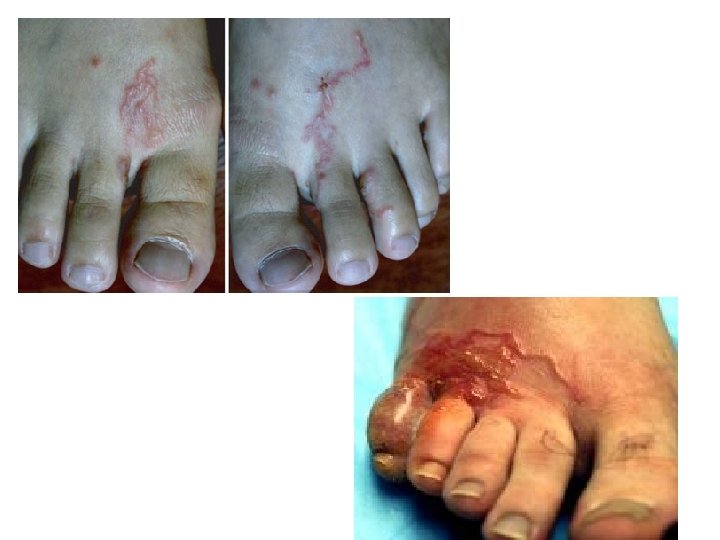

Pathogenesis & clinical picture
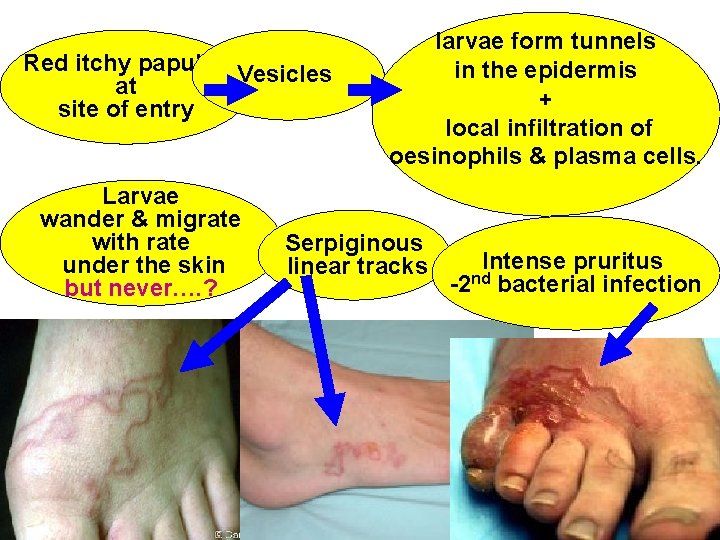
Red itchy papules Vesicles at site of entry Larvae wander & migrate with rate under the skin but never…. ? larvae form tunnels in the epidermis + local infiltration of oesinophils & plasma cells. Serpiginous linear tracks Intense pruritus -2 nd bacterial infection
The lesion could be single or multiple and persists for months Fate • As larva dies or leaves the tunnels, the presented track become dry, heals by crust formation.
Diagnosis - Clinical presentation ( site, shape and rate of migration). - Eosinophilia is uncommon.
Treatment • 1 - Oral & topical Thiabendazole. • 2 - Antibiotics for bacterial infection. • 3 - Freezing with ethyl chloride or carbon dioxide snow. • 4 - Antihistaminics.
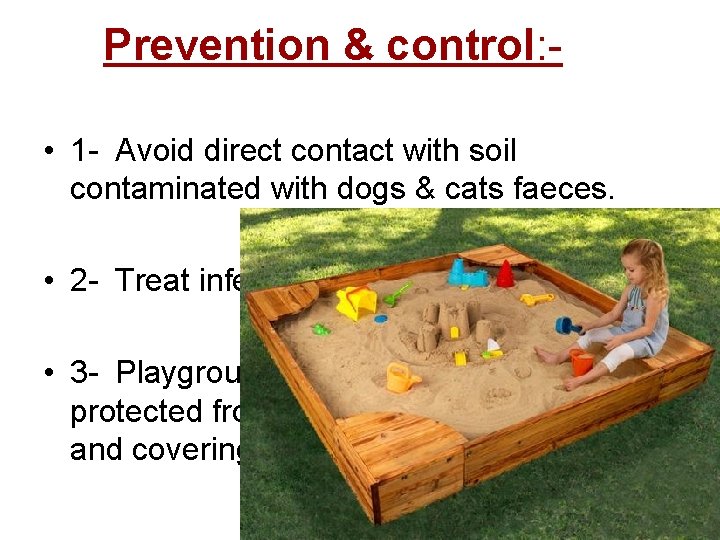
Prevention & control: • 1 - Avoid direct contact with soil contaminated with dogs & cats faeces. • 2 - Treat infected pet dogs & cats. • 3 - Playgrounds & sand boxes should be protected from animal faeces by fencing and covering respectively.

- Slides: 15