
ANIMAL GENETICS BREEDING UNIT III Principles of Animal
ANIMAL GENETICS & BREEDING UNIT – III Principles of Animal Breeding Theory Introduction to Animal Breeding Dr K G Mandal Department of Animal Genetics & Breeding Bihar Veterinary College, Patna Bihar Animal Sciences University, Patna
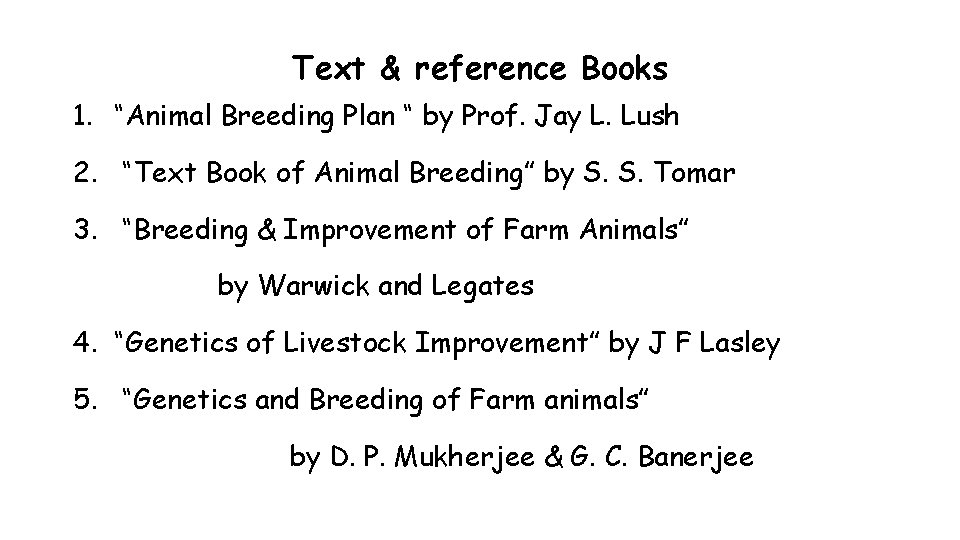
Text & reference Books 1. “Animal Breeding Plan “ by Prof. Jay L. Lush 2. “Text Book of Animal Breeding” by S. S. Tomar 3. “Breeding & Improvement of Farm Animals” by Warwick and Legates 4. “Genetics of Livestock Improvement” by J F Lasley 5. “Genetics and Breeding of Farm animals” by D. P. Mukherjee & G. C. Banerjee
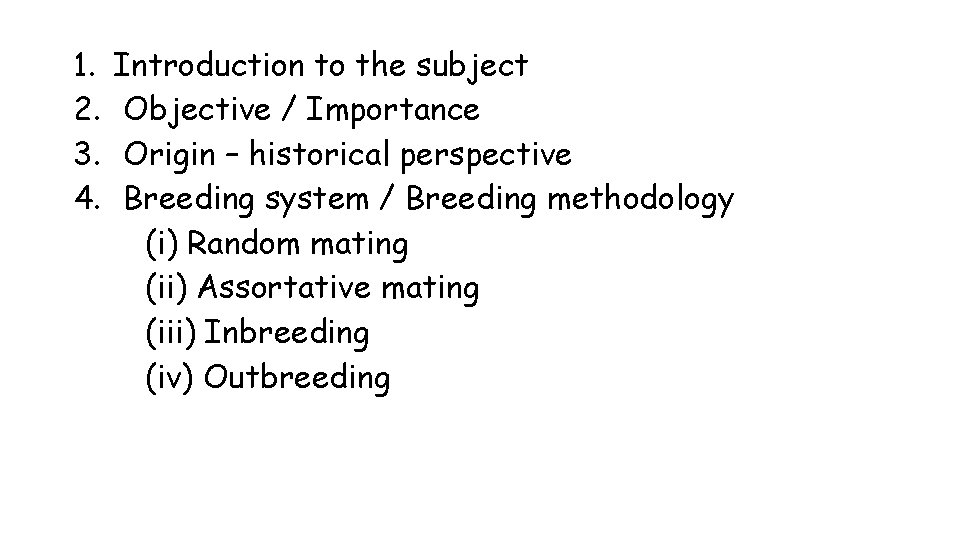
1. 2. 3. 4. Introduction to the subject Objective / Importance Origin – historical perspective Breeding system / Breeding methodology (i) Random mating (ii) Assortative mating (iii) Inbreeding (iv) Outbreeding
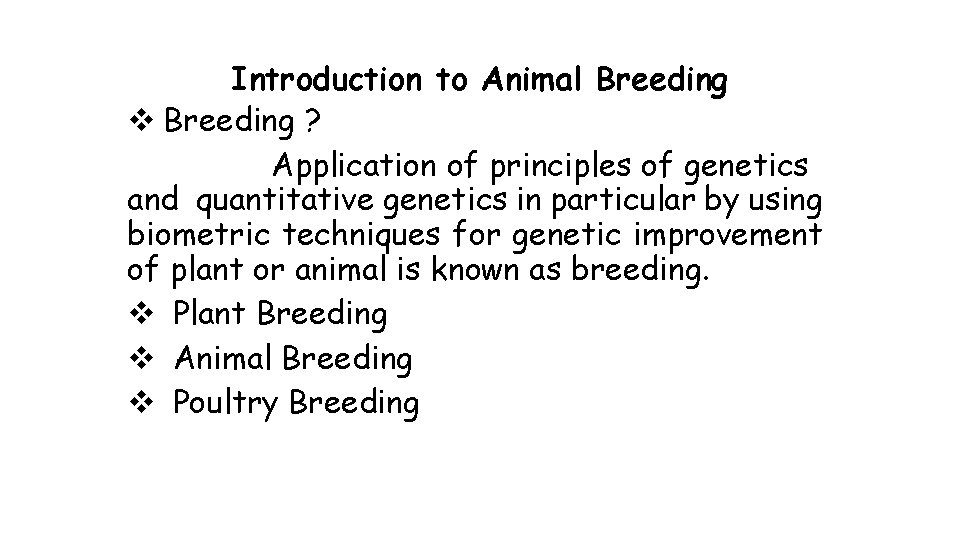
Introduction to Animal Breeding v Breeding ? Application of principles of genetics and quantitative genetics in particular by using biometric techniques for genetic improvement of plant or animal is known as breeding. v Plant Breeding v Animal Breeding v Poultry Breeding

v Historical perspective of Animal Breeding • Chronological events: 1. Robert Bakewell (1760), popularly known as the

(iii) Bred the best to best irrespective of genetic relationship. This has led to the development of inbreeding and pure breeding stock. v. The greatest contribution of Robert Bakewell to breeding methods was that he appreciated inbreeding as the most effective tool to produce refinement in the breed. 2. Spallanzani (1780) for the first time successfully demonstrated AI in dog. 3. Hunter (1799) successfully produced pregnancy in women through AI. Added for development of AH and further “Purebred Breed Association”.
4. Formation of Breed Association 5. Breed Registration & introduction of herd book: First herd book was “An introduction to the general Stud Book” for Thorough bred horse was started in the year 1791. The second herd book was Shorthorn herd book published in 1822. 6. Introduction of pure breeding in India : 1950 – 1964 7. Cross Breeding was the major policy with breeding in original tract 1964 – 1997. pure
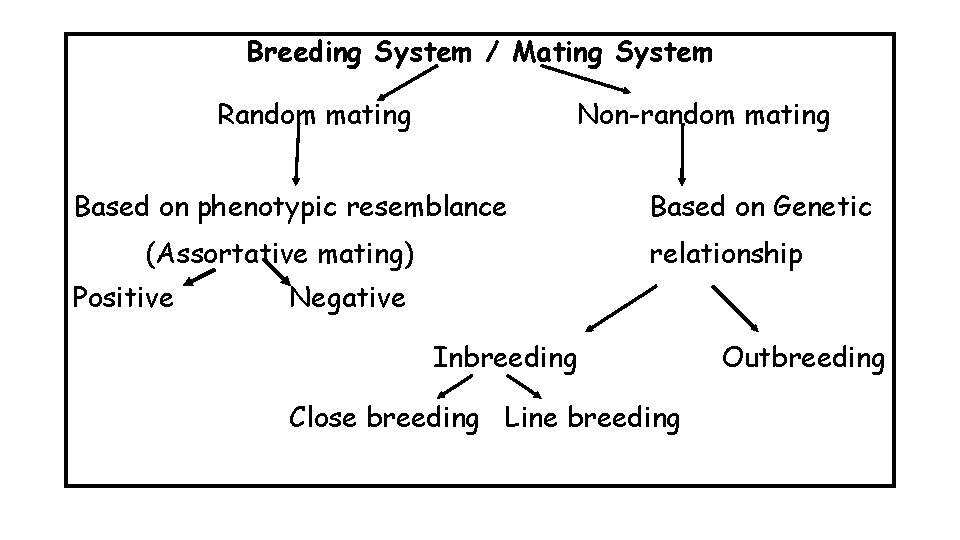
Breeding System / Mating System Random mating Non-random mating Based on phenotypic resemblance (Assortative mating) Positive Based on Genetic relationship Negative Inbreeding Close breeding Line breeding Outbreeding
Breeding System / Breeding Methodology: A. Random mating: When each and every individual has equal chance of mating with any one individual of opposite sex in a population is known as random mating. It is also known as panmixia. Breeder has no choice in selection of mated individual. B. Non-random mating: (i) Based on phenotypic resemblance : Assortative mating: Like to like mating. (a) Positive assortative mating (b) Negative assortative mating (ii) Based on genetic resemblance: (a) Inbreeding (b) Outbreeding
Inbreeding: Mating of individuals which are more closely related to each other than the average relationship of the population concerned. Related individuals: Two individuals are said to be related if they have common ancestor in the preceding 4 – 6 generations of their pedigree. Ancestor: An individual which transmits genetic material to the descendants. Descendant: An individual who receives some of its genetic material from the ancestor.
Common ancestor: Individual who transmits genetic materials to the inbred through sire’s and dam’s pedigree of the inbred individual is known as common ancestor. Inbred: The individual which is produced by mating of relatives is known as inbred. Pedigree: Systematic list of all ancestors to which an individual is genetically related. Application of pedigree: (i) To estimate breeding value based on pedigree record. (ii) To facilitate early selection based on pedigree recor. (iii) To estimate genetic parameter (iv) To formulate breeding plan

THANK YOU
- Slides: 12