
ANIMAL GENETICS BREEDING Biometrical Techniques in Animal Breeding
ANIMAL GENETICS & BREEDING Biometrical Techniques in Animal Breeding Course No. AGB – 605 UNIT - II Lecture – 9 Introduction to Matrix Algebra Dr K G Mandal Department of Animal Genetics & Breeding Bihar Veterinary College, Patna Bihar Animal Sciences University, Patna
Introduction to Matrix Algebra • Science of today is becoming increasingly quantitative in nature. • Scientists are being confronted with large volumes of numerical data gathered from their laboratories, field experiments and surveys. • Mere collection and recording of data achieves nothing until or unless those data are analysed and interpreted. • Mathematics is made great use of in describing this analysis and interpretation, and one of the most important and useful branches of mathematics for this purpose is matrix algebra.
• It is useful not only for simplifying description and development of many analysis methods but also in organising computer techniques to execute those methods and to present the results. • As a branch of mathematics, it dates back more than a century, but its application in today’s world are widespread, particularly in statistics. • Matrices are simply rectangular arrays of numbers arranged in rows and columns, matrix algebra is the algebra of those arrays.
v Application: 1. Useful in the field of population dynamics to investigate the distribution of individuals according to their age and sex. 2. Calculation of transition probabilities over a range of time intervals. continued on the next page
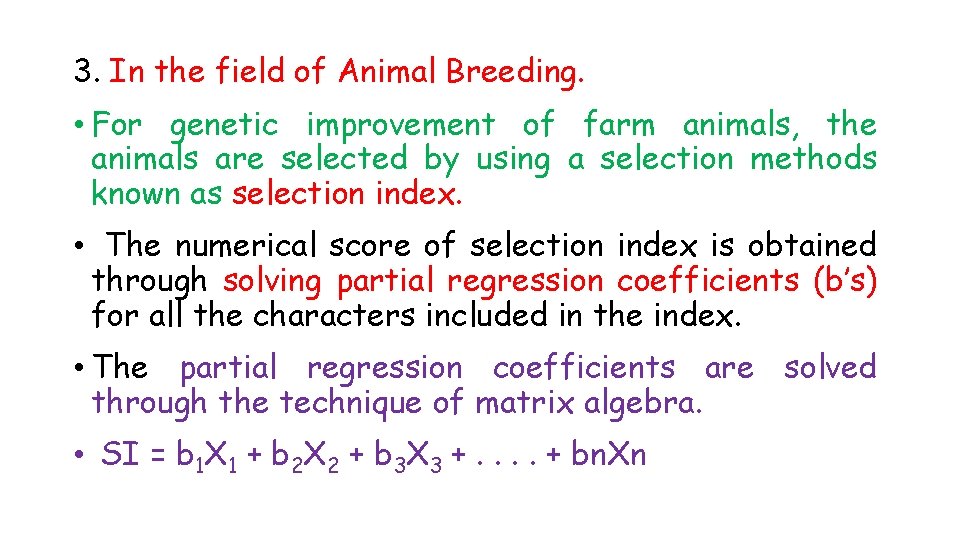
3. In the field of Animal Breeding. • For genetic improvement of farm animals, the animals are selected by using a selection methods known as selection index. • The numerical score of selection index is obtained through solving partial regression coefficients (b’s) for all the characters included in the index. • The partial regression coefficients are solved through the technique of matrix algebra. • SI = b 1 X 1 + b 2 X 2 + b 3 X 3 +. . + bn. Xn
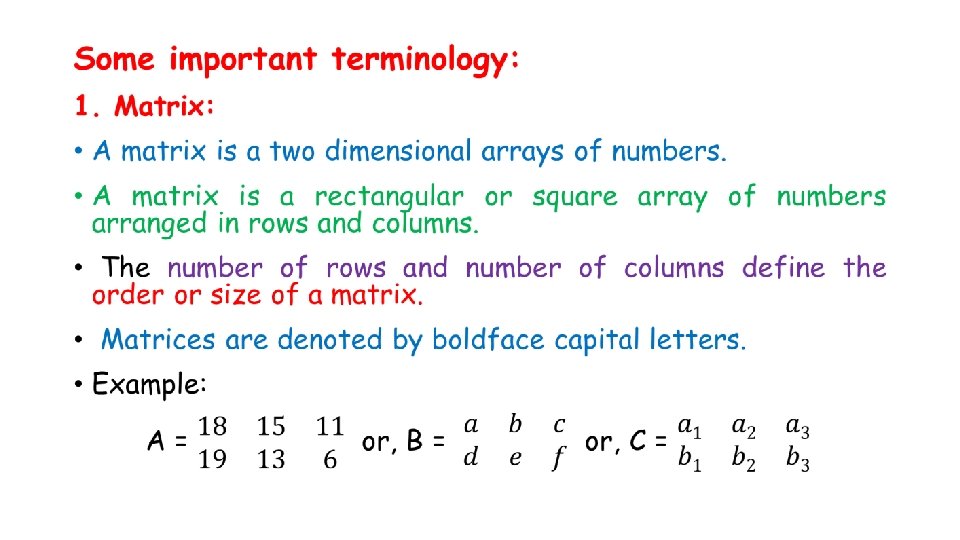
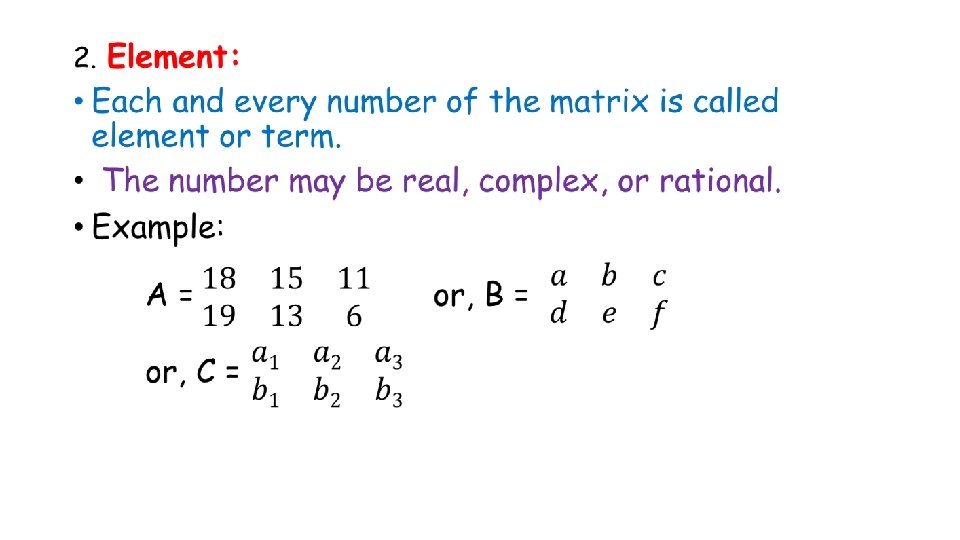
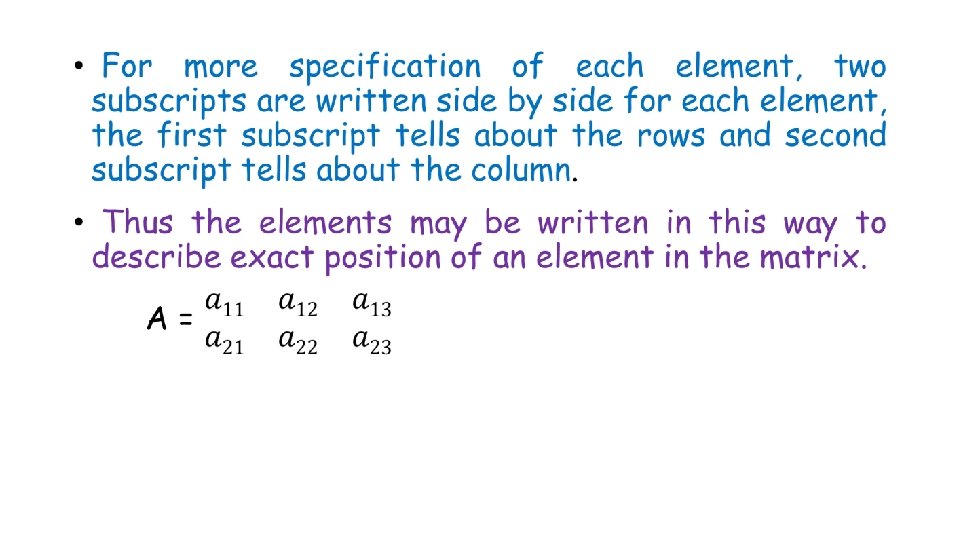
• Instead of using numbers, “ is used as subscript to denote the row and “ j “ is used to denote column, where i = 1, 2, 3, and j = 1, 2, 3, 4. • Thus, the element aij means the element is located at ith row and jth column. • Accordingly, the element a 11 is located at first row and first column of the matrix, A. • Similarly, the matrix, A = [ aij ] where, i = 1, 2, 3, and j = 1, 2, 3, 4 like this.
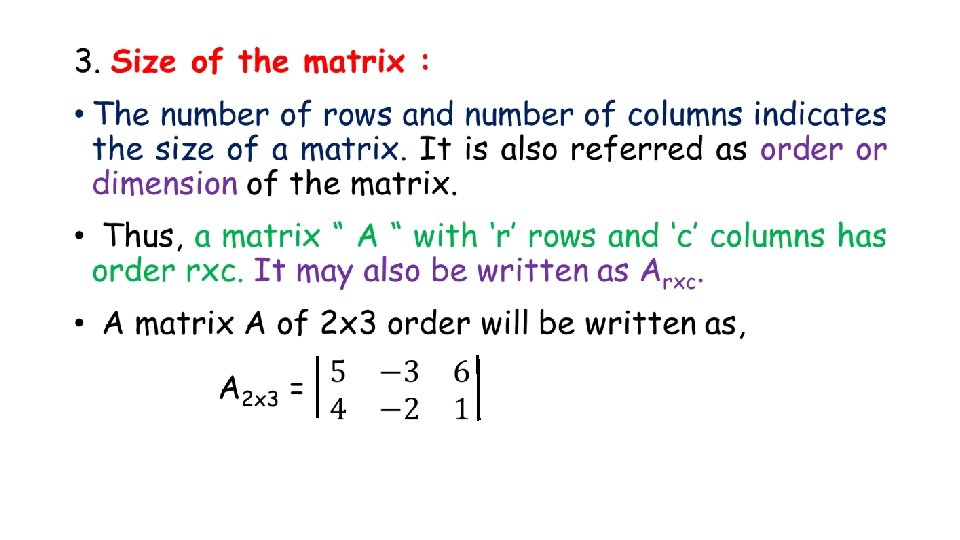
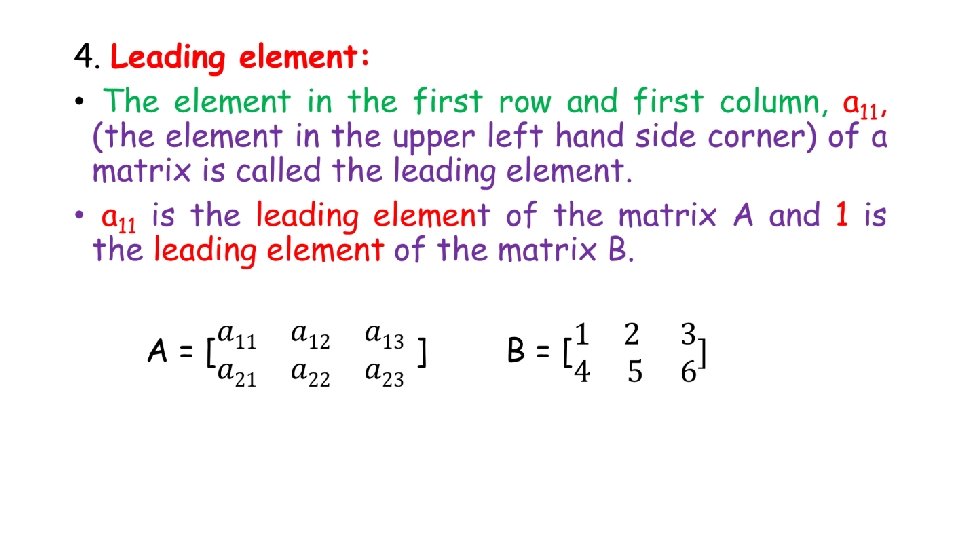
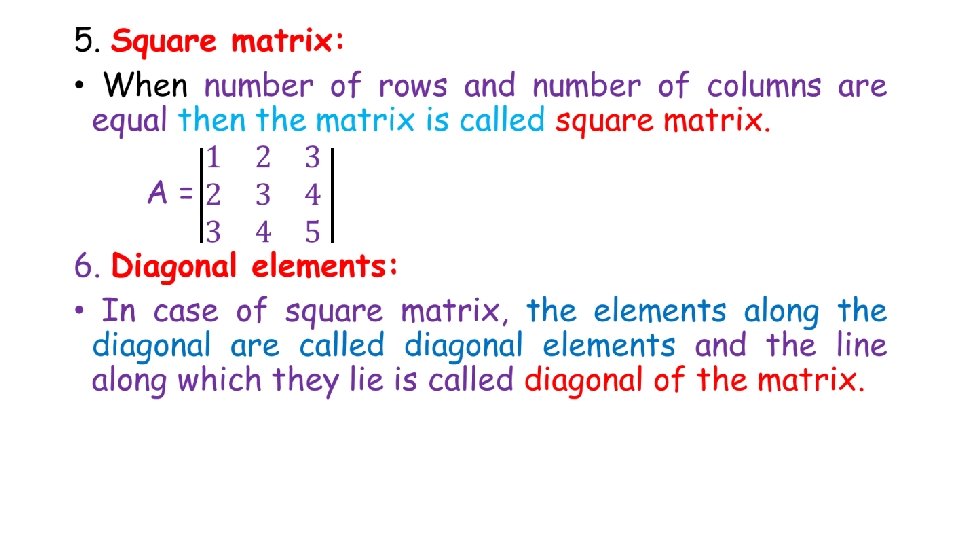
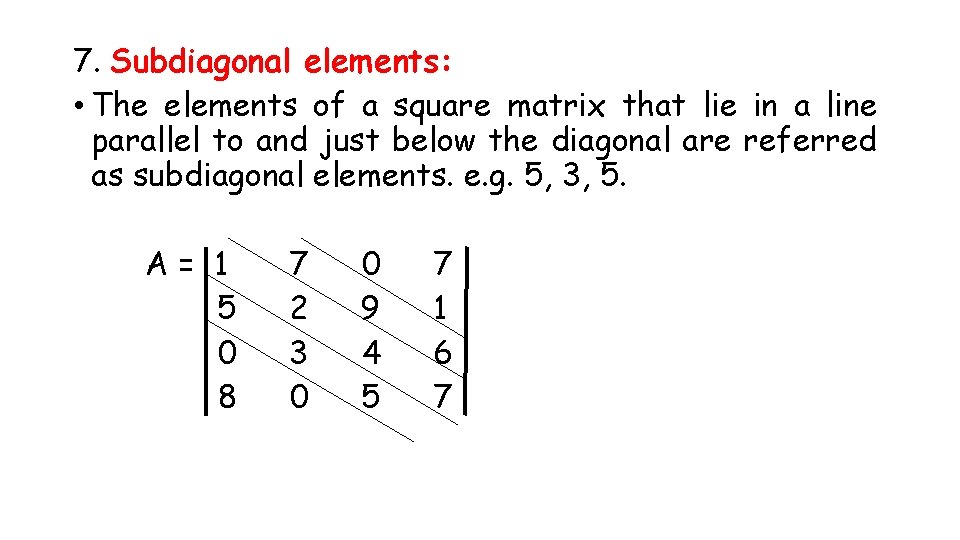
7. Subdiagonal elements: • The elements of a square matrix that lie in a line parallel to and just below the diagonal are referred as subdiagonal elements. e. g. 5, 3, 5. A= 1 5 0 8 7 2 3 0 0 9 4 5 7 1 6 7
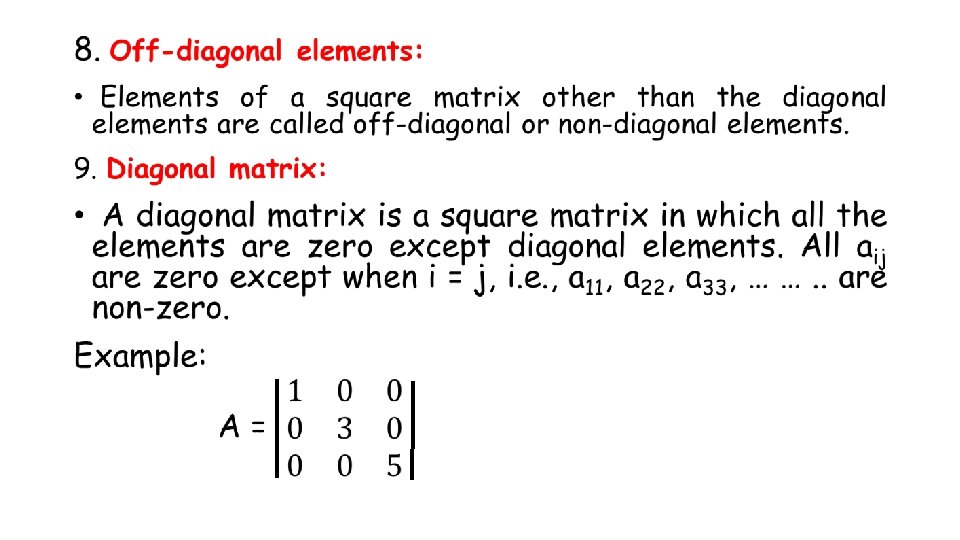
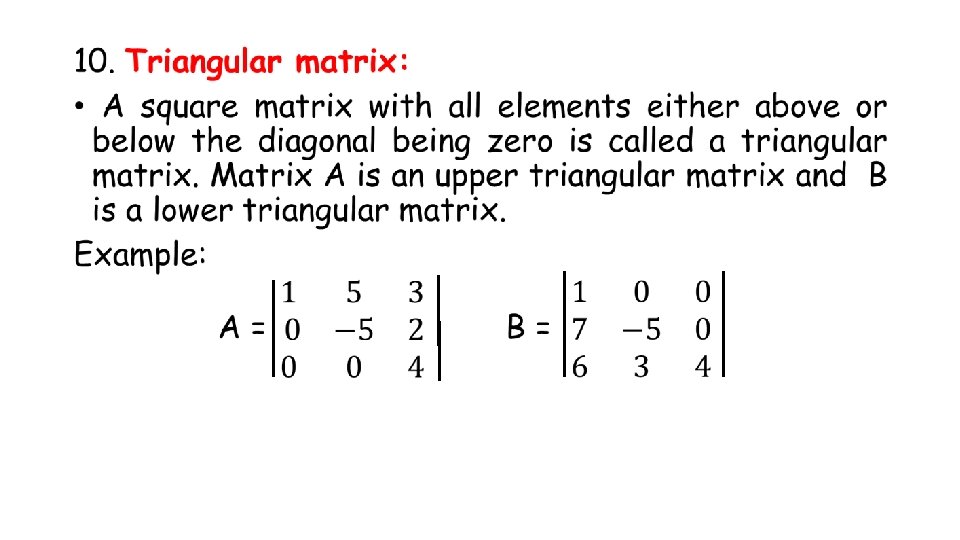
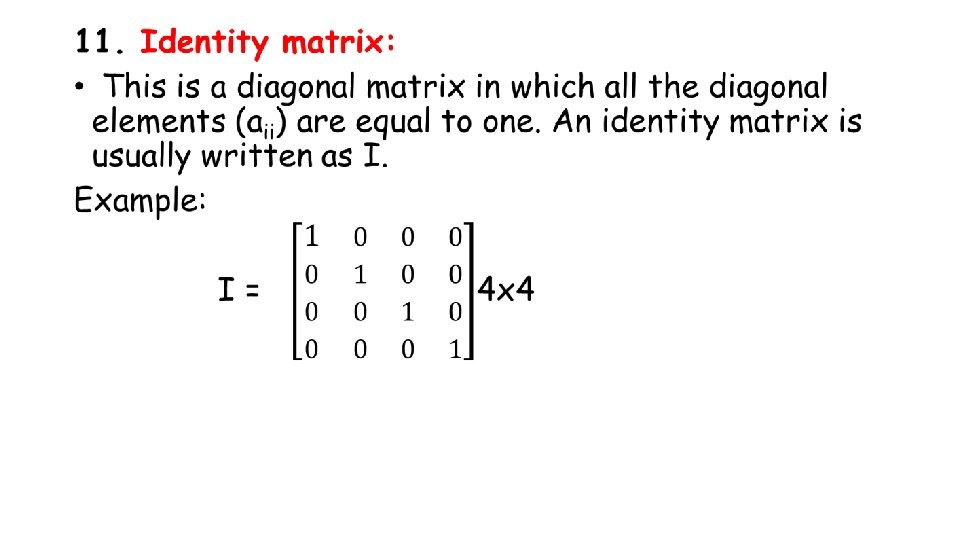
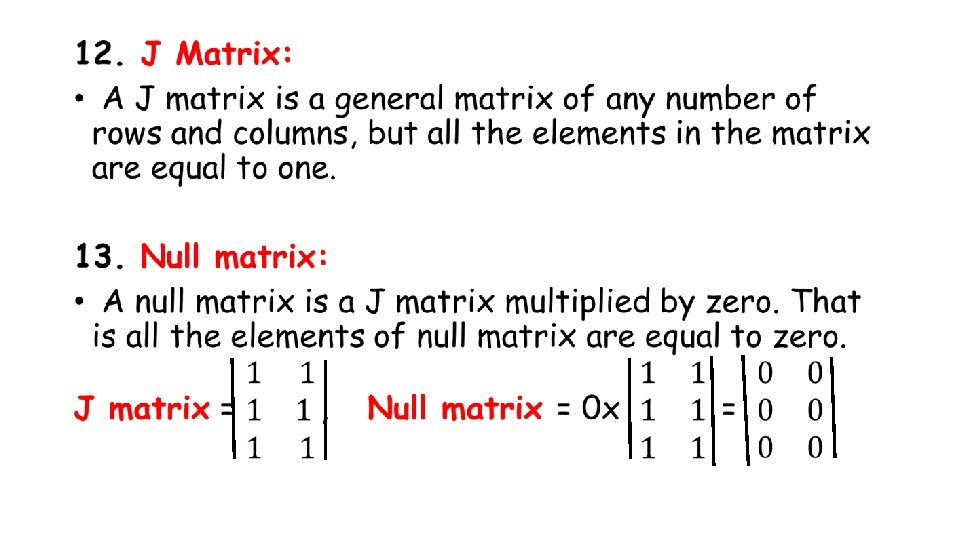
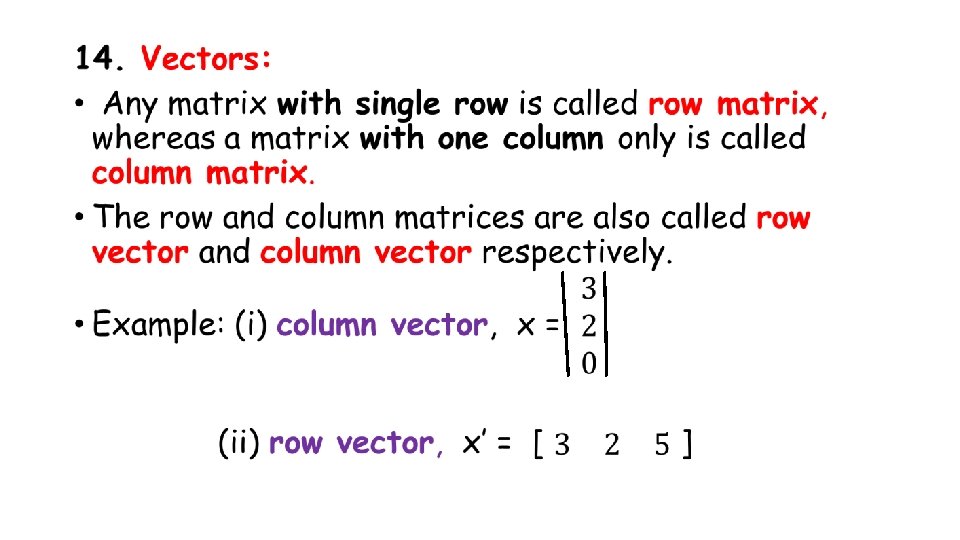
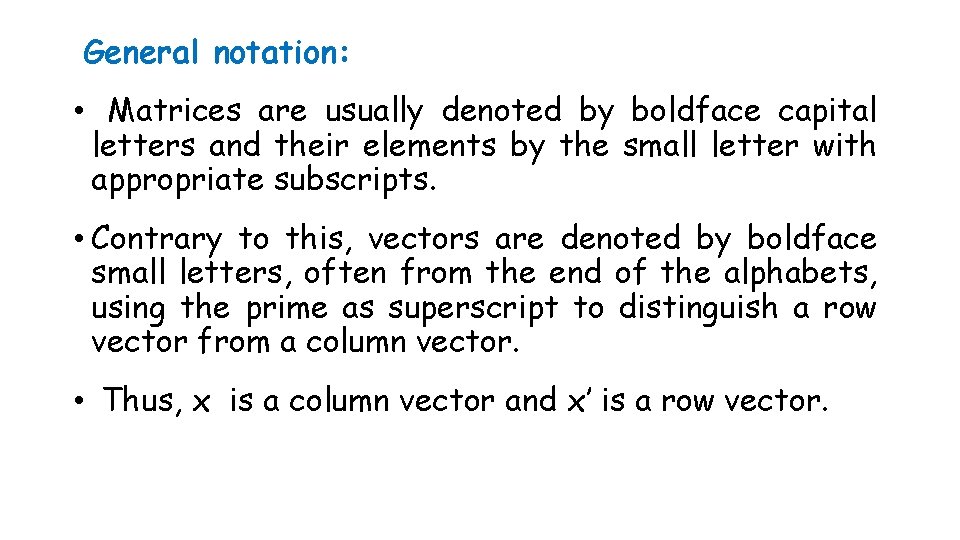
General notation: • Matrices are usually denoted by boldface capital letters and their elements by the small letter with appropriate subscripts. • Contrary to this, vectors are denoted by boldface small letters, often from the end of the alphabets, using the prime as superscript to distinguish a row vector from a column vector. • Thus, x is a column vector and x’ is a row vector.
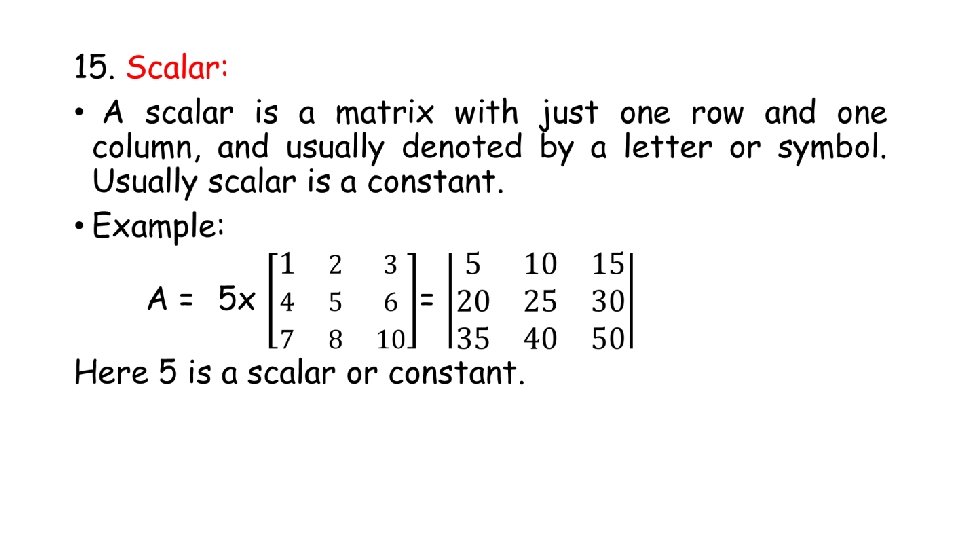
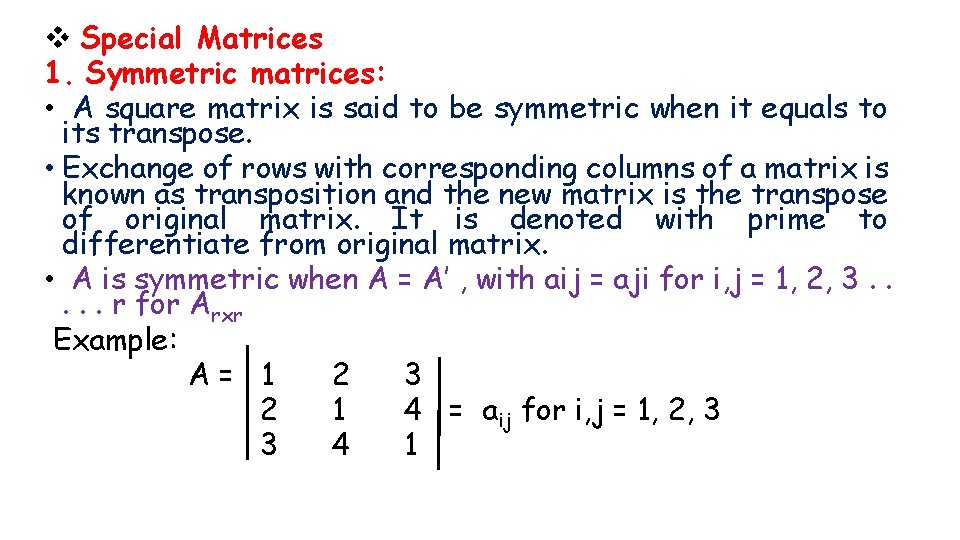
v Special Matrices 1. Symmetric matrices: • A square matrix is said to be symmetric when it equals to its transpose. • Exchange of rows with corresponding columns of a matrix is known as transposition and the new matrix is the transpose of original matrix. It is denoted with prime to differentiate from original matrix. • A is symmetric when A = A′ , with aij = aji for i, j = 1, 2, 3. . . r for Arxr Example: A= 1 2 3 2 1 4 = aij for i, j = 1, 2, 3 3 4 1
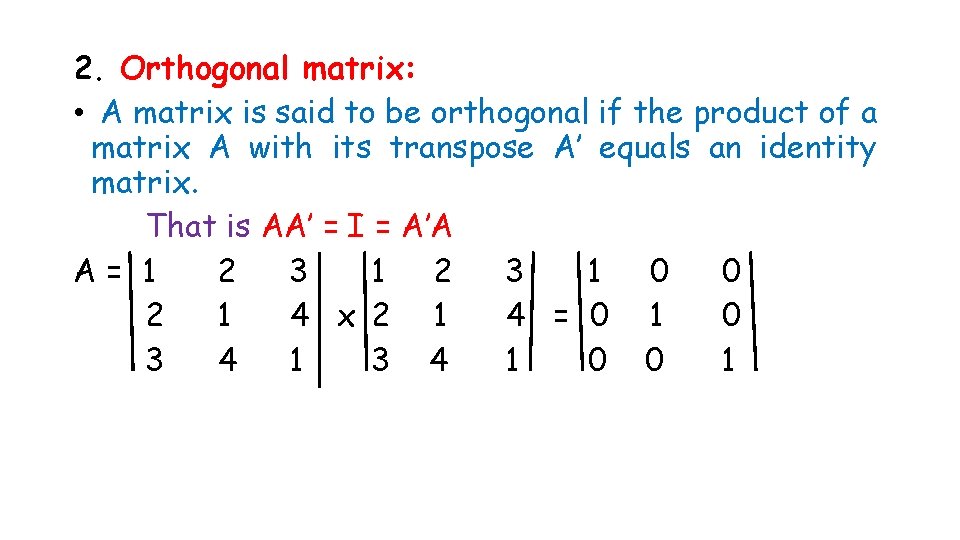
2. Orthogonal matrix: • A matrix is said to be orthogonal if the product of a matrix A with its transpose A’ equals an identity matrix. That is AA’ = I = A’A A= 1 2 3 1 0 0 2 1 4 x 2 1 4 = 0 1 0 3 4 1 0 0 1

THANK YOU
- Slides: 23