
Animal Form Function Physiology AP Biology Nerve Impulse
Animal Form & Function Physiology AP Biology
Nerve Impulse Transmission Resting potential p More negative inside cell than outside p n n n Why? Large negatively charged proteins & nucleic acids Na+/K+ pumps maintain high [Na+] outside cell and high [K+] inside cell
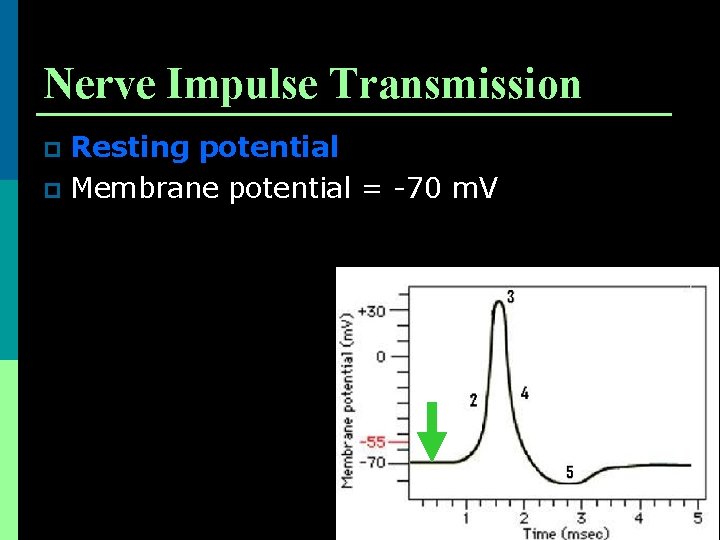
Nerve Impulse Transmission Resting potential p Membrane potential = -70 m. V p
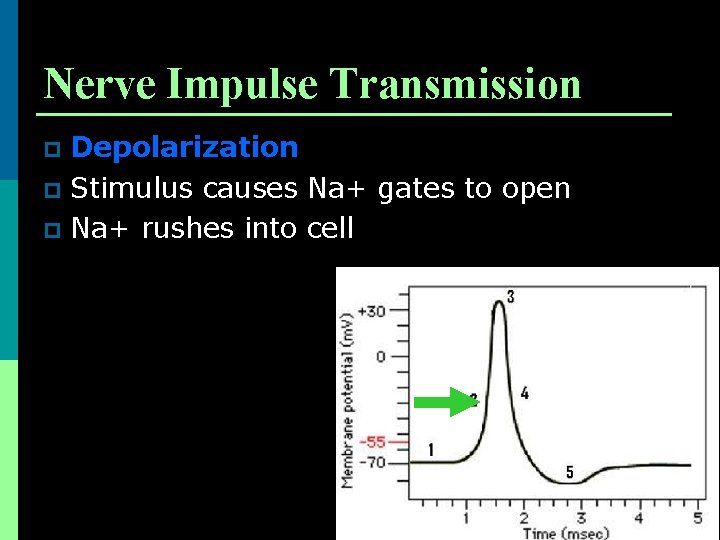
Nerve Impulse Transmission Depolarization p Stimulus causes Na+ gates to open p Na+ rushes into cell p

Nerve Impulse Transmission Repolarization p Na+ gates close & K+ gates open p K+ rushes out of cell p High [Na+] inside cell p High [K+] outside cell p
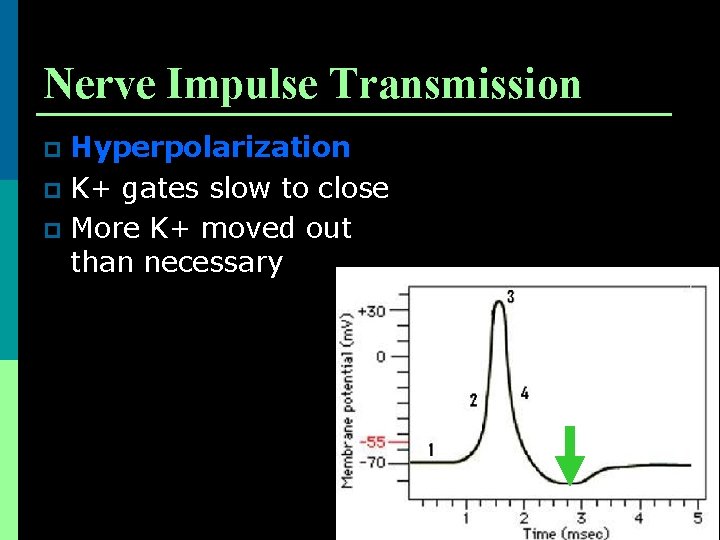
Nerve Impulse Transmission Hyperpolarization p K+ gates slow to close p More K+ moved out than necessary p
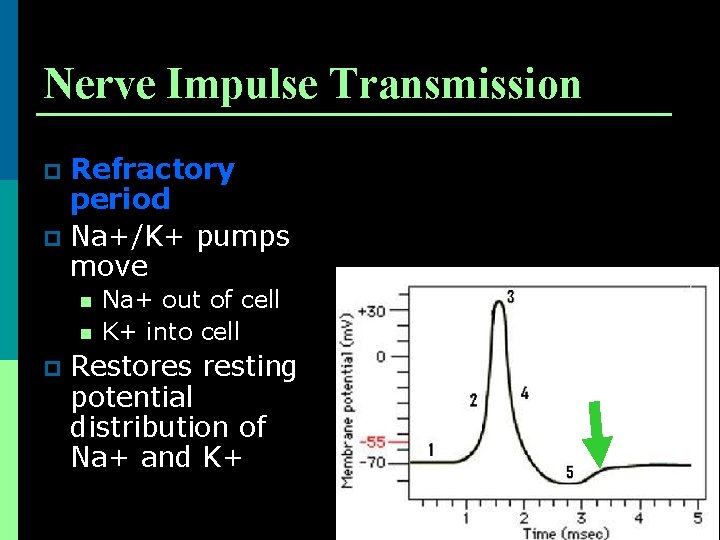
Nerve Impulse Transmission Refractory period p Na+/K+ pumps move p n n p Na+ out of cell K+ into cell Restores resting potential distribution of Na+ and K+
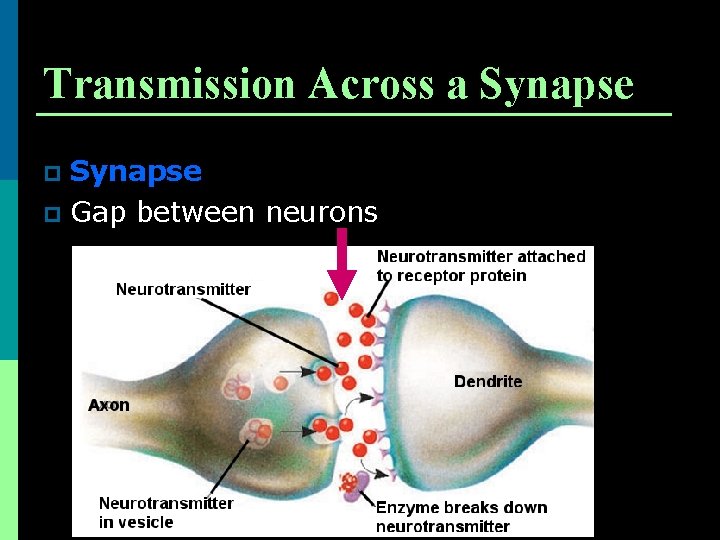
Transmission Across a Synapse p Gap between neurons p
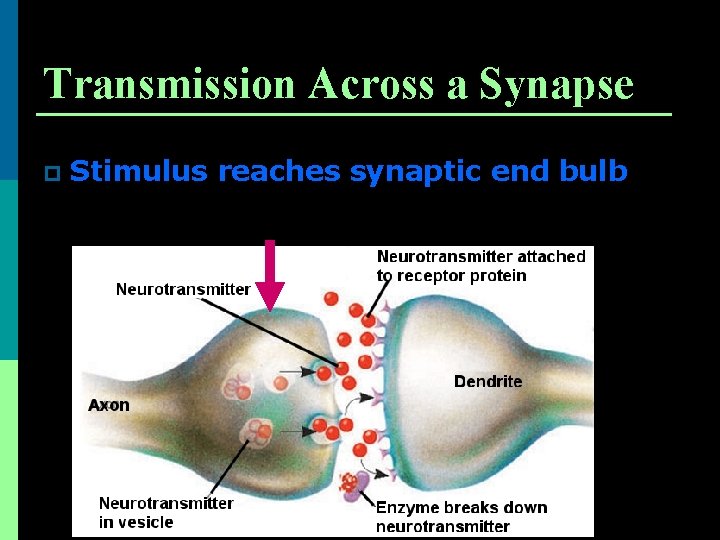
Transmission Across a Synapse p Stimulus reaches synaptic end bulb
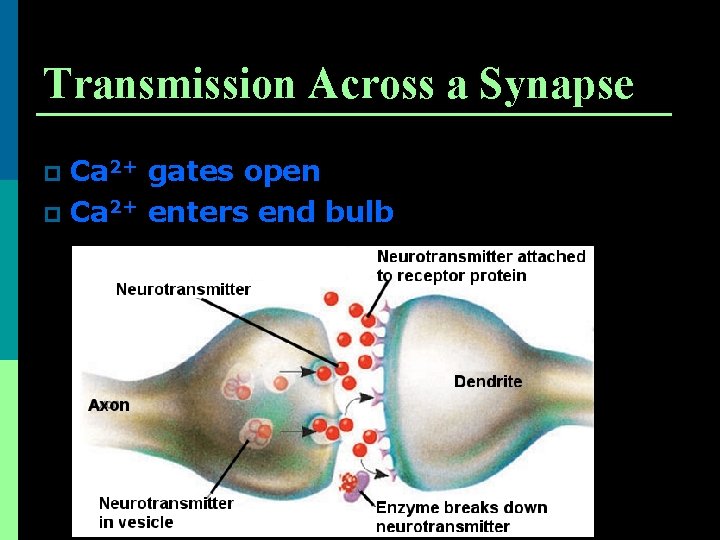
Transmission Across a Synapse Ca 2+ gates open p Ca 2+ enters end bulb p
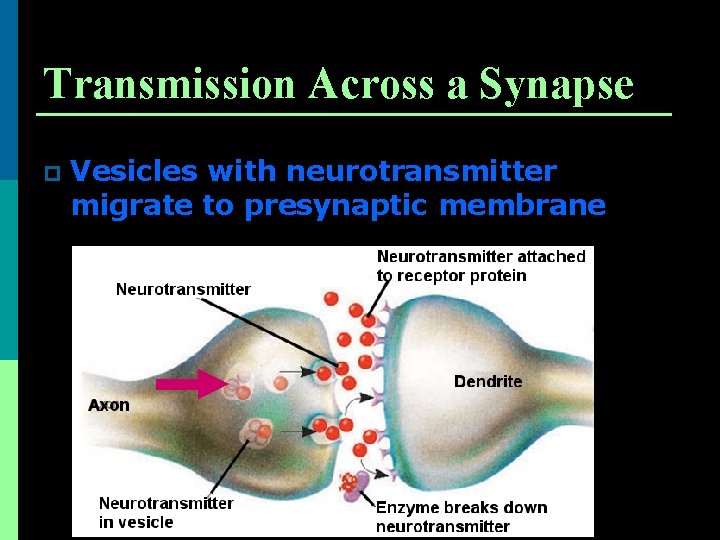
Transmission Across a Synapse p Vesicles with neurotransmitter migrate to presynaptic membrane
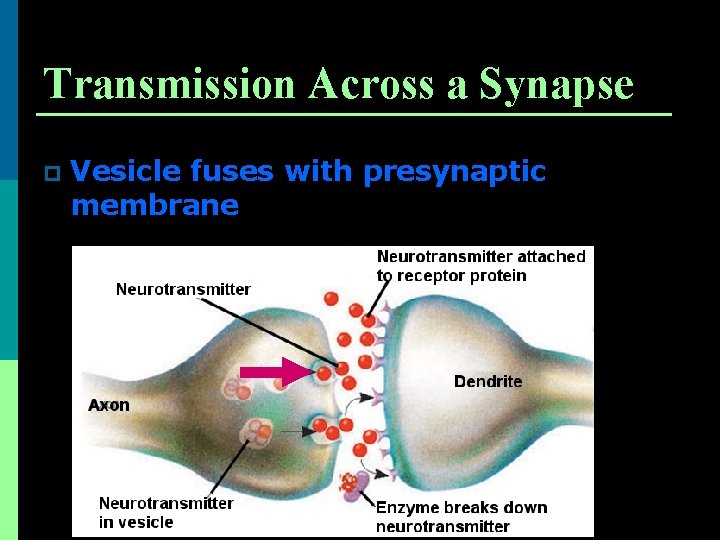
Transmission Across a Synapse p Vesicle fuses with presynaptic membrane
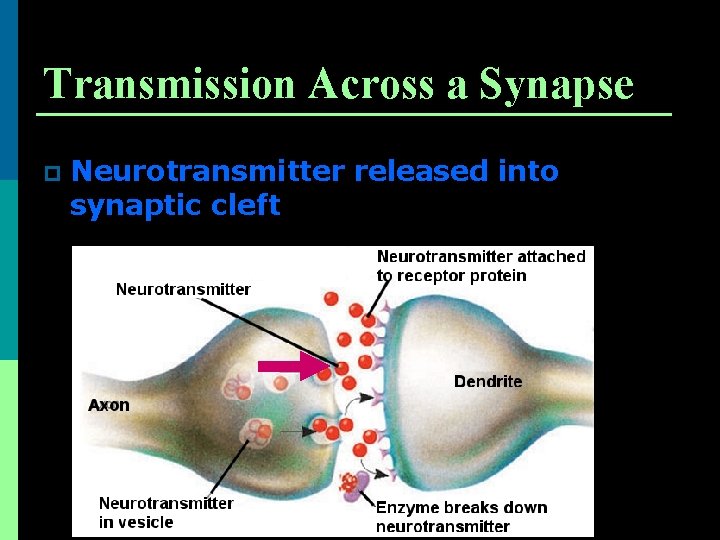
Transmission Across a Synapse p Neurotransmitter released into synaptic cleft
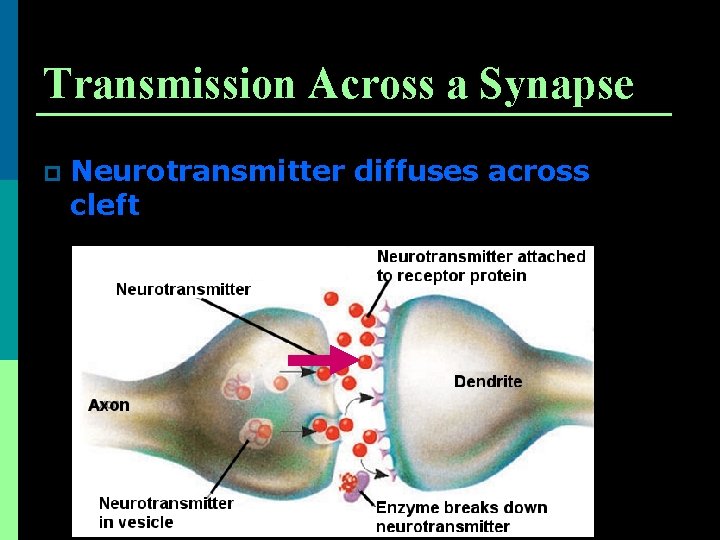
Transmission Across a Synapse p Neurotransmitter diffuses across cleft
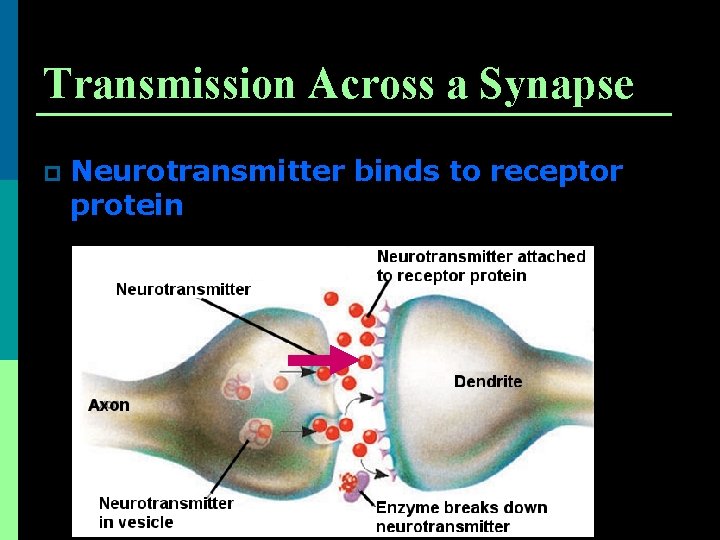
Transmission Across a Synapse p Neurotransmitter binds to receptor protein
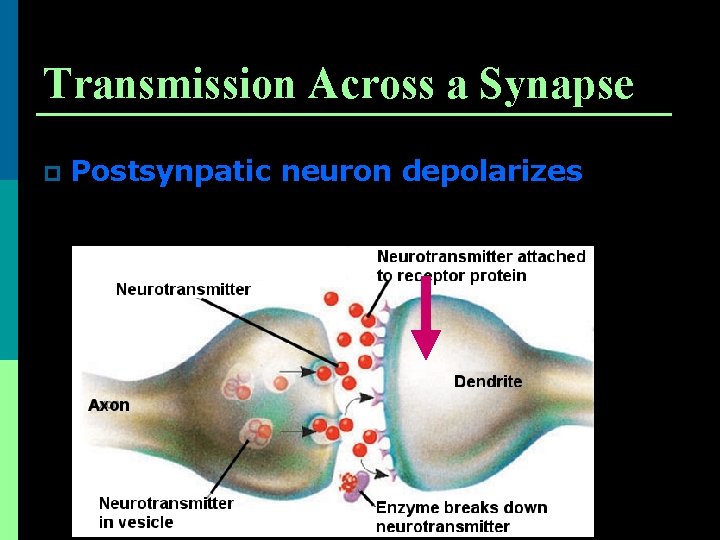
Transmission Across a Synapse p Postsynpatic neuron depolarizes
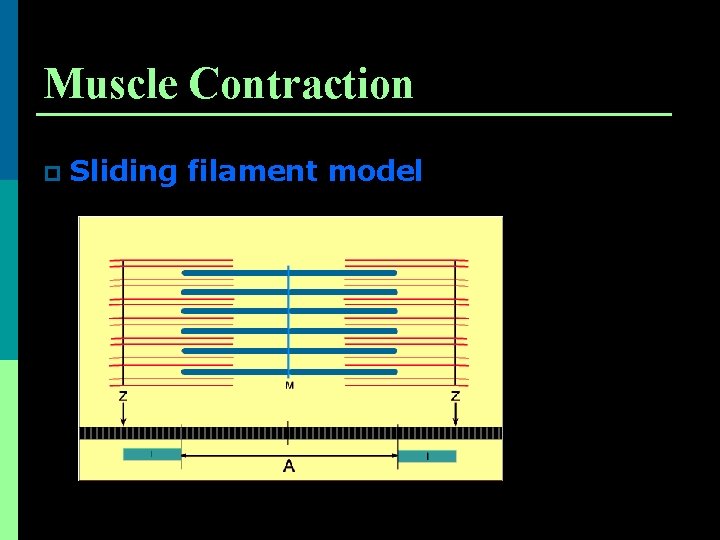
Muscle Contraction p Sliding filament model
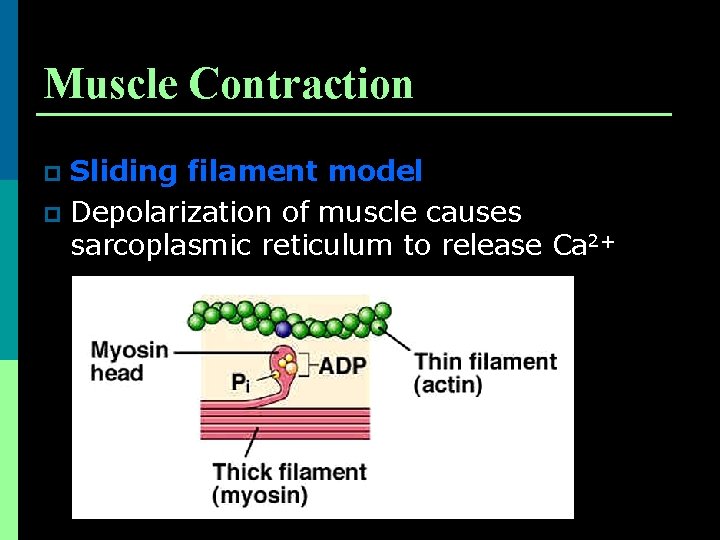
Muscle Contraction Sliding filament model p Depolarization of muscle causes sarcoplasmic reticulum to release Ca 2+ p
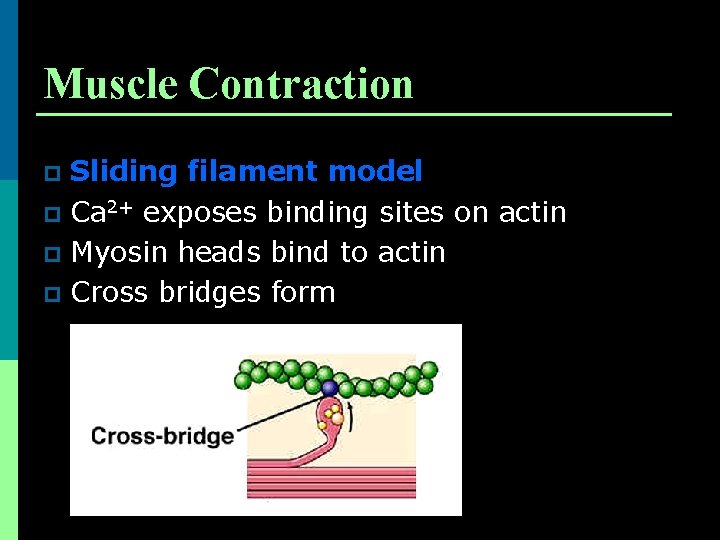
Muscle Contraction Sliding filament model p Ca 2+ exposes binding sites on actin p Myosin heads bind to actin p Cross bridges form p
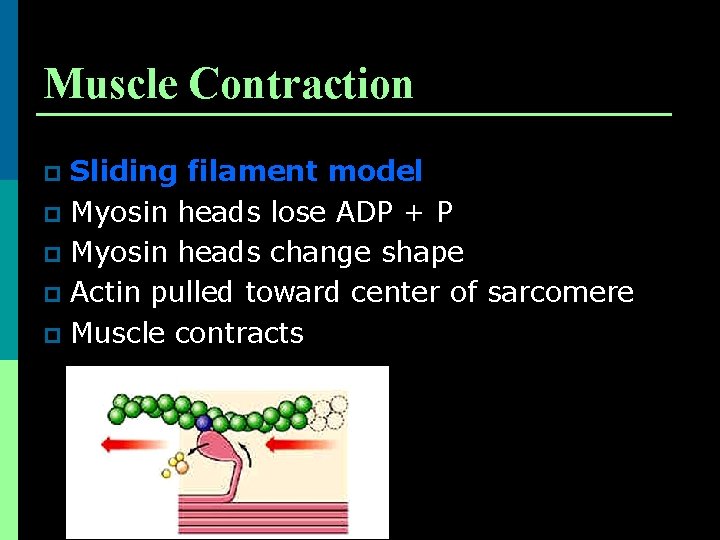
Muscle Contraction Sliding filament model p Myosin heads lose ADP + P p Myosin heads change shape p Actin pulled toward center of sarcomere p Muscle contracts p
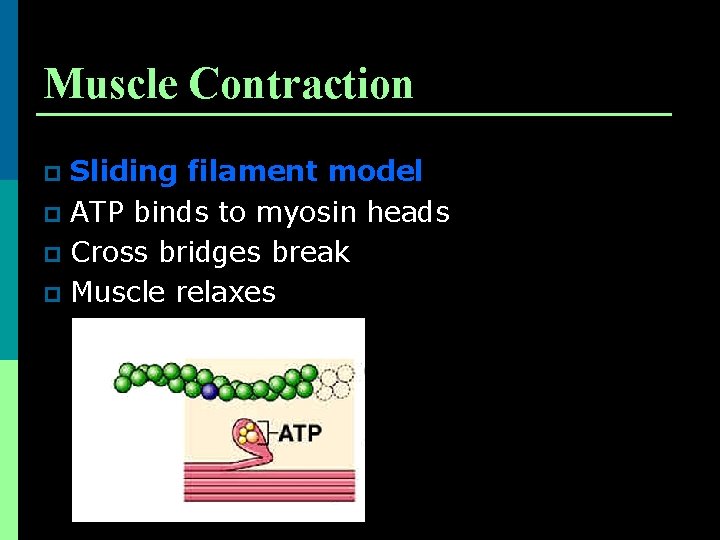
Muscle Contraction Sliding filament model p ATP binds to myosin heads p Cross bridges break p Muscle relaxes p
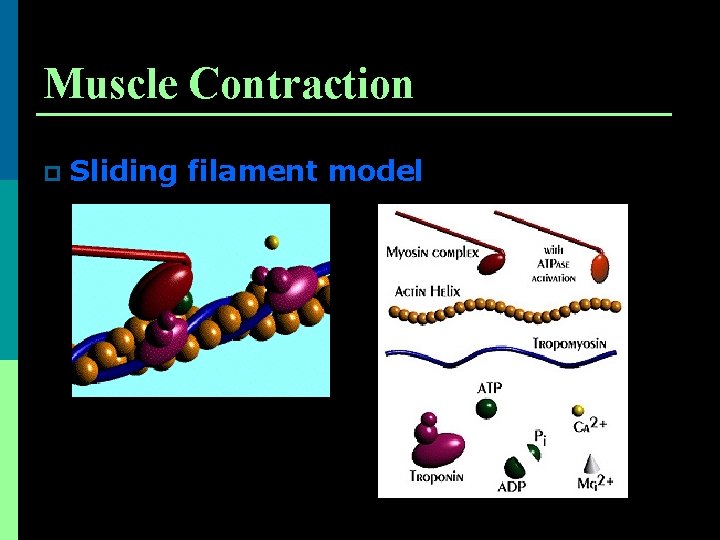
Muscle Contraction p Sliding filament model
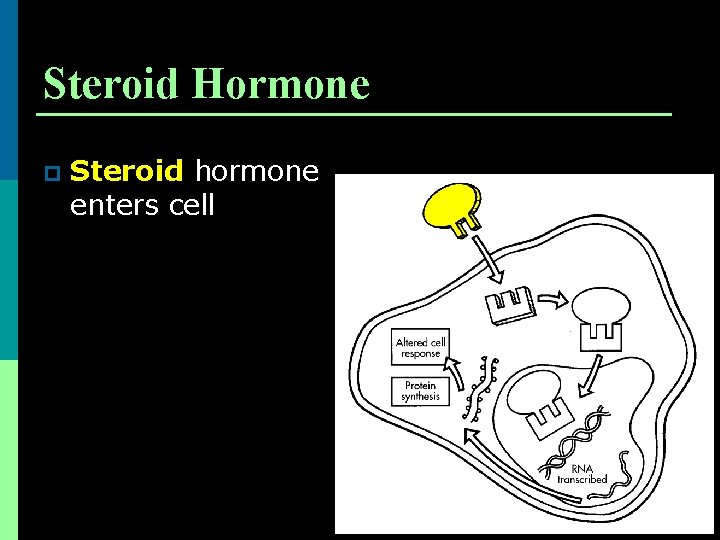
Steroid Hormone p Steroid hormone enters cell
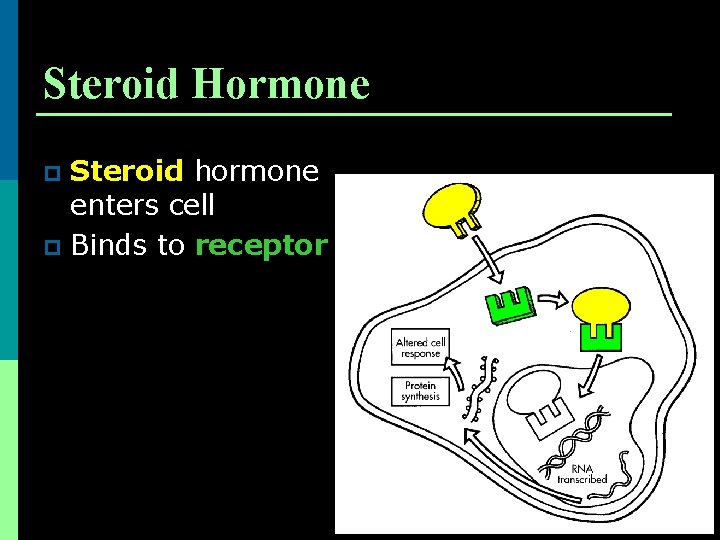
Steroid Hormone Steroid hormone enters cell p Binds to receptor p
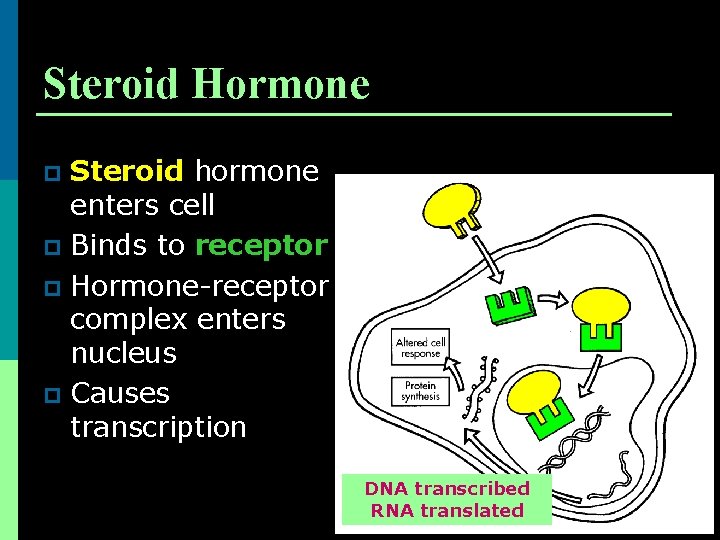
Steroid Hormone Steroid hormone enters cell p Binds to receptor p Hormone-receptor complex enters nucleus p Causes transcription p DNA transcribed RNA translated
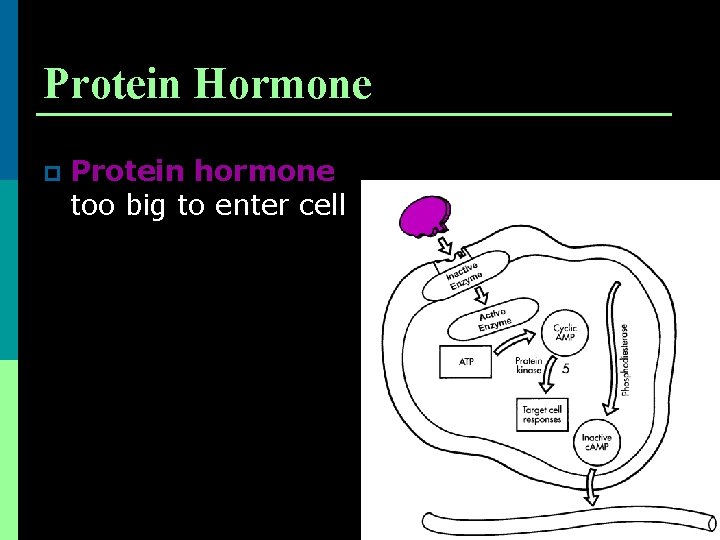
Protein Hormone p Protein hormone too big to enter cell
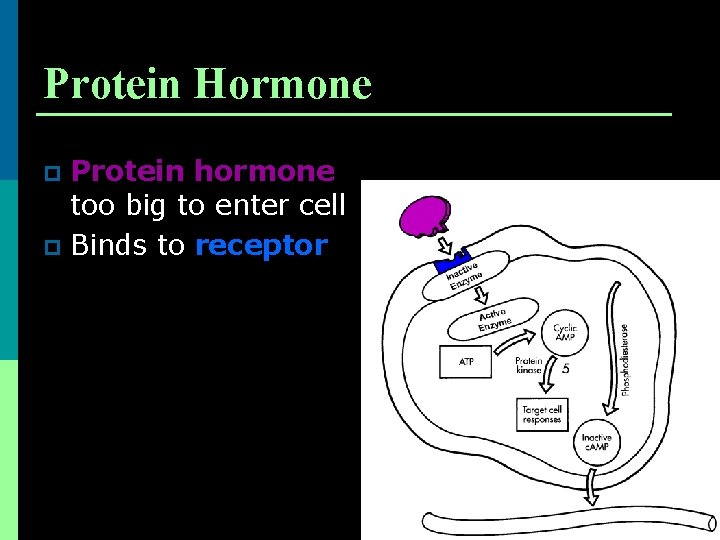
Protein Hormone Protein hormone too big to enter cell p Binds to receptor p
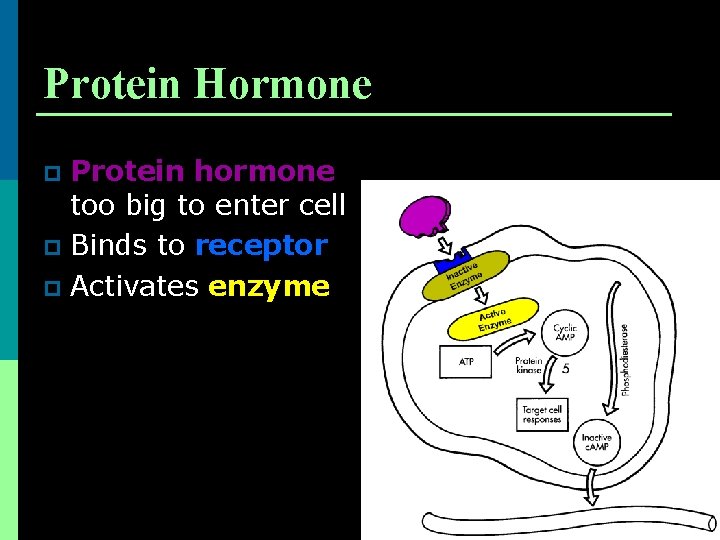
Protein Hormone Protein hormone too big to enter cell p Binds to receptor p Activates enzyme p
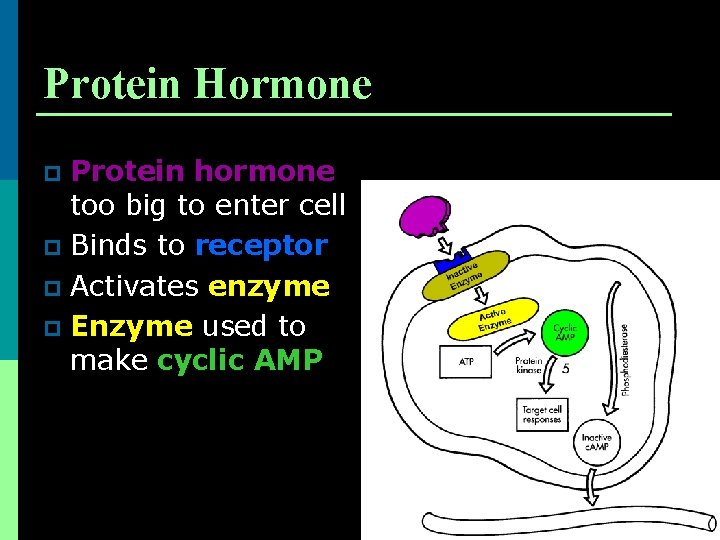
Protein Hormone Protein hormone too big to enter cell p Binds to receptor p Activates enzyme p Enzyme used to make cyclic AMP p
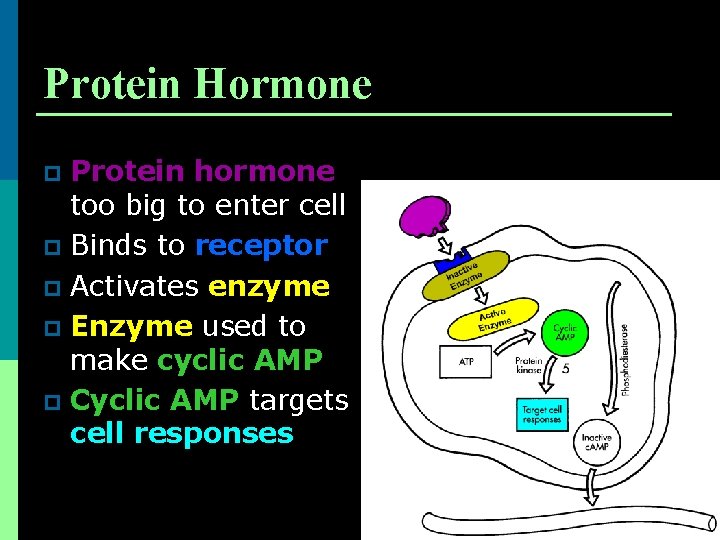
Protein Hormone Protein hormone too big to enter cell p Binds to receptor p Activates enzyme p Enzyme used to make cyclic AMP p Cyclic AMP targets cell responses p
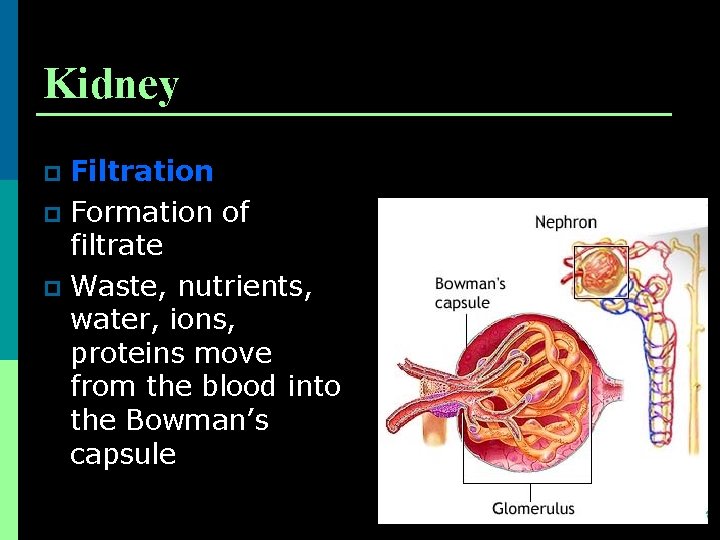
Kidney Filtration p Formation of filtrate p Waste, nutrients, water, ions, proteins move from the blood into the Bowman’s capsule p
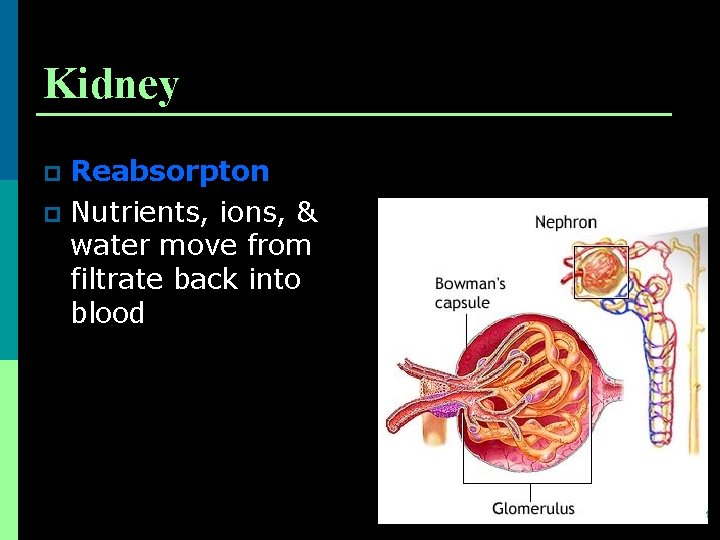
Kidney Reabsorpton p Nutrients, ions, & water move from filtrate back into blood p
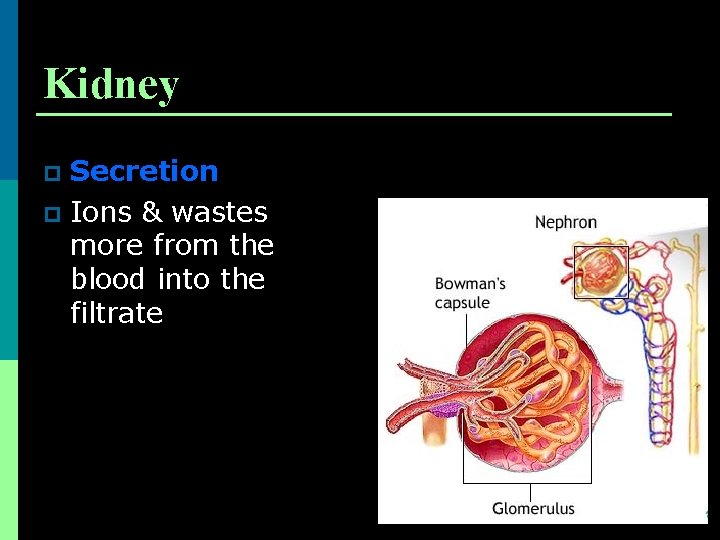
Kidney Secretion p Ions & wastes more from the blood into the filtrate p
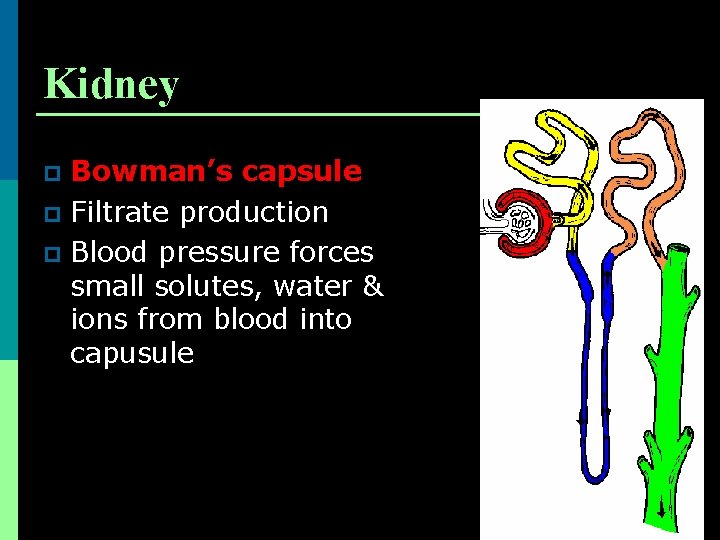
Kidney Bowman’s capsule p Filtrate production p Blood pressure forces small solutes, water & ions from blood into capusule p
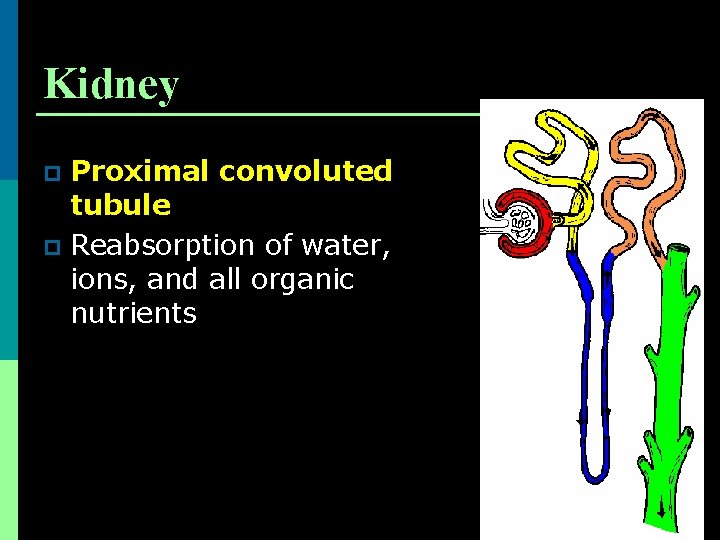
Kidney Proximal convoluted tubule p Reabsorption of water, ions, and all organic nutrients p
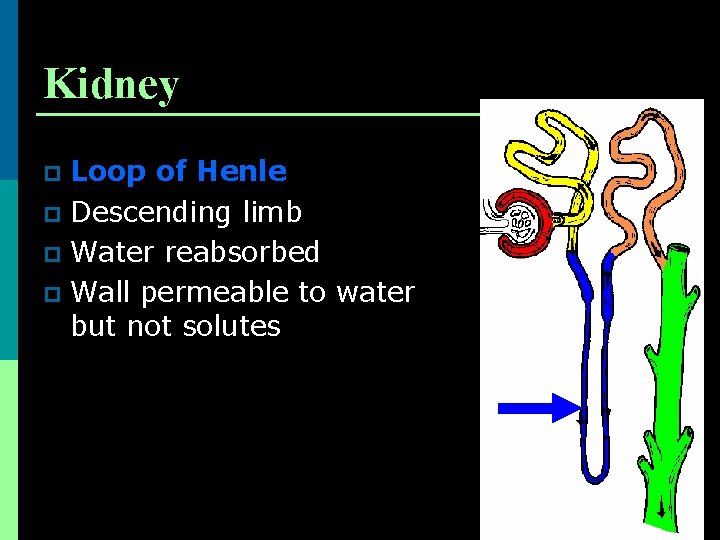
Kidney Loop of Henle p Descending limb p Water reabsorbed p Wall permeable to water but not solutes p
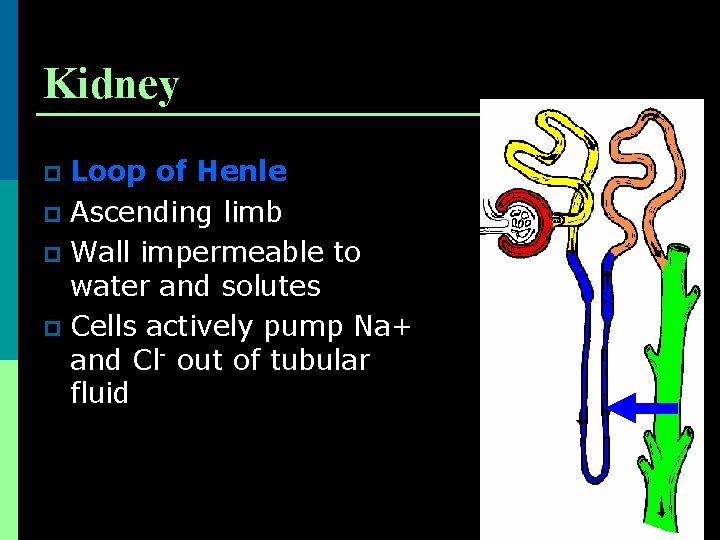
Kidney Loop of Henle p Ascending limb p Wall impermeable to water and solutes p Cells actively pump Na+ and Cl- out of tubular fluid p
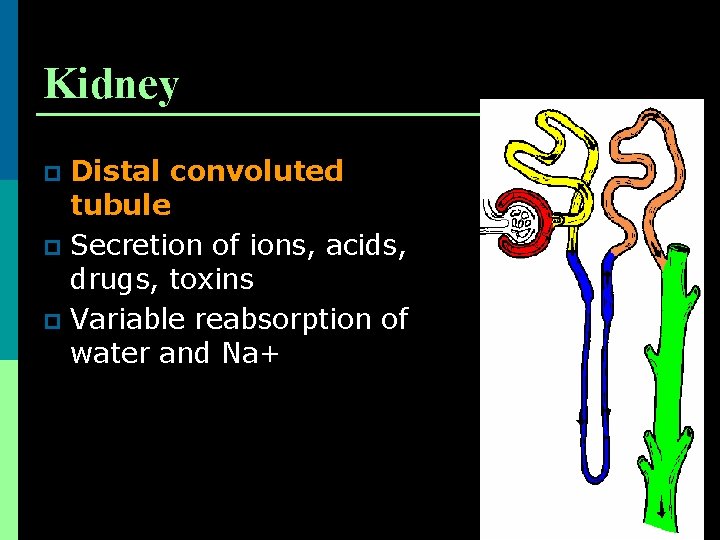
Kidney Distal convoluted tubule p Secretion of ions, acids, drugs, toxins p Variable reabsorption of water and Na+ p
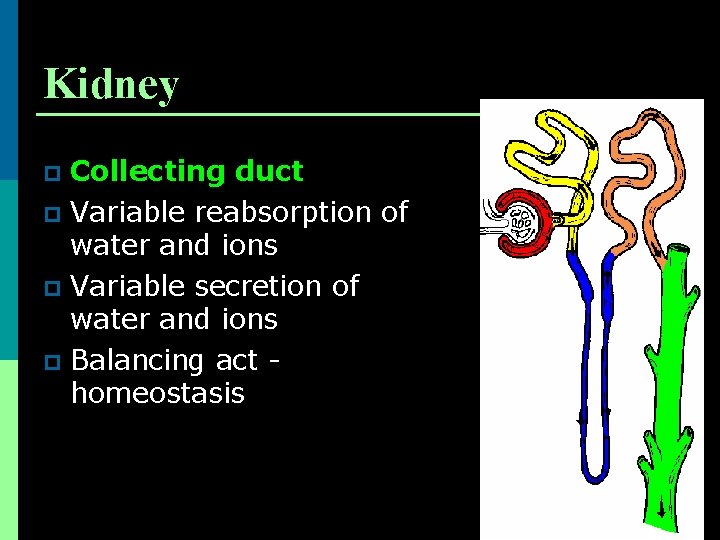
Kidney Collecting duct p Variable reabsorption of water and ions p Variable secretion of water and ions p Balancing act homeostasis p
- Slides: 39