
ANIMAL FORM AND FUNCTION Circulation and Gas Exchange
- Slides: 29
ANIMAL FORM AND FUNCTION Circulation and Gas Exchange Refer to pg 237 -243 in Holtzclaw, Ch 42 in Campbell and media resources
LEARNING GOAL: HOW DO ANIMALS EXCHANGE GASES AND TRANSPORT THEM INTERNALLY? WHAT ARE VARIOUS STRUCTURE/FUNCTION EXAMPLES ACROSS THE ANIMAL KINGDOM?
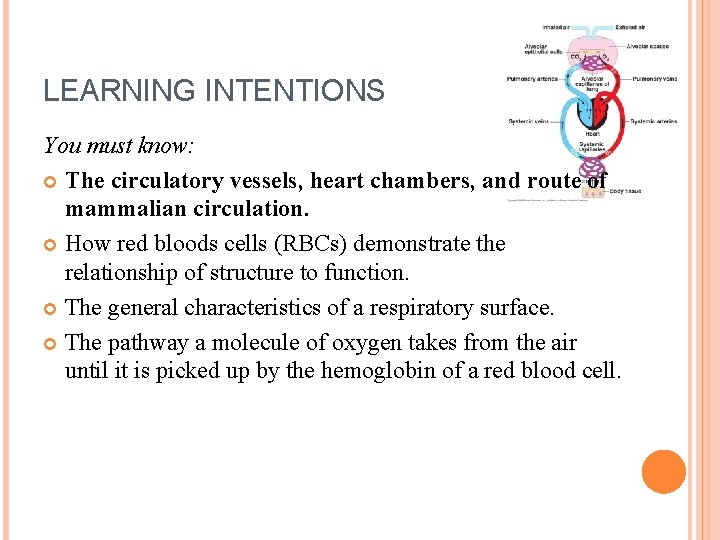
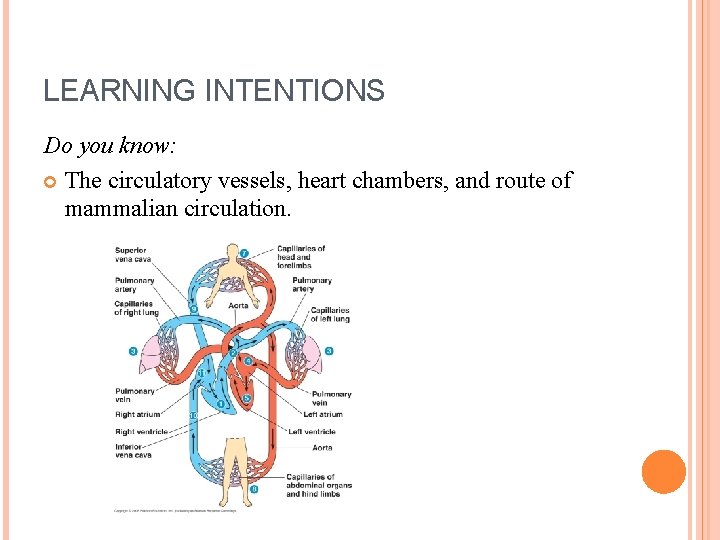
LEARNING INTENTIONS You must know: The circulatory vessels, heart chambers, and route of mammalian circulation. How red bloods cells (RBCs) demonstrate the relationship of structure to function. The general characteristics of a respiratory surface. The pathway a molecule of oxygen takes from the air until it is picked up by the hemoglobin of a red blood cell.
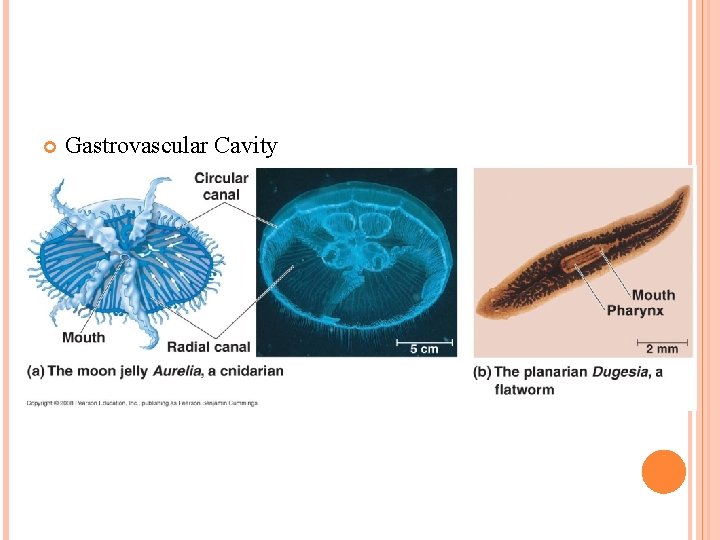
TODAY: THE CIRCULATORY VESSELS, HEART CHAMBERS, AND ROUTE OF MAMMALIAN CIRCULATION. You must exchange gas, wastes, and nutrients at the cellular level by diffusion! Two solutions: 1) 2) Keep all cells in contact with environment Gastrovascular Cavity Move fluid around to tissues/cells for exchange Circulatory System
Gastrovascular Cavity
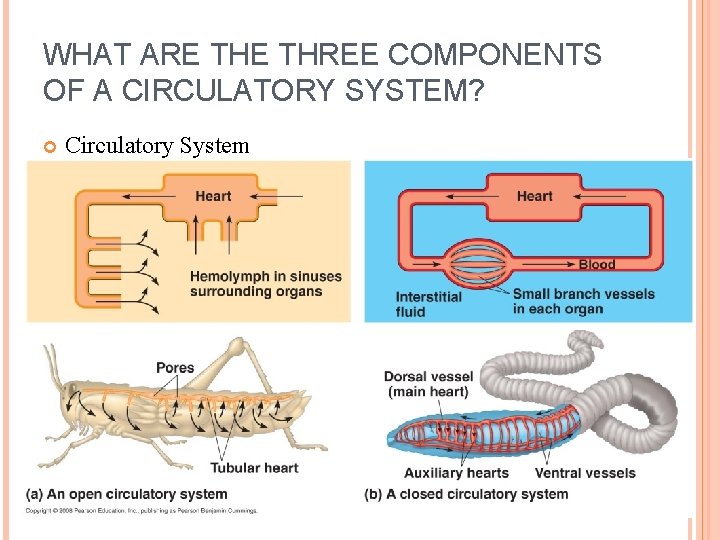
WHAT ARE THREE COMPONENTS OF A CIRCULATORY SYSTEM? Circulatory System
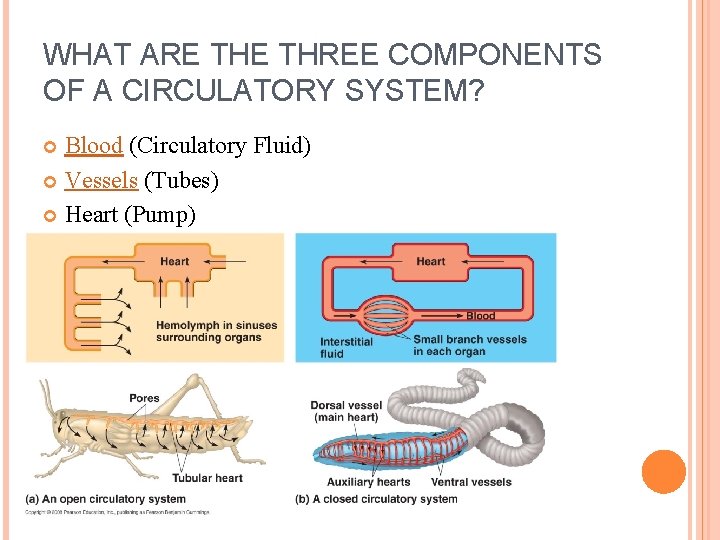
WHAT ARE THREE COMPONENTS OF A CIRCULATORY SYSTEM? Blood (Circulatory Fluid) Vessels (Tubes) Heart (Pump)
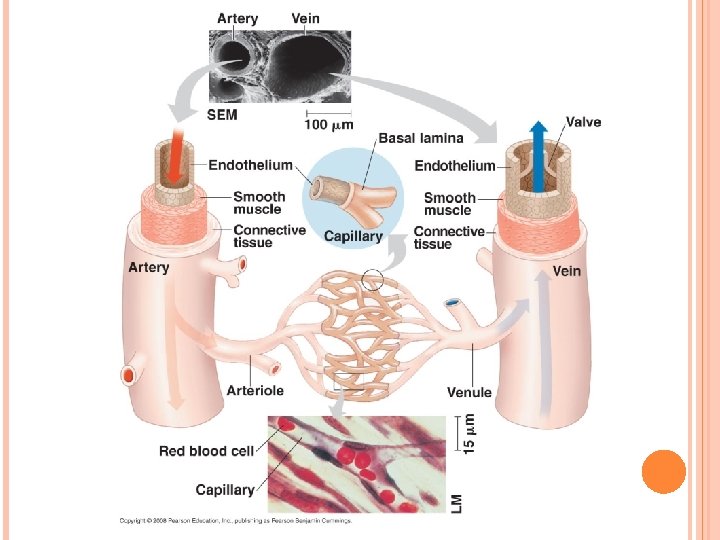
IN CLOSED CIRCULATION YOU HAVE: Arteries – carry blood away from heart Thick, lots of smooth muscle Arterioles are smaller Capillaries – Gas/Nutrient/Waste Exchange Microscopic Walls are one-cell layer thick (significance? ) Veins – carry blood back to the heart Have valves to prevent backflow Venules are smaller The heart has atria and ventricles
TRY THIS! TRUE OR FALSE? Capillary beds: A. Are the site of nutrient and oxygen delivery to tissues B. Have a total cross-sectional area much smaller than the total cross-sectional area of major arteries C. Join arterioles and venules
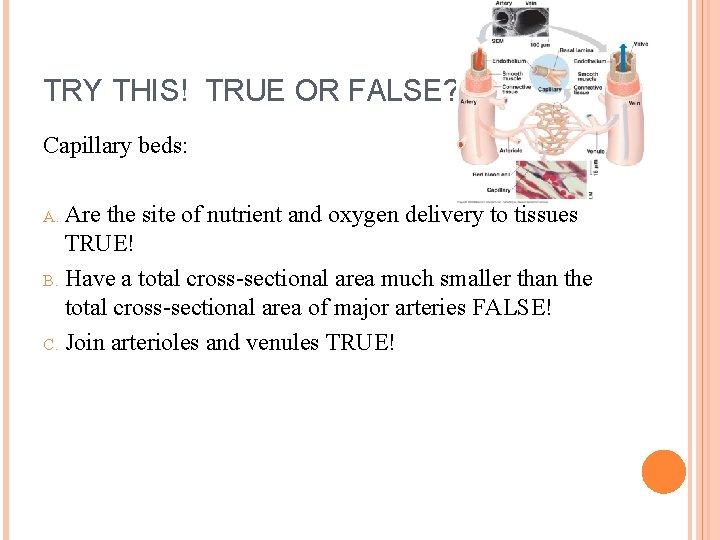
TRY THIS! TRUE OR FALSE? Capillary beds: A. Are the site of nutrient and oxygen delivery to tissues TRUE! B. Have a total cross-sectional area much smaller than the total cross-sectional area of major arteries FALSE! C. Join arterioles and venules TRUE!
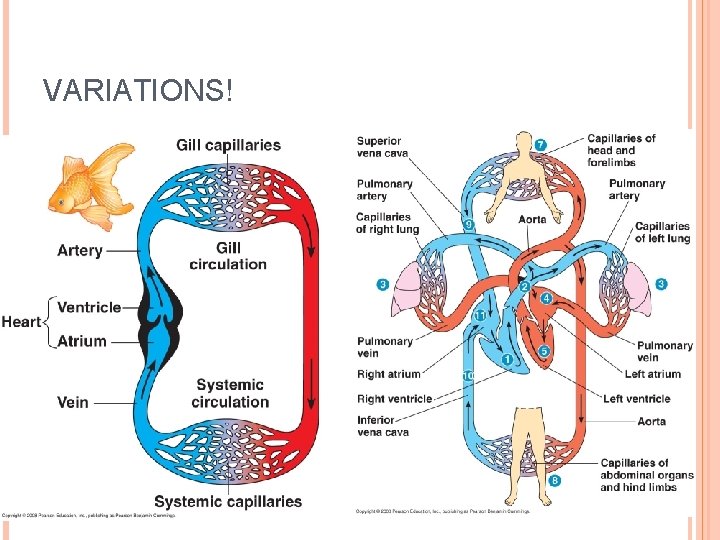
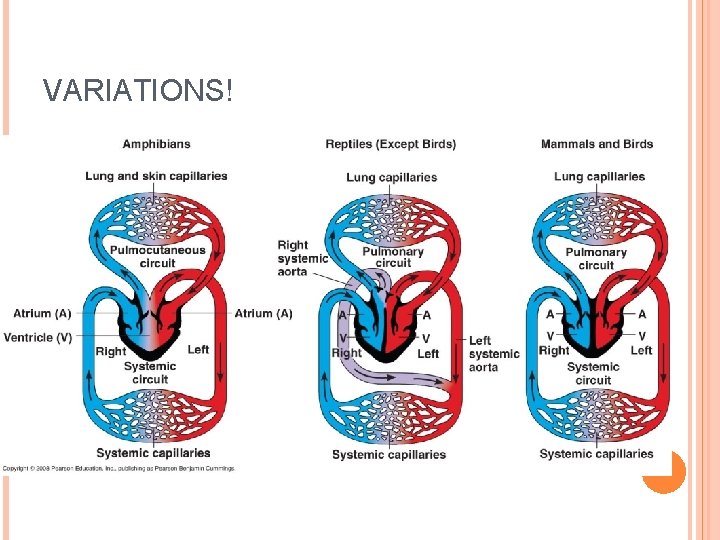
VARIATIONS!
VARIATIONS!
TRY THIS! TRUE OR FALSE? The three-chambered hearts of amphibians and nonbird reptiles: a. Allow substantial separation of pulmonary and systemic circulation b. Are facultative, allowing variation in blood flow through the heart c. Are inferior to the four-chambered hearts of birds and mammals, limiting the evolutionary success of amphibians and nonbird reptiles
TRY THIS! TRUE OR FALSE? The three-chambered hearts of amphibians and nonbird reptiles: a. Allow substantial separation of pulmonary and systemic circulation TRUE! b. Are facultative, allowing variation in blood flow through the heart TRUE! c. Are inferior to the four-chambered hearts of birds and mammals, limiting the evolutionary success of amphibians and nonbird reptiles FLASE!
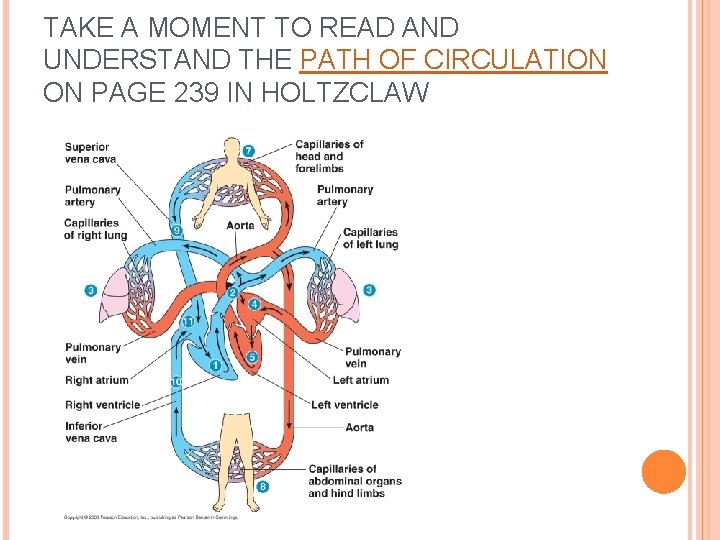
TAKE A MOMENT TO READ AND UNDERSTAND THE PATH OF CIRCULATION ON PAGE 239 IN HOLTZCLAW
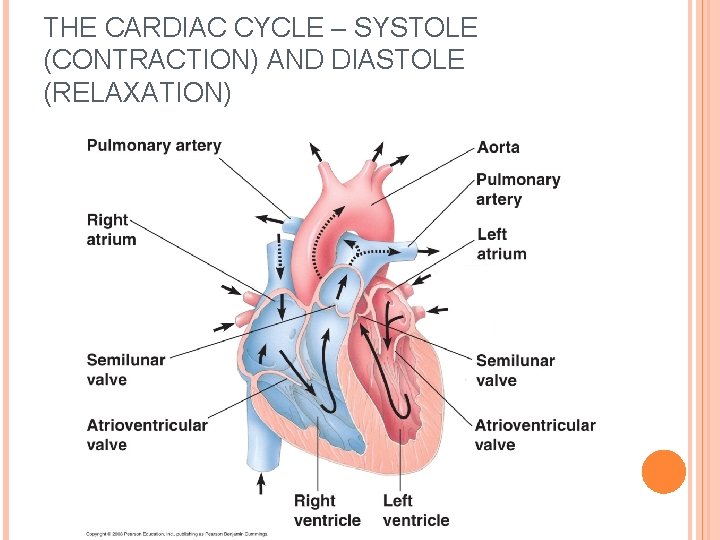
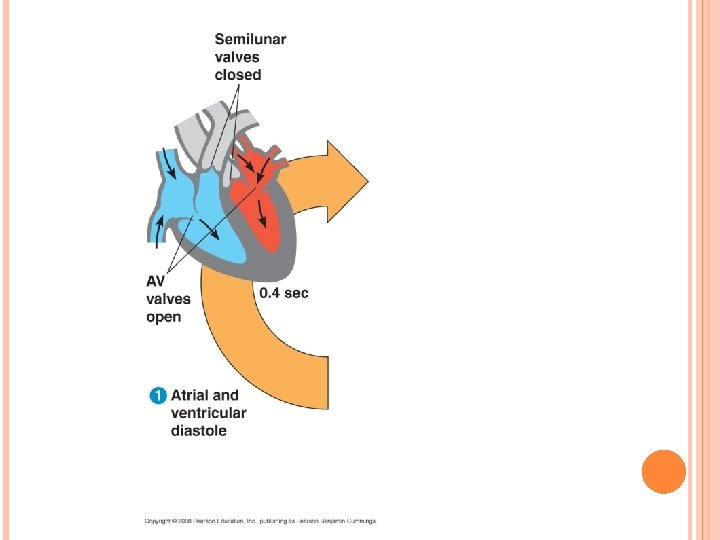
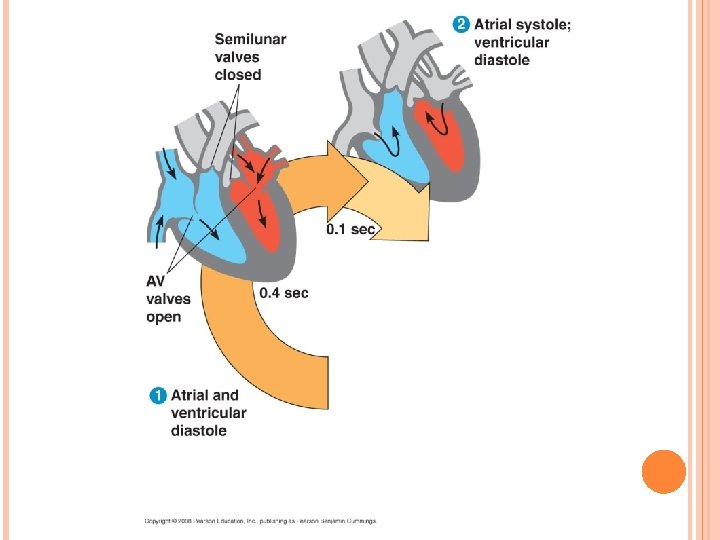
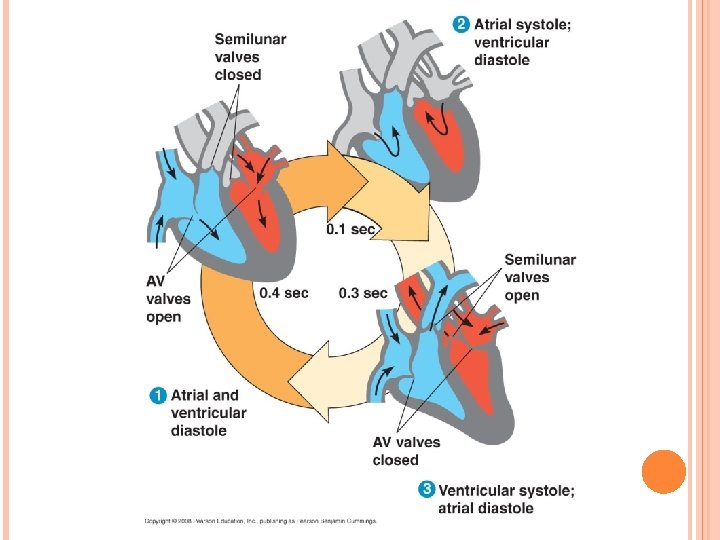
THE CARDIAC CYCLE – SYSTOLE (CONTRACTION) AND DIASTOLE (RELAXATION)
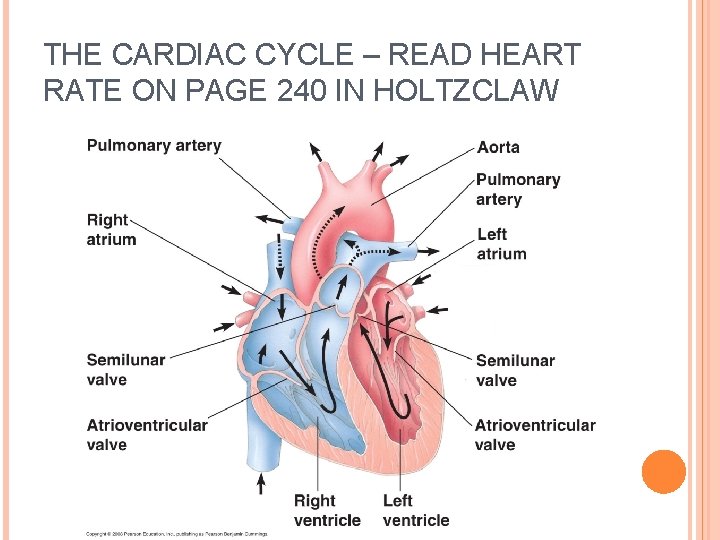
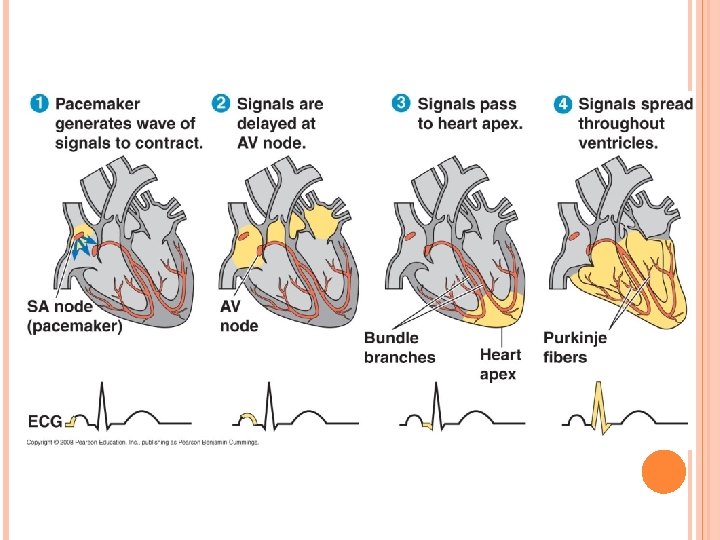
THE CARDIAC CYCLE – READ HEART RATE ON PAGE 240 IN HOLTZCLAW
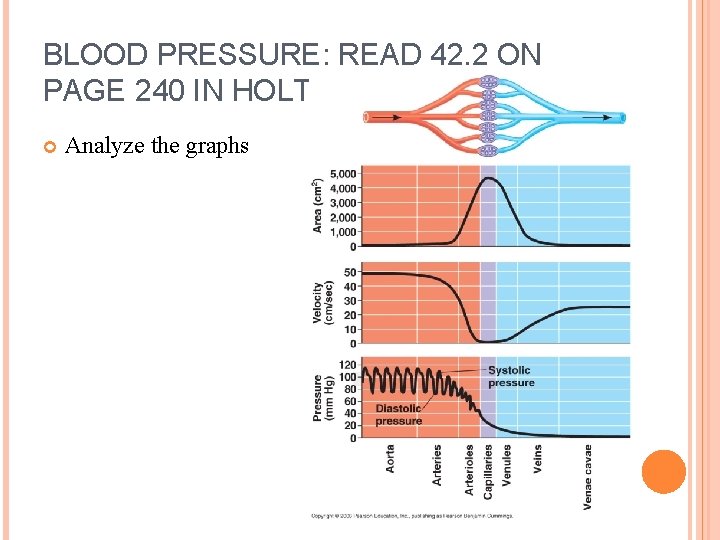
BLOOD PRESSURE: READ 42. 2 ON PAGE 240 IN HOLTZCLAW Analyze the graphs
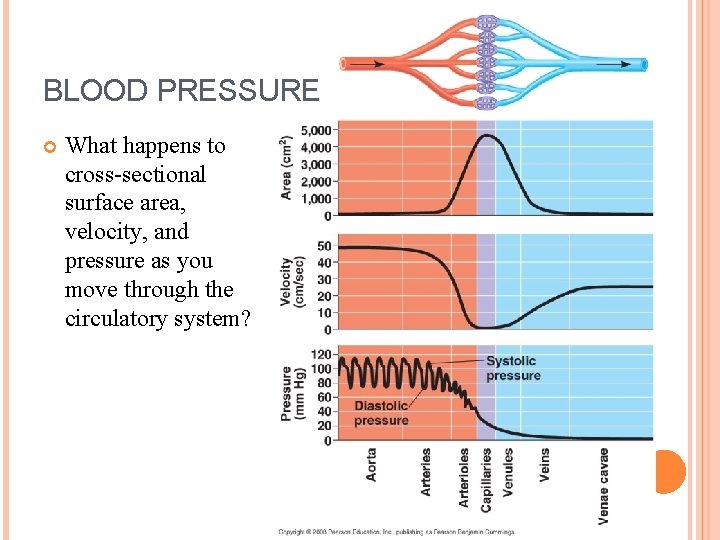
BLOOD PRESSURE What happens to cross-sectional surface area, velocity, and pressure as you move through the circulatory system?
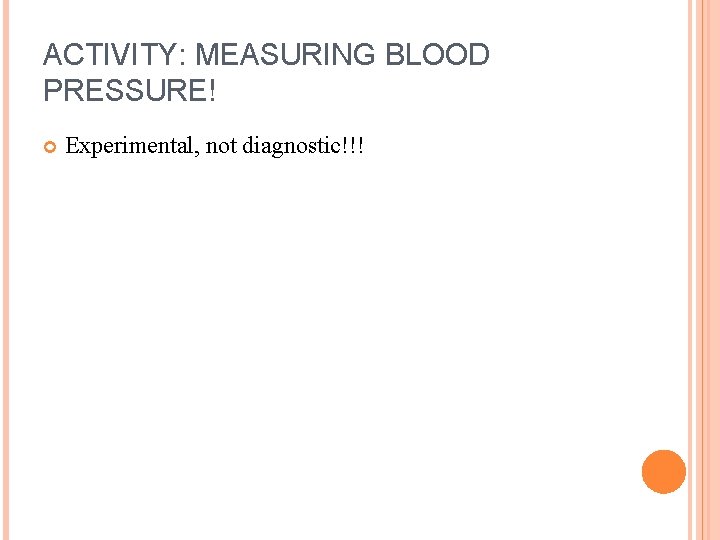
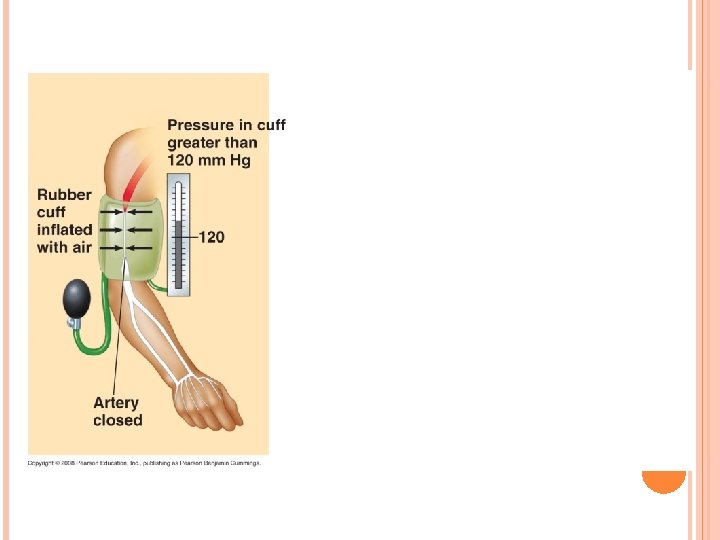
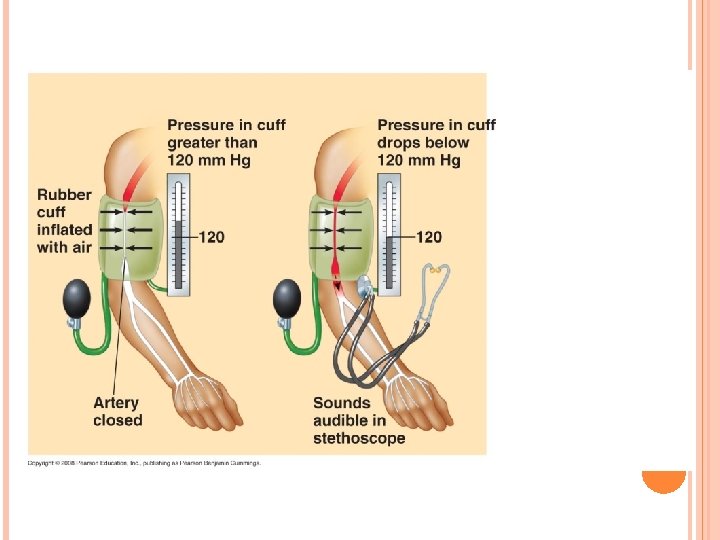
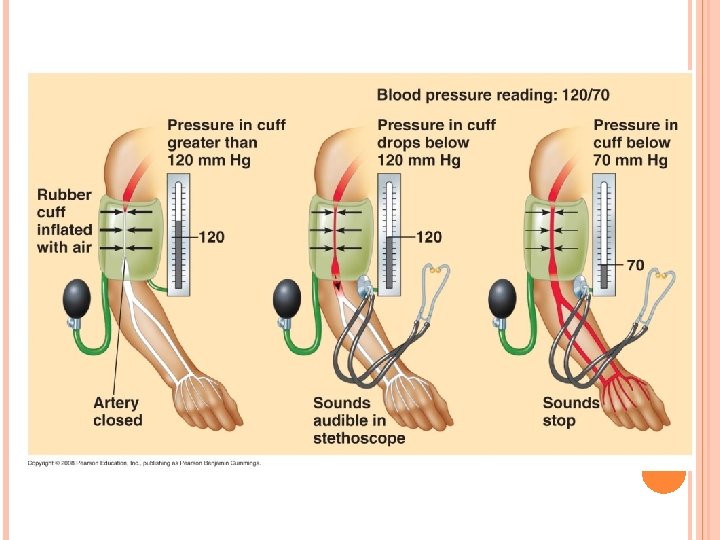
ACTIVITY: MEASURING BLOOD PRESSURE! Experimental, not diagnostic!!!
LEARNING INTENTIONS Do you know: The circulatory vessels, heart chambers, and route of mammalian circulation.