
Animal Form and Function Ch 40 AP Biology
Animal Form and Function Ch 40 AP Biology
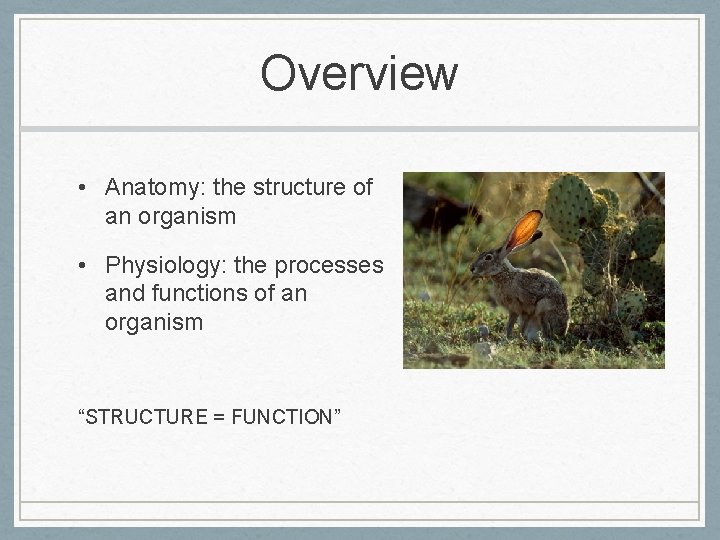
Overview • Anatomy: the structure of an organism • Physiology: the processes and functions of an organism “STRUCTURE = FUNCTION”
40. 1 Animal Form and Function are correlated at all levels of organization “What they look like” “What they do”
Physical Constraints • Physical laws constrain evolution • Ex: Fusiform marine body shapes • Ex: Maximum body size (weight of bones, muscles, etc)
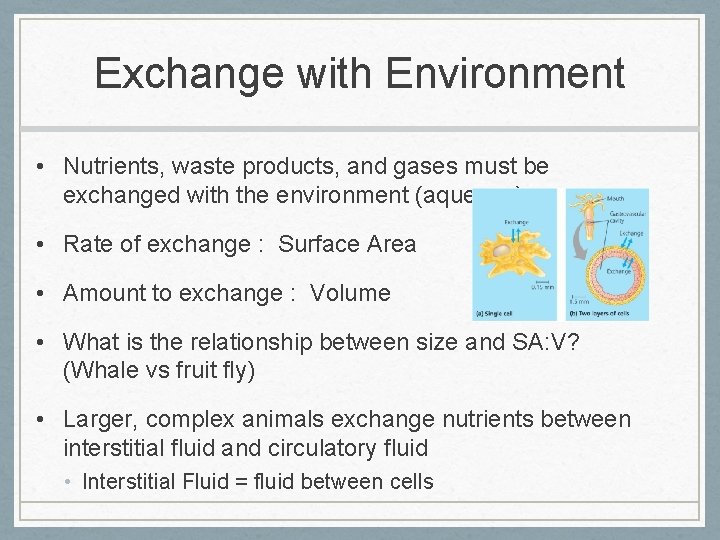
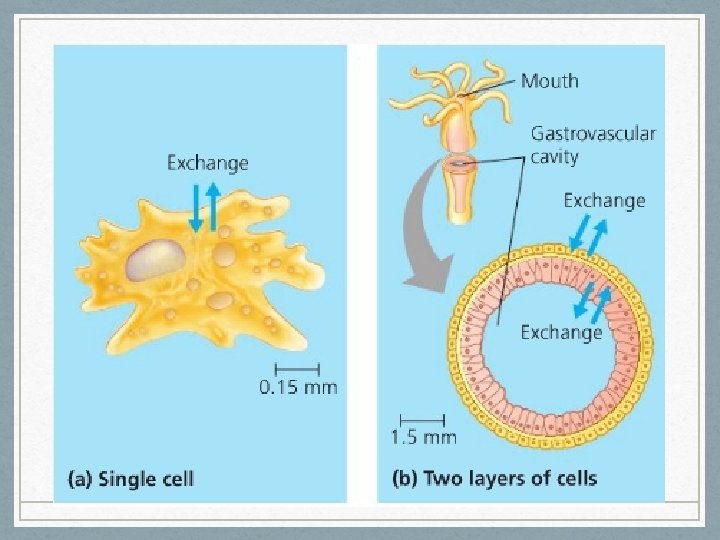
Exchange with Environment • Nutrients, waste products, and gases must be exchanged with the environment (aqueous) • Rate of exchange : Surface Area • Amount to exchange : Volume • What is the relationship between size and SA: V? (Whale vs fruit fly) • Larger, complex animals exchange nutrients between interstitial fluid and circulatory fluid • Interstitial Fluid = fluid between cells
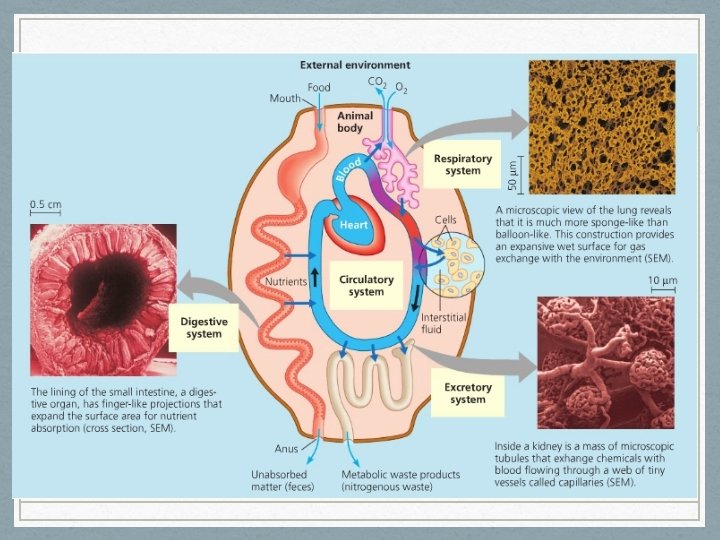
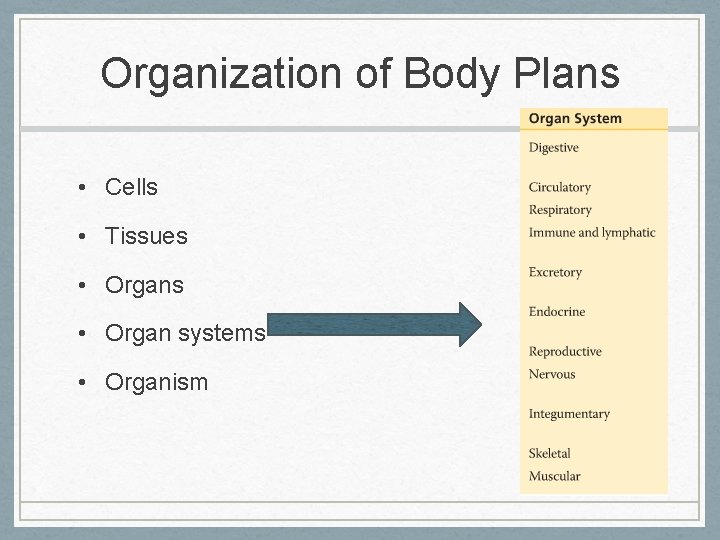
Organization of Body Plans • Cells • Tissues • Organ systems • Organism
Tissues • Epithelial • Connective • Muscle • Nervous *Study Figure 40. 5
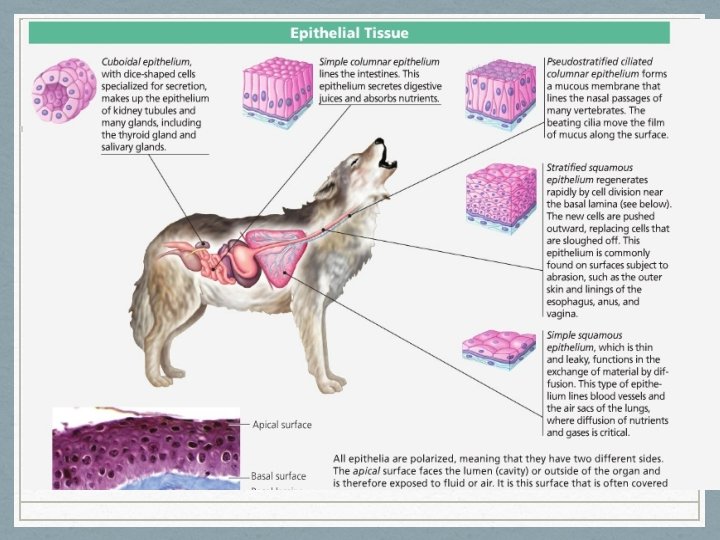
Epithelial Tissue • Function: • • Organ and body cavity lining Outer covering Protection against: pathogens, damage, fluid loss Environmental interface • Shapes of cells changes with their function Form follows function
Connective Tissue • Function: bind and support other tissues in the body • Cells are suspended in extracellular matix (fibers in various forms of liquid or jelly-like solids). • 6 Types: • • • Loose connective tissue Cartilage Fibrous connective Blood Adipose Bone
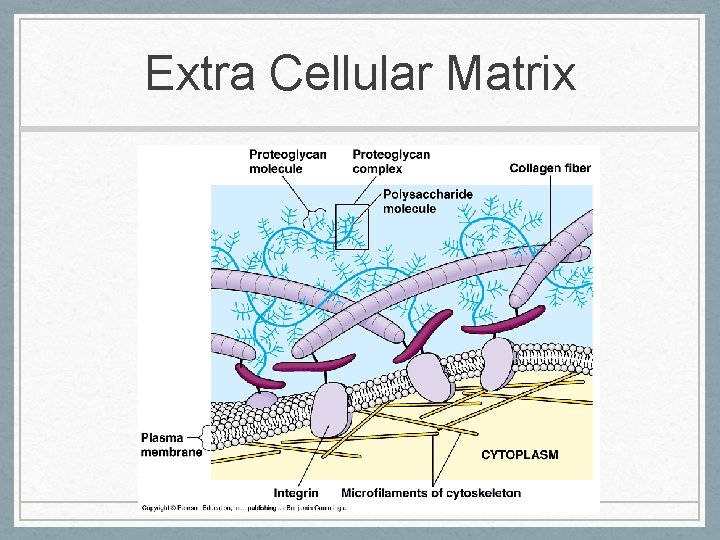
Extra Cellular Matrix
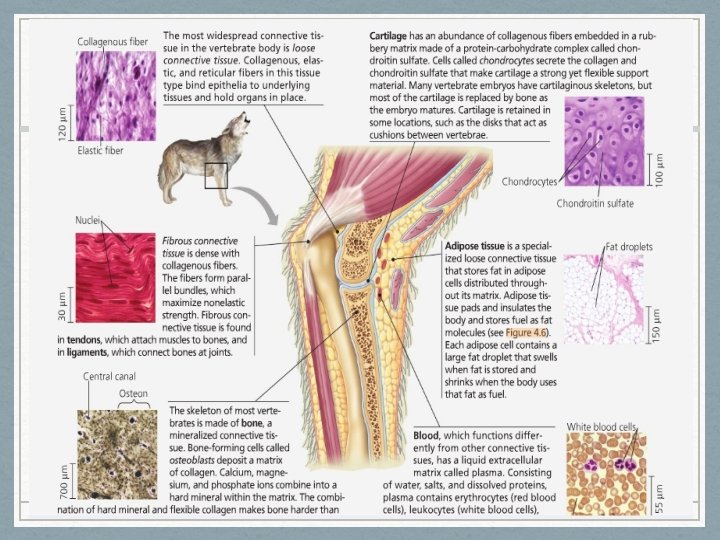
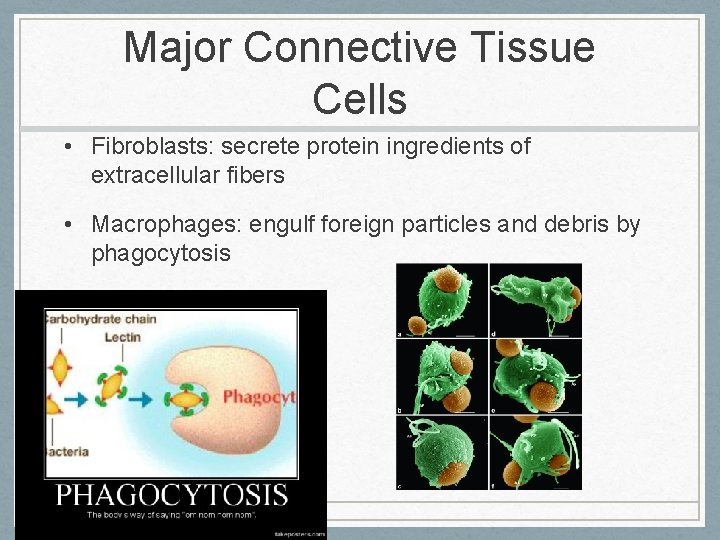
Major Connective Tissue Cells • Fibroblasts: secrete protein ingredients of extracellular fibers • Macrophages: engulf foreign particles and debris by phagocytosis
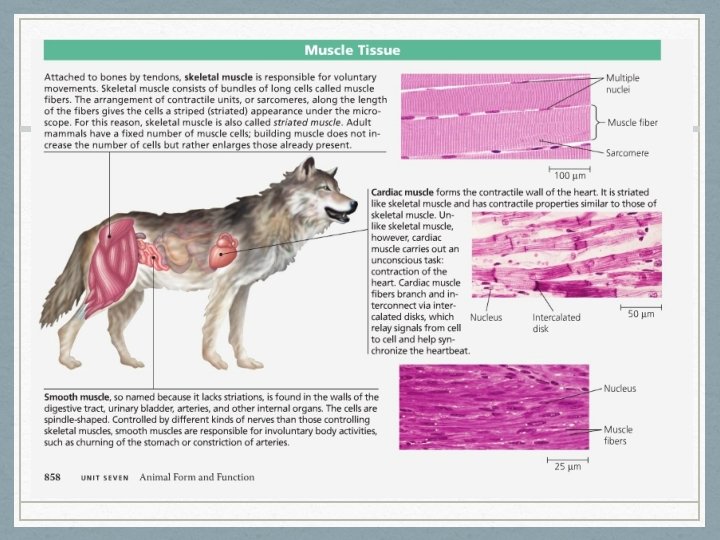
Muscle Tissue • Function: body movement • Most abundant tissue in animals • Muscle cells contain actin and myosin filaments • Consumes A LOT of energy • Which organelle would you expect to find in abundance? • 3 types: skeletal, cardiac, smooth
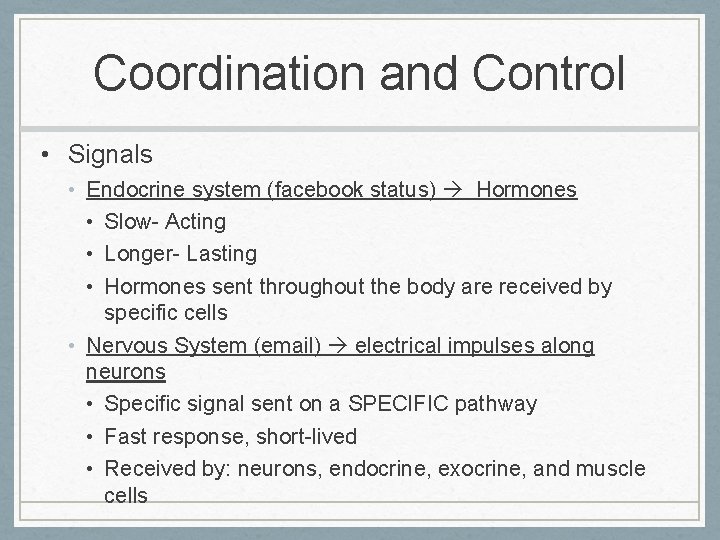
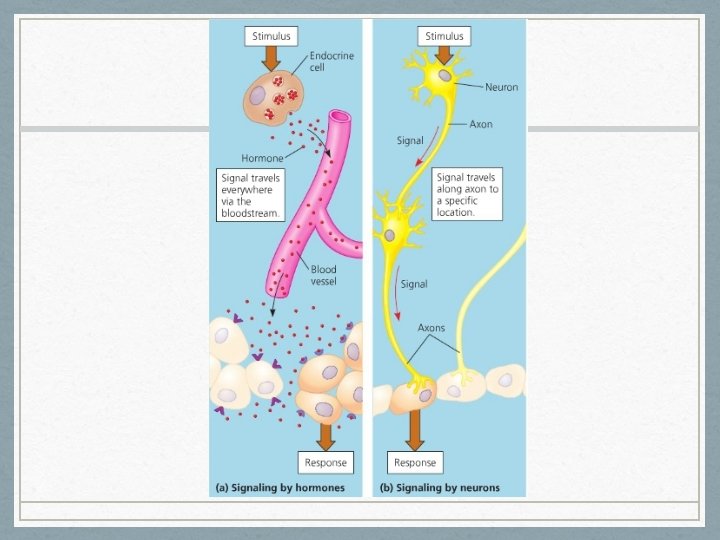
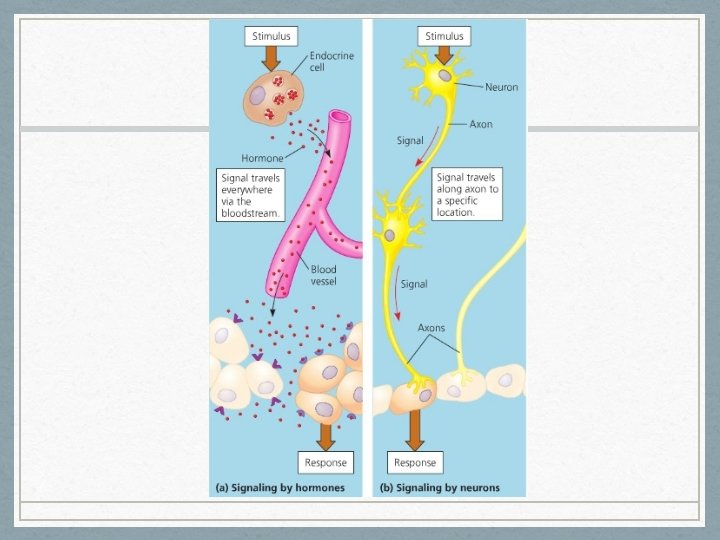
Coordination and Control • Signals • Endocrine system (facebook status) Hormones • Slow- Acting • Longer- Lasting • Hormones sent throughout the body are received by specific cells • Nervous System (email) electrical impulses along neurons • Specific signal sent on a SPECIFIC pathway • Fast response, short-lived • Received by: neurons, endocrine, exocrine, and muscle cells
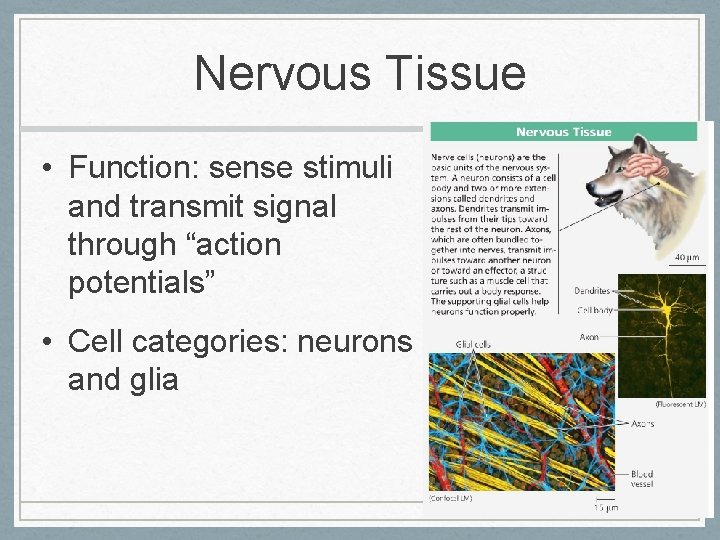
Nervous Tissue • Function: sense stimuli and transmit signal through “action potentials” • Cell categories: neurons and glia
40. 2 Feedback control loops maintain the internal environment in many animals
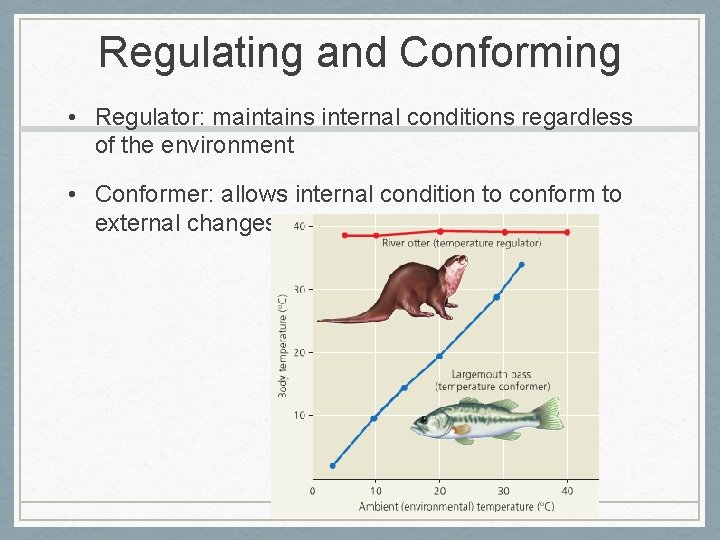
Regulating and Conforming • Regulator: maintains internal conditions regardless of the environment • Conformer: allows internal condition to conform to external changes
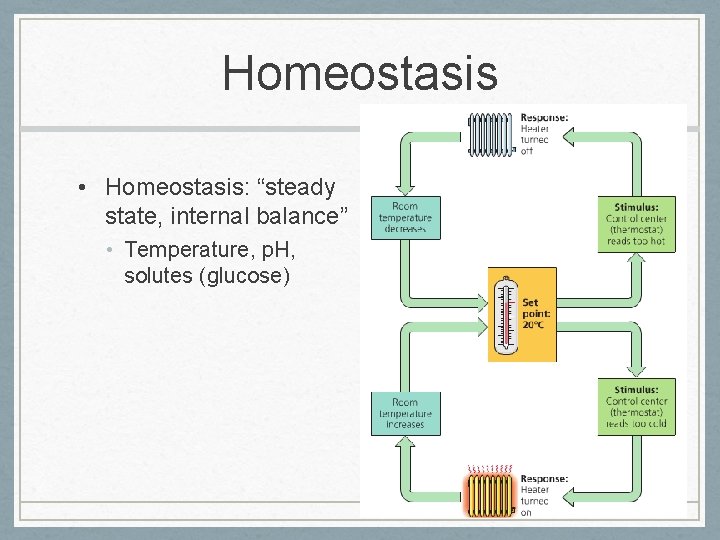
Homeostasis • Homeostasis: “steady state, internal balance” • Temperature, p. H, solutes (glucose)
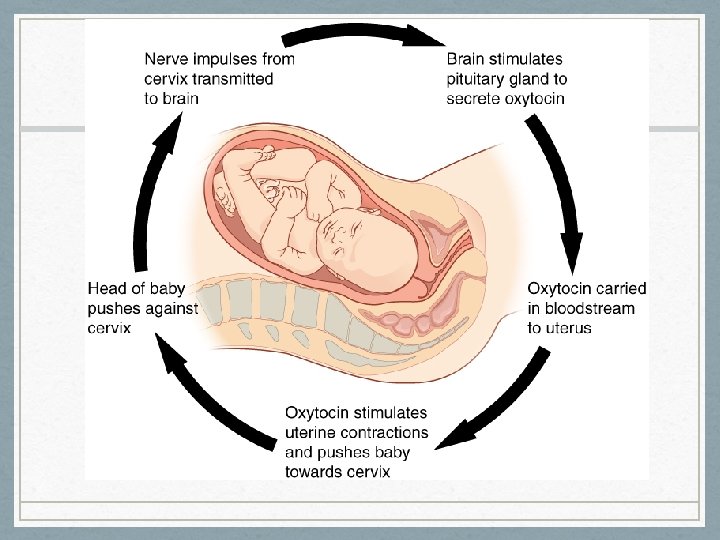
Feedback Loops • Negative Feedback loop: response reduces stimulus • Ex: evaporative cooling • Normal range vs. set point • Normal range can change! Ex: hormones during puberty • Acclimatization: process by which an animal adjusts to its external environment. • Ex: training in Colorado • Positive Feedback loop: amplifies stimulus • Ex: childbirth
40. 3 Homeostatic processes for thermoregulation involve form, function, and behavior
Thermoregulation • Thermoregulation: process by which animals maintain an internal temperature within a tolerable range. • Temperature affects: • Membrane fluidity (increase temp, increase fluidity) • Enzyme activity
Endotherm vs. Ectotherm • Endothermic: warmed by metabolism • Ex: Birds and Mammals, some fish, most insects • Require more food • Exothermic: warmed by external sources • Ex: amphibians, lizards, snakes, turtles, fish, etc • Sources: water, sun, rocks, etc • Eat less
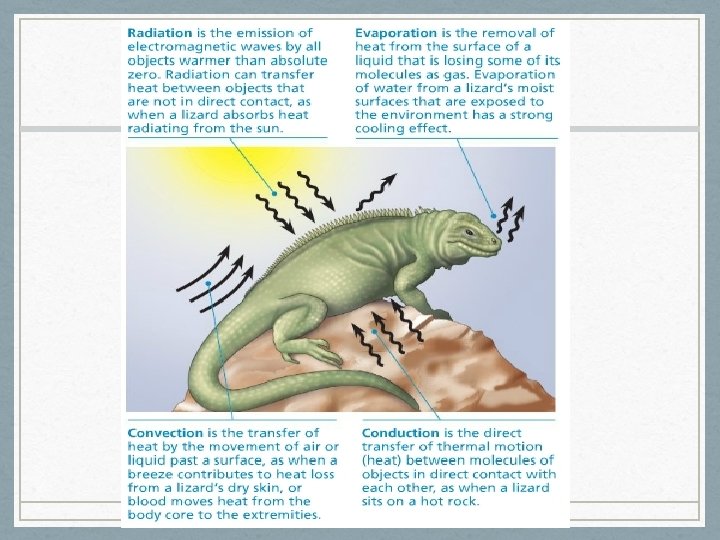
Heat Exchange • Radiation • Evaporation • Conduction • Convection
Adaptations • Insulation: fat, blubber, feathers, skin, etc • Circulation • Vasodilation: increase in diameter of blood vessels increase blood flow, increase heat loss • Vasoconstriction: decrease diameter decrease blood flow, decrease heat loss • Countercurrent exchange: flow of adjacent fluids in opposing directions that maximizes transfer rates of heat or solutes
• Coutercurrent heat flow animation • http: //www. biology. ualberta. ca/facilities/multimedia /uploads/zoology/counter%20 current. html • Also in heat exchange in limbs and filtration of waste in the kidneys
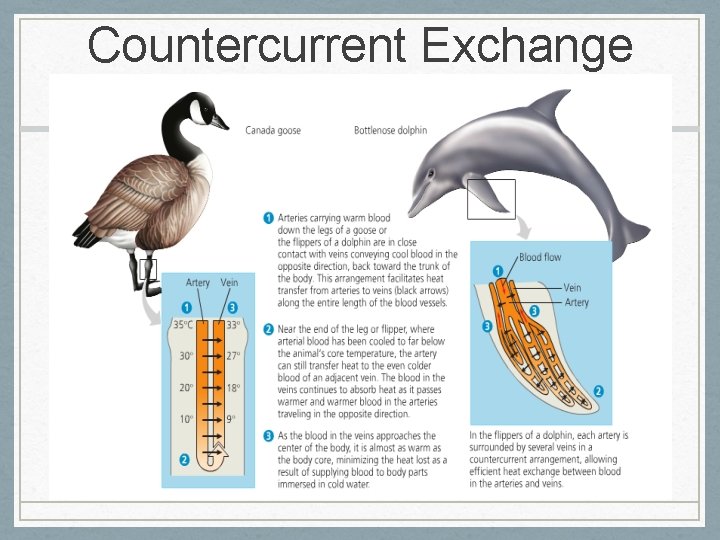
Countercurrent Exchange

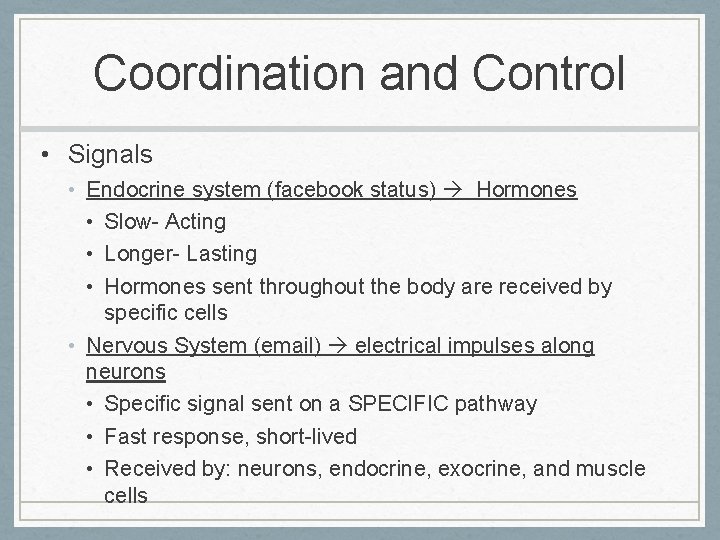
Coordination and Control • Signals • Endocrine system (facebook status) Hormones • Slow- Acting • Longer- Lasting • Hormones sent throughout the body are received by specific cells • Nervous System (email) electrical impulses along neurons • Specific signal sent on a SPECIFIC pathway • Fast response, short-lived • Received by: neurons, endocrine, exocrine, and muscle cells
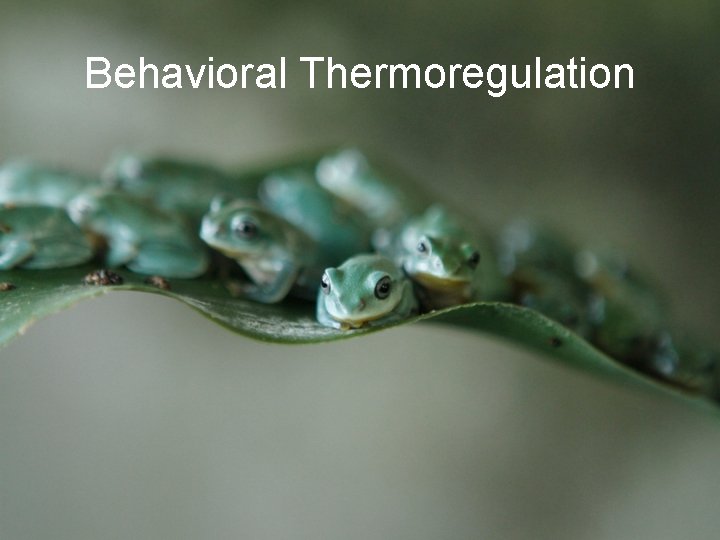
Behavioral Thermoregulation
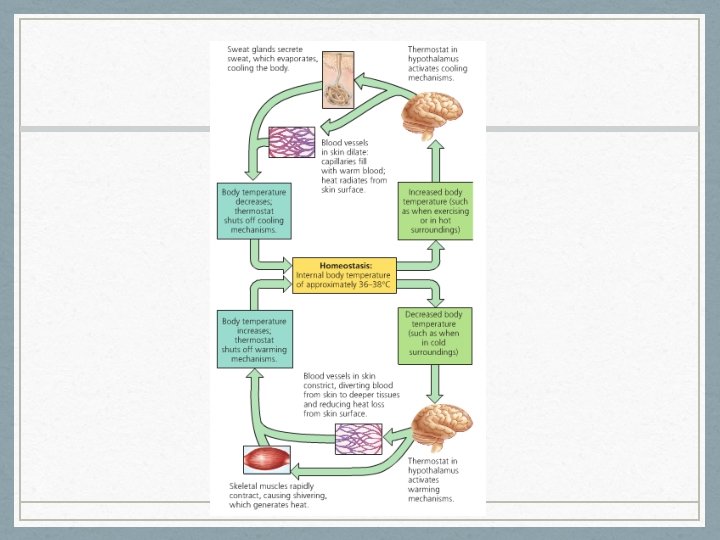
Other Mechanisms • Metabolic Heat Production • Thermogenesis; Ex: Shivering • Nonshivering Thermogenesis: Mitochondria produce heat instead of ATP • Heat Acclimatization: increased RBC production, “cellular antifreeze” Video • Physiological “thermostat” – hypothalamus
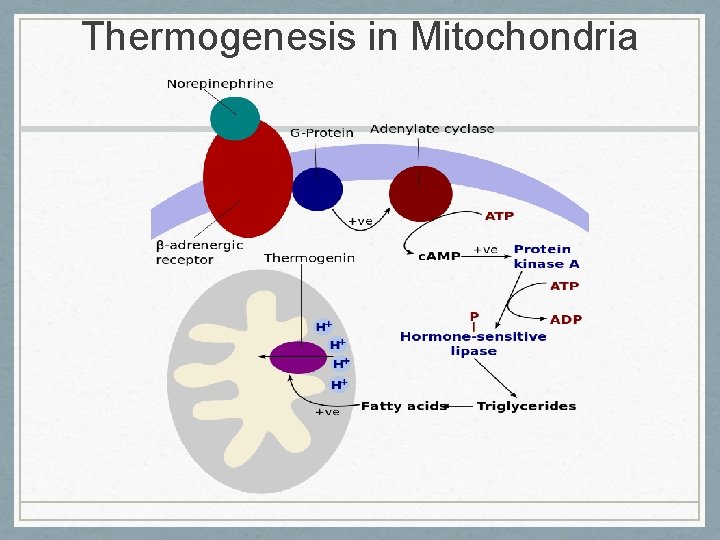
Thermogenesis in Mitochondria
40. 4 Energy Requirements are related to animal size, activity, and environment
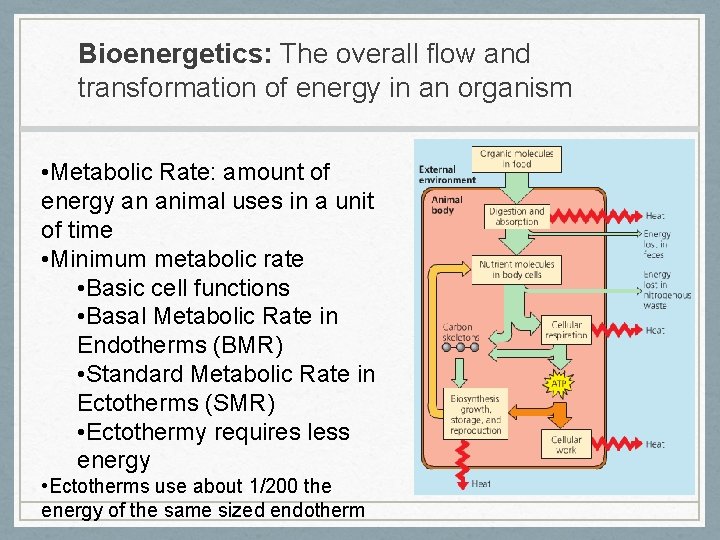
Bioenergetics: The overall flow and transformation of energy in an organism • Metabolic Rate: amount of energy an animal uses in a unit of time • Minimum metabolic rate • Basic cell functions • Basal Metabolic Rate in Endotherms (BMR) • Standard Metabolic Rate in Ectotherms (SMR) • Ectothermy requires less energy • Ectotherms use about 1/200 the energy of the same sized endotherm
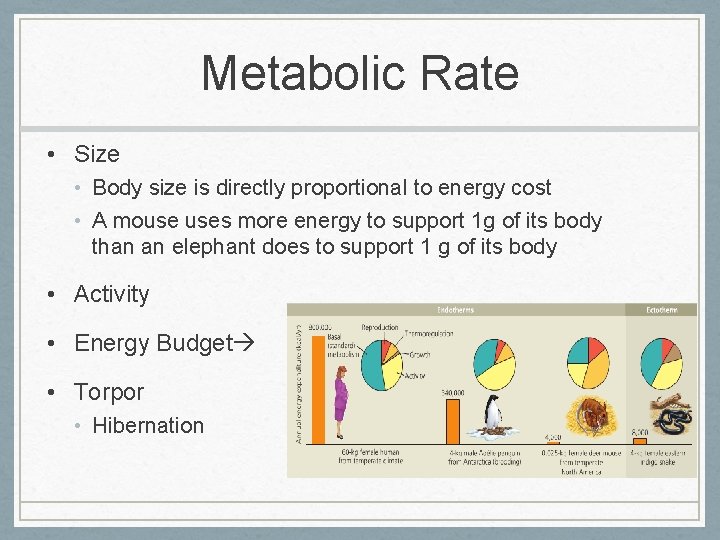
Metabolic Rate • Size • Body size is directly proportional to energy cost • A mouse uses more energy to support 1 g of its body than an elephant does to support 1 g of its body • Activity • Energy Budget • Torpor • Hibernation
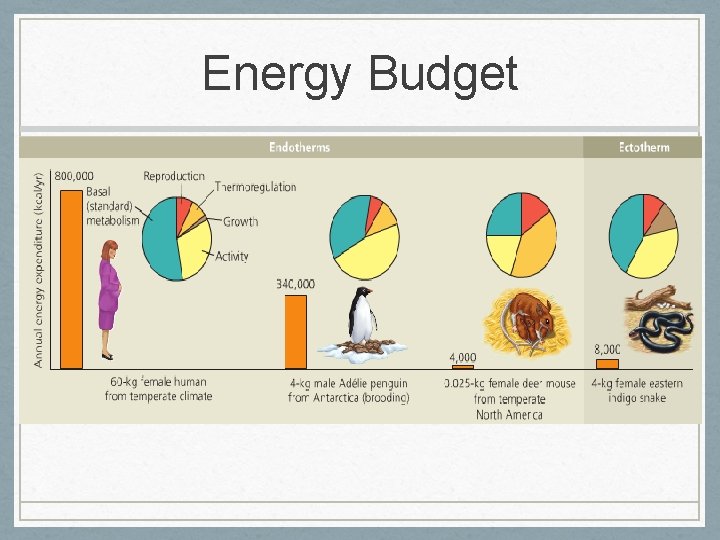
Energy Budget
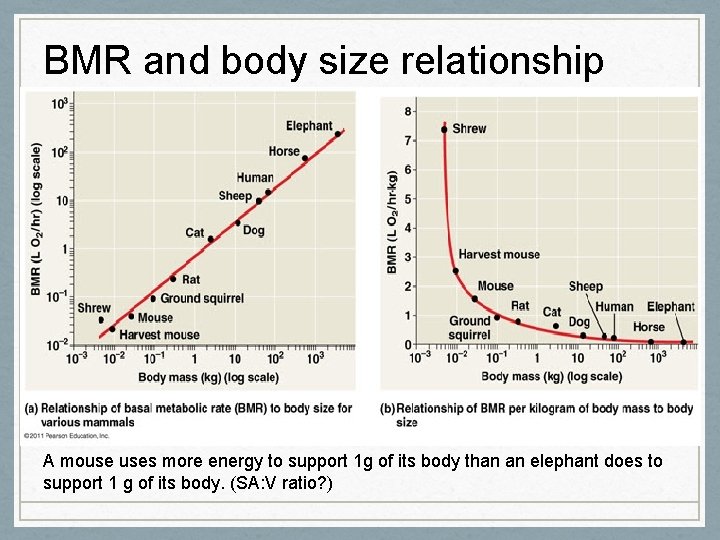
BMR and body size relationship A mouse uses more energy to support 1 g of its body than an elephant does to support 1 g of its body. (SA: V ratio? )
- Slides: 45