
Animal Farm Test Review Part One Whos Who


- Slides: 19
Animal Farm Test Review
Part One: Who’s Who? A Review of Major Characters
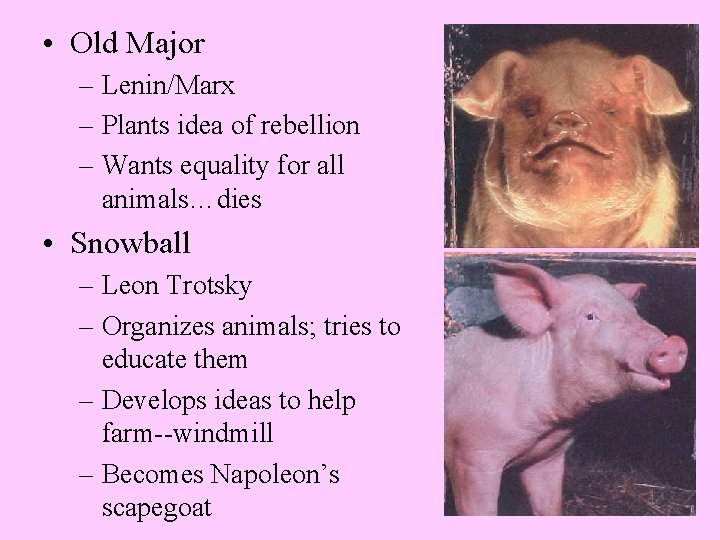
• Old Major – Lenin/Marx – Plants idea of rebellion – Wants equality for all animals…dies • Snowball – Leon Trotsky – Organizes animals; tries to educate them – Develops ideas to help farm--windmill – Becomes Napoleon’s scapegoat
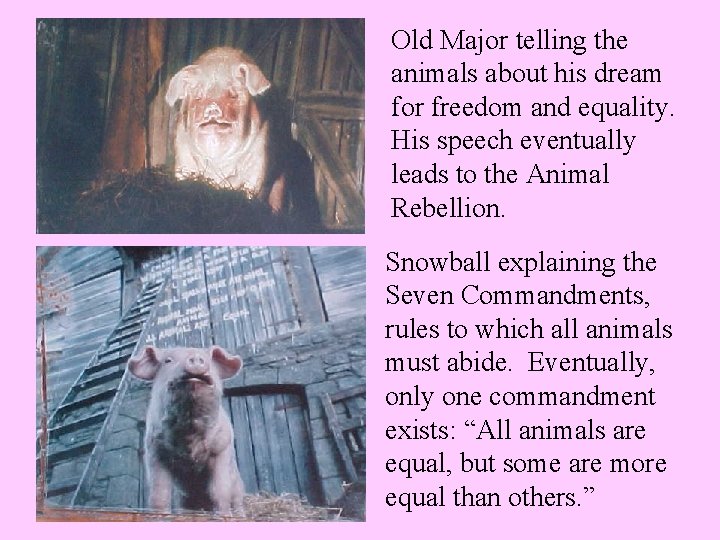
Old Major telling the animals about his dream for freedom and equality. His speech eventually leads to the Animal Rebellion. Snowball explaining the Seven Commandments, rules to which all animals must abide. Eventually, only one commandment exists: “All animals are equal, but some are more equal than others. ”
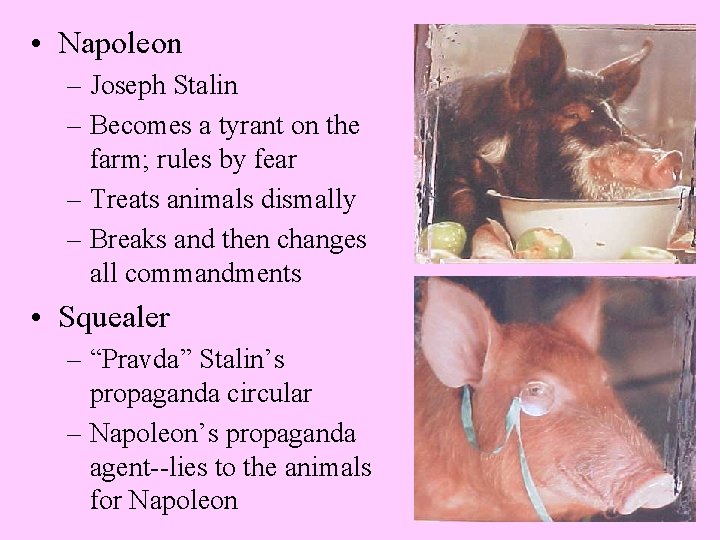
• Napoleon – Joseph Stalin – Becomes a tyrant on the farm; rules by fear – Treats animals dismally – Breaks and then changes all commandments • Squealer – “Pravda” Stalin’s propaganda circular – Napoleon’s propaganda agent--lies to the animals for Napoleon
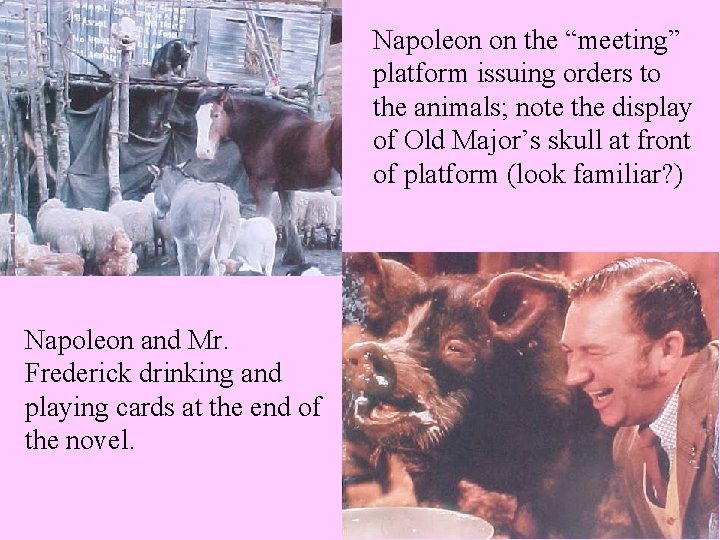
Napoleon on the “meeting” platform issuing orders to the animals; note the display of Old Major’s skull at front of platform (look familiar? ) Napoleon and Mr. Frederick drinking and playing cards at the end of the novel.
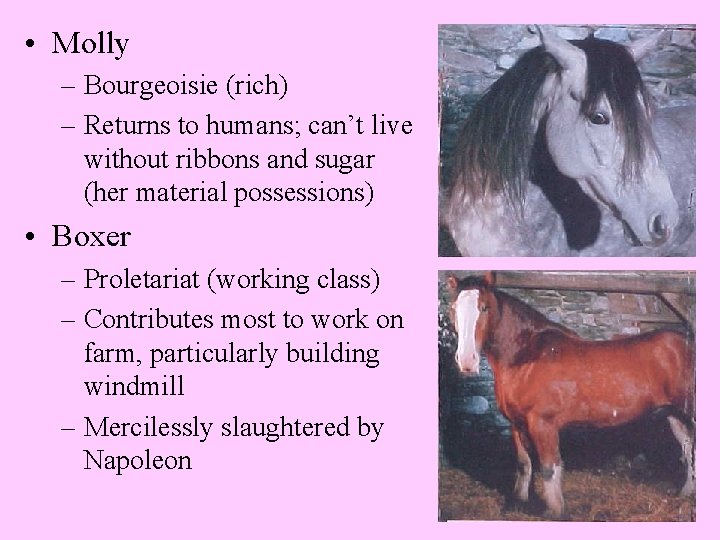
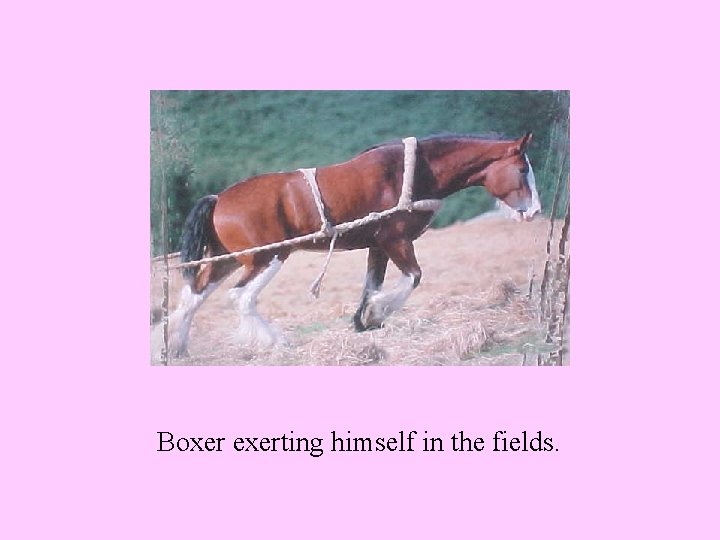
• Molly – Bourgeoisie (rich) – Returns to humans; can’t live without ribbons and sugar (her material possessions) • Boxer – Proletariat (working class) – Contributes most to work on farm, particularly building windmill – Mercilessly slaughtered by Napoleon
Boxer exerting himself in the fields.
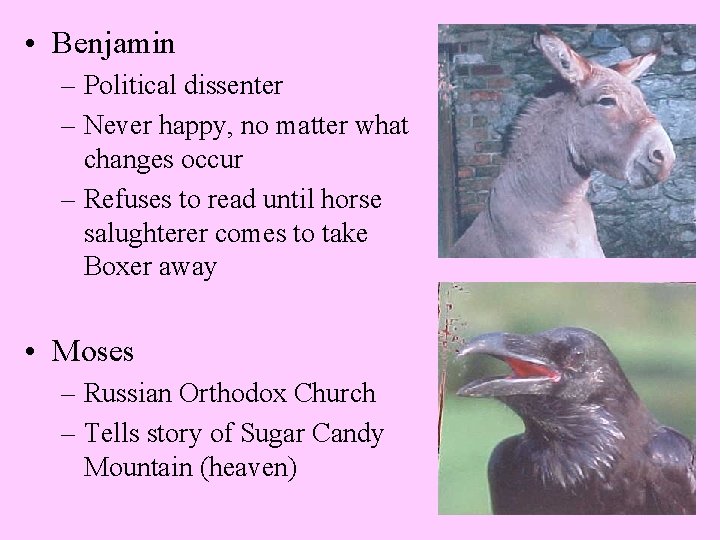
• Benjamin – Political dissenter – Never happy, no matter what changes occur – Refuses to read until horse salughterer comes to take Boxer away • Moses – Russian Orthodox Church – Tells story of Sugar Candy Mountain (heaven)
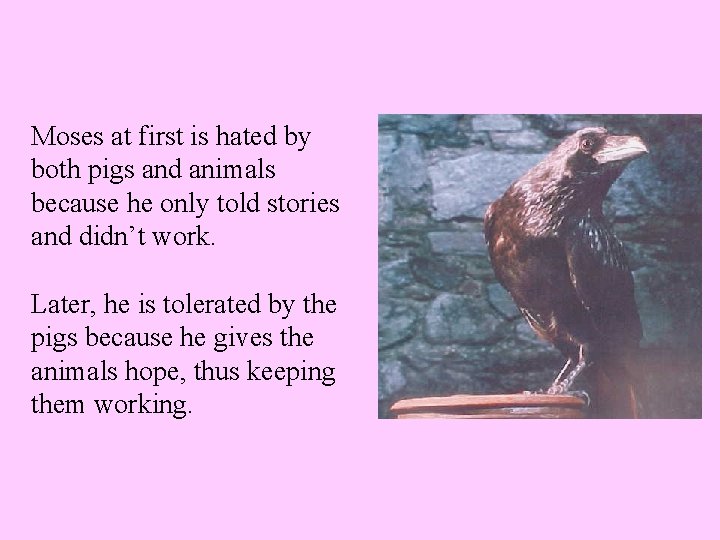
Moses at first is hated by both pigs and animals because he only told stories and didn’t work. Later, he is tolerated by the pigs because he gives the animals hope, thus keeping them working.
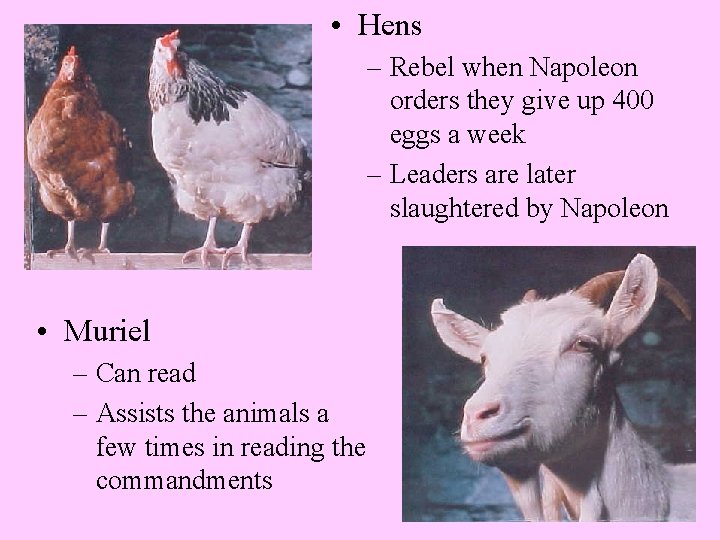
• Hens – Rebel when Napoleon orders they give up 400 eggs a week – Leaders are later slaughtered by Napoleon • Muriel – Can read – Assists the animals a few times in reading the commandments
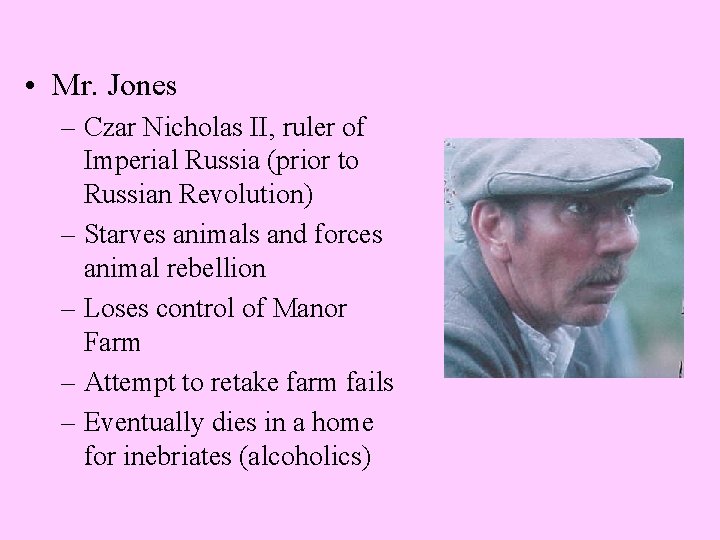
• Mr. Jones – Czar Nicholas II, ruler of Imperial Russia (prior to Russian Revolution) – Starves animals and forces animal rebellion – Loses control of Manor Farm – Attempt to retake farm fails – Eventually dies in a home for inebriates (alcoholics)
Part Two: Big Battles Animal Farm Wars & Their Historical Counterparts
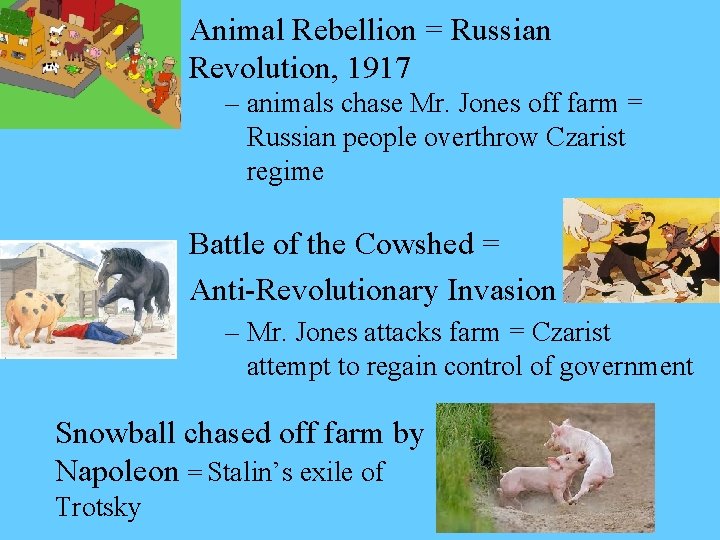
Animal Rebellion = Russian Revolution, 1917 – animals chase Mr. Jones off farm = Russian people overthrow Czarist regime Battle of the Cowshed = Anti-Revolutionary Invasion – Mr. Jones attacks farm = Czarist attempt to regain control of government Snowball chased off farm by Napoleon = Stalin’s exile of Trotsky
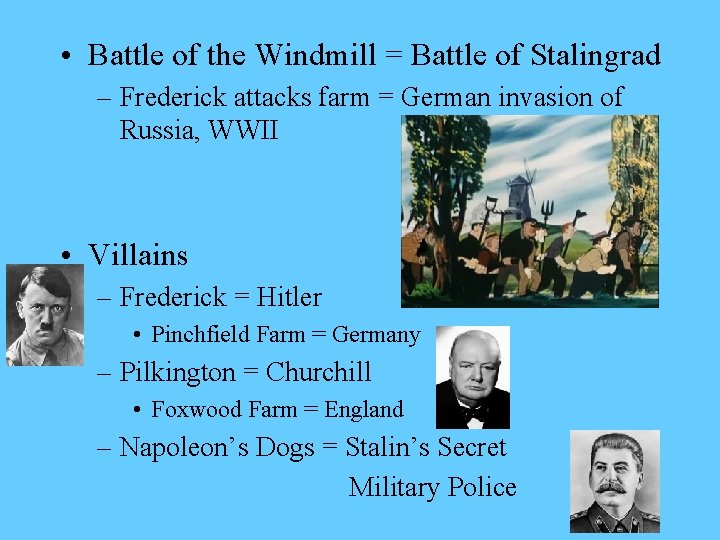
• Battle of the Windmill = Battle of Stalingrad – Frederick attacks farm = German invasion of Russia, WWII • Villains – Frederick = Hitler • Pinchfield Farm = Germany – Pilkington = Churchill • Foxwood Farm = England – Napoleon’s Dogs = Stalin’s Secret Military Police
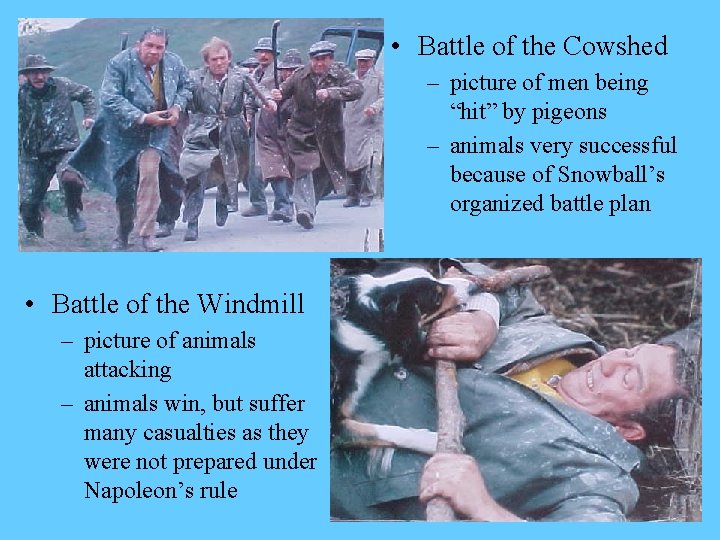
• Battle of the Cowshed – picture of men being “hit” by pigeons – animals very successful because of Snowball’s organized battle plan • Battle of the Windmill – picture of animals attacking – animals win, but suffer many casualties as they were not prepared under Napoleon’s rule
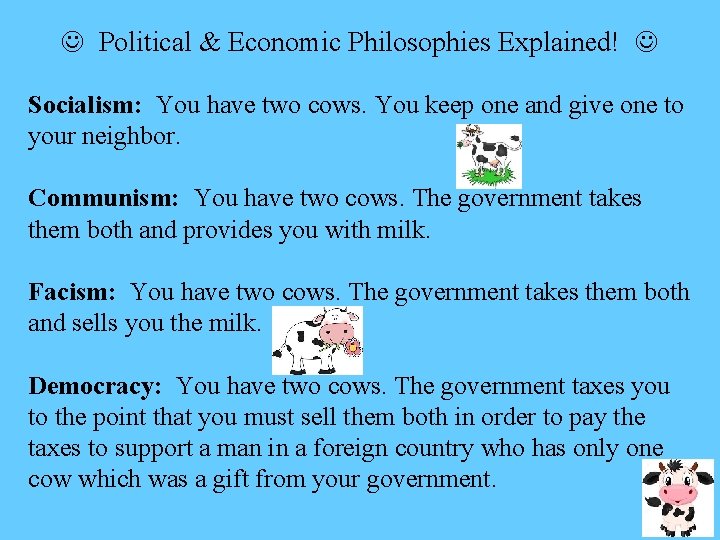
Political & Economic Philosophies Explained! Socialism: You have two cows. You keep one and give one to your neighbor. Communism: You have two cows. The government takes them both and provides you with milk. Facism: You have two cows. The government takes them both and sells you the milk. Democracy: You have two cows. The government taxes you to the point that you must sell them both in order to pay the taxes to support a man in a foreign country who has only one cow which was a gift from your government.
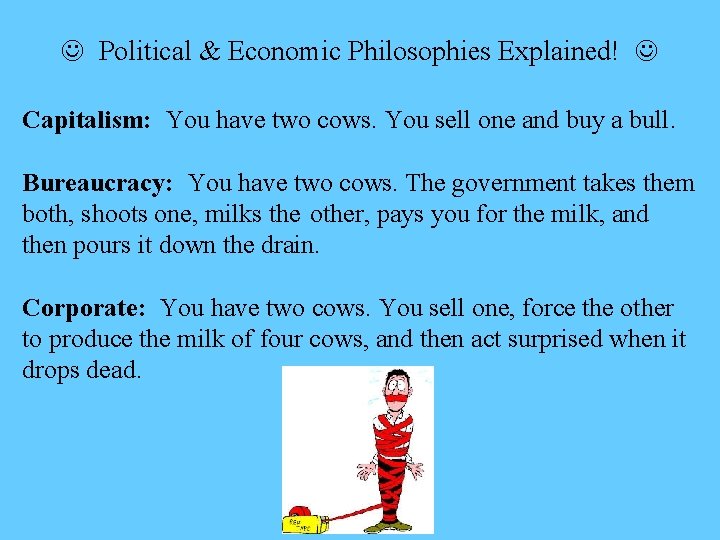
Political & Economic Philosophies Explained! Capitalism: You have two cows. You sell one and buy a bull. Bureaucracy: You have two cows. The government takes them both, shoots one, milks the other, pays you for the milk, and then pours it down the drain. Corporate: You have two cows. You sell one, force the other to produce the milk of four cows, and then act surprised when it drops dead.
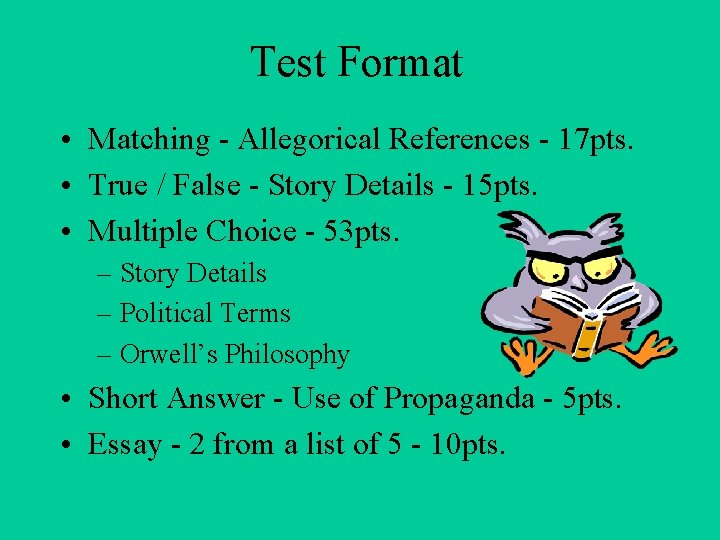
Test Format • Matching - Allegorical References - 17 pts. • True / False - Story Details - 15 pts. • Multiple Choice - 53 pts. – Story Details – Political Terms – Orwell’s Philosophy • Short Answer - Use of Propaganda - 5 pts. • Essay - 2 from a list of 5 - 10 pts.