
Animal Evolution I Animal traits A Heterotrophic B
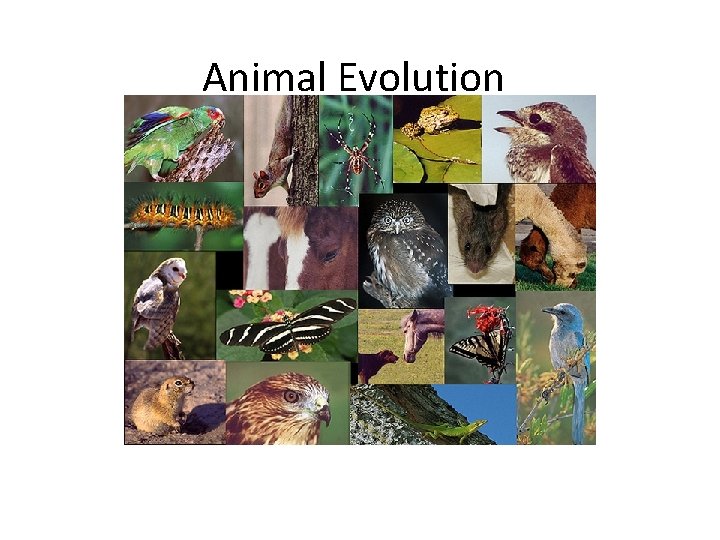
Animal Evolution
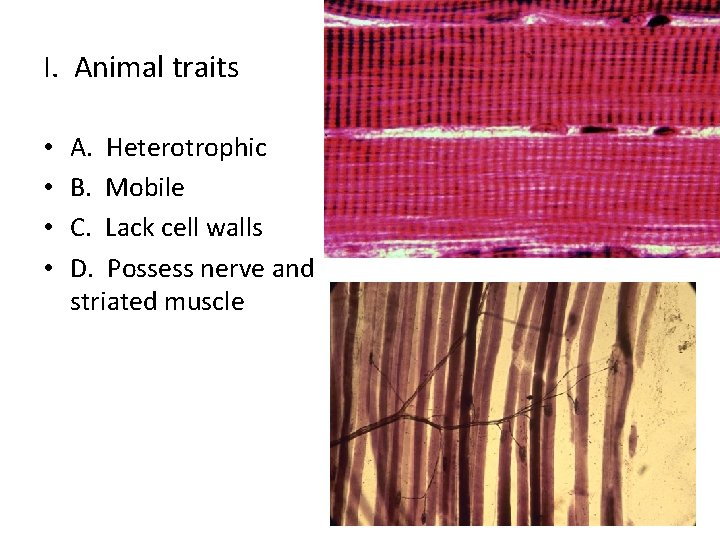
I. Animal traits • • A. Heterotrophic B. Mobile C. Lack cell walls D. Possess nerve and striated muscle
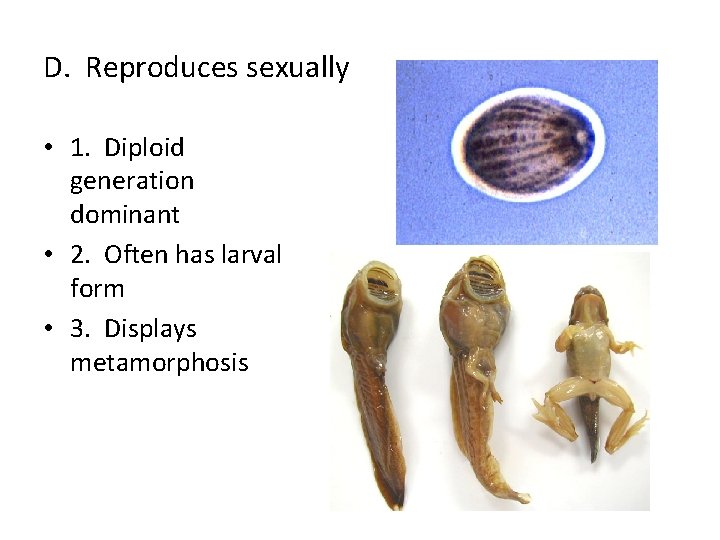
D. Reproduces sexually • 1. Diploid generation dominant • 2. Often has larval form • 3. Displays metamorphosis
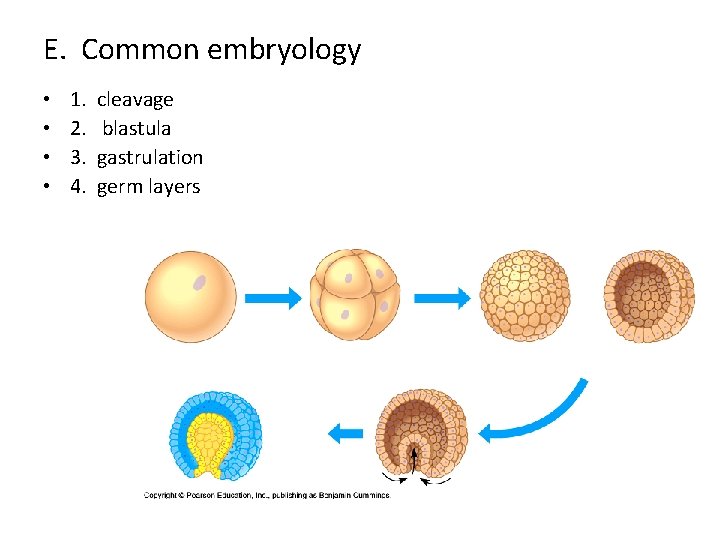
E. Common embryology • • 1. 2. 3. 4. cleavage blastula gastrulation germ layers

F. Homeotic genes • 1. genes that control development • 2. control placement and location of appendages

Mutations in homeotic genes can cause huge changes in a single generation
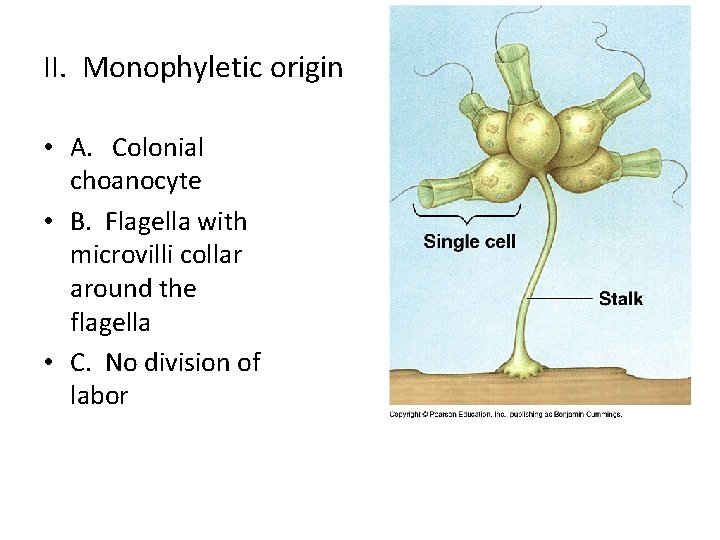
II. Monophyletic origin • A. Colonial choanocyte • B. Flagella with microvilli collar around the flagella • C. No division of labor
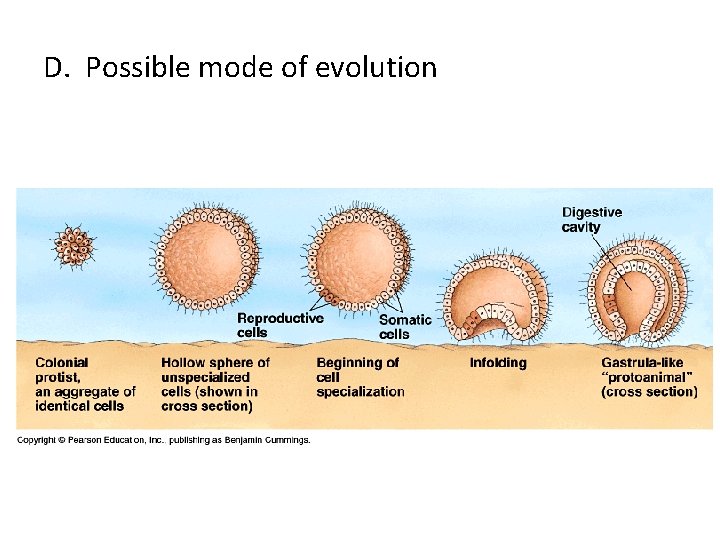
D. Possible mode of evolution
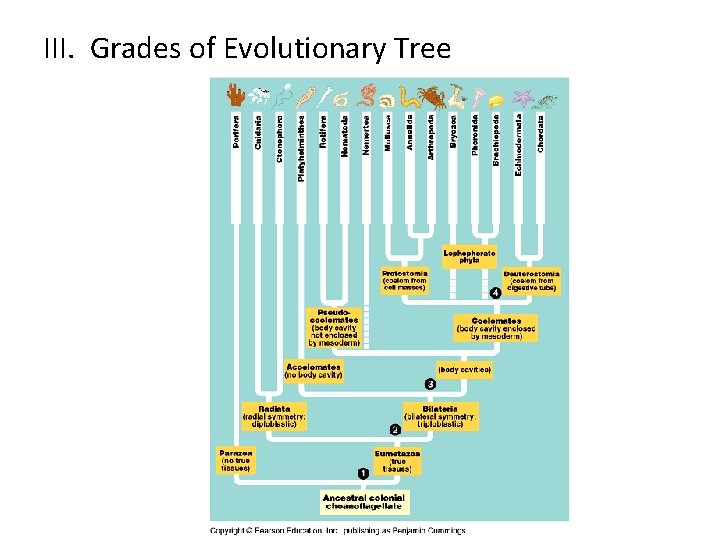
III. Grades of Evolutionary Tree
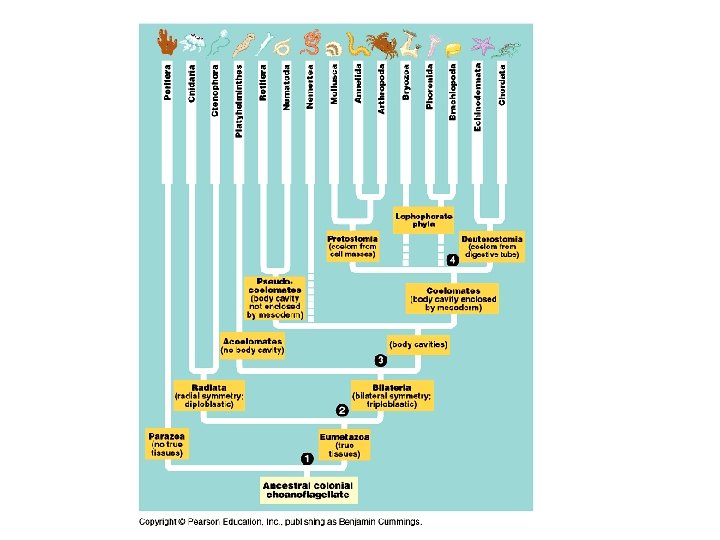
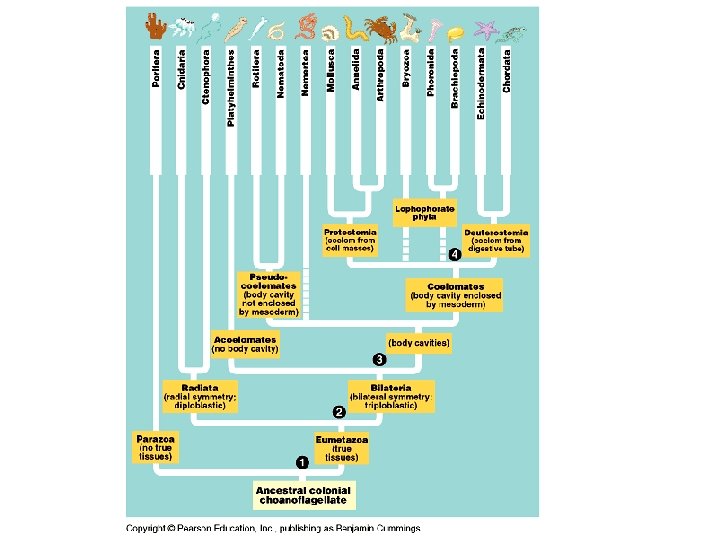
A. Major branches of the phylogenetic tree are called grades • 1. The grade is like a fork in the road that represents a major anatomical change that opens up new possibilties • 2. Once a lineage begins down a grade, it once was thought of as an irreversible path-male passing down a road • 3. Now with new tools of discovery-DNA sequencing some of older pathways are now being reconsidered • 4. We will stay with the older story for the time being
B. First bifurcation-cellular vs. tissue specialization • 1. sponges possess cellular specialization but not true tissues • 2. sponges are referred to as parametazoans-kind of animal-like • 3. second branch represents eumetazoans-true animals • 4. the eumetazoans possess two qualities that are more animal-like than the sponges – a. true tissue level specializations – b. symmetry
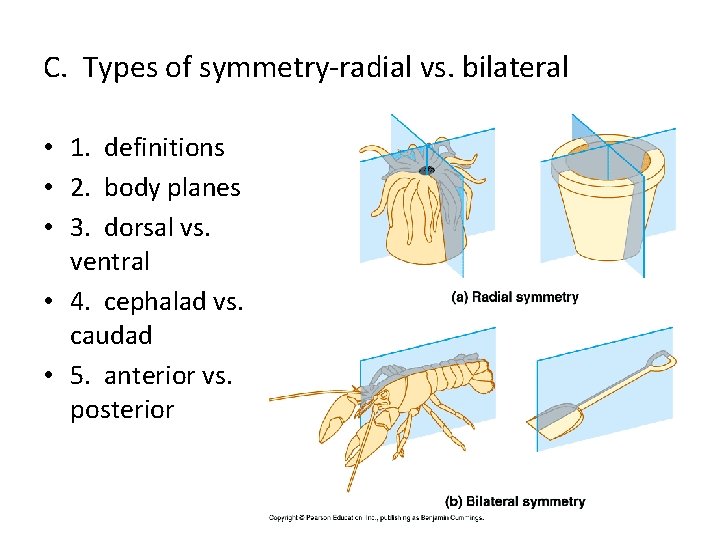
C. Types of symmetry-radial vs. bilateral • 1. definitions • 2. body planes • 3. dorsal vs. ventral • 4. cephalad vs. caudad • 5. anterior vs. posterior
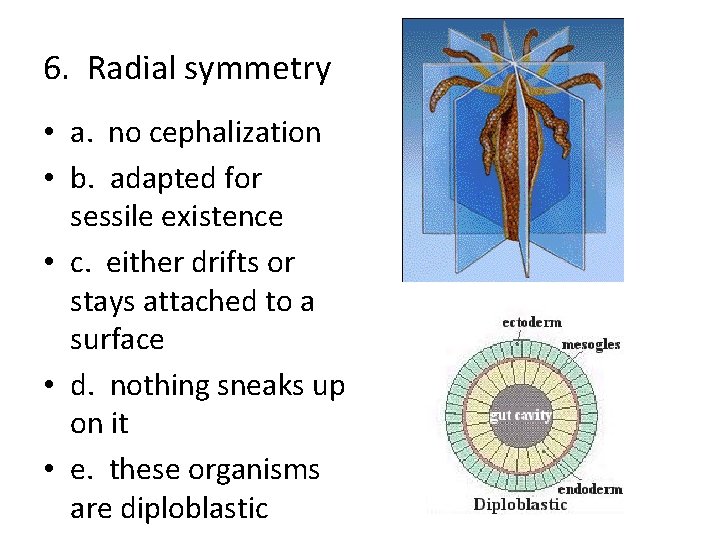
6. Radial symmetry • a. no cephalization • b. adapted for sessile existence • c. either drifts or stays attached to a surface • d. nothing sneaks up on it • e. these organisms are diploblastic
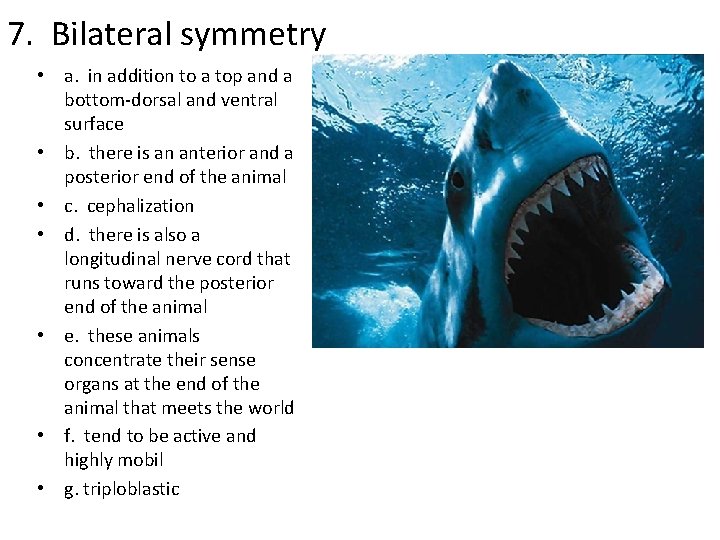
7. Bilateral symmetry • a. in addition to a top and a bottom-dorsal and ventral surface • b. there is an anterior and a posterior end of the animal • c. cephalization • d. there is also a longitudinal nerve cord that runs toward the posterior end of the animal • e. these animals concentrate their sense organs at the end of the animal that meets the world • f. tend to be active and highly mobil • g. triploblastic
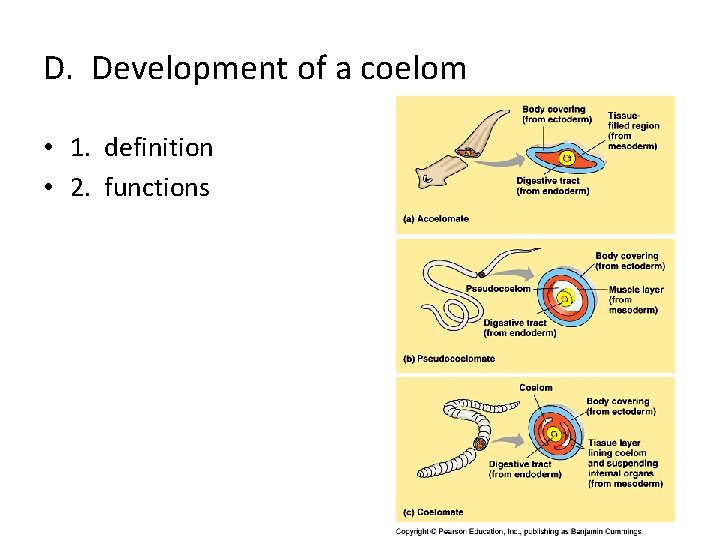
D. Development of a coelom • 1. definition • 2. functions
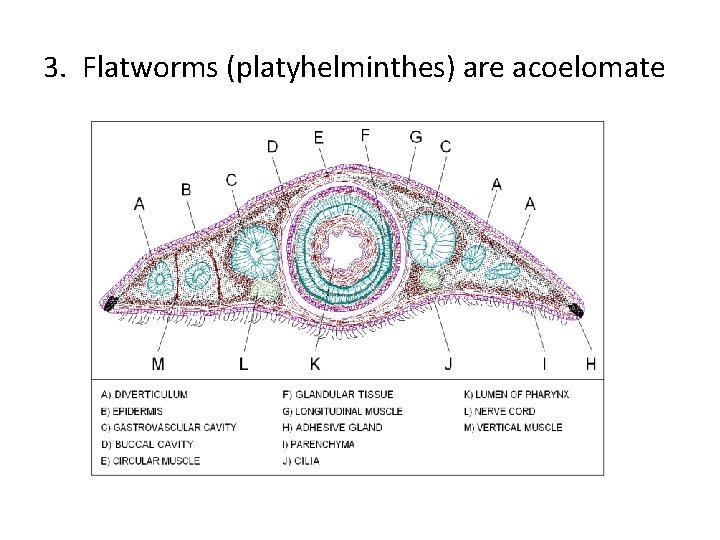
3. Flatworms (platyhelminthes) are acoelomate
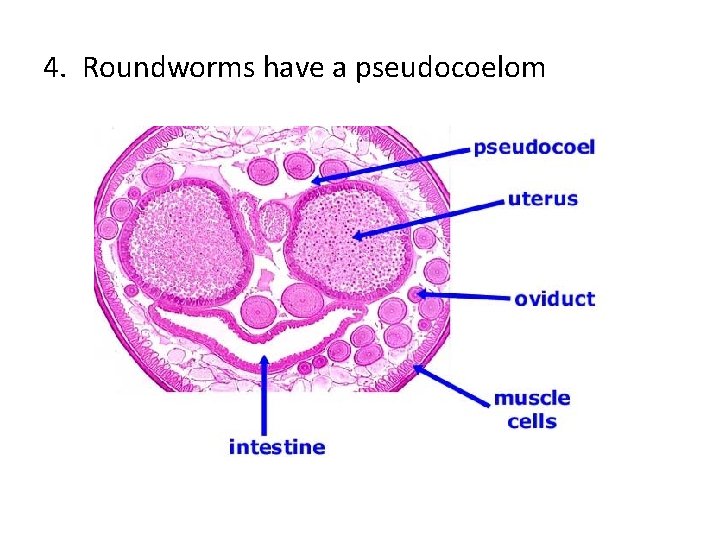
4. Roundworms have a pseudocoelom
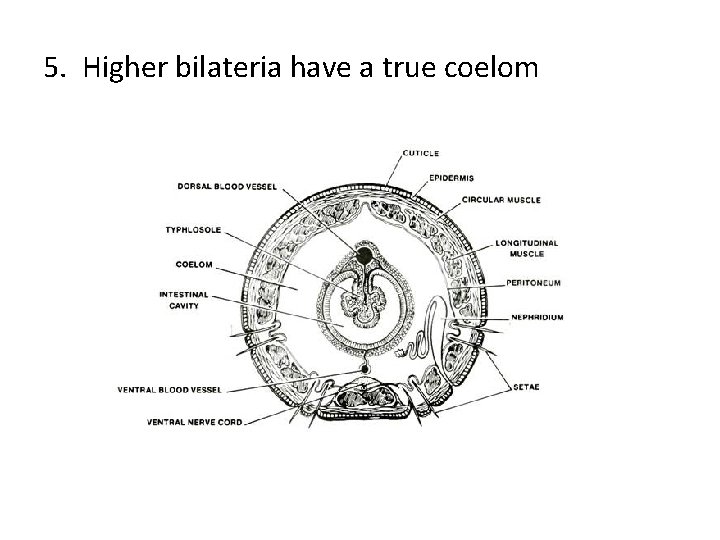
5. Higher bilateria have a true coelom
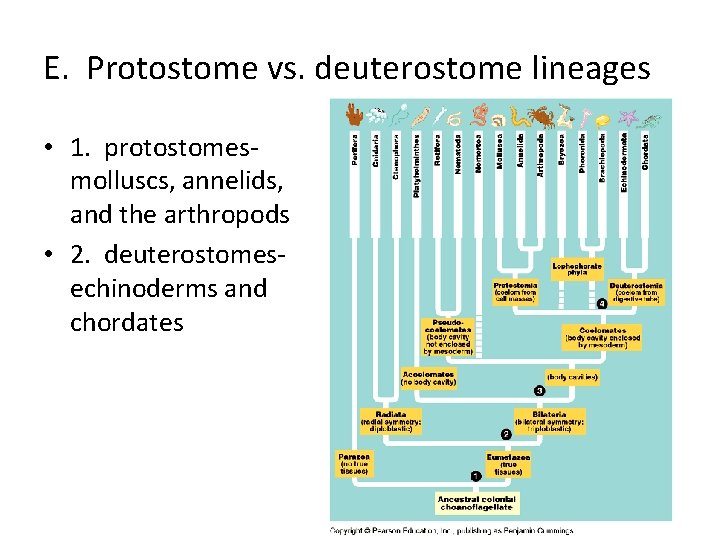
E. Protostome vs. deuterostome lineages • 1. protostomesmolluscs, annelids, and the arthropods • 2. deuterostomesechinoderms and chordates
Early animal development terms • Cleavage
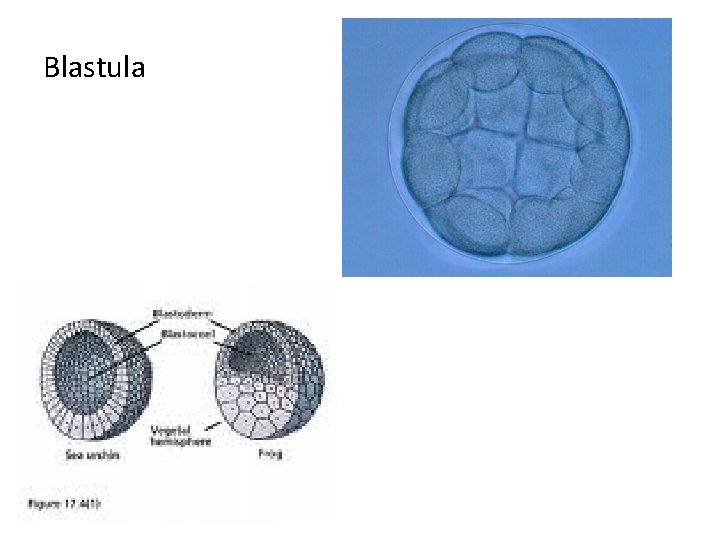
Blastula
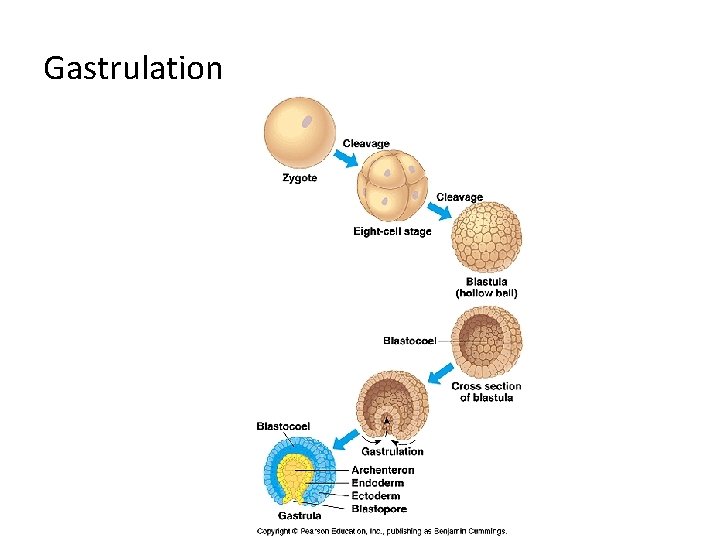
Gastrulation
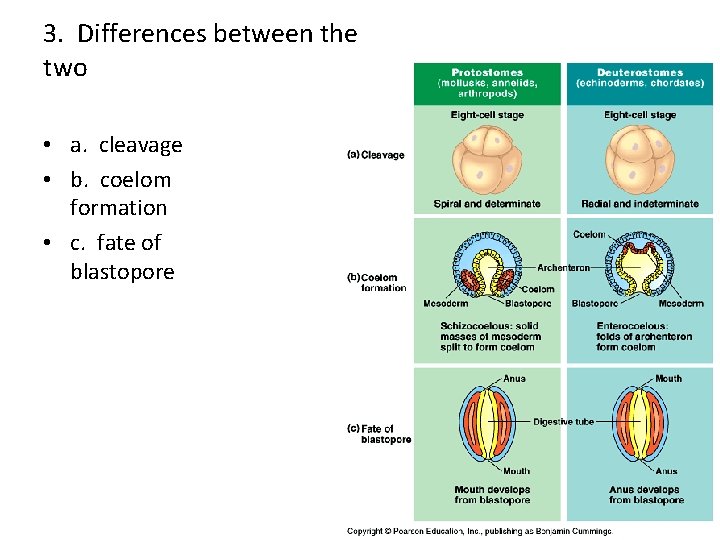
3. Differences between the two • a. cleavage • b. coelom formation • c. fate of blastopore
- Slides: 25