
Animal detection Systems Effectiveness Types Design Issues Implementation

- Slides: 14
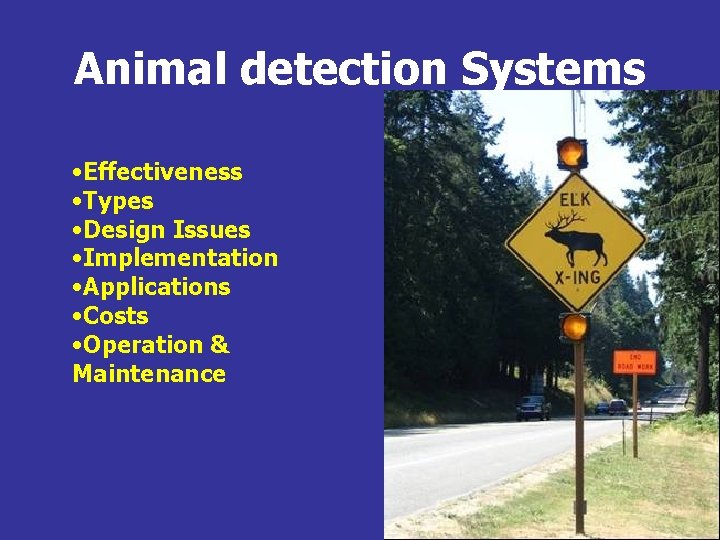
Animal detection Systems • Effectiveness • Types • Design Issues • Implementation • Applications • Costs • Operation & Maintenance
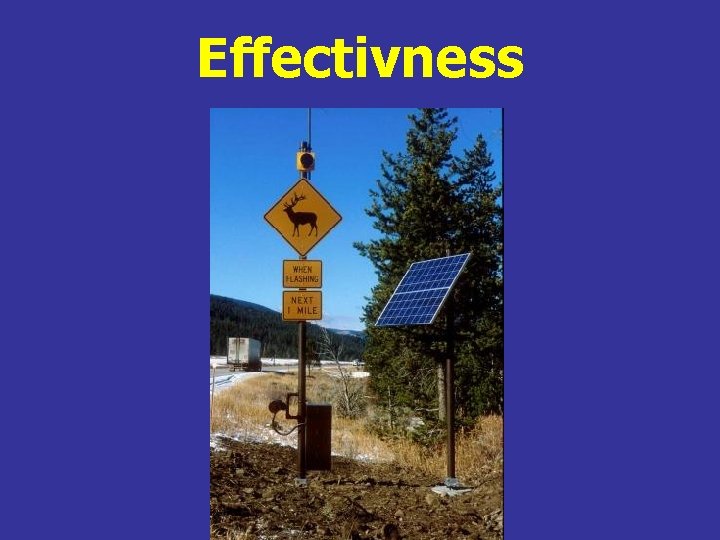
Effectivness
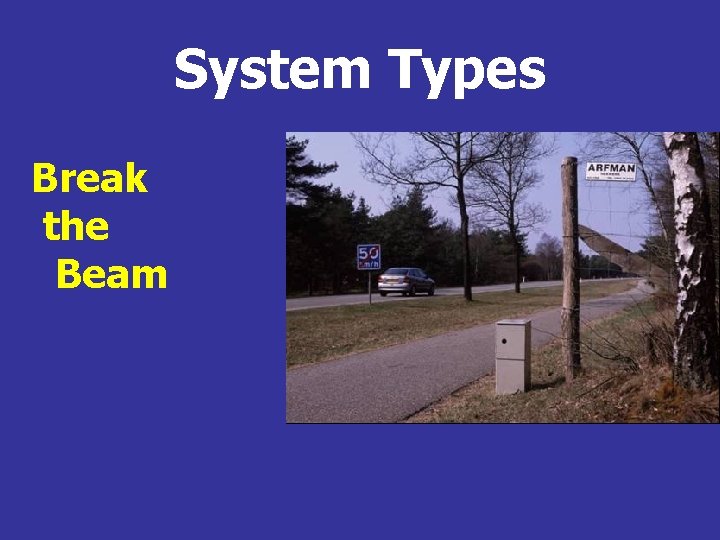
System Types Break the Beam
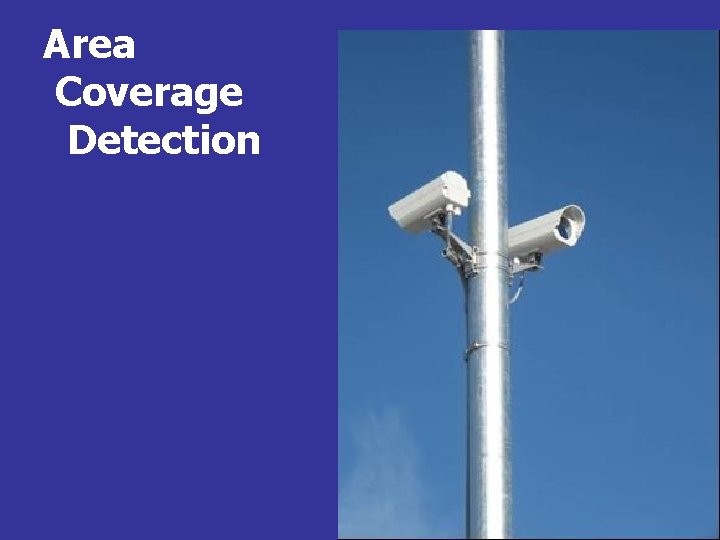
Area Coverage Detection
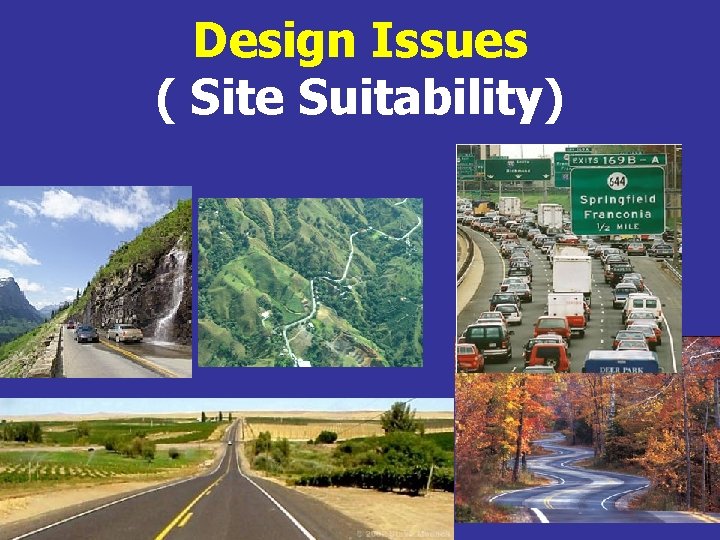
Design Issues ( Site Suitability)
Designing for Success
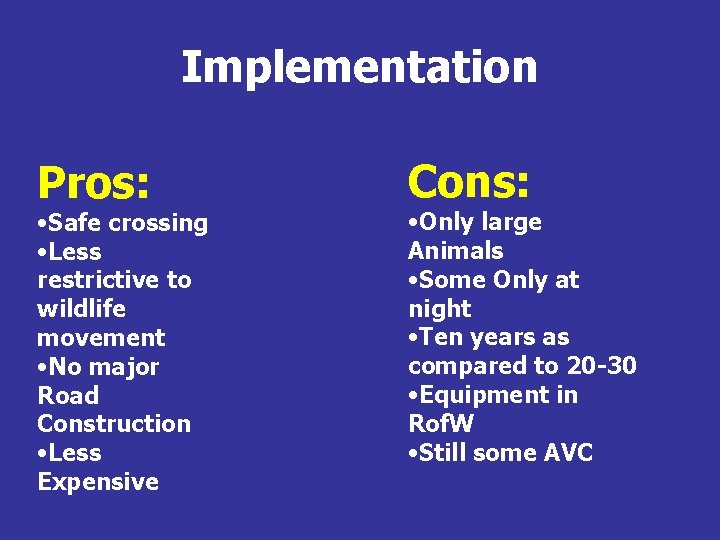
Implementation Pros: • Safe crossing • Less restrictive to wildlife movement • No major Road Construction • Less Expensive Cons: • Only large Animals • Some Only at night • Ten years as compared to 20 -30 • Equipment in Rof. W • Still some AVC
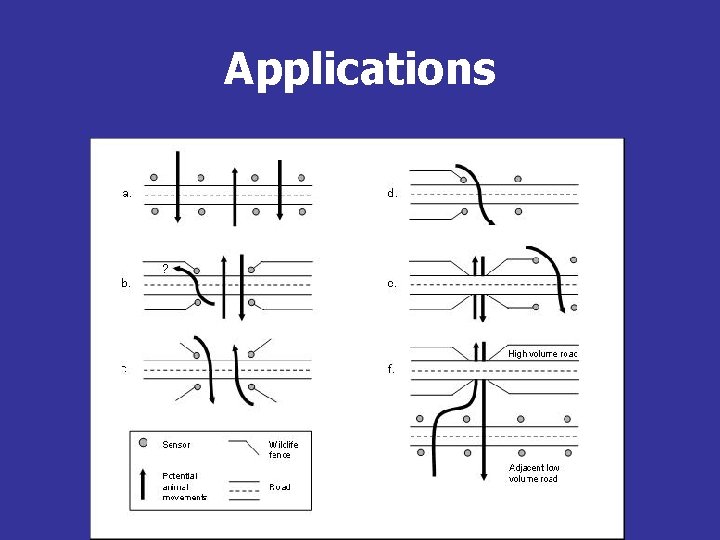
Applications
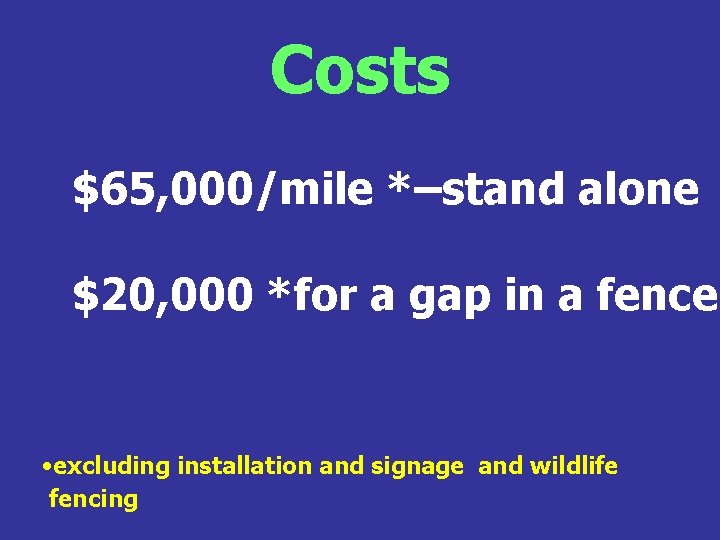
Costs $65, 000/mile *–stand alone $20, 000 *for a gap in a fence • excluding installation and signage and wildlife fencing
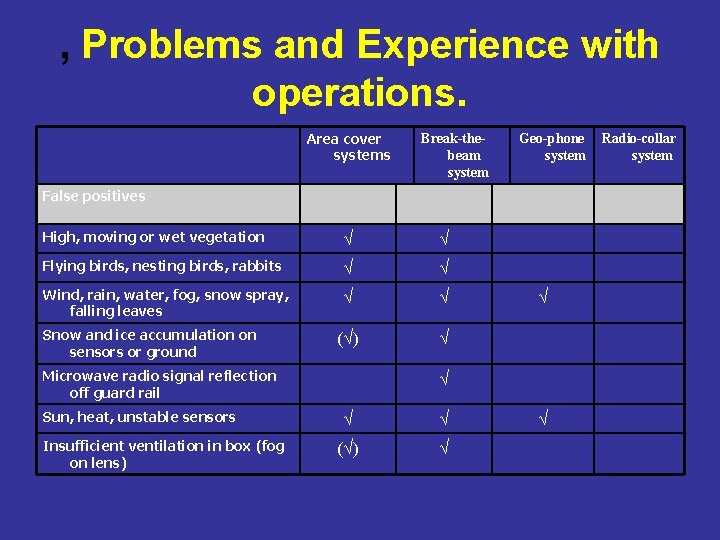
, Problems and Experience with operations. Area cover systems Break-thebeam system Geo-phone system False positives High, moving or wet vegetation √ √ Flying birds, nesting birds, rabbits √ √ Wind, rain, water, fog, snow spray, falling leaves √ √ (√) √ Snow and ice accumulation on sensors or ground Microwave radio signal reflection off guard rail Sun, heat, unstable sensors Insufficient ventilation in box (fog on lens) √ √ (√) √ √ Radio-collar system
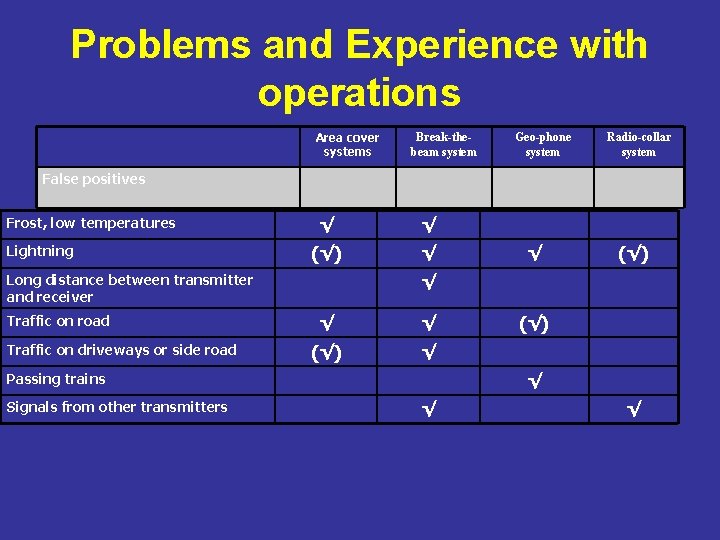
Problems and Experience with operations Area cover systems Break-thebeam system Geo-phone system Radio-collar system False positives Frost, low temperatures Lightning √ √ (√) √ Traffic on driveways or side road √ √ (√) √ Passing trains Signals from other transmitters (√) √ Long distance between transmitter and receiver Traffic on road √ √ √
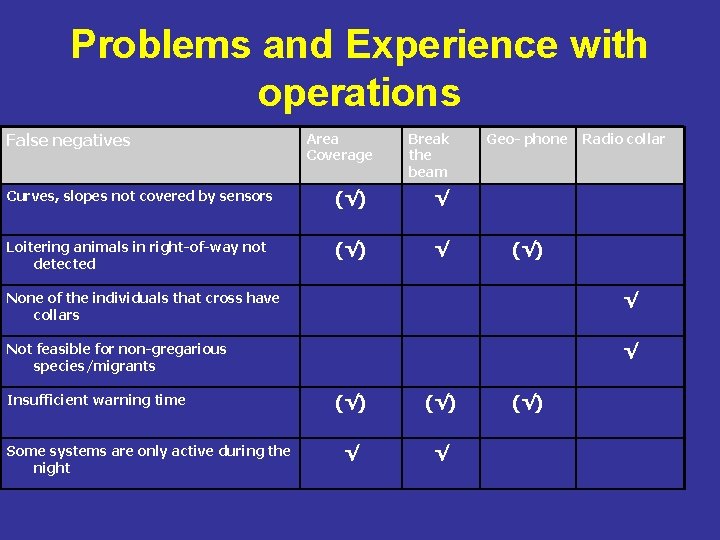
Problems and Experience with operations False negatives Area Coverage Break the beam Curves, slopes not covered by sensors (√) √ Loitering animals in right-of-way not detected (√) √ Geo- phone Radio collar (√) None of the individuals that cross have collars √ Not feasible for non-gregarious species/migrants √ Insufficient warning time Some systems are only active during the night (√) √ √ (√)
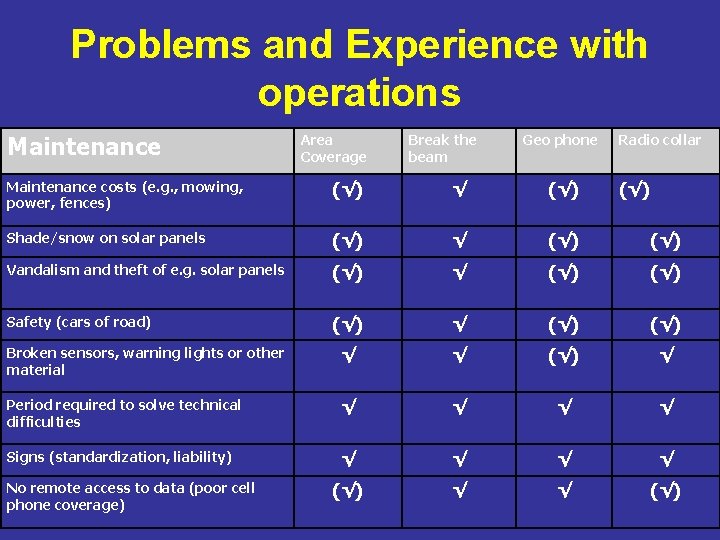
Problems and Experience with operations Maintenance Area Coverage Break the beam Geo phone Radio collar Maintenance costs (e. g. , mowing, power, fences) (√) √ (√) Shade/snow on solar panels (√) √ (√) Vandalism and theft of e. g. solar panels (√) √ (√) Safety (cars of road) (√) √ (√) Broken sensors, warning lights or other material √ √ (√) √ Period required to solve technical difficulties √ √ Signs (standardization, liability) √ √ (√) No remote access to data (poor cell phone coverage) (√)
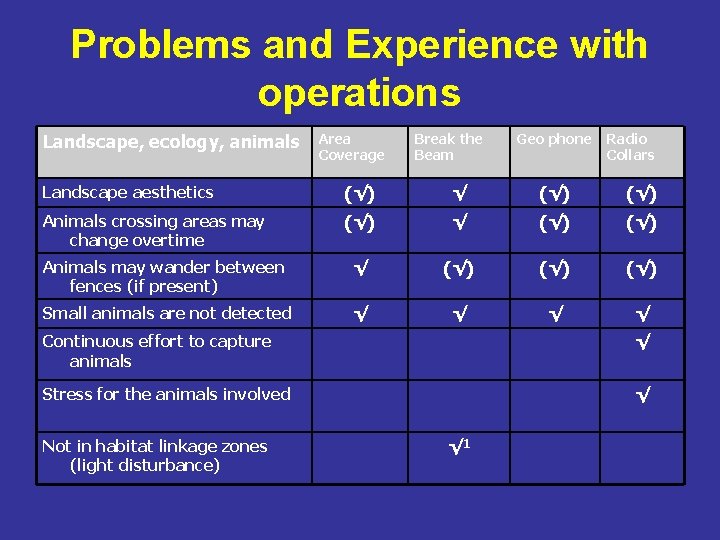
Problems and Experience with operations Landscape, ecology, animals Area Coverage Break the Beam Geo phone Radio Collars Landscape aesthetics (√) √ (√) Animals crossing areas may change overtime (√) √ (√) Animals may wander between fences (if present) √ (√) (√) Small animals are not detected √ √ Continuous effort to capture animals √ Stress for the animals involved √ Not in habitat linkage zones (light disturbance) √ 1