
Animal Cognition study of mental capacities and processes
- Slides: 15
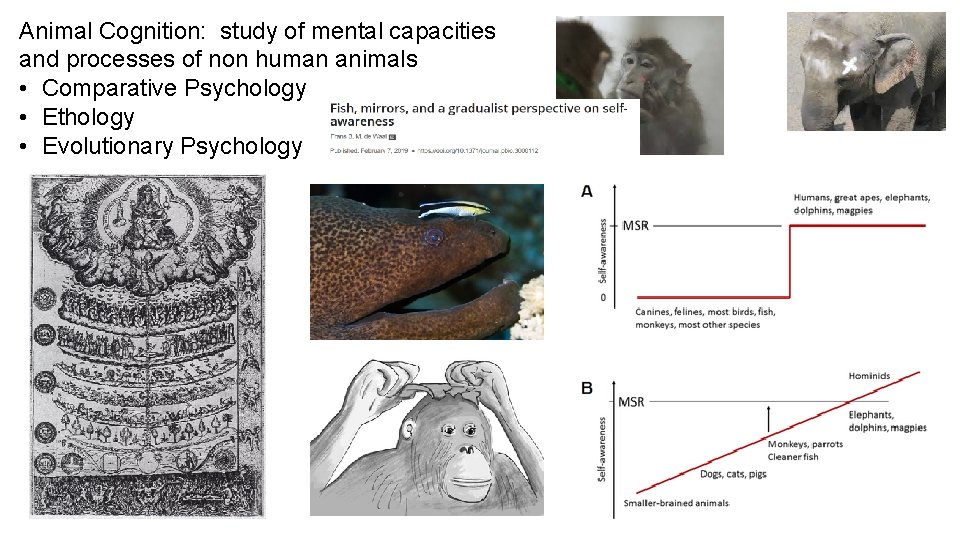
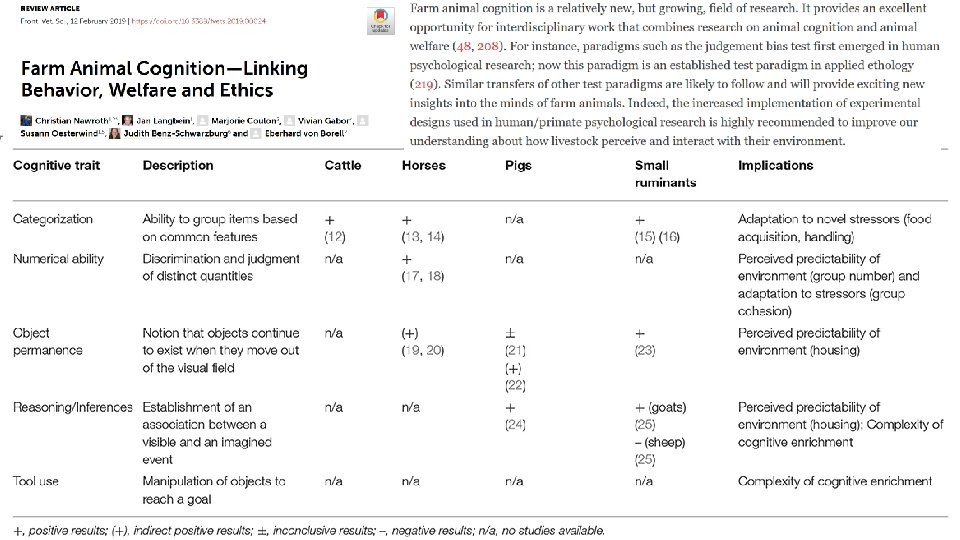
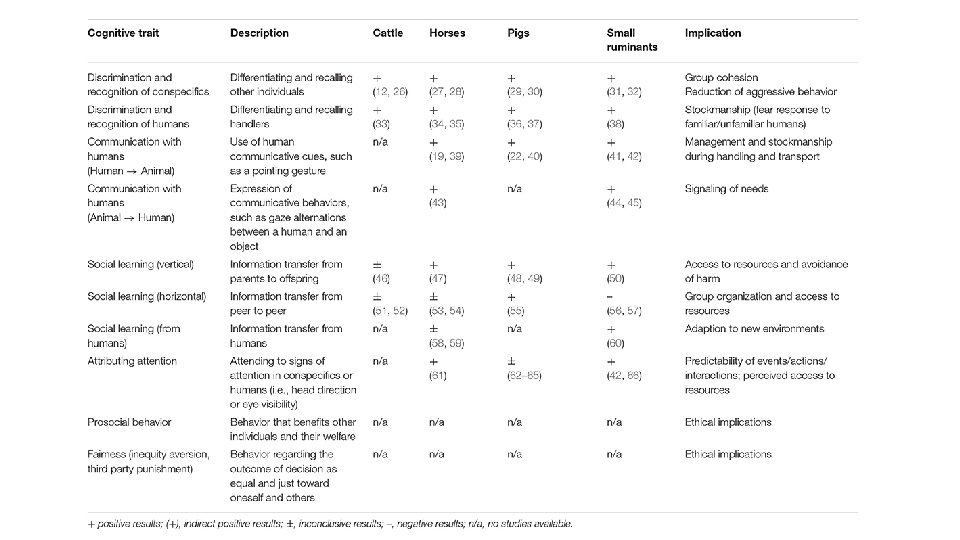
Animal Cognition: study of mental capacities and processes of non human animals • Comparative Psychology • Ethology • Evolutionary Psychology
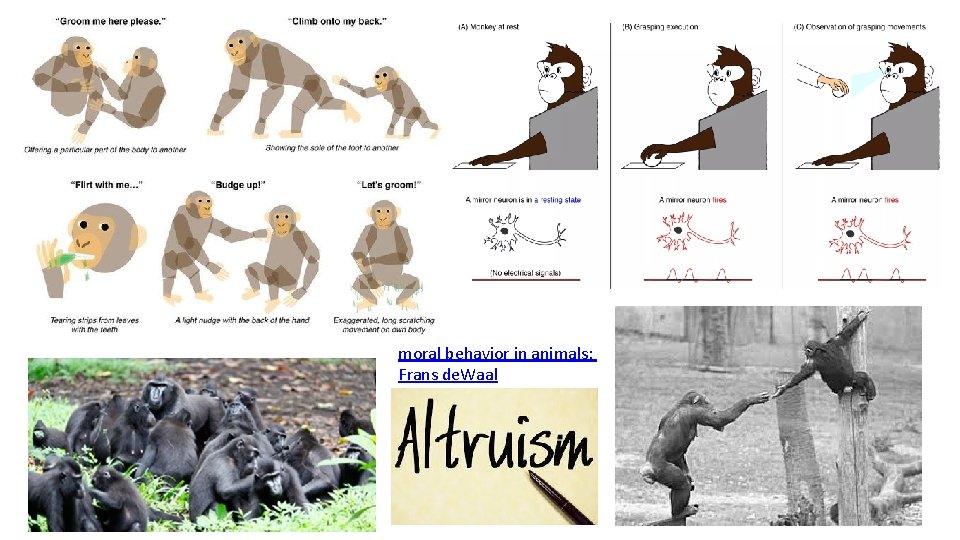
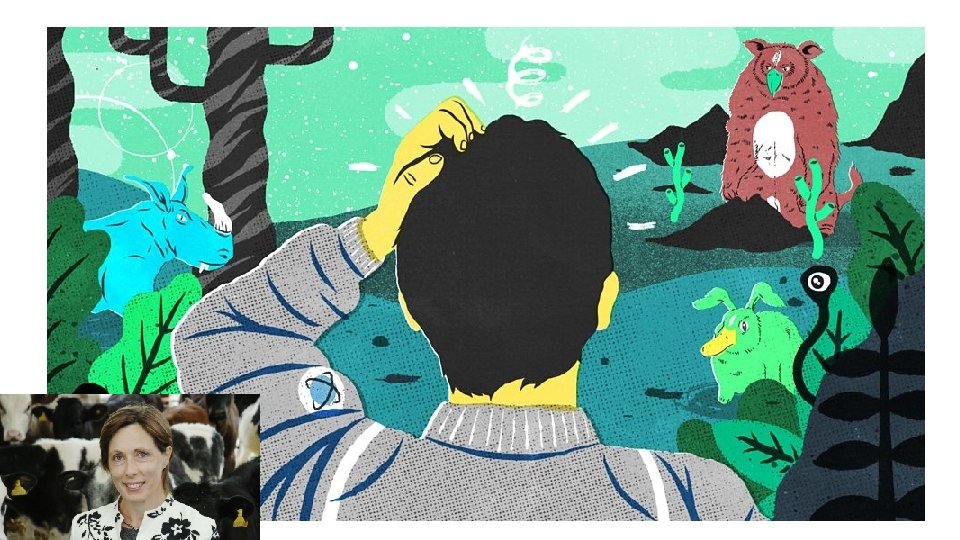
moral behavior in animals: Frans de. Waal
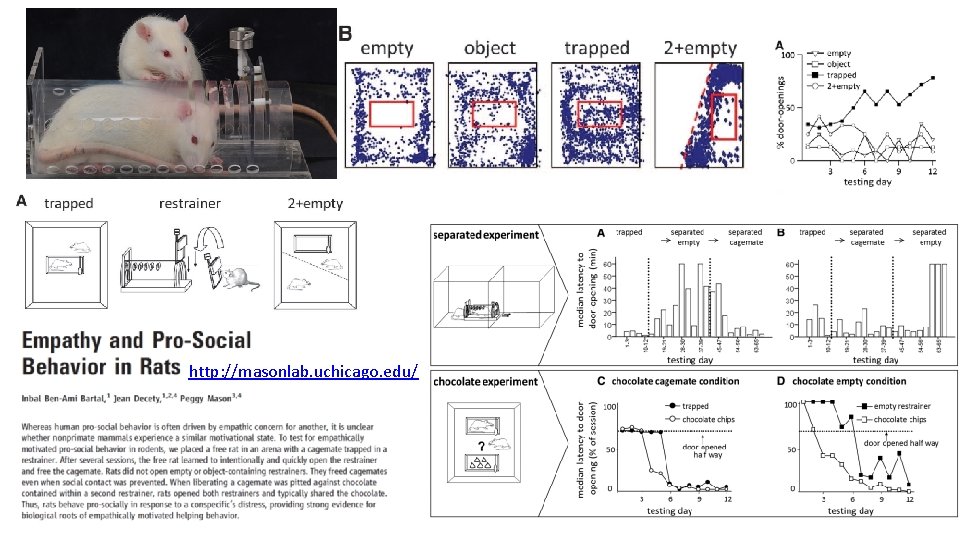
http: //masonlab. uchicago. edu/
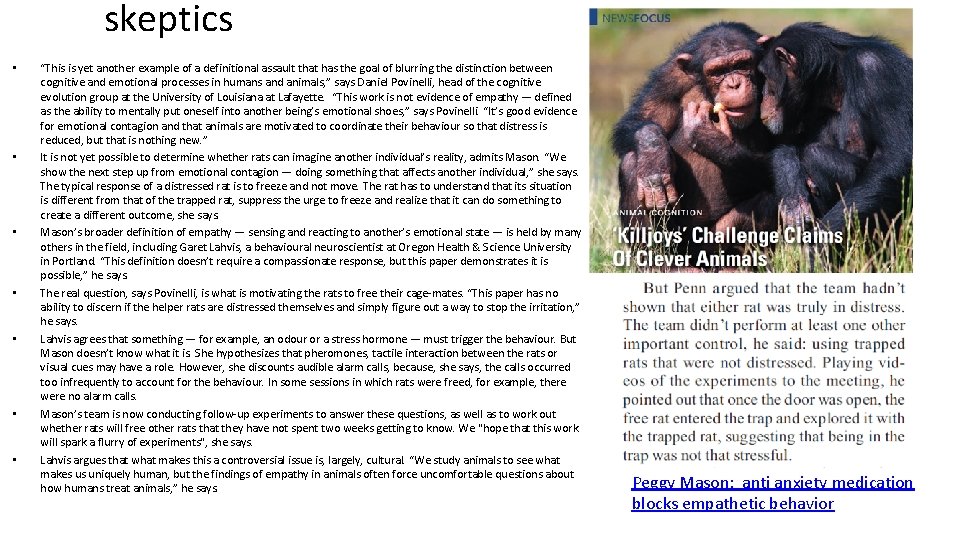
skeptics • • “This is yet another example of a definitional assault that has the goal of blurring the distinction between cognitive and emotional processes in humans and animals, ” says Daniel Povinelli, head of the cognitive evolution group at the University of Louisiana at Lafayette. “This work is not evidence of empathy — defined as the ability to mentally put oneself into another being’s emotional shoes, ” says Povinelli. “It’s good evidence for emotional contagion and that animals are motivated to coordinate their behaviour so that distress is reduced, but that is nothing new. ” It is not yet possible to determine whether rats can imagine another individual’s reality, admits Mason. “We show the next step up from emotional contagion — doing something that affects another individual, ” she says. The typical response of a distressed rat is to freeze and not move. The rat has to understand that its situation is different from that of the trapped rat, suppress the urge to freeze and realize that it can do something to create a different outcome, she says. Mason’s broader definition of empathy — sensing and reacting to another’s emotional state — is held by many others in the field, including Garet Lahvis, a behavioural neuroscientist at Oregon Health & Science University in Portland. “This definition doesn’t require a compassionate response, but this paper demonstrates it is possible, ” he says. The real question, says Povinelli, is what is motivating the rats to free their cage-mates. “This paper has no ability to discern if the helper rats are distressed themselves and simply figure out a way to stop the irritation, ” he says. Lahvis agrees that something — for example, an odour or a stress hormone — must trigger the behaviour. But Mason doesn’t know what it is. She hypothesizes that pheromones, tactile interaction between the rats or visual cues may have a role. However, she discounts audible alarm calls, because, she says, the calls occurred too infrequently to account for the behaviour. In some sessions in which rats were freed, for example, there were no alarm calls. Mason’s team is now conducting follow-up experiments to answer these questions, as well as to work out whether rats will free other rats that they have not spent two weeks getting to know. We "hope that this work will spark a flurry of experiments", she says. Lahvis argues that what makes this a controversial issue is, largely, cultural. “We study animals to see what makes us uniquely human, but the findings of empathy in animals often force uncomfortable questions about how humans treat animals, ” he says. Peggy Mason: anti anxiety medication blocks empathetic behavior
Study questions • What is social cognition and how is it different than physical cognition? What is imitation? What are mirror neurons and what role might they play in social cognition? • Describe Frans de. Waal view on animal cognition. What is a “bottom-up perspective”? Be able to answer some questions based on his Ted-talk that we watched in class. • What is the MSR test? What is it attempting to measure? • What is prosocial behavior? What is altruism? What is theory of mind? How does this all relate to empathy? • Be able to answer all the study questions from the Mason (Peggy not Georgia) paper. Be able to interpret the figures in the paper. Be able to explain what the paper showed. What was the hypothesis that was tested? How was the experiment set up? Why did they choose the controls that they did? Why did they create a different set up (separated cagemate). Why did they do the chocolate experiment? • What are some criticisms of the study? Be able to rearticulate the “kill-joys” argument about animal cognition. • Be able to answer questions based on the paper we read to prepare for Herzog’s skype interview, and what we talked about.
• Be able to understand important concepts in the BBC episode of “Would you eat an alien”. What are the ethical assumptions going into the scenario? • What is an important “first” test to see if an alien might be suitable to kill and eat? • According to Peter Singer, how do most people decide whether to kill an animal for food? • According to David Mellor, why is Jake’s dilemma similar to our dilemma with animals? How do scientists “infer” what it is like to be an animal? • How is sentience different from a simple stimulus-response behavior? • According to Georgia Mason, what are two components of subjective experiences. • According to Mike Mendl, can we directly test consciousness? If not, what do scientists do? • According to Lynn Snedden, do fish feel pain? Support your answer with evidence. Now provide an argument that fish DON’T feel pain (according to Brian Keye).
• What is simple learning versus complex learning? How does this relate to flexible learning? Which one of these is closer to consciousness? • According to Mason, what are two different forms of emotional states (other than positive and negative) • What are the five freedoms? • According to Mason and Nichol, what is the key question to ask and the thing to test in regards to the welfare of the aliens? How might trinos and dabbits differ in this regard?
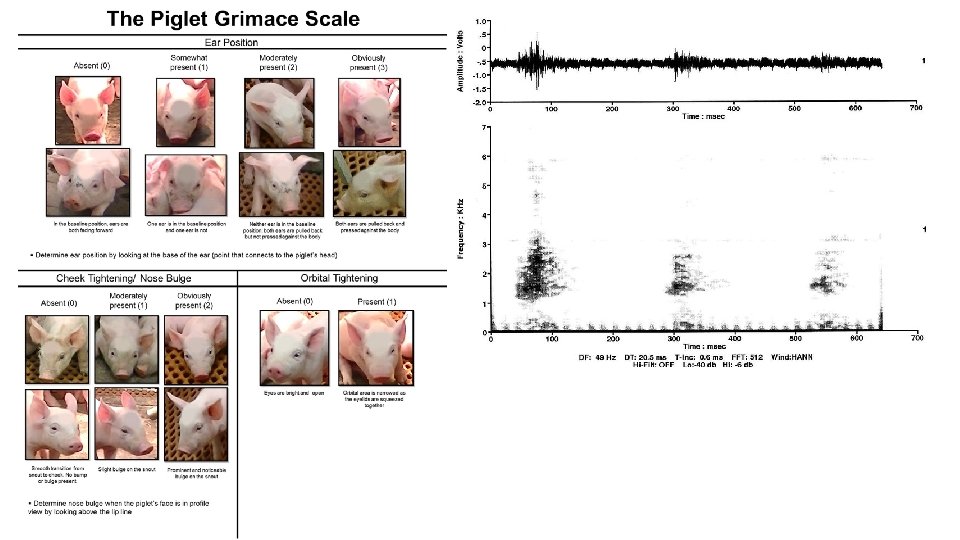
• According to Peter Singer, why might killing a sociable animal be worse than killing an animal that doesn’t live in social groups? • Describe the importance of mother-infant social bonds. How do piglets respond to separation from their mother? Why? (an evolution question) • Review cognitive bias testing methods. • What is problematic for Jake in terms of eating a Dabbitt? How does this relate to the research on interactions between humans and pet pigs? • How does Mike Mendl relate this dilemma to animal research decisions? Review Singer’s equal consideration of interest theory and speciesism. • What does the computer tell Jake to do? What type of ethical lens is the computer using? How does Roger Scruton question this approach?
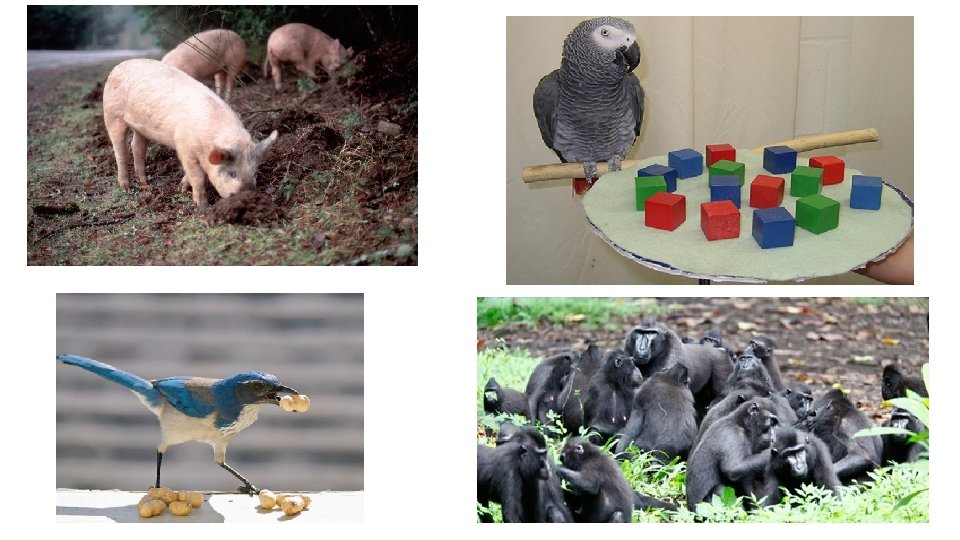
• • • • What do parrotbears make you think of? (hint, they cache) Why might being autonomous be important, according to Singer? How could you begin to investigate whether an animal has autonomy? According to Clayton, what is the difference between a scrub jay and a washing machine? What experiment demonstrated this? Be able to identify Singer’s replaceability theory in the example used for prawns. What is Roger Scruton’s view of how similar or different humans are to animals Describe Saint Thomas Aquinas view on animals. What makes humans different? Review the ethical framework diagram and what a moral agent and a moral recipient is. Where animals in this framework? What is the difference between animal welfare and animal rights? How does Steven Wise make an argument for animal rights, by referring to children, women, and slaves. What is personhood? What is the “writ of habeas corpus”? Does Scruton believe that a chimpanzee has the same rights as a person? What is his argument? Do animals have a sense of social justice? How does this relate to de Waal’s Ted talk and presentation of morality in apes? What criticisms do you have on the study with dogs that was detailed by Brooks? Why did Jake decide not to eat the parrotbears? Why did Jake decide not to eat one of the trinos? Why did Jake decide to kill and eat Scraps? Do you agree with Jake’s decision?