
Animal Cognition Aristotle Classification Scala Naturae God Angels
- Slides: 17
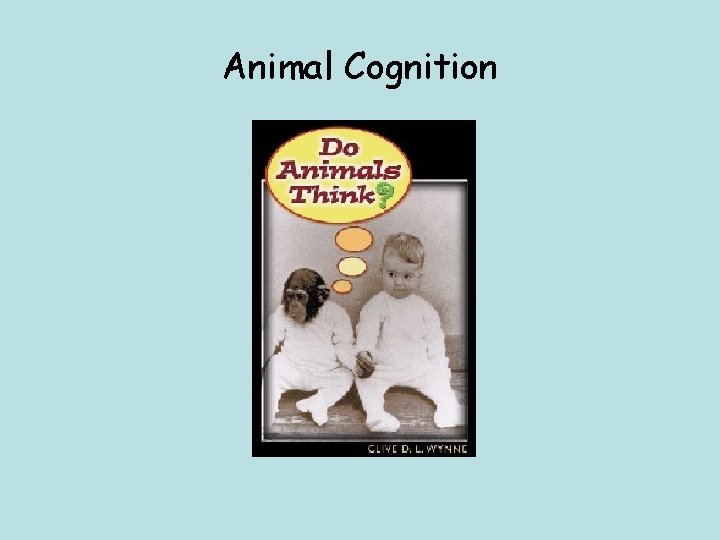
Animal Cognition
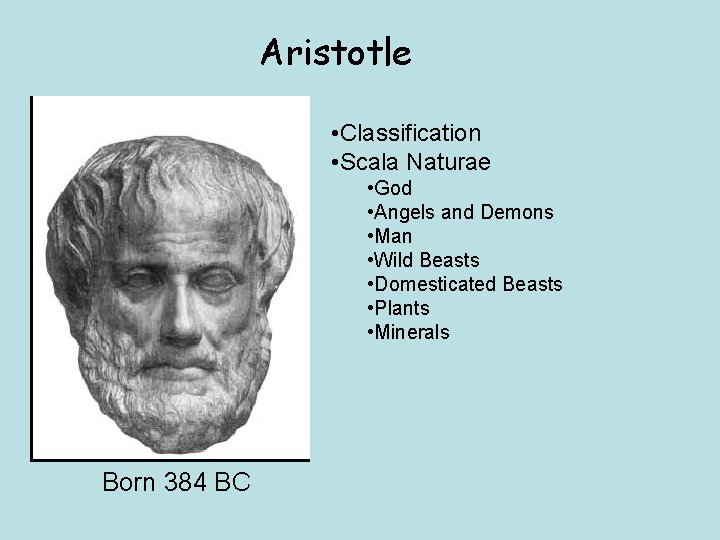
Aristotle • Classification • Scala Naturae • God • Angels and Demons • Man • Wild Beasts • Domesticated Beasts • Plants • Minerals Born 384 BC
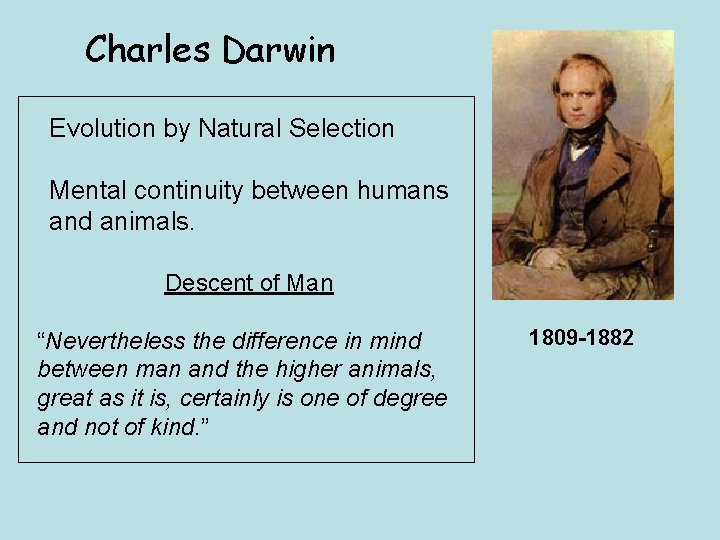
Charles Darwin Evolution by Natural Selection Mental continuity between humans and animals. Descent of Man “Nevertheless the difference in mind between man and the higher animals, great as it is, certainly is one of degree and not of kind. ” 1809 -1882
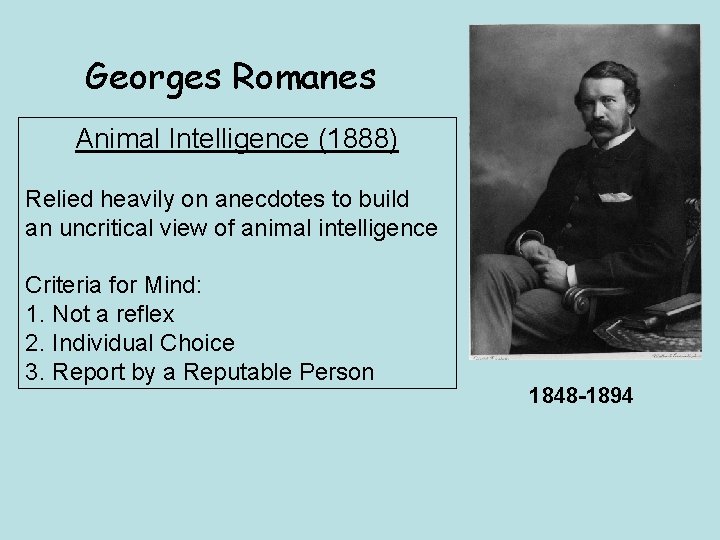
Georges Romanes Animal Intelligence (1888) Relied heavily on anecdotes to build an uncritical view of animal intelligence Criteria for Mind: 1. Not a reflex 2. Individual Choice 3. Report by a Reputable Person 1848 -1894
Some Examples • • • Horses and inclined planes Earwig “Tim” comes to breakfast Cats and mechanical understanding Scorpions commit suicide Sympathetic ants
Excerpted from George Romanes' book Animal Intelligence (1888) One day, watching a small column of these ants, I placed a little stone on one of them to secure it. The next that approached, as soon as it discovered its situation, ran backwards in an agitated manner, and soon communicated the intelligence to the others. They rushed to the rescue; some bit at the stone and tried to move it, others seized the prisoner by the legs and tugged with such force that I thought the legs would be pulled off, but they persevered until they got the captive free. This observation seems unequivocal as proving fellow-feeling and sympathy.
Evolution of Intelligence • • • Apes, Dogs Monkey, Elephant Birds Bee Reptiles Fish Snail Starfish Jellyfish • • • Morality Tool Use Understand Words Communicate Ideas Recognize People Similarity Contiguity Memory Conscious (pain)
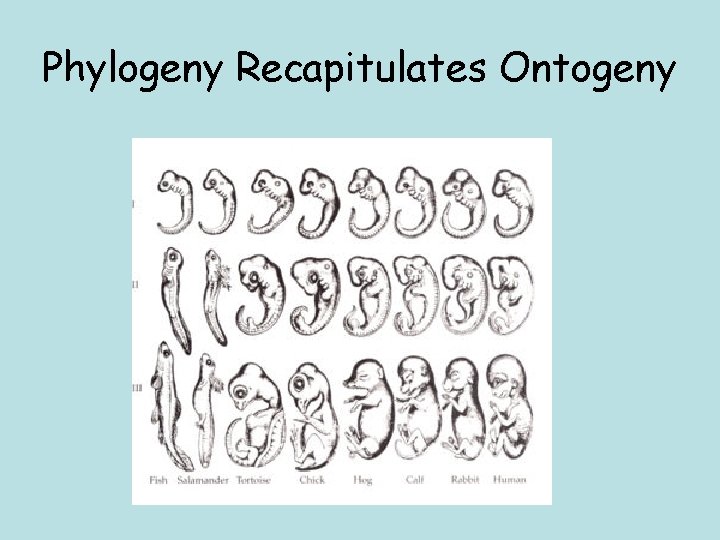
Phylogeny Recapitulates Ontogeny
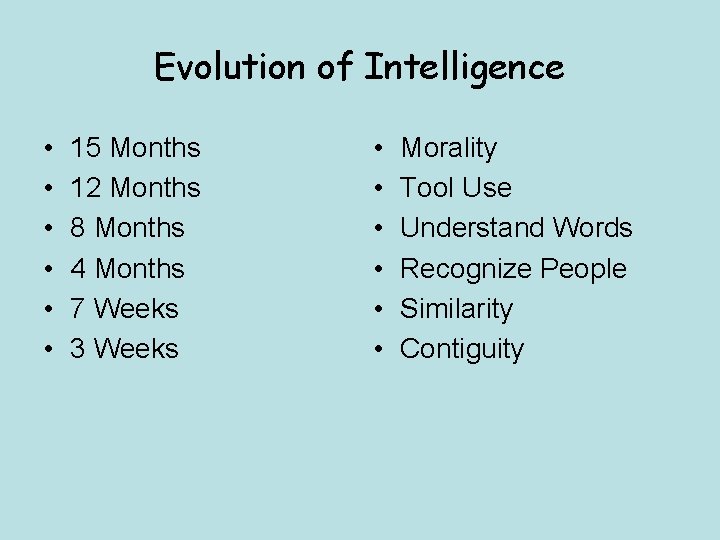
Evolution of Intelligence • • • 15 Months 12 Months 8 Months 4 Months 7 Weeks 3 Weeks • • • Morality Tool Use Understand Words Recognize People Similarity Contiguity
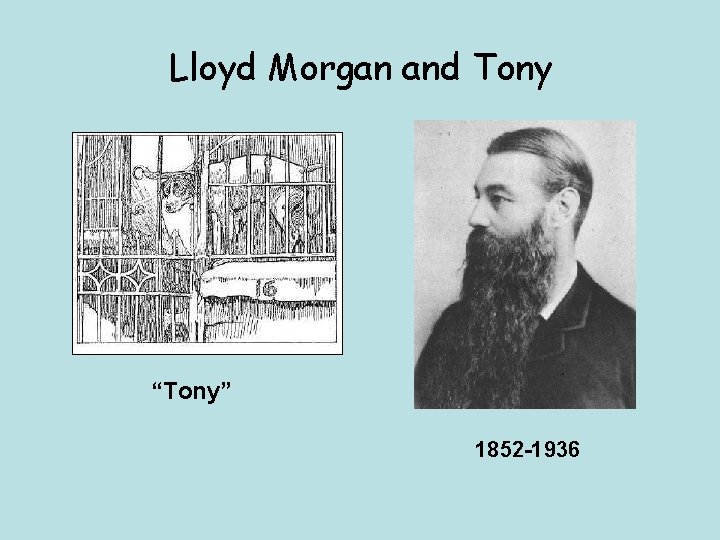
Lloyd Morgan and Tony “Tony” 1852 -1936
Morgan’s Canon “In no case may we interpret an action as the outcome of the exercise of a higher psychical faculty, if it can be interpreted as the outcome of one which stands lower in the psychological scale. ”
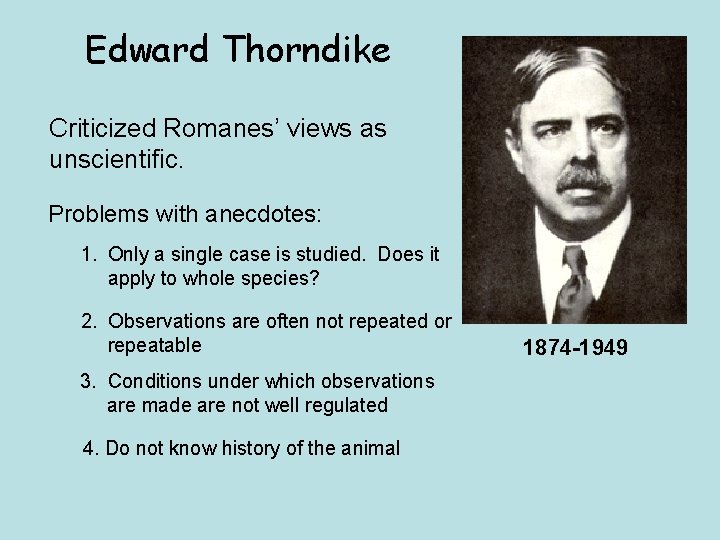
Edward Thorndike Criticized Romanes’ views as unscientific. Problems with anecdotes: 1. Only a single case is studied. Does it apply to whole species? 2. Observations are often not repeated or repeatable 3. Conditions under which observations are made are not well regulated 4. Do not know history of the animal 1874 -1949
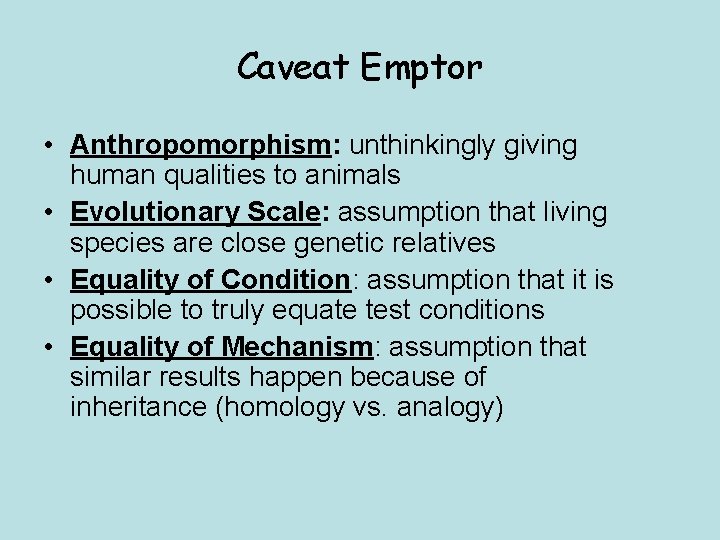
Caveat Emptor • Anthropomorphism: unthinkingly giving human qualities to animals • Evolutionary Scale: assumption that living species are close genetic relatives • Equality of Condition: assumption that it is possible to truly equate test conditions • Equality of Mechanism: assumption that similar results happen because of inheritance (homology vs. analogy)
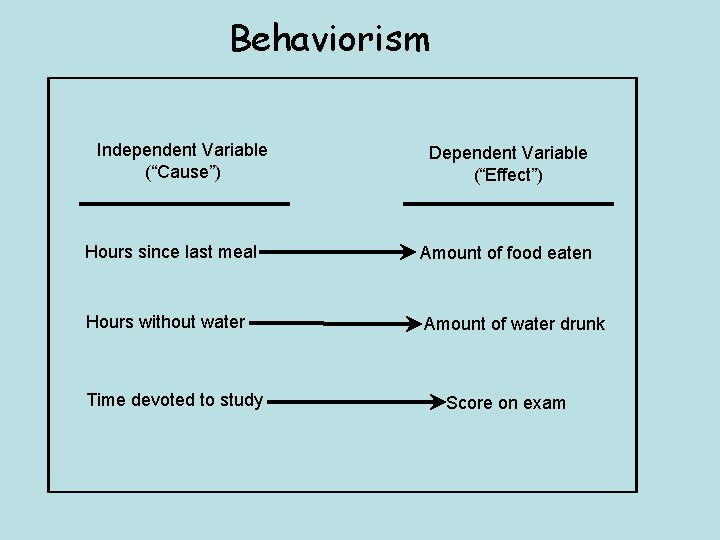
Behaviorism Independent Variable (“Cause”) Dependent Variable (“Effect”) Hours since last meal Amount of food eaten Hours without water Amount of water drunk Time devoted to study Score on exam
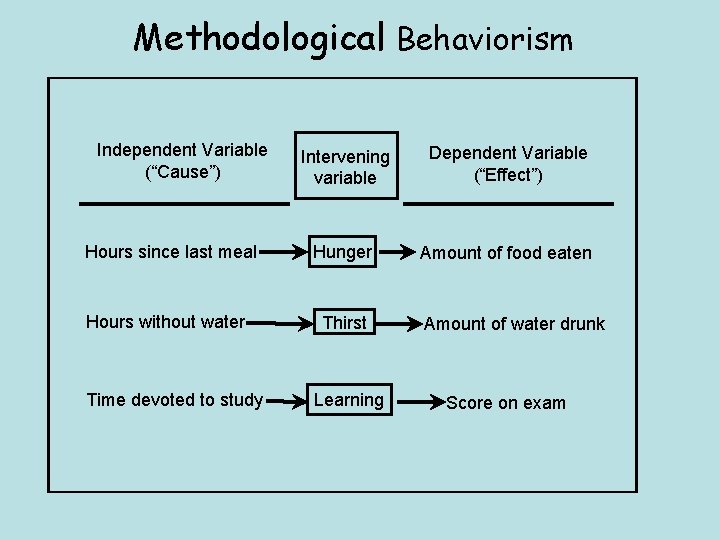
Methodological Behaviorism Independent Variable (“Cause”) Intervening variable Dependent Variable (“Effect”) Hours since last meal Hunger Amount of food eaten Hours without water Thirst Time devoted to study Learning Amount of water drunk Score on exam
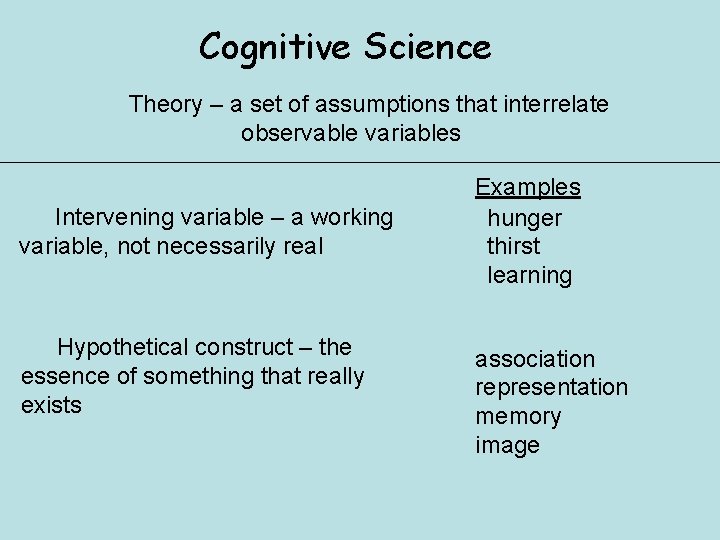
Cognitive Science Theory – a set of assumptions that interrelate observable variables Intervening variable – a working variable, not necessarily real Hypothetical construct – the essence of something that really exists Examples hunger thirst learning association representation memory image
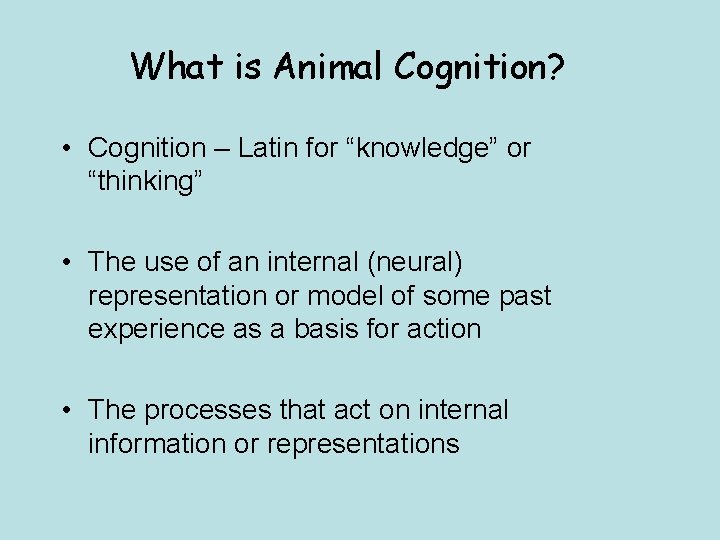
What is Animal Cognition? • Cognition – Latin for “knowledge” or “thinking” • The use of an internal (neural) representation or model of some past experience as a basis for action • The processes that act on internal information or representations