
Animal Classification Animals Animals are spilt into two

- Slides: 23
Animal Classification
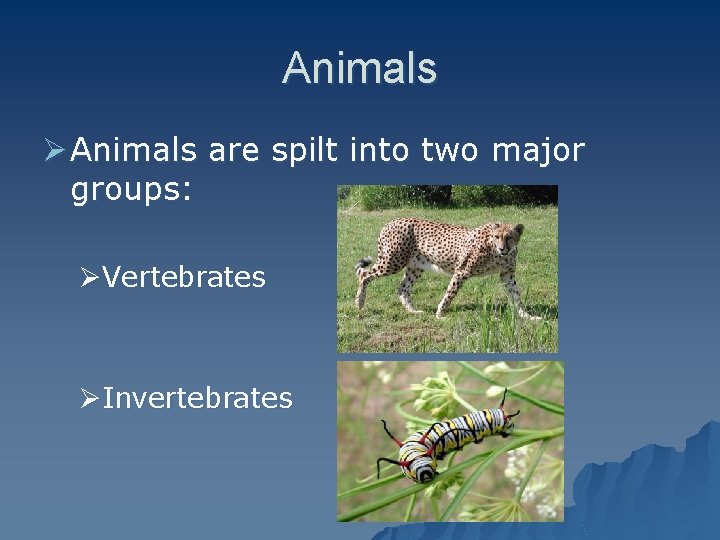
Animals Ø Animals are spilt into two major groups: ØVertebrates ØInvertebrates
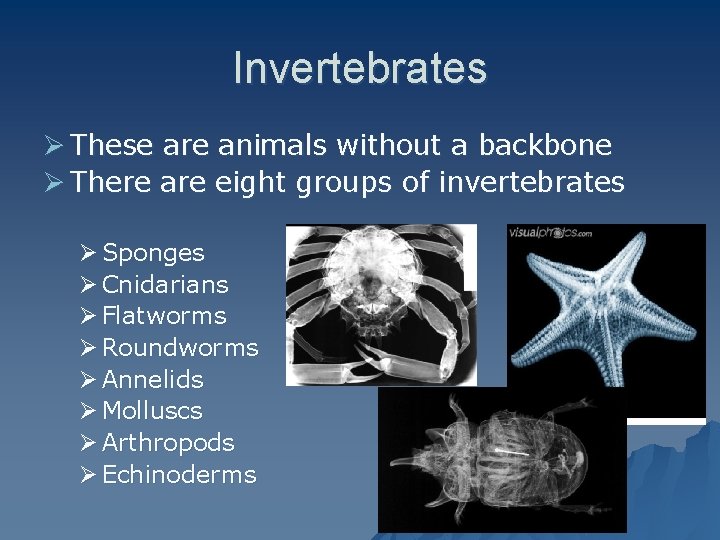
Invertebrates Ø These are animals without a backbone Ø There are eight groups of invertebrates Ø Sponges Ø Cnidarians Ø Flatworms Ø Roundworms Ø Annelids Ø Molluscs Ø Arthropods Ø Echinoderms
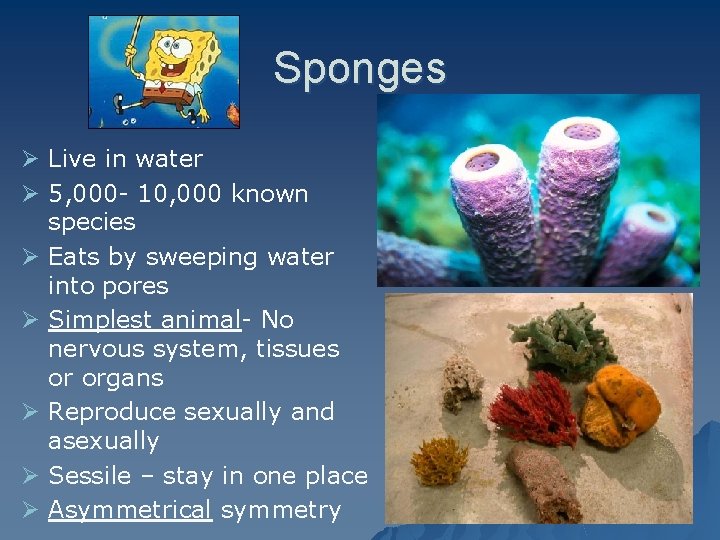
Sponges Ø Live in water Ø 5, 000 - 10, 000 known species Ø Eats by sweeping water into pores Ø Simplest animal- No nervous system, tissues or organs Ø Reproduce sexually and asexually Ø Sessile – stay in one place Ø Asymmetrical symmetry
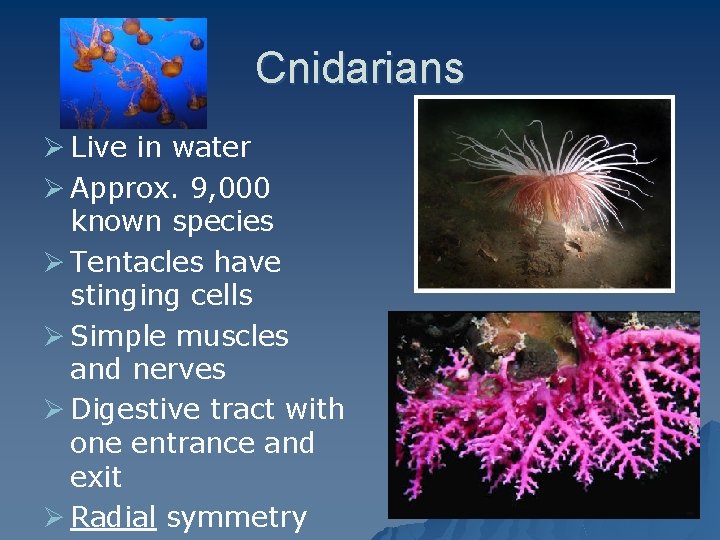
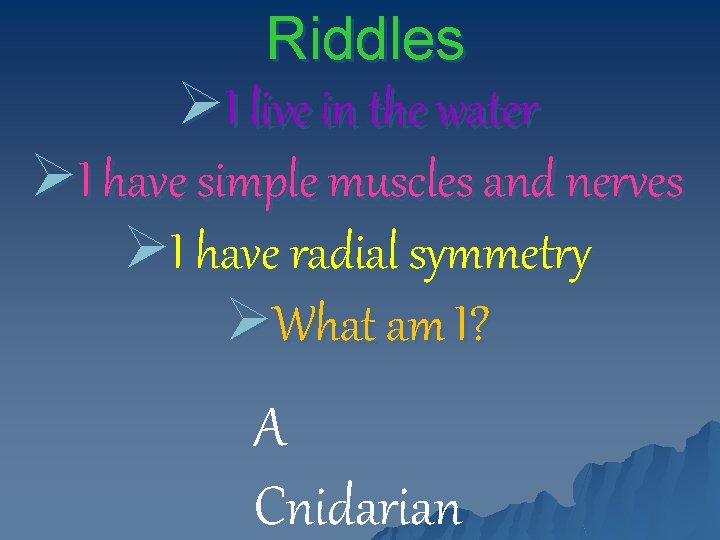
Cnidarians Ø Live in water Ø Approx. 9, 000 known species Ø Tentacles have stinging cells Ø Simple muscles and nerves Ø Digestive tract with one entrance and exit Ø Radial symmetry
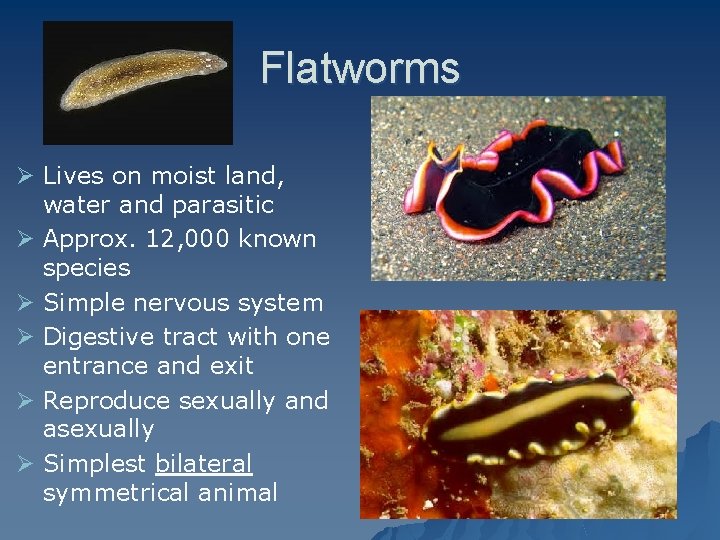
Flatworms Ø Lives on moist land, water and parasitic Ø Approx. 12, 000 known species Ø Simple nervous system Ø Digestive tract with one entrance and exit Ø Reproduce sexually and asexually Ø Simplest bilateral symmetrical animal
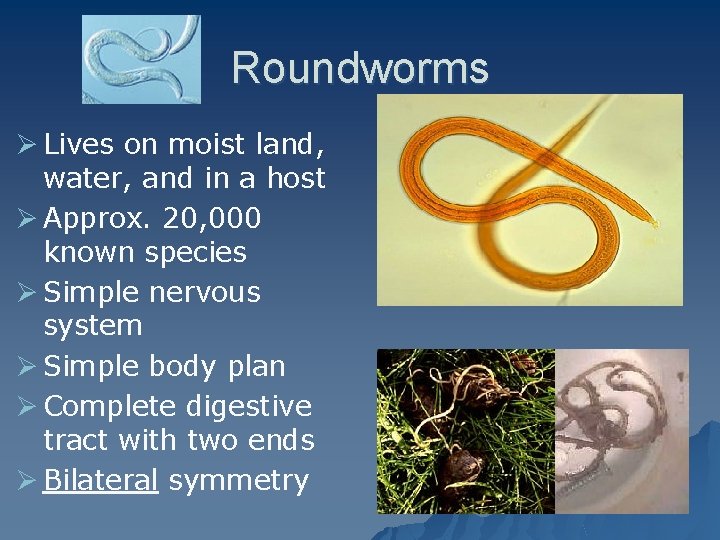
Roundworms Ø Lives on moist land, water, and in a host Ø Approx. 20, 000 known species Ø Simple nervous system Ø Simple body plan Ø Complete digestive tract with two ends Ø Bilateral symmetry
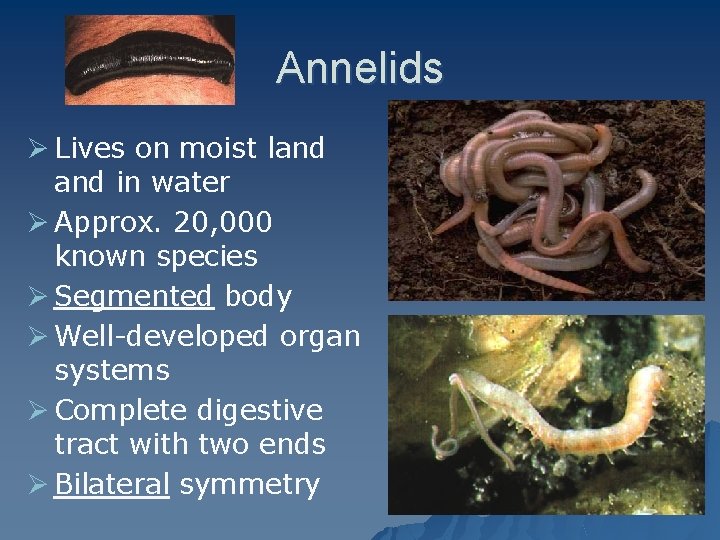
Annelids Ø Lives on moist land in water Ø Approx. 20, 000 known species Ø Segmented body Ø Well-developed organ systems Ø Complete digestive tract with two ends Ø Bilateral symmetry
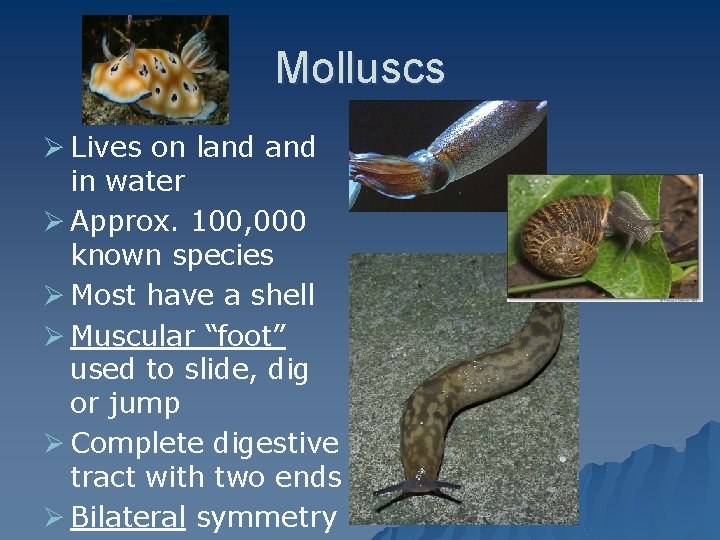
Molluscs Ø Lives on land in water Ø Approx. 100, 000 known species Ø Most have a shell Ø Muscular “foot” used to slide, dig or jump Ø Complete digestive tract with two ends Ø Bilateral symmetry
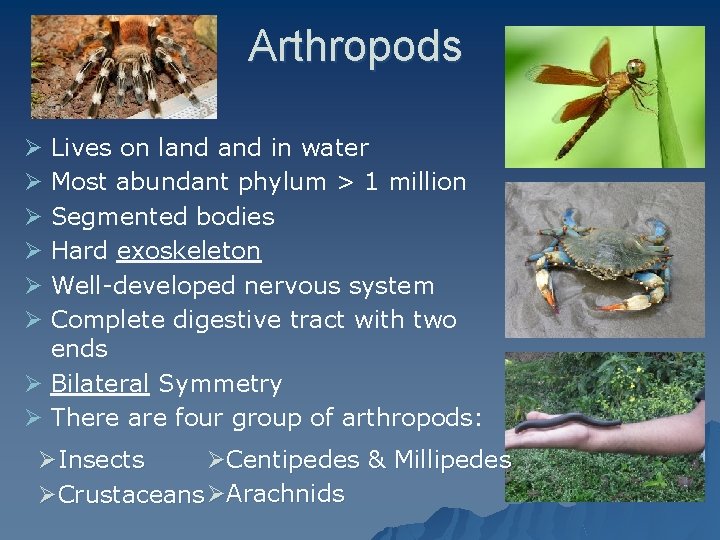
Arthropods Lives on land in water Most abundant phylum > 1 million Segmented bodies Hard exoskeleton Well-developed nervous system Complete digestive tract with two ends Ø Bilateral Symmetry Ø There are four group of arthropods: Ø Ø Ø ØCentipedes & Millipedes ØInsects ØCrustaceans ØArachnids
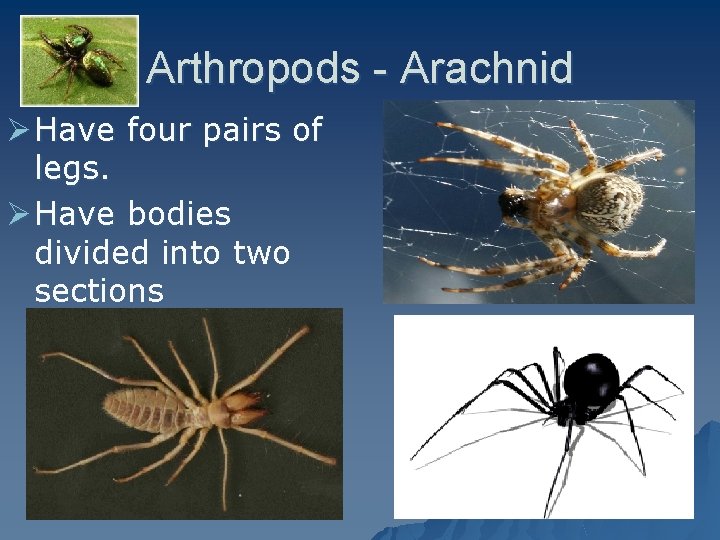
Arthropods - Arachnid Ø Have four pairs of legs. Ø Have bodies divided into two sections
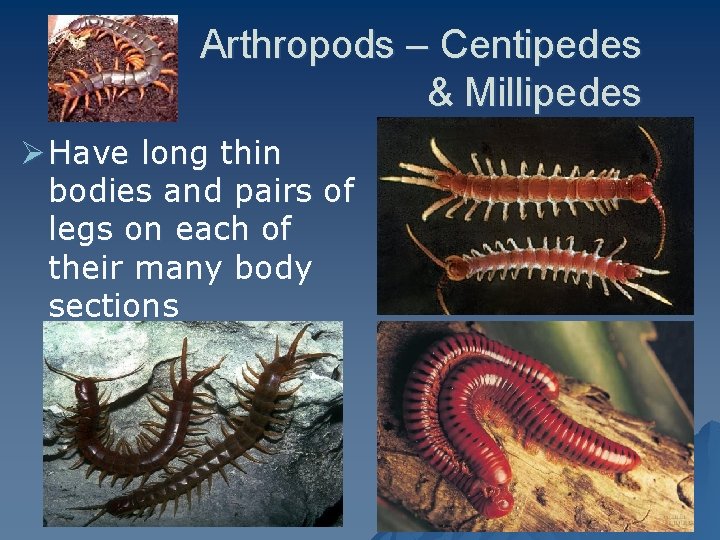
Arthropods – Centipedes & Millipedes Ø Have long thin bodies and pairs of legs on each of their many body sections
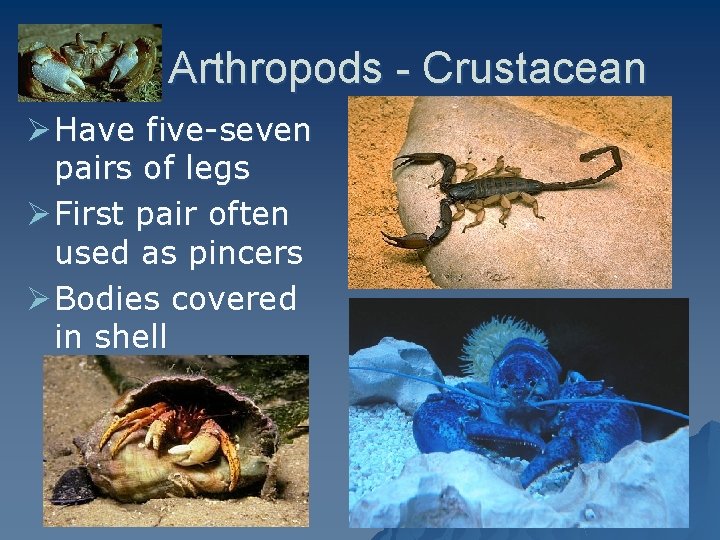
Arthropods - Crustacean Ø Have five-seven pairs of legs Ø First pair often used as pincers Ø Bodies covered in shell
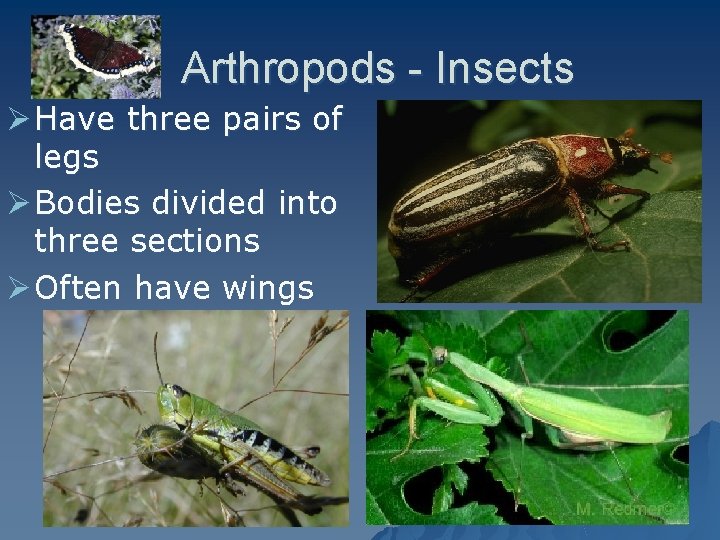
Arthropods - Insects Ø Have three pairs of legs Ø Bodies divided into three sections Ø Often have wings
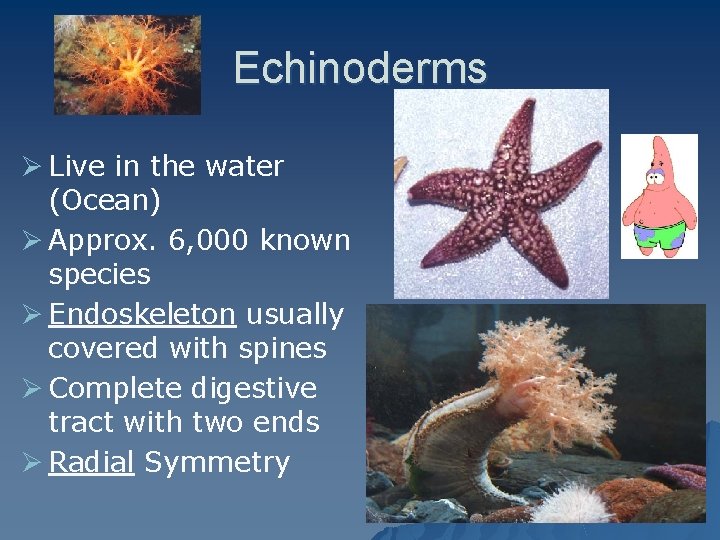
Echinoderms Ø Live in the water (Ocean) Ø Approx. 6, 000 known species Ø Endoskeleton usually covered with spines Ø Complete digestive tract with two ends Ø Radial Symmetry
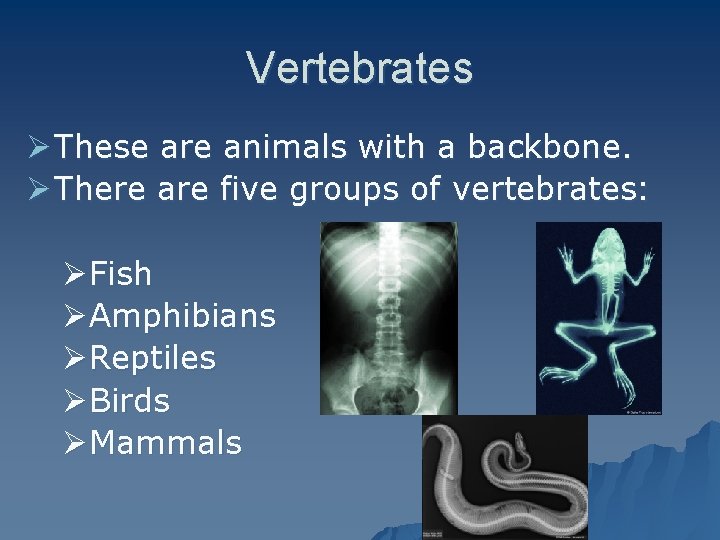
Vertebrates Ø These are animals with a backbone. Ø There are five groups of vertebrates: ØFish ØAmphibians ØReptiles ØBirds ØMammals
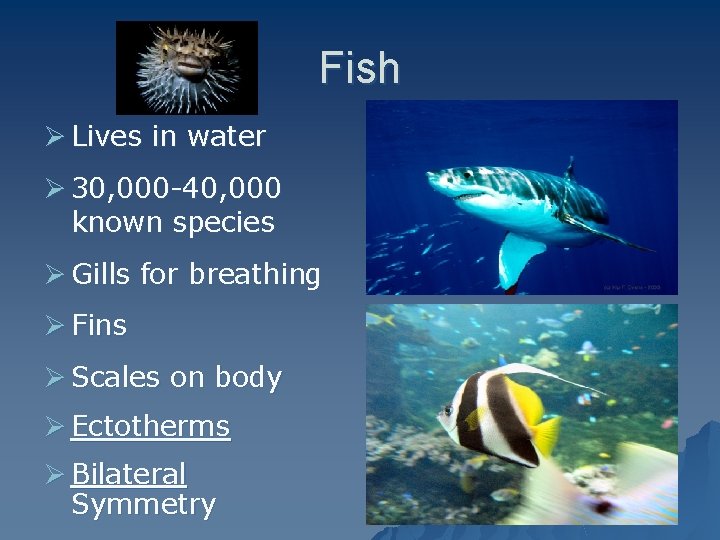
Fish Ø Lives in water Ø 30, 000 -40, 000 known species Ø Gills for breathing Ø Fins Ø Scales on body Ø Ectotherms Ø Bilateral Symmetry
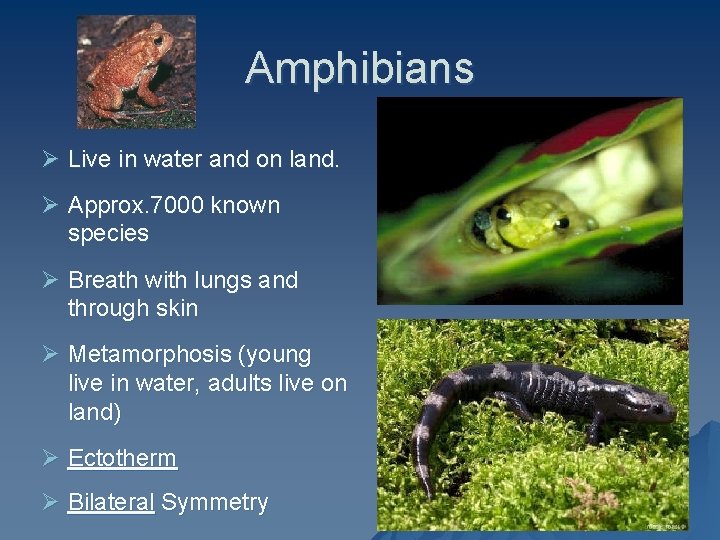
Amphibians Ø Live in water and on land. Ø Approx. 7000 known species Ø Breath with lungs and through skin Ø Metamorphosis (young live in water, adults live on land) Ø Ectotherm Ø Bilateral Symmetry
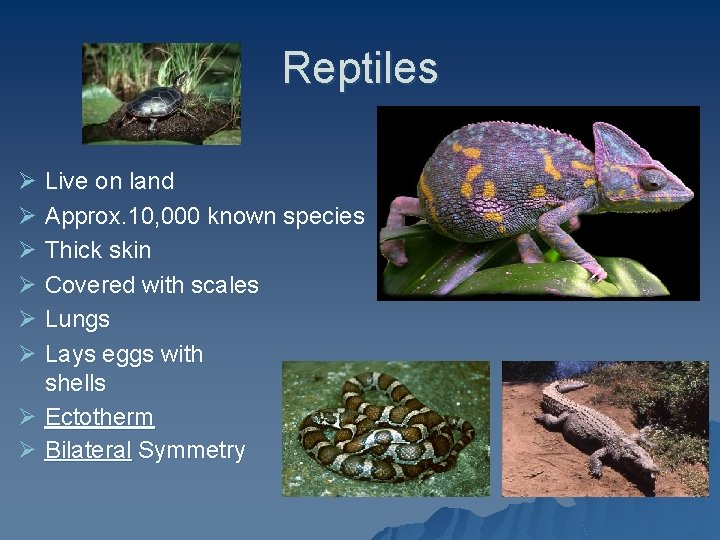
Reptiles Ø Live on land Ø Approx. 10, 000 known species Ø Thick skin Ø Covered with scales Ø Lungs Ø Lays eggs with shells Ø Ectotherm Ø Bilateral Symmetry
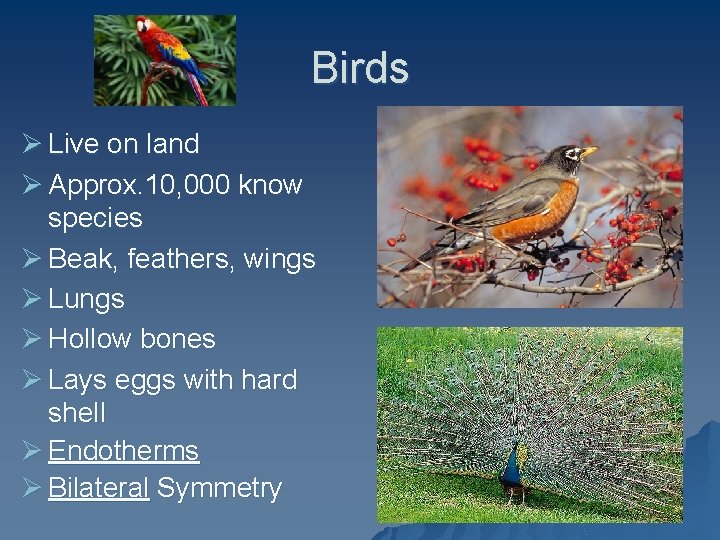
Birds Ø Live on land Ø Approx. 10, 000 know species Ø Beak, feathers, wings Ø Lungs Ø Hollow bones Ø Lays eggs with hard shell Ø Endotherms Ø Bilateral Symmetry
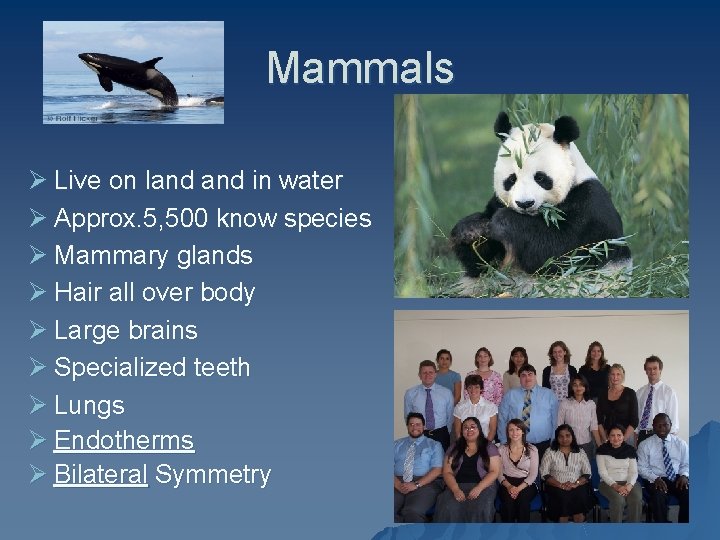
Mammals Ø Live on land in water Ø Approx. 5, 500 know species Ø Mammary glands Ø Hair all over body Ø Large brains Ø Specialized teeth Ø Lungs Ø Endotherms Ø Bilateral Symmetry
Riddles ØI live in the water ØI have simple muscles and nerves ØI have radial symmetry ØWhat am I? A Cnidarian
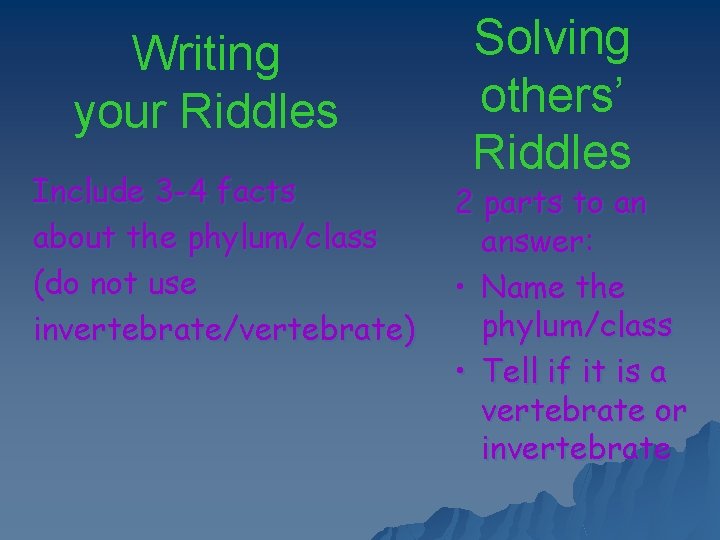
Writing your Riddles Include 3 -4 facts about the phylum/class (do not use invertebrate/vertebrate) Solving others’ Riddles 2 parts to an answer: • Name the phylum/class • Tell if it is a vertebrate or invertebrate