
Animal Classification A Writing Across Curriculum Activity Grade




- Slides: 25
Animal Classification A Writing Across Curriculum Activity
Grade 4 The learner will be able to classify animals by type according to their characteristics. n Students will categorize the 5 groups of animals. (Mammals, fish, birds, reptiles, & amphibians). n
At the end of this activity you will: n Write a report on one classification of animal and include facts from this presentation.
What is an animal? Animals are living organisms. This means they breathe, they eat, they grow and they reproduce (make more like themselves). Plants are living organisms, too. n So, what is the difference between a plant and an animal? n ¨ Plants do not move, whereas most animals do. ¨ The true difference, though, is that plants produce their own food, whereas animals feed off other things.
Classification? n Animals are separated into groups or categories so that they are more easily studied and discussed by scientists and others.
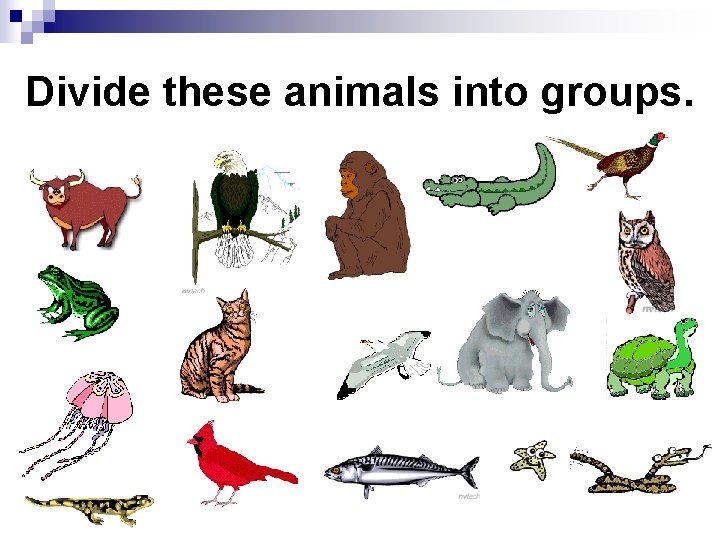
Divide these animals into groups.
Animal Classification Did you group the animals based on n Color n Size n Shape n Eating habits n Living habits
We are going to learn how animals are grouped or classified by learning about these groups: n Mammals n Fish n Birds n Reptiles n Amphibians
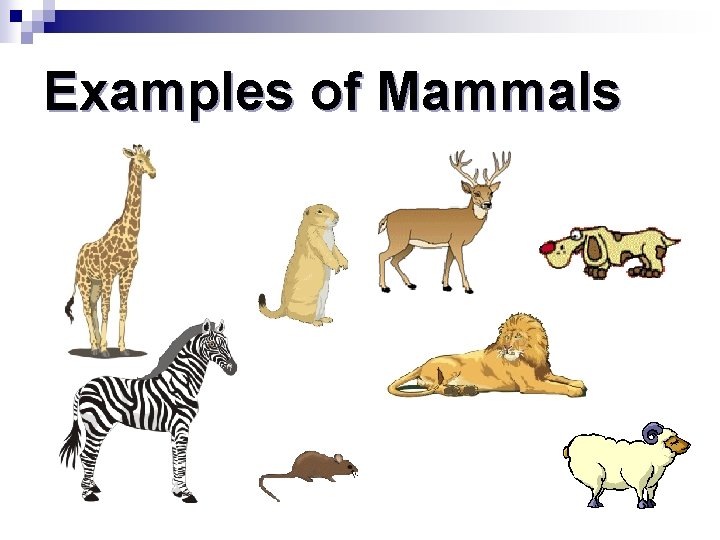
Mammals Characteristics: n Have teeth n Have hair n Are warm blooded n Have a single jaw bone n Have inner ear bones n Produce milk for their young
Mammals n Mammals have larger brains and seem to be the most capable learners. n All mammalian mothers nourish their babies with milk.
Examples of Mammals
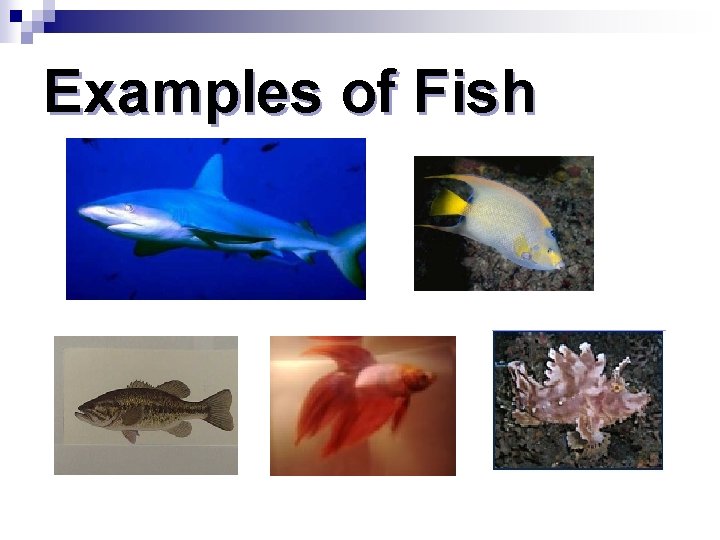
Fish Characteristics: n Are cold-blooded vertebrate (backbone) n Live in water n Usually have paired fins, gills, and scales
Fish n Most fish lay large numbers of eggs, but some have live birth. n Most fish breathe by drawing water over four or five pairs of gills.
Examples of Fish
Amphibians Characteristics: n Are cold-blooded vertebrate (backbone) n Lay their eggs in water n Lack any skin coverings such as fur, scales or feathers
Amphibians n Young amphibians tend to resemble small fish. n Amphibian means "two lives, " a reference to the change that frogs go through as they move from egg to tadpole to frog. n Even as adults, most frogs and other amphibians must stay close to water.
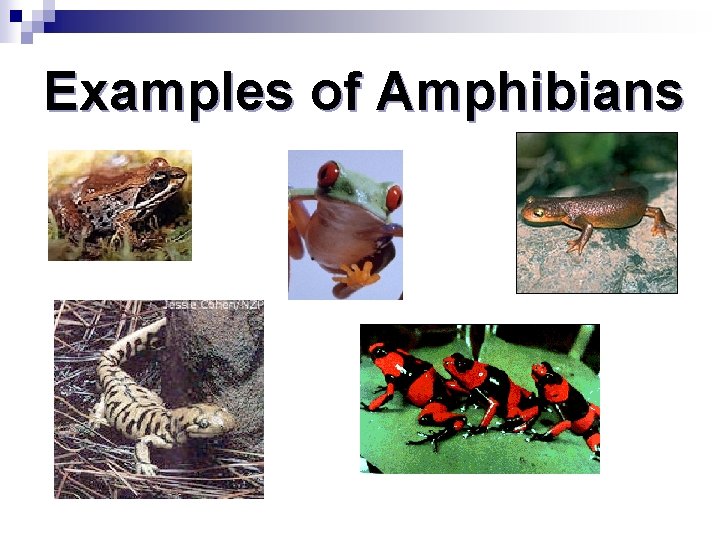
Examples of Amphibians
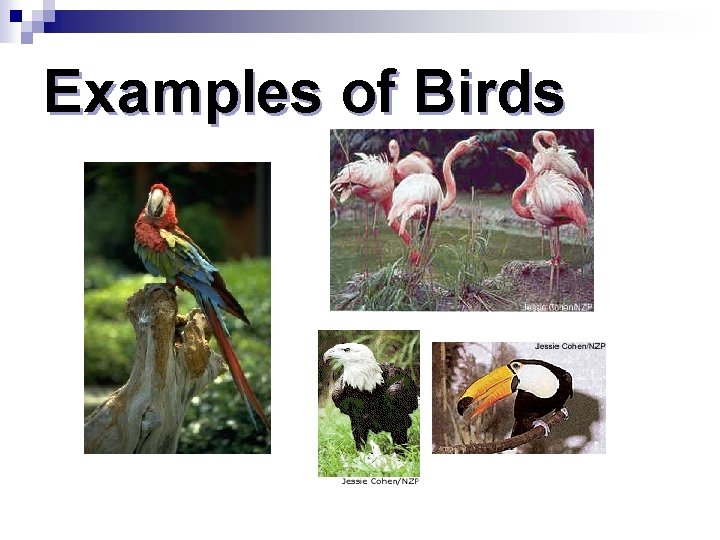
Birds Characteristics: n Have feathers n Lay eggs n Have bodies specially adapted for flight n Have a beak rather than teeth
Birds n Their nearly hollow bones provide lightweight strength. n Birds now live almost everywhere on Earth.
Examples of Birds
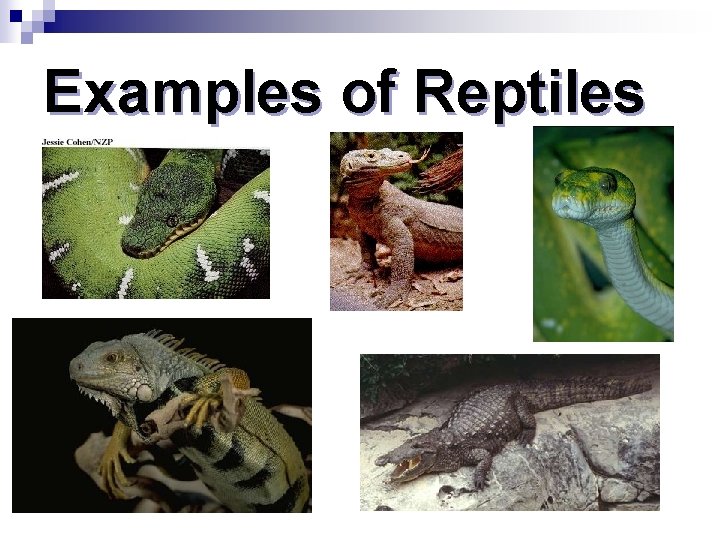
Reptiles Characteristics: n Have scales n Lay leathery eggs on land n Are often called cold-blooded because they can't regulate their own body temperature
Reptiles n Reptiles do not use energy to fuel internal "furnaces" n Although reptiles breathe through lungs, some reptiles can also absorb oxygen in water through their mouth.
Examples of Reptiles
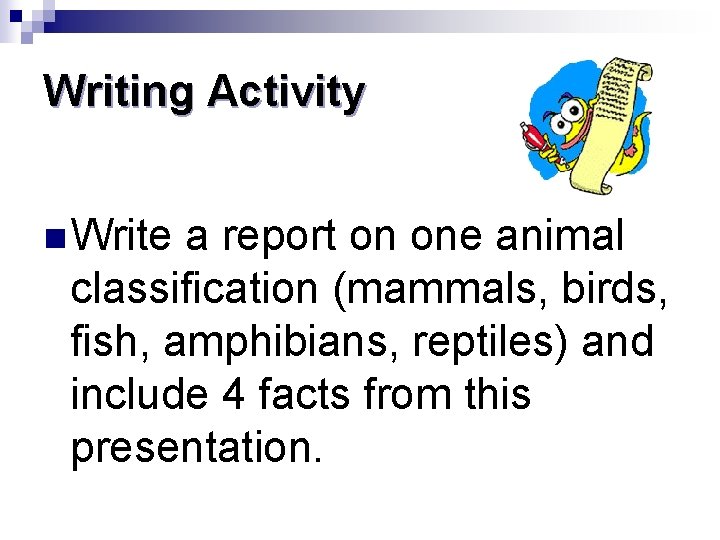
Writing Activity n Write a report on one animal classification (mammals, birds, fish, amphibians, reptiles) and include 4 facts from this presentation.
Resources n Quia Classification Quiz n Charts: Animal classification, Fish, Bird, Amphibian, Animals, n The Animal Kingdom