
Animal Characteristics Characteristics of animals Feeding Must consume
- Slides: 14
Animal Characteristics
Characteristics of animals Feeding- Must consume food. Does not produce it’s own food. Heterotrophic Respiration- Takes in oxygen and gives off CO 2 Circulation-Has a means to distribute O 2 Excretion- Means to eliminate waste Response –Respond to environment using specialized cells Movement-Able to move from one place to another. Mobile Reproduction- Able to reproduce sexually Eukaryotic- Cell with cell membrane and true nuclei.
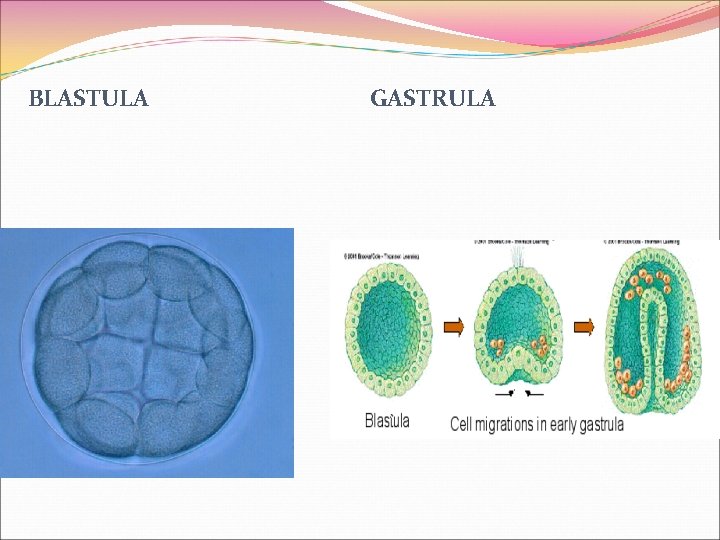
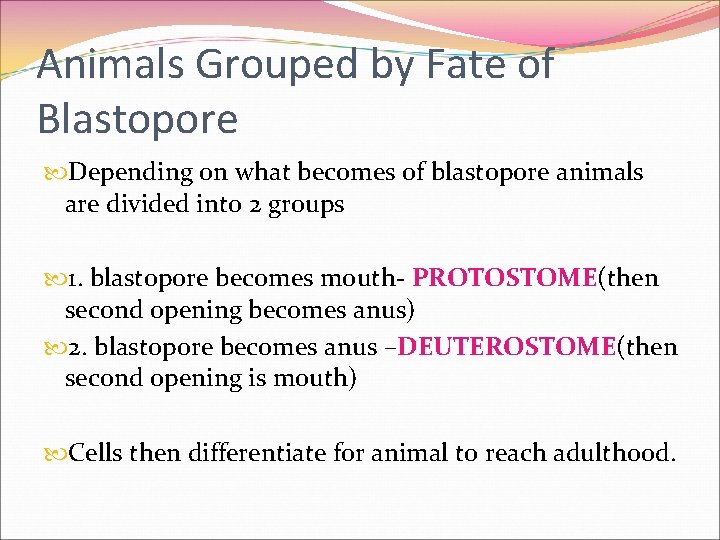
Development of animals 1. 2. 3. 4. 5. Fertilization- sperm and egg join together (1 n+1 n=2 n) Mitosis of 2 n cell = 2 cells, 4 cells, 8 cells, . 16… 32……. Now get a hollow ball of cells called a BLASTULA that is filled with fluid One side of blastula pinches inward to form GASTRULA Hole that forms is called BLASTOPORE
BLASTULA GASTRULA
Animals Grouped by Fate of Blastopore Depending on what becomes of blastopore animals are divided into 2 groups 1. blastopore becomes mouth- PROTOSTOME(then second opening becomes anus) 2. blastopore becomes anus –DEUTEROSTOME(then second opening is mouth) Cells then differentiate for animal to reach adulthood.
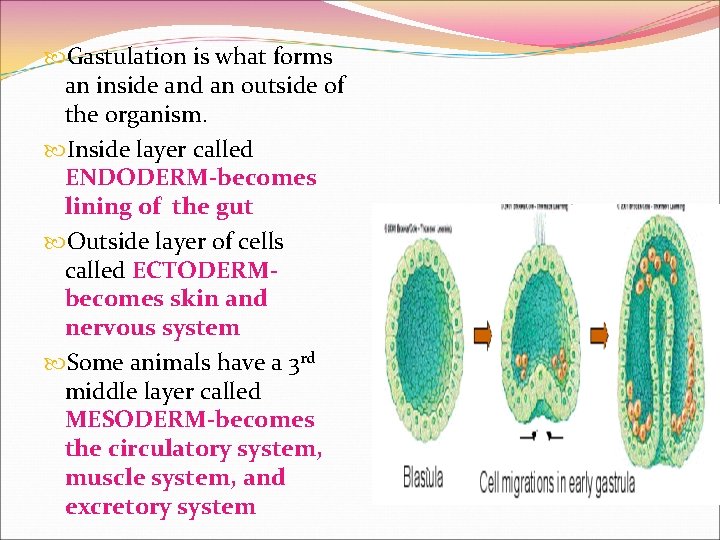
Gastulation is what forms an inside and an outside of the organism. Inside layer called ENDODERM-becomes lining of the gut Outside layer of cells called ECTODERMbecomes skin and nervous system Some animals have a 3 rd middle layer called MESODERM-becomes the circulatory system, muscle system, and excretory system
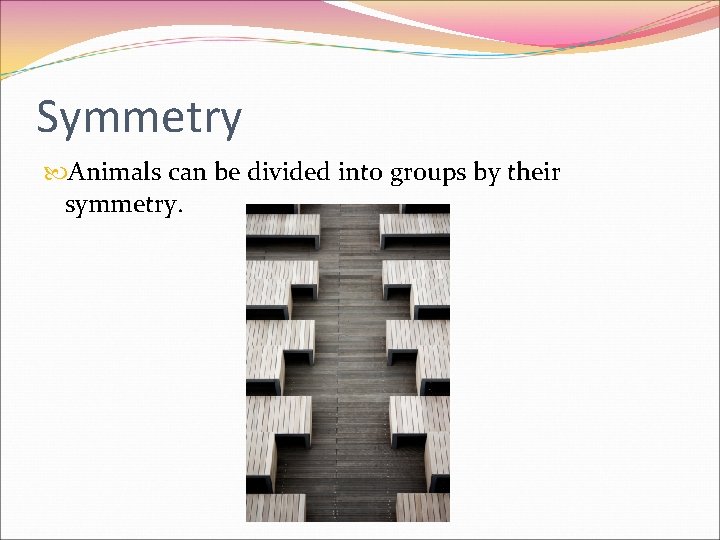
Symmetry Animals can be divided into groups by their symmetry.
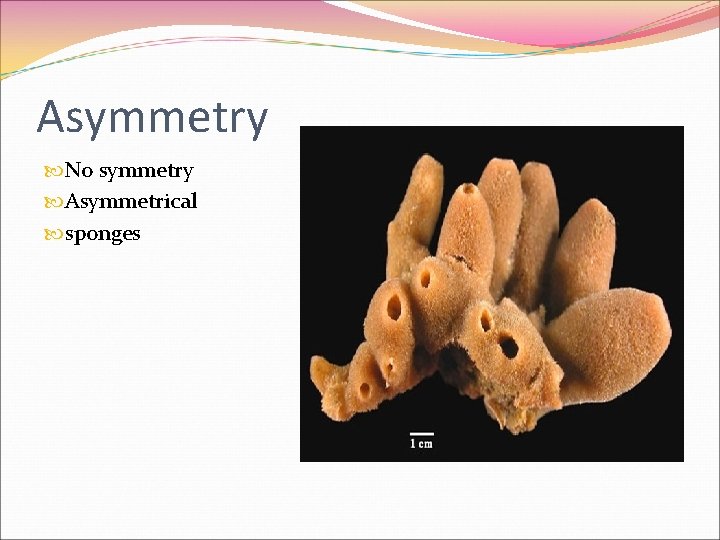
Asymmetry No symmetry Asymmetrical sponges
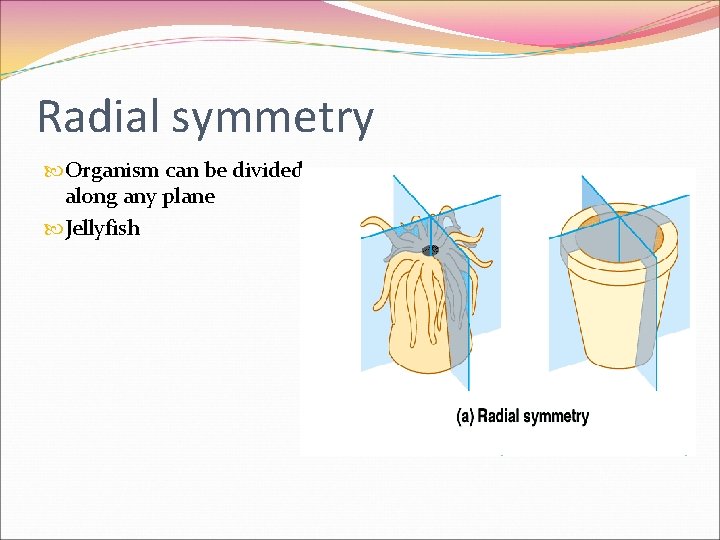
Radial symmetry Organism can be divided along any plane Jellyfish
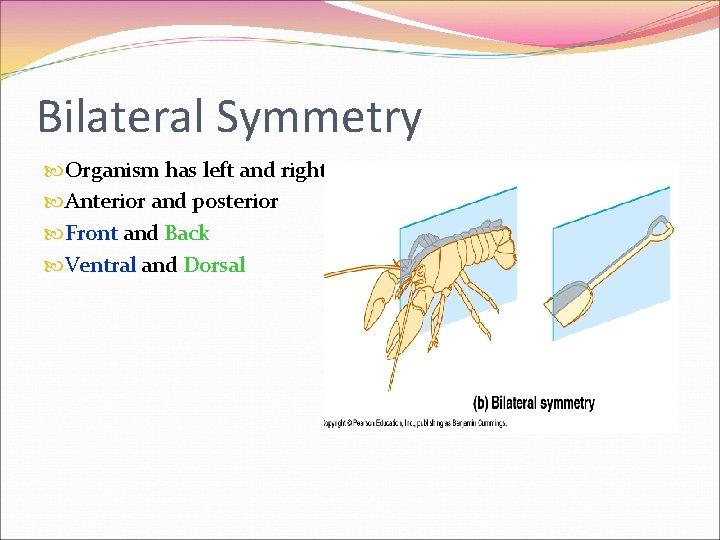
Bilateral Symmetry Organism has left and right Anterior and posterior Front and Back Ventral and Dorsal
Animals with 3 body layers(Ectoderm, Endoderm, and Mesoderm) can be divided into 3 groups depending on how much of their body cavity is covered by mesoderm. Body cavity is called COELOME
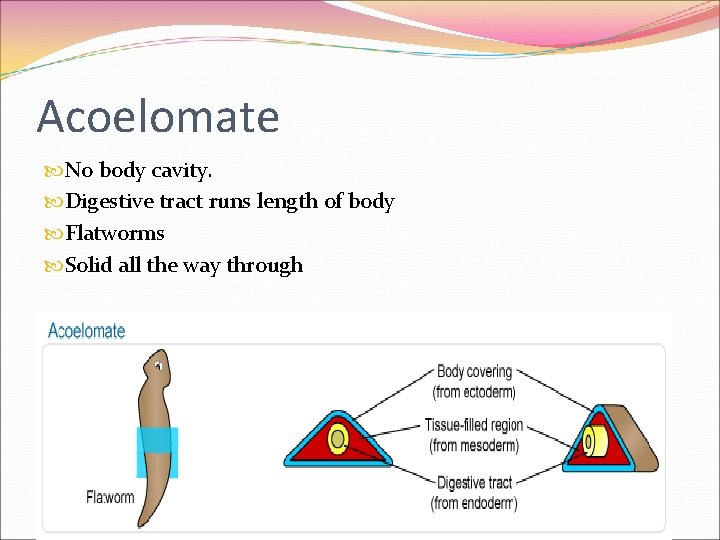
Acoelomate No body cavity. Digestive tract runs length of body Flatworms Solid all the way through
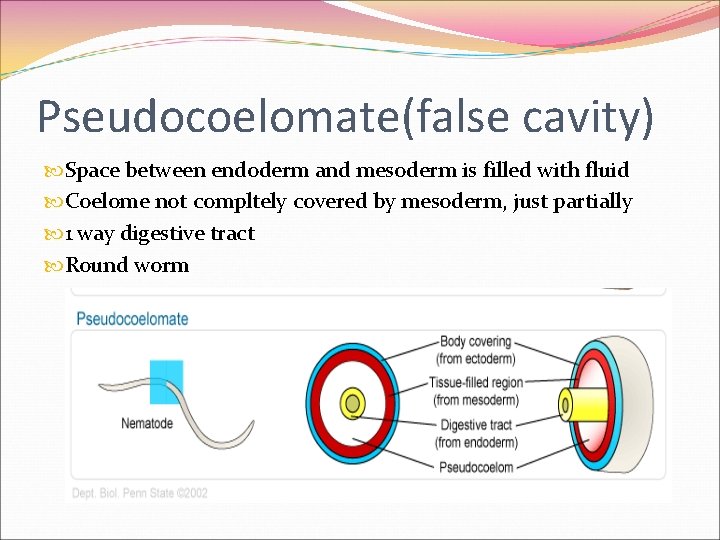
Pseudocoelomate(false cavity) Space between endoderm and mesoderm is filled with fluid Coelome not compltely covered by mesoderm, just partially 1 way digestive tract Round worm
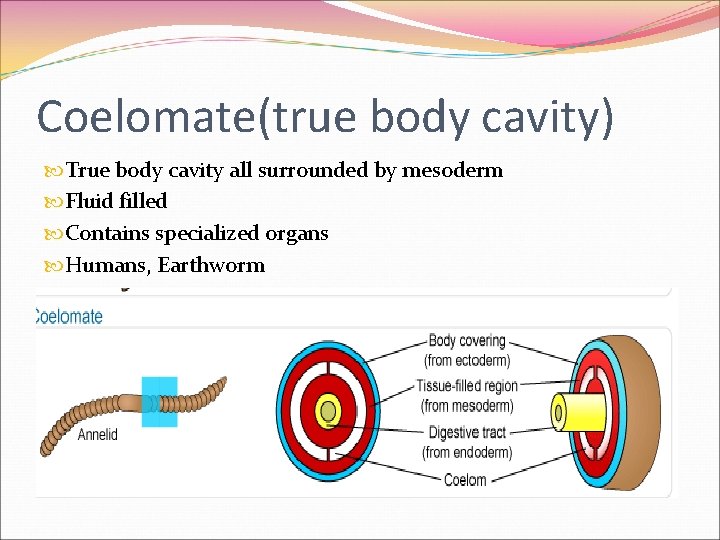
Coelomate(true body cavity) True body cavity all surrounded by mesoderm Fluid filled Contains specialized organs Humans, Earthworm