
Animal Cardiovascular and Respiratory System Chapter 39 GAS
- Slides: 41
Animal Cardiovascular and Respiratory System Chapter 39
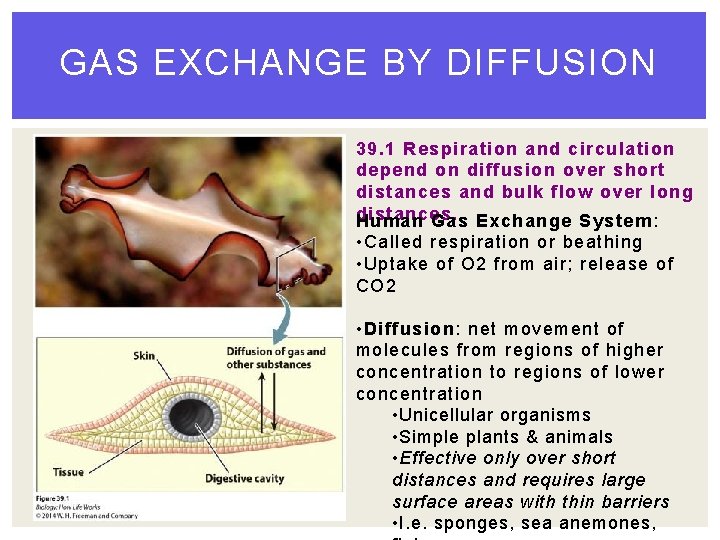
GAS EXCHANGE BY DIFFUSION 39. 1 Respiration and circulation depend on diffusion over short distances and bulk flow over long distances. Human Gas Exchange System: • Called respiration or beathing • Uptake of O 2 from air; release of CO 2 • Diffusion: net movement of molecules from regions of higher concentration to regions of lower concentration • Unicellular organisms • Simple plants & animals • Effective only over short distances and requires large surface areas with thin barriers • I. e. sponges, sea anemones,
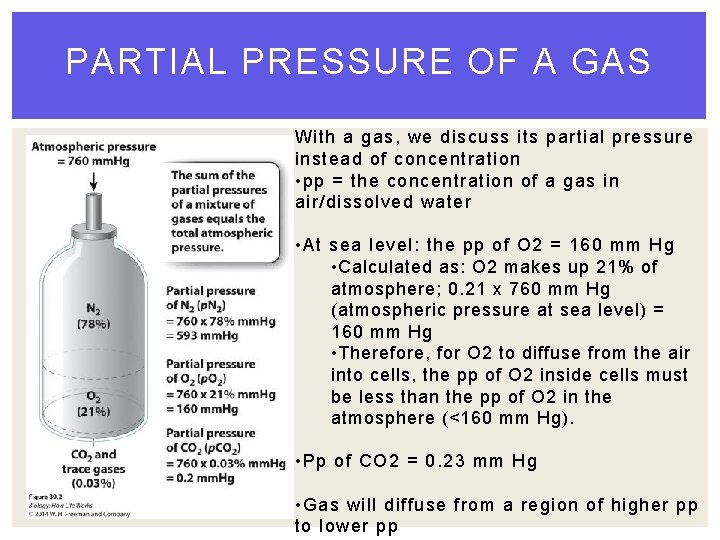
PARTIAL PRESSURE OF A GAS With a gas, we discuss its partial pressure instead of concentration • pp = the concentration of a gas in air/dissolved water • At sea level: the pp of O 2 = 160 mm Hg • Calculated as: O 2 makes up 21% of atmosphere; 0. 21 x 760 mm Hg (atmospheric pressure at sea level) = 160 mm Hg • Therefore, for O 2 to diffuse from the air into cells, the pp of O 2 inside cells must be less than the pp of O 2 in the atmosphere (<160 mm Hg). • Pp of CO 2 = 0. 23 mm Hg • Gas will diffuse from a region of higher pp to lower pp
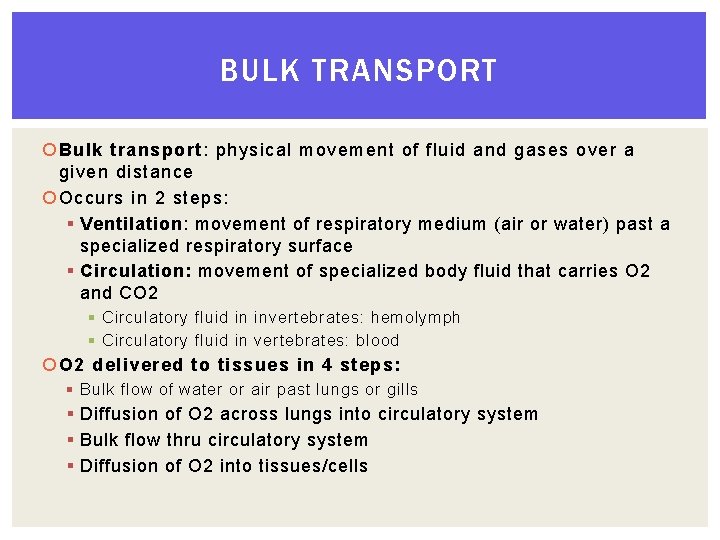
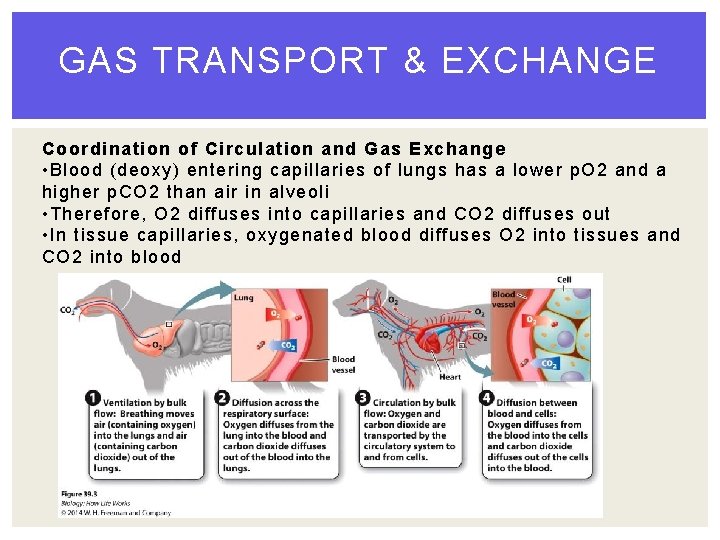
BULK TRANSPORT Bulk transport: physical movement of fluid and gases over a given distance Occurs in 2 steps: § Ventilation: movement of respiratory medium (air or water) past a specialized respiratory surface § Circulation: movement of specialized body fluid that carries O 2 and CO 2 § Circulatory fluid in invertebrates: hemolymph § Circulatory fluid in vertebrates: blood O 2 delivered to tissues in 4 steps: § Bulk flow of water or air past lungs or gills § Diffusion of O 2 across lungs into circulatory system § Bulk flow thru circulatory system § Diffusion of O 2 into tissues/cells
GAS TRANSPORT & EXCHANGE Coordination of Circulation and Gas Exchange • Blood (deoxy) entering capillaries of lungs has a lower p. O 2 and a higher p. CO 2 than air in alveoli • Therefore, O 2 diffuses into capillaries and CO 2 diffuses out • In tissue capillaries, oxygenated blood diffuses O 2 into tissues and CO 2 into blood
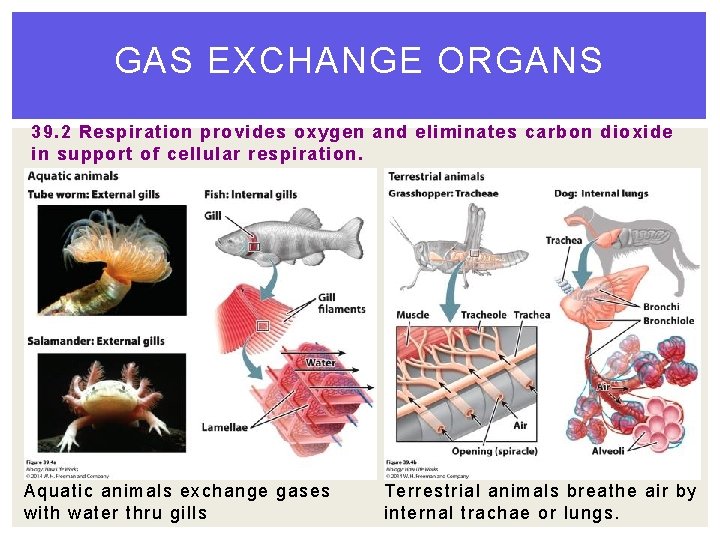
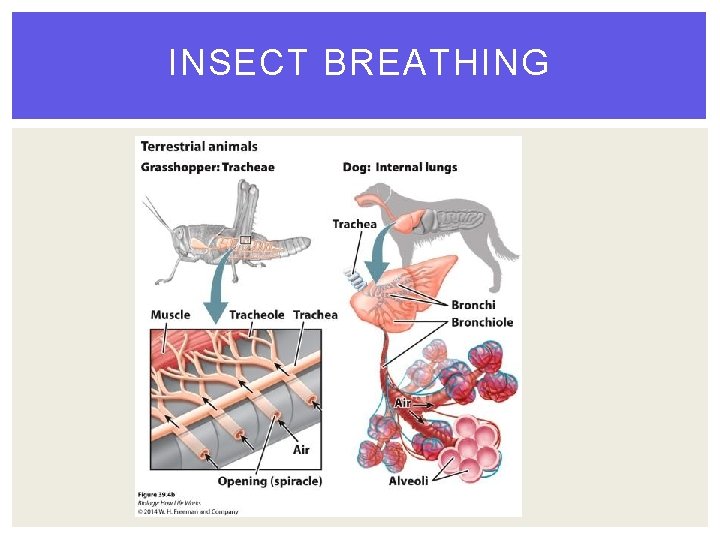
GAS EXCHANGE ORGANS 39. 2 Respiration provides oxygen and eliminates carbon dioxide in support of cellular respiration. Aquatic animals exchange gases with water thru gills Terrestrial animals breathe air by internal trachae or lungs.
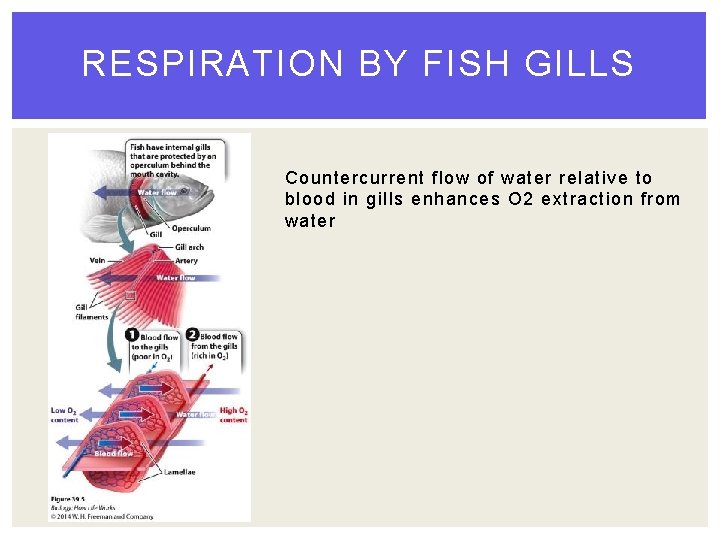
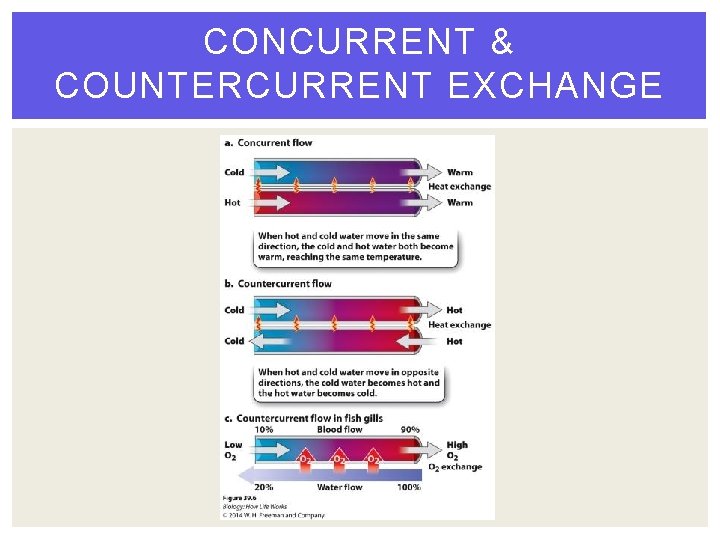
RESPIRATION BY FISH GILLS Countercurrent flow of water relative to blood in gills enhances O 2 extraction from water
CONCURRENT & COUNTERCURRENT EXCHANGE
INSECT BREATHING
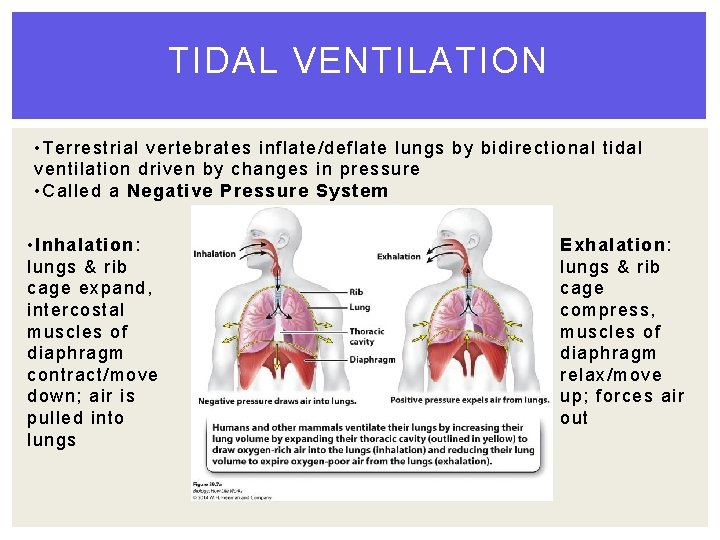
TIDAL VENTILATION • Terrestrial vertebrates inflate/deflate lungs by bidirectional tidal ventilation driven by changes in pressure • Called a Negative Pressure System • Inhalation: lungs & rib cage expand, intercostal muscles of diaphragm contract/move down; air is pulled into lungs Exhalation: lungs & rib cage compress, muscles of diaphragm relax/move up; forces air out
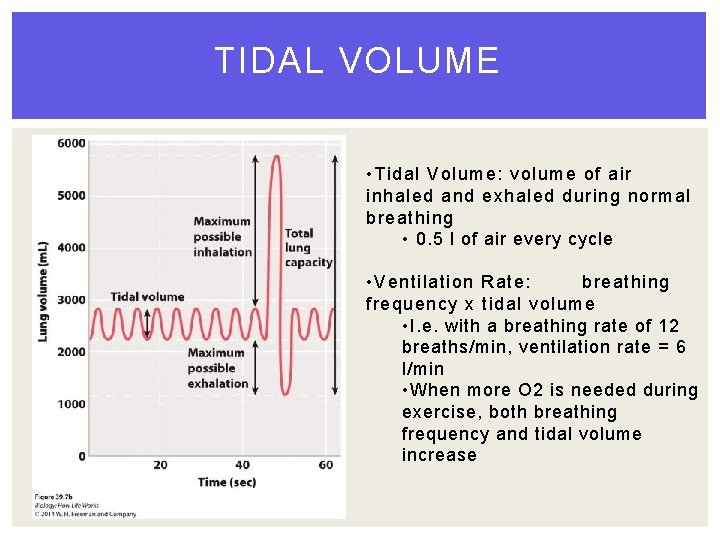
TIDAL VOLUME • Tidal Volume: volume of air inhaled and exhaled during normal breathing • 0. 5 l of air every cycle • Ventilation Rate: breathing frequency x tidal volume • I. e. with a breathing rate of 12 breaths/min, ventilation rate = 6 l/min • When more O 2 is needed during exercise, both breathing frequency and tidal volume increase
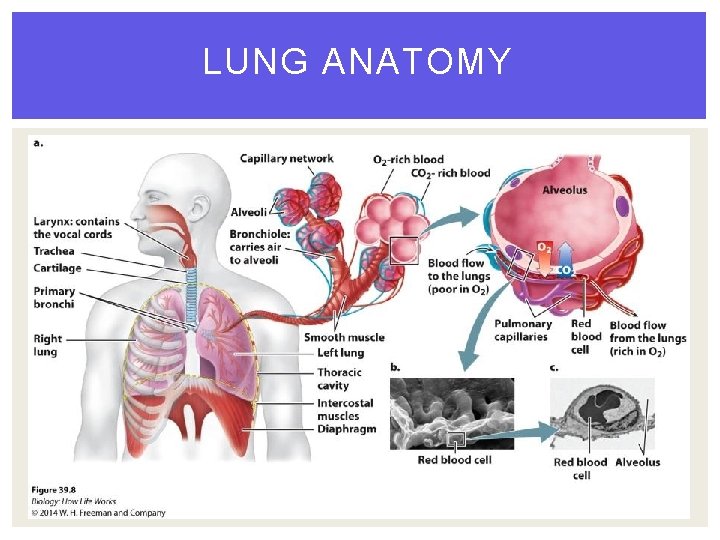
LUNG ANATOMY
RESPIRATORY SYSTEM Nose: warms and moistens air Trachea: cartilaginous tube that leads to lungs § Epiglottis: flap of tissue that prevents food from entering trachea § Swallowing blocks lungs: trachea moves up, covered by epiglottis Bronchi: 2 smaller tubes in lungs; from trachea; have primary bronchi, secondary and tertiary Bronchioles: even smaller tubes in lungs; terminal bronchioles end in air sacs called alveoli § Alveoli: site of gas exchange § Coated with surfactants, which keep them from sticking closed Right lung: has 3 lobes Left lung: has 2 lobes Diaphragm
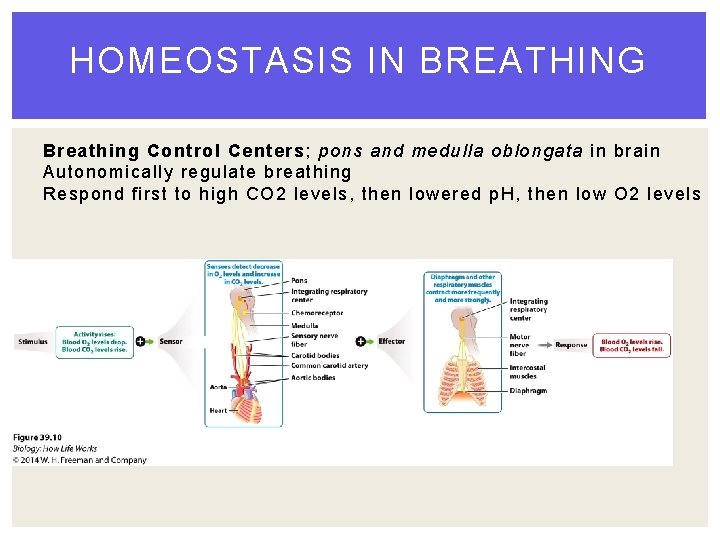
HOMEOSTASIS IN BREATHING Breathing Control Centers; pons and medulla oblongata in brain Autonomically regulate breathing Respond first to high CO 2 levels, then lowered p. H, then low O 2 levels
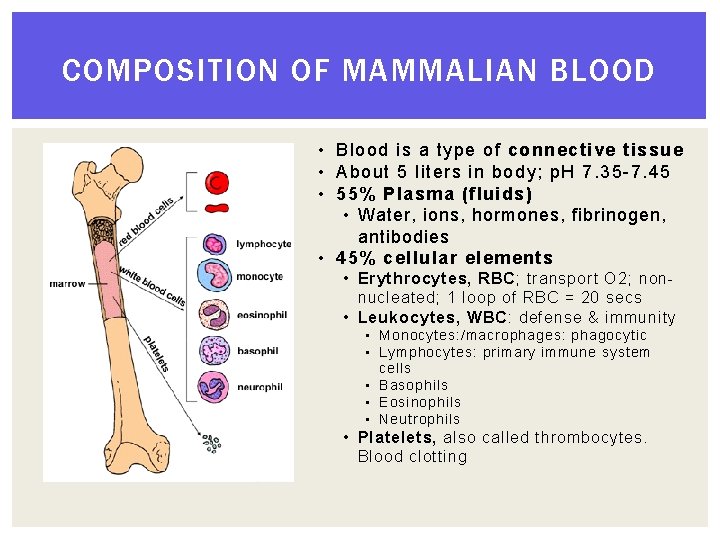
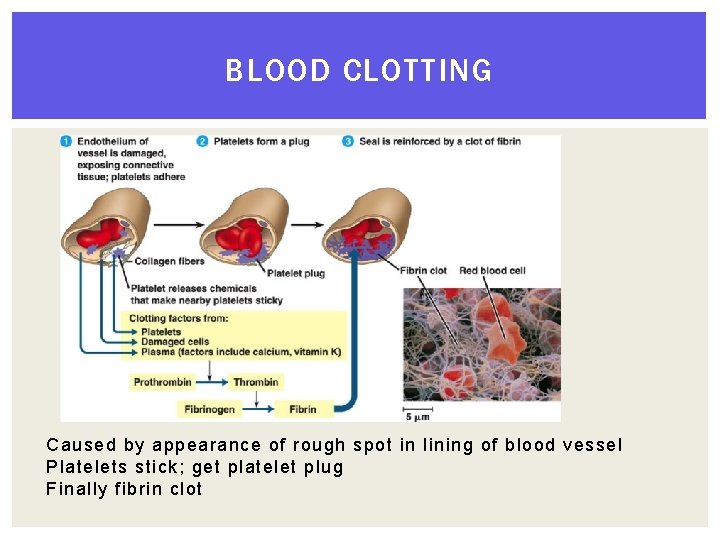
COMPOSITION OF MAMMALIAN BLOOD • Blood is a type of connective tissue • About 5 liters in body; p. H 7. 35 -7. 45 • 55% Plasma (fluids) • Water, ions, hormones, fibrinogen, antibodies • 45% cellular elements • Erythrocytes, RBC; transport O 2; nonnucleated; 1 loop of RBC = 20 secs • Leukocytes, WBC: defense & immunity • Monocytes: /macrophages: phagocytic • Lymphocytes: primary immune system cells • Basophils • Eosinophils • Neutrophils • Platelets, also called thrombocytes. Blood clotting
DIFFERENTIATION OF BLOOD CELLS All blood cells originate from stem cells in red marrow of bones (ribs, vertebrae, pelvis, breastbone) These differentiate into lymphoid stem cells & myeloid stem cells Lymphoid stem cells give rise to: § B and T lymphocytes ( a type of leukocyte) Myeloid stem cells: § RBC § Platelets § Other 4 WBC
BLOOD CLOTTING Caused by appearance of rough spot in lining of blood vessel Platelets stick; get platelet plug Finally fibrin clot
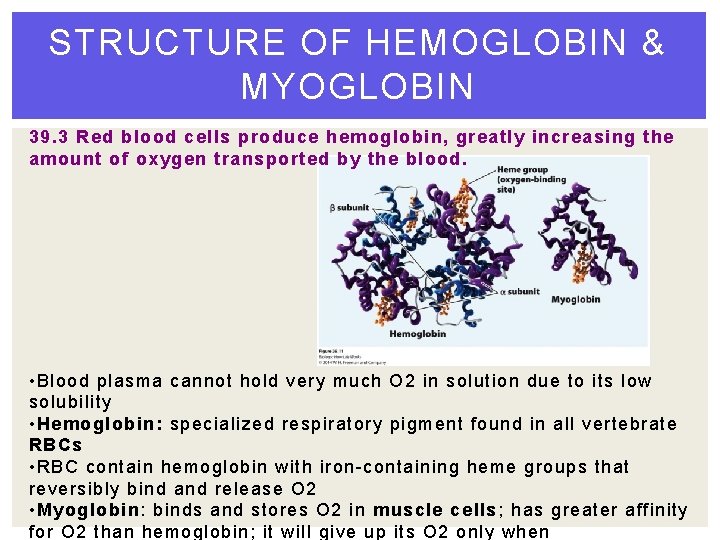
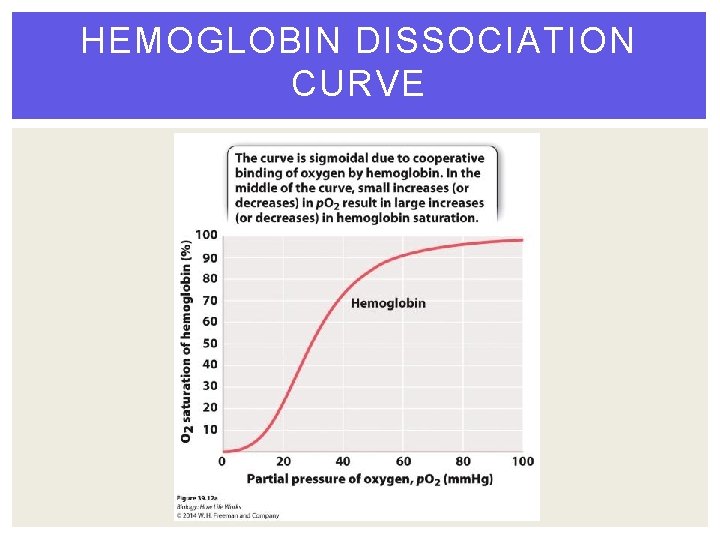
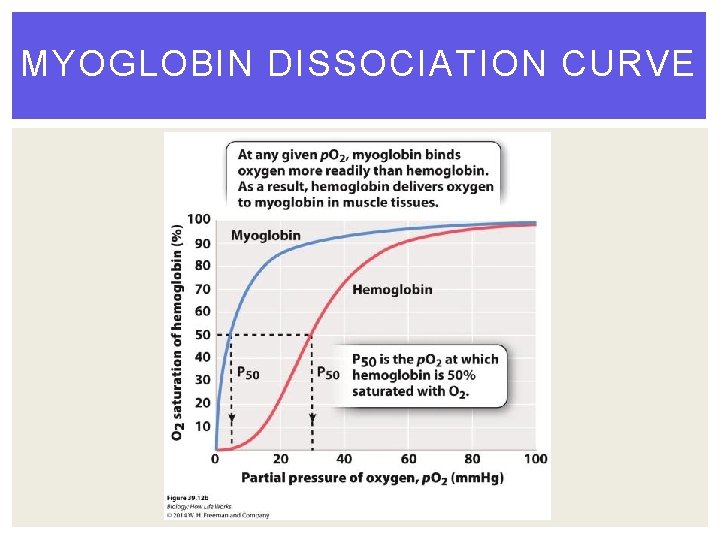
STRUCTURE OF HEMOGLOBIN & MYOGLOBIN 39. 3 Red blood cells produce hemoglobin, greatly increasing the amount of oxygen transported by the blood. • Blood plasma cannot hold very much O 2 in solution due to its low solubility • Hemoglobin: specialized respiratory pigment found in all vertebrate RBCs • RBC contain hemoglobin with iron-containing heme groups that reversibly bind and release O 2 • Myoglobin: binds and stores O 2 in muscle cells; has greater affinity for O 2 than hemoglobin; it will give up its O 2 only when
HEMOGLOBIN DISSOCIATION CURVE
MYOGLOBIN DISSOCIATION CURVE
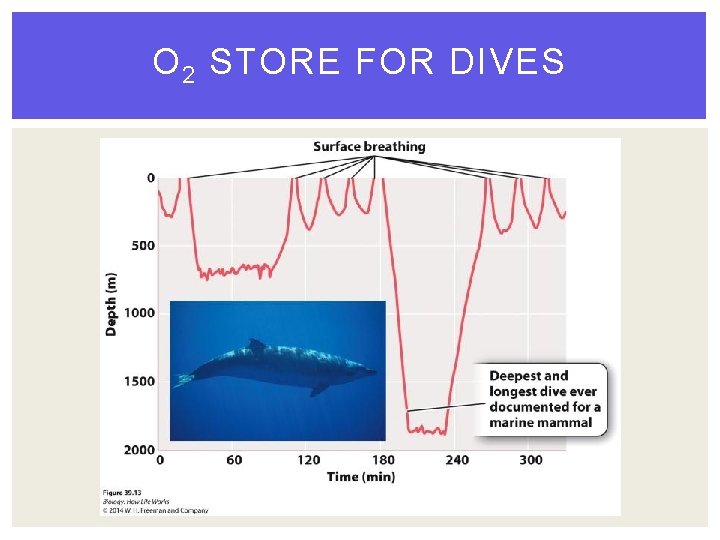
O 2 STORE FOR DIVES
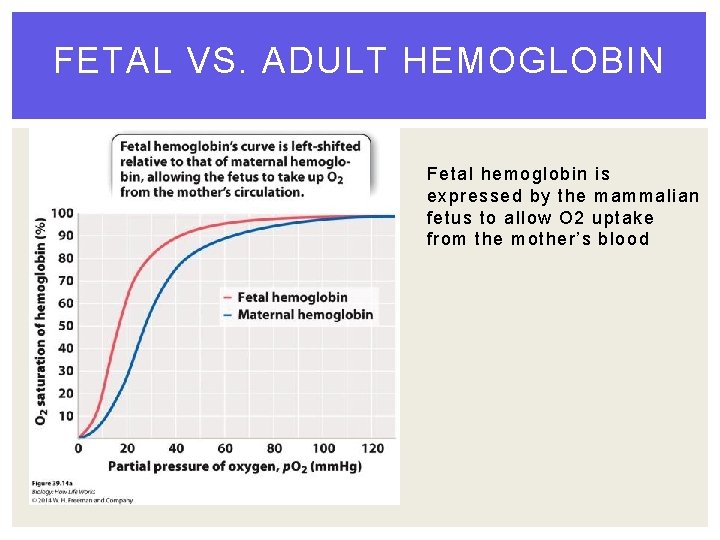
FETAL VS. ADULT HEMOGLOBIN Fetal hemoglobin is expressed by the mammalian fetus to allow O 2 uptake from the mother’s blood
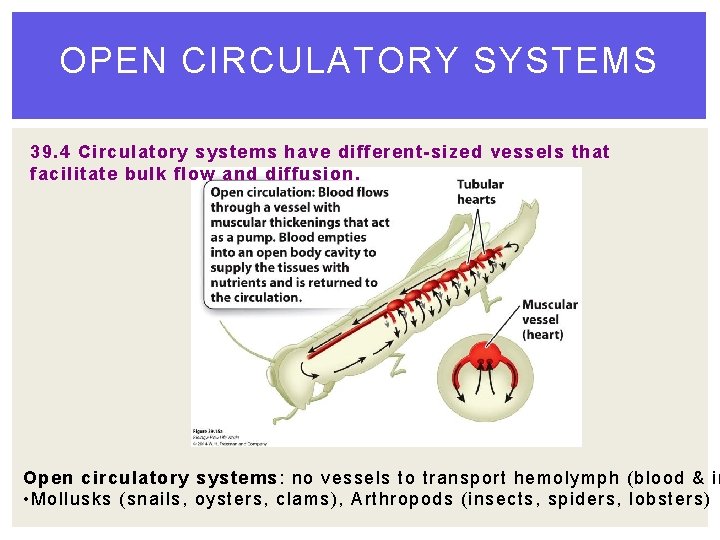
OPEN CIRCULATORY SYSTEMS 39. 4 Circulatory systems have different-sized vessels that facilitate bulk flow and diffusion. Open circulatory systems: no vessels to transport hemolymph (blood & in • Mollusks (snails, oysters, clams), Arthropods (insects, spiders, lobsters)
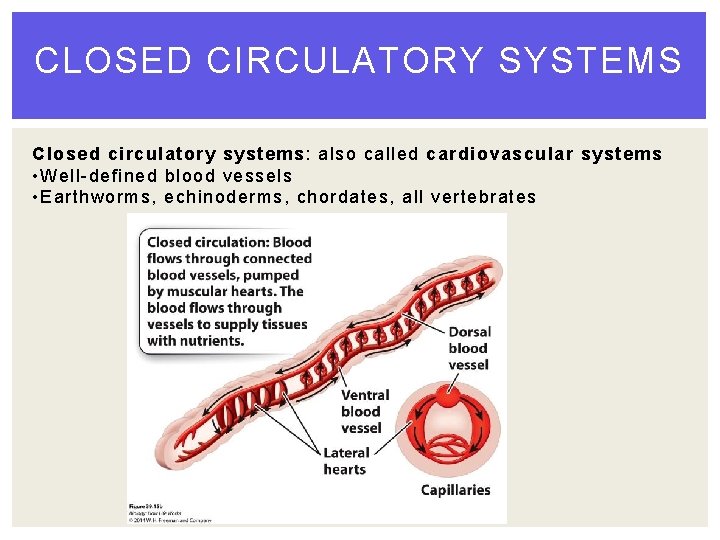
CLOSED CIRCULATORY SYSTEMS Closed circulatory systems: also called cardiovascular systems • Well-defined blood vessels • Earthworms, echinoderms, chordates, all vertebrates
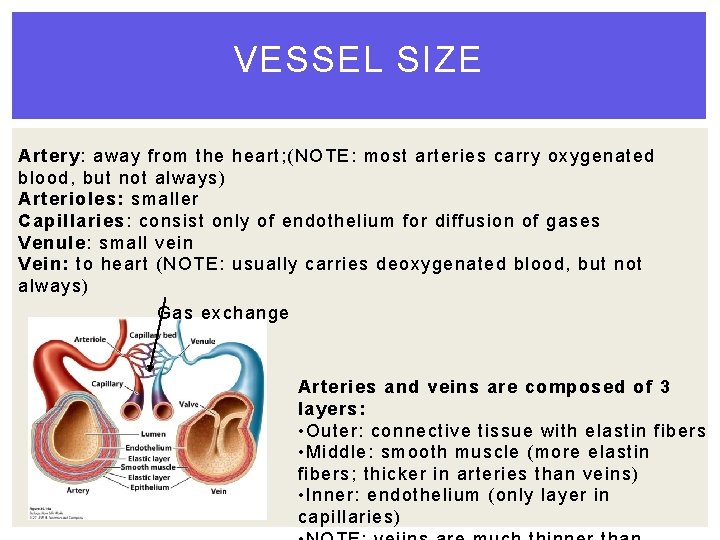
VESSEL SIZE Artery: away from the heart; (NOTE: most arteries carry oxygenated blood, but not always) Arterioles: smaller Capillaries: consist only of endothelium for diffusion of gases Venule: small vein Vein: to heart (NOTE: usually carries deoxygenated blood, but not always) Gas exchange Arteries and veins are composed of 3 layers: • Outer: connective tissue with elastin fibers • Middle: smooth muscle (more elastin fibers; thicker in arteries than veins) • Inner: endothelium (only layer in capillaries)
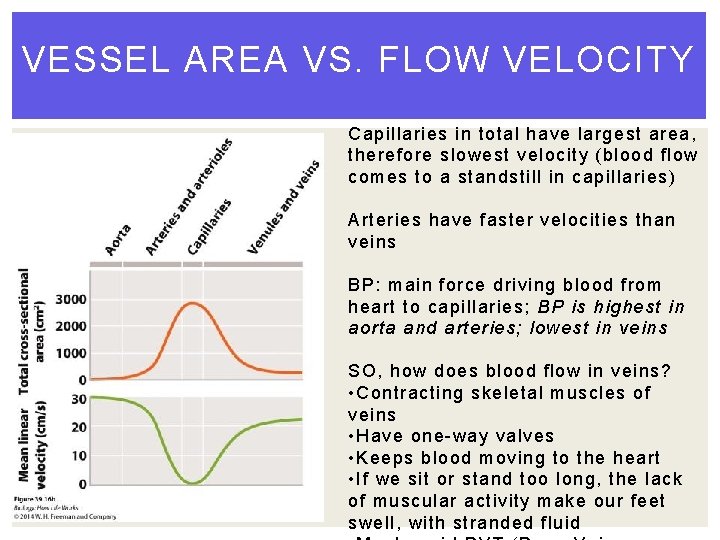
VESSEL AREA VS. FLOW VELOCITY Capillaries in total have largest area, therefore slowest velocity (blood flow comes to a standstill in capillaries) Arteries have faster velocities than veins BP: main force driving blood from heart to capillaries; BP is highest in aorta and arteries; lowest in veins SO, how does blood flow in veins? • Contracting skeletal muscles of veins • Have one-way valves • Keeps blood moving to the heart • If we sit or stand too long, the lack of muscular activity make our feet swell, with stranded fluid
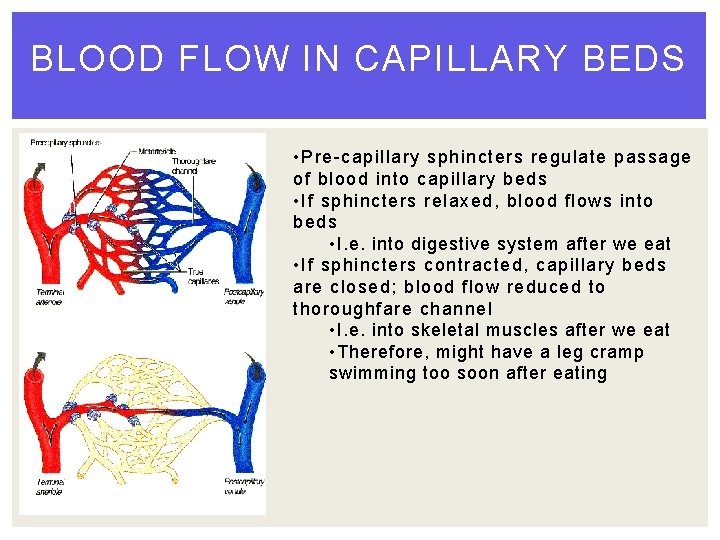
BLOOD FLOW IN CAPILLARY BEDS • Pre-capillary sphincters regulate passage of blood into capillary beds • If sphincters relaxed, blood flows into beds • I. e. into digestive system after we eat • If sphincters contracted, capillary beds are closed; blood flow reduced to thoroughfare channel • I. e. into skeletal muscles after we eat • Therefore, might have a leg cramp swimming too soon after eating
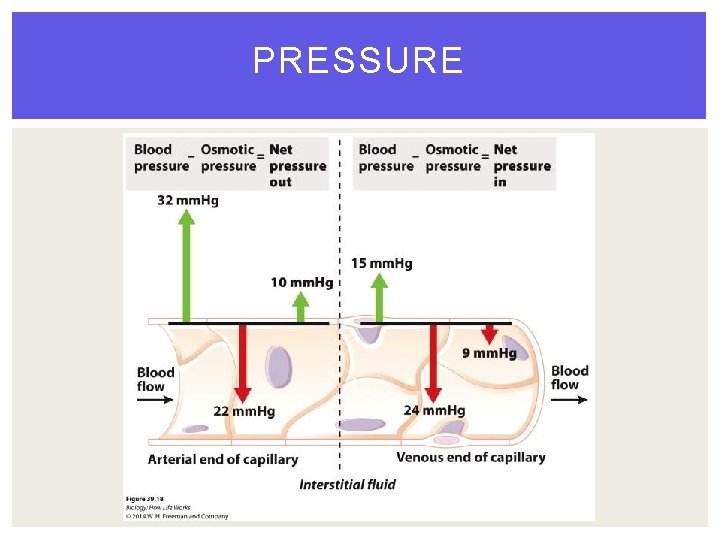
PRESSURE
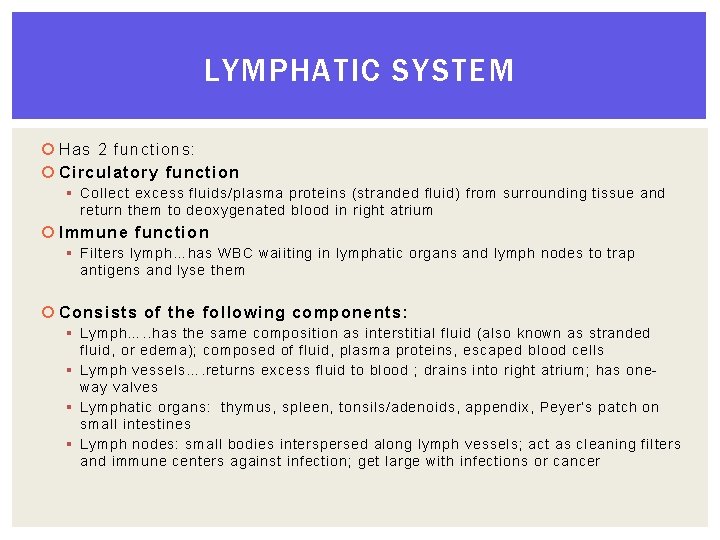
LYMPHATIC SYSTEM Has 2 functions: Circulatory function § Collect excess fluids/plasma proteins (stranded fluid) from surrounding tissue and return them to deoxygenated blood in right atrium Immune function § Filters lymph…has WBC waiiting in lymphatic organs and lymph nodes to trap antigens and lyse them Consists of the following components: § Lymph…. . has the same composition as interstitial fluid (also known as stranded fluid, or edema); composed of fluid, plasma proteins, escaped blood cells § Lymph vessels…. returns excess fluid to blood ; drains into right atrium; has oneway valves § Lymphatic organs: thymus, spleen, tonsils/adenoids, appendix, Peyer’s patch on small intestines § Lymph nodes: small bodies interspersed along lymph vessels; act as cleaning filters and immune centers against infection; get large with infections or cancer
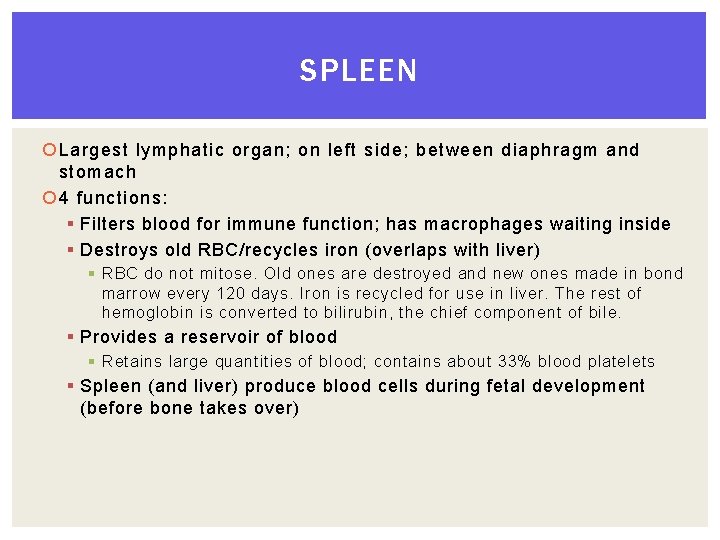
SPLEEN Largest lymphatic organ; on left side; between diaphragm and stomach 4 functions: § Filters blood for immune function; has macrophages waiting inside § Destroys old RBC/recycles iron (overlaps with liver) § RBC do not mitose. Old ones are destroyed and new ones made in bond marrow every 120 days. Iron is recycled for use in liver. The rest of hemoglobin is converted to bilirubin, the chief component of bile. § Provides a reservoir of blood § Retains large quantities of blood; contains about 33% blood platelets § Spleen (and liver) produce blood cells during fetal development (before bone takes over)
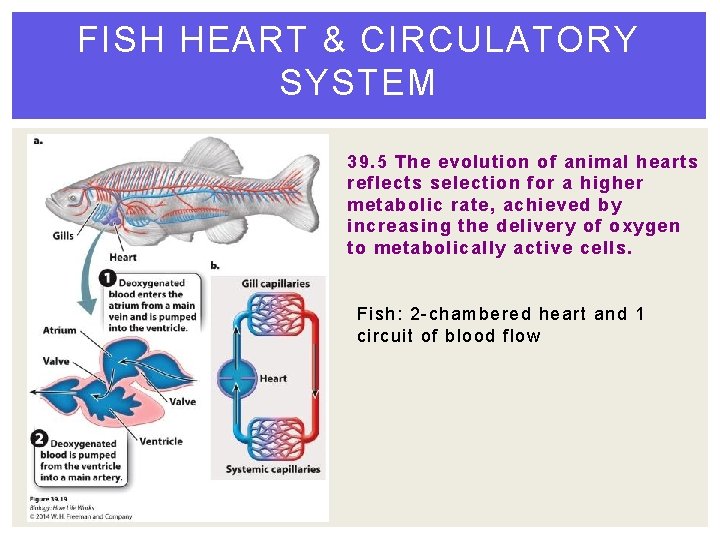
FISH HEART & CIRCULATORY SYSTEM 39. 5 The evolution of animal hearts reflects selection for a higher metabolic rate, achieved by increasing the delivery of oxygen to metabolically active cells. Fish: 2 -chambered heart and 1 circuit of blood flow
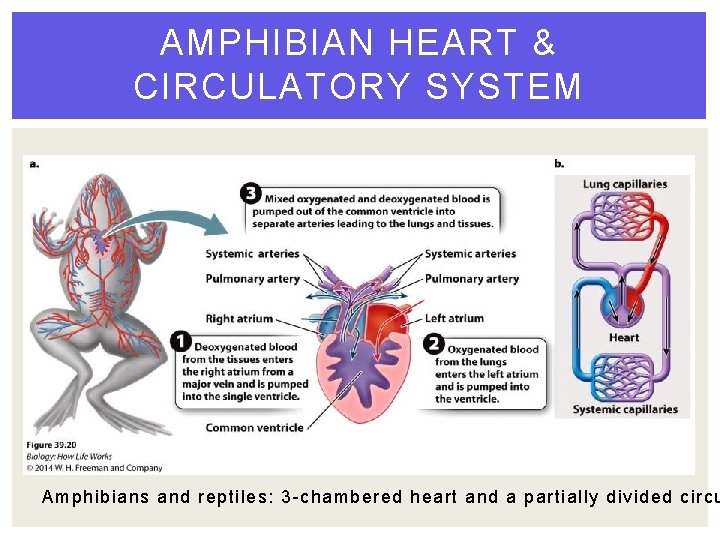
AMPHIBIAN HEART & CIRCULATORY SYSTEM Amphibians and reptiles: 3 -chambered heart and a partially divided circu
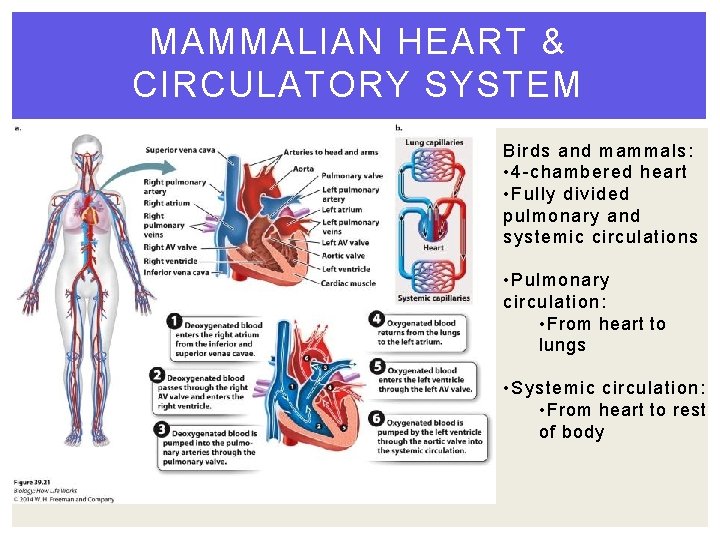
MAMMALIAN HEART & CIRCULATORY SYSTEM Birds and mammals: • 4 -chambered heart • Fully divided pulmonary and systemic circulations • Pulmonary circulation: • From heart to lungs • Systemic circulation: • From heart to rest of body
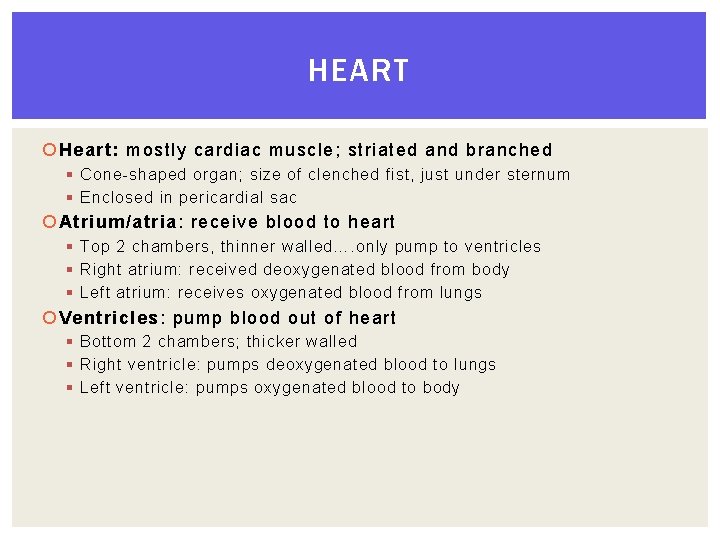
HEART Heart: mostly cardiac muscle; striated and branched § Cone-shaped organ; size of clenched fist, just under sternum § Enclosed in pericardial sac Atrium/atria: receive blood to heart § Top 2 chambers, thinner walled…. only pump to ventricles § Right atrium: received deoxygenated blood from body § Left atrium: receives oxygenated blood from lungs Ventricles: pump blood out of heart § Bottom 2 chambers; thicker walled § Right ventricle: pumps deoxygenated blood to lungs § Left ventricle: pumps oxygenated blood to body
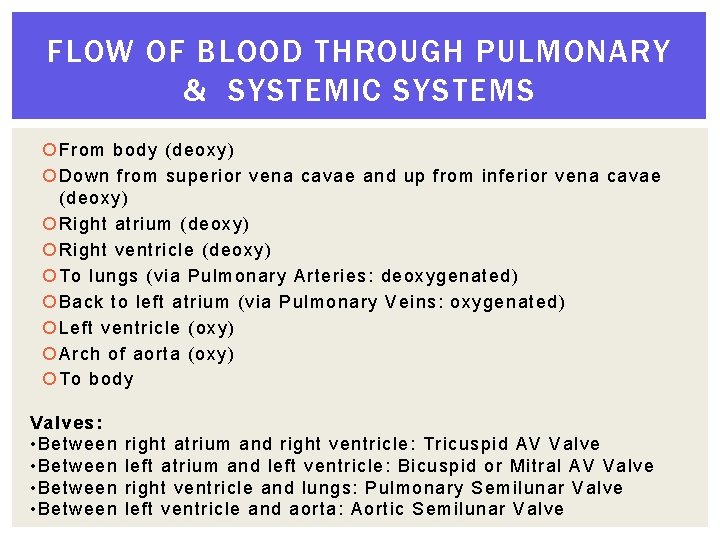
FLOW OF BLOOD THROUGH PULMONARY & SYSTEMIC SYSTEMS From body (deoxy) Down from superior vena cavae and up from inferior vena cavae (deoxy) Right atrium (deoxy) Right ventricle (deoxy) To lungs (via Pulmonary Arteries: deoxygenated) Back to left atrium (via Pulmonary Veins: oxygenated) Left ventricle (oxy) Arch of aorta (oxy) To body Valves: • Between right atrium and right ventricle: Tricuspid AV Valve left atrium and left ventricle: Bicuspid or Mitral AV Valve right ventricle and lungs: Pulmonary Semilunar Valve left ventricle and aorta: Aortic Semilunar Valve
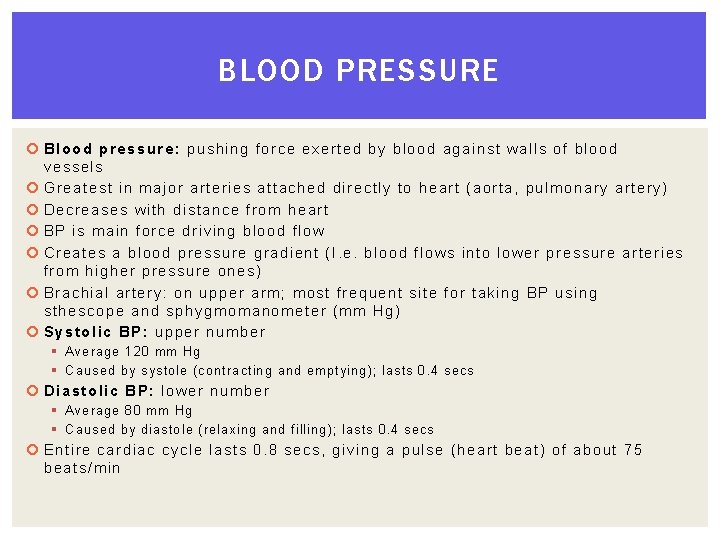
BLOOD PRESSURE Blood pressure : pu shi ng f orc e exerted by blood against walls of blood vessels Greatest in ma jo r a rte rie s a tt ached directly to heart (aorta, pulmonary artery) Decreases with d ist an ce fro m heart BP is main force d rivi ng b lo od flow Creates a b loo d pre ssure g radient (I. e. blood flows into lower pressure arteries from higher pressu re on es) Brachial artery: o n up pe r a rm; most frequent site for taking BP using sthescope a nd sp hyg moma no meter (mm Hg) Systolic BP: u pp er nu mbe r § Average 120 mm Hg § Caused by systole (contracting and emptying); lasts 0. 4 secs Diastolic BP: lo we r n umb er § Average 80 mm Hg § Caused by diastole (relaxing and filling); lasts 0. 4 secs Entire cardiac cycle l ast s 0. 8 secs, giving a pulse (heart beat) of about 75 beats/min
Hypotension (low BP): below normal BP; <100/60 § i. e. accidentally cut an artery Hypertension (high BP): above normal BP, >140/90 § High BP may overstretch, thin out arterial walls § May create aneurysms……. abnormally widened out arteries that will rupture Arteriosclerosis: hardening of walls of artery with calcium § Hypertension and arteriosclerosis worsen each other; called positive feedback mechanisms (just continues to get worse)
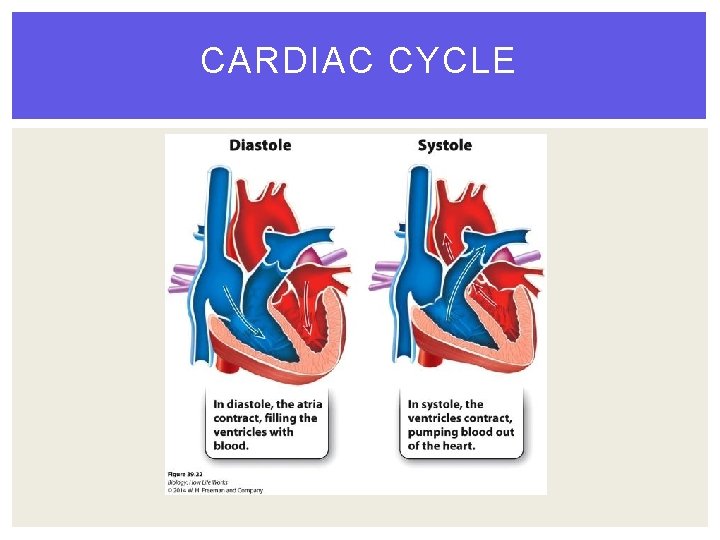
CARDIAC CYCLE
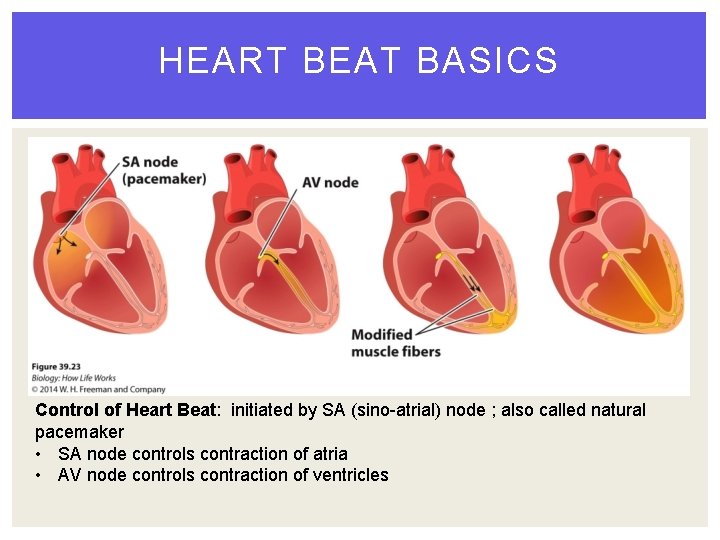
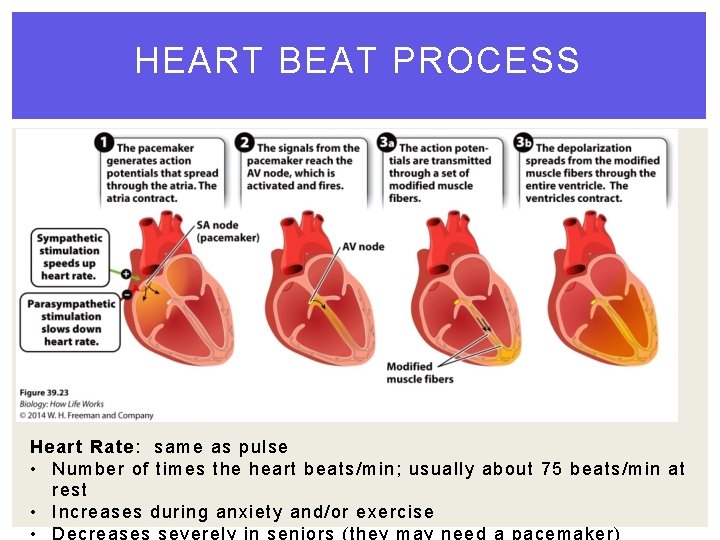
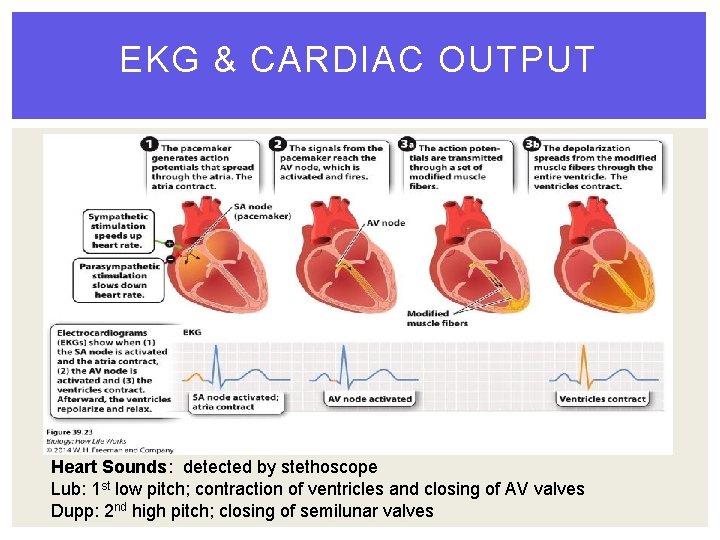
HEART BEAT BASICS Control of Heart Beat: initiated by SA (sino-atrial) node ; also called natural pacemaker • SA node controls contraction of atria • AV node controls contraction of ventricles
HEART BEAT PROCESS Heart Rate: same as pulse • Number of times the heart beats/min; usually about 75 beats/min at rest • Increases during anxiety and/or exercise • Decreases severely in seniors (they may need a pacemaker)
EKG & CARDIAC OUTPUT Heart Sounds: detected by stethoscope Lub: 1 st low pitch; contraction of ventricles and closing of AV valves Dupp: 2 nd high pitch; closing of semilunar valves