
ANIMAL BREEDING CH 9 XII BIOLOGY ANIMAL BREEDING

ANIMAL BREEDING CH 9 XII BIOLOGY
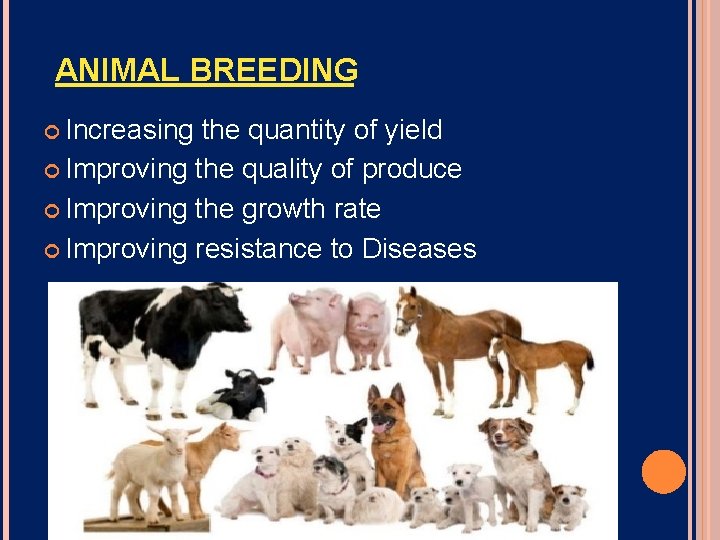
ANIMAL BREEDING Increasing the quantity of yield Improving the quality of produce Improving the growth rate Improving resistance to Diseases

-Inbreeding Superior males and females of same breed are identified and mated Superior males and females of progeny are identified for further mating Increases homozygousity Pure line can be developed Exposes harmful recessive alleles, which is eliminated by selection. Accumulate superior genes Causes breeding depression
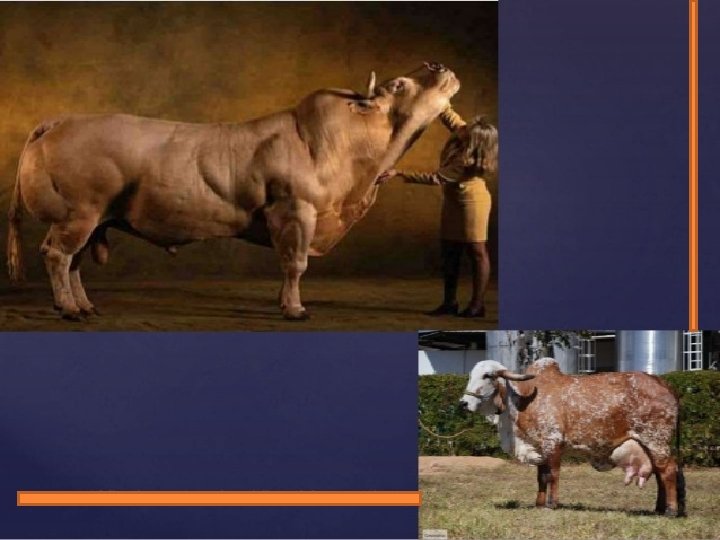

- Out Breeding of unrelated animals either of the same breed or different breeds or different species. Types of out breeding (a) out crossing (b) cross-breeding (c) Interspecific hybridisation
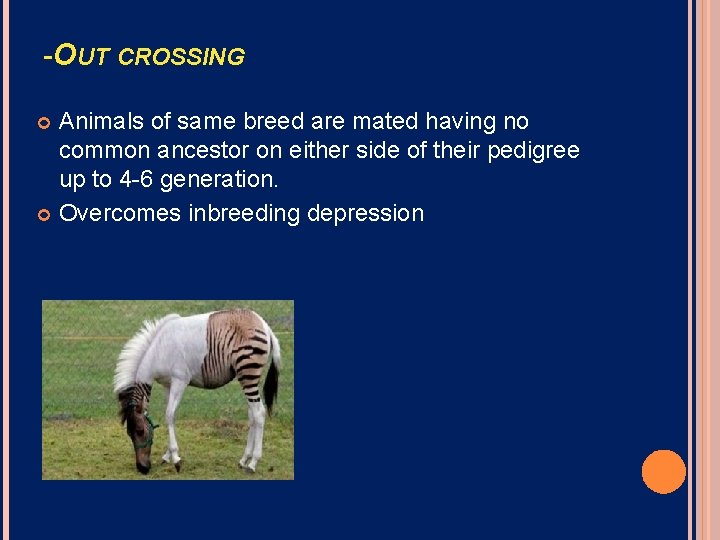
-OUT CROSSING Animals of same breed are mated having no common ancestor on either side of their pedigree up to 4 -6 generation. Overcomes inbreeding depression
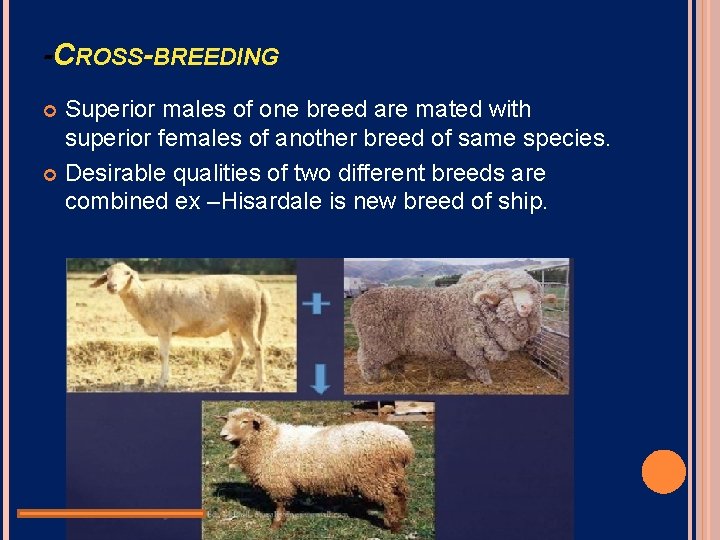
-CROSS-BREEDING Superior males of one breed are mated with superior females of another breed of same species. Desirable qualities of two different breeds are combined ex –Hisardale is new breed of ship.

-INTERSPECIFIC HYBRIDISATION Male and female animals of two different species are crossed. Combine the desirable features of both parents E. g. mule by a cross between a male donkey and female horse
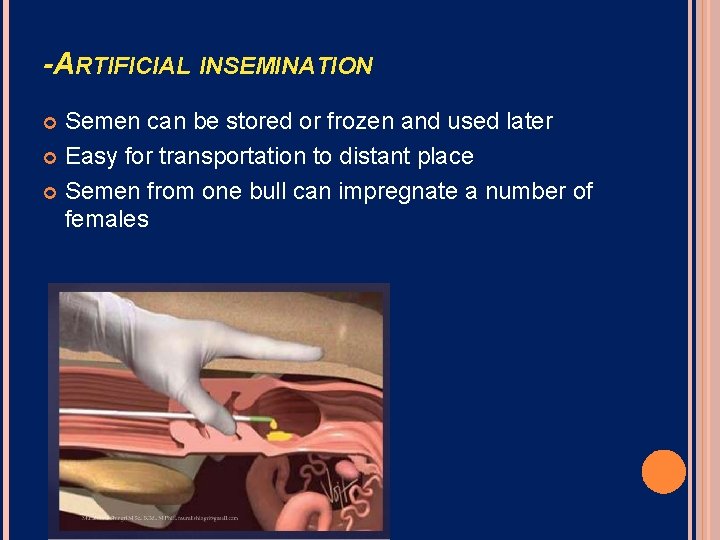
-ARTIFICIAL INSEMINATION Semen can be stored or frozen and used later Easy for transportation to distant place Semen from one bull can impregnate a number of females
-MULTIPLE OVULATION EMBRYO TRANSFER TECHNOLOGY (MOET) It is used to improve chances of successful production of hybrids Cow is administered hormones with FSH-like activity Introduce follicular maturation and super ovulation Production of 6 -8 eggs instead of one egg per cycle The female is either mated with an elite bull or artificially inseminated Non-surgical recovery of fertilized eggs at 8 -32 cells stages Each one transferred to surrogate mother This technology is used to increase herd size in a short time

END
- Slides: 12