
Animal Body Systems Structure and Function of Organs
Animal Body Systems
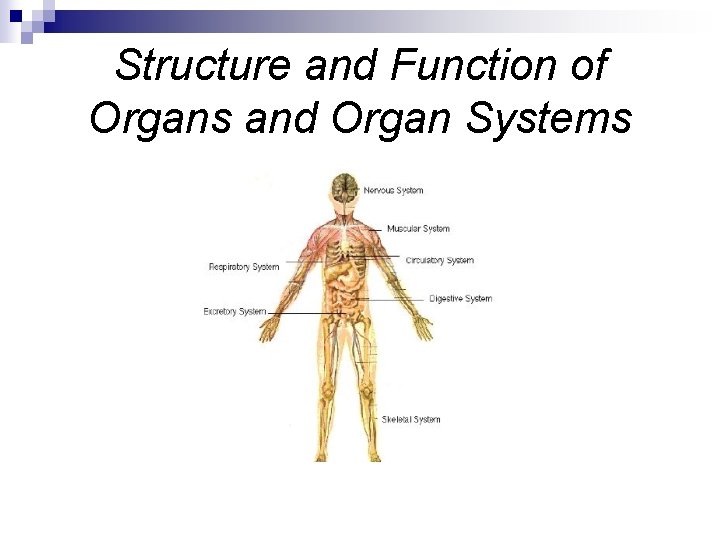
Structure and Function of Organs and Organ Systems
Animal Systems n Organization and Homeostasis
Organization in Living Things n Cells are organized into tissues ¨ Tissues n are organized into organs Organs are organized into systems ¨ Systems form an organism
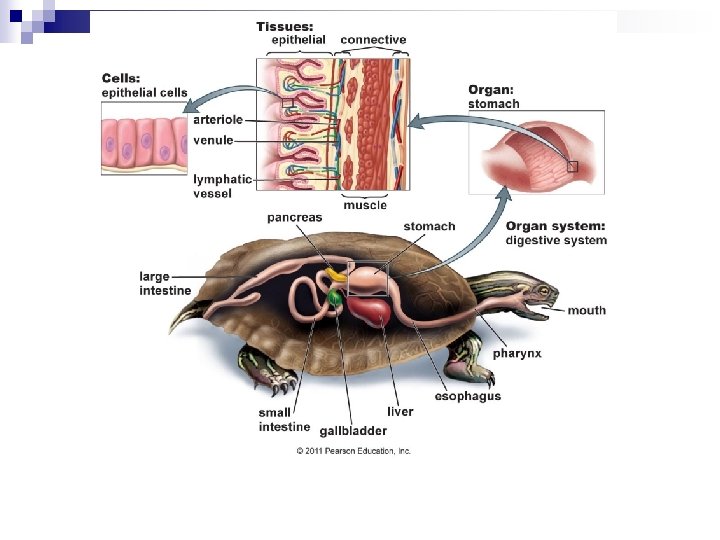

Four tissue types Epithelial n Connective n Nervous n Muscular n
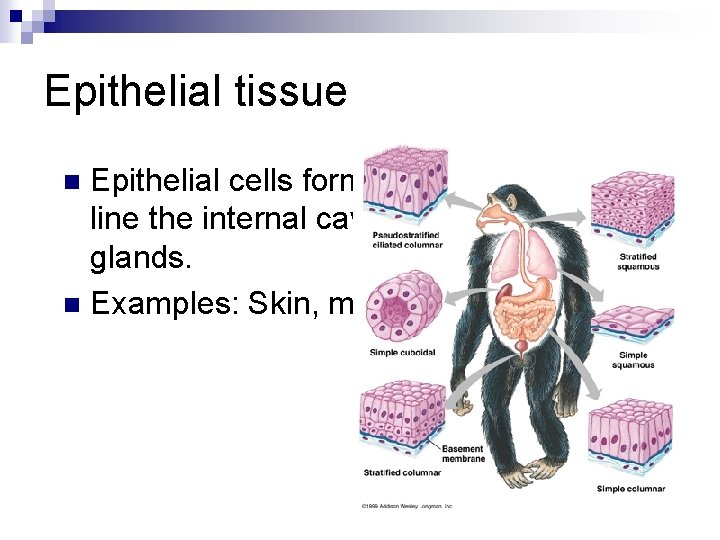
Epithelial tissue Epithelial cells form the outer covering, line the internal cavities, and make up the glands. n Examples: Skin, mucous membranes. n
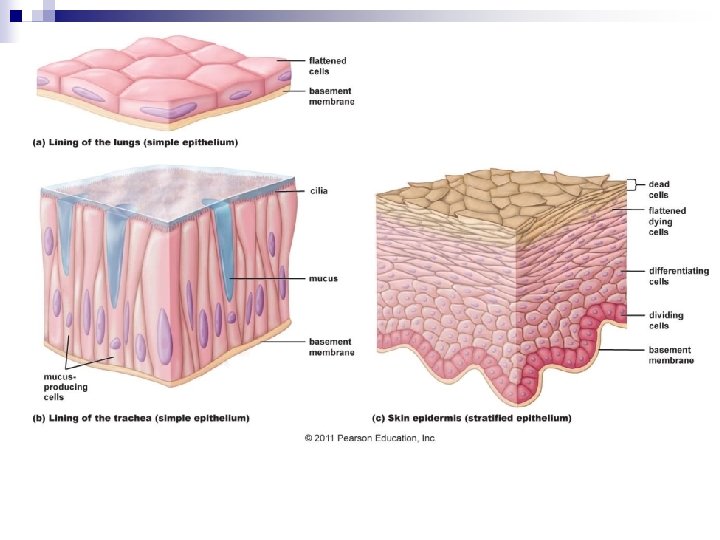
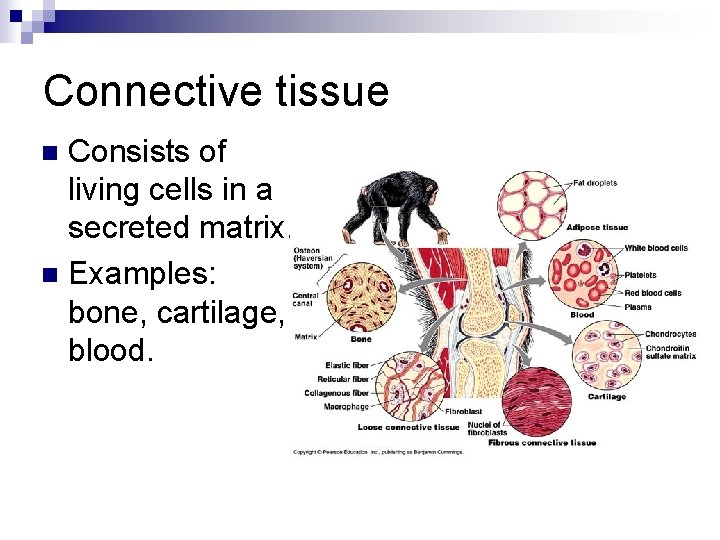
Connective tissue Consists of living cells in a secreted matrix. n Examples: bone, cartilage, blood. n
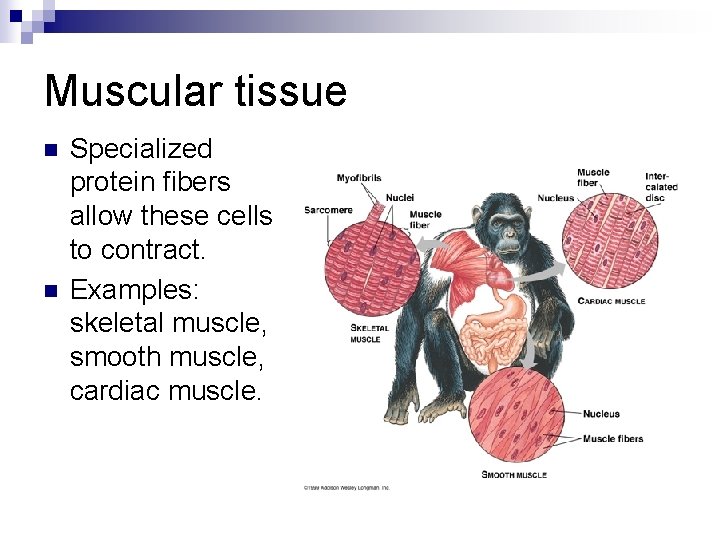
Muscular tissue n n Specialized protein fibers allow these cells to contract. Examples: skeletal muscle, smooth muscle, cardiac muscle.
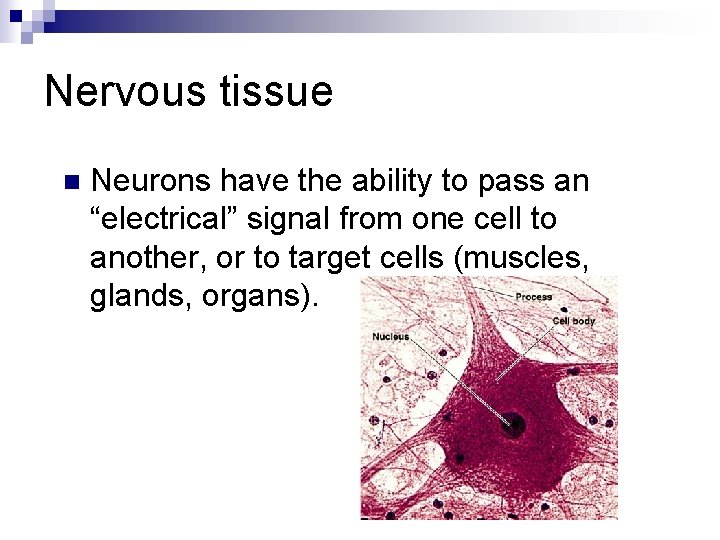
Nervous tissue n Neurons have the ability to pass an “electrical” signal from one cell to another, or to target cells (muscles, glands, organs).
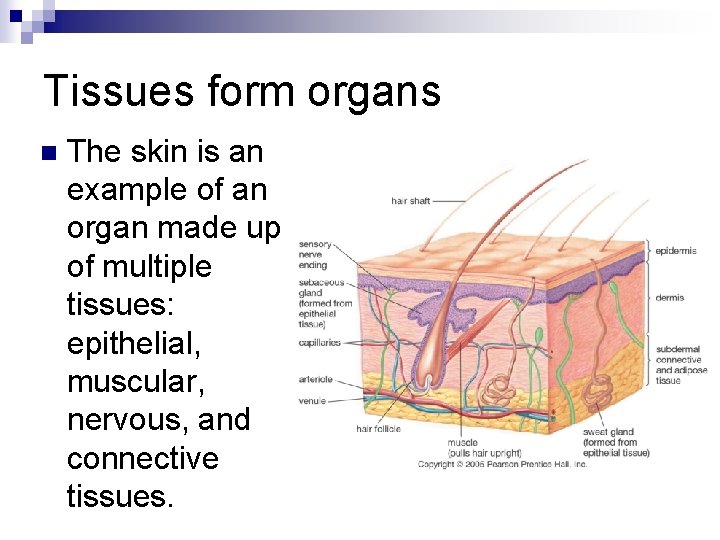
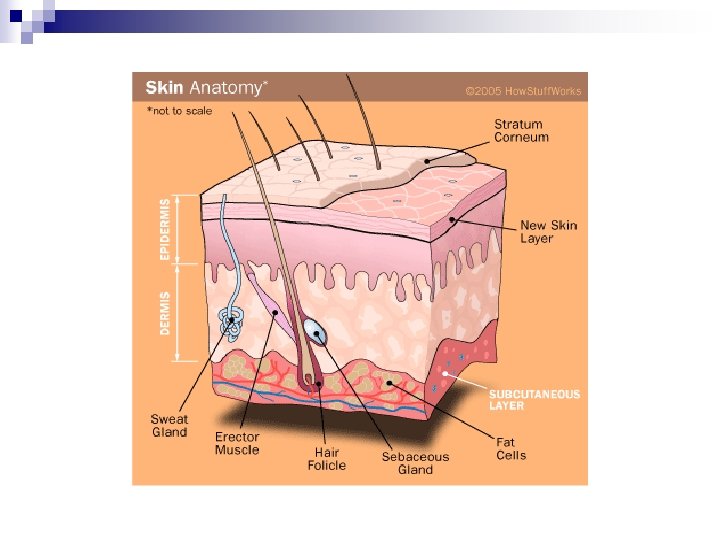
Tissues form organs n The skin is an example of an organ made up of multiple tissues: epithelial, muscular, nervous, and connective tissues.
Homeostasis is the act of keeping the internal environment of a living organism within an acceptable range of conditions. n Homeostasis controls temperature, p. H, blood volume, oxygen levels, blood sugar levels, and other conditions. n
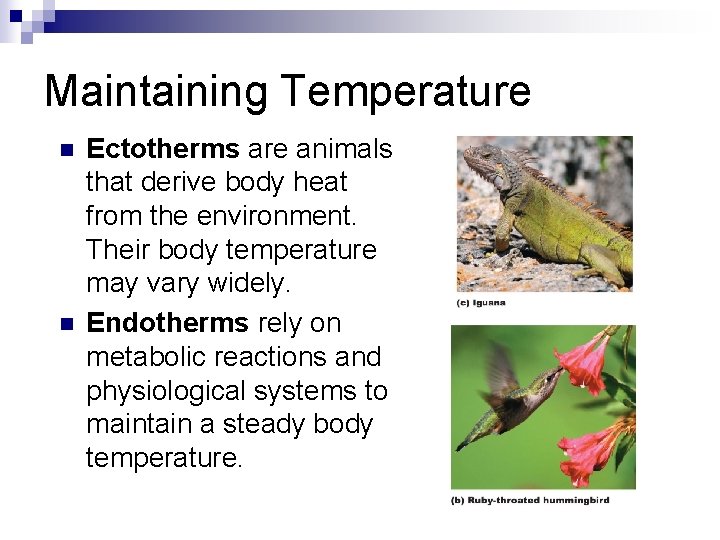
Maintaining Temperature n n Ectotherms are animals that derive body heat from the environment. Their body temperature may vary widely. Endotherms rely on metabolic reactions and physiological systems to maintain a steady body temperature.
Why do animals (and humans) have multiple systems? Animals are composed of a variety of interdependent systems n No one system can function entirely _on its own__. n In order to be healthy, _all systems_ must function properly n
Function of the Skeletal System n Function ¨ Provides protection, support, and structure for all systems and organs. ¨ Provides attachment for muscles ¨ Provides storage for minerals (ex: Ca)
What makes up the skeletal system? n n n Bone ¨ Made of minerals that provide housing for living cells Cartilage ¨ Firm, flexible tissues that are not as hard as bone Bone Marrow ¨ Production site of blood cells and platelets.
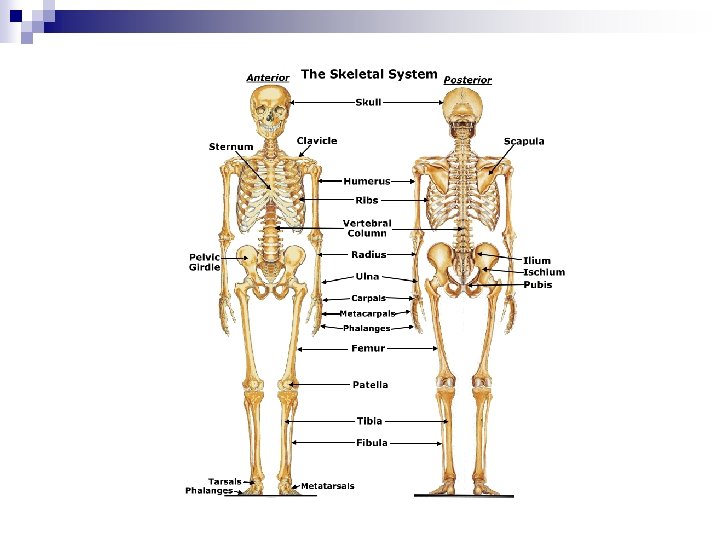
Types of bone n Long Bones ¨ Large, provide support ¨ Examples- legs and arms n Short Bones ¨ Smaller than long bones, provides comfort and mobility ¨ Examples- feet and hands n Irregular Bones ¨ Irregular shapes, main function is to provide support ¨ Example- Vertebrae n Flat Bones ¨ Example- Ribs
What else makes up the skeletal system? n Joints ¨ Where different bones meet n Ligaments ¨ Connect bones to other bones; tough tissue
Function of the Muscle System n Function ¨ Provides movement for the animal ¨ Provides movement for proper function of organs
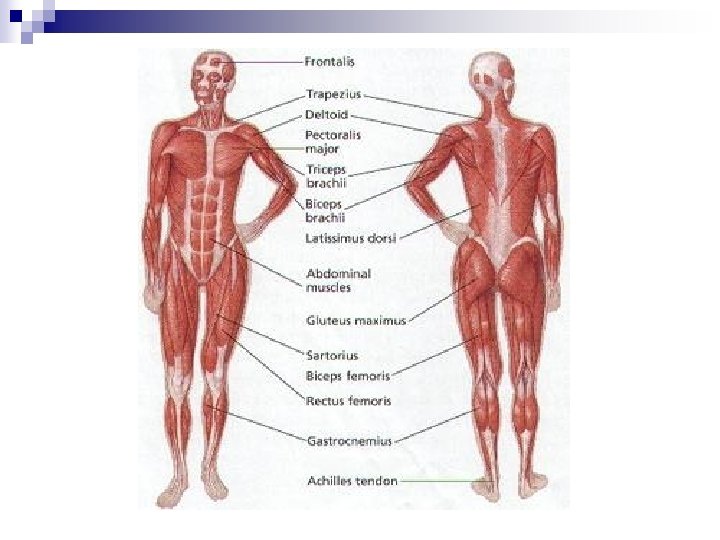
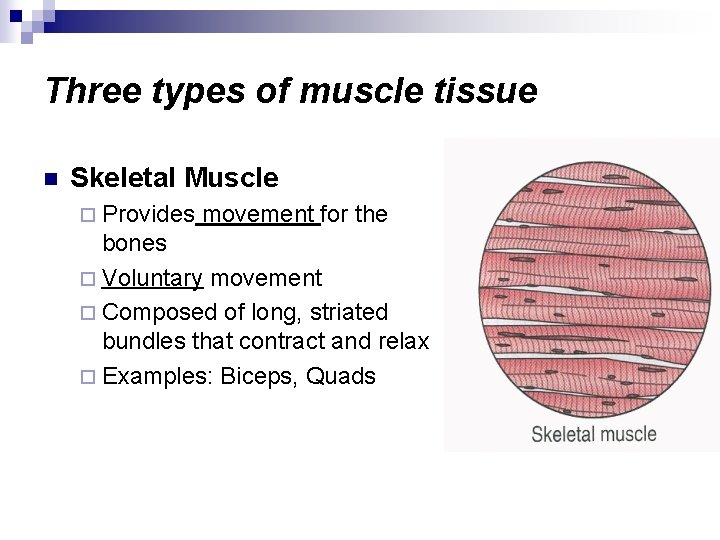
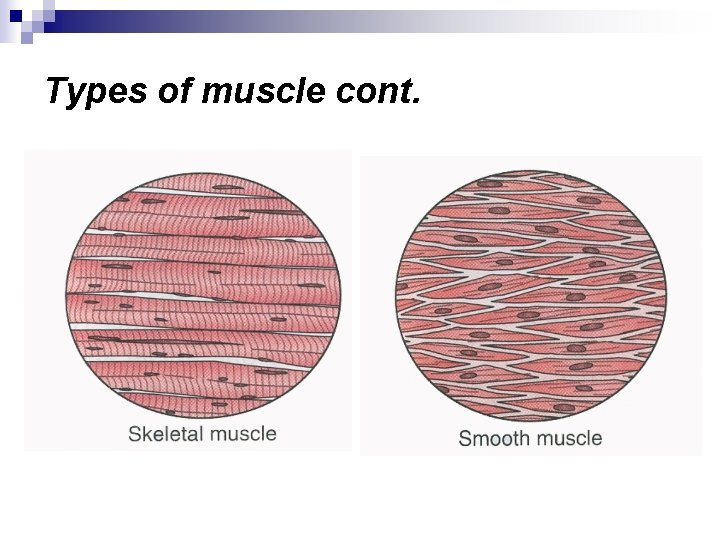
Three types of muscle tissue n Skeletal Muscle ¨ Provides movement for the bones ¨ Voluntary movement ¨ Composed of long, striated bundles that contract and relax ¨ Examples: Biceps, Quads
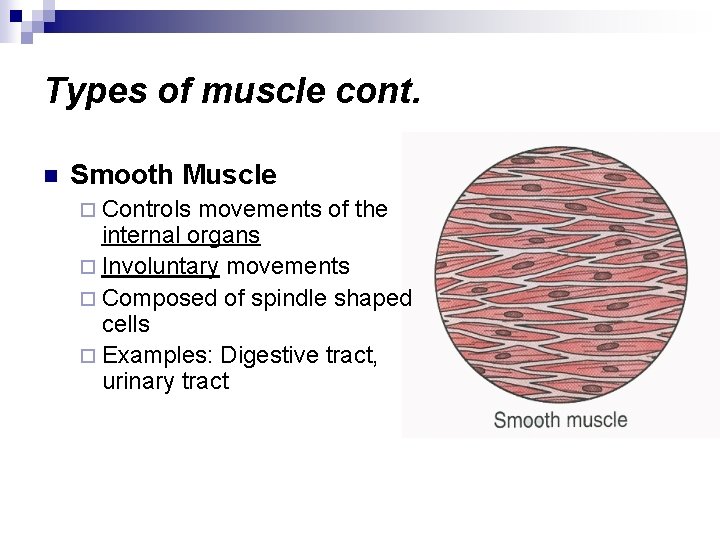
Types of muscle cont. n Smooth Muscle ¨ Controls movements of the internal organs ¨ Involuntary movements ¨ Composed of spindle shaped cells ¨ Examples: Digestive tract, urinary tract
Types of muscle cont.
Types of muscle cont. n Cardiac Muscle ¨Muscle that controls the beating of the heart ¨Involuntary
What is the Integumentary System? n n The Integumentary System includes: ¨ Skin ¨ Hair ¨ Finger and Toe Nails The Integumentary System’s Function: ¨ Barrier against infection and injury ¨ Regulates body temperature ¨ Removes wastes ¨ Provides protection from Ultra Violet radiation

What is Skin? n Layers of Skin ¨ Epidermis n Outer Layer of the skin n Contains both dead and living cells n Non-vascular tissue (no blood vessels) n Cells in the epidermis make Keratin and Melanin Keratin- tough protein found in hair ¨ Melanin- pigment that absorbs UV light ¨

What is Skin? n Layers of Skin ¨ Dermis n Inside layer of the skin n Contains collagen, hair follicles, nerves, smooth muscle and glands n Vascular tissue (has blood vessels) n Two types of glands: ¨ ¨ Sweat glands- secretes water and salts to cool the body down and remove waste from the blood. Sebaceous (oil) glands- secretes Sebum (oil) to keep the epidermis flexible and waterproof and to make hair soft and flexible.
What is Hair? n Functions of hair: ¨ Protects us from UV light ¨ Provides insulation ¨ Prevents dirt and other particles from entering the body (Ex: eyelashes, ear and nose hair) n Structure of hair: ¨ Hair is produced by hair follicles inside the dermis ¨ An individual hair is made of a column of epidermal cells that have filled with keratin and died
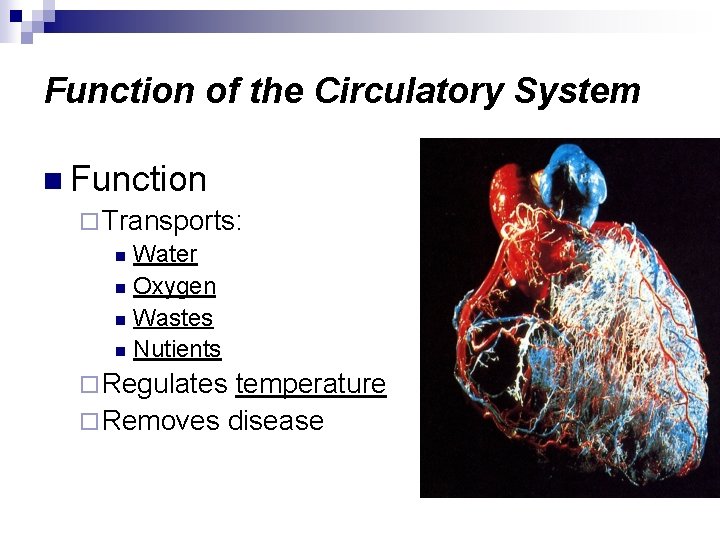
Function of the Circulatory System n Function ¨ Transports: Water n Oxygen n Wastes n Nutients n ¨ Regulates temperature ¨ Removes disease
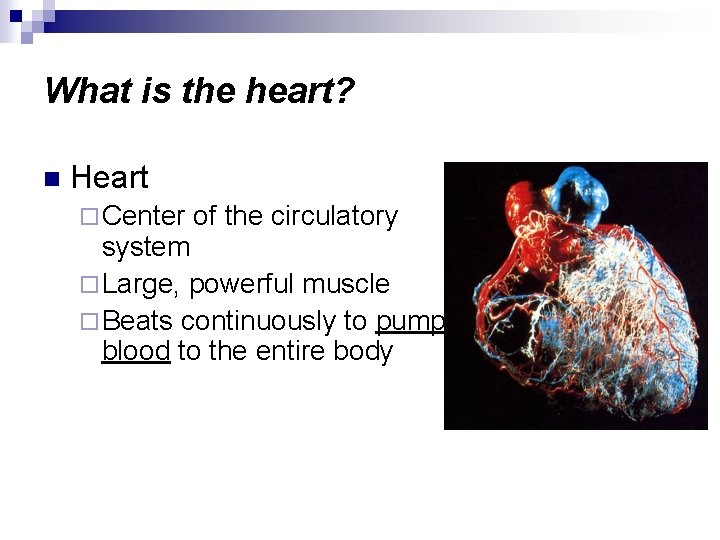
What is the heart? n Heart ¨ Center of the circulatory system ¨ Large, powerful muscle ¨ Beats continuously to pump blood to the entire body
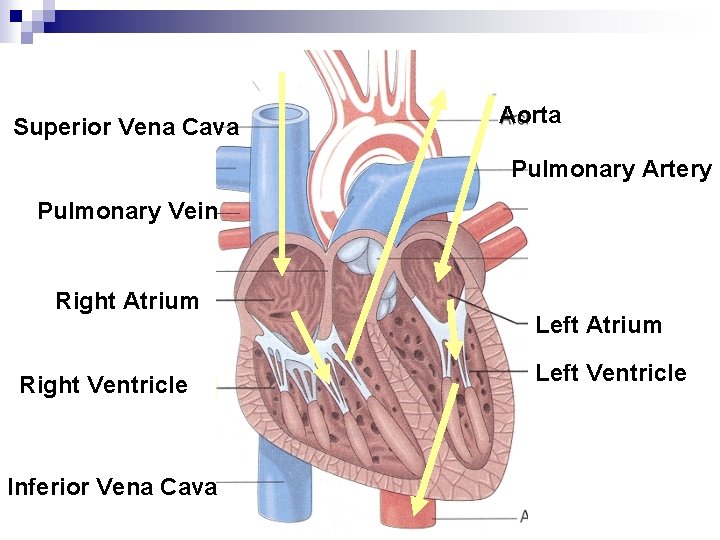
Superior Vena Cava Aorta Pulmonary Artery Pulmonary Vein Right Atrium Right Ventricle Inferior Vena Cava Left Atrium Left Ventricle

Structure of the heart n Four Chambers ¨ Right n Receives deoxygenated blood into the heart from the body via veins ¨ Right n Atrium Receives oxygenated blood into the heart from the lungs ¨ Left n Ventricle Pumps blood out to the lungs ¨ Left n Atrium Ventricle Pumps blood out into the body via arteries

What else makes up Circulatory System? n Blood Vessels ¨Arteries n Vessels that take blood away from the heart ¨Veins n Vessels that return blood to the heart

Blood Vessels cont. ¨Capillaries Connects arteries and veins n Delivers nutrients and oxygen to the cells n Removes wastes from cells n
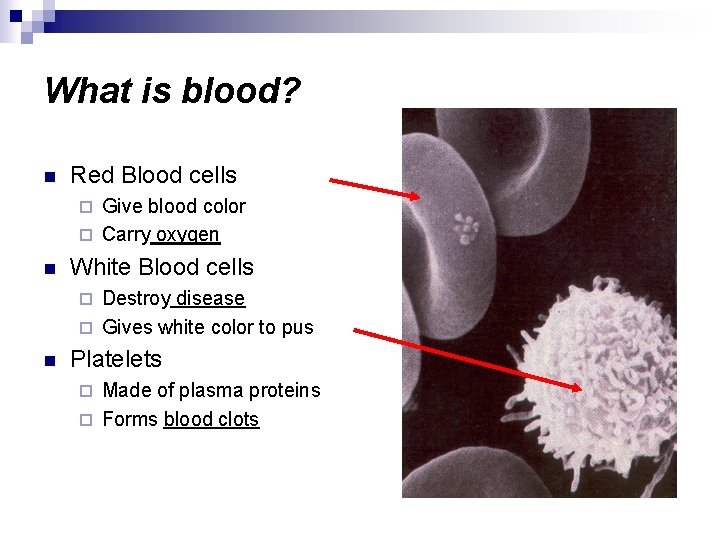
What is blood? n Red Blood cells Give blood color ¨ Carry oxygen ¨ n White Blood cells Destroy disease ¨ Gives white color to pus ¨ n Platelets Made of plasma proteins ¨ Forms blood clots ¨
Structure of the heart cont. n Two Paths of Circulation ¨ Systemic n Circulation of blood from the heart, to the body, and then back to the heart ¨ Pulmonary n Circulation of blood from the heart, to the lungs, and then back to the heart

Function of the Respiratory System n Function: ¨ Take Gas Exchange in oxygen from the air/water ¨ Place oxygen in the bloodstream ¨ Remove carbon dioxide from the body
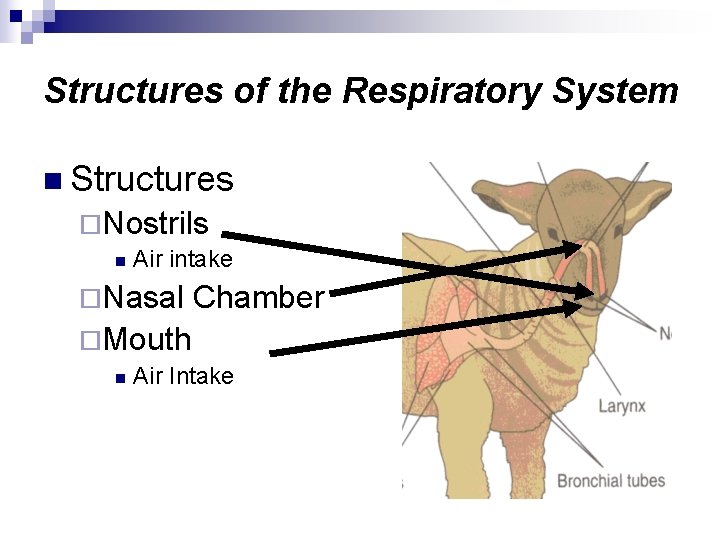
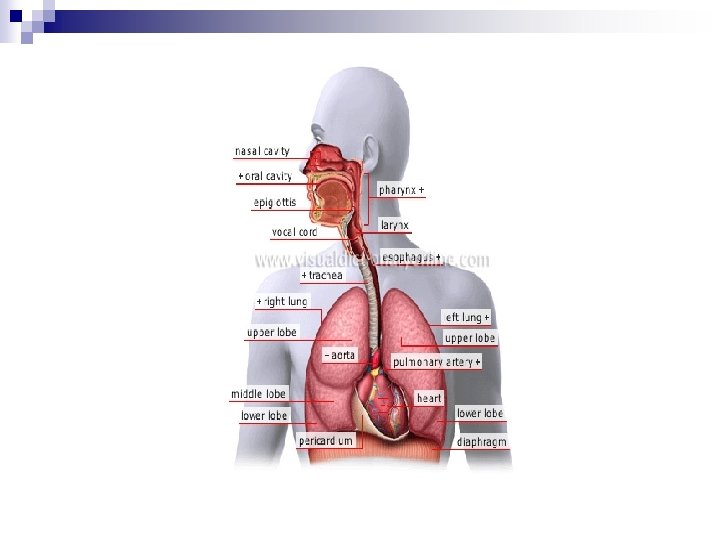
Structures of the Respiratory System n Structures ¨Nostrils n Air intake ¨Nasal Chamber ¨Mouth n Air Intake
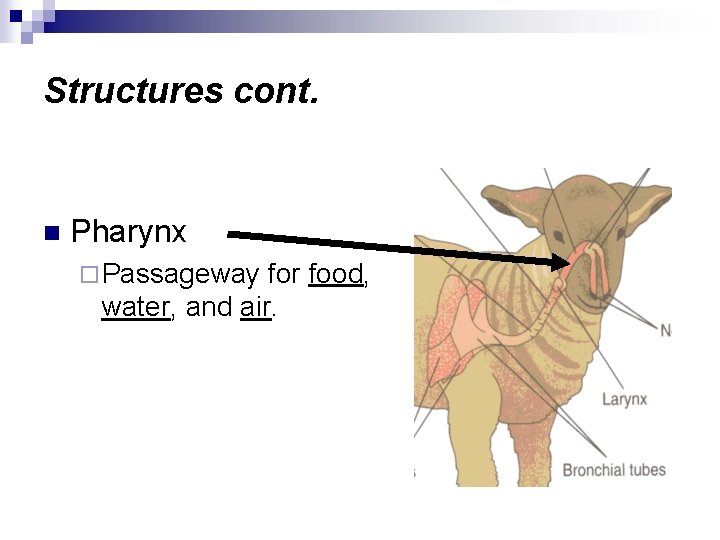
Structures cont. n Pharynx ¨ Passageway for food, water, and air.
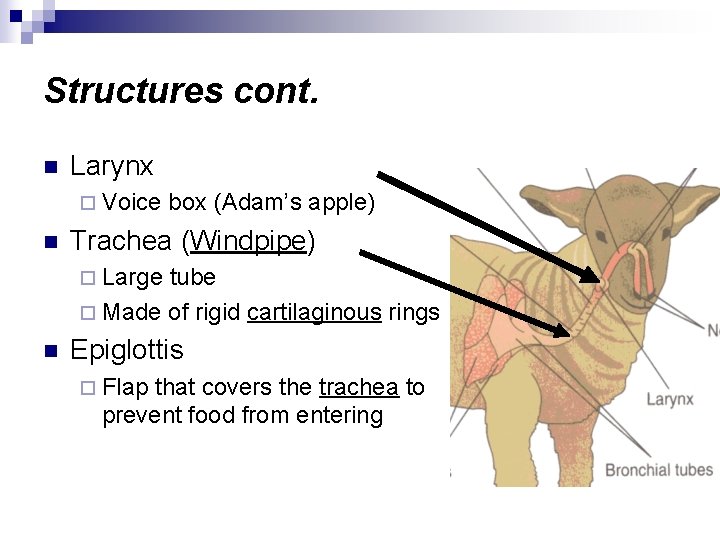
Structures cont. n Larynx ¨ Voice n box (Adam’s apple) Trachea (Windpipe) ¨ Large tube ¨ Made of rigid cartilaginous rings n Epiglottis ¨ Flap that covers the trachea to prevent food from entering
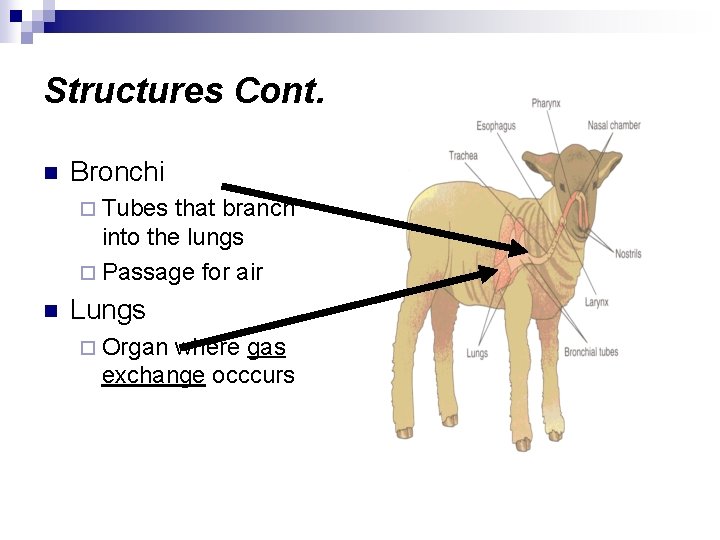
Structures Cont. n Bronchi ¨ Tubes that branch into the lungs ¨ Passage for air n Lungs ¨ Organ where gas exchange occcurs
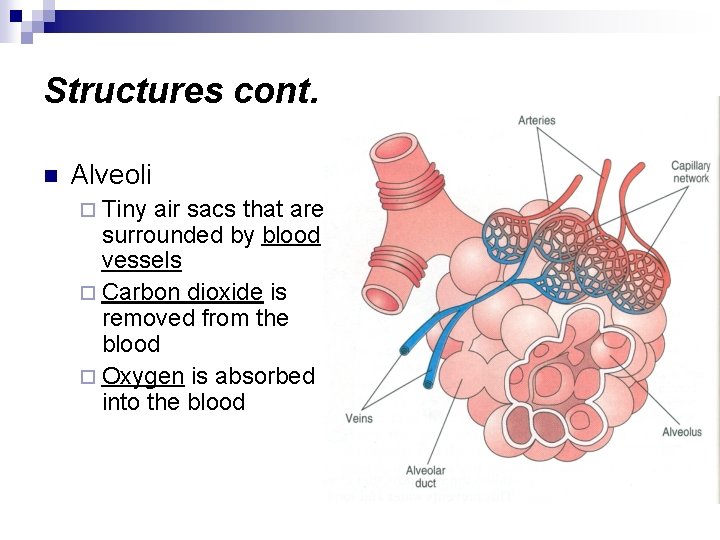
Structures cont. n Alveoli ¨ Tiny air sacs that are surrounded by blood vessels ¨ Carbon dioxide is removed from the blood ¨ Oxygen is absorbed into the blood
Structures cont. n Diaphragm ¨ Large muscle under the lungs ¨ When contracted, rib cage expands and air comes in ¨ When the diaphragm relaxes, air is forced out
How do fish get oxygen? n Gills!!! ¨ When fish open their mouth, water comes in. ¨ When they close their mouth, water is pumped through their gills. ¨ The surface of the gills is covered with capillaries which absorb oxygen and release carbon dioxide into the water. n How does this compare to people, other animals?
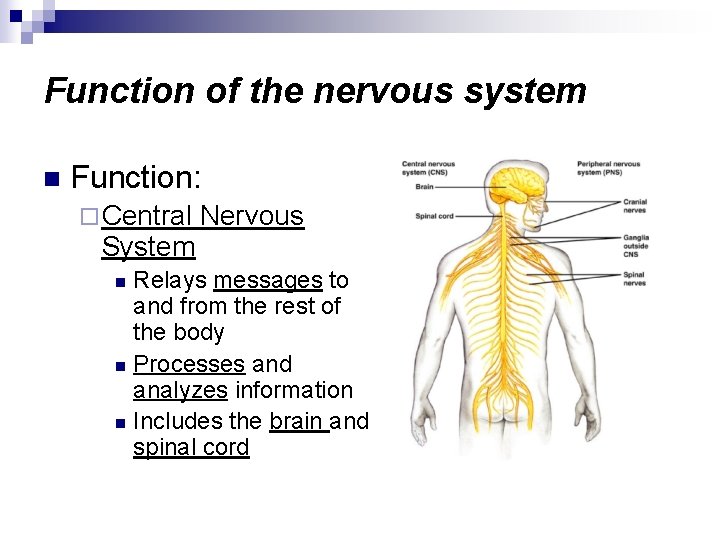
Function of the nervous system n Function: ¨ Central System Nervous Relays messages to and from the rest of the body n Processes and analyzes information n Includes the brain and spinal cord n
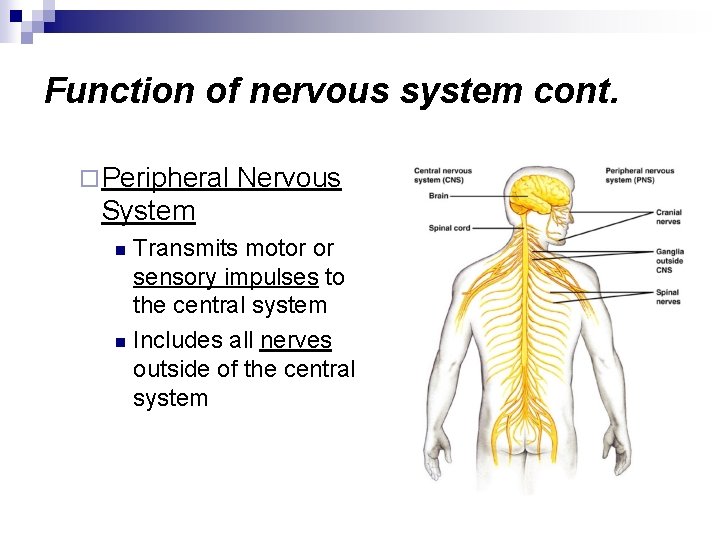
Function of nervous system cont. ¨ Peripheral Nervous System Transmits motor or sensory impulses to the central system n Includes all nerves outside of the central system n
Structures of the nervous system n Neurons ¨ Cells of the nervous system ¨ Sensory Neurons- control impulses from the body to the brain ¨ Motor Neurons- control impulses from the brain to the body n Nerves ¨ Long fiber like structures made up of neurons ¨ Impulses travel along nerves to and from the brain
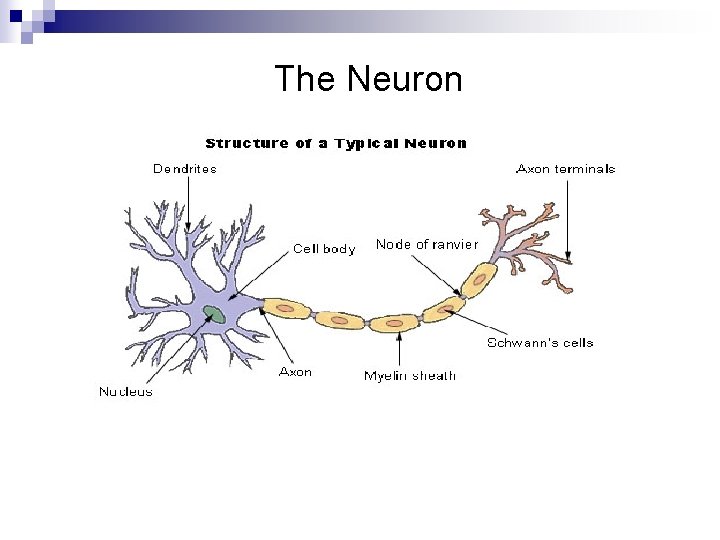
The Neuron

Nervous System structures cont. n Spinal Cord ¨ All nerves connect to the spinal cord ¨ Runs through the backbone (vertebrae)
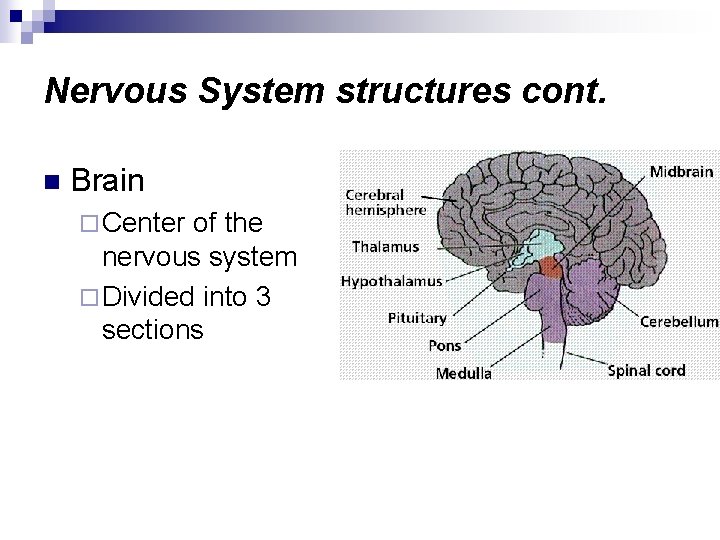
Nervous System structures cont. n Brain ¨ Center of the nervous system ¨ Divided into 3 sections
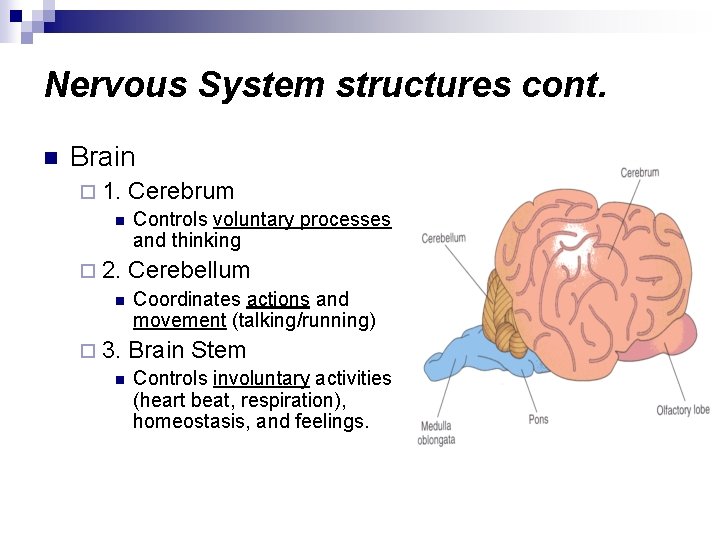
Nervous System structures cont. n Brain ¨ 1. n ¨ 2. n ¨ 3. n Cerebrum Controls voluntary processes and thinking Cerebellum Coordinates actions and movement (talking/running) Brain Stem Controls involuntary activities (heart beat, respiration), homeostasis, and feelings.
Function of the digestive system n Function: ¨ The digestive system breaks down food into a form that the body can use. Breaks food down to a molecular level that the body can absorb into the blood stream n This includes vitamins, minerals, proteins, carbohydrates, and lipids, and nucleic acids. n
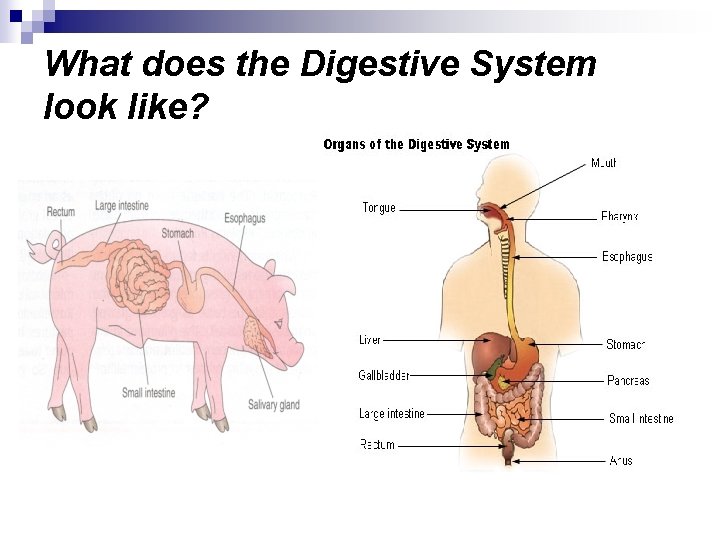
What does the Digestive System look like?
Where does digestion start? n The Mouth ¨ Teeth- tear and crush food to small pieces ¨ Salivary Glands- secrete saliva which moistens food so it can be swallowed n Saliva also contains enzymes that break down starches into sugars and destroys bacteria in food ¨ Tonguen forms a ball of food called the bolus With help from the throat muscles pushes food to the esophagus.
Where does the food go next? n The Esophagus ¨ The “food tube” ¨ Smooth muscles line this tube. Contractions of these muscles, called peristalsis, push the bolus down to the stomach.

What is the stomach? n The Stomach ¨ The stomach is a large, muscular sac. ¨ Most mechanical digestion occurs in the stomach. ¨ Glands in the stomach secrete mucus to protect the stomach, hydrochloric acid (HCL) to activate enzymes, and pepsin. ¨ The mixture in the stomach is now called chyme
What is the Small Intestine? n n The small intestine has three parts, the duodenum, the ileum, and the jejunum. Most chemical digestion (break down of chyme by enzymes) occurs in the small intestine.
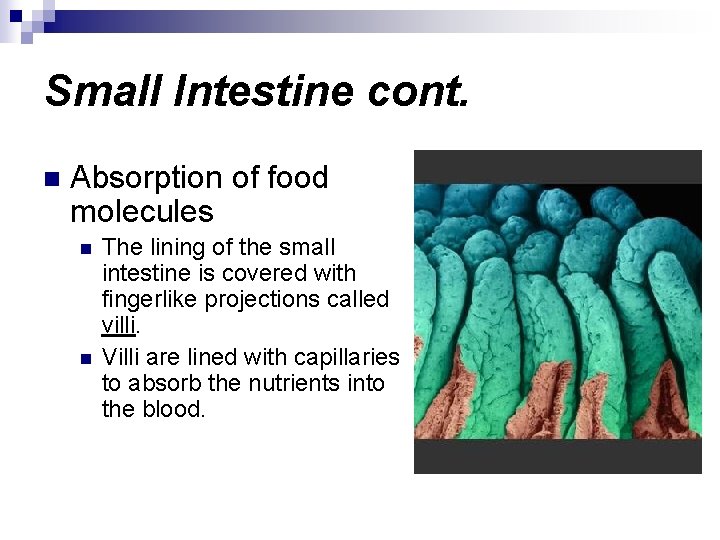
Small Intestine cont. n Absorption of food molecules n n The lining of the small intestine is covered with fingerlike projections called villi. Villi are lined with capillaries to absorb the nutrients into the blood.

The rest of the system n Large Intestine (or Colon) ¨ Primary Function is to remove water from the remainder of undigested material ¨ Also stores this material until excreted n Rectum ¨ Muscular body tube that passes waste out of the
What are the accessory organs in the digestive system? n Pancreas¨ The pancreas is a gland that lies near the stomach ¨ The pancreas has three functions: Produces insulin to regulate blood sugar levels n Produces enzymes that are secreted into the small intestine to break down carbohydrates, proteins, lipids, and nucleic acids. n Produces sodium bicarbonate to neutralize the acidity of the stomach. n
Accessory organs cont. n Liver ¨ Largest internal organ in the body ¨ Produces Bile n Bile helps dissolve fat ¨ The Liver is also responsible for detoxifying the blood
Digestive System disorders n. Peptic Ulcers ¨Caused by bacteria in the stomach ¨Creates a hole in the lining of the stomach ¨Acid Reflux ¨Caused by acid contents in the stomach being regurgitated into the esophagus. ¨Damages the lining of the esophagus. ¨Often referred to as heartburn.

What is the excretory system? n Functions of the excretory system: ¨ Every cell in the body produces metabolic wastes. ¨ The excretory system removes wastes from the bloodstream and the digestive tract, then removes these wastes from the body. ¨ Excretion plays an important role in homeostasis.
What is the function of the kidneys? n Kidney Function ¨ The kidneys remove wastes from the blood (urea), maintain blood p. H, and regulate the volume of the blood. ¨ Kidneys reabsorb 99% of the water that enters them. ¨ Kidneys filter the blood of the body every 45 min. ¨ Kidneys are made up of nephrons.
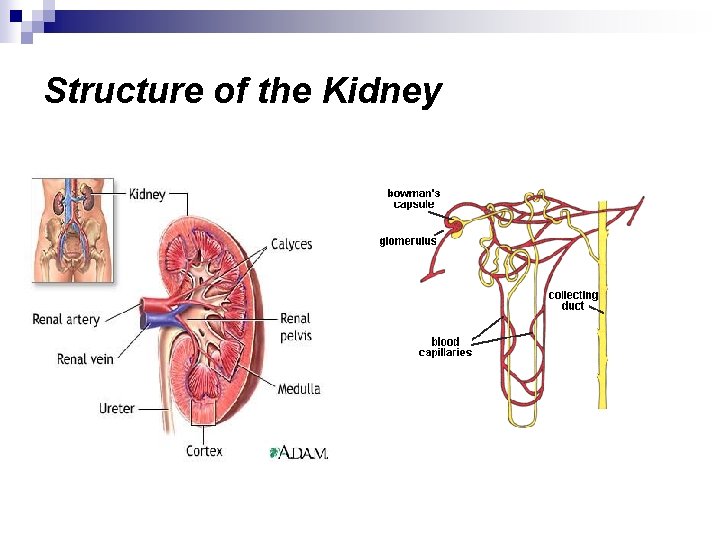
Structure of the Kidney
Other excretory structures n Ureter ¨ Tube n that carries urine from the kidney to the bladder Bladder ¨ Sac-like n organ that stores urine until excreted Urethra ¨ Tube that carries urine from the bladder to the outside of the body
Other excretory structures n Skin ¨ The n Lungs ¨ The n Skin excretes excess water and salts (sweat). lungs excrete carbon dioxide when animals exhale. Liver ¨ The liver removes toxins from our bloodstream.

What is the Endocrine System? n Function: ¨ Composed n of glands that secrete hormones. Hormones: ¨ Chemicals that affect specific parts in the body. ¨ Hormones control vital function of the body. n Growth n Reproduction ¨ Hormones play a primary role in homeostasis of the body
What are glands? n Exocrine glands¨ Release secretions through ducts directly to the organs that use them ¨ Examples- sweat glands, digestive glands n Endocrine glands¨ Release secretions directly into the bloodstream
Glands of the endocrine system n Pituitary Gland ¨ Secretes nine different hormones that regulate other endocrine glands n Hypothalamus ¨ Regulates hormone production of the Pituitary
Endocrine glands cont. n Adrenal Gland ¨ Releases Adrenaline and other hormones that help our body deal with stress n This includes the fight or flight response n Thyroid Gland ¨ Controls rate of digestion and metabolism
Endocrine glands cont. n Pancreas Has both exocrine and endocrine function n Exocrine¨ Secretes digestive enzymes into the small intestine n Endocrine¨ Secretes insulin and glucagon to regulate blood sugar levels n
Endocrine glands cont. n Ovaries ¨ Produce and secrete estrogen and progesterone n Estrogen is responsible for development of eggs and physical “female characteristics” (e. g. widening of hips, breast formation) n Testes ¨ Produce and secrete testosterone n Testosterone is responsible for sperm production and physical “male characteristics” (e. g. deep voice, facial hair)
Animal Reproduction
The Male Reproductive System n Function¨ Produce and deliver sperm ¨ Sperm development is triggered by testosterone and FSH secreted by the pituitary ¨ Sperm production is called spermatogenesis
The Male Reproductive System n Structures ¨ Testes- site of sperm production ¨ The testes reside outside the body where the temperature is 1 -3 degrees lower. This creates the ideal temperature for spermatogenesis ¨ Seminiferous tubulesn Tight coils within the testes. These coils are where sperm is produced
The Male Reproductive System n Epididymis ¨ Site n where sperm mature and are stored Vas Deferens ¨ Some n sperm move into this tube to be ejaculated Urethra ¨ The Vas Deferens joins the urethra where semen is ejaculated though the penis to the outside of the body
The Male Reproductive System n. Male Reproductive Glands n. Seminal Vesicle, Prostrate gland, and bulbourethral glands add fluids to the sperm to create semen n. Semen- acts as a carrier to get the sperm inside the vaginal canal during conception

The Female Reproductive System n. Function n. Production of Ova (eggs), and development of the embryo after fertilization n. Females are born with thousands of immature eggs. Ova maturation is triggered by estrogen and FSH n. Production of mature ova is called oogenesis.
The Female Reproductive System n. Structures n. Ovaries- Site of ova storage and maturation n. Ovulation- process where the mature follicle releases its egg. This happens once every 28 days n. Fallopian n. The Tube (oviduct) fallopian tube is usually the site of fertilization n. Once fertilized, the egg is called a zygote
The Female Reproductive System n. Structures n. Uterus n. If a zygote exists, it will implant to the wall of the uterus and mature n. Cervix n. Opening between the uterus and vagina n. Vagina n. Muscular passage. Site where semen enters the female and also site where fetus is delivered

Reproductive Technologies n Reproductive ¨ Any Technologies method of reproduction that is different from natural methods

Reproductive Technologies n Embryo Transfer: ¨ The transfer of fertilized egg(s) from a donor female to one or more recipient females
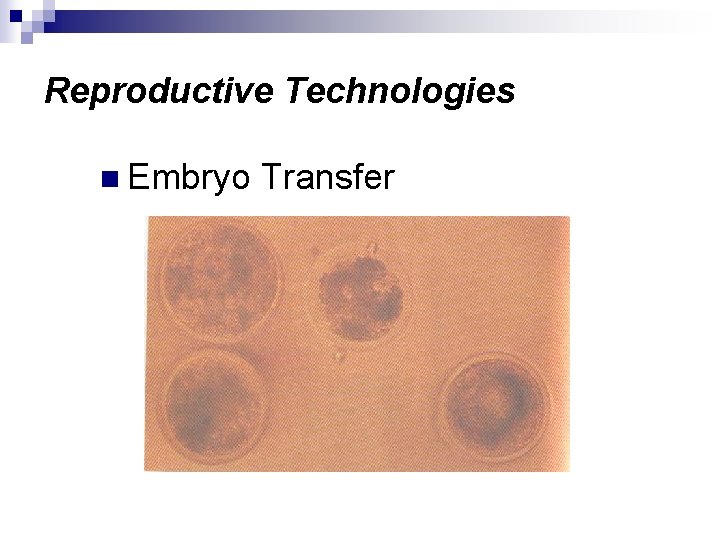
Reproductive Technologies n Embryo Transfer
Reproductive Technologies n Super Ovulation: ¨ Providing females with hormones that causes them to release more then one egg. n Embryonic Stem Cells: ¨ Early embryonic cells that are not yet differentiated. These cells can become any type of tissue. Scientists are hoping to learn how to grow tissue from stem cells to replace damaged tissue in adults.
Reproductive Technologies n Artificial ¨ Placing Insemination sperm into the female reproductive tract by means other than natural mating.
Reproductive Technologies n In vitro fertilization ¨ Eggs are surgically removed from the ovary. The eggs are then mixed with sperm in a lab. After about two days, a technician checks to see if the eggs are fertilized. A fertilized egg will then be implanted in the uterus of the female.
- Slides: 91