
Animal Behaviour Fieldwork Introducing Psychology Students to the
Animal Behaviour Fieldwork: Introducing Psychology Students to the Process of Science Tom Dickins & Peter Donovan http: //dissentwithmodification. com/
Introduction • BPS accreditation is necessarily limiting • Research methods (RM) α Experimental method β Qualitative methods • UEL – Core RM at levels 1 & 2 • Statistics lectures • Structured exercises • Simulation not true research – Level 3 research project • This paper is about one solution to this issue
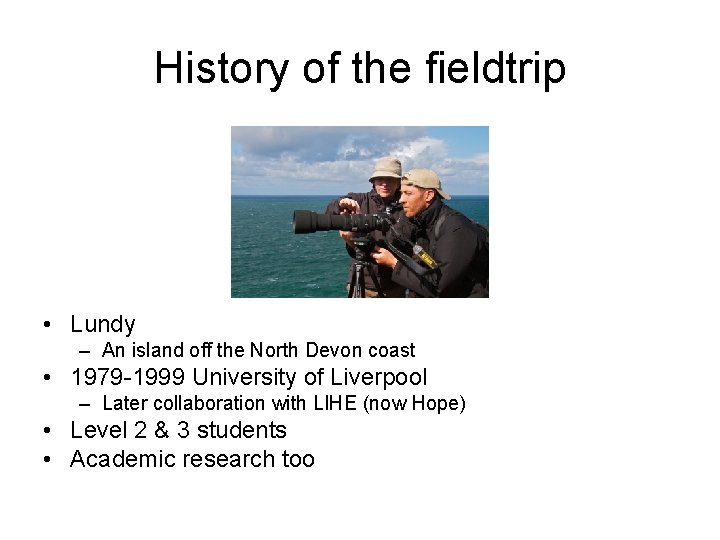
History of the fieldtrip • Lundy – An island off the North Devon coast • 1979 -1999 University of Liverpool – Later collaboration with LIHE (now Hope) • Level 2 & 3 students • Academic research too
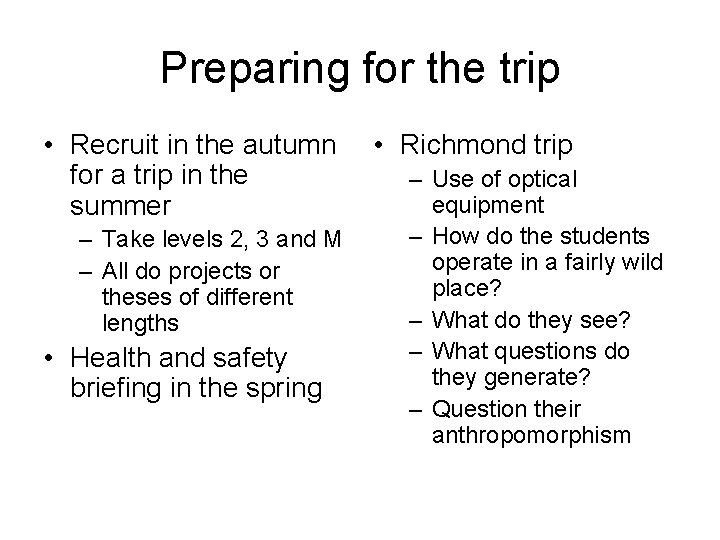
Preparing for the trip • Recruit in the autumn for a trip in the summer – Take levels 2, 3 and M – All do projects or theses of different lengths • Health and safety briefing in the spring • Richmond trip – Use of optical equipment – How do the students operate in a fairly wild place? – What do they see? – What questions do they generate? – Question their anthropomorphism
A fortnight on Lundy • Day 1 – Arrival – Orienting walk http: //www. youtube. com/watch? v=b 6 n. C 6 To. Ph 7 I – What did you see? • Day 2 – Extensive tour with planned stops – Student exercises: • Observe, note, hypothesize function – Evening seminar at The Barn • Students to present their most interesting observation of the day • How could this be turned into a study? • Days 3 – 5 – Small group work on chosen species • Generate research questions • Begin field diary – Staff visited each field site • Discuss ideas in the field • Introduce ethograms – Evening seminars • Groups presented • Discussion about motor and functional descriptions • Generate and discuss alternative accounts of observed behaviour
A fortnight on Lundy • Days 6 -8 – Group work • Developing more focused questions • Different angles on the same species • Developing a project – Evening seminars • Days 9 -14 – Running the projects – Evening seminars • Other support: – Morning and early evening tutorials – Pub surgery – Library resources from the Lundy Field Society – Our own resources brought with us – Teaching assistants
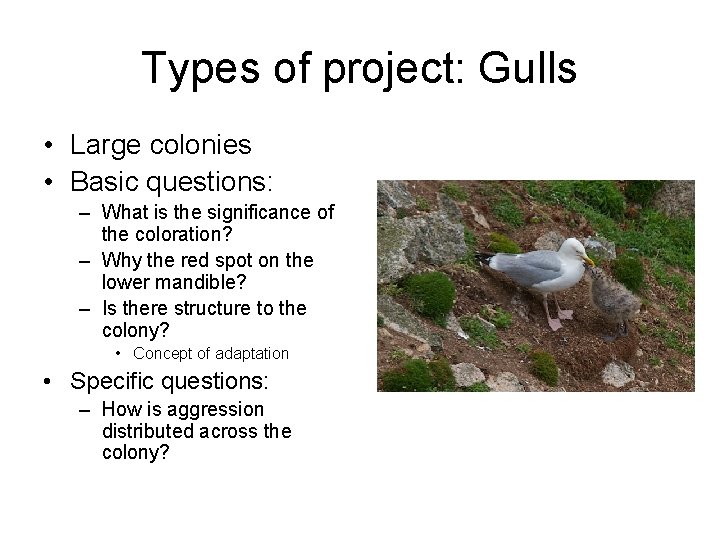
Types of project: Gulls • Large colonies • Basic questions: – What is the significance of the coloration? – Why the red spot on the lower mandible? – Is there structure to the colony? • Concept of adaptation • Specific questions: – How is aggression distributed across the colony?
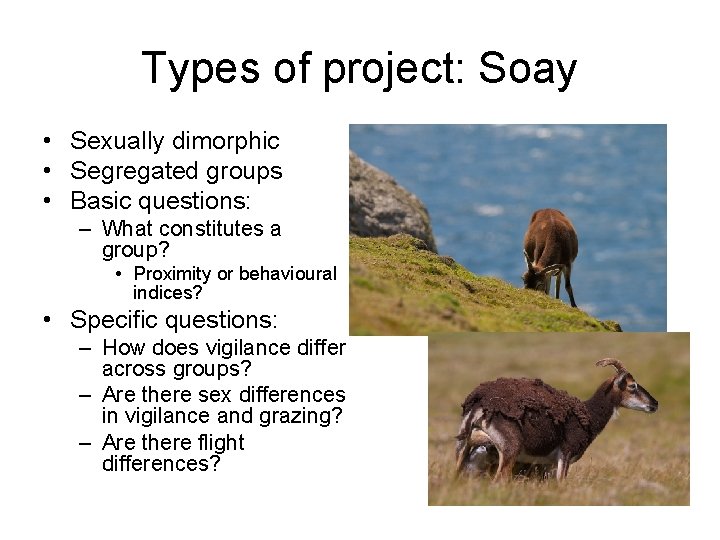
Types of project: Soay • Sexually dimorphic • Segregated groups • Basic questions: – What constitutes a group? • Proximity or behavioural indices? • Specific questions: – How does vigilance differ across groups? – Are there sex differences in vigilance and grazing? – Are there flight differences?
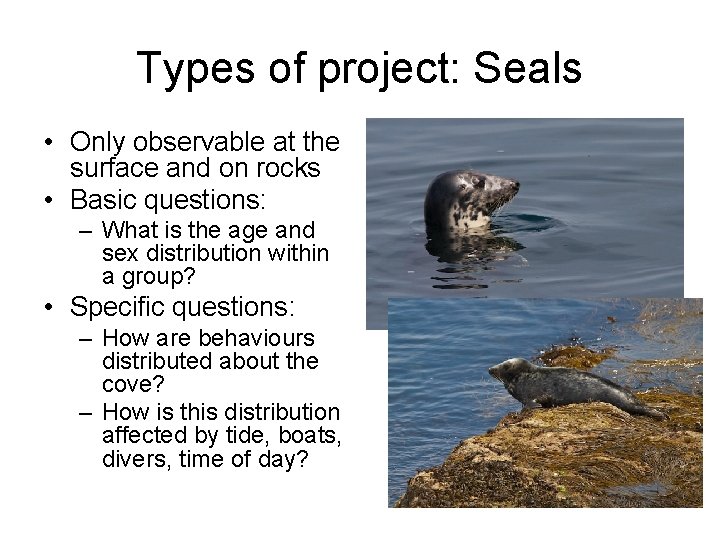
Types of project: Seals • Only observable at the surface and on rocks • Basic questions: – What is the age and sex distribution within a group? • Specific questions: – How are behaviours distributed about the cove? – How is this distribution affected by tide, boats, divers, time of day?
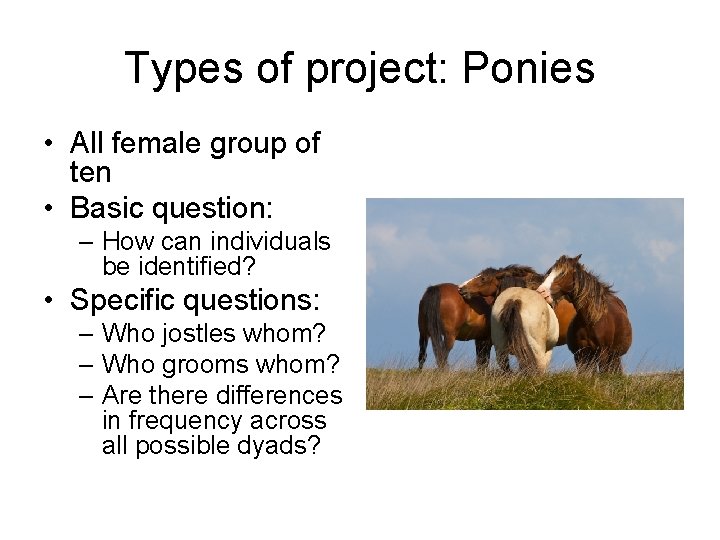
Types of project: Ponies • All female group of ten • Basic question: – How can individuals be identified? • Specific questions: – Who jostles whom? – Who grooms whom? – Are there differences in frequency across all possible dyads?
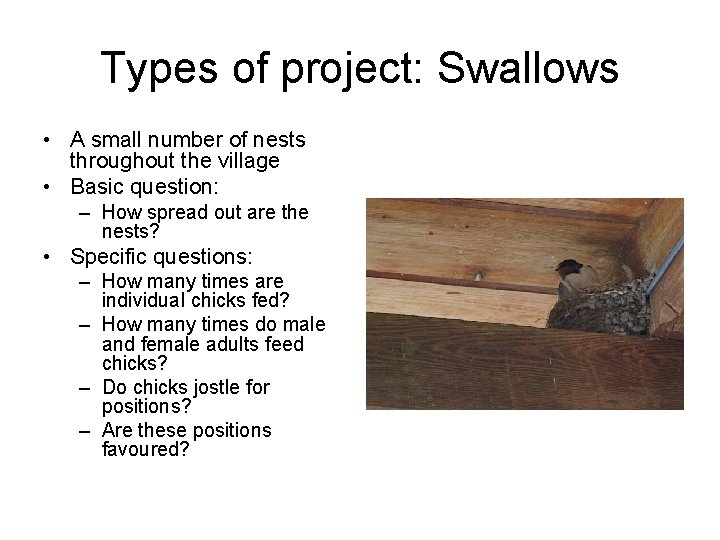
Types of project: Swallows • A small number of nests throughout the village • Basic question: – How spread out are the nests? • Specific questions: – How many times are individual chicks fed? – How many times do male and female adults feed chicks? – Do chicks jostle for positions? – Are these positions favoured?
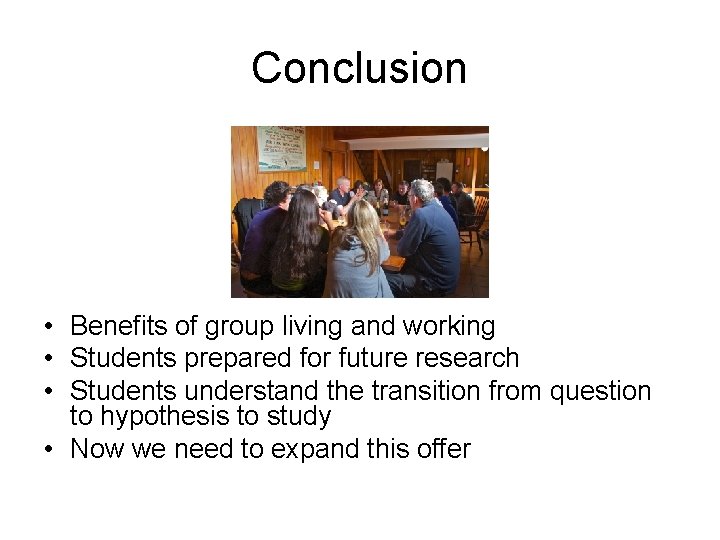
Conclusion • Benefits of group living and working • Students prepared for future research • Students understand the transition from question to hypothesis to study • Now we need to expand this offer
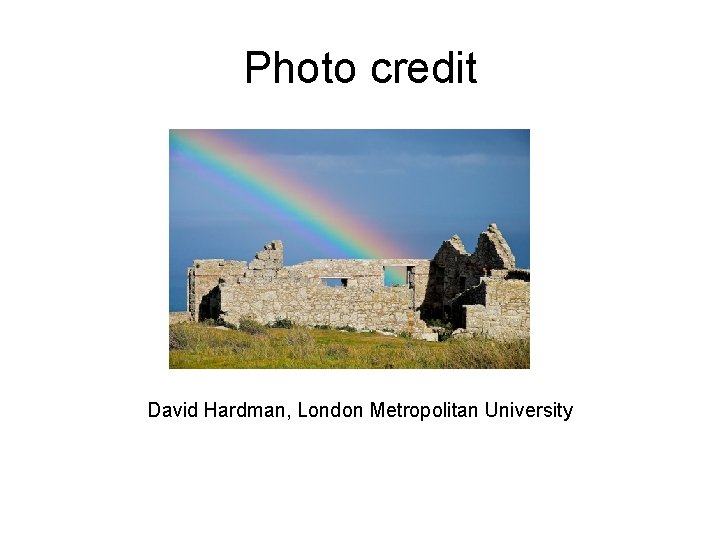
Photo credit David Hardman, London Metropolitan University
- Slides: 13