
Animal Behaviors Animalia Typical organism sponges worms insects
Animal Behaviors
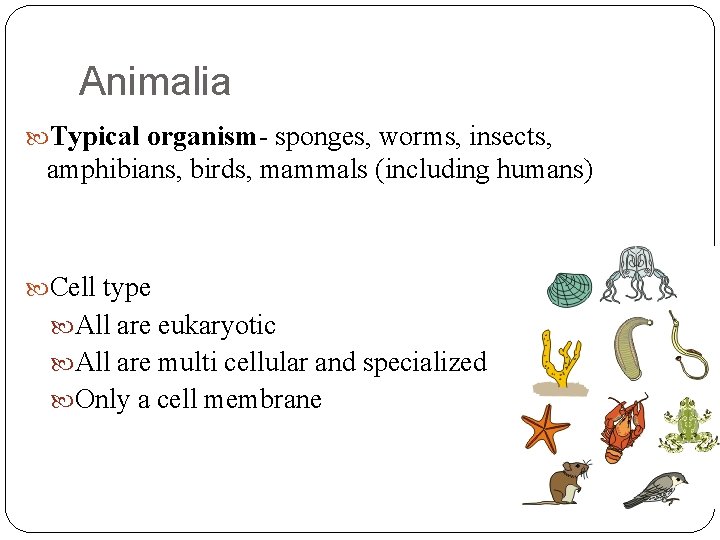
Animalia Typical organism- sponges, worms, insects, amphibians, birds, mammals (including humans) Cell type All are eukaryotic All are multi cellular and specialized Only a cell membrane
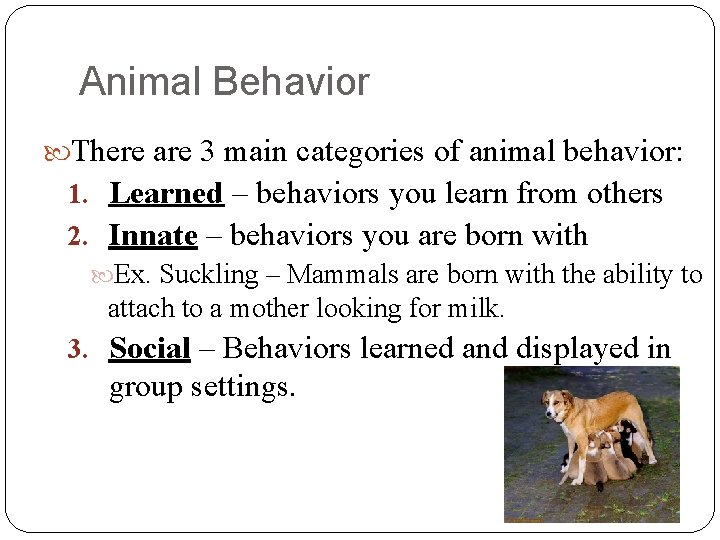
Animal Behavior There are 3 main categories of animal behavior: 1. Learned – behaviors you learn from others 2. Innate – behaviors you are born with Ex. Suckling – Mammals are born with the ability to attach to a mother looking for milk. 3. Social – Behaviors learned and displayed in group settings.

Innate responses Taxis – innate response to an external stimuli Positive – moving towards the stimulus Negative – moving away from the stimulus 1. Phototaxis – Movement towards light sources Bugs attracted to lights at night 2. chemotaxis – movement toward specific chemicals Paramecium moving towards food particles
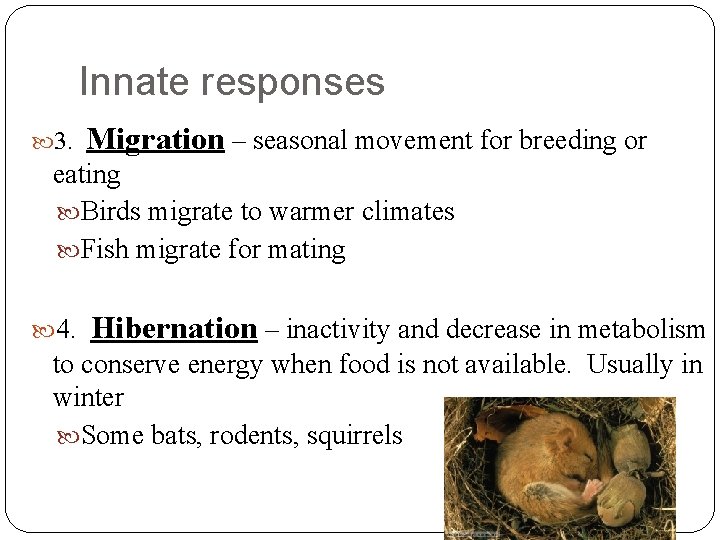
Innate responses 3. Migration – seasonal movement for breeding or eating Birds migrate to warmer climates Fish migrate for mating 4. Hibernation – inactivity and decrease in metabolism to conserve energy when food is not available. Usually in winter Some bats, rodents, squirrels

Innate behaviors Estivation – “summer sleep” that takes place during times of heat and dryness to avoid overheating and drying up. Ex. Some crabs, tortoises, salamanders, crocodiles, snails. NOT mammals 5.
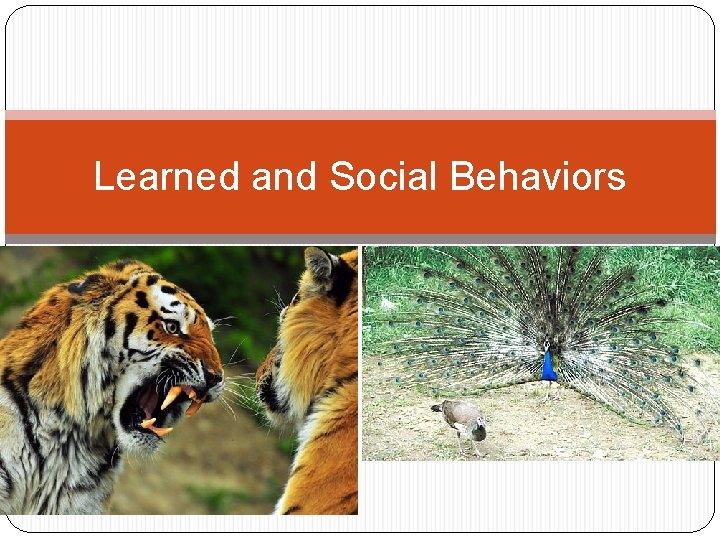
Learned and Social Behaviors
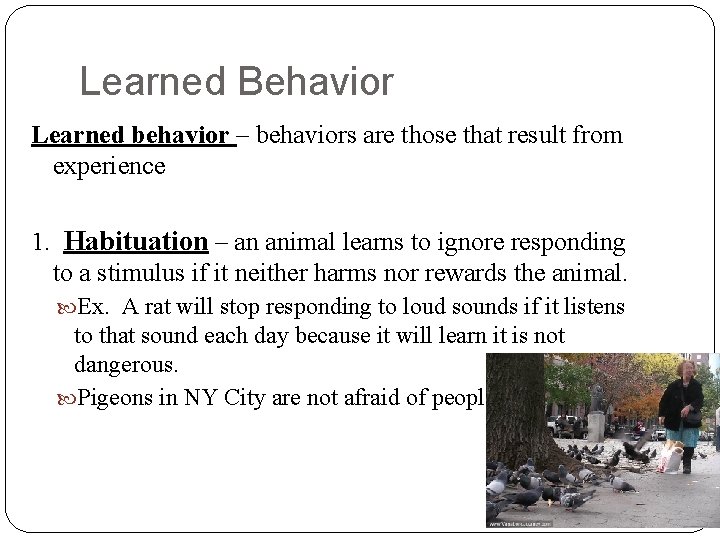
Learned Behavior Learned behavior – behaviors are those that result from experience 1. Habituation – an animal learns to ignore responding to a stimulus if it neither harms nor rewards the animal. Ex. A rat will stop responding to loud sounds if it listens to that sound each day because it will learn it is not dangerous. Pigeons in NY City are not afraid of people.
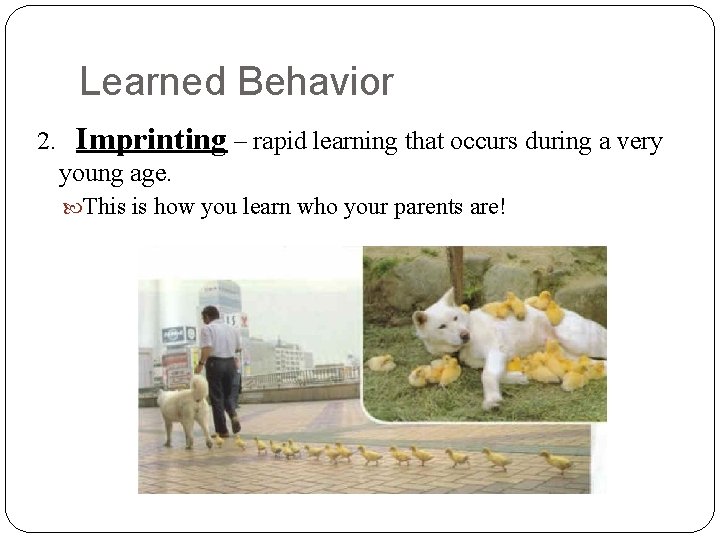
Learned Behavior 2. Imprinting – rapid learning that occurs during a very young age. This is how you learn who your parents are!
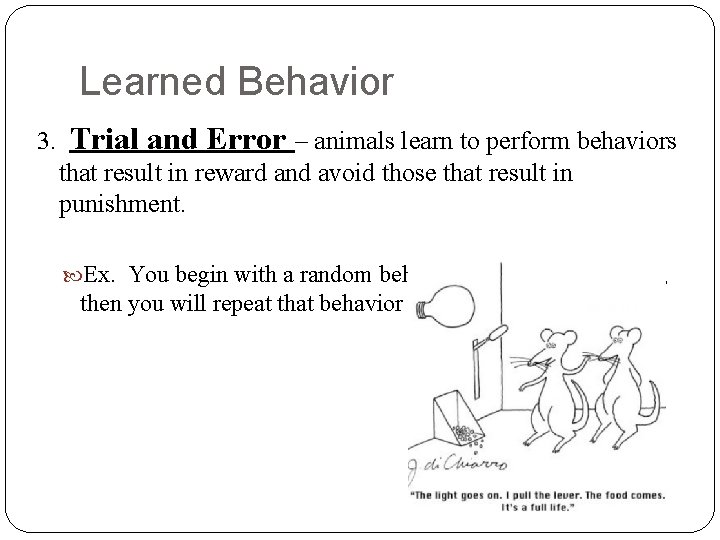
Learned Behavior 3. Trial and Error – animals learn to perform behaviors that result in reward and avoid those that result in punishment. Ex. You begin with a random behavior, if you get rewarded, then you will repeat that behavior
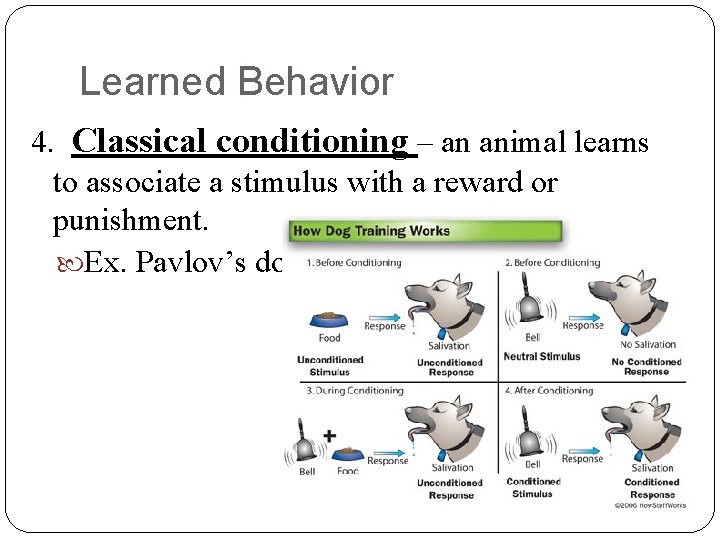
Learned Behavior 4. Classical conditioning – an animal learns to associate a stimulus with a reward or punishment. Ex. Pavlov’s dogs
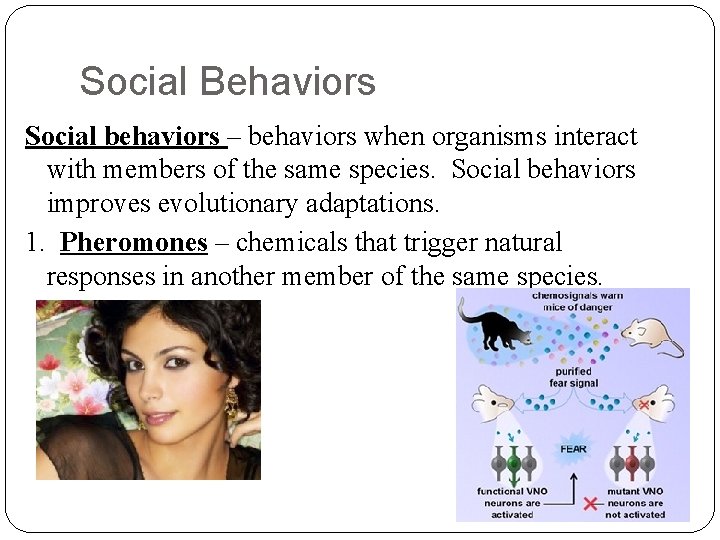
Social Behaviors Social behaviors – behaviors when organisms interact with members of the same species. Social behaviors improves evolutionary adaptations. 1. Pheromones – chemicals that trigger natural responses in another member of the same species.
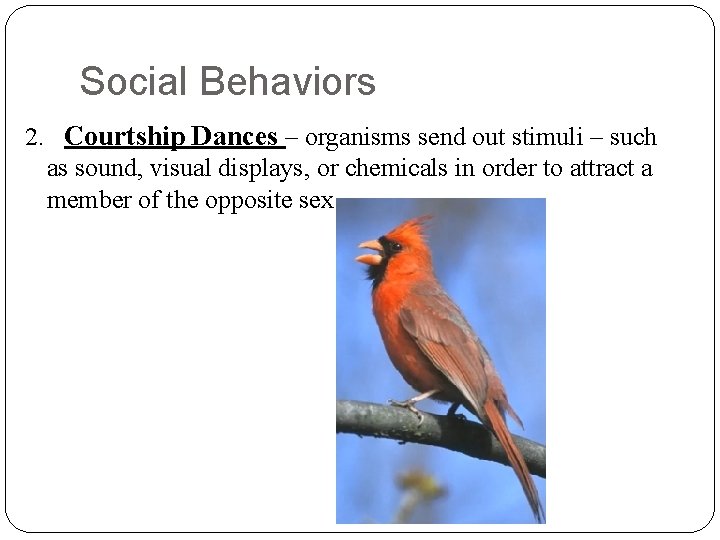
Social Behaviors 2. Courtship Dances – organisms send out stimuli – such as sound, visual displays, or chemicals in order to attract a member of the opposite sex.
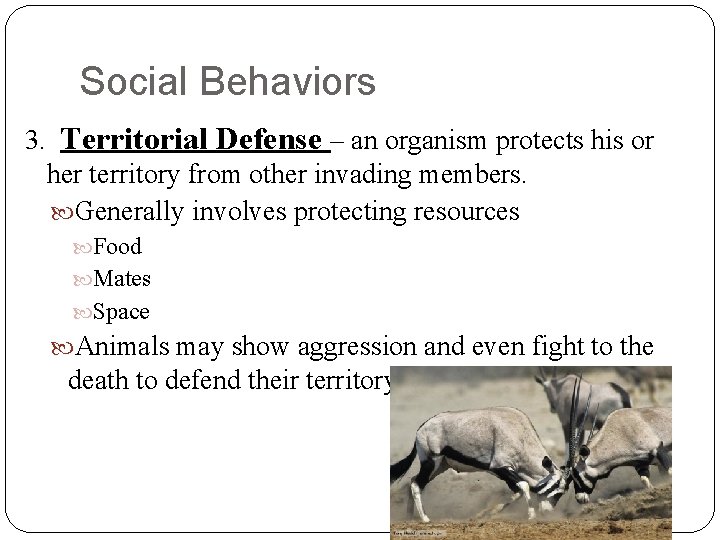
Social Behaviors 3. Territorial Defense – an organism protects his or her territory from other invading members. Generally involves protecting resources Food Mates Space Animals may show aggression and even fight to the death to defend their territory.
- Slides: 14