
Animal Behavior Why and how do animals do
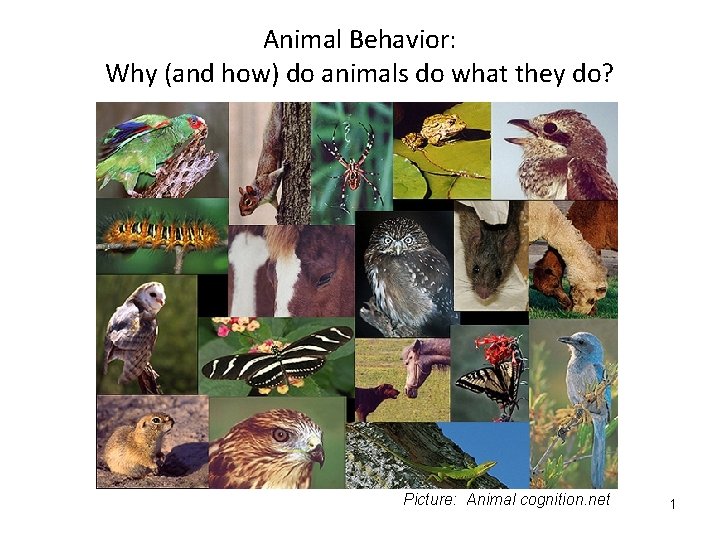
Animal Behavior: Why (and how) do animals do what they do? Picture: Animal cognition. net 1

Aristotle (384 -322 B. C. ): Observational work in zoology Anatomy Embryology Behavior: Social organization Characteristics: Vivipary 2

5/13/08: Natural Selection and History of Animal Behavior Lecture objectives: 1. Understand Darwin’s theory of evolution by natural selection 2. Identify the major people and questions that guided the development of the modern study of animal behavior 3
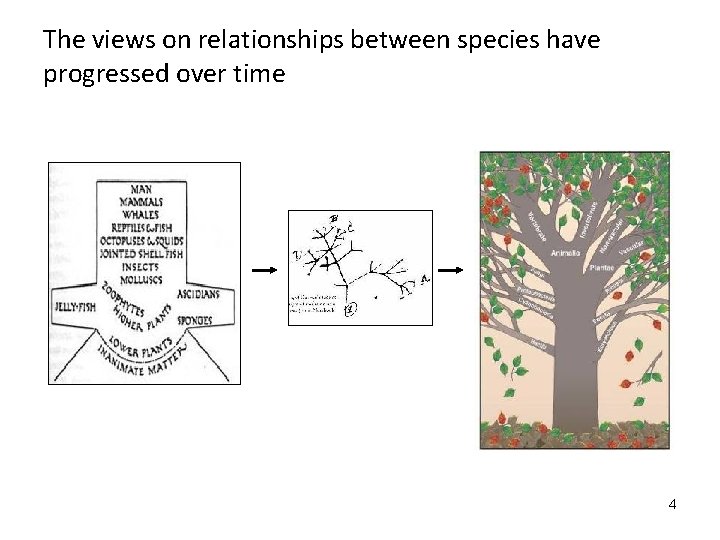
The views on relationships between species have progressed over time 4

Darwin set the stage for the study of animal behavior through his theory of natural selection 5
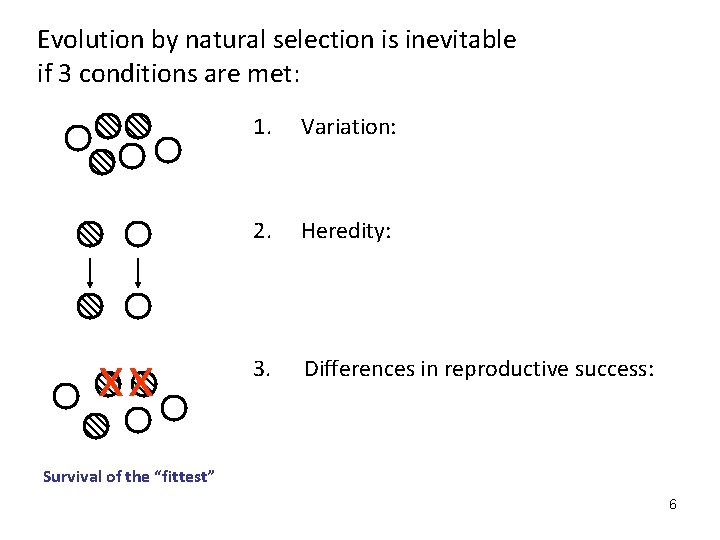
Evolution by natural selection is inevitable if 3 conditions are met: xx 1. Variation: 2. Heredity: 3. Differences in reproductive success: Survival of the “fittest” 6
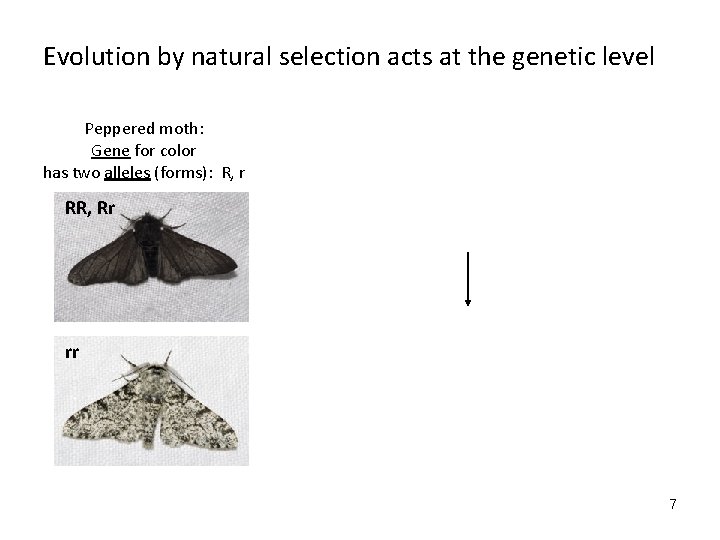
Evolution by natural selection acts at the genetic level Peppered moth: Gene for color has two alleles (forms): R, r RR, Rr rr 7
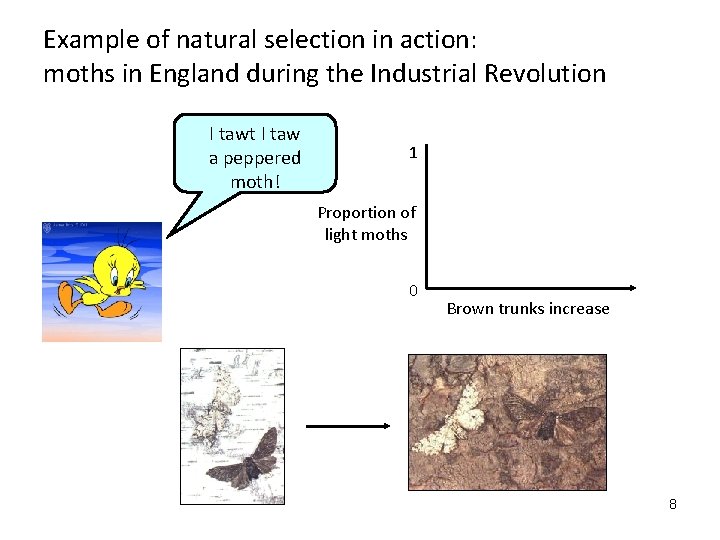
Example of natural selection in action: moths in England during the Industrial Revolution I tawt I taw a peppered moth! 1 Proportion of light moths 0 Brown trunks increase 8
What would a population look like over time if one of Darwin’s 3 conditions is not met? 1. No Variation? 2. No Heredity? 3. No Differences in reproductive success? 9
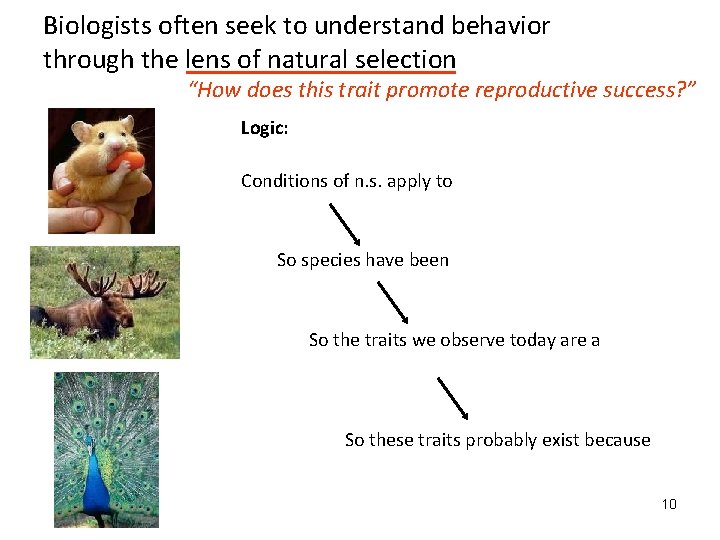
Biologists often seek to understand behavior through the lens of natural selection “How does this trait promote reproductive success? ” Logic: Conditions of n. s. apply to So species have been So the traits we observe today are a So these traits probably exist because 10
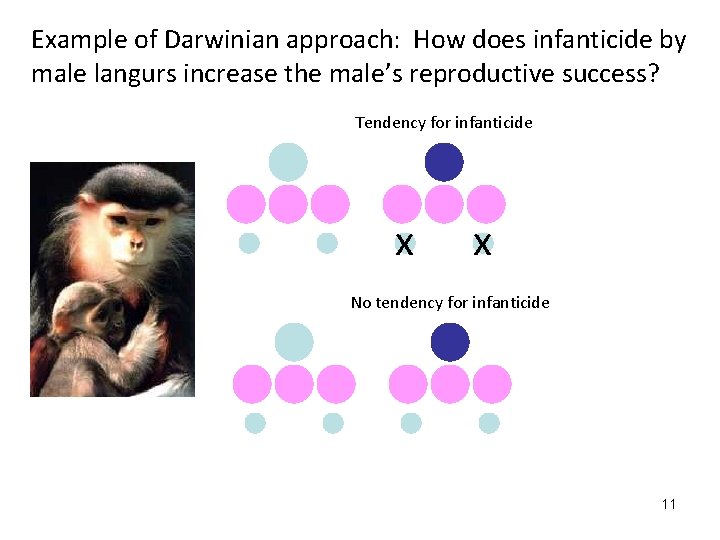
Example of Darwinian approach: How does infanticide by male langurs increase the male’s reproductive success? Tendency for infanticide x x No tendency for infanticide 11
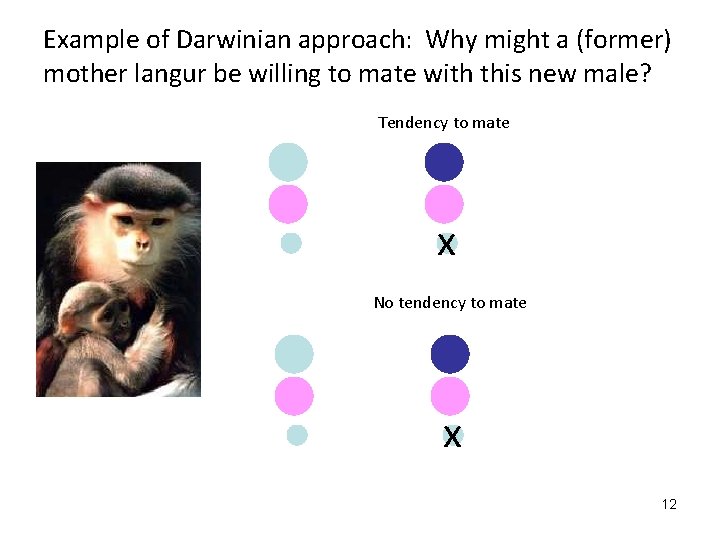
Example of Darwinian approach: Why might a (former) mother langur be willing to mate with this new male? Tendency to mate x No tendency to mate x 12
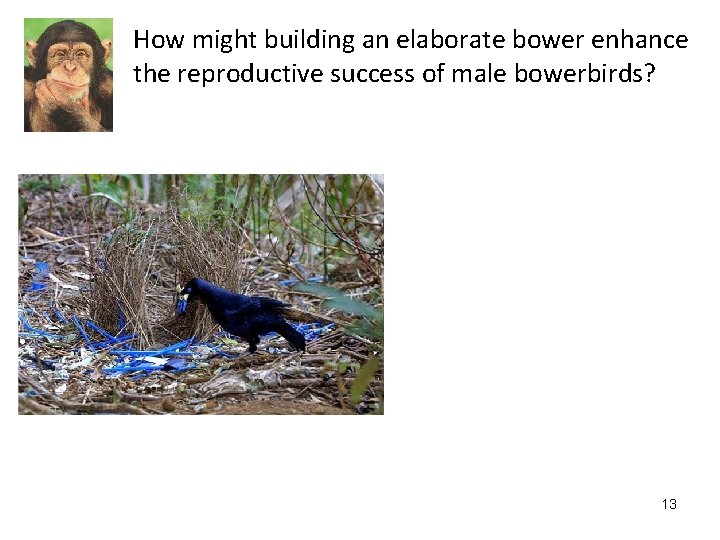
How might building an elaborate bower enhance the reproductive success of male bowerbirds? 13
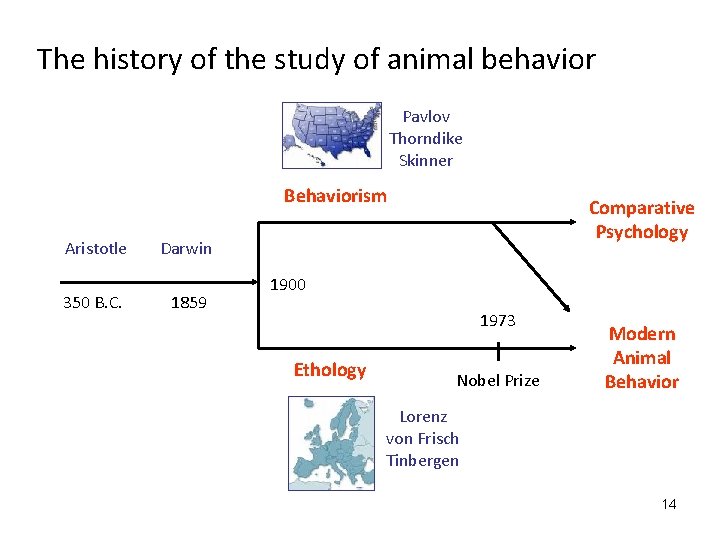
The history of the study of animal behavior Pavlov Thorndike Skinner Behaviorism Aristotle 350 B. C. Comparative Psychology Darwin 1859 1900 1973 Ethology Nobel Prize Modern Animal Behavior Lorenz von Frisch Tinbergen 14
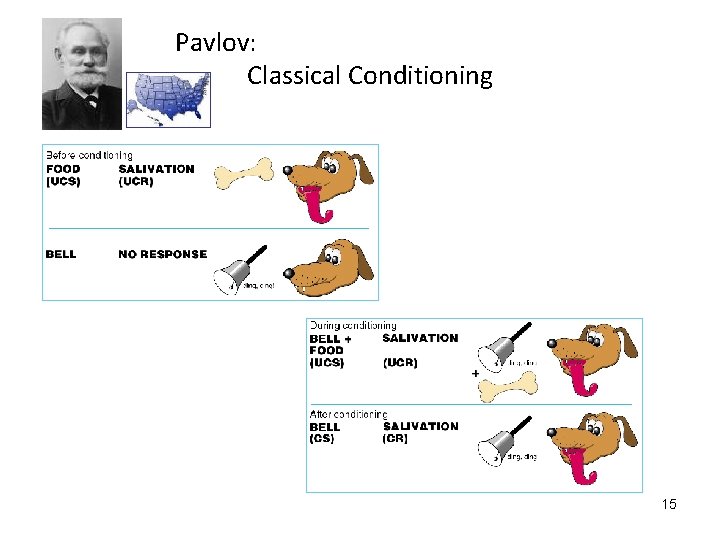
Pavlov: Classical Conditioning 15
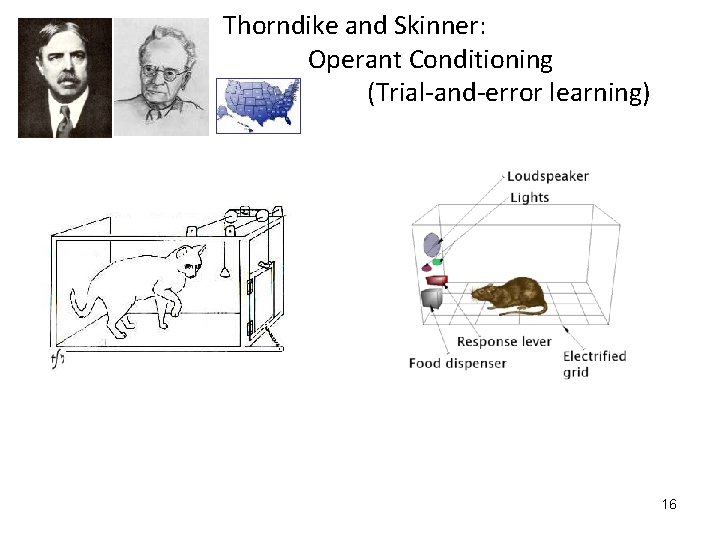
Thorndike and Skinner: Operant Conditioning (Trial-and-error learning) 16

The history of the study of animal behavior Pavlov Thorndike Skinner Behaviorism Aristotle 350 B. C. Comparative Psychology Darwin 1859 1900 1973 Ethology Nobel Prize Modern Animal Behavior Lorenz von Frisch Tinbergen 17
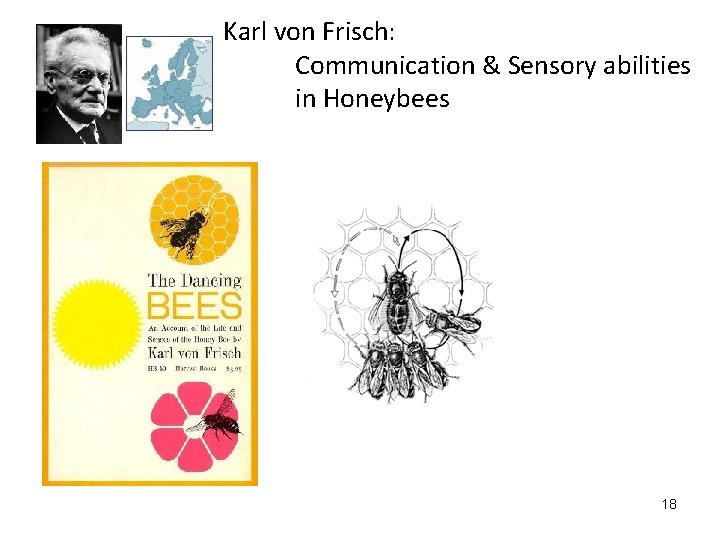
Karl von Frisch: Communication & Sensory abilities in Honeybees 18
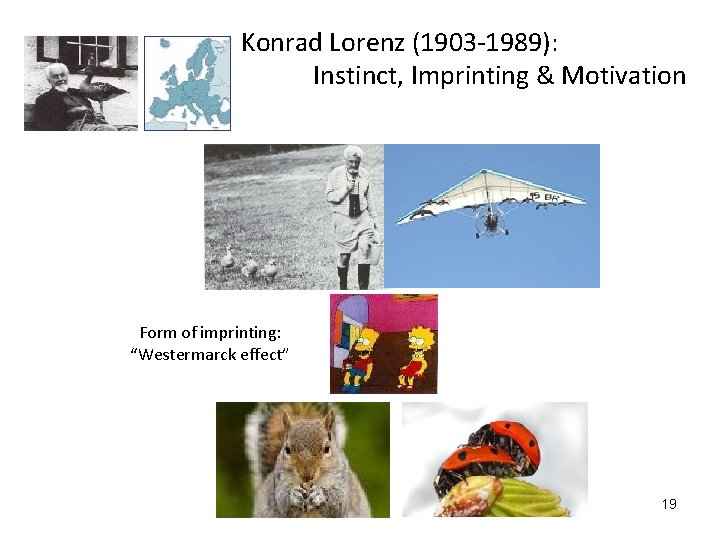
Konrad Lorenz (1903 -1989): Instinct, Imprinting & Motivation Form of imprinting: “Westermarck effect” 19
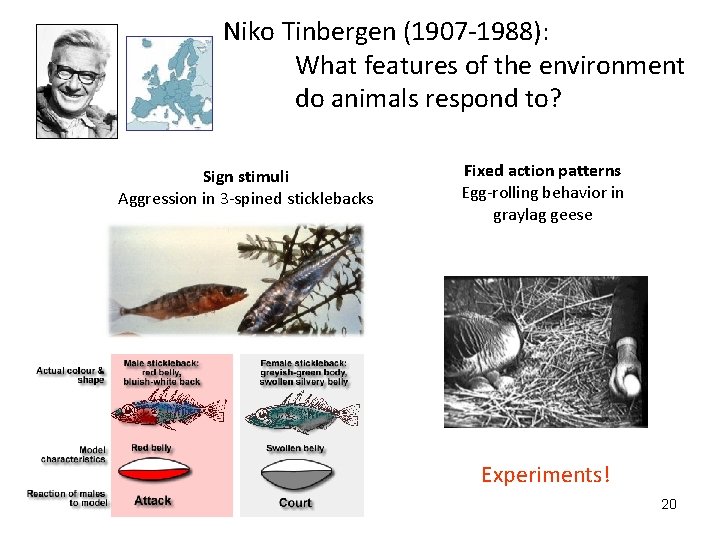
Niko Tinbergen (1907 -1988): What features of the environment do animals respond to? Sign stimuli Aggression in 3 -spined sticklebacks Fixed action patterns Egg-rolling behavior in graylag geese Experiments! 20
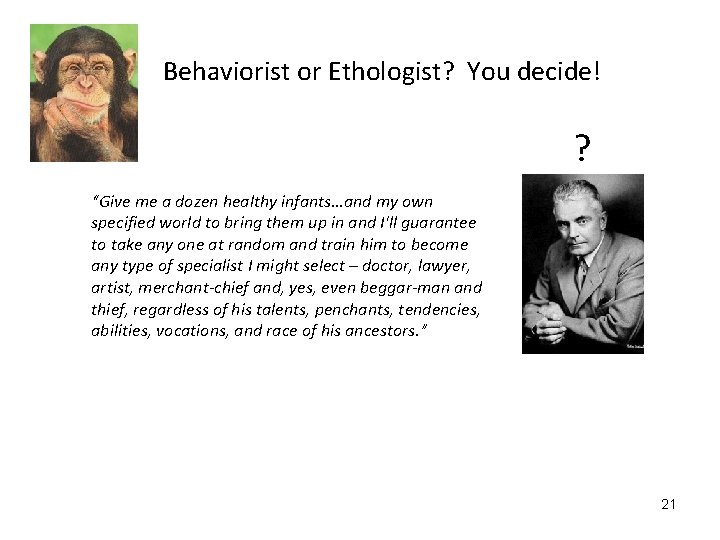
Behaviorist or Ethologist? You decide! ? “Give me a dozen healthy infants…and my own specified world to bring them up in and I'll guarantee to take any one at random and train him to become any type of specialist I might select – doctor, lawyer, artist, merchant-chief and, yes, even beggar-man and thief, regardless of his talents, penchants, tendencies, abilities, vocations, and race of his ancestors. ” 21
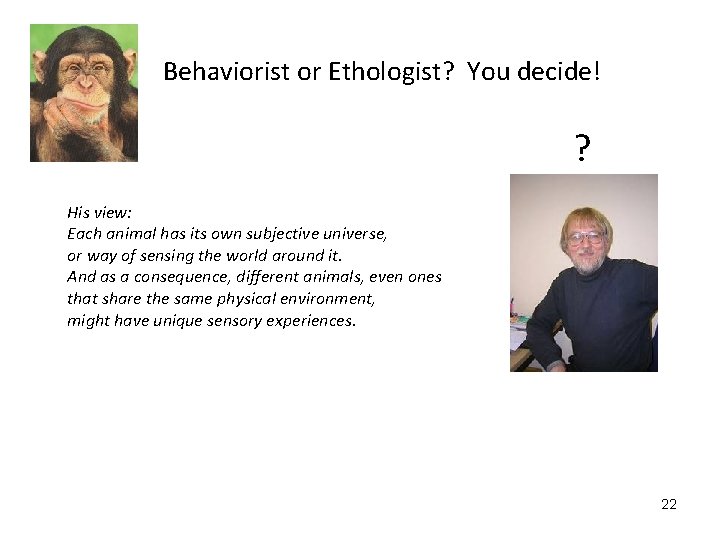
Behaviorist or Ethologist? You decide! ? His view: Each animal has its own subjective universe, or way of sensing the world around it. And as a consequence, different animals, even ones that share the same physical environment, might have unique sensory experiences. 22
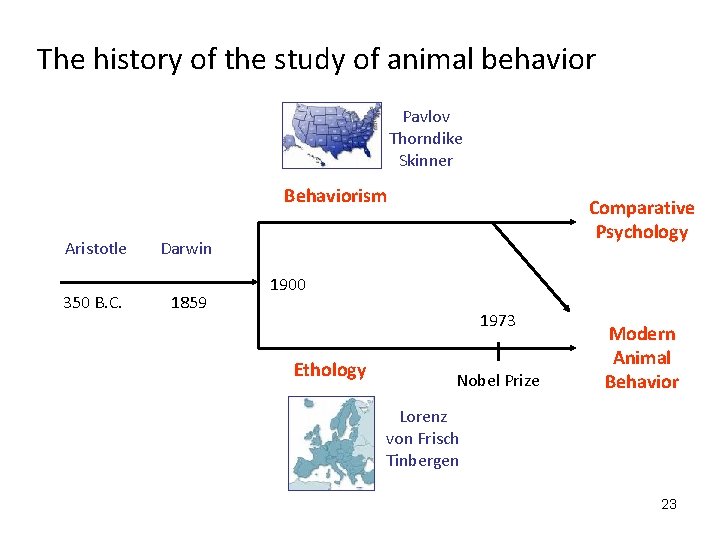
The history of the study of animal behavior Pavlov Thorndike Skinner Behaviorism Aristotle 350 B. C. Comparative Psychology Darwin 1859 1900 1973 Ethology Nobel Prize Modern Animal Behavior Lorenz von Frisch Tinbergen 23
The modern study of animal behavior is a synthesis of behaviorism and ethology Behaviorists came to recognize that Ethologists came to recognize that 24
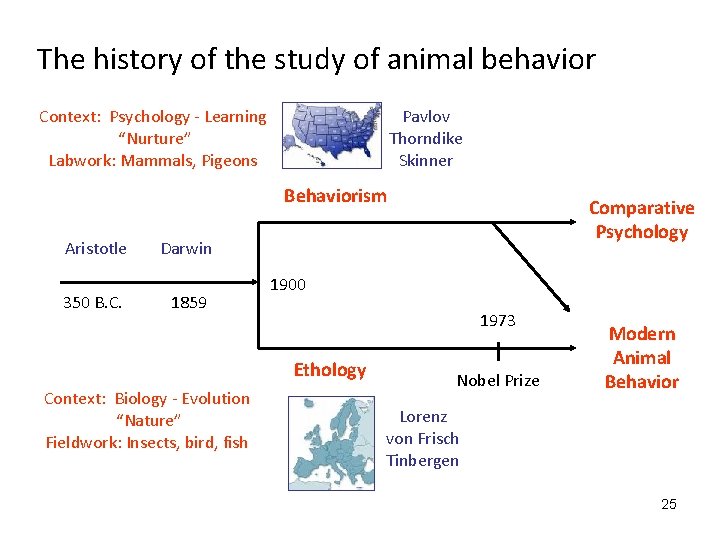
The history of the study of animal behavior Context: Psychology - Learning “Nurture” Labwork: Mammals, Pigeons Pavlov Thorndike Skinner Behaviorism Aristotle 350 B. C. Comparative Psychology Darwin 1859 1900 1973 Ethology Context: Biology - Evolution “Nature” Fieldwork: Insects, bird, fish Nobel Prize Modern Animal Behavior Lorenz von Frisch Tinbergen 25
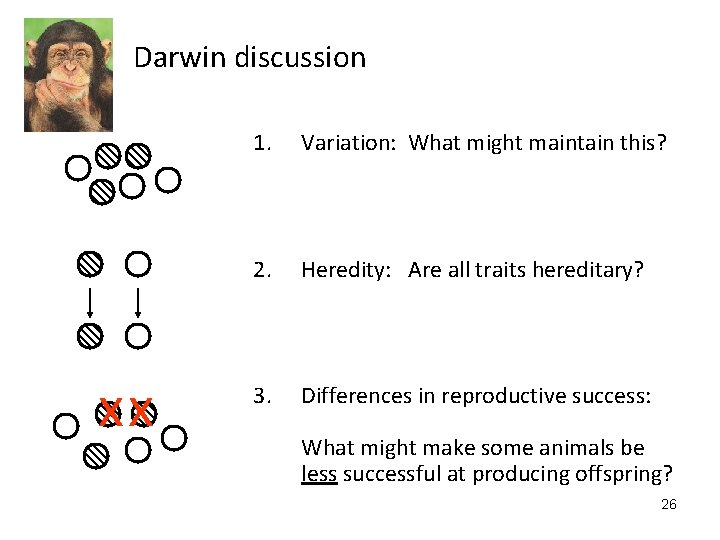
Darwin discussion xx 1. Variation: What might maintain this? 2. Heredity: Are all traits hereditary? 3. Differences in reproductive success: What might make some animals be less successful at producing offspring? 26
- Slides: 26