
Animal Behavior Notes survival Animals have internal stimuli
Animal Behavior Notes
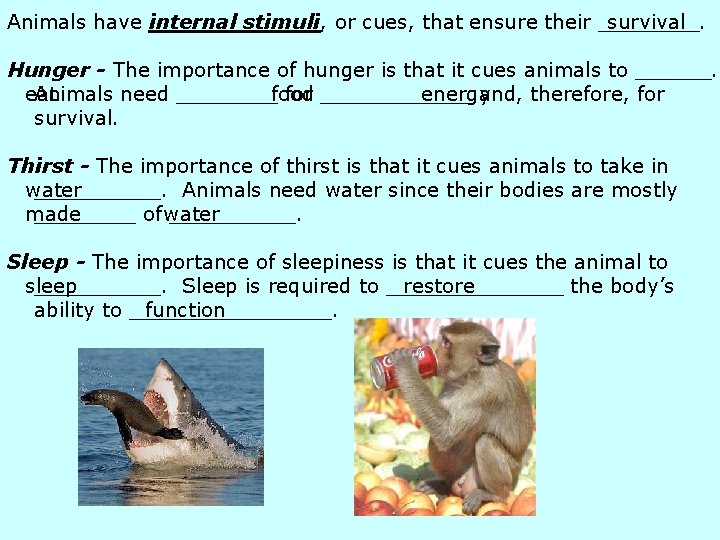
survival Animals have internal stimuli, or cues, that ensure their ____. Hunger - The importance of hunger is that it cues animals to ______. eat energy Animals need ____food for ______ and, therefore, for survival. Thirst - The importance of thirst is that it cues animals to take in water _____. Animals need water since their bodies are mostly made ____ of water _____. Sleep - The importance of sleepiness is that it cues the animal to sleep restore _____. Sleep is required to _______ the body’s function ability to ________.
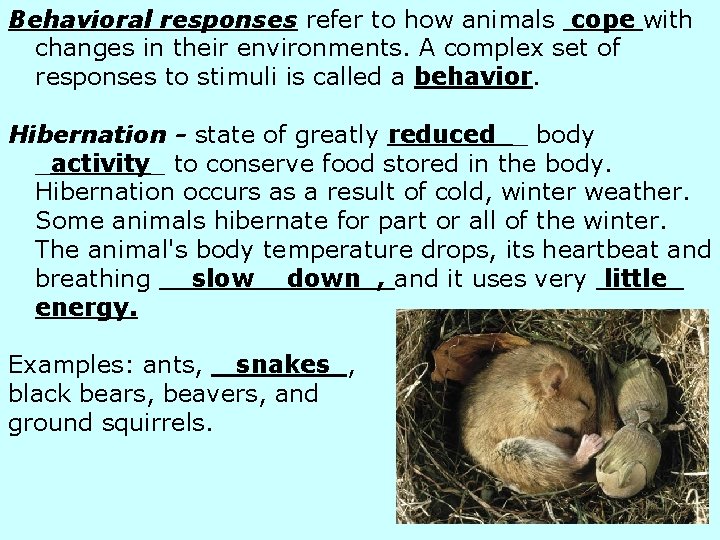
Behavioral responses refer to how animals cope with changes in their environments. A complex set of responses to stimuli is called a behavior. Hibernation - state of greatly reduced _ body _activity_ to conserve food stored in the body. Hibernation occurs as a result of cold, winter weather. Some animals hibernate for part or all of the winter. The animal's body temperature drops, its heartbeat and breathing slow down , and it uses very little energy. Examples: ants, snakes , black bears, beavers, and ground squirrels.
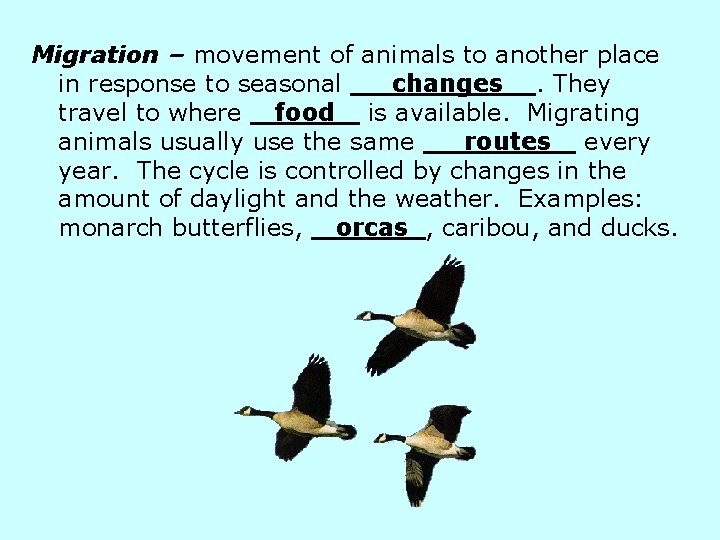
Migration – movement of animals to another place in response to seasonal changes. They travel to where food is available. Migrating animals usually use the same routes every year. The cycle is controlled by changes in the amount of daylight and the weather. Examples: monarch butterflies, orcas , caribou, and ducks.
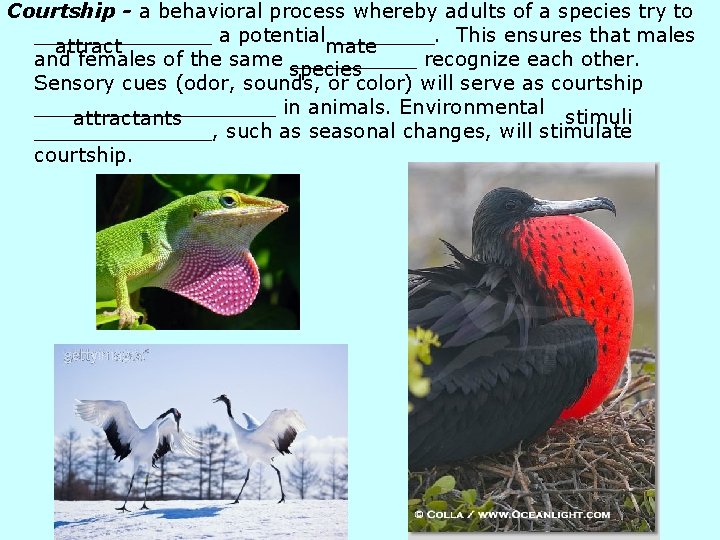
Courtship - a behavioral process whereby adults of a species try to _______ a potential ____. This ensures that males attract mate and females of the same _____ recognize each other. species Sensory cues (odor, sounds, or color) will serve as courtship __________ in animals. Environmental stimuli attractants _______, such as seasonal changes, will stimulate courtship.
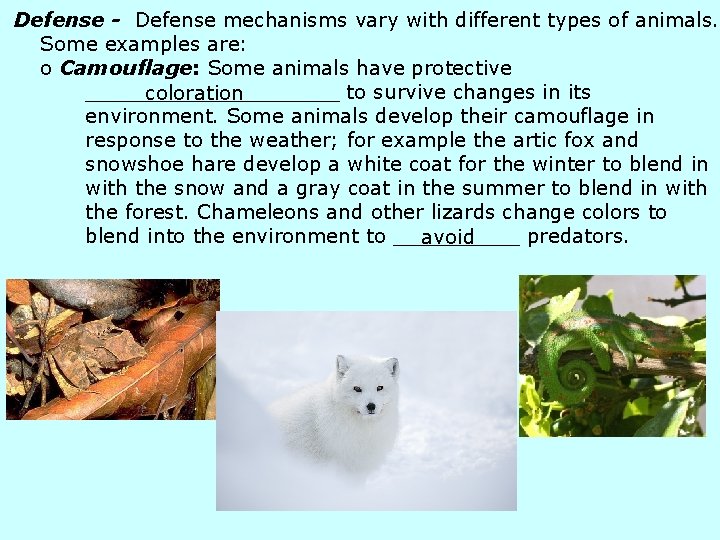
Defense - Defense mechanisms vary with different types of animals. Some examples are: o Camouflage: Some animals have protective __________ to survive changes in its coloration environment. Some animals develop their camouflage in response to the weather; for example the artic fox and snowshoe hare develop a white coat for the winter to blend in with the snow and a gray coat in the summer to blend in with the forest. Chameleons and other lizards change colors to blend into the environment to _____ predators. avoid
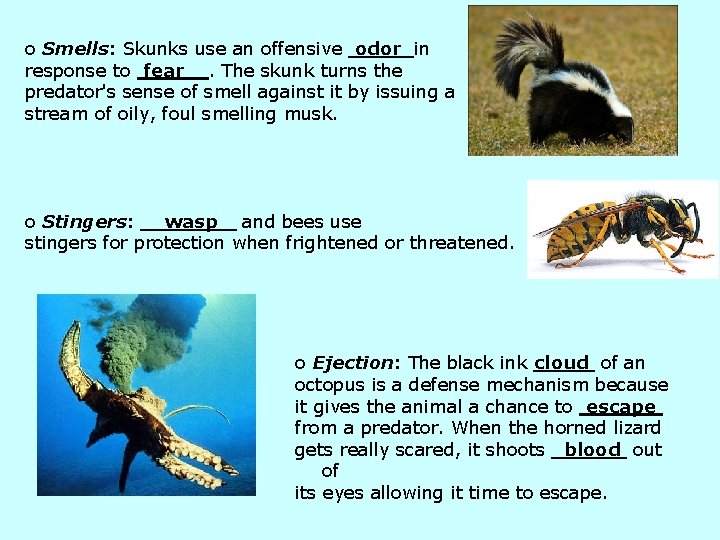
o Smells: Skunks use an offensive odor in response to fear. The skunk turns the predator's sense of smell against it by issuing a stream of oily, foul smelling musk. o Stingers: wasp and bees use stingers for protection when frightened or threatened. o Ejection: The black ink cloud of an octopus is a defense mechanism because it gives the animal a chance to escape from a predator. When the horned lizard gets really scared, it shoots blood out of its eyes allowing it time to escape.
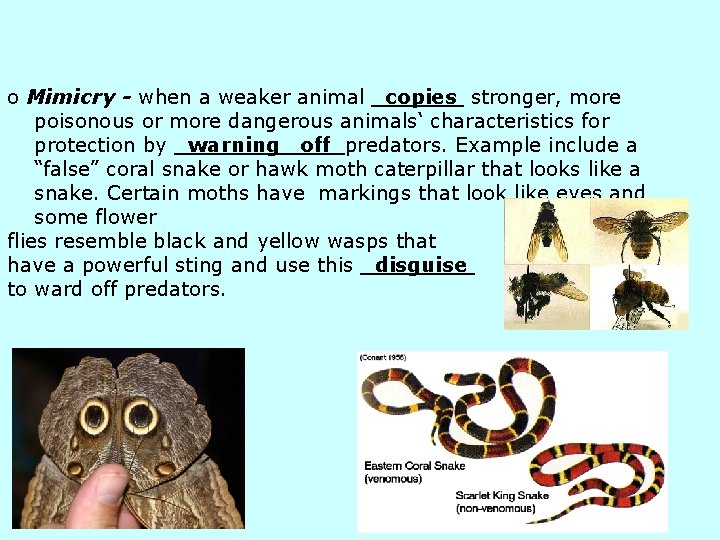
o Mimicry - when a weaker animal copies stronger, more poisonous or more dangerous animals‘ characteristics for protection by warning off predators. Example include a “false” coral snake or hawk moth caterpillar that looks like a snake. Certain moths have markings that look like eyes and some flower flies resemble black and yellow wasps that have a powerful sting and use this disguise to ward off predators.
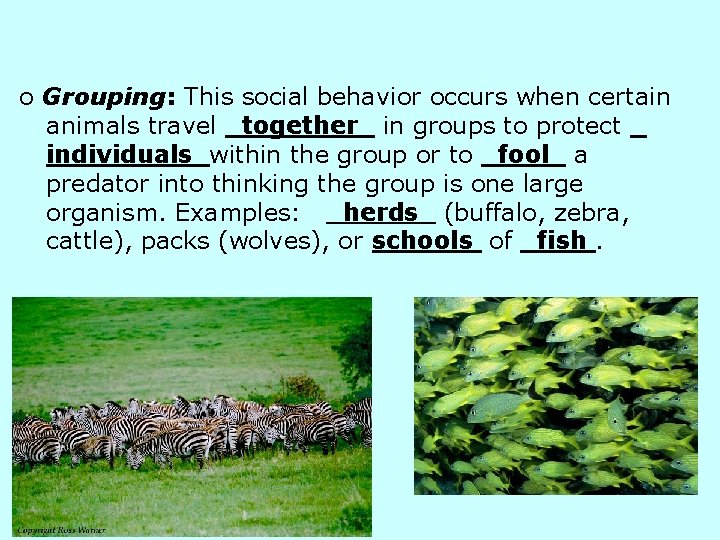
o Grouping: This social behavior occurs when certain animals travel together in groups to protect individuals within the group or to fool a predator into thinking the group is one large organism. Examples: herds (buffalo, zebra, cattle), packs (wolves), or schools of fish.
- Slides: 9