
Animal Behavior Notes Behavior What an animal does
Animal Behavior Notes!
Behavior • What an animal does & How an animal does it! • Think of all of the behaviors of your pet. . . or a friends’ pet. List them and classify them as either being genetically “innate” or learned.
Behavioral Ecology • Behavioral Ecology emphasizes evolutionary hypothesis. • Based on the fact that animals will act in a way that will increase their Darwinian fitness. What does “fitness” refer to in Darwinian terms?
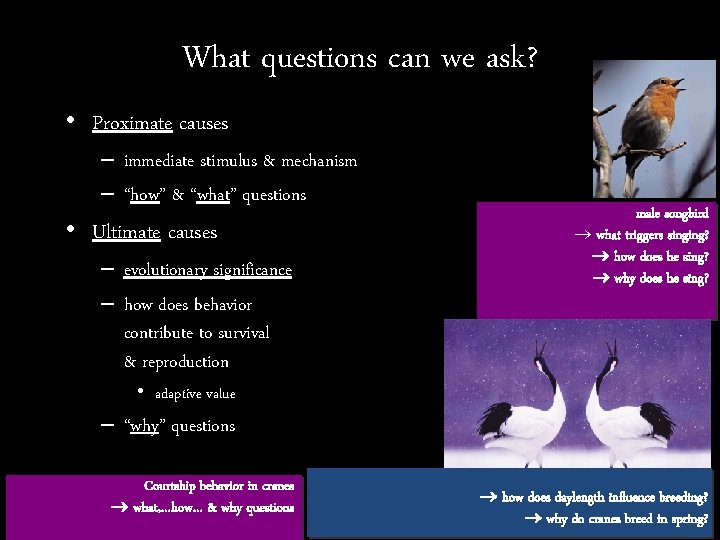
What questions can we ask? • Proximate causes – immediate stimulus & mechanism – “how” & “what” questions • Ultimate causes – evolutionary significance – how does behavior contribute to survival & reproduction male songbird ® what triggers singing? how does he sing? why does he sing? • adaptive value – “why” questions Courtship behavior in cranes what, …how… & why questions how does daylength influence breeding? why do cranes breed in spring?
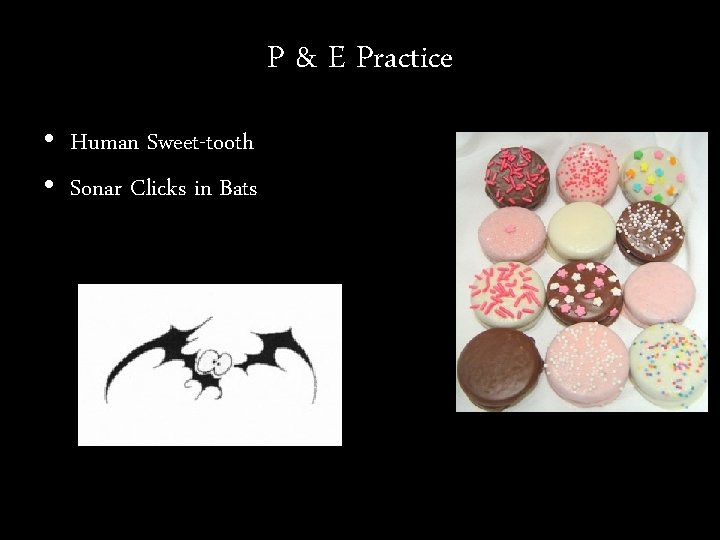
P & E Practice • Human Sweet-tooth • Sonar Clicks in Bats
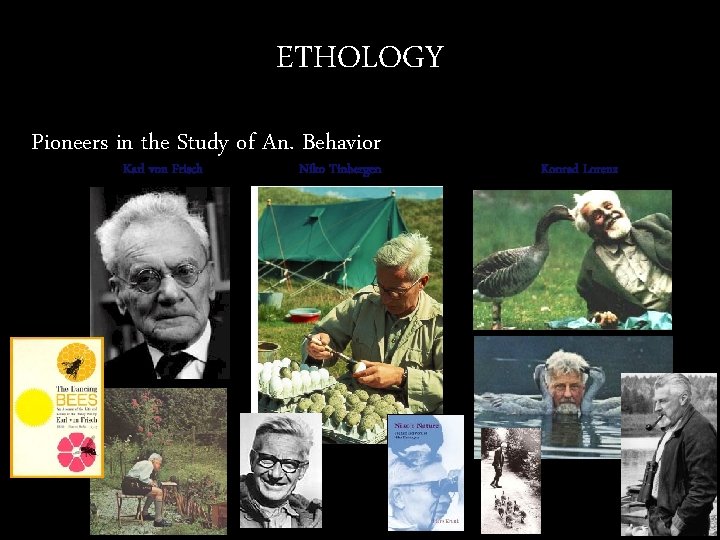
ETHOLOGY Pioneers in the Study of An. Behavior Karl von Frisch Niko Tinbergen Konrad Lorenz
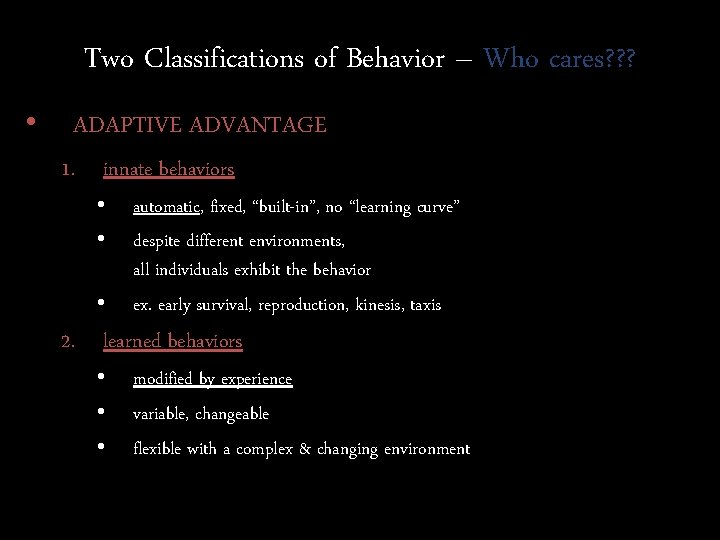
Two Classifications of Behavior – Who cares? ? ? • ADAPTIVE ADVANTAGE 1. innate behaviors • • • automatic, fixed, “built-in”, no “learning curve” despite different environments, all individuals exhibit the behavior ex. early survival, reproduction, kinesis, taxis 2. learned behaviors • • • modified by experience variable, changeable flexible with a complex & changing environment
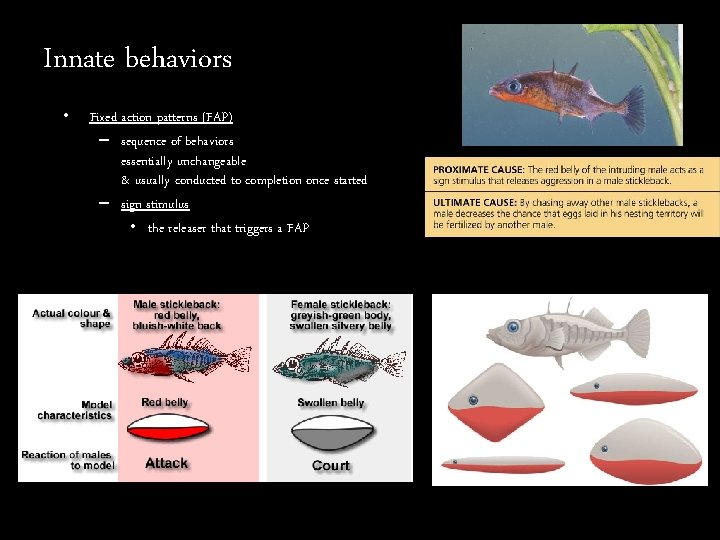
Innate behaviors • Fixed action patterns (FAP) – sequence of behaviors essentially unchangeable & usually conducted to completion once started – sign stimulus • the releaser that triggers a FAP
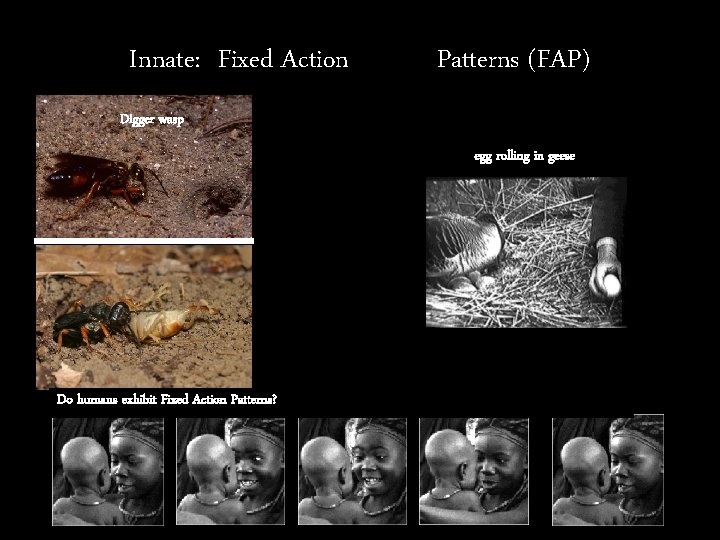
Innate: Fixed Action Patterns (FAP) Digger wasp egg rolling in geese Do humans exhibit Fixed Action Patterns?

Innate: Directed movements
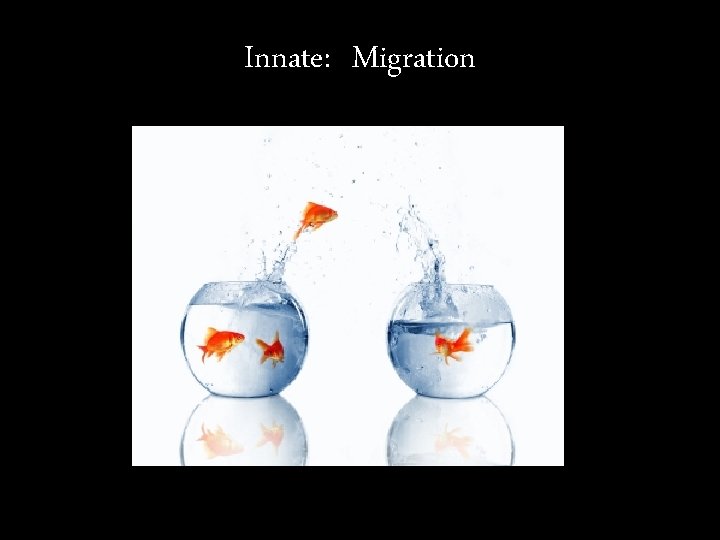
Innate: Migration
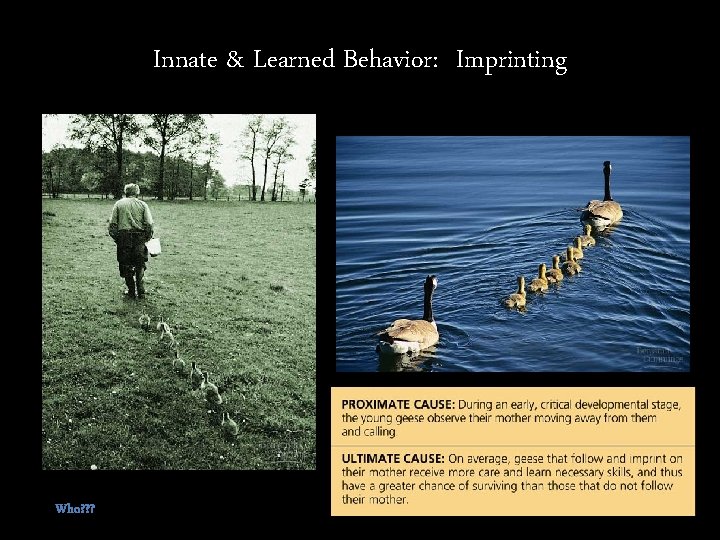
Innate & Learned Behavior: Imprinting Who? ? ?
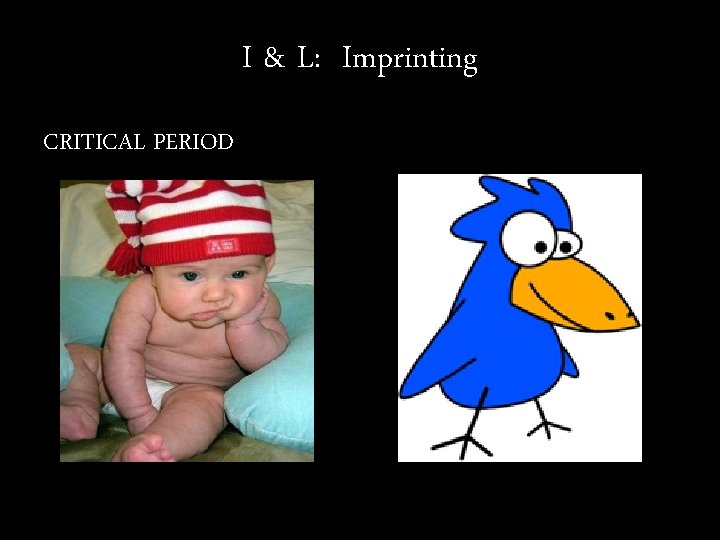
I & L: Imprinting CRITICAL PERIOD

Learned Behavior • Associative learning – learning to associate a stimulus with a consequence

Operant Conditioning
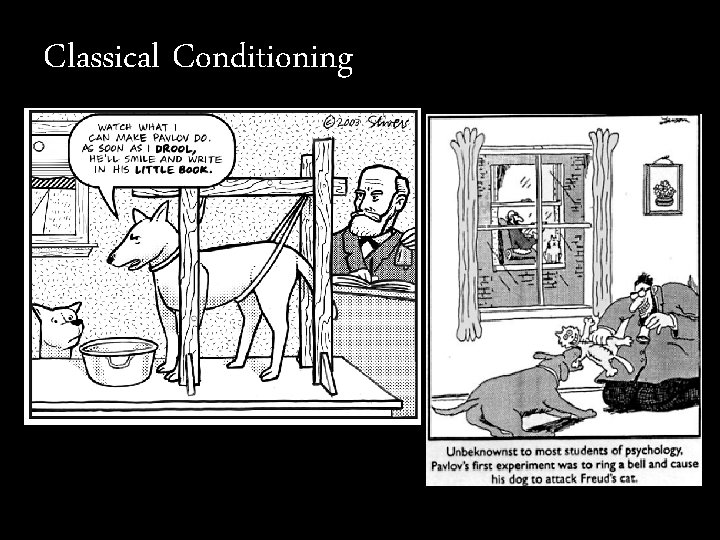
Classical Conditioning
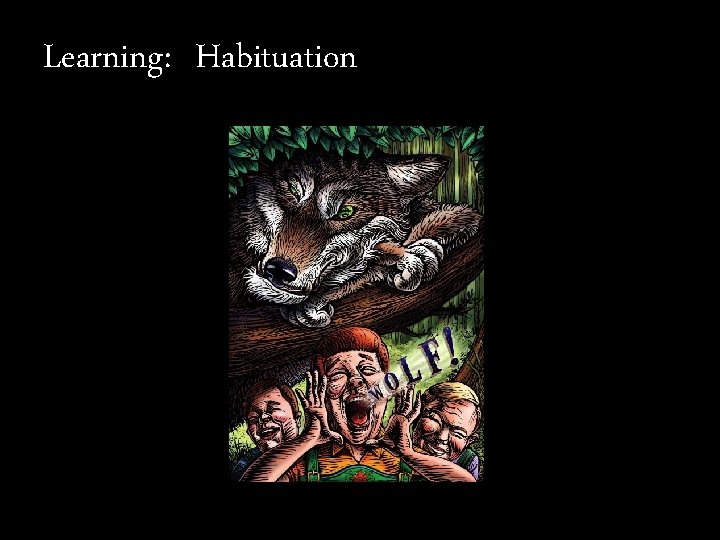
Learning: Habituation
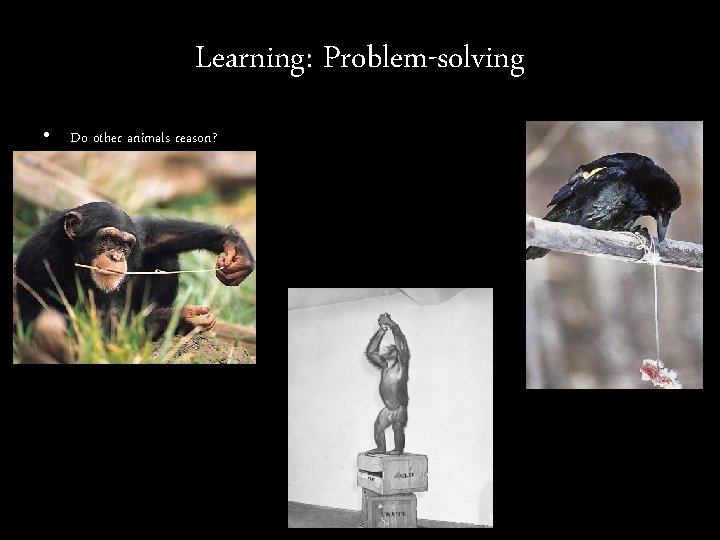
Learning: Problem-solving • Do other animals reason? crow
Social Behavior • • • Communication/Language Agonistic Behaviors Dominance Hierarchy Cooperation Altruistic Behavior
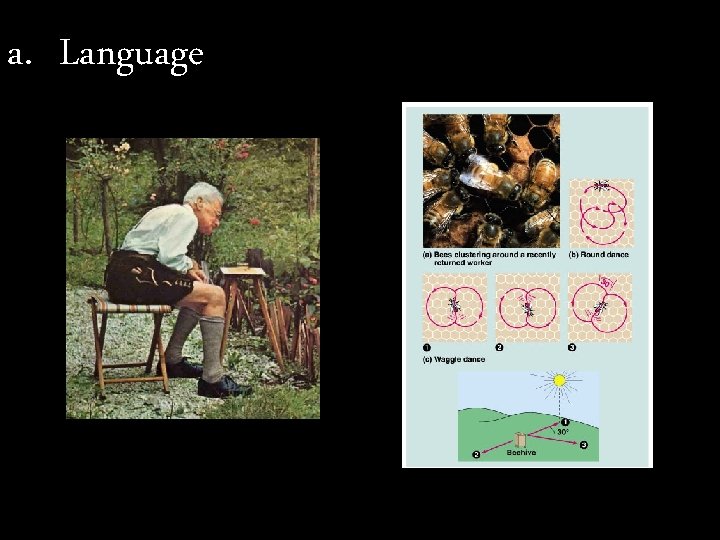
a. Language
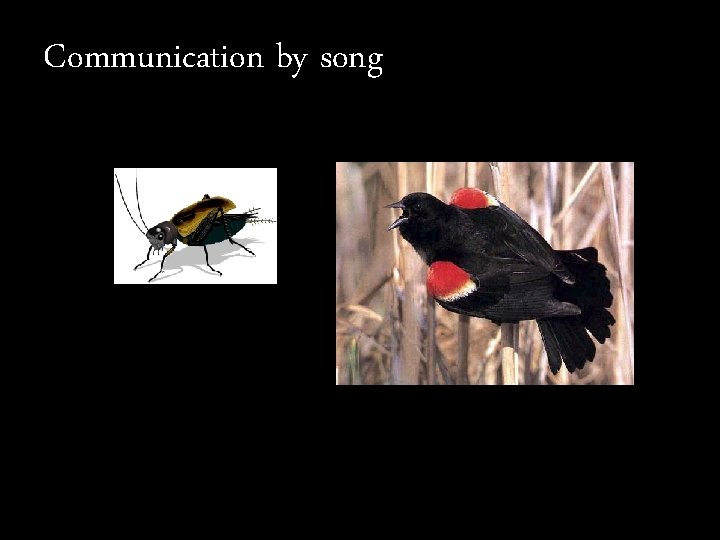
Communication by song
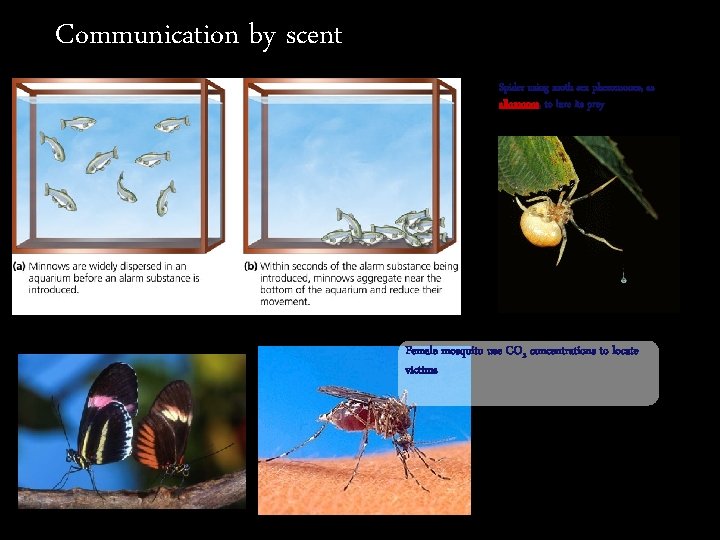
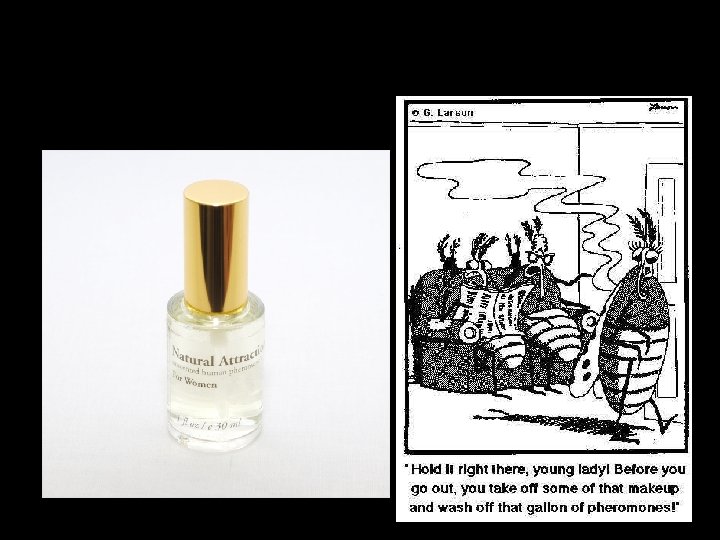
Communication by scent Spider using moth sex pheromones, as allomones, to lure its prey Female mosquito use CO 2 concentrations to locate victims
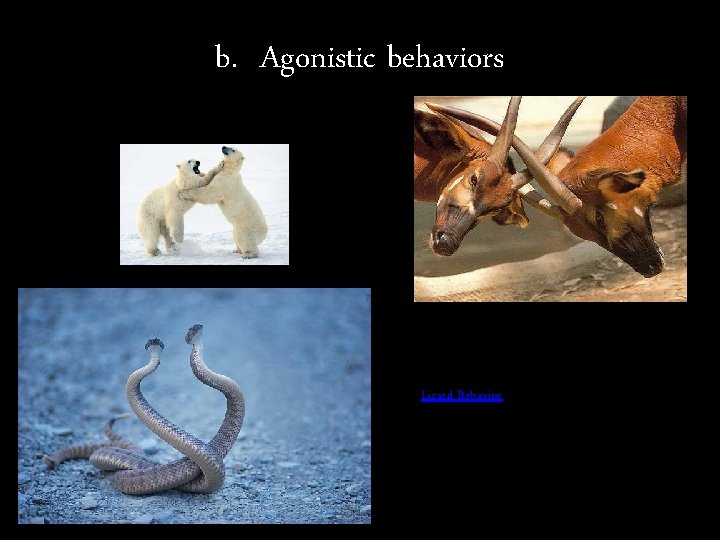
b. Agonistic behaviors Lizard Behavior
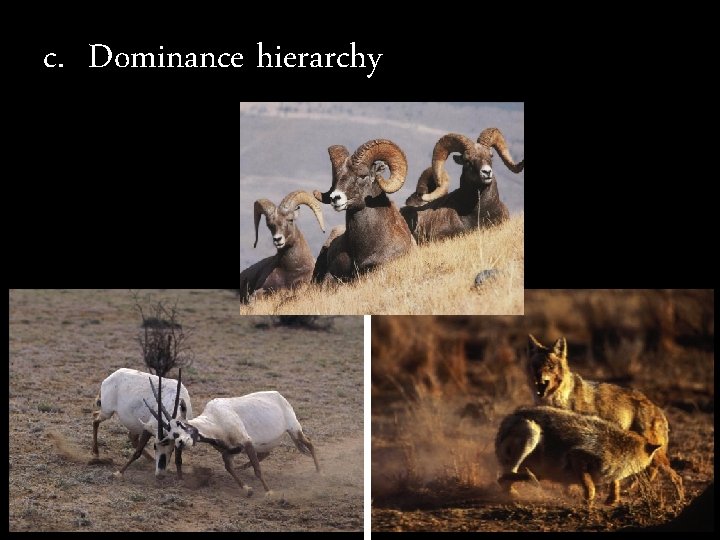
c. Dominance hierarchy
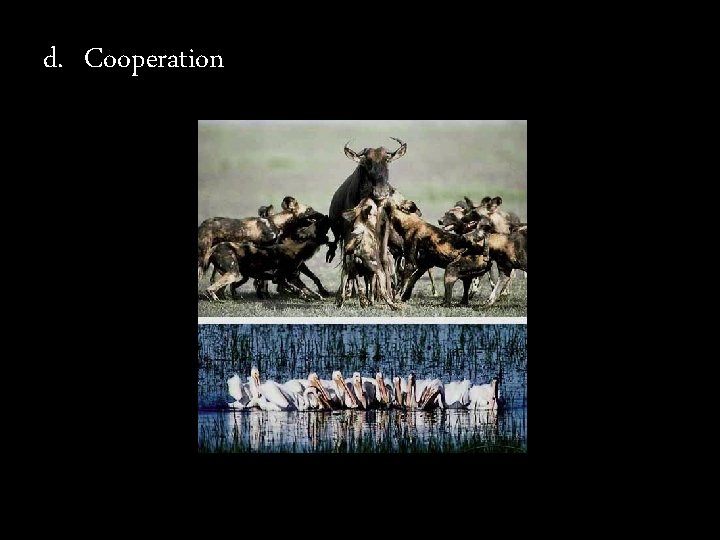
d. Cooperation
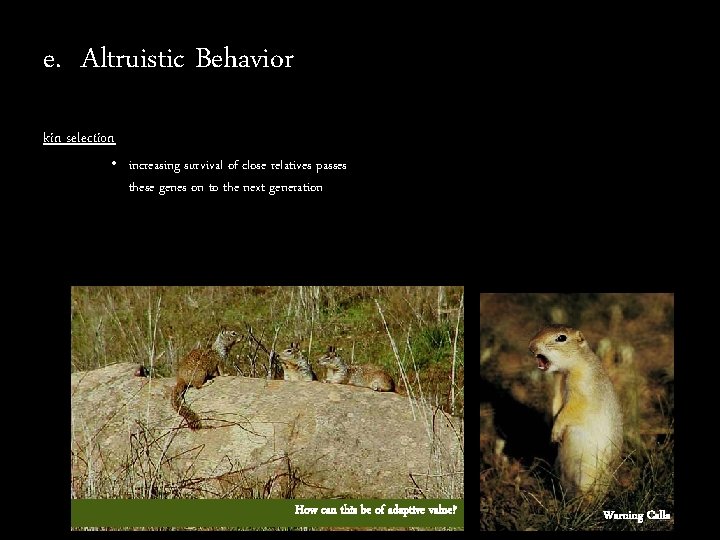
e. Altruistic Behavior kin selection • increasing survival of close relatives passes these genes on to the next generation How can this be of adaptive value? Warning Calls

- Slides: 29