
Animal Behavior Elements of Behavior Behavior the way
Animal Behavior

Elements of Behavior • Behavior: the way an organism reacts to changes in its internal condition or external environment • Stimulus: any kind of detectable sign that carries information • Response: single, specific reaction to a stimulus
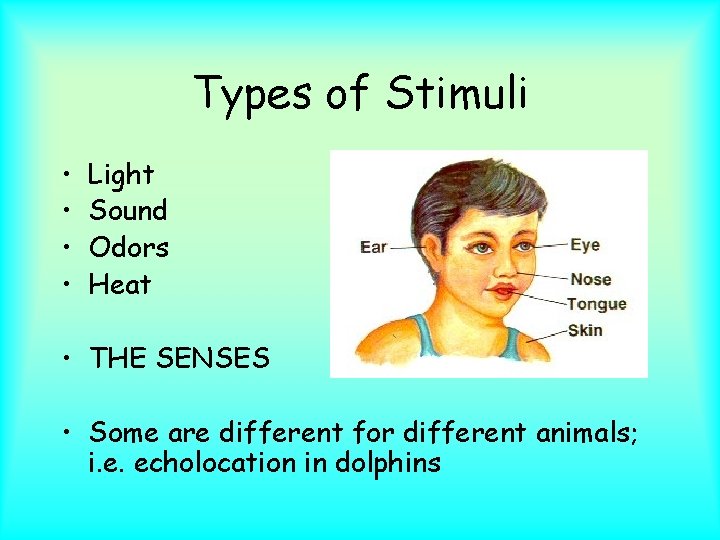
Types of Stimuli • • Light Sound Odors Heat • THE SENSES • Some are different for different animals; i. e. echolocation in dolphins
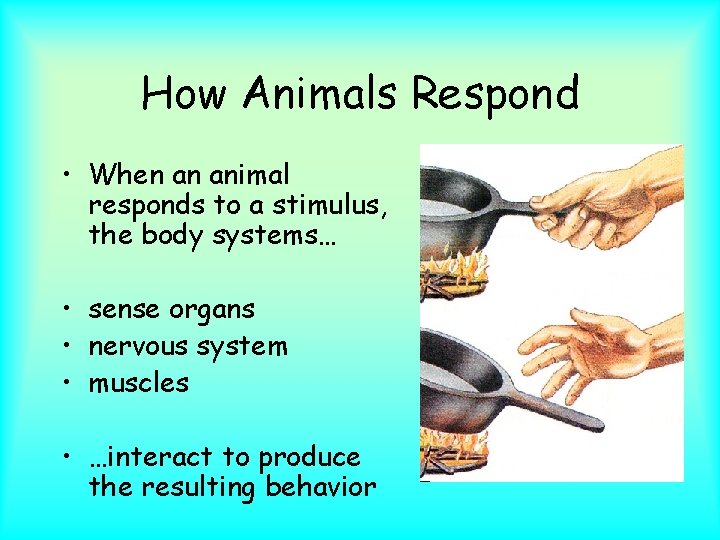
How Animals Respond • When an animal responds to a stimulus, the body systems… • sense organs • nervous system • muscles • …interact to produce the resulting behavior
Behavior and Evolution • If a behavior that is influenced by genes increases an individual’s fitness, that behavior will tend to spread through a population. • Over many generations, various kinds of adaptive behaviors can play central roles in the survival of populations and species.
Behavior and Evolution • Innate Behavior: instinct, or inborn behavior; behavior that appears in a fully functional form the first time it is performed • Learned Behavior: behavior that is altered as a result of experience
Learned Behavior • Habituation • Classical conditioning • Operant conditioning • Insight learning
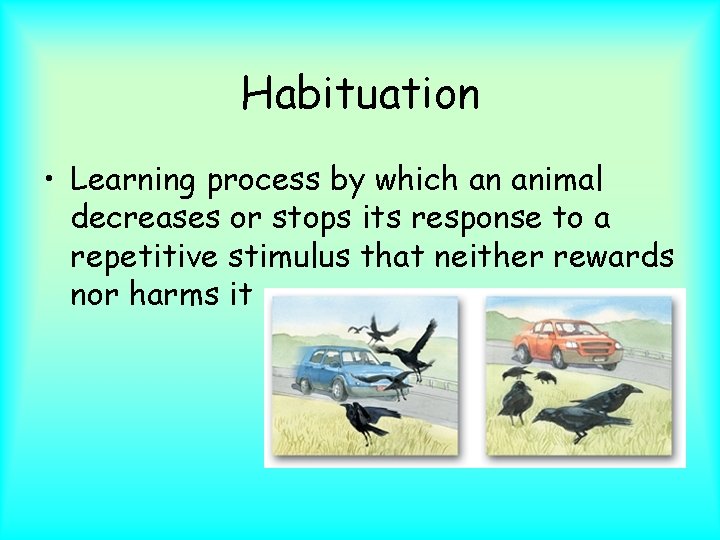
Habituation • Learning process by which an animal decreases or stops its response to a repetitive stimulus that neither rewards nor harms it
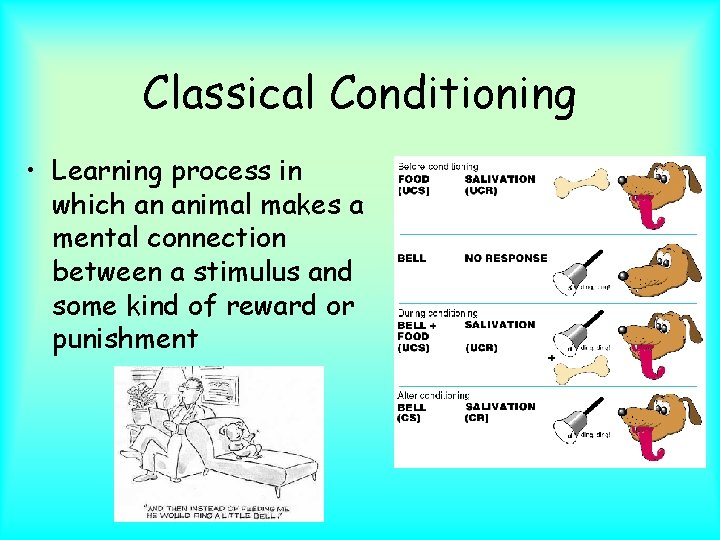
Classical Conditioning • Learning process in which an animal makes a mental connection between a stimulus and some kind of reward or punishment
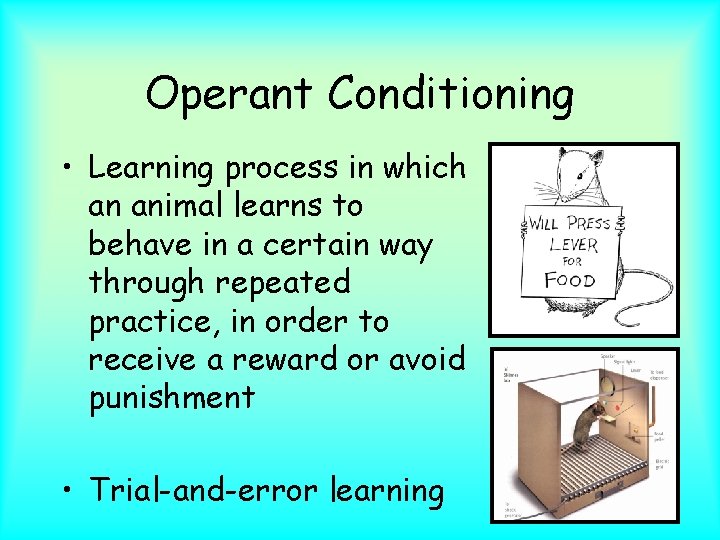
Operant Conditioning • Learning process in which an animal learns to behave in a certain way through repeated practice, in order to receive a reward or avoid punishment • Trial-and-error learning
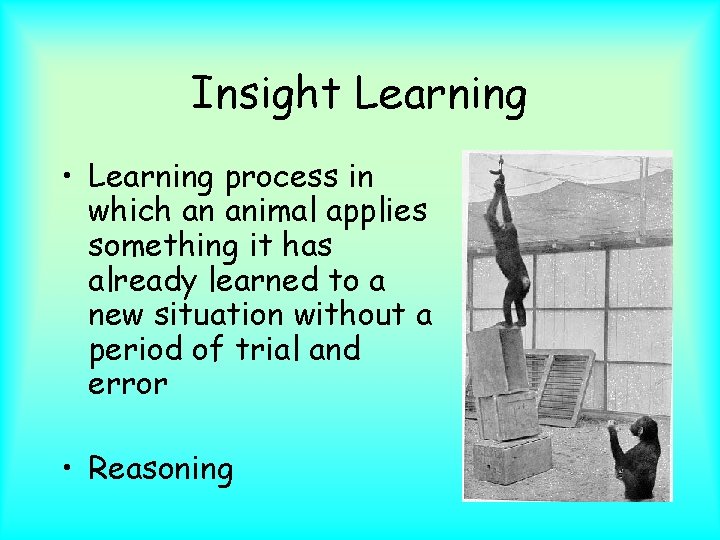
Insight Learning • Learning process in which an animal applies something it has already learned to a new situation without a period of trial and error • Reasoning
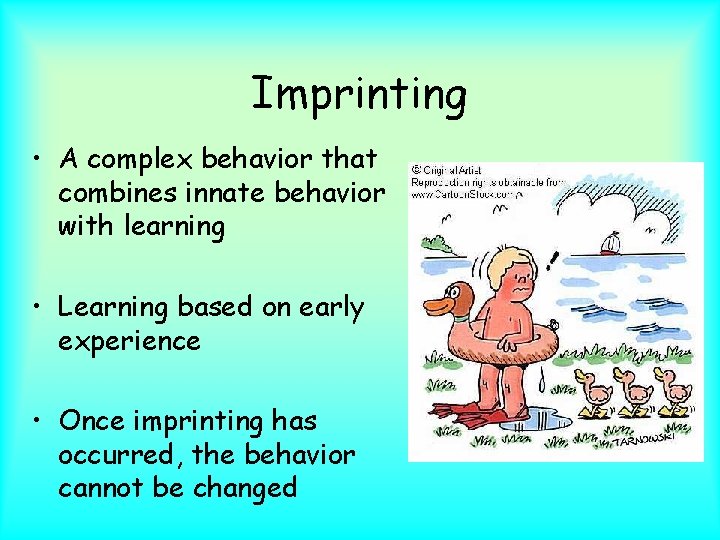
Imprinting • A complex behavior that combines innate behavior with learning • Learning based on early experience • Once imprinting has occurred, the behavior cannot be changed

Patterns of Behavior • Behavioral Cycles • Courtship • Social Behavior • Competition and Aggression • Communication
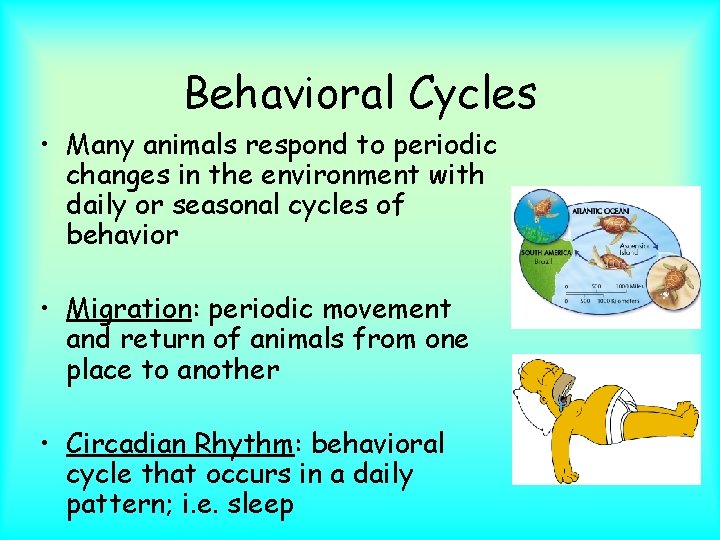
Behavioral Cycles • Many animals respond to periodic changes in the environment with daily or seasonal cycles of behavior • Migration: periodic movement and return of animals from one place to another • Circadian Rhythm: behavioral cycle that occurs in a daily pattern; i. e. sleep
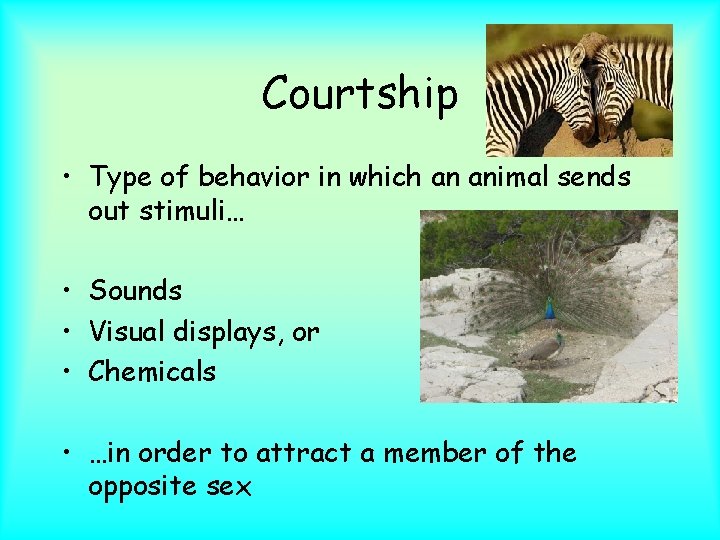
Courtship • Type of behavior in which an animal sends out stimuli… • Sounds • Visual displays, or • Chemicals • …in order to attract a member of the opposite sex
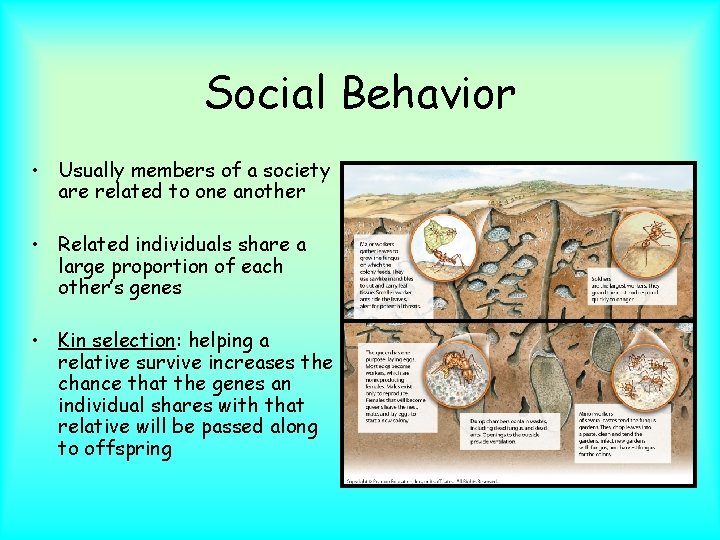
Social Behavior • Usually members of a society are related to one another • Related individuals share a large proportion of each other’s genes • Kin selection: helping a relative survive increases the chance that the genes an individual shares with that relative will be passed along to offspring
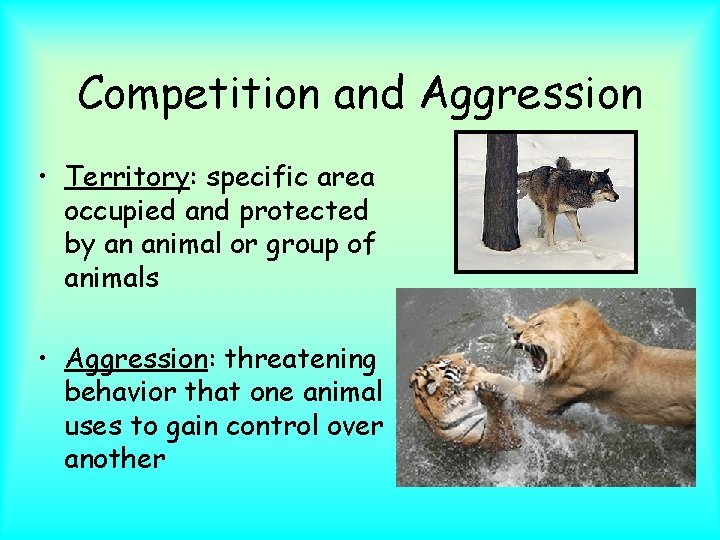
Competition and Aggression • Territory: specific area occupied and protected by an animal or group of animals • Aggression: threatening behavior that one animal uses to gain control over another
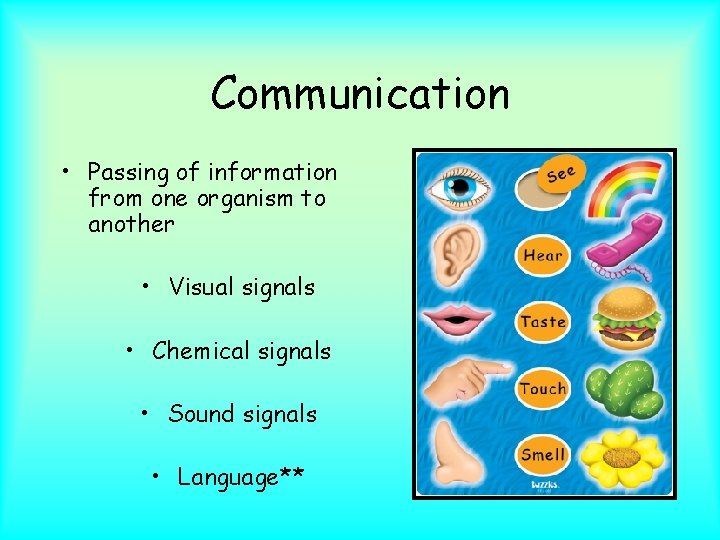
Communication • Passing of information from one organism to another • Visual signals • Chemical signals • Sound signals • Language**
- Slides: 18