
Animal Adaptations Standard SB 4 Students will assess
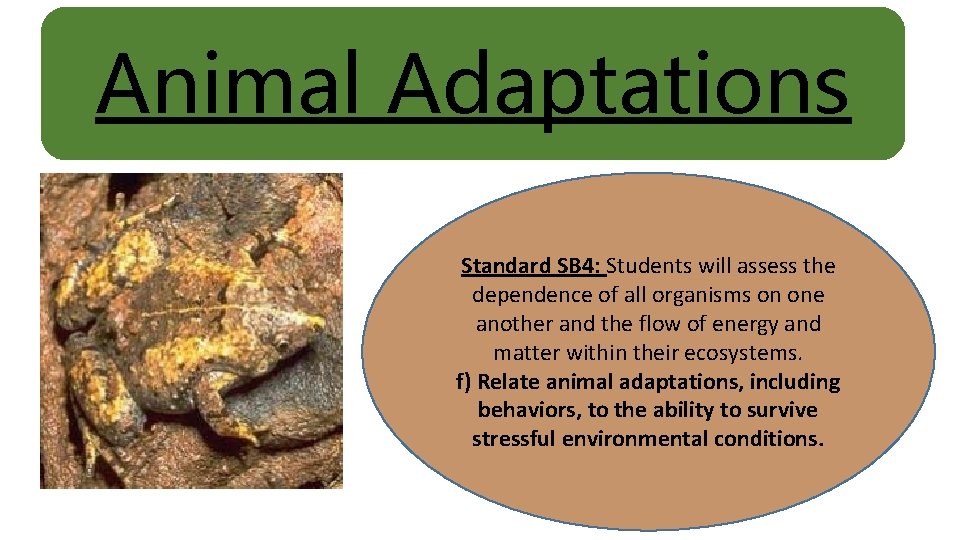
Animal Adaptations Standard SB 4: Students will assess the dependence of all organisms on one another and the flow of energy and matter within their ecosystems. f) Relate animal adaptations, including behaviors, to the ability to survive stressful environmental conditions.
Essential Question: How do animals consistently survive in their environments?
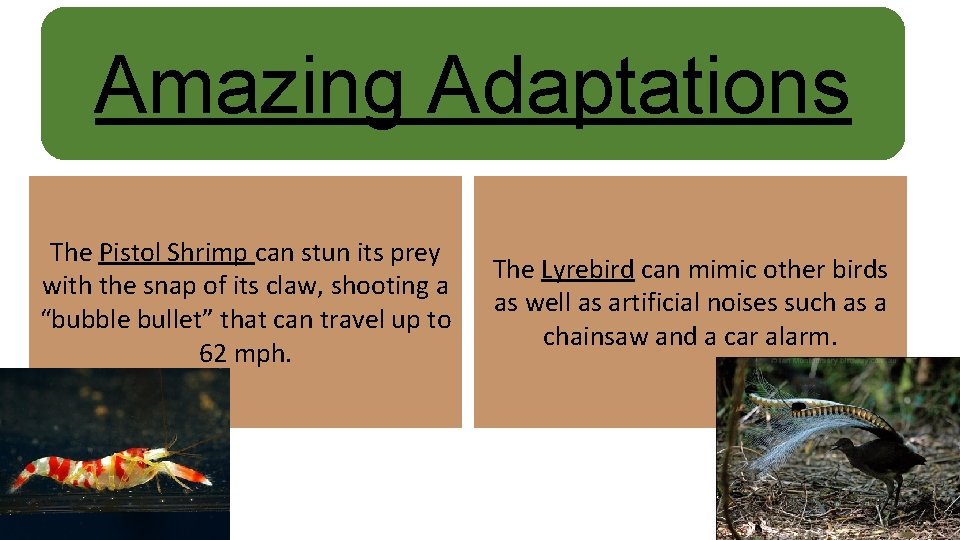
Amazing Adaptations The Pistol Shrimp can stun its prey with the snap of its claw, shooting a “bubble bullet” that can travel up to 62 mph. The Lyrebird can mimic other birds as well as artificial noises such as a chainsaw and a car alarm.
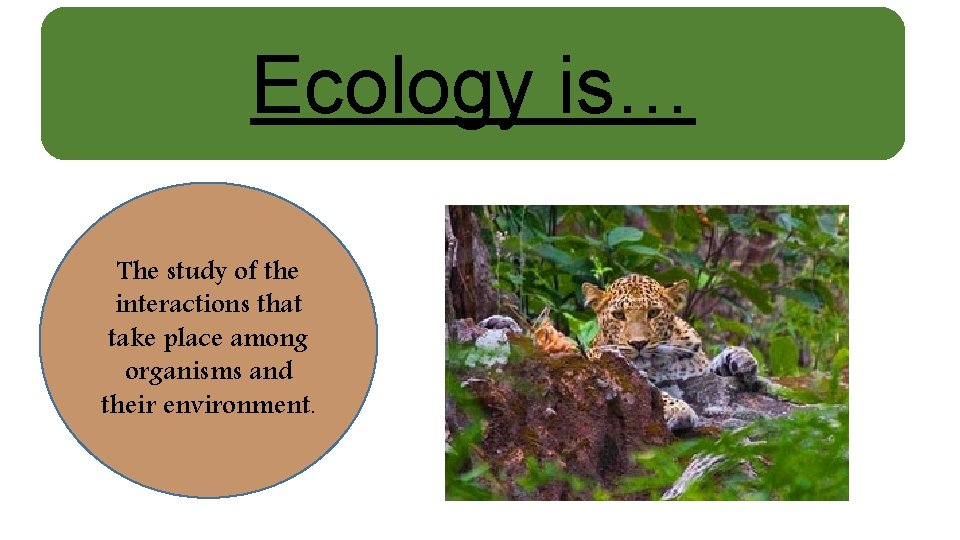
Ecology is… The study of the interactions that take place among organisms and their environment.
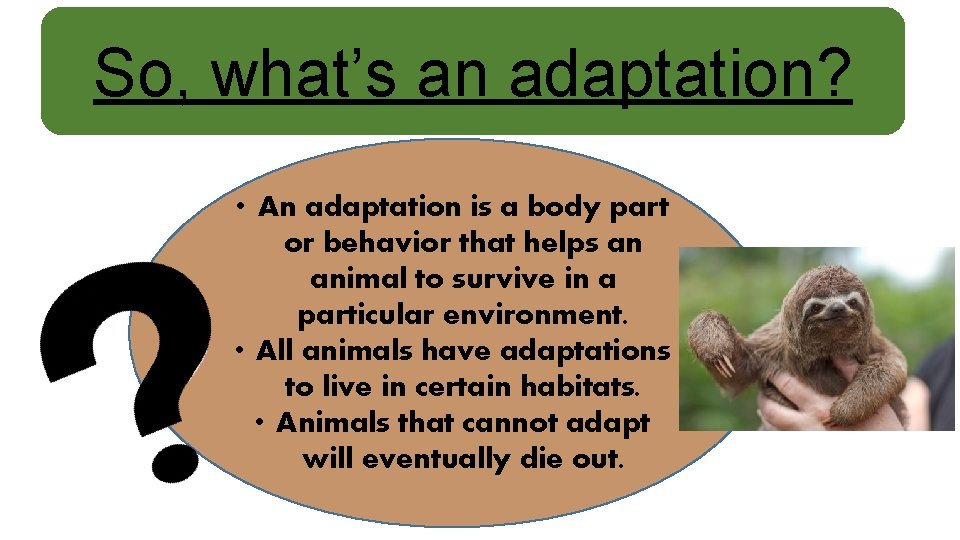
So, what’s an adaptation? • An adaptation is a body part or behavior that helps an animal to survive in a particular environment. • All animals have adaptations to live in certain habitats. • Animals that cannot adapt will eventually die out.
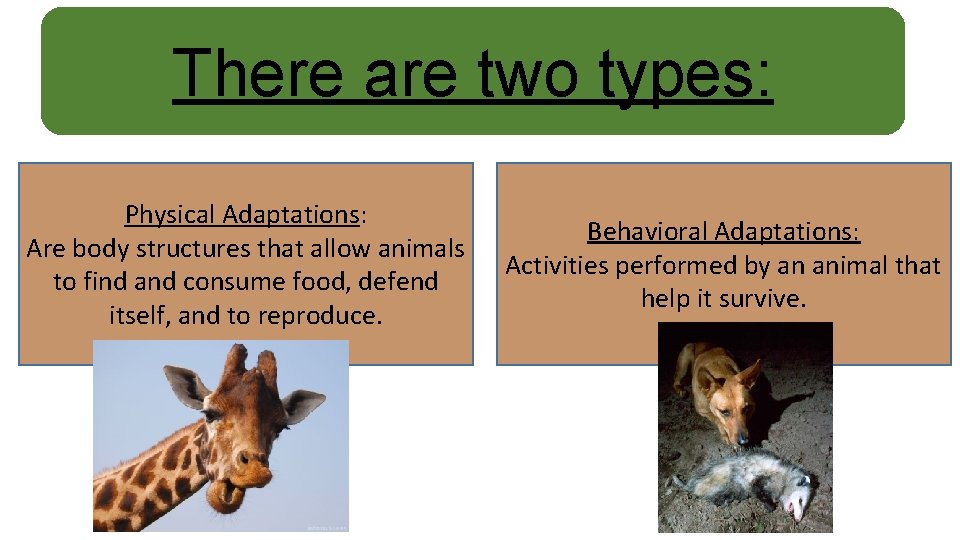
There are two types: Physical Adaptations: Are body structures that allow animals to find and consume food, defend itself, and to reproduce. Behavioral Adaptations: Activities performed by an animal that help it survive.
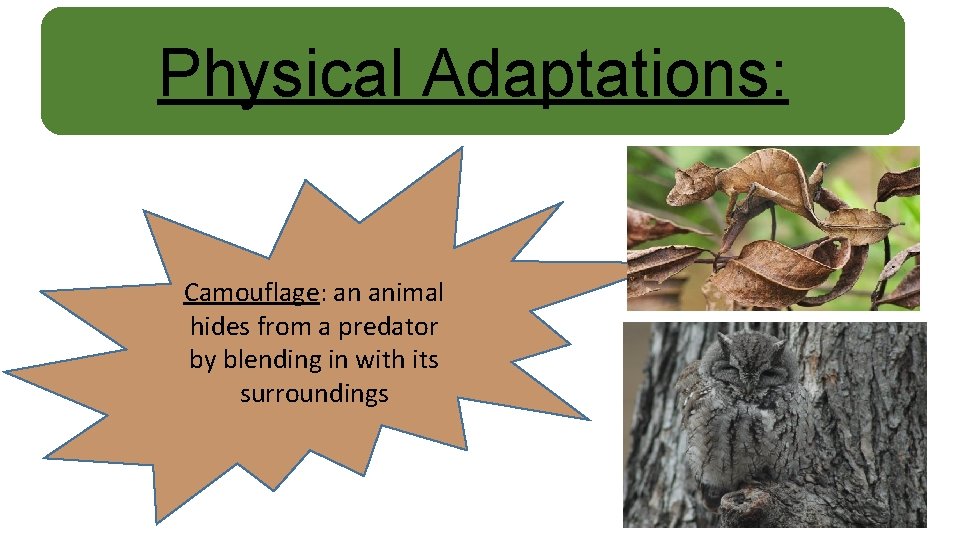
Physical Adaptations: Camouflage: an animal hides from a predator by blending in with its surroundings
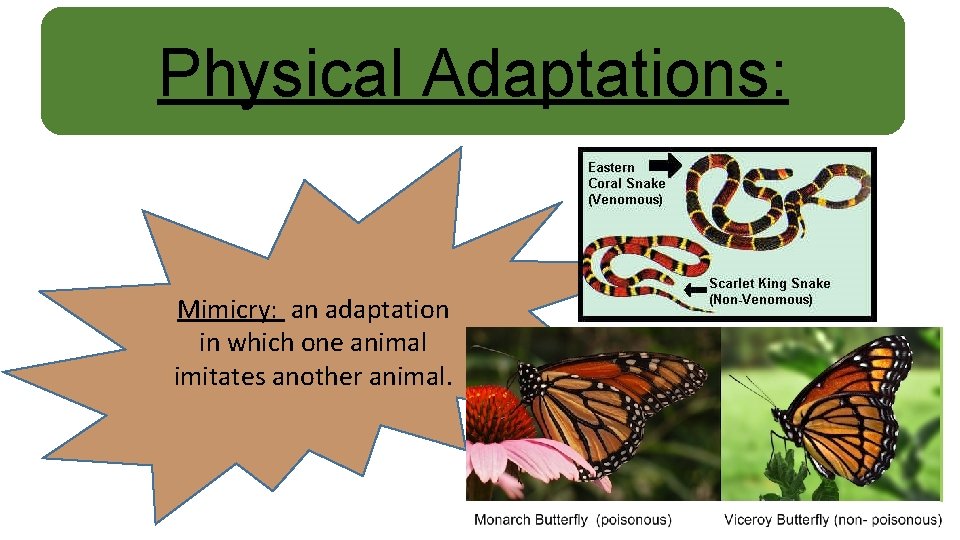
Physical Adaptations: Mimicry: an adaptation in which one animal imitates another animal.
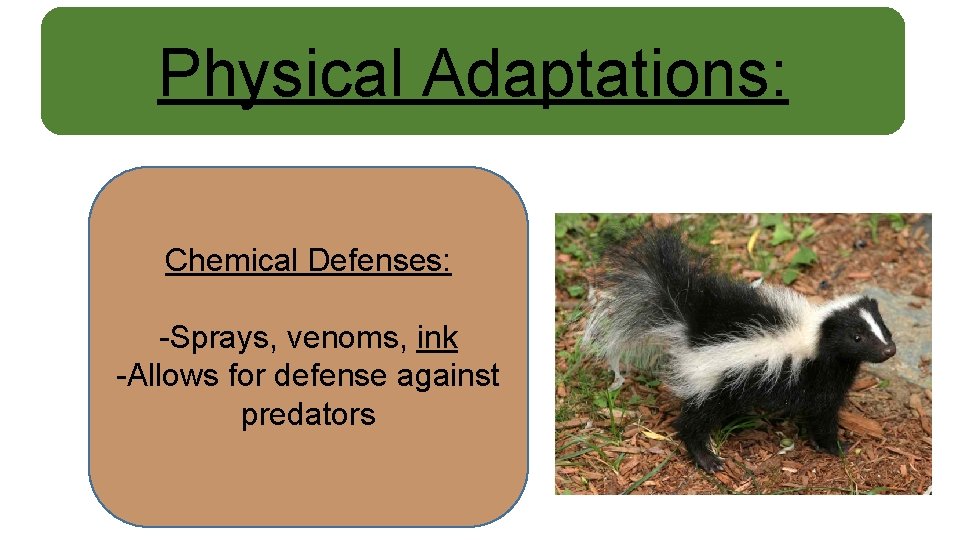
Physical Adaptations: Chemical Defenses: -Sprays, venoms, ink -Allows for defense against predators
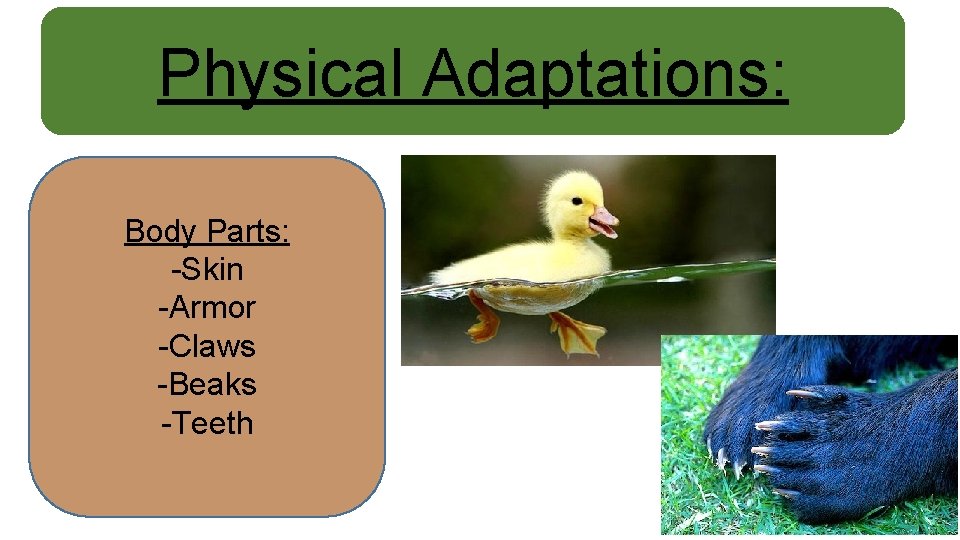
Physical Adaptations: Body Parts: -Skin -Armor -Claws -Beaks -Teeth
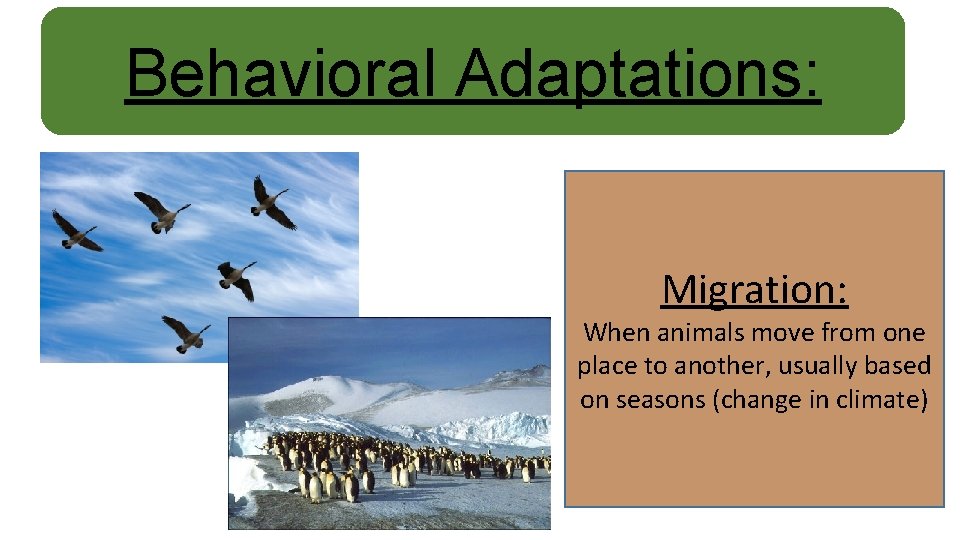
Behavioral Adaptations: Migration: When animals move from one place to another, usually based on seasons (change in climate)
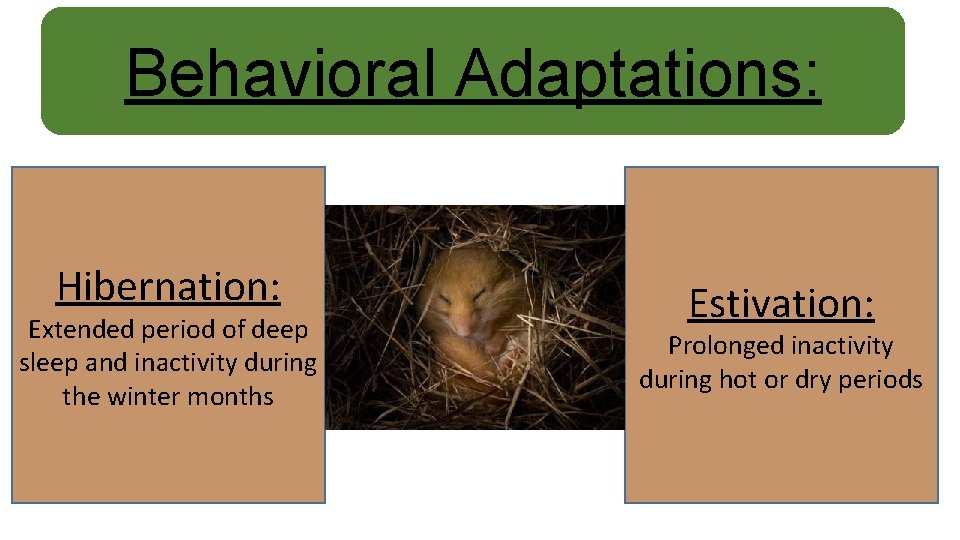
Behavioral Adaptations: Hibernation: Extended period of deep sleep and inactivity during the winter months Estivation: Prolonged inactivity during hot or dry periods
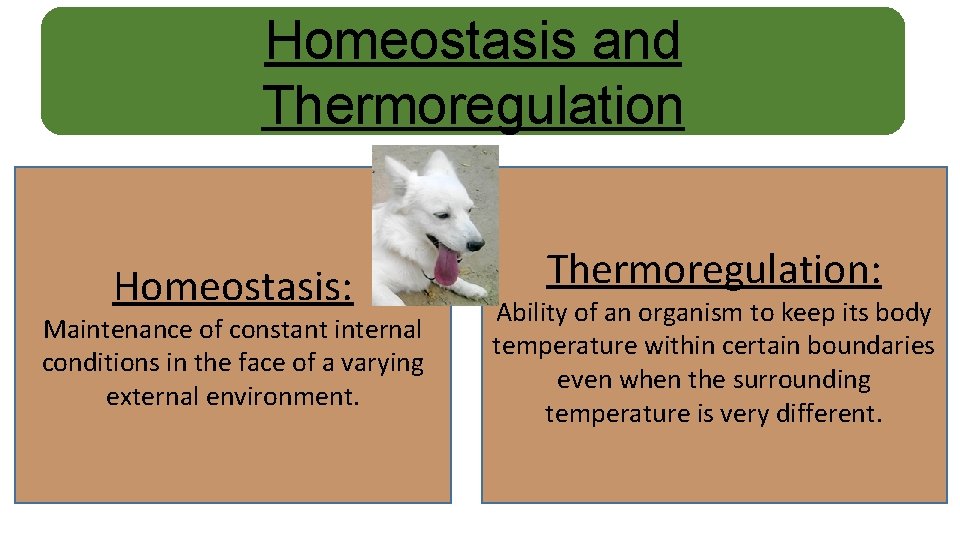
Homeostasis and Thermoregulation Homeostasis: Maintenance of constant internal conditions in the face of a varying external environment. Thermoregulation: Ability of an organism to keep its body temperature within certain boundaries even when the surrounding temperature is very different.
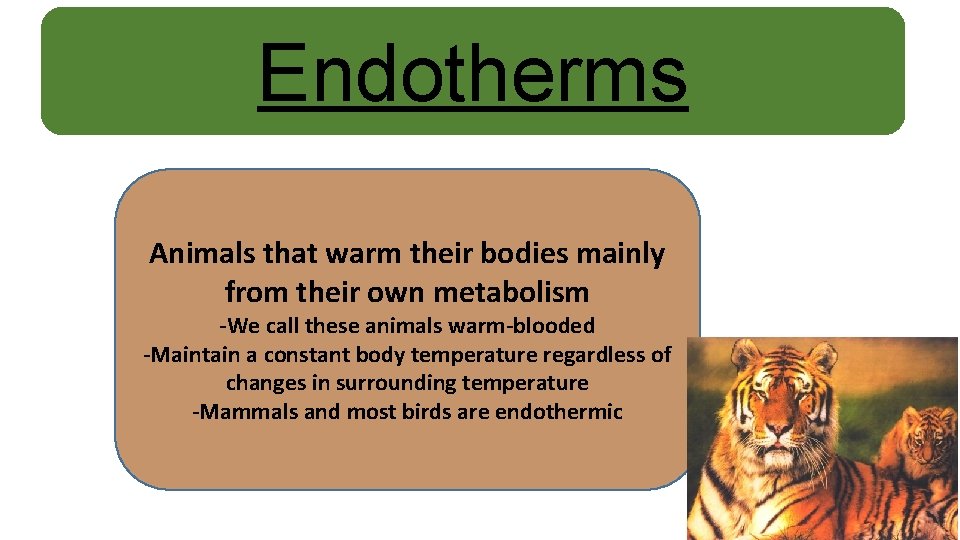
Endotherms Animals that warm their bodies mainly from their own metabolism -We call these animals warm-blooded -Maintain a constant body temperature regardless of changes in surrounding temperature -Mammals and most birds are endothermic
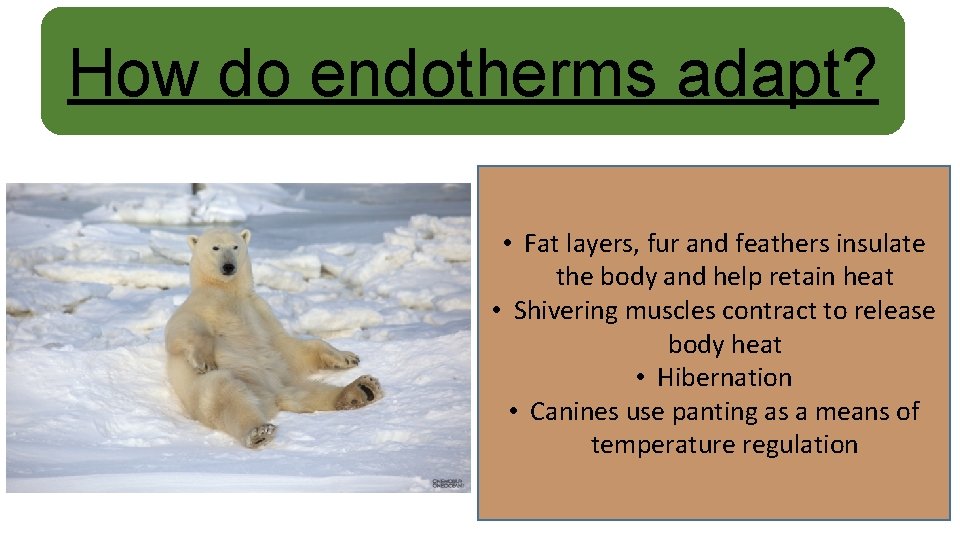
How do endotherms adapt? • Fat layers, fur and feathers insulate the body and help retain heat • Shivering muscles contract to release body heat • Hibernation • Canines use panting as a means of temperature regulation
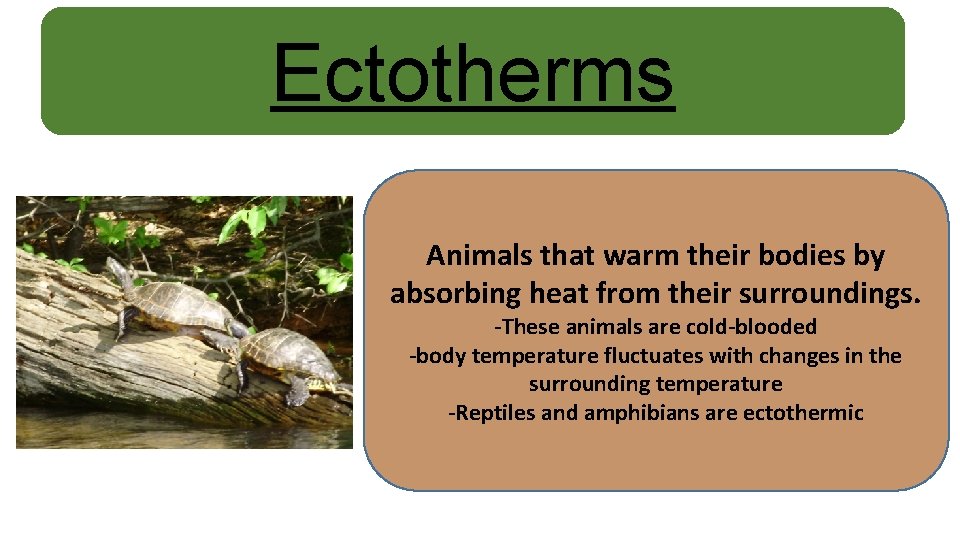
Ectotherms Animals that warm their bodies by absorbing heat from their surroundings. -These animals are cold-blooded -body temperature fluctuates with changes in the surrounding temperature -Reptiles and amphibians are ectothermic
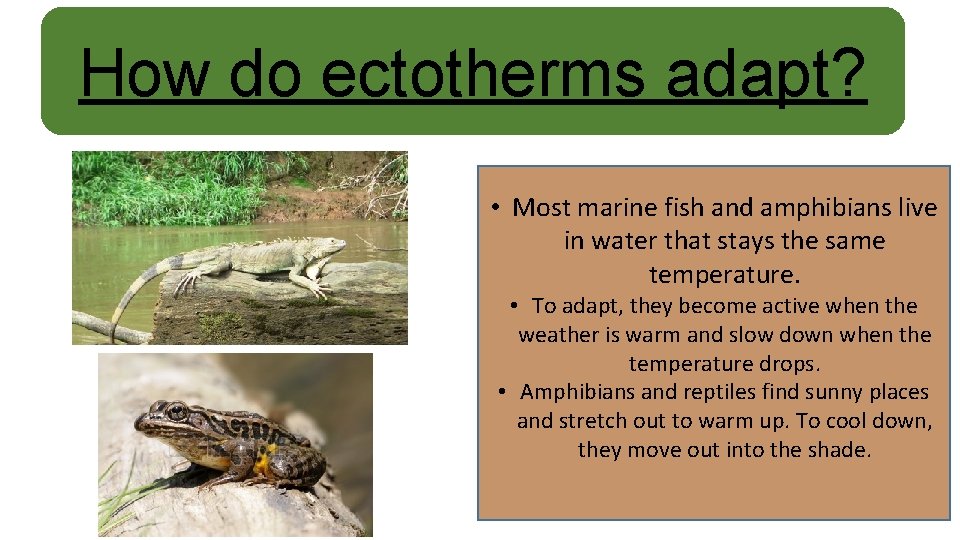
How do ectotherms adapt? • Most marine fish and amphibians live in water that stays the same temperature. • To adapt, they become active when the weather is warm and slow down when the temperature drops. • Amphibians and reptiles find sunny places and stretch out to warm up. To cool down, they move out into the shade.

So, how much do you know about adaptations? Let’s Review!
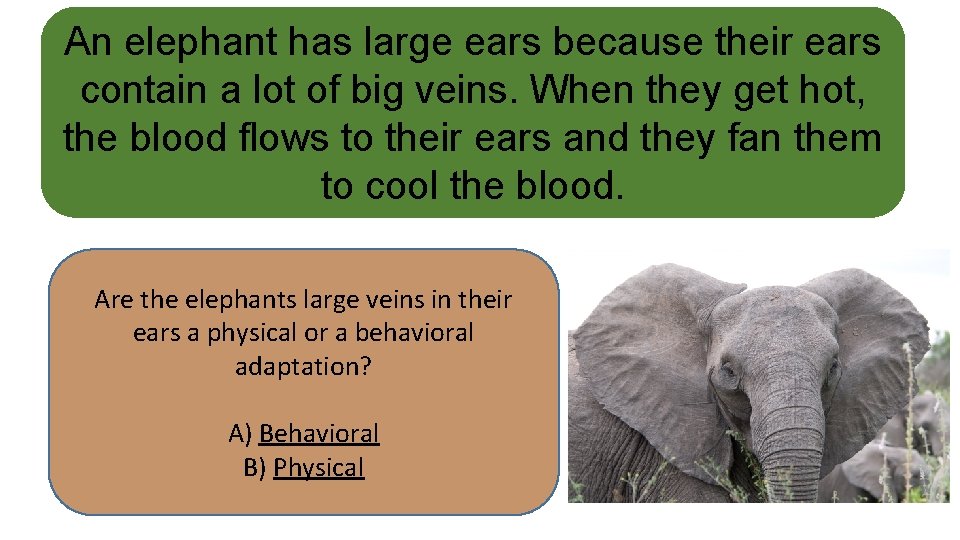
An elephant has large ears because their ears contain a lot of big veins. When they get hot, the blood flows to their ears and they fan them to cool the blood. Are the elephants large veins in their ears a physical or a behavioral adaptation? A) Behavioral B) Physical
Sorry! That’s the wrong answer! Click here to try again
GOOD JOB! That is the correct answer. Click here to go to the next question
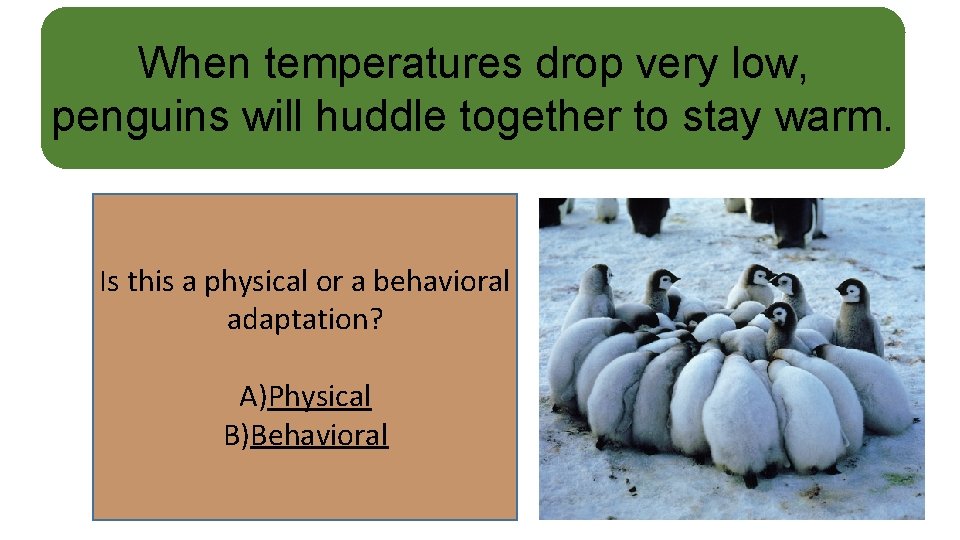
When temperatures drop very low, penguins will huddle together to stay warm. Is this a physical or a behavioral adaptation? A)Physical B)Behavioral
GOOD JOB! That is the correct answer. Click here to go to the next question
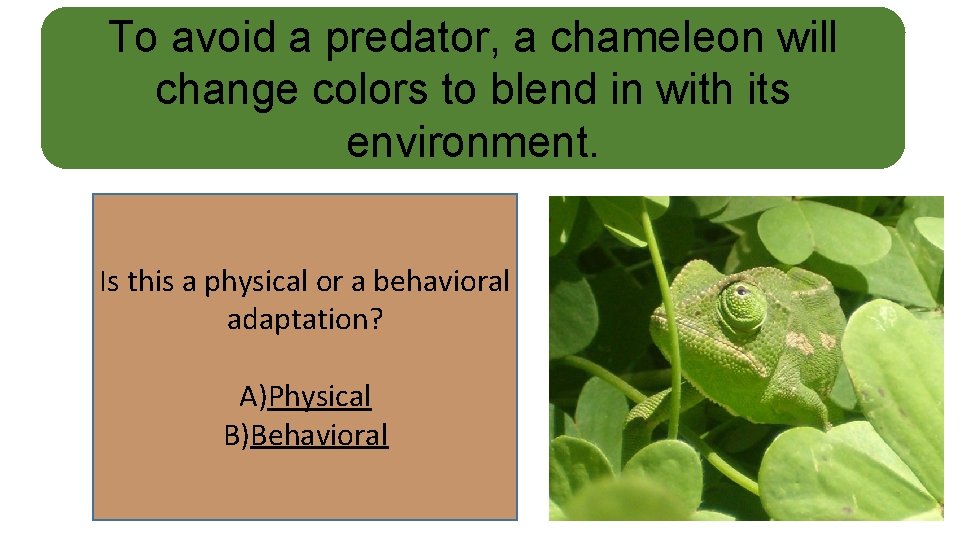
To avoid a predator, a chameleon will change colors to blend in with its environment. Is this a physical or a behavioral adaptation? A)Physical B)Behavioral
GOOD JOB! That is the correct answer. Click here to go to the next question
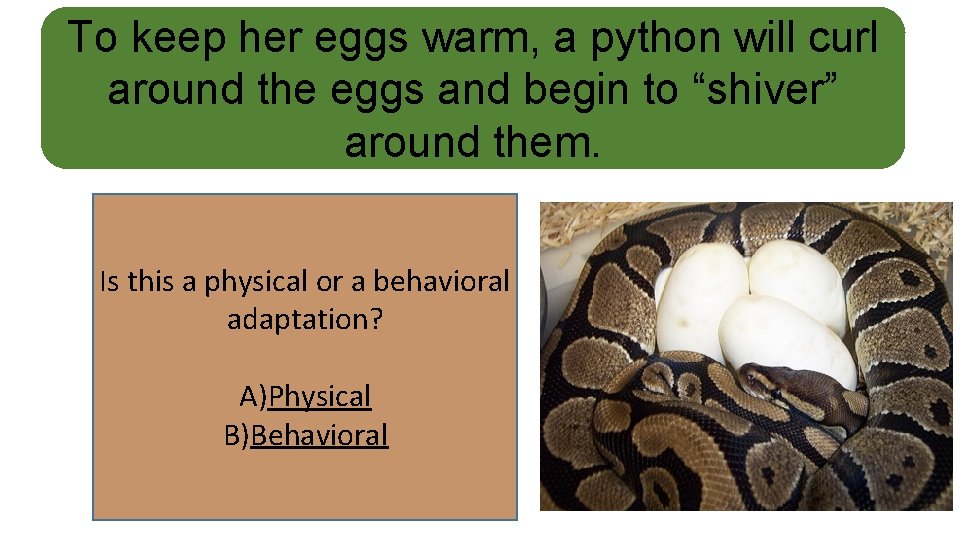
To keep her eggs warm, a python will curl around the eggs and begin to “shiver” around them. Is this a physical or a behavioral adaptation? A)Physical B)Behavioral
GOOD JOB! That is the correct answer. Click here to go to the next question
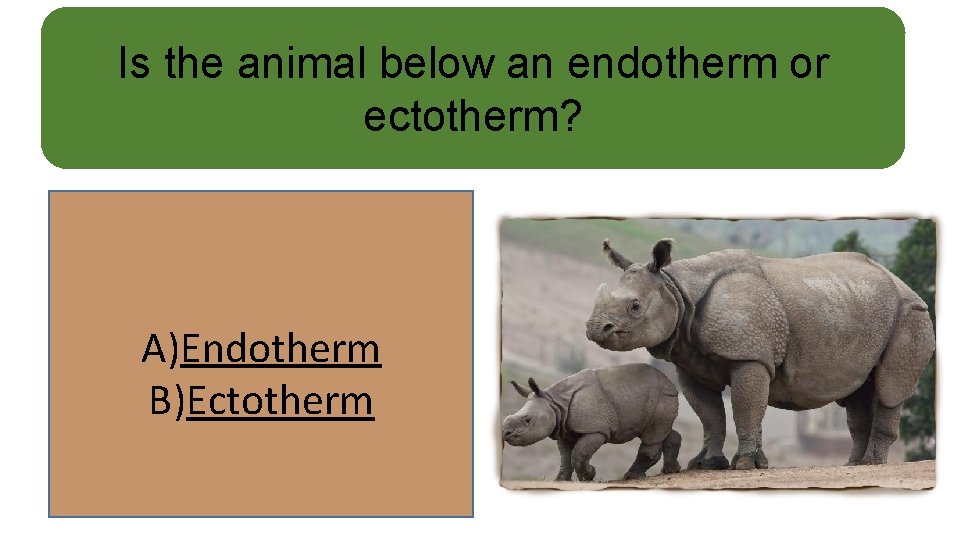
Is the animal below an endotherm or ectotherm? A)Endotherm B)Ectotherm
GOOD JOB! That is the correct answer. Click here to go to the next question
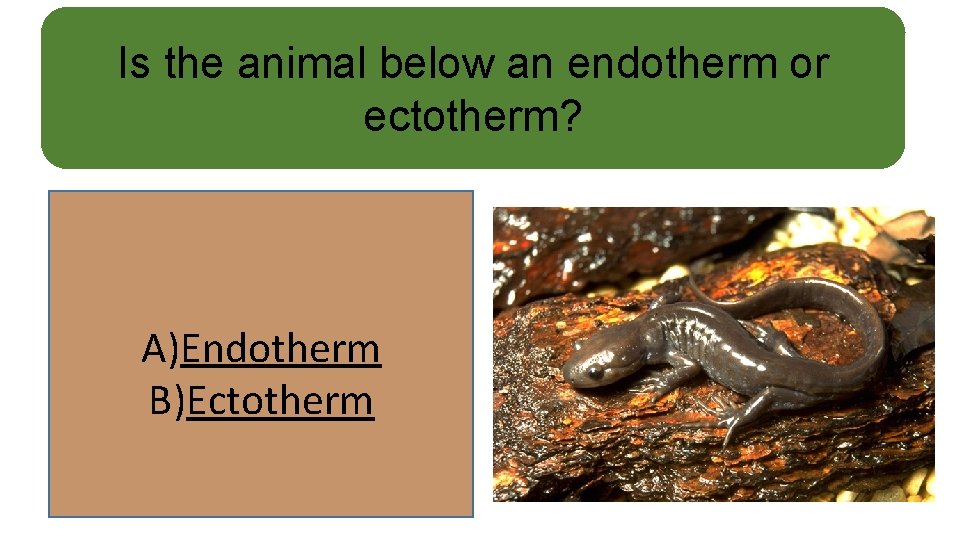
Is the animal below an endotherm or ectotherm? A)Endotherm B)Ectotherm
GOOD JOB! That is the correct answer.
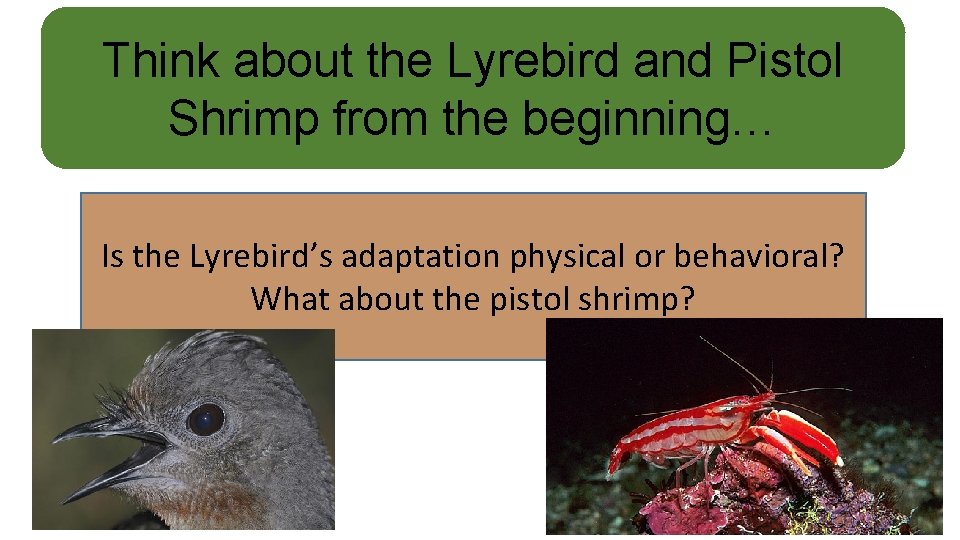
Think about the Lyrebird and Pistol Shrimp from the beginning… Is the Lyrebird’s adaptation physical or behavioral? What about the pistol shrimp?
- Slides: 32