
ANIMAL ADAPTATIONS Chapter 3 Section 4 Types of
- Slides: 13
ANIMAL ADAPTATIONS Chapter 3 Section 4
Types of Adaptation An adaptation is a characteristic that improves an individual’s ability to survive and reproduce in a particular environment Also the ability of living things to adjust to different conditions within environment §Structural adaptation §Protective coloration §Mimicry §Behaviour adaptations §Migration §Hibernation
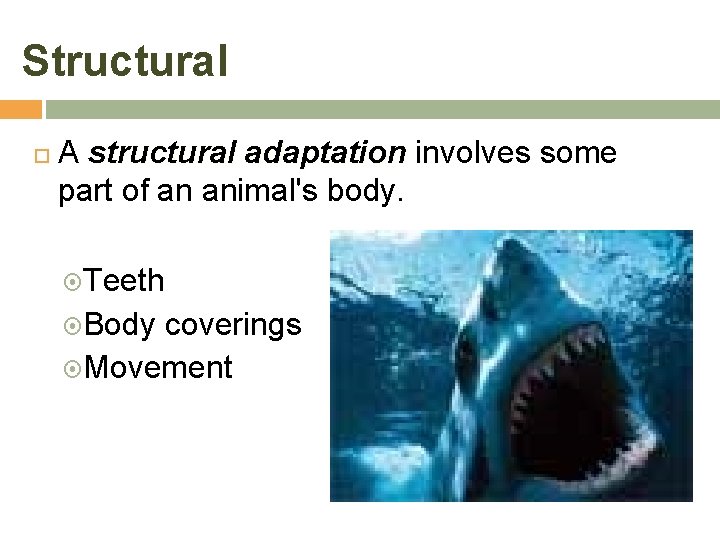
Structural A structural adaptation involves some part of an animal's body. Teeth Body coverings Movement
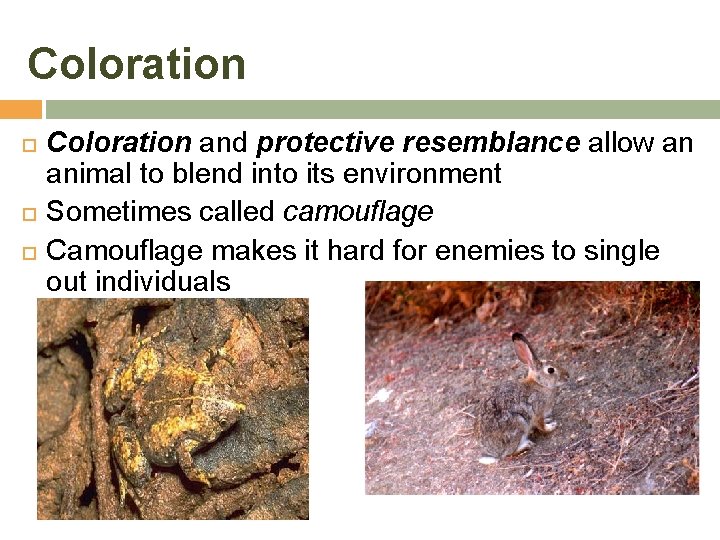
Coloration Coloration and protective resemblance allow an animal to blend into its environment Sometimes called camouflage Camouflage makes it hard for enemies to single out individuals
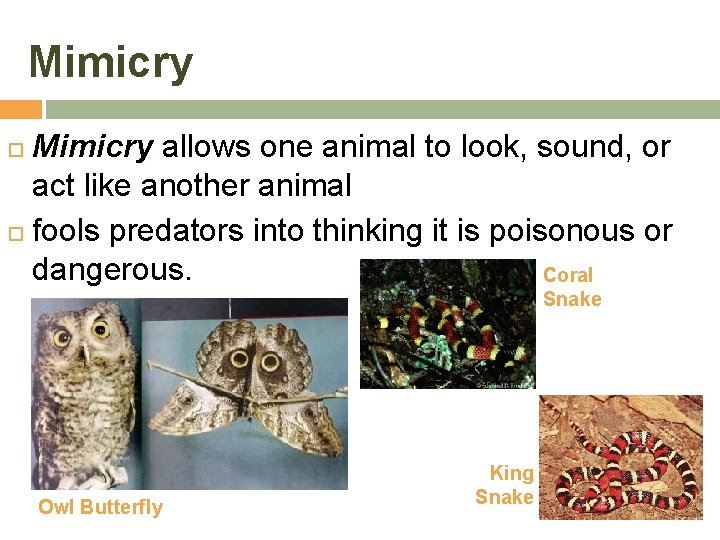
Mimicry allows one animal to look, sound, or act like another animal fools predators into thinking it is poisonous or dangerous. Coral Snake Owl Butterfly King Snake
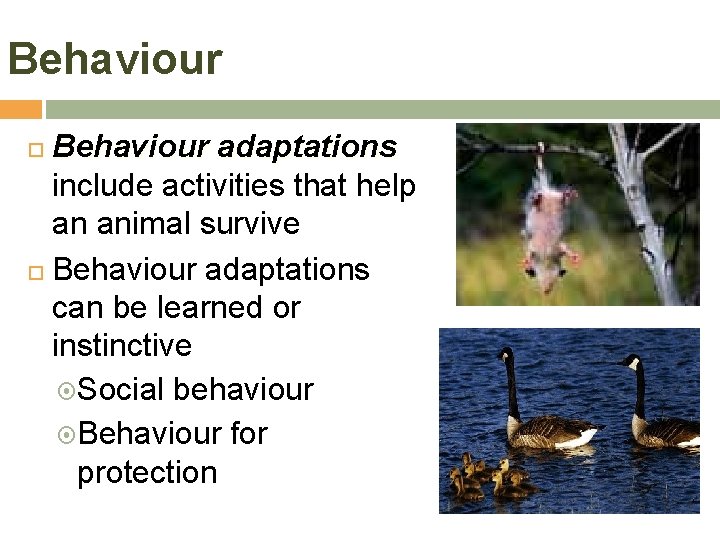
Behaviour adaptations include activities that help an animal survive Behaviour adaptations can be learned or instinctive Social behaviour Behaviour for protection
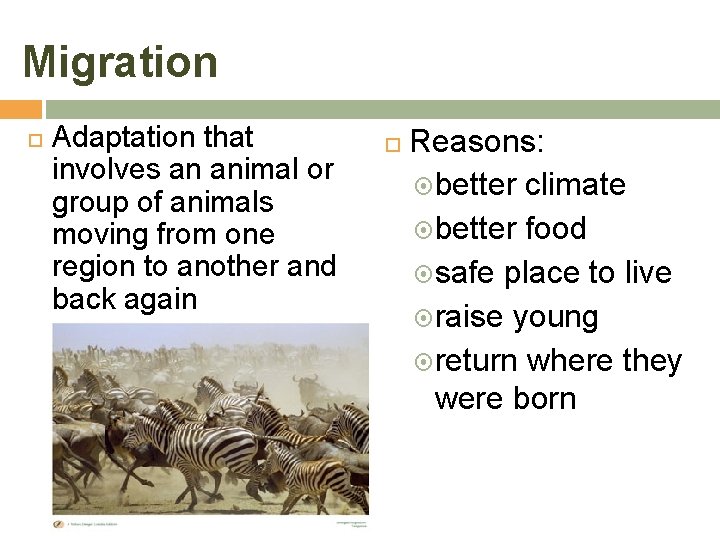
Migration Adaptation that involves an animal or group of animals moving from one region to another and back again Reasons: better climate better food safe place to live raise young return where they were born
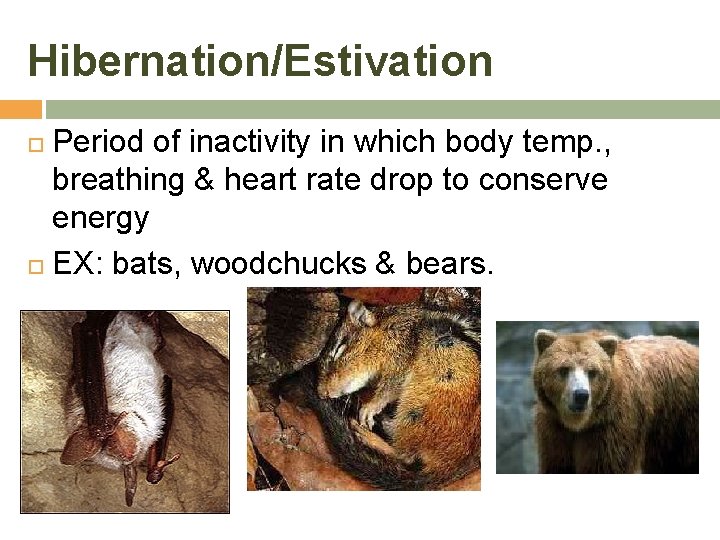
Hibernation/Estivation Period of inactivity in which body temp. , breathing & heart rate drop to conserve energy EX: bats, woodchucks & bears.
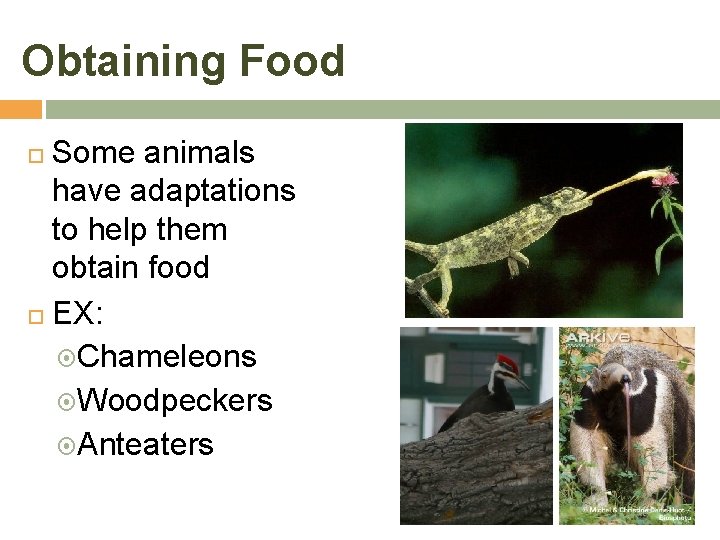
Obtaining Food Some animals have adaptations to help them obtain food EX: Chameleons Woodpeckers Anteaters
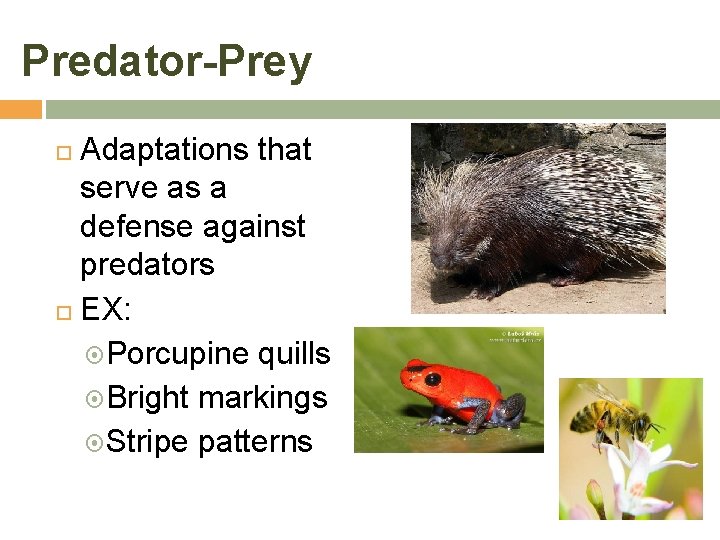
Predator-Prey Adaptations that serve as a defense against predators EX: Porcupine quills Bright markings Stripe patterns
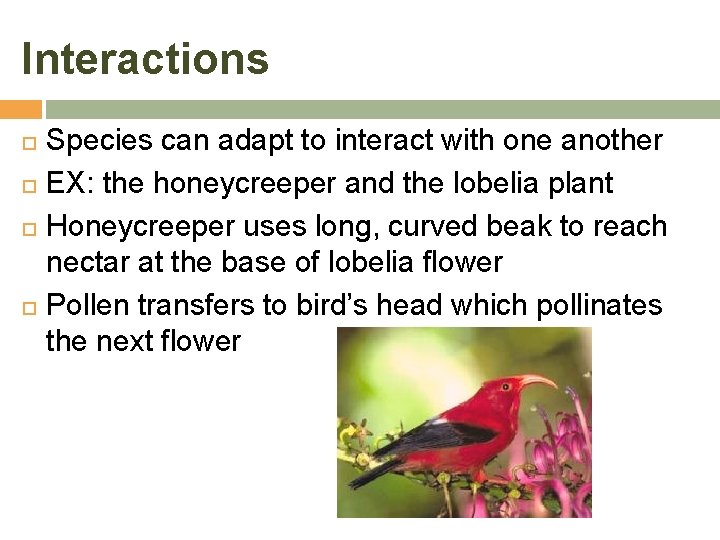
Interactions Species can adapt to interact with one another EX: the honeycreeper and the lobelia plant Honeycreeper uses long, curved beak to reach nectar at the base of lobelia flower Pollen transfers to bird’s head which pollinates the next flower