
Animal Adaptations Behavioral responses to the environment Example
Animal Adaptations
• Behavioral: responses to the environment – Example: birds migrating • Structural: are traits that involve the physical structure (anatomy) of an organism – Examples: beaks of a bird, wing of bat, teeth of bear • Physiological: traits that involve the internal functions or chemistry of an organism – Examples: enzymes to digest food, protein in spider’s web
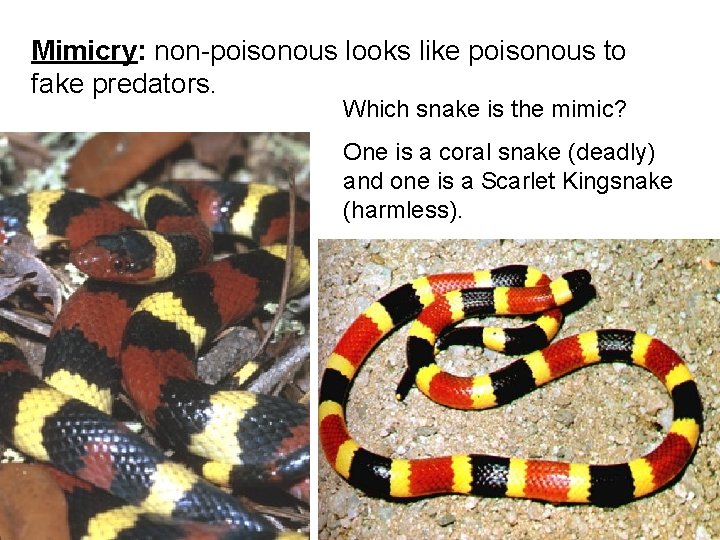
Mimicry: non-poisonous looks like poisonous to fake predators. Which snake is the mimic? One is a coral snake (deadly) and one is a Scarlet Kingsnake (harmless).
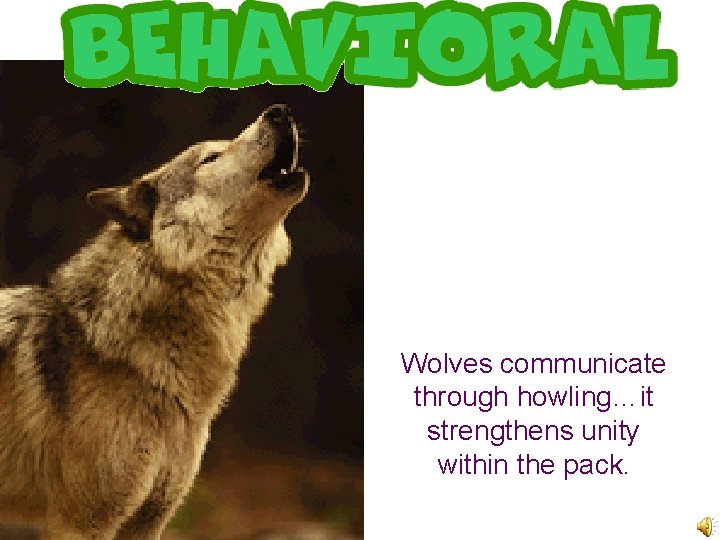
Wolves communicate through howling…it strengthens unity within the pack.
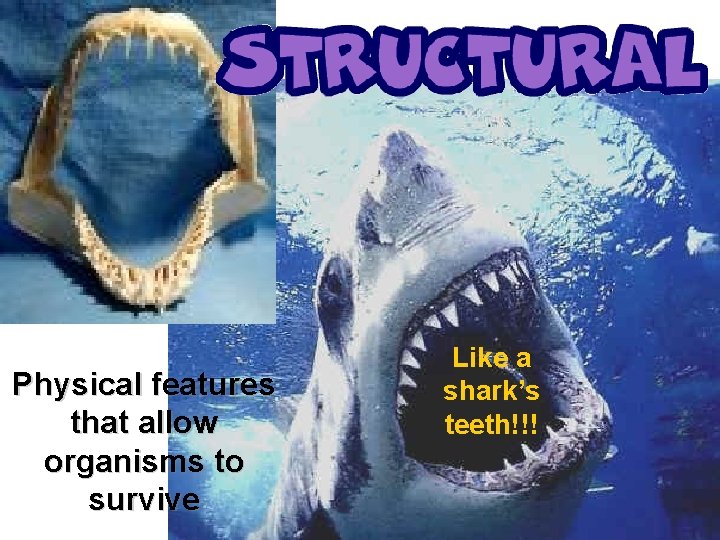
Physical features that allow organisms to survive Like a shark’s teeth!!!
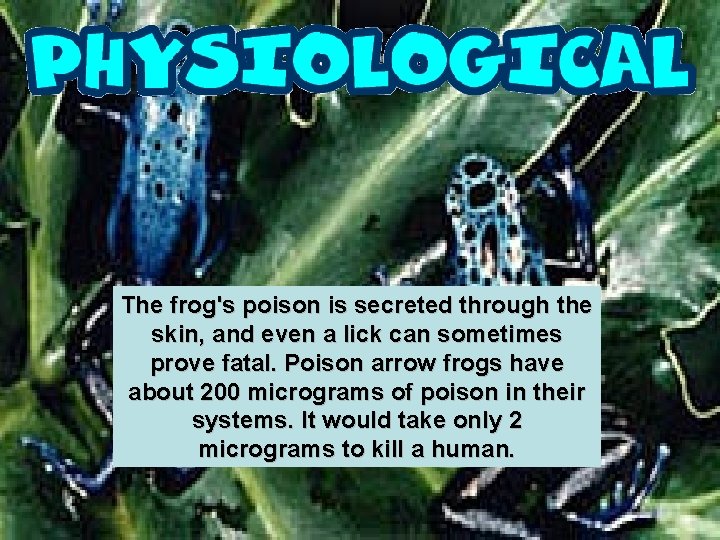
The frog's poison is secreted through the skin, and even a lick can sometimes prove fatal. Poison arrow frogs have about 200 micrograms of poison in their systems. It would take only 2 micrograms to kill a human.
Ultimate Wildlife: Animal Adaptations
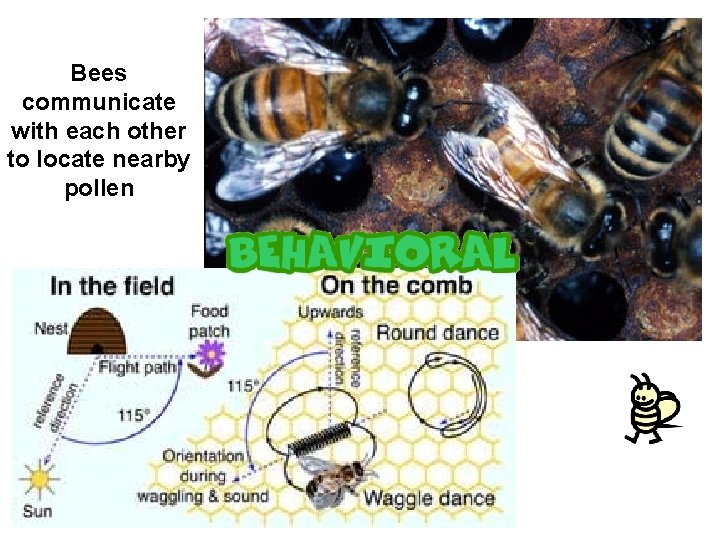
Bees communicate with each other to locate nearby pollen
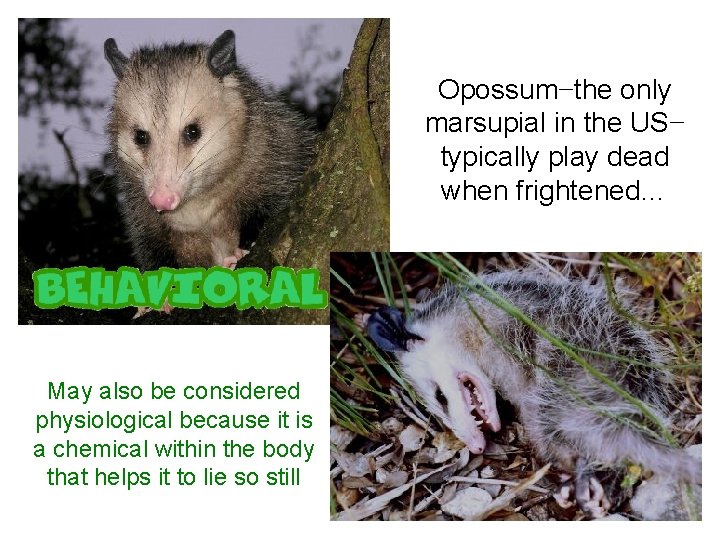
Opossum−the only marsupial in the US− typically play dead when frightened… May also be considered physiological because it is a chemical within the body that helps it to lie so still
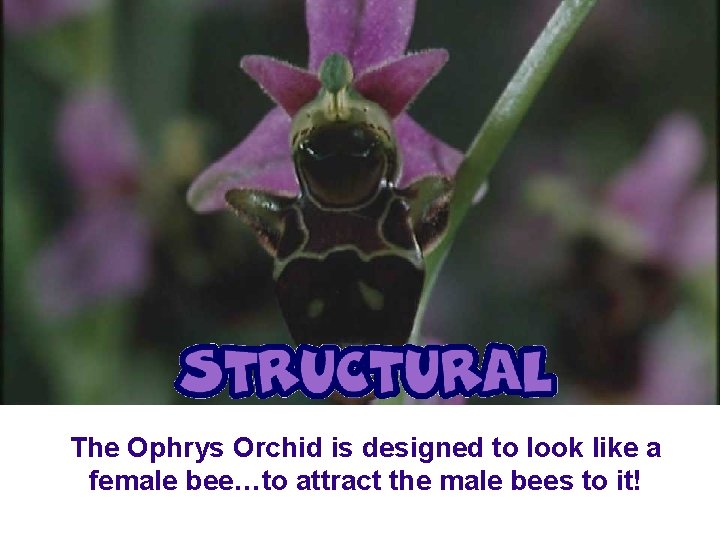
The Ophrys Orchid is designed to look like a female bee…to attract the male bees to it!
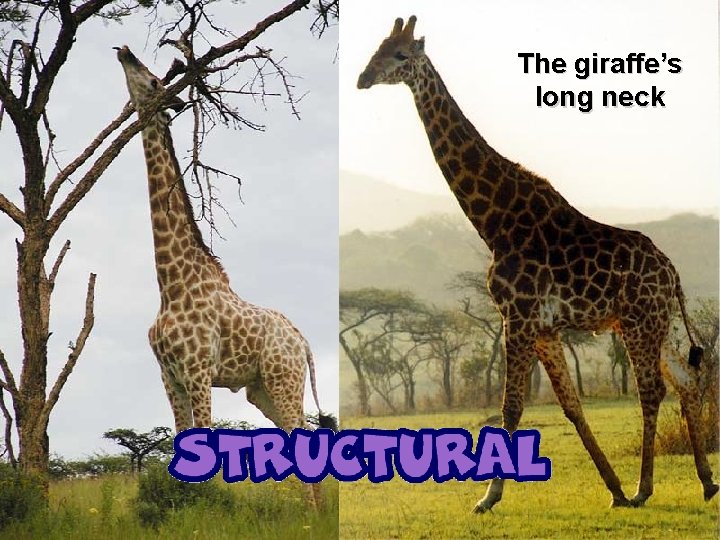
The giraffe’s long neck
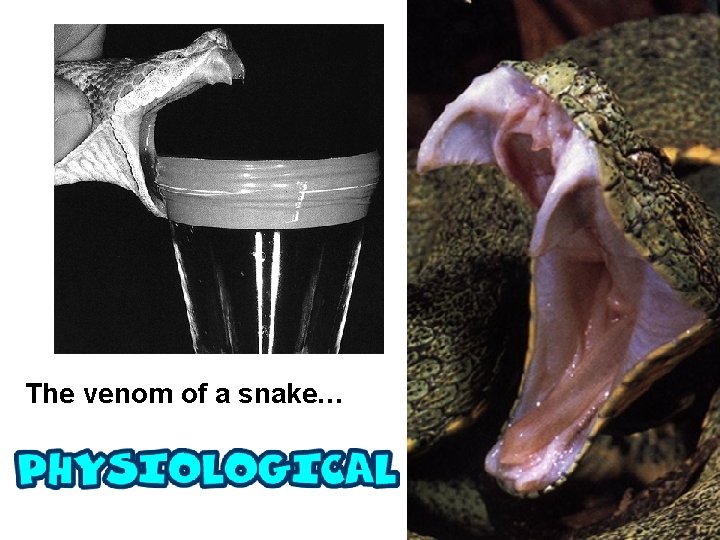
The venom of a snake…

A hummingbirds beak…
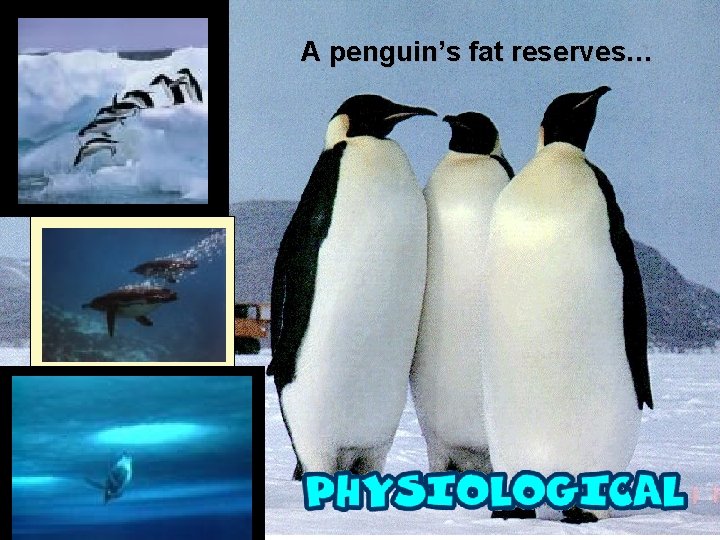
A penguin’s fat reserves…
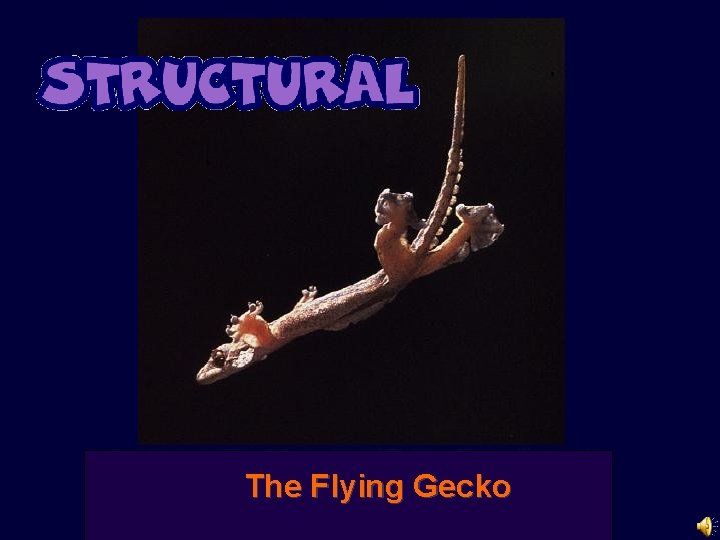
The Flying Gecko
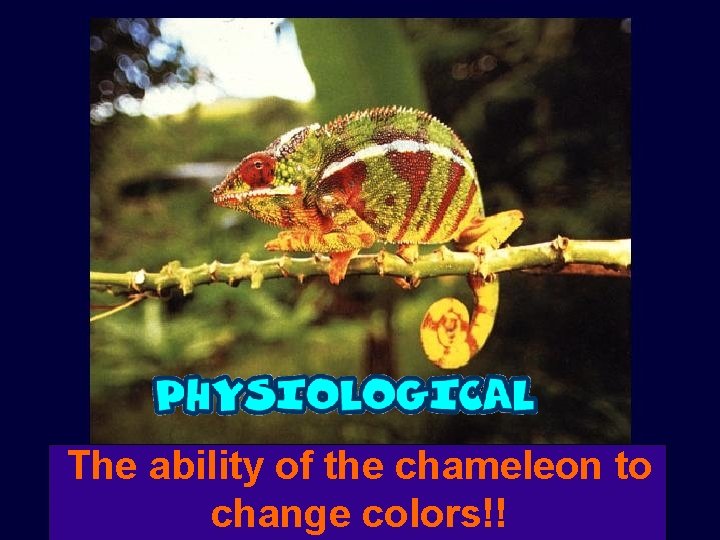
The ability of the chameleon to change colors!!

The proteins found in spider webs
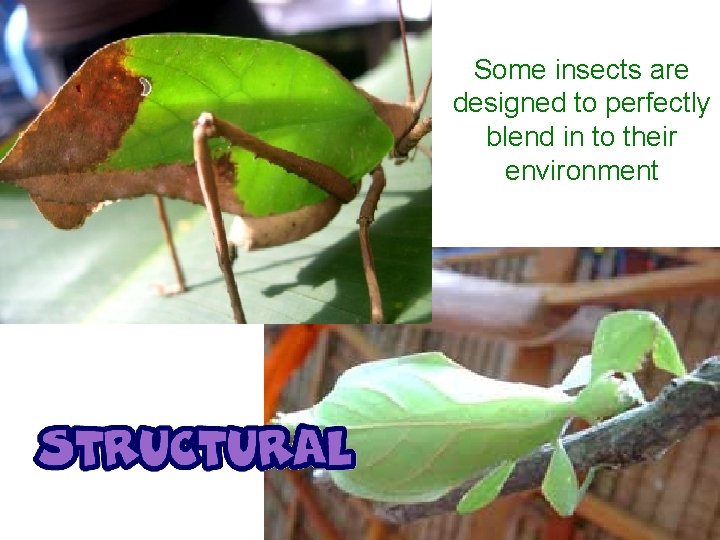
Some insects are designed to perfectly blend in to their environment
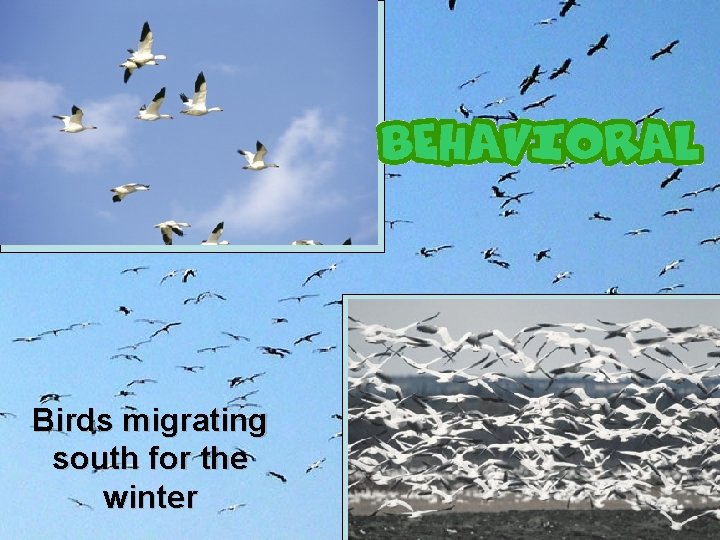
Birds migrating south for the winter
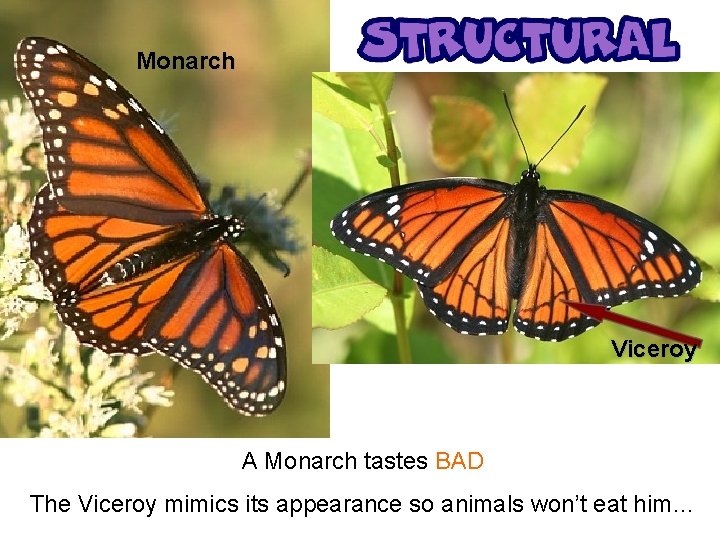
Monarch Viceroy A Monarch tastes BAD The Viceroy mimics its appearance so animals won’t eat him…
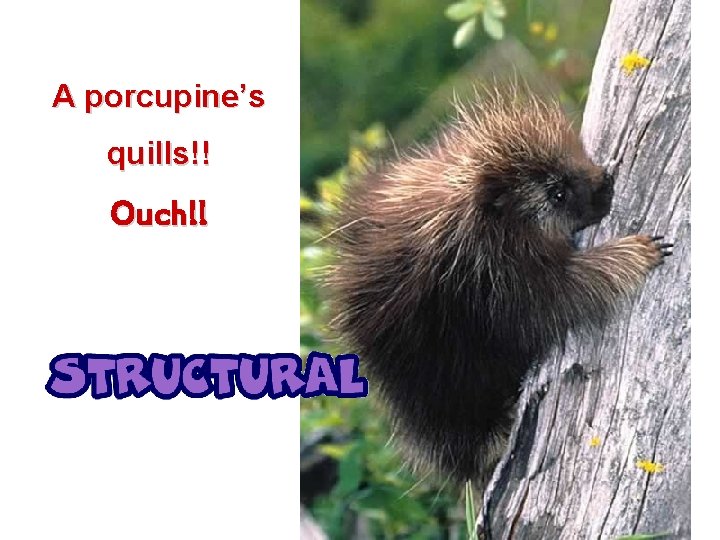
A porcupine’s quills!! Ouch!!
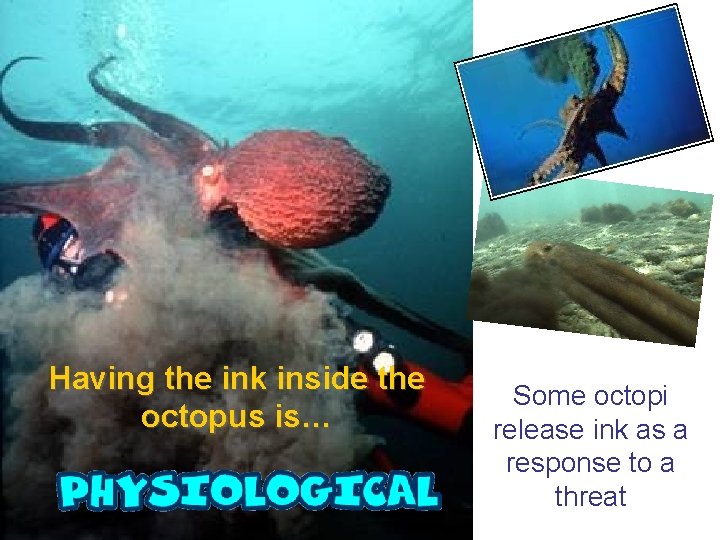
Having the ink inside the octopus is… Some octopi release ink as a response to a threat
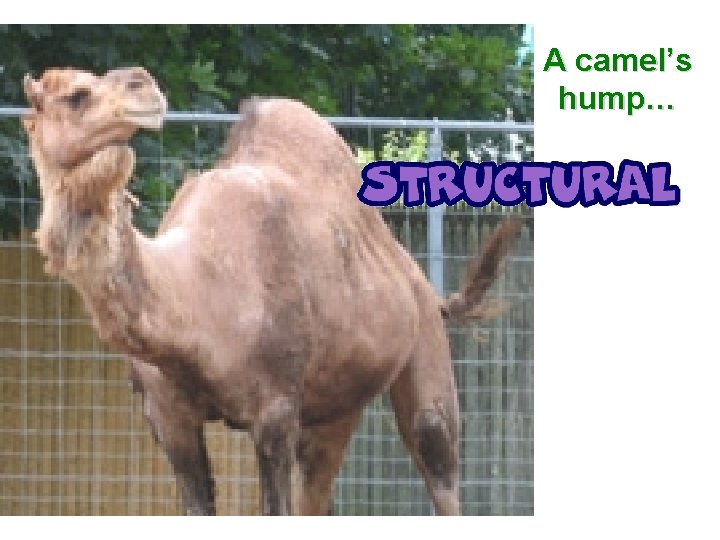
A camel’s hump…
- Slides: 24