
Angular Velocity Elliott Starter Why does an object

Angular Velocity Elliott
Starter • Why does an object going around in a circular path at a constant linear speed have acceleration?
Answer • The velocity is always changing because. . . • the direction is always changing. • Acceleration = change in velocity ÷ time interval
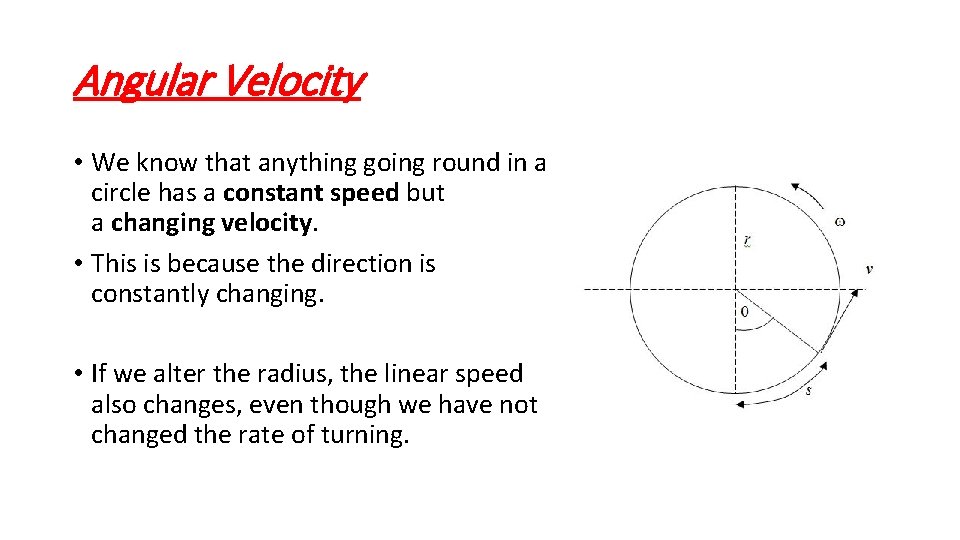
Angular Velocity • We know that anything going round in a circle has a constant speed but a changing velocity. • This is because the direction is constantly changing. • If we alter the radius, the linear speed also changes, even though we have not changed the rate of turning.
Definition We use angular velocity, physics code w (omega, a Greek letter long ‘ō’), how big an angle is turned in one second. We could use degrees per second, but instead we use another kind of angular measurement, the radian.
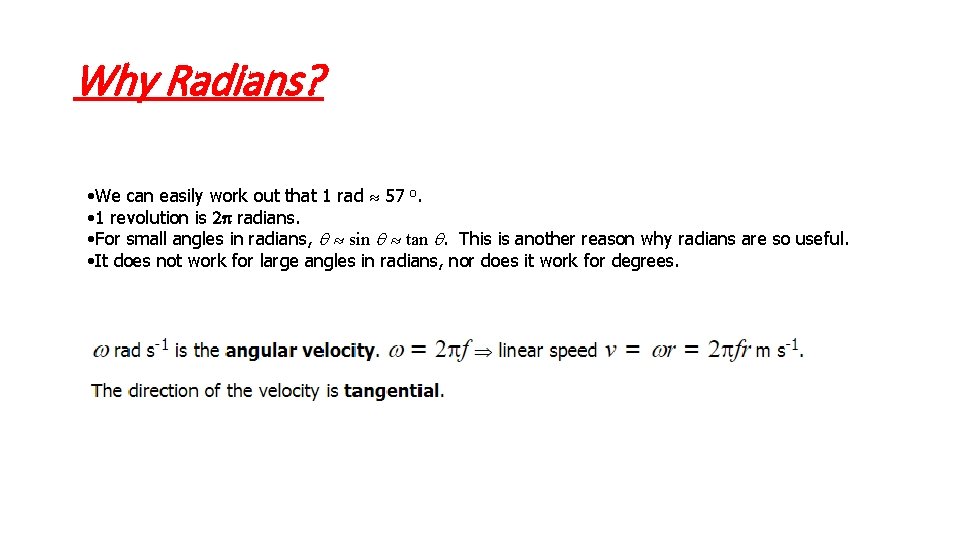
Why Radians? • We can easily work out that 1 rad » 57 o. • 1 revolution is 2 p radians. • For small angles in radians, q » sin q » tan q. This is another reason why radians are so useful. • It does not work for large angles in radians, nor does it work for degrees.
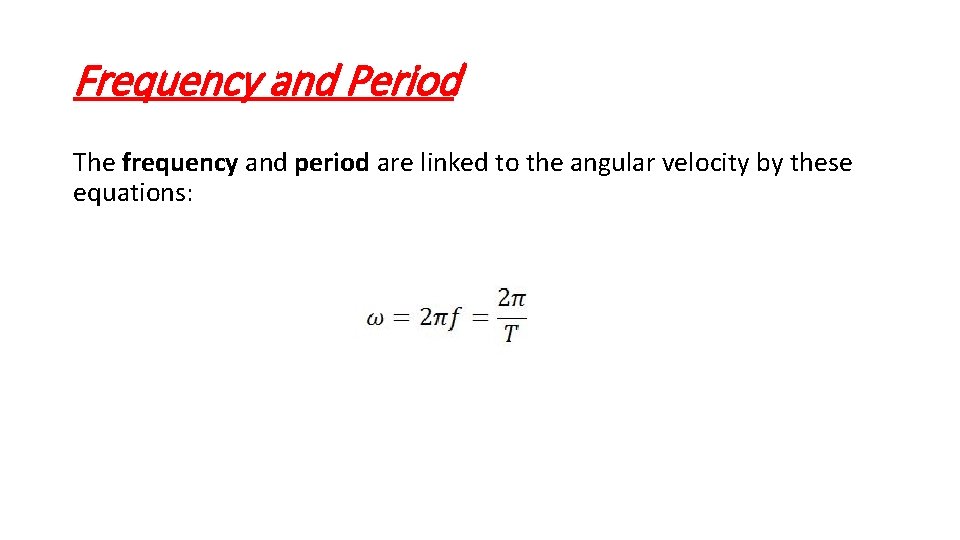
Frequency and Period The frequency and period are linked to the angular velocity by these equations:
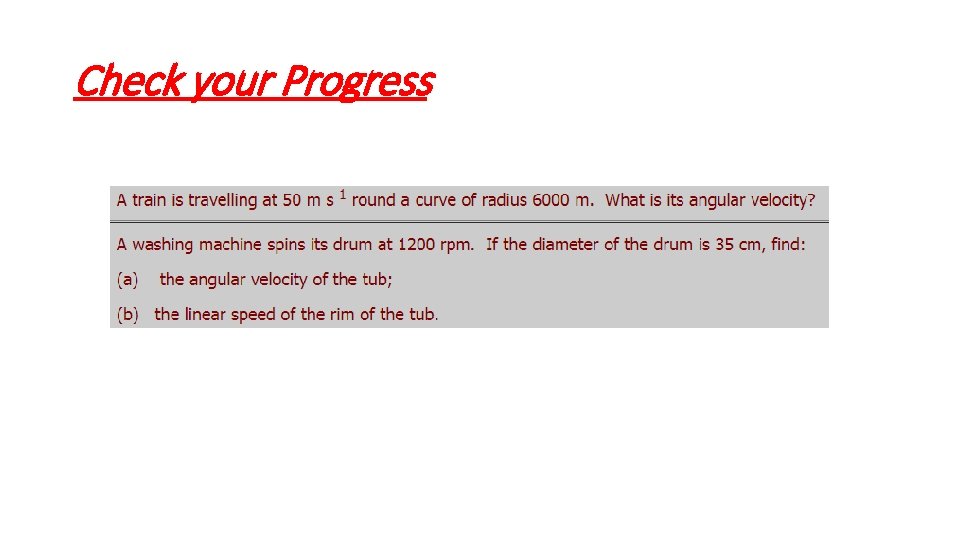
Check your Progress
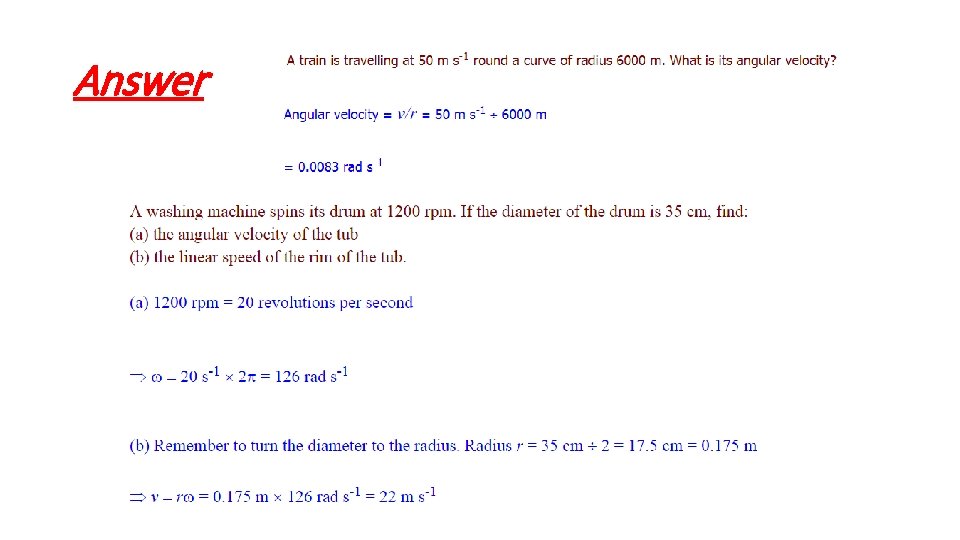
Answer
Problem! A common bear-trap is to fail to convert revolutions per minute to radians per second. Divide the rpm by 60, then multiply the answer by 2 p.
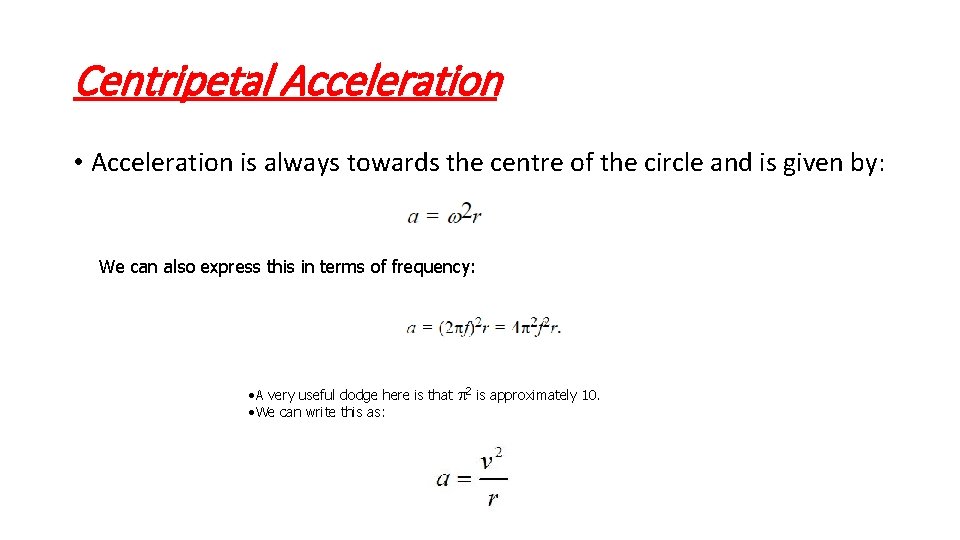
Centripetal Acceleration • Acceleration is always towards the centre of the circle and is given by: We can also express this in terms of frequency: • A very useful dodge here is that p 2 is approximately 10. • We can write this as:
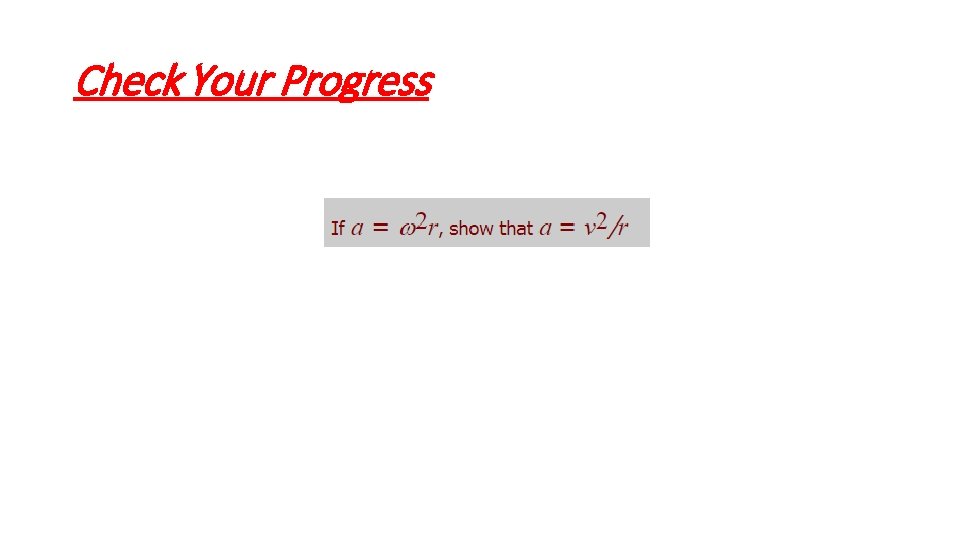
Check Your Progress
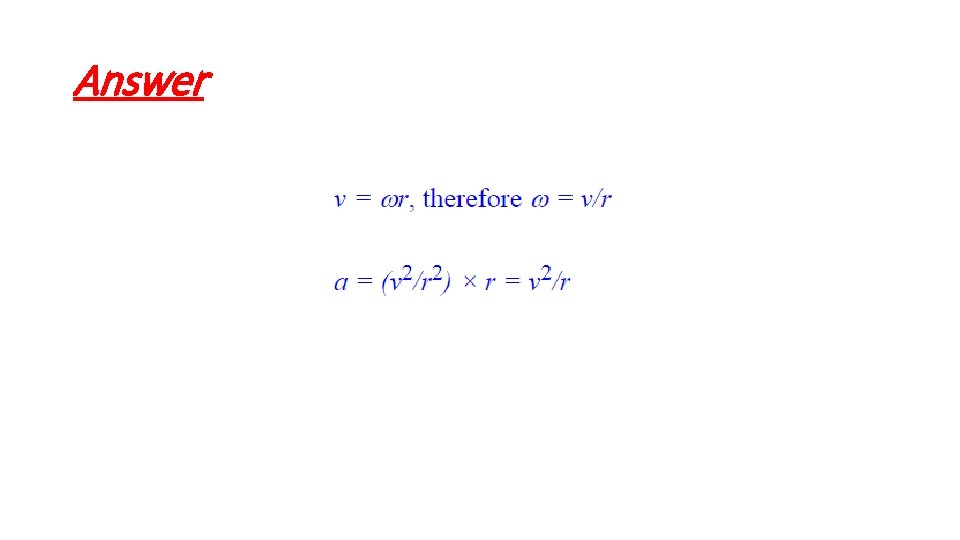
Answer
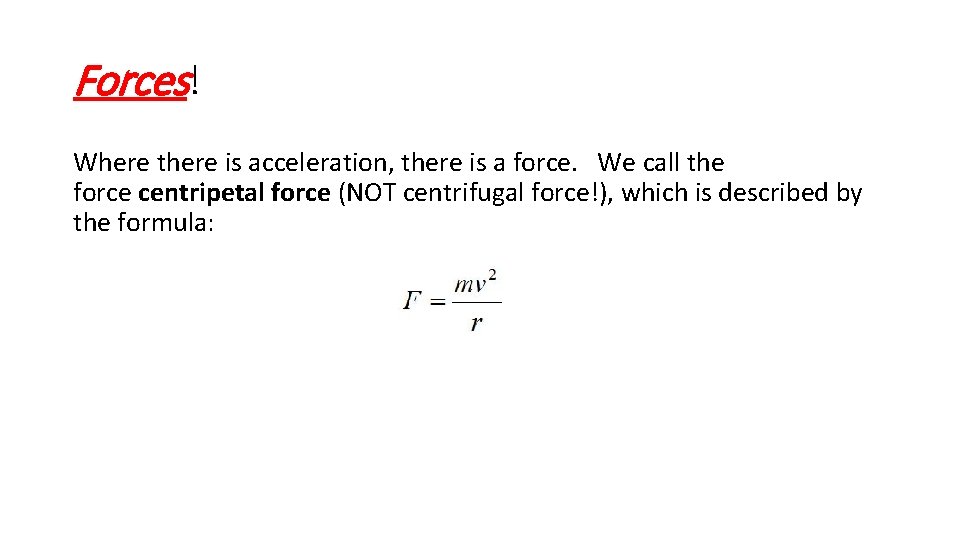
Forces! Where there is acceleration, there is a force. We call the force centripetal force (NOT centrifugal force!), which is described by the formula:
- Slides: 14